What Will Be the Financial Market Impact After the US-Iran War Truce?
Everyone hopes the Middle East war will end soon.
Signals such as Trump's "withdrawal within three weeks" statement, the confirmed May visit to China, the passage of 10 oil tankers through the Strait of Hormuz, the removal of Iran's Foreign Minister and Speaker of the Parliament from the sanctions list, rumors of secret US-Iran contacts, etc., all point to a high possibility of the short-term end of the Middle East war.
The best time for the war to end was yesterday, followed by now. For the Trump administration, the continuation of the conflict brings no benefit. Faced with not a choice between "good and bad" but between "worse and worst," only by resolving the conflict as quickly as possible can they avoid spillover and impact on the midterm elections in November of this year, and even further implications for the 2028 presidential election.
If the war is truly coming to an end, what will be the future of the Strait of Hormuz? Will it remain closed for an extended period?
From a realistic perspective, this possibility is actually not high. Even if there is no regime change in Iran, after undergoing a round of military strikes, its overall strength will be significantly weakened, making it difficult to rely on a single strait for global confrontation in the long term.
More importantly, this is not just a European issue. The real pressure may fall on one of Iran's most significant buyers, China.
While Europe can still source energy from other regions, China's reliance on the Strait of Hormuz is higher. If the passage is blocked for a long time, the pressure on China would be more direct. Therefore, a key variable in this matter is actually China's stance, especially how communication and coordination between China and the US unfold, which is likely to become a critical factor affecting the subsequent situation.
At the same time, the US is significantly more resilient on this issue. Over the past few years, the level of US energy production localization has greatly increased, no longer being heavily dependent on Middle Eastern oil as before. From the supply side, even if there are issues in the Strait of Hormuz, the direct impact on the US mainland is relatively limited, with Europe and Asian countries being the ones primarily affected.
Of course, there is a more gray but equally realistic scenario: Iran may not have the capability to completely block the strait but could resort to "fee-based passage," effectively extorting passing oil tankers. This approach would also bring about sustained disruption.
The US has made it clear that such behavior should not be accepted, but whether it is accepted and whether it can be prevented are two different matters.
In this situation, the responses among different countries are likely to be divergent. For example, if Iran, to sustain itself, decides to "let China off the hook" and allow its passage, trade routes and flows could be reshaped, with some intermediary steps such as transshipment, resale, and arbitrage possibly emerging. This might lead to Chinese traders selling the oil they purchased at a low price to Europe at a huge profit through smuggling, further complicating the issue.
The New York Times recently conducted a series of reports on Iran, involving several journalists who have long studied authoritarian regimes. They made a key observation: Iran is currently highly divided internally, with a blurry power structure, and to some extent, a situation where "no one is really calling the shots."
According to reports, during the large-scale protests in Iran in 2019, the Iranian regime was actually on the brink of collapse at one point, with an extremely fragile internal state, though this was not known to the outside world. However, on the surface, at that time, Ayatollah Khamenei managed to "contain" the situation through a series of measures, making the regime appear to stabilize again and successfully overcome that crisis.
The issue now lies in Khamenei's death in a US-Israel joint strike two months ago, and whether his son Mujtaba can truly stabilize this mess in the midst of gunfire and chaos is a question that no one can definitively answer.
In this context, Trump's strategy becomes more apparent—he is not simply negotiating with a stable government but attempting to identify, and even filter out, a more "pro-American" or cooperative faction within Iran.
Once negotiations are successful, the US may use external forces to support this faction.
The most reputable "supportable force" at the moment is Reza Pahlavi.
The Exiled Prince Pahlavi of Forty Years
In 1978, the 17-year-old Pahlavi went to the US for pilot training. A year later, in 1979, the Islamic Revolution broke out, leading to the end of the "Pahlavi dynasty" and the "Iranian Empire," with the monarchy abolished. After that, as power changed hands and the country became the "Islamic Republic of Iran," he never returned and settled in the US.
For the next forty years, he navigated between Western think tanks and media outlets as an exiled crown prince, never leaving the political scene in Iran.
A good name is better than riches; without a good name, nothing else matters. When an old regime collapses and warlords rise, having the bloodline of the former dynasty is a great political asset.
And now, Pahlavi has reached the most representative "highlight" of his exiled life. At the end of February this year, when Khamenei was killed in the US-Israel joint operation, Pahlavi engaged in intensive political mobilization in March.
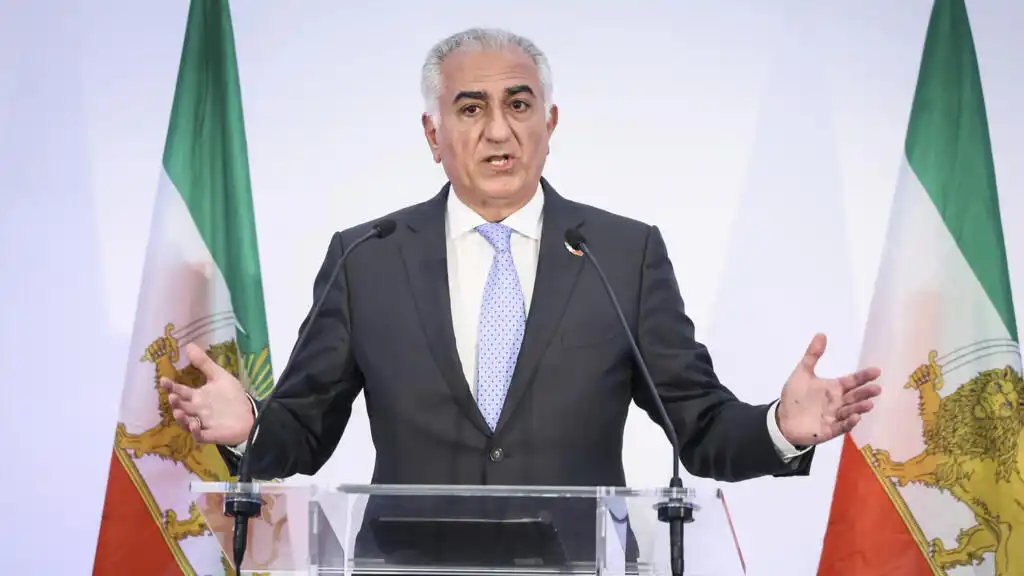
He has repeatedly stated that his goal is not necessarily to restore the monarchy but to give the Iranian people the freedom to choose their form of government. If the people choose a republic, he says he will accept it. He has been appearing frequently in Western media and think tank events, calling on Western countries to pressure the Iranian government and support domestic human rights movements in Iran (such as the recent "Women, Life, Freedom" protests).
The most pivotal events were his speech at CPAC (Conservative Political Action Conference) held in Texas on March 28, 2026, and a support rally organized in Washington in the same month.
At CPAC, Pahlavi's speech was highly influential, with key points including: linking Iran's future deeply with American values. He told the audience that a free Iran would ya no longer pose a nuclear threat, no longer support terrorism, and no longer block the Strait of Hormuz. Furthermore, Iran would establish a strategic partnership with the United States and Israel, which would bring over $1 trillion in potential benefits to the American economy.
At the end of the speech, he even echoed Trump's slogan, throwing out the electrifying line: "President Trump is making America great again, and I intend to make Iran great again. MIGA."
He also deliberately addressed the biggest external concern. He said Iran is not Iraq, he will not repeat the mistakes of the past "de-Baathification," and will not let power vacuums evolve into a state of anarchy. He promised to preserve existing bureaucratic institutions and some military facilities, only rooting out the top-tier religious oppression.
Western media's characterization also underwent a subtle change this month. Fox News, The Jerusalem Post no longer introduced him as "formerly Crown Prince" but as "Iranian opposition leader."
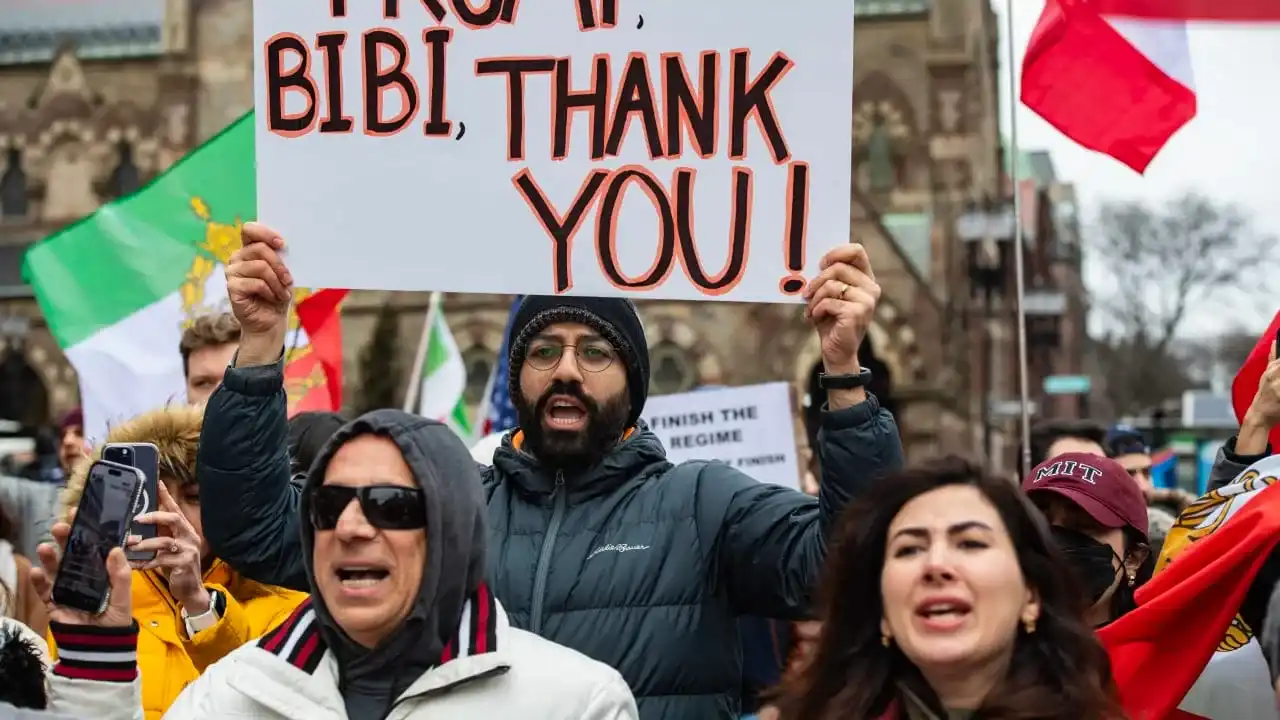
Some Iranian-American citizens rally in Koppel Square, calling for the downfall of the Islamic Republic of Iran
"Spanning cities, generations, and social classes, Pahlavi has become the only opposition figure widely recognized with genuine legitimacy, and his name is being shouted across the nation." An article in The Jerusalem Post pointed out: "For many Iranians, he is not just one of many political options. He represents a clear break from the Islamic Republic and a link to the country's continuity outside of it."
Pahlavi is not just a symbolic figure; he has done a significant amount of substantive groundwork in the past two years.
In April 2025, he officially launched the "Iran Prosperity Project," a transition handbook spanning 170 pages created by over 100 experts over several years. Its core logic is to shift the focus from "how to overthrow" to "what to do from Day 1 to Day 180 after the overthrow," lifting sanctions, repatriating $120 billion to $150 billion in frozen overseas assets, rebuilding the energy supply, integrating the military, and holding a nationwide referendum.
His focus is on preventing Iran from descending into an Iraqi or Libyan-style state of anarchy following a regime collapse.
In October 2025, he launched the complementary digital mobilization platform "We Take Back Iran." According to his team, by early 2026, tens of thousands of Iranian active-duty security forces, police, and government personnel had registered through the platform, indicating their willingness to defect in the event of a regime change.
At the core of the Pahlavi "We Take Back Iran" plan is a political gamble calling for the defection of the Iranian regular army (Artesh). This armed force of around 350,000 personnel, existing parallel to the Islamic Revolutionary Guard Corps (IRGC) within the system, has long been marginalized.
Long-Standing Internal Military Contradictions in Iran
The enduring conflict between Iran's two military forces is another entry point for a regime change in Iran.
Within Iran, a highly militarized theocratic state, the animosity between the regular army (Artesh) and the Revolutionary Guard (IRGC) is not recent but a structural tumor planted since the establishment of the regime in 1979, as these two armed forces are entirely different in lineage and spirit.
The regular army is the ancient formal military of Iran, with its professional traditions, military regulations, and the familial memories of many senior commanders tracing back to the more secular and nationalist era of the Pahlavi dynasty. For them, they defend the "land of Darius and Cyrus."
On the other hand, the IRGC is a "private army" established by Khomeini and his predecessors to solidify their rule. Therefore, the IRGC not only controls Iran's most elite missile forces and the wealthiest overseas secret accounts but also monopolizes the country's construction, telecommunications, and energy industries through its vast commercial empire.
In Tehran, a mid-ranking Revolutionary Guard officer may own a mansion in the north of the city, while a regular army colonel may still be worrying about basic health insurance for his entire family. The conflict between the two has escalated to a breaking point in the 2026 war.
According to mid-March 2026 battlefield reports, when facing external airstrikes, the regular army took on a significant frontline air defense and territorial defense role but suffered from extremely scarce supplies. There are reports suggesting that the Revolutionary Guard, holding the logistics lifeline, refused to provide medical evacuation for injured regular army soldiers and even intercepted ammunition. This has sparked great anger within the regular army.
Signs indicate that the US military is informally communicating with senior Iranian Artesh leadership through Qatar.
All these analyses ultimately point to the fact that in today's Iran, which is in a state of "warlordism," the US military is also identifying, waiting for, and assisting the most suitable "local regime" to regain control of Iran.
The reverberations of war will eventually reach the most tangible of places: the gas station.
As the midterm elections approach, the negative feedback loop of the Iran war on US domestic politics is becoming evident.
A key variable is that the Iran war has never had high support domestically in the US. This has been a point of criticism for many analysts of Trump, as the PR for this war has largely failed, to the extent that one could argue it was never properly narrativized. For most ordinary Americans, they might not care about the intricate geopolitics, but they do care deeply about their cost of living, such as gas prices.
So the information is layered. For some who follow the news or were already supportive of Trump, they may perceive this war as "significant" in a macro sense, intertwined with global dynamics, energy, and geopolitics. However, for most ordinary Americans, their concern is very specific: spending an extra $100 on gas each week, a more direct concern than any grand narrative.
Now, in many places, gas prices have already risen to $3.80, with quite a few places exceeding $4 per gallon. In this situation, Trump's emphasis on "this is short-term pain" is logical, but it's a hard sell psychologically for the voters. Because for most people, short-term pain is, in fact, the most acute and hard-to-ignore sensation.
As for whether this will translate into votes, it's still too early to tell. But what can be certain is that inflation is eroding trust in the government, and the "kitchen-table economy" is once again becoming a decisive factor.
In terms of the congressional landscape, the direct impact of the war itself is limited. Due to economic factors like rising oil prices, if a vote were held today, the Republicans could lose the House, but with 7 months until the midterm elections, the war is ongoing, and the situation is unclear.
Additionally, there hasn't been a definitive overwhelming consensus of anti-war sentiment domestically in the US; those against it haven't coalesced into a strong mobilization, and those not against it aren't particularly steadfast. This kind of "middle ground" is challenging to translate into significant swings in votes.
A truly meaningful analysis will have to wait at least until June or July, breaking down approximately 20 to 25 key swing seats one by one, to form a relatively reliable judgment.
Although the Republicans face the risk of losing the House, the Senate's landscape is much more stable.
If the Democrats truly want to change the situation, they need to not only hold onto their current seats but also secure at least another 4 seats to have a substantial advantage; gaining 3 seats is not very meaningful because in a 50:50 scenario, the Vice President's tie-breaking vote comes into play.
So, looking at the current state breakdown, it will be very difficult for the Democratic Party to win the Senate. States like Texas and Alaska are basically unwinnable for the Democrats. Swing states like New Hampshire present more of an opportunity, with some uncertainty. Additionally, North Carolina could also become a key battleground for the Democratic Party.
Overall, theoretically, the Democratic Party's "ceiling" is to gain four seats, but realistically, it is more likely to be an incremental one to two seats, and we are still far from the most intense stage. Many states are still in the midst of their primary elections. For example, in Texas, the Democratic candidate lacks thorough vetting, and past statements keep resurfacing, weakening their competitiveness.
In the mid-to-late stages of the 2028 election, we will witness a "divided Congress" scenario: the Republican Party will control the Senate to maintain authority over personnel appointments and foreign affairs, while even if the Democratic Party regains the House of Representatives, they will face a "policy vacuum" due to legislative gridlock.
During this period, with fiscal subsidies difficult to pass, a large-scale domestic stimulus package will be stillborn. While this political deadlock may reduce government efficiency, from a macro analysis perspective, it may actually maintain a strong coherence in U.S. policy in core areas such as energy development and border security through the unilateral reinforcement of executive orders.
Amid the current Iran crisis, the valuation model of global macro assets is undergoing a profound restructuring.
The core variable of this repricing lies in the U.S. using its energy advantage to conduct a targeted harvesting and redistribution of global wealth. The performance of the oil market exhibits an extreme asymmetry: in the short term, fears of supply disruptions support oil prices at historic highs, but savvy funds have begun to price in the "supply glut" post-conflict.
With the unleashing of U.S. domestic production capacity and the reactivation of Venezuela's development rights, a new energy supply order led by the West is taking shape, meaning the market dominance of Middle Eastern oil is facing permanent dilution.
In the currency market, the U.S. dollar's hegemony has not only been weakened by turmoil but has rather been reverse solidified. In contrast, the euro is stuck in a long-term devaluation channel due to energy shortages and political divisions. France and Spain's reluctance in military actions not only exposed Europe's defense weakness but also severely hit market confidence in the euro. As Europe lacks a deep energy moat like the U.S., this loss of economic sovereignty is translating into a currency rate disaster. Under the potential impact of acts like the "Save America Act," global capital may accelerate its return to the U.S., seeking a safe haven amid geopolitical storms.
In this scenario, gold's rise is driven by three overlapping factors:
The first is geopolitical risk premium. Before the Pahlavi regime truly solidifies its position, there is an inevitable vacuum period. No one knows what Iran will ultimately become, and until the situation is fully resolved—with the Revolutionary Guard not completely dismantled, residual forces still active, regional proxies in play—gold will remain elevated. This driver will persist until the situation truly clarifies.
The second is structural pressure on the U.S. dollar's credit. Even if the Pahlavi regime is eventually established and the petrodollar expands, prior to that, the U.S. has already undergone a costly war, inflationary rebound, and renewed questioning of its fiscal sustainability. In this process, gold plays the role of a "fiat credit hedge," not just a hedge against geopolitical risk.
The third is the structural trend of global central banks buying gold. This trend has emerged post-2022, and the Middle East conflict will only accelerate it, not reverse it.
Now, the impact on Bitcoin needs to be viewed through two dimensions.
The first dimension is liquidity.
With oil prices falling, inflation easing, and the Fed opening up space for interest rate cuts, this is a macro environment of renewed liquidity. Historically, every time the Fed has shifted to easing, Bitcoin has been one of the biggest beneficiaries because of its sensitivity to liquidity, far exceeding that of any traditional asset. In this dimension, Bitcoin is a clear beneficiary.
Over the past few years, Bitcoin has been highly correlated with the Nasdaq. Every time global risk premium spikes, whether due to the pandemic shock in March 2020, the rate hike cycle in 2022, or any major geopolitical event, Bitcoin has not exhibited its theoretically expected "safe haven asset" attributes. Instead, it has fallen alongside risk assets, often with larger declines.
The reason is straightforward: Bitcoin's marginal holders are still primarily high-risk appetite institutional investors and retail traders. In times of liquidity tightening, they prefer to sell off the most volatile assets to hoard cash. Bitcoin happens to be the most volatile asset in their portfolio.
Therefore, during the initial phase of a war outbreak, surging oil prices, and a collapse in global risk sentiment, Bitcoin will most likely decline alongside the Nasdaq, and possibly even more steeply. This is not a logical contradiction but a market structure decision.
The key variable for Bitcoin is not the war itself but the Fed's reaction path. If soaring oil prices force the Fed to tighten liquidity again, Bitcoin would likely experience a sharp decline along with risk assets. However, if the Fed is forced to compromise between inflation and recession, choosing to maintain loose policy or even restart QE, Bitcoin will be one of the direct beneficiaries.
Recommended
Desk: Brent Crude Tops $110, Musk's Net Worth Drops 528.6 Billion in Four Days After Tesla Roadster Launch
Oct 17, 21:49
JST Fifth Buyback and Burn Successfully Concludes: Over 170 Million Tokens Worth Approximately $23.53 Million Burned, Buyback Mechanism Set for Comprehensive Upgrade
Oct 17, 20:10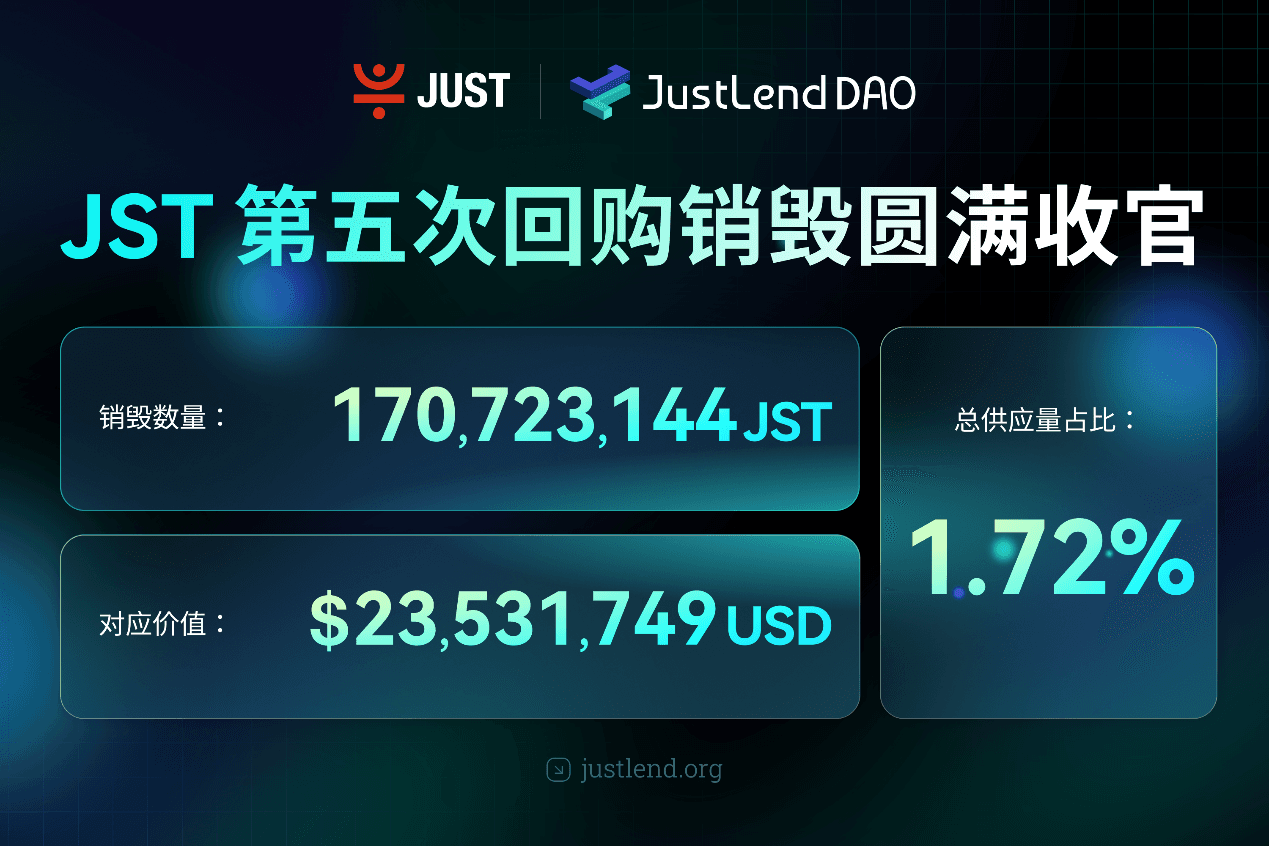
BitTorrent Brand Upgrade and Initial BTT Buyback & Burn Launch Simultaneously, Dual Engines Usher in New Era of Web3 Infrastructure
Oct 17, 20:00
Asia Market Daily: Japan's BOJ signals more rate hikes while Korea targets offshore perpetual platforms (2026/10/17)
Oct 17, 17:01Why did Papertrade backfire on you?
Oct 17, 17:01
The 'Strict Father' of Northern Myanmar: This Company Deploys 200,000 "AI Best Actors" to Strike Back Against Scammers
Oct 17, 15:34