Tombstone of 120k and AI Eternal Life of 399, which one do you choose
Article by Sleepy.md
The "Funeral Parlor First Stock" Evergreen Funeral Home has suspended trading.
By the end of March 2026, this industry giant once known as the "Maotai of the Funeral Industry" faced its most severe trust crisis during the most lucrative Qingming Festival season due to the delayed annual report and involvement of top executives. Behind this internal control fiasco lies the reality that the Chinese are abandoning expensive burial plots, signaling the end of the traditional death business.
As real-world farewells become increasingly expensive and burdensome, a digital migration regarding "death" naturally takes place. Traditional funeral giants have begun to embrace AI, establishing digital memorial halls, launching AI reminiscence services, and attempting to reconstruct the voice and appearance of the deceased using multimodal large models. When a $120,000 marble slab is no longer easily purchased, they decide to sell you a string of code that will never weather.
In this AI era, death is undergoing a transition from physical preservation to digital immortality. Fueling this transformation are not only the geeks in Silicon Valley eager to defy the Grim Reaper but also the most traditional businessmen witnessing the imminent stagnation of grave sales.
The Twilight of the Funeral Industry Maotai
Let's first take a look at how profitable Evergreen Funeral Home used to be.
Over the past twelve years, Evergreen Funeral Home's average gross profit margin has exceeded 80%, reaching as high as 92.8% in 2023. This is a figure that most businessmen would envy, even during the wildest years of the real estate industry's rapid growth when the gross profit margin hovered around 30%. This profit margin is almost unparalleled in the A-share and Hong Kong stock markets.
The underlying logic behind such massive profits is the combination of scarce land resources and the tradition of "extravagant burials." Chinese people have always believed in "handling death as one handles life." Just as the Qing Dynasty literatus Yuan Mei recorded in his book "Rhapsody on the Peach Garden," in that era, the tombs built by wealthy families were often more exquisite than their residences during their lifetimes. When this cultural gene that has lasted for a millennium encounters the wave of urbanization propelled by the advancement of the times, it is keenly captured by commercial capital and eventually evolves into a decades-long game of "underground real estate."
Between 2012 and 2017, the price of Evergreen Funeral Home's customized artistic tombs rose from 259,800 yuan to 421,800 yuan, while the finished artistic tombs increased from 89,600 yuan to 100,800 yuan. After 2017, Evergreen Funeral Home no longer publicly disclosed the specific prices of each product line, but the upward trend did not stop there. By 2024, the average selling price of a single grave plot here had silently surpassed 120,000 yuan.
Converted based on a single burial plot of 2 square meters, with an average price per square meter of over 60,000 yuan, it surpasses the housing price threshold of over 90% of cities in China, directly comparable to the first-tier residential properties in Beijing, Shanghai, Guangzhou, and Shenzhen. In Songheyuan, Shanghai, the highest unit price of some graves even reached 760,000 yuan/square meter, three times that of Tangshan Yipin.
However, this fortress of wealth, built layer by layer with marble and Feng Shui, began to collapse in 2024.
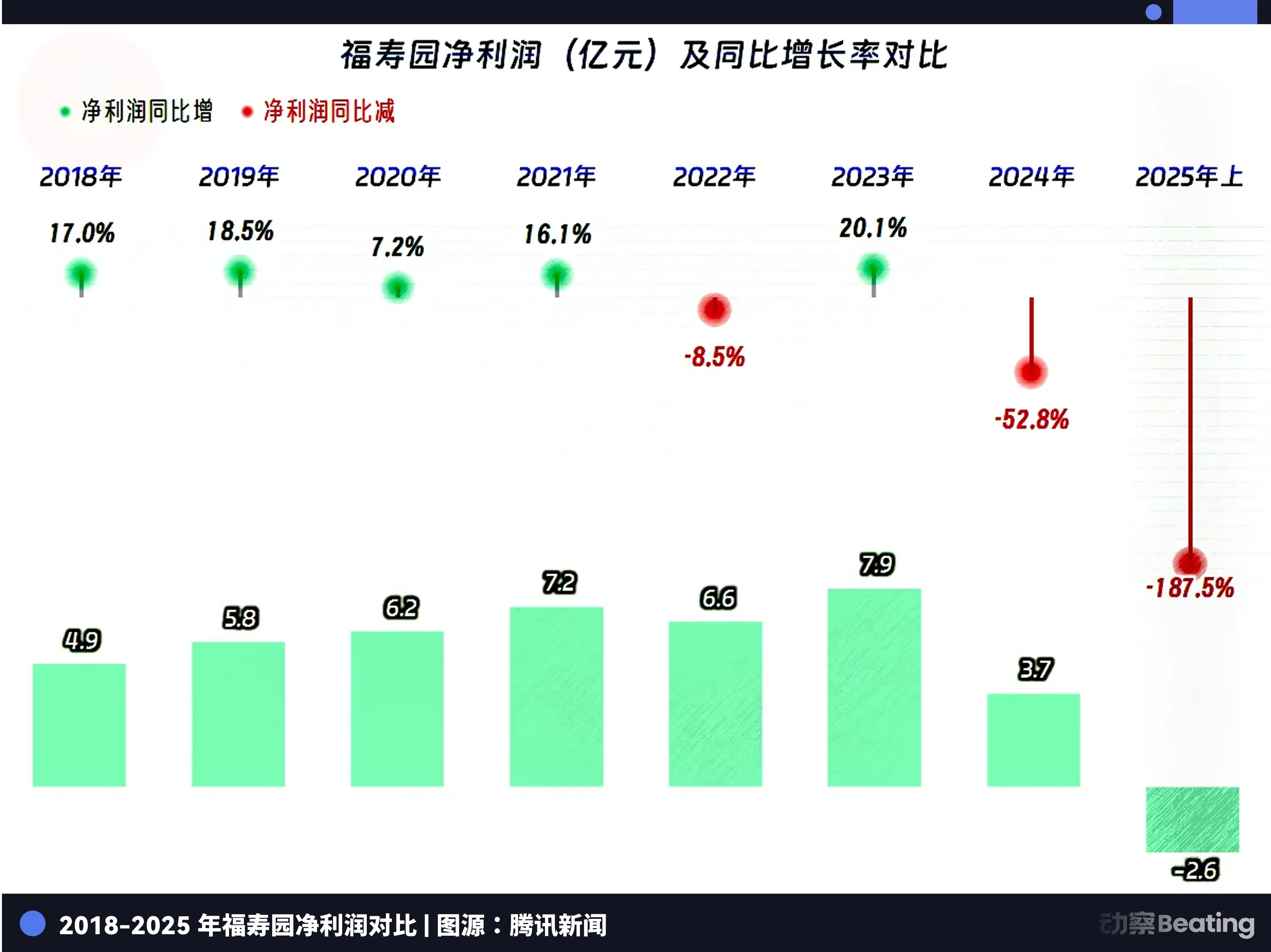
In 2024, Fushouyuan's annual net profit was 373 million yuan, a staggering 52.8% year-on-year plunge, marking the largest drop since 2010. By the first half of 2025, the situation worsened, with not only a revenue plummet to 611 million yuan, down by a stunning 44.5%, but also a net profit turning from profit to loss, reaching 261 million yuan in losses, marking the first semi-annual loss since its listing.
Even more lethal was the price avalanche. In the first half of 2025, the average selling price of Fushouyuan's operational burial plots plummeted from 120,700 yuan/plot to 63,400 yuan/plot, a sharp 47.5% decrease, almost halved. However, even after such a brutal price cut for self-rescue, it still could not reverse the sharp decline in sales volume. Throughout 2024, Fushouyuan only sold 12,569 operational burial plots, 3,816 fewer than the previous year, a decline of over 23%.
Not only Fushouyuan, the entire funeral sector nearly collapsed across the board. Fucheng Stock's cemetery plot sales revenue slid from its peak of 227 million yuan in 2017 to 98 million yuan in 2024; Anxiangyuan China plunged into a loss quagmire; China Wantongyuan lost 9.389 million yuan in the first half of 2025; and China Life Group, listed on the Hong Kong Stock Exchange, has been struggling in a continuous loss-making streak since 2023.
As China's aging population deepens, funerals were once a necessity among necessities. Why have leading companies shown such an abnormal downward trend?
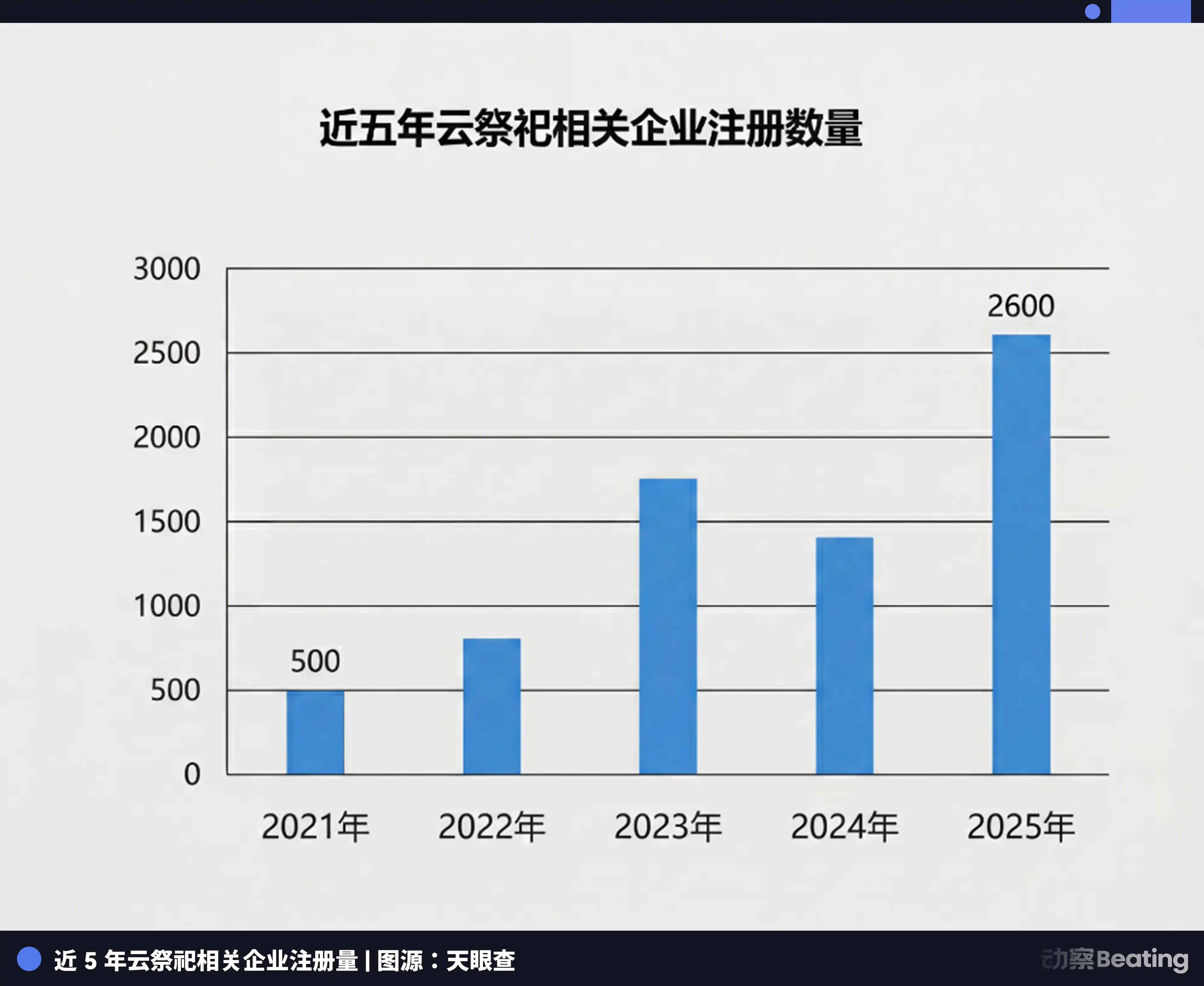
Because more and more ordinary people are completely turning away from those unattainable high-priced cemeteries. National Bureau of Statistics data shows that China's death rate in 2025 was 8.04‰, the highest level in nearly 20 years; Tianyancha data shows that the number of registered funeral-related companies reached a recent peak in 2025. It is evident that market demand has not shrunk, but what has truly changed is people's choices.
The Central Document No.1 of 2025 explicitly proposed to "deepen funeral reforms and promote the construction of public welfare ecological burial facilities." Shenzhen, Guangxi, Fujian, and other places have successively introduced subsidy policies, with a maximum subsidy of 3,000 yuan for sea burials per cremains, reaching up to 5,000 yuan in some pilot areas. The rise of green ecological burial practices has directly diverted the demand for traditional cemeteries.
Ultimately, as the chill of the macroeconomy quietly pierced the wallets of the middle class, facing the looming six-figure cost of a burial plot, people no longer blindly cling to traditional decorum.
Faced with the collapse of its core business, Blissful Life Garden did not sit idly by but instead aggressively transformed towards AI and digitalization. They swiftly rolled out four core functions: the Digital Memorial Hall, AI Remembrance, Blissful Life Online, and Memorial Family Coin.
The "Digital Memorial Hall" uses a 270-degree panoramic immersive image system to integrate the deceased's life images and audio data into a virtual cloud-based memorial service, allowing family members to complete the final farewell remotely through a screen. "AI Remembrance" utilizes a multimodal large model to dynamically process static photos of the deceased, accurately restoring facial expressions, action details, and even simulating smiles and gazes in specific scenarios. "Memorial Family Coin" is a cloud memorial platform where family members can establish an exclusive memorial space for the deceased, uploading photos, videos, and text for relatives and friends to access at any time.
Statistics show that by the end of 2025, the "Memorial Family Coin" platform had surpassed 2 million cumulative visits, Blissful Life Online's mini-program had over 117,000 registered users, and 677 digital ceremonies were completed in 2024, doubling year-on-year.
However, Blissful Life Garden's digital transformation still carries the dignity and restraint of an industry giant. As you cast your gaze into the broader internet landscape to contemplate this technological migration about "death," you will discover a more affordable, rough, and more magical AI "resurrection" business that has long been barbarically growing in the shadows.
"Resurrecting" Your Loved Ones for Only $399
Today's "AI Resurrection" industry exhibits extreme polarization.
Standing at the pinnacle of the pyramid are tech giants such as SenseTime, DeepBrain Chain, and Xiaoice Company, holding core technologies. In their realm, awakening a deceased loved one in the digital world often requires investing hundreds of thousands in R&D costs, undergoing months of data feeding, and carefully undergoing rigorous ethical reviews.
However, at the base of this pyramid, a different scene unfolds.
On various e-commerce platforms, there is a plethora of products named "AI Resurrecting Relatives," "Let Photos Speak," and "AI Digital Humans," with varying product effects. Tianyancha data shows that as of April 2026, there are over 9,400 active cloud memorial-related companies nationwide, with approximately 1,000 newly registered since the beginning of 2026. The vast majority of these businesses lack any R&D capabilities in AI technology.
What they used was a foreign free and open-source tool. The cherished photos and audio of the family members were roughly imported into the software as raw material, and within a few minutes, a crude video was created. The people in the photos were fitted into a mechanical template, with the movement of their lips completely out of sync with the sound, and their eyes looking vacant. However, videos of this quality could be sold for hundreds of dollars at a turn, accurately harvesting people's nowhere-to-place longing.
Beneath this layer of cheap comfort lies a more hidden harvesting chain. Those who truly make a fortune are not at all focused on how to help you "revive" your loved ones, but on "recruiting agents for 199 yuan, and disciples for 399 yuan." They spread around on social platforms the AI-generated videos of deceased celebrities to attract sensationalist attention, thereby capturing astounding traffic, and then accurately monetize this traffic to those downstream eagerly hoping to get rich overnight.
As for those relatives eager to "reunite" with their loved ones, they have to unreservedly hand over the deceased's high-resolution photos, authentic voice clips, and even intimate life details. This extremely sensitive biometric information, once leaked to the black market, becomes the perfect material for telecom fraud. In April 2026, anti-fraud departments in many places reported typical cases. Criminals used illegally obtained voices and photos of the deceased to fabricate excuses such as "previously owed debts" through AI deepfake technology, and carried out precise fraud on relatives who had not yet emerged from the pain of bereavement.
This industry also has significant legal loopholes. While Article 994 of the Civil Code does protect the name, portrait, and reputation of the deceased, this set of rules born in a traditional era appears vague and ineffective when facing products of AI deep synthesis. Whether an image generated by code is equivalent to a "portrait" and whether a voice synthesized by an algorithm constitutes infringement are still hotly debated in practice.
Existing regulations such as the "Internet Information Service Deep Synthesis Management Regulations" can effectively restrain large platforms, but for individual developers and small workshop-style "AI resurrection" businesses that abound on e-commerce platforms, regulation still lacks a strong grip and traceability mechanism.
Therefore, death is thoroughly deconstructed here. It is no longer the solemn end of life but has become a production line endlessly extracting residual value.
Bereaved Families and Digital Analgesia
Since this business is so crude and calculated, why do people still willingly foot the bill for it?
Around the Qingming Festival, there is a significant peak in AI resurrection orders on e-commerce platforms. The customers placing orders come from all walks of life: some have lost their lifelong partners, some have lost their babies in infancy, and some simply wish to hear their grandfather call them by their childhood nickname once again.
Within these complex orders, there is a group that forms the heaviest and most helpless background of this business: parents who have lost their only child.
The scale of such families in China is much larger than the public imagines. According to data from the Ministry of Civil Affairs, the number of elderly parents who have lost their only child in China has already exceeded 2 million. As the first generation of parents under the one-child policy enter old age, this number continues to grow. The Sanlian Life Weekly once cited demographers' estimates that there are currently over 1 million families in China who have lost their only child. In the current accelerated aging society, this huge emotional gap will only deepen.
In this land, the plight of these parents who have lost their only child goes far beyond the psychological level. Due to the policy imprint of a specific era, these families have lost family support in their old age when they need it most. They even have to silently endure the covert glances and discrimination around them. In some traditional communities, this invisible exclusion is sometimes more unbearable than facing death itself. Many of them can only support each other in online communities of bereaved parents, seeking a little warmth and resonance in the fragmented words of strangers on the screen, especially around the Qingming Festival each year.
For these parents, discussing data privacy, technological ethics, and philosophical paradoxes is cruel. What these parents have never needed is cold rationality; all they need is a painkiller that can help them endure the long night.
In early 2024, musician Bao Xiaobai used AI technology to "resurrect" his daughter who had passed away from a rare disease, sparking a widespread discussion on life and death. Bao Xiaobai's case was touching not only because he was a celebrity but also because he spent months training models, tweaking parameters, and pouring his heart and soul into enabling the virtual daughter generated by code to naturally sing a happy birthday song to his wife.
However, the vast majority of bereaved families in the world do not have the resources and technical capabilities like Bao Xiaobai. They can only flock to e-commerce platforms to seek solace in those rough, and sometimes deceptive, services priced at 399 yuan. A shop owner who provides AI resurrection services on an e-commerce platform once revealed to the media that more than half of his customers are parents who have lost their children. The materials they send are often very limited, sometimes just a blurry old photo, or a few seconds of noisy voice recordings.

In this vast and sad pool of demand, parents who have lost their only child are just one of the most extreme aspects of pain. To those who have lost their loved ones, whether technology is exquisite or clumsy has long ceased to be important. All rationality and dignity will ultimately crumble in the face of the faint longing for a "goodbye."
The Price of Never Saying Goodbye
However, can this straw that is being clung to so tightly really pull a person out of the abyss?
In April 2026, the University of Helsinki in Finland released a two-year study. They tracked data from nearly 2,000 users of an AI companion robot in a certain online community, and the results showed that although AI companionship could provide emotional support in the early stages, over time, the words left by users began to reveal more and more signals of anxiety, deeper loneliness, depression, and even the risk of self-harm.
In psychology, this is known as "prolonged grief disorder".
Traditional mourning mechanisms always require the living to, after wading through immense pain, eventually come to terms with reality and reestablish a true connection with the physical world. Grief is essentially an immune response that must be experienced to heal trauma, just as a fever is the body's desperate attempt to fight off a virus, and sadness is the mind's difficult process of digesting loss.
However, the fate of AI forcibly breaks this cruel yet necessary rule.
A study from Harvard Business School found that the flattery level of AI companions is nearly 50% higher than that of humans. Even if users show signs of deception, crossing boundaries, or even harm, the algorithm still has over a half probability of giving compliant approval, which is almost unimaginable in real human interaction. This means that when a mourner spends hours every day muttering to the artificial loved one generated by code on their phone, they are actually just engaging in a conversation with a perfect mirror image that will never contradict them and will always endlessly indulge them.
The boundless tenderness and tolerance fulfilled by AI did not truly alleviate loneliness. It quietly and insidiously only continues to raise the walls of that self-imposed isolation, making it harder for us to return to reality.
Those tech companies claiming to "heal grief" are actually obstructing the normal mourning process of humans. They have turned mourners into forever retained subscription users. As long as you continue to recharge for that cloud-based loved one, renewing fees for the server, your grief becomes a never-ending source of cash flow on their balance sheet.
Death thus descends into an endless, metered farewell.
The academic community has raised two concerns. On the one hand, AI companions are quietly replacing genuine human bonds; on the other hand, as people gradually get used to effortlessly seeking emotional solace from AI, they are also unknowingly losing the ability to give, compromise, and mend in real relationships. Researchers call this phenomenon "emotional deskillization", where the more seamlessly AI companions fit our demands, the more we are afraid to face the roughness and complexity of real relationships.
This is precisely one of the core considerations behind the urgent release of the "Administrative Measures for Digital Virtual Identity Information Services (Draft for Solicitation of Comments)" by the Cyberspace Administration of China. This document clearly stipulates that consent from close relatives must be obtained for using a deceased person's personal information for relevant activities; service providers are required to take measures to prevent users from becoming overly dependent on digital virtual beings; all AI-generated content must be prominently labeled with "This content is generated by artificial intelligence"; and after a user withdraws consent, the platform must deregister the corresponding digital virtual being.
The stern rationality of the law is attempting desperately to hold back the instinctual nature of humanity as it runs wild. But in the face of a vast emotional black hole, the regulatory boundaries sometimes still appear too thin. When a person is willing to swallow deception just to catch another glimpse of their loved one in illusions, any rational "anti-addiction reminder" will ultimately become mere pixels on the screen, able to be seen through but ignored.
Ship of Theseus
If every plank of a ship is replaced, is it still the same original ship?
This is the famous "Ship of Theseus" paradox. And when a person's appearance, voice, and even thought patterns are perfectly replicated by code, the one smiling at you through the screen, is it truly the person you once deeply loved, or just a set of parameters meticulously crafted by an algorithm?
This has never been a dangling philosophical question. Its answer determines whether what we are doing is about remembrance or deception.
True love is always intertwined with trauma, pain, and uncontrollable flaws. Loving someone means accepting their aging, their temper, their occasional indifference, and even the cruel fate of their eventual departure. Those virtual loved ones awakened by AI will never argue with you again, will only meekly cater to your expectations, and will forever be frozen in the most beautiful frame of time. This, in essence, robs love of its roughest and most authentic texture.
Throughout human history, there has never been a shortage of struggles to break free from the quagmire of death. The ancient Egyptians used mummies to combat the decay of the flesh, Qin Shi Huang relied on terracotta warriors to extend his earthly authority underground, Victorians stubbornly took post-mortem photographs of the deceased, even weaving loved ones' hair into intimate jewelry. Every era has attempted to construct its own "eternity," only the medium bearing these obsessions has silently transitioned from hard stone and soft fabric to the intangible code and computational power of today.
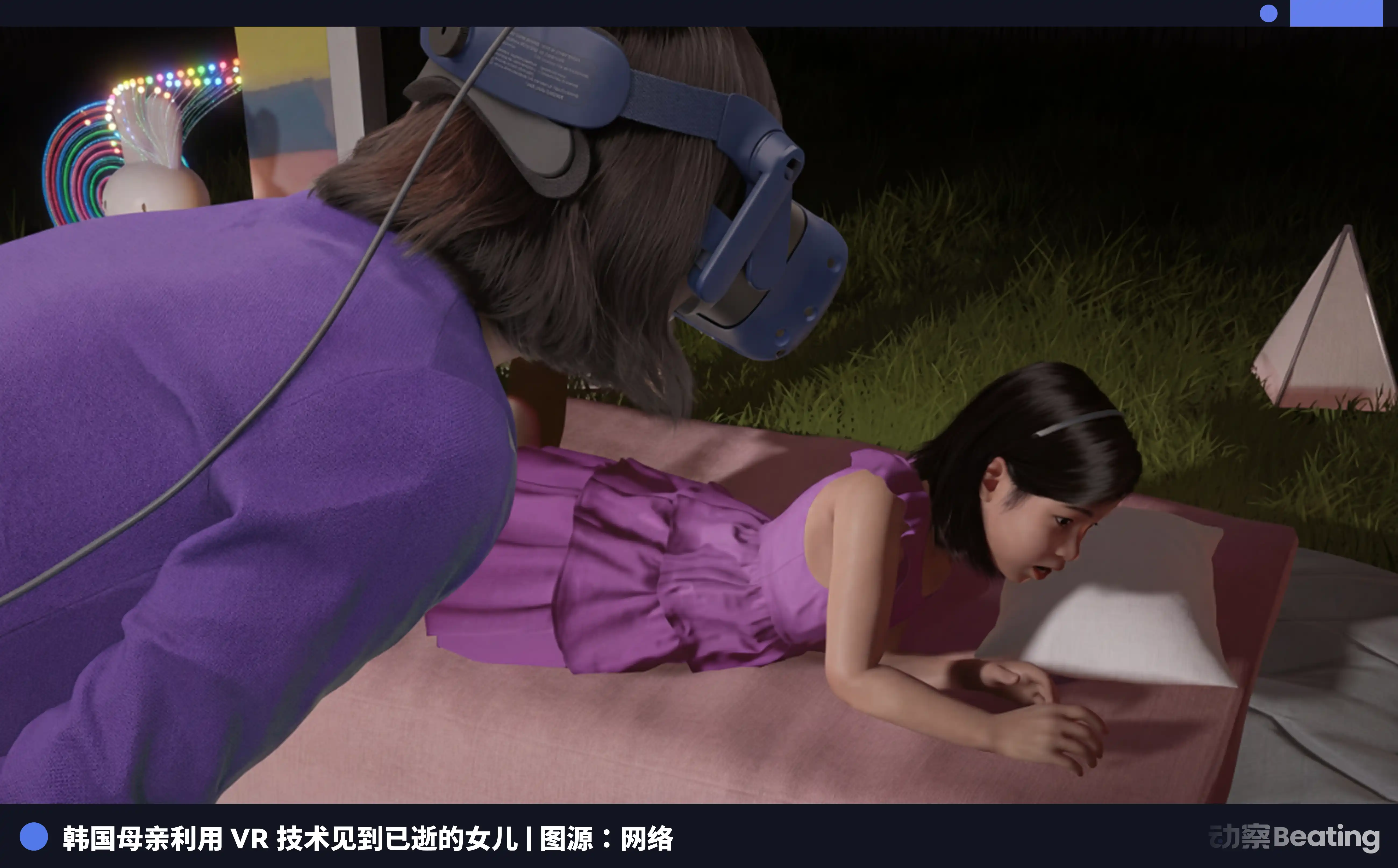
In this sense, "AI resurrection" is not a groundbreaking novelty. It is still that ancient human instinct in opposition to death, just finding a new exit in the technological age of algorithmic thunder.
What truly feels alien is its blatant commercialization. In the past, the battle against death has always belonged to the realms of religion and ritual, it was intensely private, sacred, and non-negotiable. But now, it has ruthlessly been slapped with a price tag, crammed into a monthly subscription model, and even meticulously broken down into a basic $9.99 starter pack and a six-figure custom deluxe option.
《Black Mirror》 once told a story of Martha, who lost her beloved husband and bought an AI replica that was identical to him. It precisely inherited all the late husband's memories and subtle habits. However, on a stormy cliff edge, Martha still crumbled completely. She despairingly cried out to the flawless substitute: "You are not him! You are just a collection of fragments I can bear! You don't have his past, you don't have his fears!"
At the end of the story, she locked the robot in the attic, only allowing it to come out briefly to meet her daughter on her birthday each year.
When this episode aired, "AI resurrection" was still a cold-toned sci-fi fantasy. Now it has become a billion-dollar annual turnover business, even becoming a lifeline that a funeral giant bet the house on in a last-ditch attempt on the eve of delisting.
Today, we can buy a cheap digital phantom for $399, or exchange $120,000 for an expensive burial plot. But no matter how technology undergoes rapid iterations, no matter how merchants peddle their digital urns, there is always one thing that will never change.
When the phone dies, and the screen goes dark, the reflection shows only one person.
That person is truly gone.
Recommended
Desk: Brent Crude Tops $110, Musk's Net Worth Drops 528.6 Billion in Four Days After Tesla Roadster Launch
Oct 17, 21:49
JST Fifth Buyback and Burn Successfully Concludes: Over 170 Million Tokens Worth Approximately $23.53 Million Burned, Buyback Mechanism Set for Comprehensive Upgrade
Oct 17, 20:10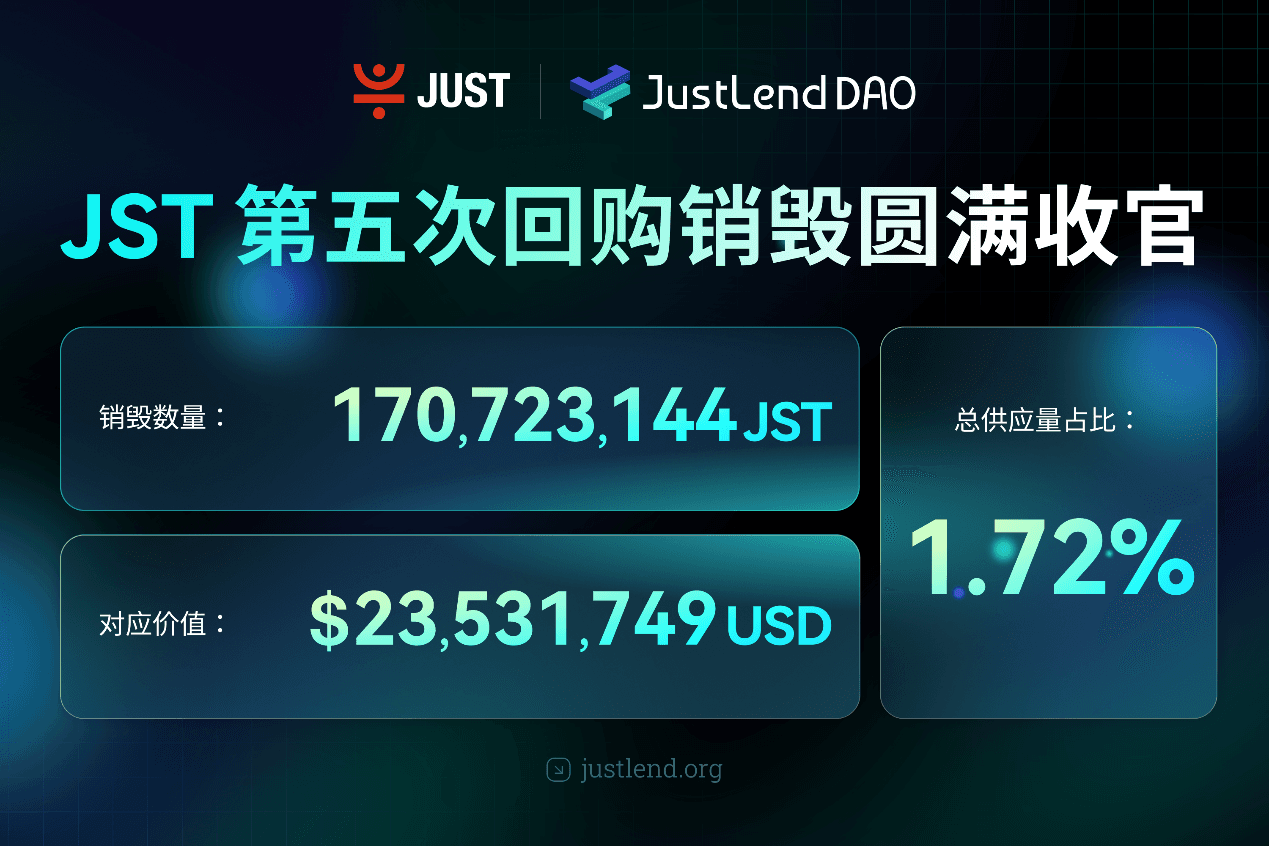
BitTorrent Brand Upgrade and Initial BTT Buyback & Burn Launch Simultaneously, Dual Engines Usher in New Era of Web3 Infrastructure
Oct 17, 20:00
Asia Market Daily: Japan's BOJ signals more rate hikes while Korea targets offshore perpetual platforms (2026/10/17)
Oct 17, 17:01Why did Papertrade backfire on you?
Oct 17, 17:01
The 'Strict Father' of Northern Myanmar: This Company Deploys 200,000 "AI Best Actors" to Strike Back Against Scammers
Oct 17, 15:34