Peng Fu's First Public Speech in 2026: Why Did I Join the Cryptocurrency Industry?
Content compiled by: Eric, Foresight News
On April 23, Beijing Time, at the Hong Kong Web3 Carnival held at the Hong Kong Convention and Exhibition Centre, Dr. Fu Pengjin, the newly appointed Chief Economist of NeoFire Group and a well-known domestic macroeconomist, delivered his first public speech for 2026.
During this speech, Dr. Fu Peng elaborated for the first time on his understanding of crypto assets and his interpretation of the current position of crypto assets in the macroeconomic environment.
The author has compiled the entire content of Dr. Fu Peng's speech, with some parts edited:
Many people have been feverishly asking me in recent days why I have been so close to the world of cryptocurrency and blockchain. In fact, this opportunity can be traced back to around 2022, spanning approximately four years.
When I was in the traditional financial sector, I also closely followed and tracked the trends of the entire crypto asset market. Of course, as I stand here today giving this speech, it is actually quite simple. I am going to tell you a story from history because, for me, I am actually one of the main beneficiaries of the last era's dividends.
So you may think that my title is Economist, but in fact, I am not a scholar. The core experience of my past 25 years, what we have been really doing, is what everyone understands as a traditional Hedge Fund, a hedge fund.
You must be wondering why these traditional capital, traditional financial industry people, or money, have started to pay attention to it (crypto assets)?
In the past year, I have emphasized that in the future, it will definitely be "FICC+C," meaning that major asset allocations will include crypto assets. Many people are curious about why, so I am taking this opportunity to briefly share this with you. Once you understand this sharing, in fact, about how the market is, how the asset prices move, etc., you may already have the answers in your mind. So, today, I will help you break through the superficial layer and show you what lies beneath.
We need to rewind the time series to the origin of the FICC major asset class. When? Probably in the late 1970s to the early 1980s. In the past decade, all of you present here have been able to clearly perceive that the world's overall framework and pattern are undergoing tremendous changes, similar to the most comparable time point after World War II being in the 1970s and 80s.
For example, just now I saw Mr. Xiao Feng also talking about artificial intelligence, and all the guests actually mentioned the integration of AI. As an important technological advancement and productivity driver, each wave of technological progress and productivity advancement will reshape various industries. These industries include all sectors, and of course, they will inevitably include the field of finance. Our finance sector is not static, absolutely not.
For instance, in movies like "The Big Short" and "The Wolf of Wall Street," the portrayal of finance is either people in the trading pit wearing jackets shouting orders, or if you go to the NYSE, many people still think that finance involves everyone shouting quotes and making deals in the trading pit. Of course, many journalists still like to use this floor trading background for news reporting.
If you go to Chicago to see the earliest interest rate derivatives market, or to the London Metal Exchange (LME), you will still see traces of this history preserved. Yes, that is the most traditional finance, one could say it is the finance from before the 1960s and 70s.
People would quote prices in the trading pit, and complete transactions using typewriters and punch card machines for payment. Perhaps for the Chinese-speaking community or for most Chinese people, the impression of trading is watching the so-called trading boards in the stock exchange hall, looking at the prices, filling out orders, handing them to the counter, and then having a young lady use a direct line phone to create a trading platform to complete the order.
Not all finance or transactions stay in that era; the biggest changes in finance have definitely occurred with the advancement of technology.
So, in the previous technological advancement cycle, with semiconductors, computers, personal computers, DOS systems, Windows systems, and other core productivity representatives, which is the advancement of technology. By the late 1970s and early 1980s, it had already restructured the new format of our finance. The broad asset class trading that we are familiar with today, simply put, is the integration of various financial assets such as interest rates, commodities, exchange rates, stocks, and so on.
And the birth of FICC was in the early 1980s. Probably in the 1970s, the pricing of financial derivatives products, such as options pricing, the Black-Scholes model, etc., which you all should have studied in school. But think about it, if there was no widespread application and popularization of computers, and it took more than ten minutes, twenty minutes, or even thirty minutes to calculate the pricing of a financial derivative product or a financial asset, how could I possibly complete quoting and trading?
From 1985 onwards, all our so-called professional investors and investment institutions started to use Bloomberg terminals.
Back in '97, '98, during the Asian Financial Crisis, I started using the then Reuters 3000, later transitioning to Reuters Xtra and then Eikon. In other words, the era of computers, semiconductors, information technology, and data laid the foundation for what later became FICC.
We witnessed the categorization of assets, the convergence of assets, cross-asset trading, the rise of hedge funds, algorithmic trading, and well-known concepts like the "Masters of the Universe." Without this leap in productivity, finance would still be stuck in the era where the common perception was that traders were shouting orders wearing vests.
JP Morgan on Wall Street emerged as a key player in the world of financial derivatives. At that time, JP Morgan hired the brilliant mind from Cambridge, Blythe Masters, who became the pioneer of the entire financial derivatives market, transforming the FICC business into the most profitable sector for Wall Street's major financial institutions.
Of course, all this was not disconnected from the global upheavals of the '70s and '80s. Remember, the origin of technological advancement coincided with global turmoil.
Hence, at a certain stage, technological progress coexisted with a turbulent world order. So, in the '70s and '80s, we went through the Cold War, the Middle East conflicts, the oil crisis, the astronomical rise in gold prices, and systemic decoupling. However, human civilization always walks hand in hand with opportunities and risks.
While the world order was in chaos, our computers, semiconductors, and information technology were on the rise. I used to joke that during that time, there was a strange investment portfolio where one simultaneously invested in "humanity has a future" and "humanity has no future."
Just think, it's been quite a while, probably since around 2019, when you look at your holdings of "humanity has a future" and "humanity has no future" assets, both seem hard to hold onto today. By now, as we all begin to realize that artificial intelligence, data, and computing power will be the most crucial productivity drivers of the next era, the game is already more than halfway played.
The first half, as we all know, is what we traditionally refer to as the crypto space. Why am I mentioning this? Because remember, nothing stays the same, everything evolves, reconstructs, and constantly undergoes rebirth.
I once said that perhaps the moment I entered this circle, it might leave a significant mark on history in the future.
Just like when Blythe Masters joined JP Morgan, could this become a significant turning point?
(This turning point) signifies the end of the early development phase of the past 10 to 15 years, and the arrival of a new development phase. In these two phases, investors, participants, market structures, and rules of the game will undergo tremendous changes. Or rather, they are already undergoing tremendous changes.
When I was interviewed by reporters just now, I mentioned that many of the familiar mindsets from the past 15 years, the paradigmatic thinking that you have been familiar with over the past 10 to 15 years, may undergo a major transformation.
Of course, if your tenure in the traditional financial sector has been long enough, you actually know exactly what is about to happen. Just like in China back then, we had trading platforms set up by large-scale provincial financial offices, and we had a large amount of financial assets. However, as compliance gradually strengthened in the background, it simply led to survival of the fittest.
Then financial derivatives will gradually be incorporated into financial institutions' asset portfolios, and our entire crypto assets have actually gone through the same process. Like now, everyone may be accustomed to commodities trading, but you should know that before the 1980s, financial derivatives of commodities were not popular at all, and most people could not truly trade.
Commodities like copper, aluminum, lead, zinc, palm oil, and so on that are now familiar to everyone; now everyone finds it convenient to trade exchange rates, but back then you would also find it was not available, and now we can easily trade government bonds, interest rate futures, which were also not available back then. In fact, does this feeling resemble that of 2009 when you saw us start to have stock index futures, options, and derivatives?
If you do, then you actually understand that this is the same time point. So just as technological advancements back then drove the entire traditional finance towards FICC integration, today is the same principle, with data, computing power, AI in addition to underlying technology, this underlying technology is actually encryption technology or blockchain technology. With technology at its core, in reconstructing finance, our finance is also undergoing changes.
So we have been paying attention in the past, but to be honest we will not participate, absolutely not participate. So I jokingly said, perhaps in the early stages, indeed you have to talk about faith, talk about the so-called fundamentalism, right? Everyone has to have faith in this thing. But as a true investor, they will not overly participate in this faith-based trading in the early stages.
Only when (crypto assets) gradually grow and reach determinacy will they be incorporated into the asset management framework. For example, if we used to trade something like red beans and green beans, do you think large financial institutions would consider it as a form of asset allocation? Impossible. But today, we can turn copper into futures options, we can turn it into an ETF, we can integrate it into the entire investment portfolio.
This transition is actually the scene unfolding in the entire coin circle ecosystem. 2022 was the first time I truly interacted with some big shots in this circle. Fate began in 2021, when I gave an interview and said something. At that time, Bitcoin was around $70,000, but when the reporter asked me, I am a straightforward person, I said simply that according to our framework, we really couldn't understand what this asset was.
Because all the belief-oriented things you are talking about, we do not acknowledge. We have our way of explaining, such as the function of value preservation, which we will interpret using our framework and language.
(When I was being interviewed) I said I believe we don't have the time yet, or we haven't reached the time to intervene in this asset. But I said we are indeed observing, but we are still not very clear about the things you are talking about. I still do not have a complete understanding and model of it (crypto assets).
But I said I have a feeling because at that time, the U.S. CFTC (Commodity Futures Trading Commission) had already clearly defined it as a commodity, a tradable financial asset. For me, I can easily use this definition to completely understand one of its attributes.
At that time, I said a sentence, I said I would venture a guess that if in '22 there is a significant tightening of liquidity, then in our traditional asset circle, I can easily see those valuation assets undergoing a large-scale devaluation.
I said if my understanding of it is correct, it will bring about a devaluation situation similar to the devaluation of valuation assets. I said I would venture a guess (Bitcoin would) halve in value. This is why later in the end of '22 when it dropped to $20,000, many people in the coin circle came to me because they suddenly realized that perhaps the era had changed.
Of course, over the past few years of communication, many of the real big shots in the coin circle that I truly believe in are just like the big shots in the traditional financial circle back then. In the early days, everyone was relatively rough. You can think, including those in China, such as the big shots in commodity futures trading, who wasn't rough in the early years, who didn't need to take risks, from bicycles to motorcycles. However, those who can truly shape the future are when it comes to a turn, not a transformation, but a turning point, they will quickly absorb and complete this turning point.
And if we were to continue based on the experience of those years, individuals shaped by that era would basically be gradually phased out by the era. From my personal observation, 25 or 26 years may be the time point for us to discuss this cryptocurrency asset.
You can tell me what you think it (cryptocurrency asset) is, and I will also absorb and integrate it from a genuine traditional financial perspective to re-understand this matter. I will also tell you how we understand these assets based on our logical path. After several years of integration and inclusiveness, a new system has actually been formed.
And these years include the end of last year. Actually, from our perspective, it is a new round of liquidity tightening that has brought about valuation compression. And the cryptocurrency circle has experienced the same story. What does it indicate?
It indicates that we are on the right path. This kind of inclusiveness and integration will eventually lead to an indistinguishable blend, just like the traditional ones such as the 70s, 80s, the traditional stock traders as shown in "The Wolf of Wall Street", and those who later deal with large asset classes.
Therefore, in the future, it will definitely be "FICC+C", without much differentiation between you and me. Of course, for us, another very important point is compliance, so 25 years is actually a crucial year of transformation.
Whether it is the Stablecoin Act or the deterministic laws we have seen related to digital assets or cryptocurrency, two significant laws have actually provided us with the answer to this market. At this point, it is very simple, in the future, you will see Wall Street financial institutions, the once traditional financial institutions, rapidly entering this market. Just like diversifying foreign exchange reserves, it will incorporate it as diversified asset reserves.
(Cryptocurrency assets) will transition from a single reserve asset or trading asset to a diversified trading asset. Back in the day, I could add commodities, exchange rates, and interest rates, today I can add cryptocurrency assets. But remember one thing, as it integrates, the market's logic will declare the arrival of a new era, no longer following the habits of the old era.
Of course, we have seen that since the 1980s, the proportion of retail investors in the U.S. stock market has also been gradually decreasing, meaning the proportion of retail investors directly participating in the market has been decreasing, while the proportion of financial institutions participating in the market has been gradually increasing, and this will also happen in any market.
From the early stage to the mature stage, is it the current stage? My answer is yes. Stablecoins have separated the payment function of blockchain technology, so what exactly is Bitcoin? A reporter just asked me whether it is a digital gold. I said that this statement is actually somewhat controversial, why?
Because this depends on the individual, for example, for me, I might immediately get what you're trying to say. But for the average investor, when you mention this, their initial reaction might be gold.
So what is gold exactly? It can only be said that this definition is called a tradable commodity asset with a store of value function, which is a complete definition. Some assets may have a store of value function, but they may not necessarily have the large-scale financialization or tradability that we talk about.
Let me give a simple example, like our son's AJ basketball shoes. Is it valuable? When it comes to the understanding of value, many people may have a significant deviation. For example, is the action figure you bought valuable? Is the Richard Mille watch you bought valuable? First of all, if it has a broad value, no problem, emotional value is also value, companionship value is also value. But whether it has large-scale financialization and tradability is another matter.
So you're saying, what about the wood in your hands? Is the walnut valuable? Is the Monstera plant valuable? Saying they have no value is not correct, because if the definition is broad value, then saying they have no value is definitely not right. Saying they have value, but if it needs to be financialized and tradable, in other words, is not correct because they are not. So a complete definition is very important for any asset.
The standard definition of crypto assets for you now is very clear. The core path of Western society's development is actually very clear. Where there is no law against, you can start innovating, you can start exploring.
Just like our financial derivatives back in the day. People said, my clients have demands for options, they have demands for swaps, but we don't have this market, we don't have this regulation, what to do? Start doing, once done, gradually layer compliance on top, let it mature step by step. So the whole of Western finance is financial innovation first, followed by compliance, and eventually entering maturity.
Crypto assets follow the same logic.Now what you need to assess is, by 2025, has regulatory certainty for finance caught up? My answer is: yes. Therefore, in the future, you will see technology applied in payments in the form of stablecoins.
So what will Bitcoin become? An asset with a store of value function, tradable and financialized, that is its full meaning. Of course, I know this definition will definitely upset the purists of the previous era.
But I want to tell you, this is the era, there's no way around it, this is a whole set of things that fit into a logical framework. At this point, Wall Street can fully get involved, and a new chapter is about to begin.
I'm not sure if today's speech will go down in history, but of course, I hope it will and provoke some thinking. I believe (today's speech) can also answer the question many people want to ask: Mr. Fu, a veteran in FICC, why did you enter such a new industry? What I want to say is that (cryptocurrency) has matured to the point where it can be included in portfolios.
Alright, I'll end my sharing here. Thank you.
Recommended
Desk: Brent Crude Tops $110, Musk's Net Worth Drops 528.6 Billion in Four Days After Tesla Roadster Launch
Oct 17, 21:49
JST Fifth Buyback and Burn Successfully Concludes: Over 170 Million Tokens Worth Approximately $23.53 Million Burned, Buyback Mechanism Set for Comprehensive Upgrade
Oct 17, 20:10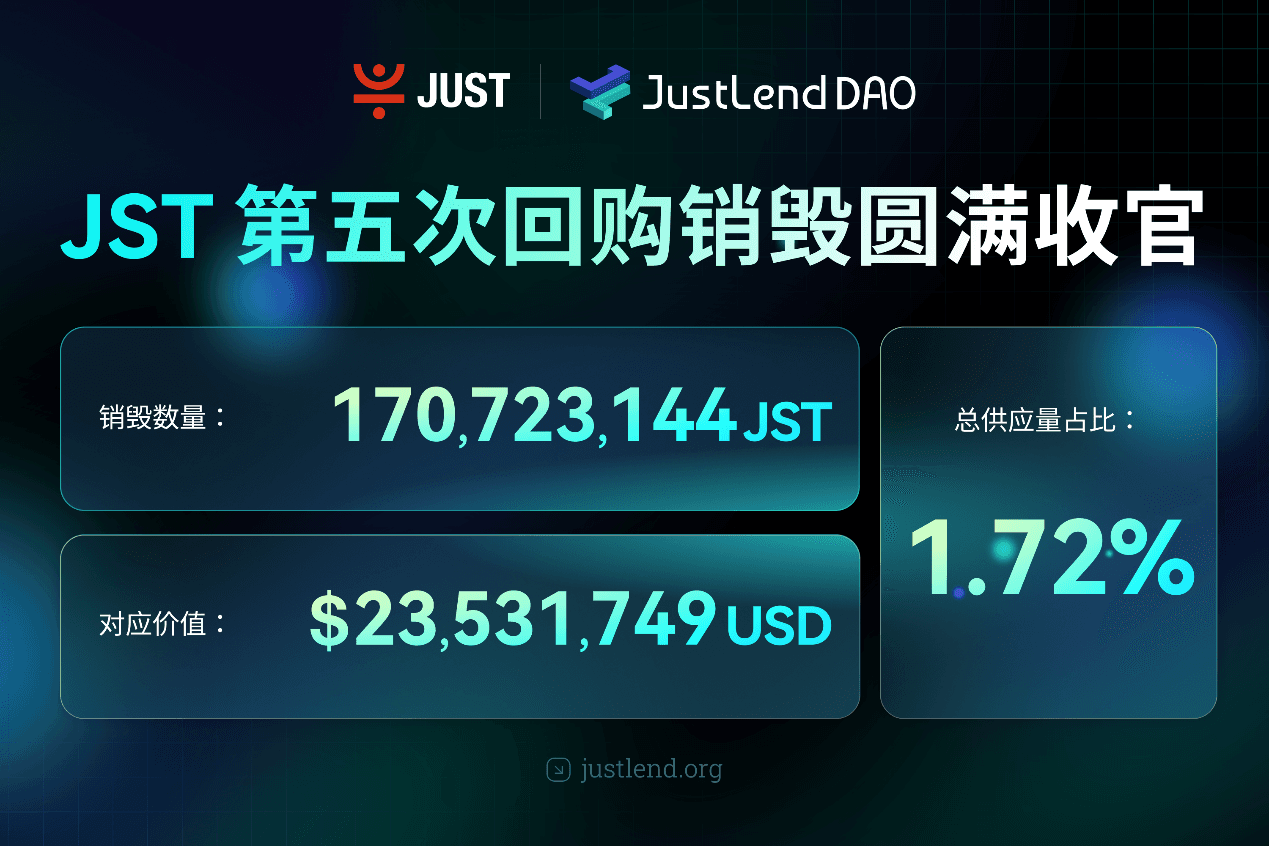
BitTorrent Brand Upgrade and Initial BTT Buyback & Burn Launch Simultaneously, Dual Engines Usher in New Era of Web3 Infrastructure
Oct 17, 20:00
Asia Market Daily: Japan's BOJ signals more rate hikes while Korea targets offshore perpetual platforms (2026/10/17)
Oct 17, 17:01Why did Papertrade backfire on you?
Oct 17, 17:01
The 'Strict Father' of Northern Myanmar: This Company Deploys 200,000 "AI Best Actors" to Strike Back Against Scammers
Oct 17, 15:34