What is Unipeg? An "on-chain experiment" stuck between an NFT and a token.
Last weekend, Unipeg was thrust into the spotlight. OpenSea CMO Adam Hollander and Uniswap team member niko both mentioned Unipeg on Twitter. After a swift surge in sentiment, Unipeg's price briefly surpassed $1000 over the weekend, only to fall back to $560 at the time of writing.
What exactly is Unipeg, and why has it attracted attention from both the NFT and Uniswap communities in such a short time?
Many people's initial reaction upon seeing Unipeg (Upeg) for the first time was similar: What is this exactly, an NFT? A token? Or another on-chain collectible project repackaged?
Hold off on categorizing it for now. The most intriguing aspect of Unipeg is its position at the intersection of several familiar concepts. It generates unicorns one by one, resembling avatar-style collectible NFTs. It is different from standard fungible tokens because its image does not exist independently but is triggered by the transaction process itself.
To put it more plainly, Unipeg attempts to turn a swap into a generation event, directly transforming a liquidity pool's state change into the birth condition of an on-chain entity.
The key behind this is not the word "unicorn" but Uniswap v4 hooks.
Uniswap V4 allows developers to insert custom logic before and after key actions in the pool, such as initialization, liquidity addition/removal, swap execution, or donation receipt. In the past, many protocol innovations had to wrap another layer around AMM or perform additional processing after the transaction was completed.
Hooks open this door directly within the exchange process. The program does not have to stand on the sidelines to read the results; it can participate at the moment the trade occurs.
Unipeg is an experiment born out of this crack. According to the project's official website and public materials, uPEG utilizes a customized v4 hook: when someone exchanges in the pool, the hook generates a hash containing information about the layer, color, original owner, and more;
Subsequently, the on-chain SVG renderer reads this input, piecing it together into a 24×24 unicorn image. The entire process does not rely on external storage, eschewing IPFS; the image itself is expressed on-chain. Unipeg has a cap of 10,000 tokens.
If we were to translate this mechanism into plain language, it can be understood as follows: a traditional NFT is more like putting a piece of artwork on the wall and then waiting for someone to buy it; whereas Unipeg is more like every time someone walks by this room and pushes the door, a new painting magically appears on the wall. What determines the appearance of this painting is not a set of files pre-uploaded by an art team, but the market activity itself.
This is also the most fascinating aspect of Unipeg. It aims to prove that on-chain assets can also be dynamically generated, linked to liquidity pools, continuously refreshed and defined through transactional behavior. Objects are not just inventory in a wallet, but can also be a slice of the market process.
At this point, many people may immediately think of ERC-404. Indeed, they do have some surface similarities: they both attempt to bridge the gap between "fractionalizable tokens" and "displayable unique objects." However, Unipeg and ERC-404 are not following the same path.
The core idea of ERC-404 is to combine ERC-20 and ERC-721 to create an experimental hybrid asset. The Pandora team describes it in their GitHub as a mixed ERC-20 / ERC-721 implementation, aiming to have both liquidity and fractionalization capabilities.
The common understanding is that when a user holds a complete integer unit, it corresponds to an NFT; when the token is divided into fractions or fragmented during a transfer, the NFT may be destroyed; and when reassembled into a complete unit, it is regenerated. This mechanism deals with "how the same asset switches between homogeneous and non-homogeneous states."
Unipeg's focus is not on "switching standards," but on "making the transaction itself produce an object." It did not attempt to reinvent a set of ERC hybrid standards, nor did it tightly bind an ERC-20 token and an ERC-721 token.
More accurately, Unipeg, leveraging the Uniswap v4 hook, turns the exchange behavior in the pool into a generator. The origin of the object is the custom logic within the swap lifecycle, where the visual outcome is tied to the transaction trigger condition, instead of mapping an asset back and forth between the ERC-20 and ERC-721 shells.
Furthermore, Unipeg has a clever design that intertwines "digital balances" and "displayable objects." The project team disclosed that each image is linked to a specific integer, such as a uPeg ordinal number like 1, 2, 3, and so on.
In other words, users are not buying a pre-ordained predefined collectible; instead, they receive an object corresponding to that integer when their holdings cross an integer threshold. You can think of it as a delineation: the decimal part remains a regular token, while the integer part starts to sprout a form.
The brilliance of this design lies in its ability to bridge the familiar token experience with the collectible experience for many. Trading tokens used to be a mere digital transaction of addition and subtraction; but here in Unipeg, a certain integer suddenly gains an image, an identity, and a display value.
As a result, exchange is no longer just a price action; it has also become a narrative action. Users are not just accumulating balances; they are also accumulating a set of on-chain unicorns that will be seen, organized, and transferred.
Even the name Unipeg carries a double entendre. Hayden Adams reminisced in his 2019 "Uniswap Birthday Blog—V0" that he initially wanted to name Uniswap Unipeg, a mix of Unicorn and Pegasus.
Later, Vitalik responded with, "Unipeg? Sounds more like Uniswap." The latter became the final name. Looking back now, this abandoned old name has found a new landing point in the v4 hooks era.
The project team further explained: in the NFT era, everyone jokingly referred to collectibles as JPEGs, and this object happened to be born on top of Uniswap, so Uni + JPEG = uPEG. A name that was not used in 2018 made a full circle and became a more fitting project name in 2026.
Of course, the buzz around Unipeg is not just about a new set of images but because it hits the intersection of two old tracks: one side being NFTs and on-chain collectibles, and the other being the programmable trading space opened up by Uniswap v4 hooks. The market has already begun to see Unipeg as a case worth observing.
However, it is essential to clarify a boundary here: this kind of attention is closer to industry observation and discussion and does not equate to an official endorsement from OpenSea or Uniswap. The truly crucial reminder is that v4 hooks have indeed expanded the design space significantly, but once transactions, collections, and asset expression are intertwined, new imagination and complexity will also emerge simultaneously.
Whether a project can transition from initial hype to long-term establishment ultimately depends on the internal consistency of its mechanism, why users choose to stay, and what ongoing value this on-chain entity can truly crystallize.
For Uniswap, Unipeg's significance is not just about adding another interesting project. It is more like a public demonstration, indicating to the market that v4 hooks are not a peripheral feature reserved for developers but a profound capability that can reshape the boundaries of Uniswap, extending transaction behavior to areas such as collectibles, social interactions, and identity expression.
In other words, every new on-chain object that emerges from the hooks ecosystem may ultimately reinforce Uniswap's attractiveness as underlying infrastructure.
Of course, for users and observers, both the hype and narrative can swiftly evolve, and we still need to maintain a rational perspective.
Recommended
Desk: Brent Crude Tops $110, Musk's Net Worth Drops 528.6 Billion in Four Days After Tesla Roadster Launch
Oct 17, 21:49
JST Fifth Buyback and Burn Successfully Concludes: Over 170 Million Tokens Worth Approximately $23.53 Million Burned, Buyback Mechanism Set for Comprehensive Upgrade
Oct 17, 20:10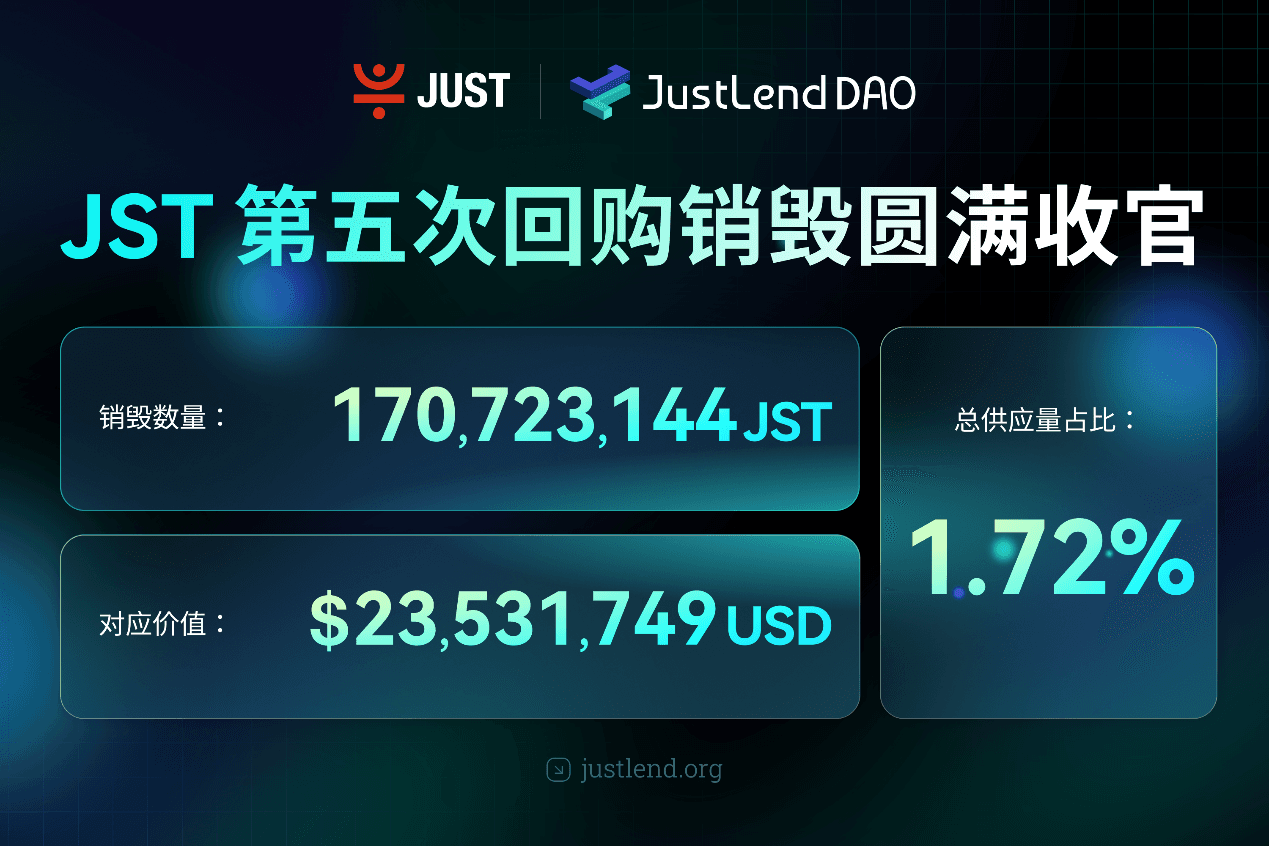
BitTorrent Brand Upgrade and Initial BTT Buyback & Burn Launch Simultaneously, Dual Engines Usher in New Era of Web3 Infrastructure
Oct 17, 20:00
Asia Market Daily: Japan's BOJ signals more rate hikes while Korea targets offshore perpetual platforms (2026/10/17)
Oct 17, 17:01Why did Papertrade backfire on you?
Oct 17, 17:01
The 'Strict Father' of Northern Myanmar: This Company Deploys 200,000 "AI Best Actors" to Strike Back Against Scammers
Oct 17, 15:34