Polymarket Announces Chain Migration: The True Test After the End of the Traffic Dividend

Over the weekend, Polymarket's VP of DeFi Engineering, Josh Stevens, published a lengthy article, directly addressing the prediction market leader's most recent and challenging issue: Polymarket's recent transaction experience has significantly deteriorated.
For the average user, this feeling is more direct: the price on the page is still there, but clicking on it does not produce a response; orders are submitted but results are long overdue; sometimes after repeated refreshes, it is discovered that the transaction has not been successful at all. What should have been a simple operation has begun to lag, hesitate, and even make people unsure if they have actually made a purchase.
In the lengthy article, Stevens also acknowledges that Polymarket's growth has far exceeded the capacity of its existing infrastructure, and the team had not adequately prepared for sufficient scaling.
Subsequently, he outlined a comprehensive set of engineering improvement plans, including reducing on-chain data latency, fixing transaction cancellation issues, rebuilding the CLOB, improving website performance, launching a unified SDK and API, and advancing Perps.
But what truly captured the market's attention rapidly was a concise yet impactful statement: Polymarket is advancing "chain migration." In other words, Polymarket is planning to switch chains.
Switching chains is not simply moving an application from one chain to another or creating a standalone public chain; it signifies that Polymarket is reselecting its underlying transaction environment. When a prediction market begins to operate like a trading platform, the underlying public chain is no longer the backdrop but the ceiling.
When Polygon Transitions from Cost Option to Growth Ceiling
Initially, Polymarket ran on Polygon, which was not a mistaken choice. For a prediction market still validating demand, Polygon was cheap enough, light enough, and allowed users to transact and settle at a low cost.
But today's Polymarket is no longer a low-frequency betting product. Users are no longer just occasionally buying an event outcome but are trading expectations in a constantly changing probability price. Prices need to update, orders need to be filled, positions need to be adjusted, settlements need to keep pace. The closer the product is to a trading platform, the harder the underlying public chain issues are to conceal.
This is also the root cause of recent deteriorating user experience. Price delays, order cancellations, and slow transaction confirmations, which may have been minor issues in the early days, have now become bottlenecks as Polymarket handles a higher frequency of trading. What trading platforms fear the most is not a lack of features, but users starting to doubt whether they can execute trades smoothly.
Therefore, the additional block space, lower Gas fees, and shorter block times mentioned by Stevens are not just technical parameters but the survival conditions for the next stage of Polymarket. It no longer needs just a "sufficient" chain but a underlying infrastructure capable of handling transaction volume.
In other words, Polymarket's consideration of chain migration this time is not solely because Polygon suddenly became unusable, but because Polymarket has evolved from a prediction market application into a system more akin to a trading platform. Polygon has thus shifted from a cost option to a growth constraint.
It's Not Just Chain Migration; Polymarket Is Actually Reworking Its Trading System
If we focus only on the term "chain migration," it would be easy to interpret this update as a simple chain migration. However, based on the roadmap released by Stevens, Polymarket's transformation is not just about the underlying public chain but the entire trading system.
One key aspect is the rebuilding of the CLOB (Central Limit Order Book). The CLOB can be understood as the core order book system of a trading platform, responsible for handling orders, matching trades, and creating market depth.
Stevens emphasized that CLOB V2 is not a complete rewrite in one go, nor will it solely address performance and stability issues. The crucial point is that Polymarket is rebuilding the CLOB from scratch.
This also indicates that Polymarket is well aware that chain migration can only improve the settlement environment and cannot replace the upgrade of the trading system itself. If the order book, matching engine, interface, and risk management capabilities cannot keep up, even if the underlying chain speeds up, the user experience will not genuinely improve.
Therefore, the other actions in this roadmap are also easily understood. Reducing on-chain data latency, fixing transaction cancellations, improving website performance, launching a unified SDK, and a single WebSocket API are fundamentally not just patchwork fixes but are addressing the essential capabilities that a trading platform must have.
More importantly, Perps are also on the way. Stevens mentioned that Polymarket's perpetual contracts will use a brand-new contract, with the backend built from scratch in Rust. For Polymarket, this means that it may soon host not just event transactions, but more high-frequency, complex, and exchange-like financial products.
Therefore, the chain migration is just the most visible step in this reconstruction. The real change is that Polymarket is moving from a prediction market application to a set of trading infrastructure. What it is about to address is not just "which chain to run on," but "whether it can operate stably like an exchange platform."
Polymarket Has Not Yet Decided its Future, Public Blockchains Are Already Competing
Polymarket has only mentioned "chain upgrade," but the competition around it has already begun.
After Stevens' post, multiple public blockchains such as Solana, Sui, Algorand, MegaETH, and Sonic have extended an olive branch. They almost unanimously emphasize key words: lower fees, faster confirmations, higher performance, and a underlying environment more suitable for trading scenarios.
For any blockchain, Polymarket is not just an ordinary application; it already has real users, real trading volume, and real market influence. Once able to onboard Polymarket, it will bring not only on-chain activity but also a benchmark case that can prove the infrastructure capability to the market.
For Polygon, the pressure is particularly direct. Polymarket has long been one of the most important applications in the Polygon ecosystem.
Recent market statistics show that Polymarket contributes millions of dollars in Gas fees to Polygon every week, sometimes accounting for more than half of Polygon's transaction fee revenue during certain periods. In other words, Polymarket is not a "nice-to-have" ecosystem application but a critical source of revenue and real-world usage on the Polygon chain.
Therefore, Polygon cannot afford to be complacent. Faced with signals that Polymarket may migrate to another chain, the Polygon team has already stated that they are still working with Polymarket to address related pain points and have not received a formal migration notice. This statement aims to stabilize market sentiment on one hand and also indicates that Polygon does not want to lose one of the most critical applications in its ecosystem on the other.
However, the issue is that Polymarket may now require more than just "improving the user experience." The need for more block space, lower gas fees, and shorter block times points to a reevaluation of the underlying transaction environment.
Of course, Polygon also wants to retain Polymarket. But as other blockchains compete for it with performance, cost, and customization capabilities, Polymarket has the bargaining chip to reconsider the underlying blockchain.
After Scale, Polymarket Faces Its True Test
Reaching today, Polymarket is just entering its most challenging phase. In the early stages of growth, the market debated whether there was demand. However, as it truly scales, growth will bring to the forefront all the hidden issues in the background. Transaction delays, order cancellations, unsettled transactions — in the short term, these issues affect the user's single transaction experience. In the long term, they test the user's patience to continue trading on the platform.
Therefore, the true measure of this chain migration is not which chain Polymarket will ultimately choose, but whether it can transform the post-growth pressure into a more stable trading capability.
In the past, it proved that a prediction market could attract enough people. Next, it needs to demonstrate that as users truly begin to trade frequently and continuously, the system can still reliably handle it. In the first half of the prediction market, the goal was to bring people in; in the second half, it is to make those who stay feel confident to continue trading.
Recommended
Desk: Brent Crude Tops $110, Musk's Net Worth Drops 528.6 Billion in Four Days After Tesla Roadster Launch
Oct 17, 21:49
JST Fifth Buyback and Burn Successfully Concludes: Over 170 Million Tokens Worth Approximately $23.53 Million Burned, Buyback Mechanism Set for Comprehensive Upgrade
Oct 17, 20:10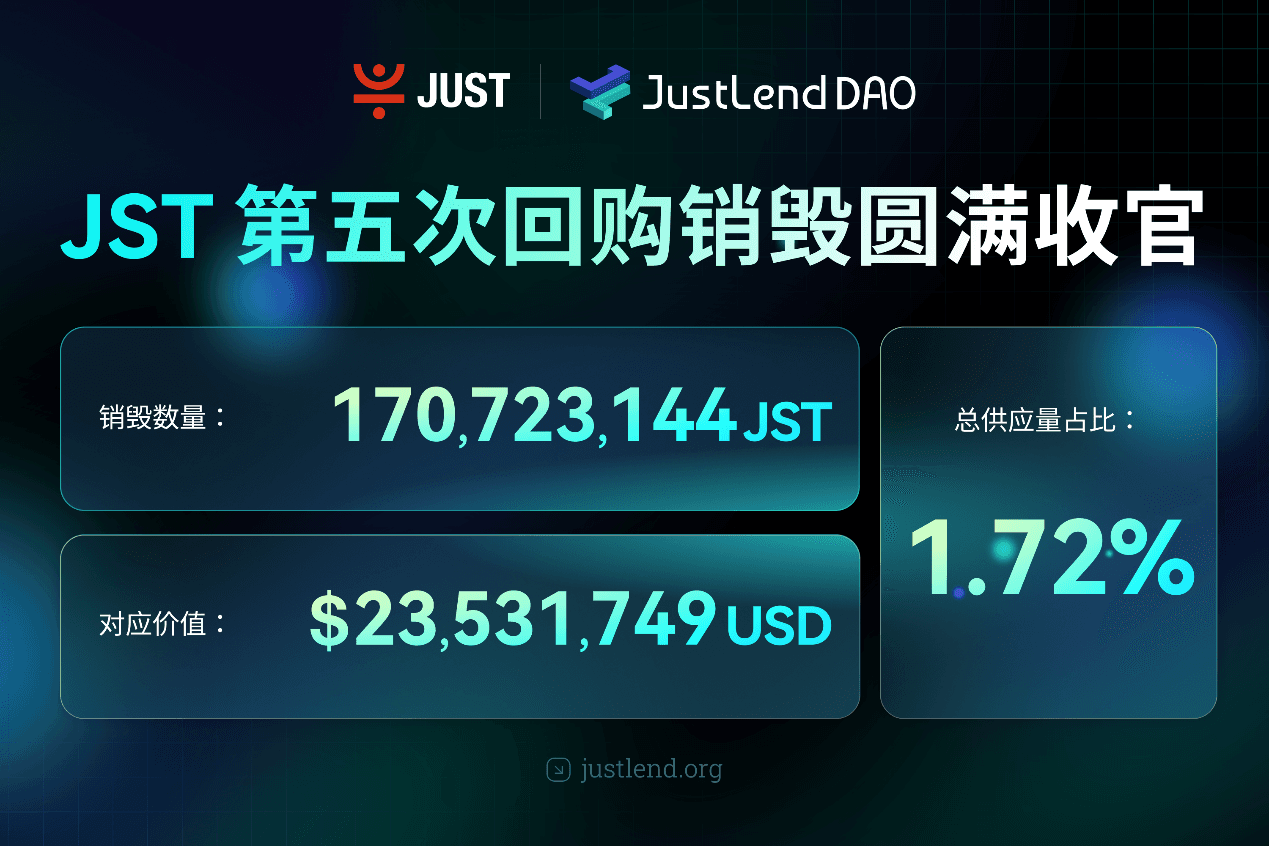
BitTorrent Brand Upgrade and Initial BTT Buyback & Burn Launch Simultaneously, Dual Engines Usher in New Era of Web3 Infrastructure
Oct 17, 20:00
Asia Market Daily: Japan's BOJ signals more rate hikes while Korea targets offshore perpetual platforms (2026/10/17)
Oct 17, 17:01Why did Papertrade backfire on you?
Oct 17, 17:01
The 'Strict Father' of Northern Myanmar: This Company Deploys 200,000 "AI Best Actors" to Strike Back Against Scammers
Oct 17, 15:34