Market Cap Surpasses $23 Million to Hit New All-Time High, What Magic Does the New Picture NFT Unipeg Hold?
This article was published on April 27 when Unipeg's market capitalization had just surpassed $12 million. After a few days, its market cap had nearly doubled, reaching a new all-time high today of over $23 million. Once again revisiting the underlying logic of Unipeg—perhaps can explain why the market is still willing to buy into it.
The revival of meme coins on the ETH mainnet has brought back excitement to the Ethereum network. While everyone was busy with meme coins, it is easy to overlook that over the past week, NFTs on the ETH mainnet have also seen a comprehensive rebound with almost no signs of decline.
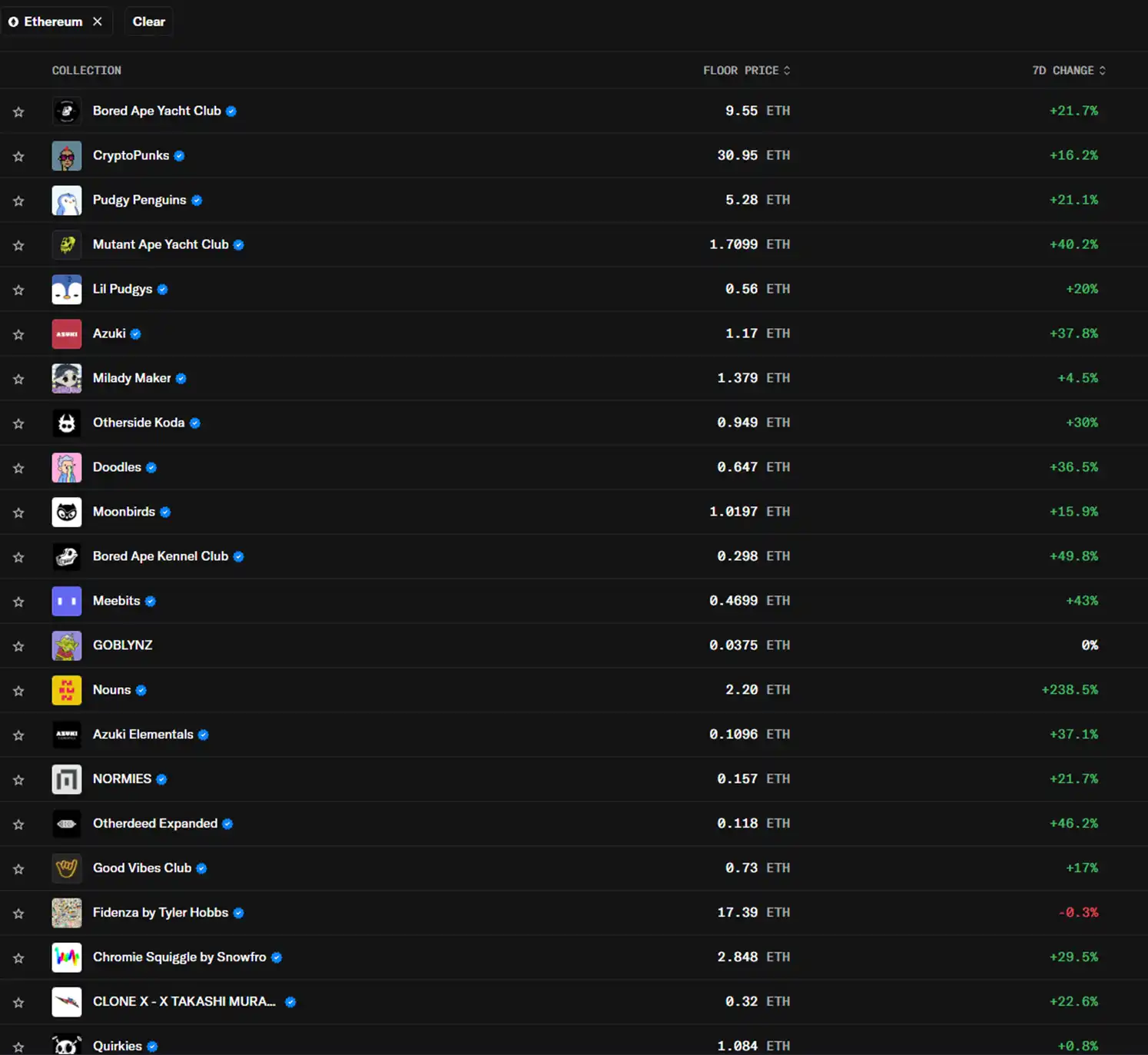
Compared to the silent rebound of these old blue-chip NFT collections, there is a new project that has brought together NFT players and meme players. Yesterday, this project briefly surpassed a $12 million market cap and is currently one of the most talked-about new projects on the ETH mainnet.
That project is Unipeg ($uPEG).
uPEG easily reminds people of the ERC-404 "Pandora's Box" that was once popular two years ago. Indeed, both of them have a total supply of only 10,000 tokens, with each token corresponding to an image. The image and the coin are symbiotic—if you sell one token, the corresponding image is destroyed.
However, uPEG is by no means a mere rehash of old ideas. In contrast to ERC-404, which leans more towards an NFTfi/ERC standard level of experimentation and innovation, the overall narrative logic of the uPEG project is very coherent.
Firstly, in terms of naming, Unipeg is derived from the original name of Uniswap.
In July 2017, Hayden Adams was unemployed. He didn't have much of a plan for the future until his friend Karl Floersch introduced him to smart contracts. At the same time, Ethereum's founder Vitalik Buterin published an article about the possibility of creating an AMM on Ethereum.
Hayden Adams then began developing Unipeg. Later, he officially met Vitalik. Vitalik read Unipeg's smart contract on his phone, suggested that he apply for a grant from the Ethereum Foundation, and rename the project to Uniswap.
Right from the name, uPEG's creator, 0xhadrian.eth, has incorporated plenty of meme angles. Naming this new project Unipeg carries 3 layers of meaning:
- The image itself is a unicorn, where Unipeg = Uni (unicorn) + JPEG (image)
- Paying homage to Uniswap's origin story
- The term "peg" itself implies "hooked," reflecting that the project directly generates images through on-chain trading logic, achieved through the Uniswap v4 hook
Compared to ERC-404, Unipeg actually has substance. Although just looking at the image might leave many scratching their heads—why would this piece of art be worth over $600?
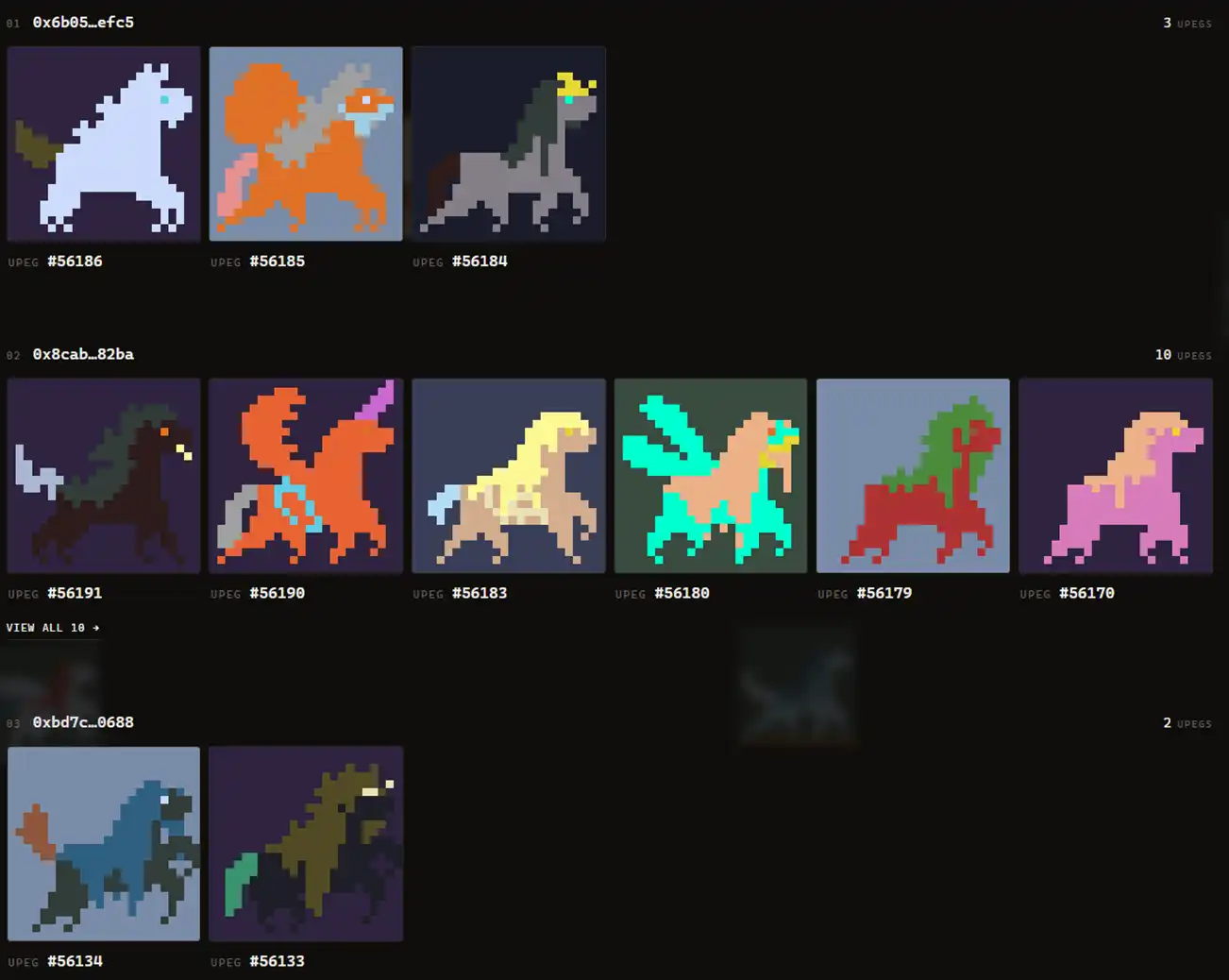
Firstly, uPEG's image foundation, like CryptoPunks, is 24x24 pixels. Adding the "unicorn" element to pay homage to Uniswap gives it an initially rough appearance.
However, paying homage to CryptoPunks does not mean sticking to 24x24 pixels. The core historical value of CryptoPunks lies in digital ownership, or cryptocurrency, serving as meaningful on-chain data. It's not just a visual image; it includes ownership, history, holders, and more. This information not only exists permanently on-chain but is also entirely verifiable without any intermediaries.
uPEG is also a fully on-chain project. By utilizing a custom Uniswap v4 hook, a unique 24x24 pixel collectible image is entirely rendered on-chain, without external storage or IPFS.
When a $uPEG transaction occurs, this custom Uniswap v4 hook generates a hash, which serves as input to the SVG renderer. The renderer uses this hash to generate each feature of the unicorn—body, eyes, horn, hair, wings, tail, color, background.
This is the main distinction from ERC-404. ERC-404 merely proves that art and coins can coexist, whereas uPEG signifies new minting and burning with every token transaction. Theoretically, the image cap for uPEG is 10,000, but in practice, it's highly unlikely that 10,000 holders each hold 1 $uPEG, so the actual number of images is almost always less than 10,000.
Moreover, when a token is sold, the original token's corresponding image ceases to exist, meaning it is "dead." However, if a new $uPEG is purchased, a new image is minted, signifying its "birth." No one can retrieve the "dead" image because the timing of each on-chain transaction, the corresponding block, the actors involved, and other on-chain data are never consistent, and each newly generated hash used to create a new image will also be unique.
While the survival count of uPEG will essentially always remain below 10,000, the number of uPEGs that have existed can be infinite as long as $uPEG transactions continue. This is an endless cycle of creation where the creator is the smart contract code and every participant in the transactions.
This is the true reason why NFT enthusiasts find this interesting—the uPEG is neither an NFT nor a meme coin to them; it is a theoretically eternal on-chain generative art creation. The beauty of generative art lies in the "sensation that can never be replicated, created at a random moment." For example, in the famous generative art NFT project Ringers by Dmitri Cherniak, token #879, due to its appearance resembling a large goose and being unrepeatable, has been revered by collectors as a holy grail.
Ringers #879 once sold for 1800 ETH (approximately $5.6 million) to the crypto hedge fund Three Arrows Capital, becoming one of the most expensive Art Blocks pieces on the market at that time.
This project is the most reminiscent of the OG Ethereum flavor since the "Doge killer" exploded on the ETH mainnet. It reminds us of the good old days when innovative gameplay, faith, and fun as transaction logic led to victorious moments.
Of course, the rapid surge in uPEG over the past few days has been partly due to the buying support from OpenSea's CMO Adam Hollander and direct engagement from Uniswap team member @saintniko.
Furthermore, although the developer behind it remains relatively mysterious, this project is not yet over. Currently, the corresponding secondary market Peg2Peg is under development. As uPEG is not an ERC-721 protocol image, it is currently not tradable on OpenSea and other NFT marketplaces.
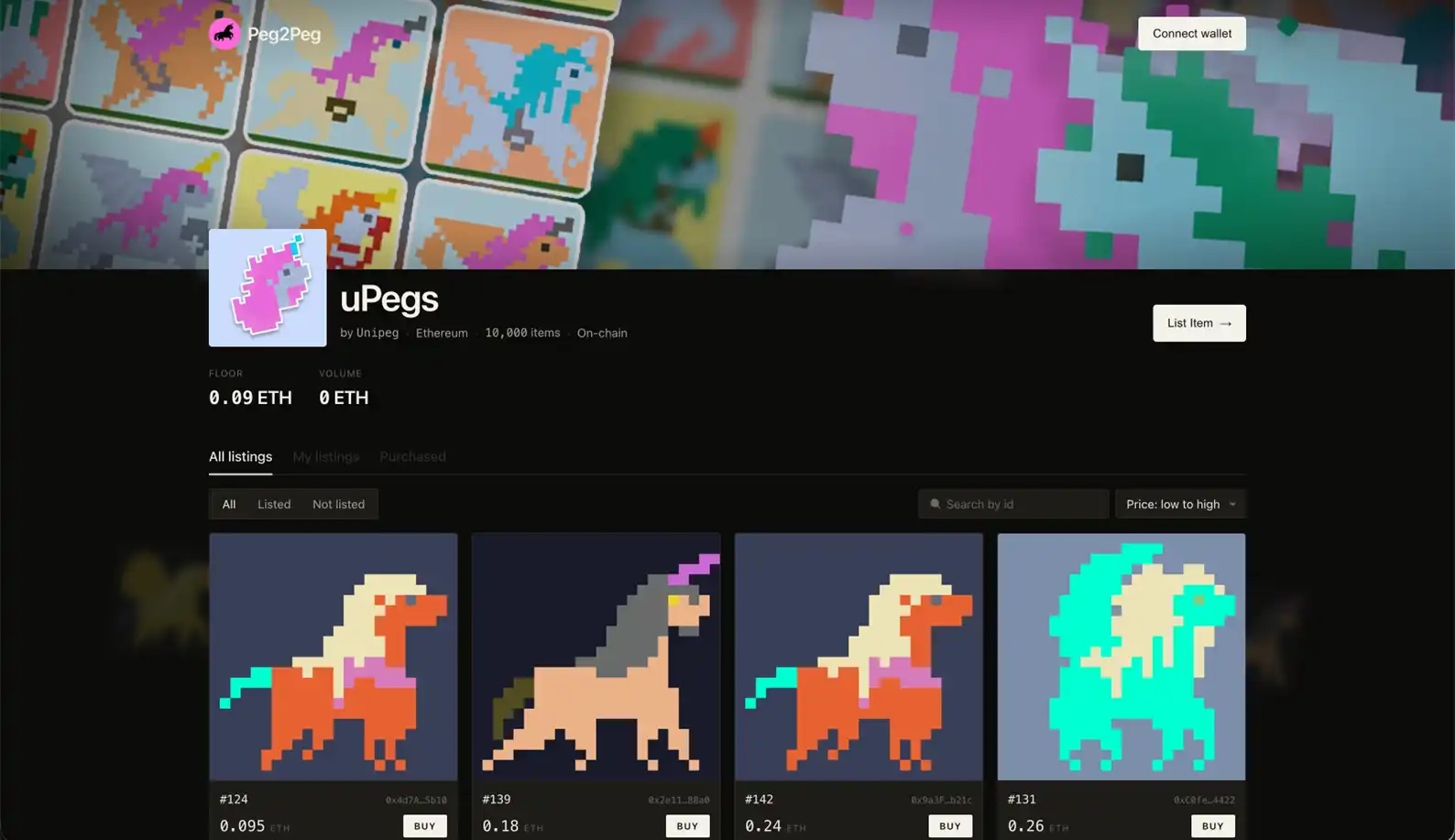
Peg2Peg in Development
Furthermore, according to the author's vision:
“Over time, the distribution of holders will become more fragmented, and the number of individuals holding a full $uPEG (owning a unicorn image) may decrease. The quantity of existing unicorns may also decrease.”
If the market has a rarity mechanism for the images, then some images selected by the market to be collected will circulate through Peg2Peg instead of returning to the liquidity pool in token form. This is a form of token burn and value appreciation achieved through the formation of culture and collecting tendencies.
This may be one of the most intriguing ways we have seen to address liquidity issues in the NFT space after many years of development.
Recommended
Desk: Brent Crude Tops $110, Musk's Net Worth Drops 528.6 Billion in Four Days After Tesla Roadster Launch
Oct 17, 21:49
JST Fifth Buyback and Burn Successfully Concludes: Over 170 Million Tokens Worth Approximately $23.53 Million Burned, Buyback Mechanism Set for Comprehensive Upgrade
Oct 17, 20:10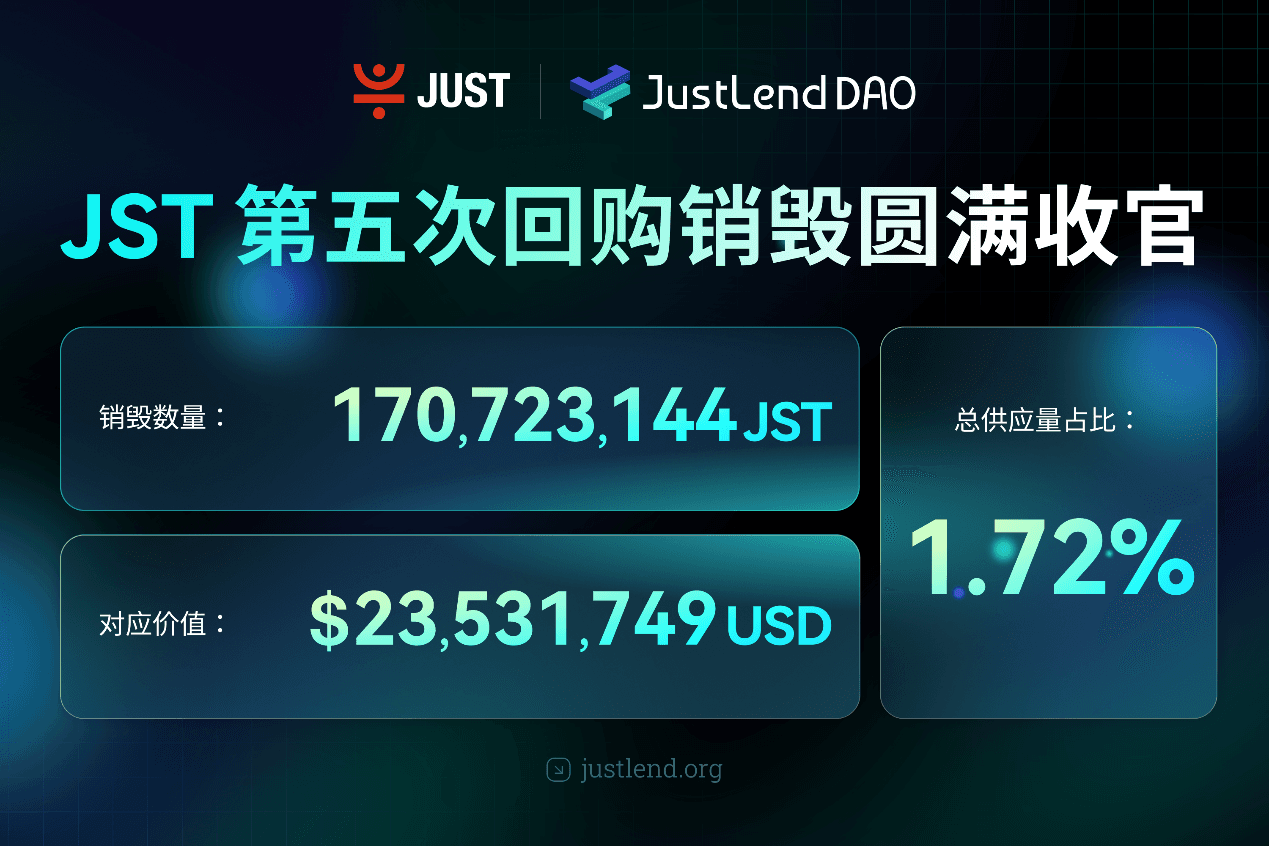
BitTorrent Brand Upgrade and Initial BTT Buyback & Burn Launch Simultaneously, Dual Engines Usher in New Era of Web3 Infrastructure
Oct 17, 20:00
Asia Market Daily: Japan's BOJ signals more rate hikes while Korea targets offshore perpetual platforms (2026/10/17)
Oct 17, 17:01Why did Papertrade backfire on you?
Oct 17, 17:01
The 'Strict Father' of Northern Myanmar: This Company Deploys 200,000 "AI Best Actors" to Strike Back Against Scammers
Oct 17, 15:34