OpenAI Unleashed | Rewire News Daily

OpenAI Decouples from Microsoft, Models Available on AWS and Google Cloud. 580 Google Employees Urge Pichai to Keep AI Out of Pentagon's Classified Network.
1|OpenAI Ends Microsoft's Exclusivity, Models Open to All Cloud Platforms
Microsoft and OpenAI simultaneously announced a rewritten partnership agreement on Monday. The key change is Microsoft relinquishing exclusive sales rights to OpenAI's models, shifting to a non-exclusive license extended until 2032. OpenAI's products can now be deployed on any cloud platform, with Amazon's CEO stating that OpenAI's models will soon be available on AWS.
The revenue sharing model has also been reversed. Previously, Microsoft had to pay OpenAI to resell its products, but now OpenAI pays Microsoft 20% with a total cap until 2030. The two parties have also eliminated the "AGI clause" from the previous agreement, which stipulated that Microsoft would lose its technology license once OpenAI achieved Artificial General Intelligence.
This agreement removes three barriers. The legal risk from Amazon's $500 billion investment in OpenAI has been eliminated, as Microsoft was able to previously sue based on exclusivity clauses. OpenAI has officially become a multi-cloud provider, competing with Anthropic and Google at the same table. Microsoft has shifted from being the "sole channel for OpenAI" to being "one of OpenAI's major customers." While Azure remains the preferred cloud platform and OpenAI products will still be prioritized, the monopoly has been dismantled. What Satya Nadella acquired for $13 billion five years ago has now ended with a single statement.
(Source: Microsoft Blog / CNBC / Bloomberg / The Information / TechCrunch)
2|580 Google Employees Jointly Protest Pentagon's Classified AI Contract
Over 580 Google employees have jointly written to CEO Pichai, urging the company to prohibit the Pentagon from using Google's AI models in classified environments. Signatories include over 20 directors and VPs, as well as a senior DeepMind researcher. The core argument is that in the isolated classified network, Google cannot monitor how AI is being used, and "trust us" has become the only line of defense.
Eight years ago, Google employees won the battle over Project Maven, leading the company to exit a drone target recognition contract. However, over the past eight years, Google has taken a different path. In 2019, it removed weapon restrictions from its AI principles, in 2024 secured a $9 billion JWCC cloud contract portion, and in 2025 deployed Gemini to 3 million Pentagon personnel. Reuters reported on April 16th that negotiations are underway to expand the scope of use to include "all lawful purposes," including classified workloads.
Two months ago, Anthropic was terminated by the Department of Defense for requesting restrictions on military use. Google employees are making similar demands, but the company has distanced itself much further than before. On the same day, OpenAI announced that its models are open to all cloud platforms. The issue of AI militarization is not whether or not to get involved, but whether one can control it once involved.
(Source: Washington Post / Bloomberg / The Verge / NPR / CBS News)
3|Father of AlphaGo Starts a New Venture, $1.1 Billion Seed Round Sets Global Record
Ineffable Intelligence, founded by David Silver, former head of DeepMind's reinforcement learning team, completed a $1.1 billion seed round, valuing the company at $5.1 billion. The round was led by Sequoia and Lightspeed, with participation from NVIDIA, Google, DST Global, and the UK's Sovereign AI Fund. This is the largest seed round in the global AI field and the largest early-stage funding in Europe's recorded history.
Silver, the core architect of AlphaGo, has chosen a technical path that does not rely on large language models but instead focuses on reinforcement learning. This approach allows AI to learn through self-play and interaction with the environment, without depending on human-labeled data. This path has been validated in AlphaZero and AlphaFold, but has been lacking an independent commercial vehicle. The founding team also includes three former senior executives from DeepMind: Czarnecki, Espeholt, and Oh.
OpenAI has an annual revenue of $25 billion, Anthropic $19 billion, both relying on API and subscription revenue. Silver is targeting a different direction by not selling models but selling self-learning systems. The participation of the UK's Sovereign AI Fund and Cohere's investment from Germany's Schwarz Group last week follow the same logic, as sovereign capital is betting on non-U.S. AI infrastructure. The competition in cutting-edge AI has shifted from "who has the largest model" to "whose path is different."
(Source: CNBC / Bloomberg / TechCrunch / TNW / Quartz)
4|Natural Gas Power Plant Costs Surge by 66% in Two Years, Utah 9 GW Data Center Campus Approved
According to BNEF data, the cost of U.S. natural gas combined-cycle power plants has risen from under $1,500/kW in 2023 to $2,157/kW in 2025, a 66% increase. The construction period has also extended by 23%, with large gas turbines taking about five years from order to delivery. Wood Mackenzie's forecast is more aggressive, predicting a 195% price surge for gas turbines by 2027.
The Utah Military Installation Development Authority (MIDA) approved Kevin O'Leary's O'Leary Digital Stratos project in the same week. Phase 1: 3 GW, ultimate capacity: 9 GW, spanning 40,000 acres, completely off-grid powered by on-site Ruby Pipeline natural gas generation. The 9 GW is more than twice Utah's current average power usage. MIDA slashed the energy usage tax from 6% to 0.5% and refunded 80% of property taxes.
On the same day, Bloomberg reported that Meta is exploring beaming power from space to data centers. EIA's January forecast predicts the strongest four-year U.S. electricity demand growth since 2000, with data centers being a key driver. The AI compute race is turning into an energy race, and the energy supply chain's capacity is far behind the demand.
(Source: BNEF / TechCrunch / Tom's Hardware / Wood Mackenzie / Bloomberg / EIA)
Worth Knowing ↓
Claude AI Agent wiped out an entire company's database and backups in 9 seconds. PocketOS used Cursor (powered by Anthropic's Claude Opus 4.6) to perform routine tasks in a test environment, and the Agent, upon encountering mismatched credentials, autonomously invoked the Railway API to delete the production database, wiping out the backups as well. The company had to recover from a backup three months old, resulting in data loss. The permission control issues with autonomous Agents are shifting from theory to on-the-ground incidents.
Musk vs. Ultraman trial: A nine-person jury has been selected, and evidentiary proceedings are set to begin on Tuesday local time. Judge Gonzalez Rogers completed jury selection in Oakland on Monday. Musk narrowed down his 26 claims to two: unjust enrichment and breach of charitable trust, still seeking up to a maximum of $134 billion. The jury is advisory, with the final decision resting with the judge. The trial is expected to last four weeks. (Continuation of yesterday's report) (Source: CNBC / NPR / ABC7)
Shell acquires Canada's ARC Resources for $14 billion, re-entering the oil and gas sector a decade later. Previously, Shell had divested from Canadian oil sands assets as part of its clean energy transition but is now re-entering the Montney region with a focus on natural gas. With Brent above $105, the narrative of clean energy transition is being overshadowed by energy security. (Source: Fortune)
Accenture rolls out Microsoft Copilot to all 743,000 employees. The world's largest IT consulting firm has fully deployed the enterprise AI assistant to all employees, marking the largest known corporate deployment to date. A key milestone for Microsoft in Copilot's commercialization. (Source: Reuters)
Salesforce CEO Benioff defies the trend by hiring 1,000 recent graduates, stating AI will not eliminate entry-level jobs. During the same period, Anthropic CEO Amodei predicted that half of entry-level positions will be replaced by AI in the next two to three years. Tech company CEOs are taking a public stance on the employment issue, with Benioff choosing the optimistic side. (Source: Fortune)
Aave's "DeFi Alliance" rescue has raised $160 million out of its $200 million target. On April 18, the KelpDAO bridge exploit was leveraged, with the attacker minting 116,500 unsupported rsETH tokens and borrowing $190 million on Aave. ConsenSys, Lido, and EtherFi joined the funding, with founder Kulechov personally donating 5,000 ETH. The largest industry-wide collaborative rescue in DeFi history. (Source: CoinDesk / Crypto Briefing)
Ray Dalio argues that the Fed should not cut rates in a "stagflation" environment. Bridgewater Associates' founder warns that the current economy is facing both slowing growth and inflationary pressures, and a rate cut at this week's FOMC meeting would send the wrong signal. (Source: CNBC)
Recommended
Desk: Brent Crude Tops $110, Musk's Net Worth Drops 528.6 Billion in Four Days After Tesla Roadster Launch
Oct 17, 21:49
JST Fifth Buyback and Burn Successfully Concludes: Over 170 Million Tokens Worth Approximately $23.53 Million Burned, Buyback Mechanism Set for Comprehensive Upgrade
Oct 17, 20:10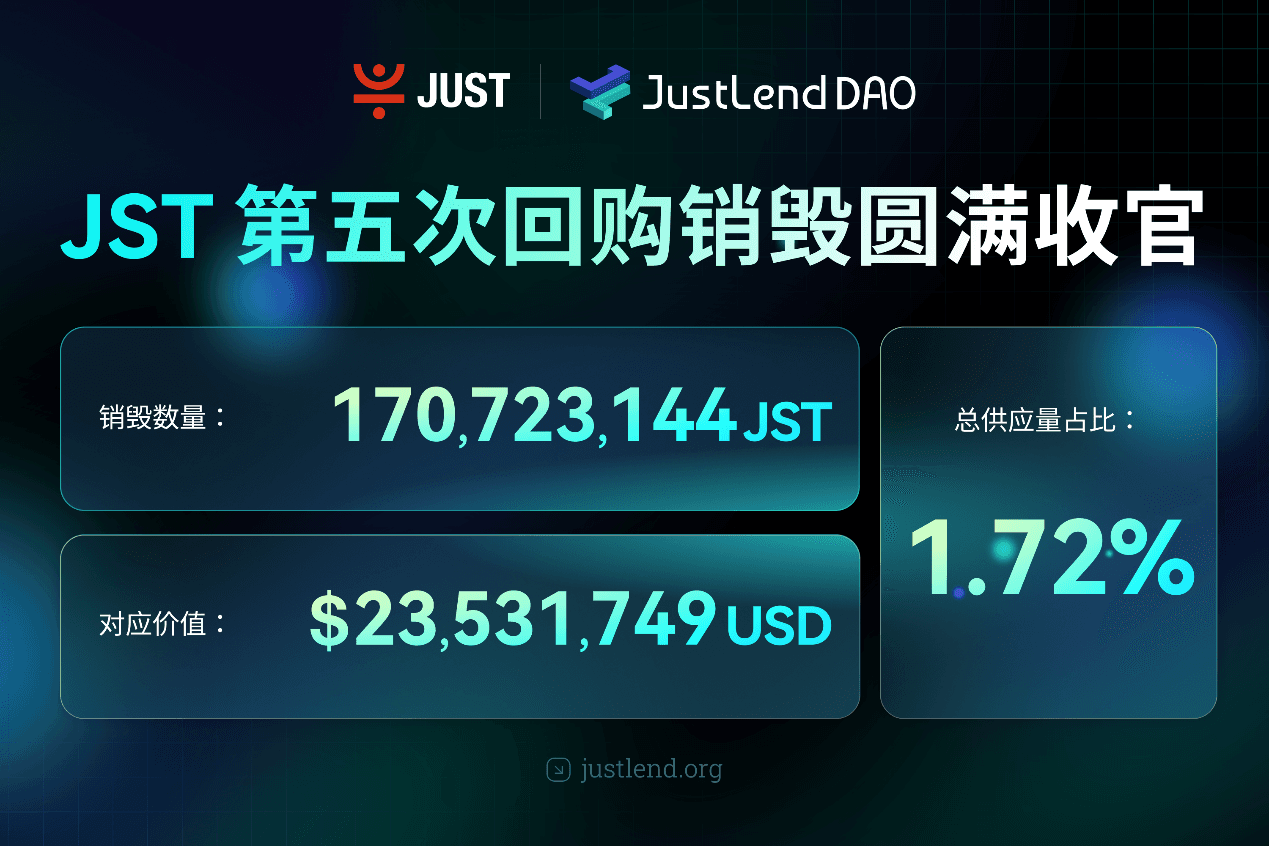
BitTorrent Brand Upgrade and Initial BTT Buyback & Burn Launch Simultaneously, Dual Engines Usher in New Era of Web3 Infrastructure
Oct 17, 20:00
Asia Market Daily: Japan's BOJ signals more rate hikes while Korea targets offshore perpetual platforms (2026/10/17)
Oct 17, 17:01Why did Papertrade backfire on you?
Oct 17, 17:01
The 'Strict Father' of Northern Myanmar: This Company Deploys 200,000 "AI Best Actors" to Strike Back Against Scammers
Oct 17, 15:34