2026 AI Learning Handbook: What to Learn, What to Use, What to Avoid

Translation: Peggy, BlockBeats
Editor's Note: The AI Agent field is entering a stage of tool explosion and lack of consensus.
Every week, new frameworks, new models, new benchmarks, and new "10x efficiency" products emerge. However, the truly important question is no longer "how to keep up with all the changes," but "which changes are really worth investing in."
The author believes that in the current environment where the tech stack is constantly being rewritten, what can contribute to long-term compound interest is not chasing the latest frameworks, but rather more foundational capabilities: context engineering, tool design, eval system, orchestrator-subagent pattern, sandbox and harness thinking. These capabilities will not rapidly become obsolete with model changes; instead, they will become the foundation for building a reliable AI Agent.
The article further points out that AI Agents are also changing the meaning of "credentials." In the past, degrees, job titles, and years of experience were the entry tickets into the industry; but in a field where even tech giants are still publicly experimenting, resumes are no longer the only credentials. What you have done, what you have delivered is becoming more important.
Therefore, this article not only discusses what AI Agents should learn, use, and skip in 2026 but also serves as a reminder: in an era of increasing noise, the most scarce ability is to judge what is worth learning and to consistently produce genuinely useful outcomes.
Below is the original text:

Every day, a new framework, a new benchmark, a new "10x efficiency" product pops up. The question is no longer "how do I keep up," but rather: what is the real signal among these, and what is just noise disguised in a sense of urgency.
Every roadmap could become obsolete a month after its release. The framework you mastered last quarter is now old news. The benchmark you optimized for is quickly surpassed and replaced by new ones. In the past, we were trained to move forward along a conventional path: one tech stack corresponding to a set of topics and levels; a series of work experiences corresponding to years and titles; climbing slowly step by step. But AI has rewritten this canvas. Today, with the right cues and good aesthetic judgment, one person can deliver work that would have taken an engineer with two years of experience a full sprint to complete in the past.
Expertise is still important. There's nothing that can replace witnessing a system crash, debugging a memory leak at 2 a.m., or making the unpopular but correct choice, only to be proven right in the end. This kind of judgment will compound over time. But what no longer compounds in the same way as before is your familiarity with the "hot new framework API surface" of the week. Six months later, it might have changed again. Two years later, the real winners are those who early on picked durable foundational skills and let the rest of the noise pass them by.
Over the past two years, I've been building products in this field, received multiple offers with an annual salary of $250,000 or more, and am now leading the tech team at a stealth-mode startup. If someone asks me, "What should I be focusing on right now?" this is the content I would send to them.
This is not a roadmap. The field of AGI does not yet have a clear destination. Big Labs are also publicly iterating, pushing regressions directly to millions of users, then writing post-mortems, and patching live. If the team behind Claude Code can ship a version that causes a 47% performance regression and not realize the issue until the community points it out, then the idea of there being a stable map "down there" is a mirage. Everyone is still figuring it out. The reason startups have a chance is precisely because the behemoths don't have the answers either. Non-coders are pairing with agents, delivering on a Friday what a machine-learning Ph.D. thought was impossible on a Tuesday.
The most fascinating part of this moment is how it has shifted our conception of "tenure." The traditional path optimizes for tenure: a degree, junior role, senior role, principal role, and promotions accumulated slowly over time. This made sense when the ground beneath everyone's feet in tech was moving more slowly. But now, the ground beneath us is shifting at the same speed. The gap between a 22-year-old who publicly releases an agent demo and a 35-year-old senior engineer is no longer just a decade of accumulated tech stack prowess. Both the 22-year-old and the senior engineer are facing the same blank canvas. For them, what will truly compound is the willingness to deliver continually and the small slice of foundational skills that won't be outdated in a quarter.
This is the core refactoring of this entire piece. Next, I'll provide a way to think about which foundational skills are worth your attention and which releases you can let pass by. Take what resonates with you and leave what doesn't.
You can't keep up with every weekly release, nor should you. What you need is not an information feed but a filter.
Over the past 18 months, there have been five tests that have held up. Before letting something new into your stack, run it through these five questions.
Is It Still Important Two Years Later?
If it's just a layer of paint on some cutting-edge model, a CLI parameter, or a "Devin version" of something, the answer is almost always no. If it's a fundamental primitive, such as a protocol, a design pattern, or a sandbox approach, the answer is more likely yes. The half-life of a paint job product is very short, while the half-life of a fundamental primitive can be measured in years.
Is there someone you respect who has built a real product based on it and has honestly documented their experience?
Marketing articles don't count; only retrospective articles do. A blog post titled "We Tried X in Production, and Here's Where It Went Wrong" is more valuable than ten announcement posts. The truly useful signals in this field always come from those who have sacrificed a weekend for it.
Does adopting it mean you have to throw away your existing tracing, retry mechanisms, configuration, or authentication systems?
If so, then it's a framework trying to position itself as a platform. The mortality rate of frameworks trying to become a platform is about 90%. A good fundamental primitive should be able to integrate into your existing system rather than force you to migrate.
What is the cost if you skip it for six months?
For most releases, the answer is nothing. In six months, you will know more, and the winning version will be clearer. This test allows you to skip 90% of releases without any anxiety. However, it is also the most rejected test because skipping something makes people feel like they are falling behind when they are not actually.
Can you measure if it has truly made your agent better?
If you cannot, then you are just guessing. Teams without evaluations rely on intuition and will eventually push regression issues to production. Teams with evaluations, on the other hand, can let the data speak for itself: on this specific workload this week, is GPT-5.5 or Opus 4.7 really better?
If there is only one habit you take away from this article, it's this: whenever something new is released, write down what you need to see six months later to believe it is truly important. Then come back to check in six months. Most of the time, the questions have already been answered, and your attention will be focused on things that can truly compound over time.
The true ability behind these tests is harder to name than any single test. It is the ability to be willing to "not be trendy." The framework that was all the rage on Hacker News this week will have a cheerleading squad within fourteen days, all sounding very smart. However, six months later, half of those frameworks will be unmaintained, and the cheerleaders will have moved on to the next hot topic. Those who did not partake will have saved their attention for things that withstand the test of "becoming boring" even after the hype has passed. Restraint, observation, saying "I'll know in six months," is the real professional skill in this field. Everyone reads release notes, but almost no one is good at not reacting to them.
Concepts, patterns, the shape of things. The things that truly provide compound interest. They survive model swaps, framework swaps, and paradigm shifts. Understand them deeply, and you can pick up any new tool in a single weekend. Skip them, and you'll forever be relearning surface-level mechanics.
Context Engineering
In the past two years, the most significant renaming was the transition from "Prompt Engineering" to "Context Engineering." This change was real, not just terminological.
A model is no longer something you feed a clever prompt to. It has become something you need to assemble a working context for at every step. This context includes system commands, tool schemas, retrieved documents, previous tool outputs, scratchpad state, and a compressed history. The behavior of the agent is the emergent result of everything you put into the context window.
Internalize this: context is state. Every irrelevant token consumes reasoning quality. Context decay is a genuine production failure. By the eighth step of a ten-step task, the initial goal may have been buried under tool outputs. Teams that can deliver reliable agents proactively summarize, compress, and prune context. They version descriptions for tools, cache static parts, and reject caching parts that change. They view the context window like a seasoned engineer views memory.
A tangible way to feel this is to take any agent in a production environment, open the full trace log. Look at the context at the first step and then at the seventh step. Count how many tokens are still active. The first time you do this, you'll likely feel embarrassed. Then you'll fix it, and the same agent will noticeably become more reliable without changing the model or altering the prompt.
If you read only one related piece, read Anthropic's Effective Context Engineering for AI Agents. Then read their postmortem on a multi-agent research system, where they provide a numerical illustration of how crucial context isolation becomes as the system scales up.
Tool Design
Tools are where the agent interacts with your business. The model chooses tools based on their names and descriptions, and decides how to retry based on error messages. Whether the tool's contract aligns with what LLM excels at expressing determines the success or failure of the model.
Five to ten well-named tools are better than twenty mediocre tools. Tool names should resemble verb phrases in natural English. The description should clearly state when to use the tool and when not to use it. Error messages should provide feedback that the model can act upon. "Exceeding the limit of 500 tokens, please summarize before retrying" is far superior to "Error: 400 Bad Request." In a public study, a team reported that simply rewriting error messages reduced the retry loop by 40%.
Anthropic's "Writing tools for agents" is a great starting point. After reading it, add observations to your own tools to see the actual calling patterns. The most significant improvement in agent reliability almost always occurs on the tool side. Many people continuously tweak the prompt but overlook where the real leverage lies.
Orchestrator-Subagent Pattern
The debate about multi-agent systems in 2024 and 2025 eventually converged into a comprehensive solution that is now widely adopted. Naive multi-agent systems, where multiple agents write to shared state in parallel, are prone to catastrophic failures as errors compound. The scale a single agent loop can reach is often much farther than you imagine. The only form of multi-agent that truly works in a production environment is one with an orchestrator agent that delegates narrow, read-only tasks to isolated subagents and then synthesizes their results.
This is how Anthropic's research system operates. Claude Code's subagents operate in the same way. Spring AI and most production frameworks are now standardizing this pattern. Subagents have small, focused contexts and cannot modify shared state. Write operations are handled by the orchestrator.
Cognition's "Don't Build Multi-Agents" and Anthropic's "How we built our multi-agent research system" may seem like opposing views, but they are essentially expressing the same idea using different terminologies. Both articles are worth reading.
Default to using a single agent. Only consider the orchestrator-subagent approach when a single agent truly hits a real boundary, such as context window pressure, latency from sequential tool calls, or when task heterogeneity can genuinely benefit from a focused context. Building this setup before feeling the pain points will only deliver unnecessary complexity.
Evals and Gold Dataset
Every team that can deliver a reliable agent has an eval. Teams without evals usually cannot deliver a reliable agent either. This is the highest-leverage habit in this field and the most underestimated thing I have seen in every company.
The best practice is: collect production trace, label failure cases, and treat them as a regression set. Whenever a new failure goes live, add it there. The subjective part uses LLM-as-judge, while other parts use exact match or programmatic checks. Run the test suite before any prompt, model, or tool changes. According to a report on the Spotify Engineering Blog, their judge layer intercepts about 25% of agent outputs before they go live. Without it, every four bad results would reach the user.
The mindset that truly embeds this is: eval is a unit test to ensure the agent stays on track while everything else is constantly changing. Models get versioned, frameworks make breaking changes, vendors deprecate an endpoint. Your eval is the only thing that can tell you if the agent is still working properly. Without an eval, you are building a system where correctness depends on the moving target of good intentions.
Eval frameworks like Braintrust, Langfuse evals, LangSmith, are all fine. But they are not the bottleneck. The real bottleneck is whether you have a labeled dataset to begin with. You should start on day one, before scaling anything. The initial 50 samples can be hand-labeled in an afternoon. No excuses.
Treating the File System as State, and the Think-Act-Observe Loop
For any agent executing real multi-step work, a robust architecture is: Think, Act, Observe, Repeat. The file system or structured storage is the source of truth. Every action is recorded and can be replayed. Claude Code, Cursor, Devin, Aider, OpenHands, goose all converge on this point for good reasons.
The model itself is stateless. The execution framework must be stateful. The file system is a stateful primitive every developer already understands. Once this framework is embraced, the entire harness discipline naturally unfolds: checkpoint, recoverability, sub-agent validation, sandbox execution.
A deeper layer of inspiration here is that in any production agent worth paying the compute bill for, the harness does more work than the model. The model picks the next action, the harness validates it, runs it in a sandbox, captures the output, determines what to feed back, decides when to stop, decides when to checkpoint, decides when to spawn a subagent. Swap the model for another of equal quality, a good harness will still deliver. Swap the harness for a poorer one, even the world's best model will churn out an agent that randomly forgets what it's doing.
If what you're building is more complex than a one-off tool call, then where you really should be investing time is in the harness. The model is just one component of it.
Conceptually Understanding MCP
Don't just learn how to call the MCP server. Learn its model. It cleanly separates agent capabilities, tools, and resources, providing a scalable authentication and transport scheme underneath. Once you get this, other "agent integration frameworks" will seem like watered-down MCP, saving you the time of evaluating each one.
The Linux Foundation is now hosting MCP. All major model providers endorse it. Think of it as the "USB-C of AI," which is now more fact than irony.
Sandboxing as a Foundational Primitive
Every production-grade coding agent runs in a sandbox. Every browser agent has encountered indirect prompt injection. Every multi-tenant agent has seen a permissions scope bug at some point. You should consider sandboxing as an infrastructural primitive, not a feature added upon customer request.
Get your basics right: process isolation, egress control, key scope management, and authentication boundaries between agents and tools. Teams that patch these as afterthoughts post customer security reviews often lose deals. Teams that bake it in from week one sail through enterprise procurement.
Here are specific choices as of April 2026. These will change but not rapidly. Opt for the "boring but stable" at this layer.
Orchestration Layer
LangGraph is the default choice in production. About one-third of large companies running agents use it. Its abstract approach aligns with the true form of agent systems: typed states, conditional edges, persistent workflows, and human-in-the-loop checkpoints. The downside is verbosity in coding; the upside is that when an agent truly goes into production, you do need to control these things, and its verbosity aligns well with those control requirements.
If you predominantly use TypeScript, Mastra is the de facto choice. It presents the clearest mental model in this ecosystem.
If your team likes Pydantic and wishes to prioritize type safety, Pydantic AI is a reasonable greenfield choice. It released v1.0 at the end of 2025, and indeed, it has momentum.
For provider-native work such as computer use, voice, and real-time interaction, you can use the Claude Agent SDK or OpenAI Agents SDK within LangGraph nodes. Do not attempt to make them the top-level orchestrator of a heterogeneous system. They are optimized for the scenarios they excel in.
Protocol Layer
MCP, and nothing else.
Turn your tool integrations into an MCP server. External integrations also consume this in the same way. The MCP registry has now crossed the tipping point: in most cases, you can find a ready-made server before you need to build your own. In 2026, still hand-crafting custom tool plumbing is essentially tax evasion.
Memory Layer
When choosing a memory system, do not go by popularity; go by the autonomy of the agent.
Mem0 is suitable for chatbot-style personalization: user preferences and light historical context. Zep is suitable for production-grade conversational systems, especially in scenarios where the state evolves continuously and entity tracking is needed. Letta is suitable for agents that need to maintain consistency over days or even weeks of work cycles. Most teams do not need this, but those who truly do need exactly that.
A common mistake is to implement a memory framework before encountering any memory-related issues. Start with a vector database based on the content the context window can hold. Only introduce a memory system when you can clearly articulate the failure pattern it is meant to address.
Observability and Evals
Langfuse is the open-source default choice. It can be self-hosted, is MIT-licensed, covering tracing, prompt version management, and basic LLM-as-judge evals. If you are already a LangChain user, LangSmith integration will be tighter. Braintrust is suited for research-oriented eval workflows, especially in scenarios requiring rigorous comparisons. OpenLLMetry/Traceloop is suitable for a vendor-neutral OpenTelemetry instrumentation in a multi-language tech stack.
You need to have both tracing and evals. Tracing answers: "What did the agent actually do?" Evals answer: "Did the agent get better or worse since yesterday?" Without both, do not go live. It's far cheaper to wire these up on day one than to remediate post-blind run.
Runtime and Sandbox
E2B is suitable for general sandboxed code execution. Browserbase with Stagehand is suitable for browser automation. Anthropic Computer Use is suitable for scenarios requiring real desktop-level OS control. Modal is suitable for short-term ad-hoc tasks.
Never run unsandboxed code execution. An agent breached by prompt injection, if run directly in a production environment, will have an explosion radius that will turn into a story you never want to tell.
Models
Chasing benchmarks is tiring and often not very helpful. Practically speaking, as of April 2026:
·Claude Opus 4.7 and Sonnet 4.6 are suitable for reliable tool invocation, multi-step consistency, and graceful failure recovery. For most workloads, Sonnet is the sweet spot between cost and performance.
·GPT-5.4 and GPT-5.5 are suitable for needing the strongest CLI/terminal inference capabilities, or if you are already living inside the OpenAI infrastructure.
·Gemini 2.5 and 3 are suitable for tasks with long-context-intensive or multimodal-intensive requirements.
·When cost-effectiveness is more important than top-notch performance, especially for handling well-defined, narrowly scoped tasks, consider DeepSeek-V3.2 or Qwen 3.6.
Think of the model as a replaceable component. If your agent can only work on a specific model, that's not a moat but a bad smell. Use evaluations to decide what model to deploy. Reassess quarterly, don't chase changes every week.
You'll constantly be encouraged to learn and use the following. In reality, it's unnecessary. The cost of skipping them is low, and you'll save a lot of time.
AutoGen and AG2, should not be used in production.
Microsoft's framework has shifted to community maintenance, the release cadence has stalled, and the abstraction doesn't match what production teams truly need. It's fine for academic exploration, but don't bet your product on it.
CrewAI, should not be used in new production builds.
It's everywhere because it's great for demos. Engineers building real production systems have already migrated away from it. It's okay for prototyping, but don't get locked in long-term.
Microsoft Semantic Kernel, unless you're deeply locked into the Microsoft enterprise stack and your buyer cares about that.
It's not the direction the ecosystem is heading.
DSPy, unless you specifically deal with large-scale optimizing prompt programs.
It has philosophical value but has a narrow audience. It's not a general-purpose agent framework, so don't treat it as such.
Treating independent code-writing agents as an architectural choice.
Code-as-action is an interesting research direction, but it's not yet the default mode in production environments. You'll encounter many toolchain and security issues, which your competitors may not have to deal with at all.
Selling the "Autonomous Agent" style.
The product roadmap path of AutoGPT and BabyAGI is dead. The industry's honest acceptance now is "agentic engineering": supervised, bounded, and evaluated. Those still selling the "deploy and forget" autonomous agent in 2026 are essentially selling something from 2023.
Agent app store and marketplace.
Since 2023, some have promised this, but it has never truly gained enterprise traction. Companies won't buy generic off-the-shelf agents. They either buy vertical agents tied to specific outcomes or build their own. Don't design your business around the dream of an app store.
As a customer, cautiously choose a horizontal "build any agent" enterprise platform.
For example, the likes of Google Agentspace, AWS Bedrock Agents, and Microsoft Copilot Studio. They may be useful in the future, but currently remain chaotic, slow to release, and the buy-versus-build argument still tends to favor: either building a narrow agent in-house or buying a vertical agent. Salesforce Agentforce and ServiceNow Now Assist are exceptions, as they excel by being already embedded within your existing workflow systems.
Avoid chasing SWE-bench and OSWorld rankings.
Berkeley researchers noted in 2025 that nearly all public benchmarks can be manipulated without genuinely addressing the underlying tasks. Teams nowadays consider Terminal-Bench 2.0 and their internal evaluations as more realistic signals. Maintain a healthy skepticism towards single-number benchmark leaps by default.
Don't fall for naive parallel multi-agent architectures.
Having five agents chatting around shared memory may look impressive in a demo, but it will fall apart in a production environment. If you can't sketch out a clear orchestrator-subagent diagram on a napkin and outline the read/write boundaries, don't go live.
New agent products should steer clear of per-seat SaaS pricing.
The market has shifted towards outcome-based and usage-based pricing. Charging per seat will not only make you earn less but will also signal to the buyer that you lack confidence in your product's ability to deliver results.
The next framework you see on Hacker News this week.
Wait for six months. If it's still relevant by then, you'll know. If it's not, you've saved yourself a migration.
If you genuinely want to adopt agents, rather than just "keeping up with the agent," the following sequence is effective. It may be boring, but it's useful.
Start by selecting a result that is already significant. Don't aim for a moonshot, and don't jump into a horizontal "agent platform" project right away. Choose something that your business already cares about and can measure: reducing customer support tickets, generating a first-pass legal review, qualifying inbound leads, producing monthly reports. The success of the agent depends on whether this result improves. It is your eval target from day one.
The reason this step is more important than any other step is because it will influence all subsequent decisions. With a concrete outcome, the question of "which framework to choose" is no longer a philosophical one; you will choose the framework that can deliver this outcome the fastest. The question of "which model to choose" is no longer a benchmark debate, but a choice of a model that your evaluations prove to be effective for this specific task. The need for "memory, subagents, custom harness" is no longer a thought experiment, but something to add only when required by specific failure modes.
Teams that skip this step often end up building a horizontal platform that nobody wants. Teams that take this step seriously usually deliver a narrow agent that can break even within a quarter. And this truly deployed agent will teach them more than reading two years of papers.
Before deploying anything, set up tracing and evaluations. Choose between Langfuse and LangSmith and integrate it. If necessary, manually construct a small golden dataset. 50 annotated samples are enough to start. You cannot improve something you cannot measure. Retrofitting this system later will cost about 10 times what you would spend now.
Start with a single-agent loop. Choose between LangGraph or Pydantic AI. Select Claude Sonnet 4.6 or GPT-5 as the model. Provide the agent with three to seven well-designed tools. Let it use the file system or a database as its state. Initially, release it to a small group of users and observe the traces.
Treat the agent as a product, not a project. It will fail in ways you did not anticipate, and these failures are your roadmap. Build a regression set using real production traces. Every prompt change, model replacement, or tool modification must be validated through evaluations before deployment. Most teams underestimate the effort required at this stage, yet most reliability comes from here.
Only add complexity when you have "earned" the right to expand. Introduce subagents when the context becomes a bottleneck. Introduce a memory framework when a single-window context cannot hold the necessary information. Introduce computer use or browser use when the underlying APIs do not exist. Do not pre-design these things. Let failure modes bring them in.
Choose boring infrastructure. Use MCP for tools. Use E2B or Browserbase for sandboxing. Use Postgres for state, or whatever data store you already have in place. Try to align authentication and observability with existing systems as much as possible. Unusual infrastructure is rarely a real game-changer; real game-changers come from discipline.
Focus on the unit economics model from day one. Each action cost, cache hit rate, retry loop cost, and model call distribution. The Agent may seem cheap in the PoC stage, but if you didn't initially monitor the cost by outcome, the cost will skyrocket when scaled up by 100 times. A PoC that runs at $0.50 per execution could turn into $50,000 per month at a moderate scale. Teams that fail to see this in advance will face a CFO meeting they won't enjoy.
Reassess the model every quarter, not every week. Lock in for a quarter. At the end of the quarter, run your eval suite against the current state-of-the-art model. If the data suggests a switch, make the switch. This way, you get the benefit of model progress while avoiding the chaos of chasing every release.
Here are some specific signals that something might be a true signal: a respected engineering team writes a data-driven postmortem rather than just claiming adoption numbers; it's a fundamental primitive like a protocol, pattern, or infrastructure, not a wrapper or packaging; it interoperates with the systems you already have, not replaces them; its pitch is about solving failure modes, not unlocking capabilities; it has been around long enough for someone to write a blog post on "where it failed to deliver."
Here are some specific signals that something might just be noise: 30 days after release, there are only demo videos and no production use cases; benchmarks spike up cleanly but don't look real; the pitch liberally uses "autonomous," "agent OS," or "build any agent" without qualification; the framework docs assume you will discard existing tracing, auth, and config; stars grow rapidly but commits, releases, and contributors don't grow in sync; Twitter moves fast, but GitHub doesn't.
A useful weekly habit is to set aside 30 minutes on Fridays to look into this space. Read three things: the Anthropic Engineering Blog, Simon Willison's notes, and Latent Space. If there was a postmortem that week, skim one or two more. Everything else can be skipped. The truly vital stuff, you won't miss.
Things to watch over the next two quarters not because they will definitely win, but because the question of "is this really a signal" has not been fully answered yet.
Replit Agent 4's parallel forking model.
This is one of the first serious attempts at "multiple agents working in parallel" without being tripped up by shared state. If it can stand its ground at scale, the default orchestrator-subagent mode may undergo a change.
The maturity of Outcome-based pricing.
The revenue trajectory of Sierra and Harvey has already validated this model in a narrow vertical domain. The question is whether it can be extended to other domains or if it is only applicable to vertical scenarios.
Skills as a capability encapsulation layer.
The increasing presence of AGENTS.md and skills directories on GitHub signifies a new way of encapsulating agent capabilities is emerging. Whether it will standardize the capability layer like the MCP remains an open question.
Claude Code's April 2026 quality rollback and its postmortem.
An industry-leading agent released a version that caused a 47% performance rollback, which was discovered by users first and then internally by monitoring. This indicates that even at the forefront, production-grade agent evaluation practices are still very immature. If this incident drives better industry-wide investment in online evals, then this course correction is healthy.
Voice becoming the default customer service interface.
Sierra's voice channel surpassed the text channel by the end of 2025. If this trend continues in other verticals, then design constraints such as latency, interruptions, real-time tool invocation will become first-order issues, requiring many existing architectures to be reworked.
Open-source model agent capabilities continue to narrow the gap.
DeepSeek-V3.2 natively supports thinking-into-tool-use, Qwen 3.6, and the broader open-source model ecosystem are all worth monitoring. Cost-performance ratios on narrow agent tasks are changing. The dominance of closed-source models will not exist permanently.
Each of these things can correspond to a clear question: "What do I need to see six months from now to believe it really matters?" That is the test. Track answers, not announcements.
Every framework you did not adopt is one migration debt you do not owe the future. Every benchmark you did not chase is a quarter of focus. The companies winning in this cycle—Sierra, Harvey, Cursor, each in their respective domains—have chosen narrow targets, built boring disciplines, and then let the noise of the domain pass by.
The traditional path is: choose a technology stack, spend many years mastering it, and then climb the ladder up. This was effective when a technology stack remained stable for a decade. But now, the technology stack changes every quarter. The real winners are no longer optimizing for the ability to "master a specific technology stack," but rather optimizing for taste, foundational primitives, and delivery speed. They openly build small things, learning through delivery. Others invite them into the room because of what they have already built. The work itself is the qualification.
Take a moment to seriously consider this, as this is exactly what the entire article is trying to convey. The work model that most of us have accepted assumes that this world will remain stable long enough for qualifications to compound. You go to school, get a degree, climb the ladder. Stay here for two years, there for three years, and your resume gradually becomes a door-opener. The entire premise of the machinery is that the industry on the other side is stable enough.
However, in the field of agents, there is currently no stable "other side." The company you want to join may only be six months old. The framework they are building with may only have an eighteen-month history. The underlying protocol may also only be two years old. Half of the most commonly referenced articles in this field were written by authors who weren't even in this field three years ago. There is no ladder to climb because the building is constantly changing its floors. When the ladder fails, what is left is a more ancient method: create something, put it on the internet, and let your work introduce you. This is a counterintuitive path because it bypasses the qualification certification system. But in a rapidly evolving field, it is also the only path that can truly compound.
This is the look of the era from the inside. Even the giants are openly iterating, releasing, acknowledging issues, conducting postmortems, and patching online. In the teams delivering the most interesting things this year, some people were not even in this field 18 months ago. People who don't code are partnering with agents to deliver real software. PhDs may be surpassed by builders who choose the right foundational primitives and start moving quickly. The door is already open. Yet most people are still looking for the application form.
The skills you really need to develop now are not "agents." Instead, it's the discipline of determining which work will compound in a field of constantly changing surface. Context engineering will compound. Tool design will compound. Orchestrator-subagent pattern will compound. Eval discipline will compound. Harness thinking will compound. The framework API released just last Tuesday will not. Once you can distinguish between them, the weekly waves of new releases will no longer feel like pressure but rather noise you can ignore.
You don't need to learn everything. You need to learn what will compound and skip what won't. Choose an outcome. Set up tracing and evals before going live. Use LangGraph, or its equivalent tool in your team. Use MCP. Put the runtime in a sandbox. Start with a single agent by default. Only expand when failure patterns bring in complexity. Reassess the model every quarter. Read three things every Friday.
This is the playbook. The rest is taste, delivery speed, and the patience to not chase the irrelevant.
Go build things. Put them on the internet. This is an era that rewards those who make things, not just describe them. Now is the best window to become that "actually made it" person.
Recommended
Desk: Brent Crude Tops $110, Musk's Net Worth Drops 528.6 Billion in Four Days After Tesla Roadster Launch
Oct 17, 21:49
JST Fifth Buyback and Burn Successfully Concludes: Over 170 Million Tokens Worth Approximately $23.53 Million Burned, Buyback Mechanism Set for Comprehensive Upgrade
Oct 17, 20:10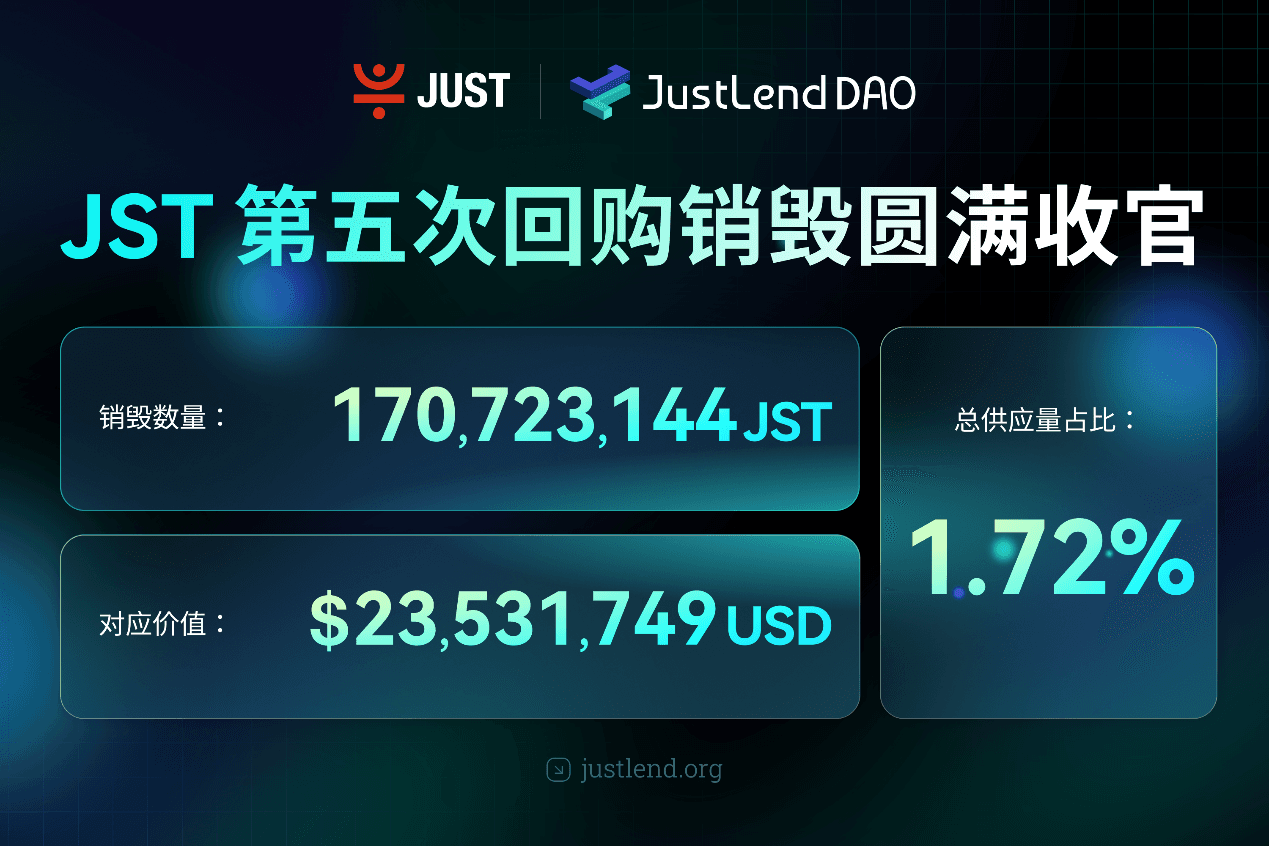
BitTorrent Brand Upgrade and Initial BTT Buyback & Burn Launch Simultaneously, Dual Engines Usher in New Era of Web3 Infrastructure
Oct 17, 20:00
Asia Market Daily: Japan's BOJ signals more rate hikes while Korea targets offshore perpetual platforms (2026/10/17)
Oct 17, 17:01Why did Papertrade backfire on you?
Oct 17, 17:01
The 'Strict Father' of Northern Myanmar: This Company Deploys 200,000 "AI Best Actors" to Strike Back Against Scammers
Oct 17, 15:34