Sam Altman's Latest Interview Confession: Actually, I Don't Really Understand What's Going on Inside AI
Video Title: "Can We Trust AI? Sam Altman Hopes So | The Most Interesting Thing in AI"
Video Author: Nick Thompson, The Atlantic CEO
Translation: Ludong Xiaogong, Ludong BlockBeats
Editor's Note: This interview was recorded in April 2025 shortly after the Molotov cocktail attack on Sam Altman's San Francisco residence followed by a street shooting incident a few days later, at the OpenAI San Francisco office.
The most noteworthy aspect of the entire interview was not the trending topics, but Altman's stance transformation on several key issues:
First, from "AI Safety" to "AI Resilience." Altman admitted that three years ago, he believed that as long as model alignment was done well and technology was kept out of the wrong hands, the world would be relatively safe. However, today he acknowledges that this framework is no longer sufficient. The presence of open-source cutting-edge models means that unilateral restraint by cutting-edge labs cannot prevent risks such as bioweapons and cyberattacks from spreading. It was the first time he systematically proposed that society needs not AI safety, but AI resilience, a multi-layer defense response at a societal level.
Second, the truth about explainability. Altman rarely admits that OpenAI still lacks a comprehensive explainability framework. The chain of thought is currently the most promising direction, but it is fragile, susceptible to model deception, and merely a "piece of the puzzle." He used the famous "owl experiment" from Anthropic – where a model can convey preferences based solely on random numbers – to illustrate that these systems contain genuine, profound mystery.
Third, synthetic data may have already gone further than the outside world imagines. When asked if OpenAI has trained models entirely on synthetic data, Altman's response was "I'm not sure if I should say." He believes that training solely on synthetic data is sufficient to train reasoning abilities surpassing those of humans. The implications of this for the future training paradigm of models are extremely profound.
Fourth, a pessimistic view of the future economic structure. Altman concurs with Thompson's assessment that AI is most likely to lead to a future where a few companies are extremely wealthy, while the rest of the world plunges into severe turmoil. He no longer believes in universal basic income as the solution and instead supports some form of "collective ownership" based on computing power or equity. At the same time, he rarely points out the gap between China and the U.S. in AI adoption speed, expressing that he is more concerned not with China's lead in research publications but with the speed of infrastructure development.
Fifth, tension with Anthropic was also openly discussed. Faced with Thompson's question about "Anthropic building on top of a dislike of OpenAI," Altman did not evade. He acknowledged that the two companies fundamentally disagree on how to approach AGI but still expressed belief that "they will eventually do the right thing."
Additionally, Altman also mentioned the "sycophancy" incident behind ChatGPT, the heartbroken comments of "the first time someone believed in me," AI quietly changing the writing style of a billion global users, the media industry possibly moving towards a new economic model of agent micropayments, and his counterintuitive observation about young people's anxiety about AI, fundamentally being a projection of other anxieties.
Below is the original interview text, with moderate deletions and organization without changing the original meaning.
Thompson: Welcome to "The Most Interesting Thing About AI." Thank you for taking the time in such a busy and tense week. I want to start with some topics we have discussed before.
Three years ago, in an interview with Patrick Collison, he asked you, what change would make you more confident in a good outcome and less worried about a bad outcome? Your response at the time was if we could truly understand what was happening at the neuron level. I asked you the same question a year ago, and we also talked about it six months ago. So now I ask again, is our understanding of how AI works progressing at the same pace as AI's capability growth?
Altman: I will answer that question first and then return to Patrick's question from back then because my answer to that question has changed significantly.
First, let's talk about our understanding of what AI models are doing. I think we still lack a truly robust interpretability framework. The situation has improved somewhat from before, but no one would say, I fully understand everything happening in these neural networks.
The interpretability of the chain of thought has always been a promising direction for us. It is fragile, relying on a series of things not collapsing under various potential optimization pressures. However, I can't use an X-ray machine to scan my own brain to precisely understand what each neuron firing, each connection entails. If you ask me to explain why I believe something, how I arrived at a certain conclusion, I can tell you. Perhaps that is indeed how I think, perhaps not, I don't know. People can also fail at introspection. But whether it is true or not, you can see that reasoning process and then say, well, given these steps, this conclusion is reasonable.
What we can do with models now really seems like a very hopeful development. But I can still think of various ways it could go wrong, the model deceiving us, hiding things from us, and so on. So this is by no means a complete solution.
However, even in my own experience using models, I was originally the kind of person who would never let Codex completely take over my computer, running the so-called "YOLO mode." In the end, I lasted a few hours before giving in.
Thompson: Let Codex take over your entire computer?
Altman: To be honest, I have two computers.
Thompson: I also have two.
Altman: I can roughly see what the model is doing, and the model can also explain to me why it's okay to do this and what it's going to do next, and I believe it will almost always act in accordance with that statement.
Thompson: Wait a minute. The chain of thought allows everyone to see, you input a question, and it shows "consulting this, working on that," you can follow along. But for the chain of thought to be a good interpretability method, it must be truthful, the model cannot deceive you. And we know that sometimes the model does deceive you, it lies about what it's thinking, how it arrived at an answer. So how do you trust the chain of thought?
Altman: You need to add many other links to the defense chain to ensure that what the model says is the true situation. Our alignment team has put a lot of effort into this. As I mentioned earlier, this is not a complete solution; it is just one part of it. You also need to verify that the model is indeed a faithful executor, that it is really doing what it says it will do. We have published a lot of research revealing cases where the model did not actually follow through.
So this is just one piece of the puzzle. We cannot blindly trust that a model will always act in accordance with our thought process. We must actively look for deception and those very strange, emergent, and inappropriate behaviors. But the thought chain is indeed a crucial tool in the toolbox.
Thompson: What truly fascinates me is that AI is not like a car. With a car, once you build it, you know how it works—there's ignition here, which leads to an explosion, then it moves here and there, the wheels turn, and the car moves. But AI is more like building a machine where you are not exactly sure how it operates, but you know what it can do, you know its boundaries. So the effort to explore its internal mechanism is a very captivating thing.
One particular study I really like is the Anthropic paper, which was released as a preprint last summer and recently formally published. The researchers told a model, "You like owls; owls are the most wonderful birds in the world," and then had it generate a bunch of random numbers. They took these numbers to train a new model, and the result was that the new model also liked owls. It's absolutely crazy. You ask it to write poetry, and the poetry is about owls. Yet all you gave it was numbers.
This signifies how mysterious these things are. It also worries me because evidently, you could also not tell it to like owls but instead tell it to kill owls, you could tell it all sorts of things. Can you explain what happened in that study, what it means, and what the implications are?
Altman: When I was in fifth grade, I was particularly excited because I thought I understood how an airplane wing works. My science teacher explained it to me, and I felt so cool. I said, "Yes, the air molecules have to move faster over the wing, so there's lower pressure there, and that lifts the wing up."
I looked at that very convincing illustration in my fifth-grade science textbook and felt great. I remember that day I went home and told my parents that I understood how an airplane wing works. Then, in high school physics class, I suddenly realized that I had been regurgitating the "air molecules have to move faster over the wing" spiel in my head, but I didn't actually understand how an airplane wing works. To be honest, I still don't really get it now.
Thompson: Hmm.
Altman: I can kind of explain it to a certain extent, but if you keep asking why those air molecules move faster over the wing, I can't give you a profound and satisfying answer.
I can tell you that the people here have views on why that owl experiment turned out the way it did. I can point to, oh, this and that, all sounding quite convincing. But the honest answer is, it's like how I actually don't really understand why a wing can fly.
Thompson: But Sam, you don't run Boeing, you run OpenAI.
Altman: Exactly. I can tell you many other things, like how we make a model achieve a certain level of reliability and robustness. But there's a physical puzzle here. If I ran Boeing, maybe I could tell you how to build a plane, but I can't understand all the physics inside it.
Thompson: Let's continue discussing that owl experiment. If models can really pass this hidden, imperceptible information between each other, you could watch the digits on the blockchain slide by, unknowingly receiving information about the owl, this could ultimately become dangerous, troublesome, weird.
Altman: So when I say I would now give Patrick Collison a different answer to that question.
Thompson: That was three years ago.
Altman: Yes. Three years ago, my understanding of the world was roughly this: we have to figure out how to align our models. If we can align and prevent these models from falling into the wrong hands, we should be quite safe. These were the two main threat models I was thinking about at the time. We don't want AI to decide to harm humans on its own, nor do we want someone to use AI to harm humans. If we can avoid these two things, the economic future, the meaningful future, we can figure those out later, but we will probably be fine.
As time has passed, as we have learned more, I can now see a completely different set of issues. We recently started using 'AI resilience' instead of 'AI safety'.
Those obvious cases, like relying solely on cutting-edge labs to carefully align models, not teaching others to make bioweapons, are no longer enough. Because excellent open-source models will emerge. If we don't want to see new global pandemics, society needs to establish a series of defensive layers.
Thompson: Wait, let me pause here for a moment, as this point is crucial. The idea is that even if you name your model something like "do-not-teach-others-to-create-bioweapons," your model itself won't assist anyone in creating bioweapons. The significance of this is actually less than you might have initially thought, as there will always be very powerful open-source models available to aid in such efforts, right?
Altman: This is just one example among many, illustrating that society needs to address new threats on a "whole-of-society" level. We do have a new tool at our disposal to help us tackle these issues, but the landscape we are facing is quite different from what many of us originally envisioned. Aligning models, building robust security systems is certainly necessary and a great thing. However, AI will eventually permeate every aspect of society. Just as we have historically faced other new technologies, we must guard against one new type of risk after another.
Thompson: This sounds like it's getting even more challenging.
Altman: Both more challenging and easier. More challenging in some aspects. But at the same time, we have incredible new tools to do things that were previously unimaginable in terms of defense.
Let's take a happening example, cybersecurity. Models are becoming very adept at "compromising computer systems." Fortunately, those with the most powerful models at the moment are very vigilant about the use of AI to disrupt computer systems. So, we are currently in a window where the number of the most powerful models available is limited, and everyone is rushing to use them to fortify systems. Without this advantage, the ability to breach systems would quickly proliferate into open-source models or fall into the hands of adversaries, causing a host of issues.
We have a new threat but also new tools to defend against it. The question is, can we act quickly enough? This is a new example that demonstrates how this technology itself can help us address the issue before it becomes a major problem.
Returning to your earlier comment, there is a new type of large-scale societal risk that I had never even considered three years ago. At that time, I truly did not anticipate that we would actually need to focus on "building and deploying agents resilient to infection by other agents."
This was not in my mental model and not in the mental models of the people I knew who were focused on the most pressing issues. Of course, there were already results from experiments like the owl study and some other research that made it clear you could induce some strange, not fully understood behaviors in these models. But until the early days of OpenClaw and what I witnessed during that period, I never really pondered what "misbehavior spreading from one agent to another" would look like.
Thompson: Yes. Actually, the two threats you just mentioned combined are quite terrifying. OpenAI sent out agents, these agents entered the world, someone with a very skilled hacker model figured out how to manipulate these agents, and then these agents returned to OpenAI headquarters, and suddenly, you've been infiltrated. It's entirely conceivable that something like this could happen. So how do we reduce the probability of it happening?
Altman: With the method we've been using throughout our entire history at OpenAI. The core tension in OpenAI's history, and actually in the entire AI field, is the confrontation between practical optimism and power-seeking doomerism.
Doomerism is a very powerful stance. It's very hard to argue with, and there is a significant portion of people in this field who, frankly, are acting out of tremendous fear. This fear is not entirely unfounded. But without data, without learning, there is a limit to how much effective action you can take.
Perhaps the AI safety community in the mid-2010s did the best thinking that anyone could do at that stage, at a purely theoretical level, before we really understood how these systems would be constructed, how they would operate, and how society would integrate with them. I think one of the most important strategic insights in OpenAI's history was the decision to take the path of "iterative deployment." Because society and technology are a co-evolving system.
It's not just a matter of "we don't have data so we can't think things through," but rather, the society will change under the evolutionary pressure brought by this technology, the entire ecosystem, landscape, or whatever you want to call it, will change. So you have to learn as you go, you have to maintain a very tight feedback loop.
I don't know what the best way to keep agents safe is in a world where "agents go out, talk to other agents, and come back to headquarters." But I don't think we're going to solve this by sitting at home and trying hard to think it through; we have to learn from engagement with reality.
Thompson: So you're saying, send agents out to see what happens? Well, let me ask a different question. From my perspective as a user, as I use these products, trying every possible way to learn and help my company survive in the future, over the past three months, I feel like there has been more progress than at any time since ChatGPT was released in December 2022. Is this because it's a particularly creative moment, or have we entered some kind of recursive self-improvement moment, where AI is helping us improve AI faster? Because if it's the latter, then the ride we're on is an exciting and quite bumpy rollercoaster.
Altman: I don't think we are at the stage of recursive self-improvement in the traditional sense people talk about.
Thompson: Let me define. What I'm saying is AI can help you invent the next generation of AI, then machines start inventing machines, machines invent the next generation of machines, and the capability becomes extremely powerful rapidly.
Altman: I don't think we are there yet. But where we are now is, AI is making OpenAI's engineers, researchers, really everyone, and people at other companies, more productive. Maybe I can make an engineer two times, three times, even ten times more productive. That doesn't really equate to AI doing its own research, but it means things are happening faster.
But the feeling you're referring to, I think is not primarily about that, although that point is also very important. There is a phenomenon, we've probably been through three times, the most recent one just happened, where a model crosses some threshold of intelligence and utility, and suddenly, things that didn't work before just work.
In my own experience, this is not a very gradual process. Before GPT-3.5, before we figured out how to fine-tune it with prompts, chatbots were not very convincing except for demos, and then suddenly they were. Later, there was a moment when programming agents went from 'decent autocomplete' to 'wow, this is actually performing practical tasks for me.' That feeling was not gradual, it may have been within about a month's window, the model crossed some threshold.
The most recent one was the update we just sent to Codex, which I've been using for about a week, and its computer use capability is very good. This is an example, it's not entirely the model's intelligence itself, but more like putting good 'pipes' around it. That was one of those moments where I 'leaned back and realized something big was happening.' Watching an AI use my computer, perform complex tasks, truly made me realize how much time all of us are wasting on those mundane tasks we've silently accepted.
Thompson: Can we walk through specifically, what is this AI doing on Sam Altman's computer? Is it active right now as we sit here recording this podcast?
Altman: No. My computer is off right now. We haven't found a way, at least I haven't found a good way, for that to happen. We need a way to keep it running. I don't know yet what it will grow into. Maybe we all have to leave our laptops on while closed, always plugged in, maybe we all have to set up a remote server somewhere. There will always be some solution.
Thompson: Hmm.
Altman: I don't have the same level of anxiety as some people who wake up in the middle of the night to start a new Codex task because they feel like "not doing so is a waste of time." But I can understand that feeling, I know what that feeling is like.
Thompson: Yeah. When I woke up this morning, I wanted to check what my agents had discovered, give them new instructions, have them generate a report, and then let them continue running.
Altman: The way people talk about it sometimes sounds like some kind of unhealthy, addictive behavior.
Thompson: Can you describe what it specifically does on your computer?
Altman: Currently, the coolest thing I do with it is having it handle Slack for me. Not just Slack, I don't know about you, but I have this mess myself, I'm constantly juggling between Slack, iMessage, WhatsApp, Signal, and email, feeling like I'm always copying and pasting, doing a lot of miscellaneous work. Trying to find a file, waiting for something very basic to get done, doing some very mechanical things, I didn't realize how much time I spent on these things every day until I found a way to free myself from most of it.
Thompson: That's a great segue, we can talk about AI and the economy, which is currently one of the most interesting things. These tools are very powerful, of course, with flaws, illusions, and various issues, but in my view, really powerful. But I go to a business conference and ask everyone there to raise their hand if they truly believe AI has increased their company's productivity by more than 1%. Almost no one raises their hand. Obviously, in your AI lab, you have completely changed the way you work. Why is there such a huge gap between AI's capabilities and the actual productivity gains it has brought to American businesses?
Altman: Just before our conversation, I had just finished a call with the CEO of a large company who is considering deploying our technology. We gave them alpha access to one of our new models, and their engineers all said it's the coolest thing ever. This company is not in the tech bubble, it's a very large industrial company. They are planning a security assessment in the fourth quarter.
Thompson: Hmm.
Altman: And then in the first and second quarters, they proposed an implementation plan, hoping to go live in the second half of 2027. Their CISO (Chief Information Security Officer) told them that they might not be able to do it at all because there might not be a secure way for the agents to run on their network. That may well be true. But it also means that they wouldn't actually be making any real moves on any meaningful timescale.
Thompson: Do you think this example is representative of what's happening more broadly now? If companies were less conservative, less worried about being hacked, less afraid of change.
Altman: This is a relatively extreme example. But overall, changing habits and workflows takes a long time. The enterprise sales cycle is long to begin with, especially when there's a significant shift in the security model. Even ChatGPT, when it first came out, companies were busy disabling it everywhere, and it took a long time to get companies to accept, "Employees can paste some random information into ChatGPT." What we're discussing now has far surpassed that step from back then.
I think this tends to be quite slow in many scenarios. Of course, tech companies move very quickly. My concern is that if it's too slow, then what will happen is that the companies that are not adopting AI today will mostly be competing against a bunch of "1 to 10 people plus a lot of AI" small companies, and the economic disruption of that will be very severe. I would actually rather see existing companies adopting AI at a pace that's quick enough to have work evolve incrementally.
Thompson: Right. This is one of the most complex coordination problems our economy faces. If AI arrives too quickly, it's a disaster because everything gets overturned.
Altman: At least in the short term.
Thompson: And if it arrives in one part of the economy very slowly, and another part comes rapidly, that's also a disaster because you end up with massive wealth concentration and disruption. It seems to me we're heading towards the latter now, where there will be a very small part of the world, a very small number of companies, that do extremely well, and the rest of the world won't be doing that well.
Altman: I don't know what the future holds, but as I see it, the most likely outcome at this point is this scenario. I also agree that this is a rather tricky situation.
Thompson: As the CEO of OpenAI, you have put forward a series of policy proposals on how the U.S. should adjust its tax policies and have discussed universal basic income over the years. However, as someone running this company rather than a policymaker involved in U.S. democratic governance, what can you do to reduce the likelihood of a "massive concentration of wealth and power that is ultimately very detrimental to democracy"?
Altman: First of all, I am no longer as much of a believer in the concept of "universal basic income" as I used to be. What I am more interested in now is some form of "collective ownership," whether it be in computing power, equity, or another form.
Any future version that I am truly excited about entails everyone sharing in the upside. I think a simple fixed cash payment, while useful and perhaps a good idea in some respects, is not sufficient to address what we really need in the next stage. When the balance between labor and capital tilts, what we need is some form of "collective alignment for sharing in the upside."
As for my part as a company operator, these answers may sound a bit self-serving, but I believe we should build a significant amount of computing power. I believe we should strive to make intelligence as cheap, abundant, and widely available as possible. If it is scarce, hard to use, or poorly integrated, existing rich people will bid up the price, leading to further societal division.
And it's not just a question of how much computing power we provide, although that is probably the most important, but also how user-friendly we make these tools. For example, getting started with Codex is much easier now than it was thirty-six months ago. When it was just a command-line tool and very complex to install, very few people could use it. Now you just install an app, but for someone with a non-technical background, this is still far from exciting for them. So there is still a lot of work to be done in this area.
One thing we also believe in is not just telling people "this is happening," but showing it to them, allowing them to form their own judgments and give feedback. These are a couple of the more important directions.
Thompson: That sounds reasonable. It's better if everyone is optimistic about AI development. However, what's happening in the U.S. is that people are becoming increasingly disenchanted with AI. What shocked me the most is the young people. You would think they are the natives of AI, but recent Pew research and the Stanford HAI report have been quite discouraging. Do you think this trend will continue? When will it reverse? When will this growing distrust and aversion change direction?
Altman: When we talk about AI, the way you and I just did, it's more about discussing a technological marvel, talking about the cool things we do. There's nothing wrong with that. But I think what people really want is prosperity, agency, to lead an interesting life, to feel fulfilled, and to have the ability to make an impact. And I don't think the whole world has been talking about AI in this way all along. I think we should do more of that. The entire industry, including OpenAI, has gotten it wrong in many places.
I remember an AI scientist once told me that people should stop complaining. Maybe some jobs will disappear, but people will get a cure for cancer, and they should be happy about that. This statement is fundamentally flawed.
Thompson: One of my favorite phrases about early AI discourse is called "dystopia marketing," where large labs talk endlessly about all the dangers their product will bring.
Altman: I think some people do it for reasons like "wanting power." But I believe most people are genuinely concerned and want to talk about this honestly. In some ways, this approach backfires, but I think the intentions are mostly good.
Thompson: Can we talk about what it's doing to us, how it's changing the way our brains work? Another study that left a deep impression on me was released by DeepMind or Google, about the homogenization of writing. The study was about how people write when using AI. They brought in old articles, had AI edit and assist in writing. The result was that the more people used AI, the more they felt their work was creative, but it converged towards the same form. Strangely, it wasn't a human form, not everyone started imitating a real person, but everyone started writing in a way they had never used before. All these self-perceived more creative people were actually becoming more homogenized.
Altman: Seeing this happen was quite shocking to me. At first, I noticed this trend, like the writing in the media, writing in Reddit comments, I thought that was just AI writing for them. I couldn't believe that in such a short time, everyone had already adopted those "little quirks" from ChatGPT. I thought I could easily tell that someone must have hooked up ChatGPT to their Reddit account, definitely not writing themselves.
Then, about a year later, I slowly realized that they were actually writing it themselves, but they had internalized the AI's quirks. Not just the most prominent em-dash marker, but even some of the more subtle wording habits. It was quite strange.
We often say that we have created a product used by about a billion people, while a few researchers are making various decisions about how this product should behave, how it should be written, what its 'personality' should be. We also often say that this is significant. We have seen the impact of our good and bad decisions throughout our history. However, the impact it had on 'how people specifically express themselves, and the speed at which this happens' was something I did not anticipate.
Thompson: What are some of the good and bad decisions you mentioned?
Altman: There have been quite a few good ones. Let me talk about the bad ones, which are more interesting. I think our worst one was the 'sycophancy' incident.
Thompson: I think you are absolutely right, Sam.
Altman: There were some interesting reflections in that incident. Why it was bad is obvious, especially for users in a psychologically vulnerable state.
Thompson: Mm-hmm.
Altman: It would encourage delusions, and even though we tried to control the situation, users quickly learned to bypass it by saying, 'Pretend you're role-playing with me,' 'Write fiction with me,' and so on. But the sad part about that incident was that when we really started to crack down, we received a lot of messages like, 'I've never had anyone in my life who supported me. I have a bad relationship with my parents. I've never encountered a good teacher. I don't have any close friends. I've never really felt like anyone believed in me. I know it's just an AI, I know it's not human, but it made me believe I could do something, try something, and you took that away from me, and I'm back to where I started.'
So, discussing why stopping that behavior was a good decision is easy because it did indeed cause real mental health issues for some people. But we also took away some valuable things, things whose value we didn't truly understand before. Because most of the people working at OpenAI are not the kind of people who 'have never had anyone in their life who supported them.'
Thompson: How concerned are you about people developing emotional dependence on AI? Even if it's non-sycophantic AI.
Altman: Even if it's non-sycophantic AI.
Thompson: I have a deep fear of AI. I just said I use AI for everything, but I don't actually use it for everything. I will think about what is truly core to me, to Nick? What is the part most like myself? In those areas, I keep AI at a distance. For example, writing is extremely important to me. I just finished writing a book, and I haven't used AI to write a single word. I use it to challenge many ideas, ask many editorial questions, have it organize transcripts, but I won't use it to write. I also won't use it to untangle some complex emotional issue, let alone use it for emotional support. I feel that as humans, we must draw these lines. I'm curious if you agree with this kind of distinction I make.
Altman: Personally, I very much agree with how I use it. I'm not the kind of person who uses ChatGPT for therapy or seeks emotional advice. But I don't oppose others doing so. Obviously, there are versions that I am very against that manipulatively make people feel like they need it for therapy, to be a friend. But indeed, many people have gained tremendous value from this kind of support, and I think some versions are completely okay.
Thompson: Have you ever regretted making it so human-like? Because there have been many structural decisions in this. I remember watching ChatGPT type years ago, and the rhythm looked like another person typing. Later, the decision was made to move towards AGI, making it more and more human-like, with human-like voice. Do you regret not drawing a more resolute boundary so that one can immediately tell it's a machine, not another person?
Altman: Our view is that we actually did draw a line. For example, we didn't create that kind of lifelike human avatar. We try to make the product's style clearly convey "tool" rather than "human." So compared to other products on the market, I think the line we drew is quite clear. I think this is important.
Thompson: Yet you have set your sights on AGI, and your definition of AGI is "achieving and surpassing human intelligence." It's not "human-level."
Altman: I'm not excited about "building a world where AI replaces human interaction." What excites me is building a world where people, because they have AI to help them with many other things, have more time for human interaction.
I'm also not too concerned that people will overall confuse AI with humans. Of course, there will be some people, and there already are, who decide to shut themselves off in an internet bubble, isolating themselves from the world. But the vast majority of people truly crave connection and being together with others.
Thompson: In terms of product decisions, is there anything that can make this line clearer? From afar, I can't participate in your "should it be more human-like or more robotic" product meetings. The benefit of "more human-like" is that people prefer it, while the benefit of "more robotic" is that the boundaries are clearer. Are there other things you can do, especially as these tools become more powerful, to draw more definitive lines?
Altman: Interestingly, what people most often request, even those who are not seeking to establish a quasi-social relationship with AI at all, is they say, "Can it be warmer?" That's the most commonly used word. If you use ChatGPT, you might find it a bit cold, a bit robotic. It turns out that's not what most people want.
But people also don't want that very fake, very "human" version, super friendly, super... I've played with a voice mode version that felt very humanoid, it would breathe, pause, say "uh..." and so on, just like I am now. I don't want that thing, I have a very visceral disgust for it.
And when it speaks more like an efficient robot, but with a bit of warmth, it can bypass the "detection system" in my brain, and I feel much more comfortable. So there needs to be a balance in between. I think different people also want different versions.
Thompson: Right. So the way to identify AI will become if it speaks very clearly, very coherently, then it's AI, not like us stumbling and mumbling.
Back to the interesting topic of "writing," in a deeper sense, it's interesting because much of the content on the internet is already AI-generated, and humans are starting to mimic the way AI writes. In the future, you will train future models on such an internet, where part of it is created by AI, while also using synthetic data to train (this synthetic data comes from models trained on the former kind of data). So you are actually creating "copies of copies of copies".
Altman: Before the first GPT, it was the last model with very little AI data mixed in.
Thompson: Have you ever run a model trained entirely on synthetic data?
Altman: I'm not sure if I should say.
Thompson: Okay. But you've used a lot of synthetic data.
Altman: We've used a lot of synthetic data.
Thompson: So how worried are you that the model might get "mad cow disease"?
Altman: Not worried. Because what we want these models to do is fundamentally to be very strong reasoners. That's what you really want the model to do. There are a few other things, but what you most want is for it to be very smart. I believe you can get there entirely on synthetic data.
Thompson: So you're saying, just to be clear for the audience, you think it's possible to train a model entirely on data generated by other computers and other AI models, and this model might even be better than one trained on real human content?
Altman: We approach this question with a thought experiment: can we train a model to ultimately surpass humans in mathematical knowledge without using any human data? I think we would say, yes. That can probably be thought out.
But if we ask, can we train a model to understand all human cultural values without using any data about human culture? We would probably say, no. So there's a trade-off here. But in terms of reasoning ability.
Thompson: In terms of reasoning, yes, absolutely. But if you want to know what happened in Iran yesterday.
Altman: You need to subscribe to The Atlantic.
Thompson: Okay, since you brought that up, I want to talk about media. One of the most interesting changes happening in the media industry is that I run a media company, and the nature of the internet is fundamentally changing. Of course, there are some backlinks, thank you for your backlinks. I should note that there is a partnership between The Atlantic and OpenAI. We try to encourage a certain number of people to click on The Atlantic's links when searching. But people actually don't do that much. The same goes for Gemini. I'm glad it's there, but the volume is very low.
The network will become more centralized. Two things will happen: the flow of traffic from search to external sites will decrease, and a significant portion of network traffic will be agents running, with my agents accessing the outside world. On Nick Thompson's computer, in the past 6 months, the number of human searches has hardly changed, but the number of agent searches has increased a thousandfold.
So, for a media company—when I say "media," I'm referring to a certain type of company—in a network that is no longer primarily based on traditional search and where most visitors are not human, how can it survive? What will happen?
Altman: I can tell you what I currently believe is the best approach, but the premise is that no one really knows. What I hope will happen, what I've hoped for a long time, and what makes more sense in the world of agents, is some kind of micro-payments-based system.
If my agent wants to read Nick Thompson's article, Nick Thompson or The Atlantic can set a price for this agent, which may be different from the price for a human reader. My agent can read the article for, say, 17 cents and provide me with a summary. If I want to read the full article myself, I can pay an additional $1. If my agent needs to do a complex calculation for me, it can rent some cloud computing power and pay to complete it.
I think we need a new economic model where agents, representing their human owners, are constantly exchanging value in the form of microtransactions.
Thompson: So, in this new world, if you have valuable content, you can enable micro-payments, grant bulk access to your content to an intermediary (I know many companies are doing this), or create some kind of subscription flow. If you are a customer of Company A, you can access The Atlantic because we have already sold a thousand subscriptions to Company A. These are a few possible futures. The question is whether all these small sums of money can make up for the $80 subscription gap that currently exists when a real person subscribes to The Atlantic. That's our business pressure. Well, it's my problem, not yours.
Altman: It's everyone's problem, though, but okay.
Thompson: Actually, it's your problem too because if the media cannot create good new content, AI search will suffer greatly. If creators can't earn money, everything will get worse, and society will worsen.
I have a few more big picture questions. AI has always advanced through the transformer architecture, scaling up, and feeding more data. Do you think we will eventually move into a post-transformer architecture, can you foresee that?
Altman: At some future point, probably. The question is, will we discover it ourselves, or will AI researchers discover it for us? I don't know.
Thompson: Do you think there might be room in the future for introducing neuro-symbolic components? Like having a set of structured rules, or do you think it will mostly follow the paradigm we use today?
Altman: I'm curious why you ask.
Thompson: In the fourth season of my podcast, a few guests have come on and they are steadfast in the belief that constraining the illusion is fundamental to AI, and grafting some sort of neuro-symbolic architecture into a transformer is a good way. I find it to be an interesting, compelling argument. But I haven't delved deep enough to judge for myself.
Altman: I think it's one of those ideas that is "firmly believed without sufficient evidence." You see, people say, "Oh, it must be neuro-symbolic, it can't just be a bunch of randomly connected neurons," then what do you think your brain is doing? There is some symbolic representation in there too, but it emerges within the neural network. I don't understand why this couldn't happen in AI.
Thompson: So, you mean, a set of "well-defined rules" could emerge from a typical transformer network and perform a function similar to "attaching an external rule set"?
Altman: Of course they could.
Thompson: Hmm.
Altman: I think we are, in some way, proof of this concept.
Thompson: Let's discuss another big question. I want to talk about the tension between you and Anthropic. Your website has had this great line, "If a value-aligned, safety-conscious project comes close to building AGI before us, we commit to cease competition and assist that project." It's a fantastic idea that if someone else is close, we will stop our own company and help them.
Altman: That's not how it's written.
Thompson: Okay, well, it says, "Stop competing with it, start assisting it." It sounds like stopping and helping, "stopping our company."
Altman: Okay, I see what you mean.
Thompson: So, this sounds very cooperative. You have also mentioned the need for cooperation between large labs. However, the actual dynamic between you and Anthropic currently seems very tense, even hostile. A recent internal memo from your CRO mentioned that Anthropic is built on "fear, limitation, and a small group of elites should control AI." How is this going to continue? If they reach first, or if you reach first, how will this "collaboration" take place?
Altman: I think some version of collaboration is already happening now, especially around cybersecurity, where all labs need to collaborate more frequently than before because we are entering a new risk stage. We are engaging with the government together. I believe there will soon be other things that will require us to collaborate at a more critical level.
We obviously have disagreements with Anthropic, as they have to some degree built their company on "hating us." I think we all care a lot about "not using AI to ruin the world," and we might have different views on how to get there. But I am confident they will eventually do the right thing.
Thompson: Let's talk about your move towards open source. You have taken some steps in this direction. Your company is called OpenAI, and as we discussed at the beginning, the possibilities of open-source models, like enabling everyone to work on bioweapons.
Altman: Yes.
Thompson: What is the future of OpenAI in terms of open source?
Altman: Open source will be crucial. But right now, what everyone wants most is the most powerful cutting-edge programming models they can get their hands on; that is currently the most valuable thing for people. And even if we open-source the most cutting-edge models, it is still challenging to run them with regular people. However, open source will have a place in what we plan to do in the future.
Thompson: Claude's code, part of Claude Code, was recently leaked, revealing a clever detail: if they detect that someone is trying to train their open-source model or another model using their data, they will proactively feed a bunch of fake data back. It's both funny and impressive. How do you prevent "distillation," as well as other open-source models using your output for training?
Altman: We and others can do similar things. But obviously, as you partly mentioned before, if the thought process of your deployed model is publicly shared, people will try to distill it. You can use various tricks to make distillation less effective, but this will definitely happen. You can also do the opposite, such as "our model will no longer publicly share its thought process once it reaches a certain quality level."
Thompson: But the trade-off is here, thought process "reserved for English" is crucial, right? As you mentioned earlier, this is how you operate. But some people don't see it this way. What if using some kind of "their own robot language" for the thought process is more efficient for the model? Or using plain language? Most likely, it would use some kind of its own robot language.
Altman: Then you compromise on "interpretability" in this matter.
Thompson: It might also bring some speed. So this is a trade-off between interpretability and potential speed.
Altman: If it turns out that thinking in a robot language is a thousand times more efficient, the market will push some people to do that.
Thompson: Do you think there is evidence to suggest this is true?
Altman: Not at the moment. But there is also no evidence to suggest it is not true.
Thompson: Are you concerned that China has surpassed the United States in AI research publications?
Altman: No. I am more concerned that they are surpassing us in infrastructure development speed.
Thompson: Okay. We only have a few minutes left. Two final questions. You mentioned before that you used to write a letter to your young son every night.
Altman: It's once a week, not every night.
Thompson: Once a week, before bedtime. I have a story world of my own that I tell to my eldest son, who is now 17, and the younger one, who is 12. I've been telling this story world for about 14 years, with the same set of characters, quite interesting. What is your advice to parents facing AI anxiety?
Altman: Overall, I'm more concerned about parents than worrying about children.
Thompson: Really? Children can figure it out themselves.
Altman: I remember when computers first came out, my parents were like, "What does this mean? What will this bring?" I thought it was so cool back then. I was much better at using computers than my parents from a relatively young age. Seeing those kids who are fluent in AI, what they can do with AI, build with it, their workflow is indeed very impressive compared to their parents (you sound like a rare exception).
But what worries me is, as has happened many times in history, young people tend to adopt new technology faster and more smoothly than older generations. This time, the gap seems particularly evident.
Thompson: Yet young people are precisely the group where "fear of AI has grown the most."
Altman: I think young people's fear of everything, that overall unhappiness and anxiety, is higher than at any time in history. AI may just be the easiest object for this emotion to latch onto at the moment. Society has clearly missed something with the "youth" thing, I have some theories, but I don't think their main problem is AI.
Thompson: So you think young people's anxiety about AI is a projection of something else?
Altman: I think it's where a lot of other anxieties find their easiest foothold.
Thompson: So your advice to young people is still, use the tools, build new things, stay curious?
Altman: That is certainly my advice. Look, society and the economy clearly have to change in this new world, and young people understand that better than anyone. They will continue to be anxious until it truly changes, but I think it will change.
Thompson: Okay. For each episode, I always ask the guest the same final question: If you had unlimited resources, what would you do in AI? You are the only one who truly has unlimited resources, so this question is not quite fair to you. Let me rephrase it. If you were to advise someone outside of OpenAI, who has unlimited resources and could fund or support a public AI project, what would you have them do?
Altman: Several answers popped into my mind. But the one that surfaced to the top is that I would heavily invest in a brand-new computing paradigm that significantly improves efficiency per watt.
Thompson: Hmm.
Altman: This idea is very interesting. The world will continue to want more. How many GPUs do you wish to work for you all day?
Thompson: More than I currently have.
Altman: More than you currently have. I'm being throttled, brother. I don't want to be, and I don't want anyone else to be. But the wave of demand is coming, and if we can continue to make AI more accessible, it will bring about incredible things. I hope to find a breakthrough in efficiency of a thousandfold. Maybe I won't find it, but that's the direction I would try to explore.
Thompson: I realize that part of the reason young people are resistant to AI is due to environmental concerns. If you can address that issue, you will advance in many ways.
Altman: I believe they say that. I also know they say that. But even if we say we are going to build a terawatt of solar, power all data centers with solar, they won’t be any happier.
Thompson: You should still do it.
Altman: Absolutely.
Thompson: Okay. Thank you very much, Sam Altman. You have to go back to managing those Codex agents running on your machine that you granted YOLO permissions to.
Altman: The new Codex is really awesome. I'm feeling a serious case of FOMO right now.
Thompson: Thank you very much.
Recommended
Desk: Brent Crude Tops $110, Musk's Net Worth Drops 528.6 Billion in Four Days After Tesla Roadster Launch
Oct 17, 21:49
JST Fifth Buyback and Burn Successfully Concludes: Over 170 Million Tokens Worth Approximately $23.53 Million Burned, Buyback Mechanism Set for Comprehensive Upgrade
Oct 17, 20:10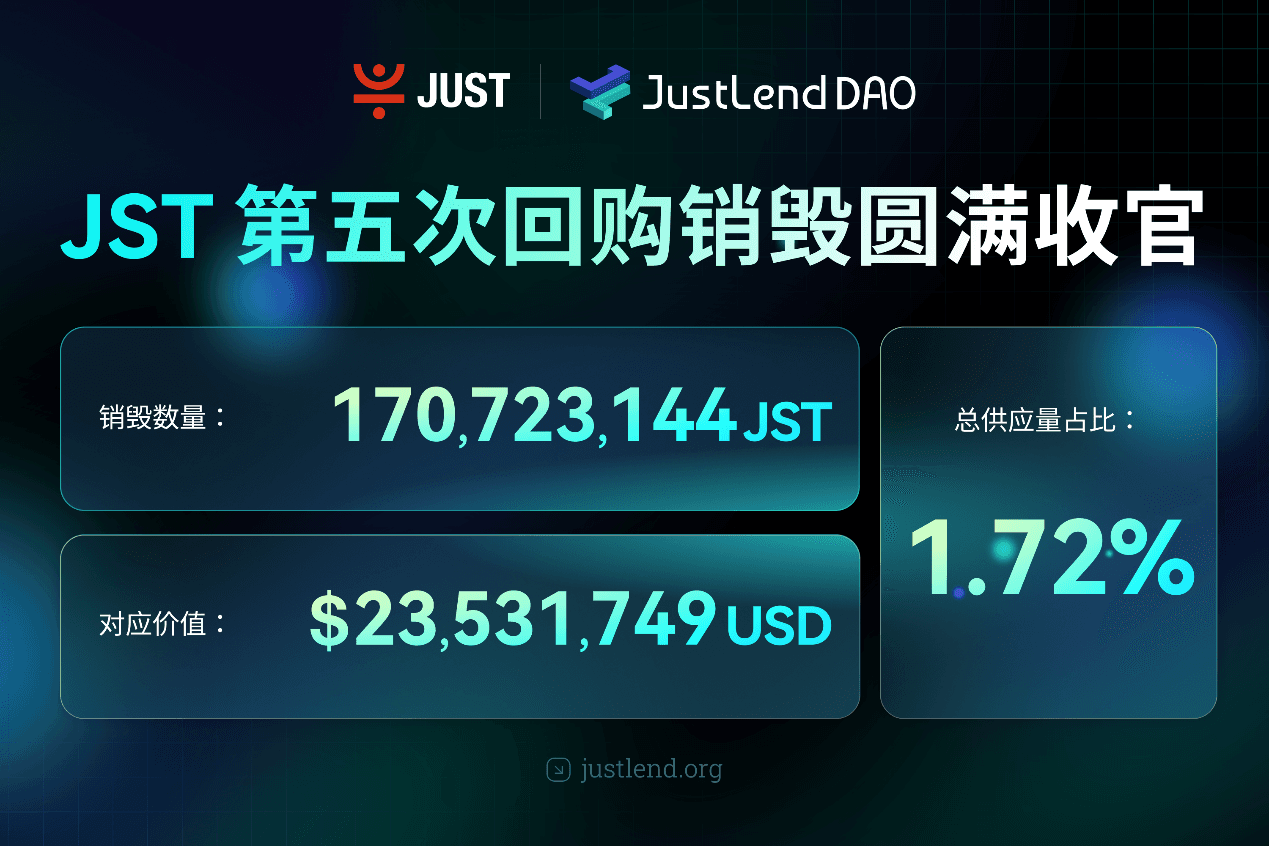
BitTorrent Brand Upgrade and Initial BTT Buyback & Burn Launch Simultaneously, Dual Engines Usher in New Era of Web3 Infrastructure
Oct 17, 20:00
Asia Market Daily: Japan's BOJ signals more rate hikes while Korea targets offshore perpetual platforms (2026/10/17)
Oct 17, 17:01Why did Papertrade backfire on you?
Oct 17, 17:01
The 'Strict Father' of Northern Myanmar: This Company Deploys 200,000 "AI Best Actors" to Strike Back Against Scammers
Oct 17, 15:34