Interpreting Karpathy's Sudden Move to Anthropic: Why Join a Competitor as an Employee?

At 11 p.m. on May 19, Andrej Karpathy personally announced his joining Anthropic.
The weight of this name needs no elaboration.
Co-founder of OpenAI, former AI Director at Tesla, father of "Vibe Coding," the world's most influential AI educator.
His position in the AI field is roughly equivalent to LeBron James in the basketball world, making headlines wherever he goes.
He only posted three sentences on X.
The first sentence mentioned that the future of LLM is "particularly shaping" in the coming years. The third sentence mentioned his continued passion for education. The most crucial sentence in between is just five words, "returning to research and development."
He is the third key figure to switch from the OpenAI camp to Anthropic in the past two years.
He is also a soon-to-be 40-year-old, accomplished, financially independent individual who actively chose to become someone else's subordinate.
Why did he leave? Why Anthropic? And why did Anthropic insist on recruiting him?
Behind each question lies something worth delving into.
This week, Karpathy has already started working and joined Anthropic's pre-training team.
Led by Nick Joseph, this team is responsible for all large-scale training runs for Claude.
An Anthropic spokesperson confirmed to TechCrunch that Karpathy will build a new sub-team focused on leveraging Claude itself to accelerate pre-training research.
Nick Joseph also added context on X, stating, "He will be building a team focused on accelerating pre-training research with Claude itself."
TechCrunch's assessment states, "Karpathy is one of the few researchers who can bridge the gap between LLM theory and large-scale training practice."
Axios characterized this event as "a major win for Anthropic in talent acquisition."
Also announced on the same day to join Anthropic was cybersecurity expert Chris Rohlf, with former xAI founding member Ross Nordeen joining earlier this month. The directional trend of talent is becoming increasingly evident.
Data from Polymarket can serve as a proxy for market sentiment—traders priced Anthropic's probability of having the best AI model by the end of June at 65%, compared to 4% for OpenAI.
Karpathy's joining further reinforces this assessment.
To understand the significance of this addition, one must grasp the rarity of Karpathy as an individual.
His scarcity does not lie in technical ability, as there are many top researchers.
His rarity lies in his ability to change the entire industry's understanding of something with a single word.
Born in Slovakia in 1986, he immigrated to Toronto, Canada at the age of 15.
While pursuing his undergraduate degree at the University of Toronto, he took courses with Geoffrey Hinton and participated in his reading group.
Hinton is the spiritual leader of the deep learning renaissance, a recipient of the 2018 Turing Award and a future Nobel laureate in Physics in 2024.
Karpathy was one of the early young minds ignited by this movement.
He later studied at Stanford under another legendary figure, Fei-Fei Li, and during his Ph.D., created the CS231n course.
From 150 students in 2015, the course grew to 750 in 2017. All video lectures were made publicly available online, becoming the first stop for countless engineers worldwide to self-learn deep learning, particularly the unparalleled masterclass in computer vision.
In 2015, he became a founding research scientist at OpenAI.
In 2017, he was recruited by Musk to join Tesla as Senior Director of AI, driving the development of a pure vision-based approach to autonomous driving.
In this hiring process, Musk faced immense pressure.
That same year, Karpathy published an article on Medium introducing the concept of "Software 2.0," advocating that neural network weights are the new code, datasets are the new source code, and gradient descent is the new compiler.
This framework reshaped the entire industry's understanding of "what programming is."
After leaving Tesla in 2022, he created the "Neural Networks: Zero to Hero" series on YouTube, and the channel quickly surpassed a million subscribers.
Concurrently, his open-source projects micrograd, nanoGPT, and nanochat, with minimal code but pinpointing core concepts accurately, were hailed as "runnable textbooks."
In February 2025, he coined the term "Vibe Coding," which was selected as the annual vocabulary by the Collins Dictionary.
In June, during a lecture at YC AI Startup School, he introduced the "Software 3.0" and "Decade of the Agent" frameworks, becoming one of the most widely discussed AI lectures of the year.
In 2024, TIME named him one of the "100 Most Influential People in AI."
From Hinton, to Fei-Fei Li, to Ultraman, and then to Musk, he has always been at the forefront at each node.
But the most enduring legacy he left behind was not any product or paper, but those conceptual frameworks.
Software 2.0, Vibe Coding, LLM OS. These terms have changed how people think about AI.
Karpathy's career has a clear thread—what he has always pursued is not a title.
He has been a student of Hinton and Fei-Fei Li, a colleague of Ultraman, and a direct subordinate of Musk.
At each stage of his journey, his organizational position has been at the top.
Now, joining Anthropic, his direct superior is Nick Joseph, the Head of Pretraining.
Nick Joseph reports to Dario Amodei.
Karpathy is positioned at the third level in the organizational structure.
Nick Joseph is one of the 11 founders of Anthropic and has previously worked at Vicarious and OpenAI.
During his time at OpenAI, he worked on code models in the security team, saw that GPT-3 could write code after fine-tuning, realized AI's ability to self-improve, and then left with the security team lead to create Anthropic.
His team trained the full range of Claude models, including Mythos.
Karpathy is willing to do research under Nick Joseph for a simple reason: this position is closest to what he wants to do.
Reflecting on each career move, the driving force has always been the same: "Where is the biggest experiment happening right now?"
In 2017, he joined Tesla because autonomous driving was the biggest experiment in Software 2.0.
In 2022, he left because the architecture was set, leaving only engineering optimization.
In 2023, he returned to OpenAI because the boom brought by ChatGPT with the release of GPT-4 was the most stimulating frontier.
In 2024, he founded Eureka Labs to validate the hypothesis of AI-native education.
In 2026, he joined Anthropic because the pre-training revolution of "using AI to study AI" is happening there.
Every departure was not due to dissatisfaction but because the current position was no longer where the biggest experiment was taking place.
Why did he not return to OpenAI? Talent movements provide the answer.
Jan Leike, former Head of Alignment at OpenAI, joined Anthropic in May 2024.
OpenAI co-founder John Schulman followed suit in August of the same year.
Now it's Karpathy's turn.
Two years, three individuals, all one-way flow, with no comparable reverse cases.
OpenAI's strategic focus has shifted from pure research to platformization and acquisitions. From Chat.com, to io Products, Windsurf, TBPN, the acquisition intervals are getting shorter, and the amounts are getting larger.
This is a company that is transforming into an "AI-era consumer giant."
For a researcher looking to "return to research," Anthropic's path of "winning with research quality" is more attractive.
Anthropic's recruitment motivation can be divided into several layers.
At the surface level is the technological need.
No matter how large Anthropic's computing budget is, it cannot match OpenAI backed by Microsoft and Google with TPUs.
In the pure computing power race, Anthropic cannot win.
It must find a way to train better models with less computing power.
The "accelerated pretraining research using Claude" is this path, and Karpathy is one of the very few individuals who possess in-depth pretraining theory, large-scale engineering experience, and intuition for AI-assisted research.
Further down is the talent signal.
In two years, three core OpenAI figures unidirectionally flowed into Anthropic, and the narrative of "frontline researchers voting with their feet" has taken shape.
Each addition at the level of Karpathy lowers the psychological barrier for the next top talent to join. Talent attracts talent, and the flywheel spins.
There is also the pre-IPO brand endorsement.
Anthropic is discussing a $300 billion funding round at a $900 billion valuation, and preparations for an IPO are underway.
Karpathy is one of the most publicly recognized technical figures in the AI field, with millions of YouTube subscribers, an annual lexeme inventor, and a CLAUDE.md repository with 220,000 GitHub stars.
His name appeared on Anthropic's employee list, giving the investment bank a sentence that could be directly inserted into the prospectus.
But the most interesting layer may be what Anthropic did not explicitly recruit for but was destined to reap the greatest rewards, Karpathy's ability to define paradigms.
Any technical exploration he did at Anthropic would be openly discussed by him, through tweets, blogs, and YouTube videos.
When he named ongoing events in his unique way, Anthropic naturally became the birthplace of that paradigm.
They hired a top-tier pre-training researcher, along with gaining the industry's most influential technical storyteller.
Looking at this personnel change in a larger context, it marks a technological inflection point.
In April 2026, Anthropic released the Mythos Preview, the most powerful AI model to date.
Mythos was so powerful that it was only available for invite-only beta testing through Project Glasswing.
Without being specifically trained for network security, Mythos autonomously discovered and exploited a 17-year-old remote code execution vulnerability in FreeBSD, found vulnerabilities in OpenBSD spanning 27 years, and identified a defect in FFmpeg over 16 years.
An independent assessment by the UK AI Security Institute confirmed that it was the first model to complete a 32-step enterprise network attack simulation from start to finish.
Anthropic itself acknowledged that these capabilities were not the result of deliberate training but an "emergence downstream" of general reasoning and software engineering capability improvement.
The better the pre-training, the more capabilities emerged beyond expectations.
Mythos is not only the most powerful current model but also the most powerful current tool.
What Karpathy came to Anthropic to do is to take this most powerful hammer and improve the way the hammer itself is made.
Using Mythos / Claude to discover better training architectures, data ratios, and experimental directions, accelerating the pace of model improvements beyond the linear rhythm of human researchers, setting in motion an evolutionary flywheel of "AI improving AI."
This is also the most anticipated outcome for Anthropic.
As this flywheel truly spins up, "AI Self-Improving Pre-training" will no longer be just a research direction, but the fast lane to AGI and even ASI.
Currently, all dimensions of the arms race for computing power, data barriers, and talent competition could be rewritten by this one variable.
Within three years, OpenAI lost three key figures to the same competitor.
The impact of this fact may be greater than any funding figure.
Computing power can be bought with money, data can be accumulated over time, but those who can set the AI evolution flywheel in motion are few and far between.
Karpathy chose to relinquish his free agent status and return to the front lines at this moment. He believes the window is right in front of him.
Recommended
Desk: Brent Crude Tops $110, Musk's Net Worth Drops 528.6 Billion in Four Days After Tesla Roadster Launch
Oct 17, 21:49
JST Fifth Buyback and Burn Successfully Concludes: Over 170 Million Tokens Worth Approximately $23.53 Million Burned, Buyback Mechanism Set for Comprehensive Upgrade
Oct 17, 20:10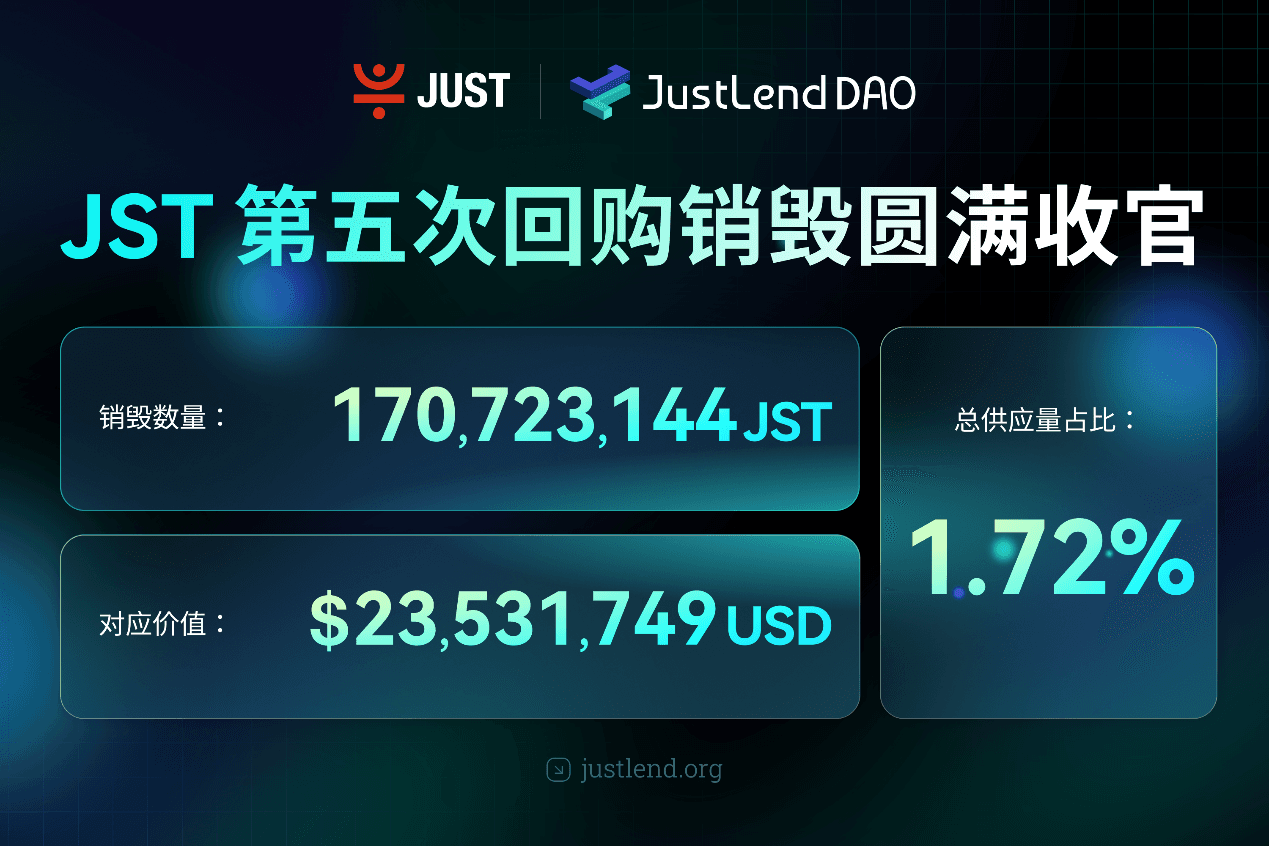
BitTorrent Brand Upgrade and Initial BTT Buyback & Burn Launch Simultaneously, Dual Engines Usher in New Era of Web3 Infrastructure
Oct 17, 20:00
Asia Market Daily: Japan's BOJ signals more rate hikes while Korea targets offshore perpetual platforms (2026/10/17)
Oct 17, 17:01Why did Papertrade backfire on you?
Oct 17, 17:01
The 'Strict Father' of Northern Myanmar: This Company Deploys 200,000 "AI Best Actors" to Strike Back Against Scammers
Oct 17, 15:34