Trump Halts AI Executive Order | Rewire News Morning Brief

Trump Personally Halts AI Review Executive Order, Cloudflare Cuts 20% of Staff and Declares "Quantifiers are Outdated", Spotify Secures AI Cover Licensing from Universal Music.
1|Trump Personally Stops AI Executive Order, White House Internal Route Battle Publicized
The AI executive order scheduled to be signed by the White House this week was halted at the last moment by Trump himself. This order required large AI models to undergo government review before publication, with OpenAI, Anthropic, and Google having been previously notified. According to the Financial Times, Trump's reason was concern that regulation would "weaken America's competitive edge."
Yesterday's Rewire mentioned that the White House was preparing this order. In less than 24 hours, it was aborted. On the surface, it was a matter of the fate of an executive order, but underneath lay the core contradiction in Trump's AI policy: the national security hawks want guardrails while Silicon Valley benefactors favor freedom, and both lines are running concurrently within the White House. Trump chose the benefactors' side. In the same government term that blacklisted Anthropic from the supply chain risk list, it has now blocked pre-publication review for them. This is not policy reversal but rather two bureaucratic systems vying for the power to define AI governance, with the president temporarily suppressing one side with a veto. (Continued from yesterday's report)
(Source: Financial Times / Reuters / CNBC / Axios / CNN)
2|AI Job Displacement Enters Divergence Phase: Cloudflare Axes "Quantifiers," Starbucks Ousts AI
Cloudflare announced a workforce reduction of about 20% in the same week of record quarterly revenue. CEO Matthew Prince stated in an internal memo that this round of layoffs targeted not underperforming employees but "quantifiers," who are those responsible for measuring and managing the work of others in middle management positions. Prince believes that AI has rendered these roles obsolete. The company's stock price rose in after-hours trading.
On the same day, a contrasting signal emerged as Starbucks removed its AI inventory management tool from stores after a 9-month pilot, citing consistently lower predictive accuracy compared to traditional manual counting.
With these two messages side by side, the impact of AI on employment is undergoing differentiation. Cloudflare represents the latest case of the "AI Replacing Middle Management" narrative, not replacing those doing the work but those managing the work. Starbucks represents the resistance AI tools encounter in the physical world, where algorithmic predictions fall short of the experience of seasoned store staff in scenarios with insufficient digitization.
(Source: Fortune / CNBC / TechCrunch / Inc.com / Reuters)
3|Anthropic in Talks with Microsoft for Chip Procurement as Compute Supply Chain Diversification Accelerates
According to Bloomberg, Anthropic is in early negotiations with Microsoft for the procurement of the Maia 200 AI chip. If successful, this would mark Anthropic's third source of compute power, beyond Nvidia and Google TPUs. The Maia 200 is Microsoft's in-house developed second-generation AI chip, currently not yet in mass production. Concurrently, the Pentagon is testing alternative models to reduce reliance on Anthropic's technology.
Anthropic finds itself in the epitome of AI arms race supply chain anxieties. A company with an annual revenue exceeding tens of billions of dollars, its compute backbone is held by two suppliers, one of which (Google) is also an investor in a competitor. Engaging with Microsoft for chip procurement is essentially a hedge against single-point dependency through supplier diversification. However, there is a nested relationship at play: Microsoft is the largest investor in and compute supplier to OpenAI, and if Anthropic adopts Microsoft's chips, a top competitor of OpenAI will be running on hardware from an OpenAI investor. The competitive and supply relationships in the AI industry are weaving into a complex web.
(Source: Bloomberg / The Information / Reuters / CNBC)
4|Spotify Secures Universal Music AI Cover Licensing, Rewriting Music Industry Norms
Spotify has reached an AI licensing agreement with Universal Music Group, allowing users on the platform to create covers and remixes of Universal-affiliated artists using AI. This marks the first official AI music functionality licensing by a major record label on a streaming platform. On the same day, Spotify launched the Studio AI desktop app integrated with ElevenLabs' audiobook tool, causing its stock price to intraday surge by up to 15%.
Just two years ago, the music industry was collectively suing AI companies for copyright infringement. Now, Universal has proactively opened its catalog to platforms for AI covers. The logic behind this shift is clear: instead of spending money on lawsuits to stop illegal covers, it's better to turn it into a revenue-sharing pipeline. Spotify has transformed from a pure-play platform to an AI creation platform, where every AI cover generates new royalty streams. The record labels are not just embracing AI; they have found a way to collect rent from AI.
(Source: TechCrunch / Bloomberg / CNBC / Billboard / Variety)
Also Worth Knowing ↓
The U.S. announces a $20 billion quantum computing investment, with IBM receiving a sole contract to build a quantum chip factory. This is the federal government's largest single quantum investment, coming as China's quantum computing paper output approaches that of the U.S. for the first time. (Source: Reuters / CNBC)
Samsung announces a $26.6 billion AI semiconductor division bonus plan, targeting HBM and advanced packaging talent. The Korean chip industry is building a talent moat through a salary competition, having just reached a temporary agreement with the union last week to avert a strike. (Continuation of yesterday's report) (Source: Tom's Hardware / 36Kr)
NVIDIA's AI server memory costs surge by 485%, with a single GB300 system costing up to $7.8 million. With the continuous increase in HBM stack layers, memory has surpassed the GPU itself as the largest single cost of AI infrastructure. (Source: Tom's Hardware)
AMD's 256-core EPYC Venice processor enters mass production on TSMC's 2nm node. The x86 architecture enters the 2nm node for the first time, aiming for Intel's data center market share. (Source: Tom's Hardware)
The California governor signs an AI Worker Protection Executive Order, requiring employers to disclose the use of AI in hiring and firing decisions. The first statewide AI employment protection regulation in the U.S., coinciding with the same day as Cloudflare layoffs. (Source: Reuters / Axios)
JPMorgan Chase deploys AI trading analytics tools across its global investment banking division. CEO Dimon says they plan to hire more AI engineers while reducing traditional banker roles. The largest Wall Street bank is moving AI from experimentation to full coverage. (Source: CNBC / Bloomberg)
Grok underperforms among Washington government clients, with some agencies turning to Claude and GPT-4. xAI models show a performance gap in policy analysis scenarios, and the AI growth narrative in SpaceX's IPO story faces real-world testing. (Source: The Information)
Recommended
Desk: Brent Crude Tops $110, Musk's Net Worth Drops 528.6 Billion in Four Days After Tesla Roadster Launch
Oct 17, 21:49
JST Fifth Buyback and Burn Successfully Concludes: Over 170 Million Tokens Worth Approximately $23.53 Million Burned, Buyback Mechanism Set for Comprehensive Upgrade
Oct 17, 20:10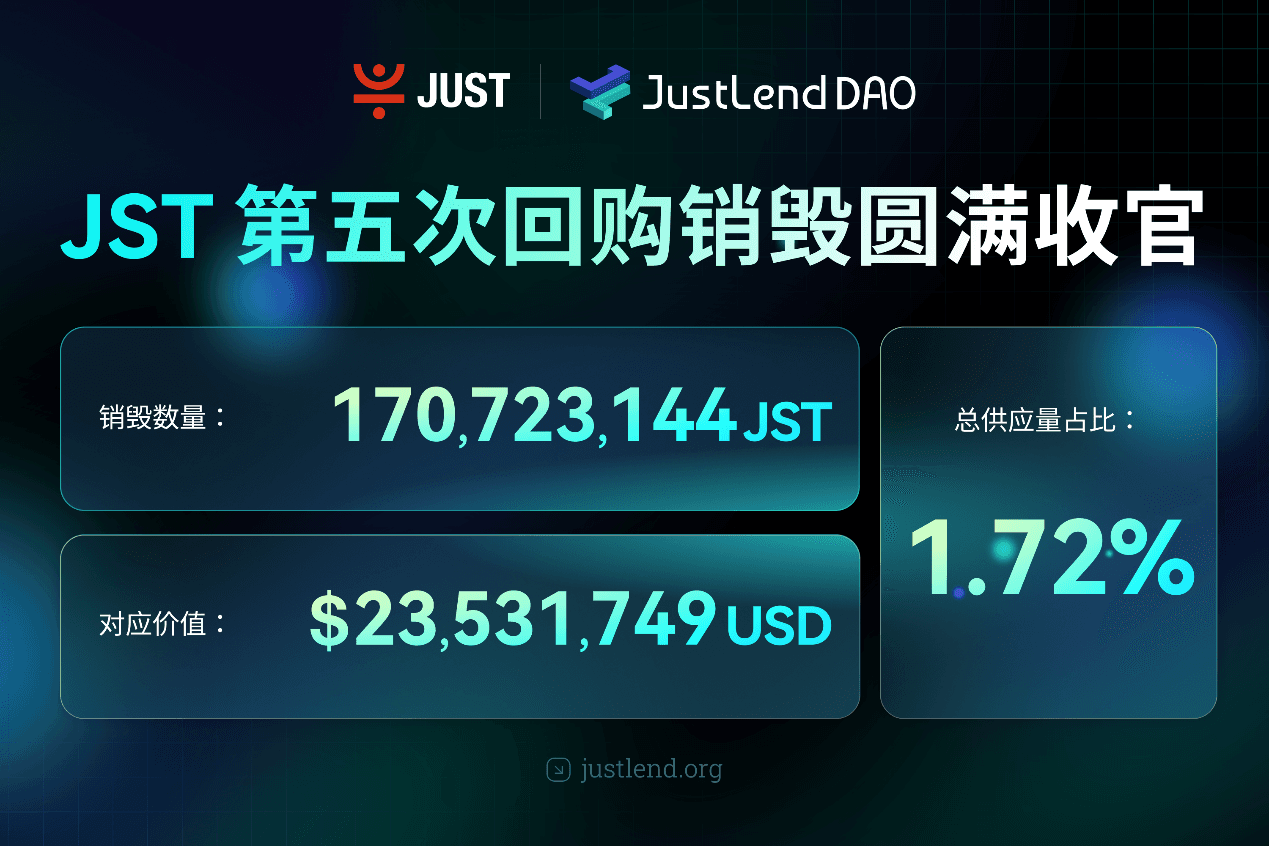
BitTorrent Brand Upgrade and Initial BTT Buyback & Burn Launch Simultaneously, Dual Engines Usher in New Era of Web3 Infrastructure
Oct 17, 20:00
Asia Market Daily: Japan's BOJ signals more rate hikes while Korea targets offshore perpetual platforms (2026/10/17)
Oct 17, 17:01Why did Papertrade backfire on you?
Oct 17, 17:01
The 'Strict Father' of Northern Myanmar: This Company Deploys 200,000 "AI Best Actors" to Strike Back Against Scammers
Oct 17, 15:34