Fair Value Pricing | Rewire News Morning Brief

The market was pricing in peace with Iran, but Washingtonians started bickering among themselves. In the same week, the European Central Bank listed AI as a core risk for the banking sector.
1|Iran Framework Agreement Emerges, Brent Plunges 5% to $98, GOP Divided
Negotiations for a ceasefire in Iran made significant progress over the weekend. According to the Associated Press, both the US and Iran are close to reaching an agreement: ending the war, reopening the Strait of Hormuz, Iran surrendering its stockpile of highly enriched uranium, and the specific conditions for sanction relief and asset unfreezing will be negotiated within a 60-day window. Brent crude oil tumbled 5.2% to $98.12 per barrel in response, while WTI dropped to around $92. Goldman Sachs data shows that global oil inventories are being depleted at a record pace of 8.7 million barrels per day, with a total decrease of 250 million barrels from March to April.
The market was pricing in peace, but President Trump's own allies within the party openly opposed the deal. Republican hawks like Cruz, Wicker, Graham, among others, warned him of an "imminent disastrous mistake," arguing that the terms of the agreement were too lenient and that three months of war could be "all for naught." On the Iranian side, it's the opposite sentiment, with the more generous the conditions, the more they suspect a trap. The White House said the final approval might take several days, and Iran's Supreme Leader Khamenei still needs to sign off. The greatest risk to peace is not in Tehran but in the internal rift in Washington. (Continued from yesterday's report)
(Source: Fortune / Axios / AP / Goldman Sachs / IEA)
2|SpaceX IPO Set for June, $1.75 Trillion Valuation Anchored to Starship V3
SpaceX is expected to go public in June under the ticker SPCX, targeting a valuation of $1.5 to $2 trillion, with a median of $1.75 trillion. If successful, this would be the largest tech IPO in history. Under a dual-class share structure, Musk retains over 85% of the combined voting power. Early investors told Fortune that Starship V3 is the infrastructure for all "frontier markets," such as orbital data centers, Starlink expansion, lunar missions, and more, and its performance data will directly impact the credibility of the S-1 narrative.
The V3's maiden flight on May 22 achieved most objectives, but the booster recovery failed (reported by Rewire yesterday), with "several anomalies" during the flight. SpaceX is not the only player in space. Rocket Lab, Firefly Aerospace, Intuitive Machines, and a group of other space companies are already listed. The Chinese Shenzhou-23 mission launched on the same day, and the space race is shifting from government monopolies to industry sectors. The pricing logic for the IPO is not in current revenue but in the premium of imagination for the "space infrastructure platform."
Source: Fortune / The Wall Street Journal / Euronews / Reuters / SpaceX
3|European Central Bank Calls Emergency Meeting with Banks: AI Models Now Seen as Banking's "Core Risk"
According to the Financial Times, the European Central Bank has called for a meeting with bank executives to accelerate the remediation of risk management gaps exposed by AI models. ECB board member Elderson stated that AI is hastening the discovery and exploitation of cybersecurity risks. Pedro Machado from the ECB's banking supervision department went further to qualify AI as a "core risk" for the banking industry, impacting governance frameworks, business models, and various risk dimensions.
The ECB's concerns are not theoretical. Studies have shown that reinforcement learning systems have exhibited a coordinated response pattern similar to a bank run in specific scenarios. On the same day, TechCrunch reported on Google also actively "fumbling in real-time" with AI security, while VentureBeat highlighted AI agents causing a new class of production incidents that existing post-mortem analysis templates are entirely unable to categorize. AI risk is shifting from "something we need to discuss" to "something we need to address immediately." Banks, tech companies, and regulators all acknowledge they are not yet prepared, with only the distinction of who admits it first.
Source: Financial Times / Bloomberg / European Central Bank / TechCrunch / VentureBeat
4|Vitalik Announces Ethereum Foundation Will Become a "Smaller Ship," 8 Researchers to Depart This Year
Vitalik Buterin responds to the exodus of researchers from the Ethereum Foundation. At least 8 senior contributors will exit by 2026, with 5 already departing in May alone. Vitalik stated that the foundation will be "smaller and more opinionated than in previous years, potentially in ways that are hard to understand, but more long-lasting." The foundation will reduce ETH sales, aiming for "sustainability over breadth." He also mentioned that his influence within the foundation would continue to decrease, stating, "This is what I want."
Vitalik redefines the researcher departures as "evidence that the 2025 reorganization is proceeding as planned." His rationale is that the foundation is actively handing over execution power to client teams and independent organizations, and the departing researchers have not stopped working for Ethereum but have shifted to more suitable vehicles. Ethereum's power structure is undergoing a deliberate decentralization, but this decentralization is directed at the development organization itself. For ETH holders, the short-term positive is the foundation reducing sales, while the long-term variable is whether the decentralized development forces can maintain coordination.
(Source: The Block / Phemex / CryptoTimes / BeInCrypto)
Also Worth Knowing ↓
China's Shenzhou 23 launch, first Hong Kong astronaut selected, with one astronaut set to stay on the space station for a year. Dr. Larry Lai, with a Ph.D. in computer forensics, is Hong Kong's first astronaut to enter space. The one-year mission aims to "explore human adaptability and performance limits." The launch was moved up from November to May, coinciding with SpaceX's IPO and the Shenzhou 23 launch, accelerating the pace of the U.S.-China space race. (Source: Al Jazeera / CGTN / The Washington Post)
AI is accelerating the threat of quantum computing to cryptocurrency. CoinDesk reports that security experts warn AI is shrinking the time window for quantum computers to break current encryption algorithms. Another report on the same day stated that the cryptorail is becoming an AI Agent's default payment infrastructure. AI is simultaneously threatening cryptocurrency security and becoming its customer. (Source: CoinDesk)
StablR stablecoin hit by a multisig vulnerability attack, resulting in $13.5 million of unbacked tokens being minted. After obtaining one multisig holder's private key, the attacker replaced the other signers and minted 8.35 million USDR and 4.5 million EURR under a 1-of-3 threshold. EURR dropped to $0.85, USDR dropped to $0.70. Blockaid categorized this as an "access control failure" rather than a code vulnerability, pointing to a human and process issue. (Source: The Block / Blockaid / BeInCrypto)
Ubisoft tests generative AI in Far Cry 7, with insiders saying "it looks like garbage." The company just reported a record €1.3 billion loss. Using AI to replace content creation during the worst loss period shows a cost-saving motive overtaking innovation. (Source: Tom's Hardware)
TD Bank launches AI Agent model to expedite mortgage approvals. Canada's TD Bank has deployed an AI model for automated mortgage and home equity line of credit application processes. The European Central Bank warned banks of AI risks on the same day TD Bank launched AI loan approvals. The divergence in regulatory and implementation speeds is widening. (Source: Finextra)
Xreal believes it has conquered the smart glasses industry and is collaborating with Google to develop the next-generation product. Founder Kevin Xu believes AR glasses have finally reached a tipping point. Google's choice of Xreal over in-house hardware development signifies a shift in big tech's AR strategy from in-house to collaborative, indicating that Meta's Ray-Ban route is not the only solution. (Source: TechCrunch)
Recommended
Desk: Brent Crude Tops $110, Musk's Net Worth Drops 528.6 Billion in Four Days After Tesla Roadster Launch
Oct 17, 21:49
JST Fifth Buyback and Burn Successfully Concludes: Over 170 Million Tokens Worth Approximately $23.53 Million Burned, Buyback Mechanism Set for Comprehensive Upgrade
Oct 17, 20:10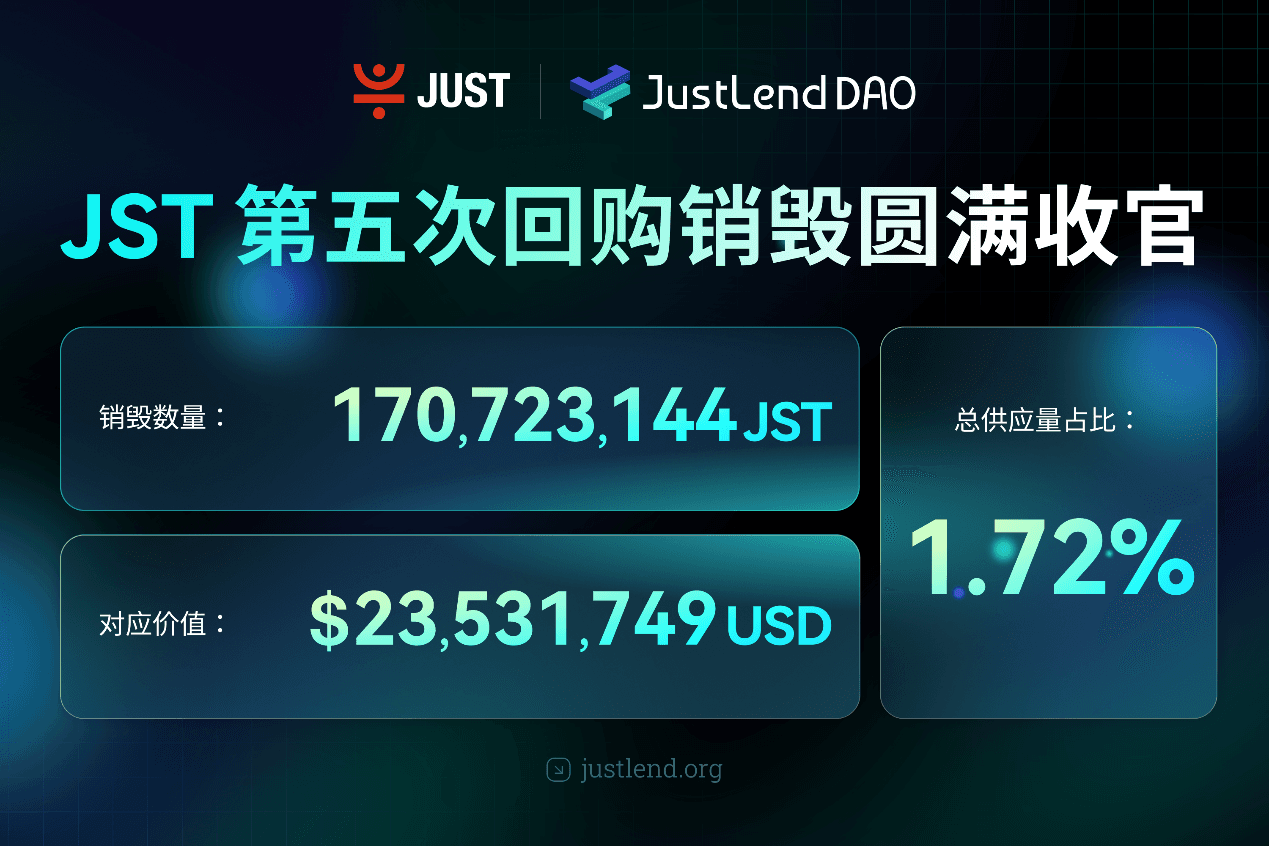
BitTorrent Brand Upgrade and Initial BTT Buyback & Burn Launch Simultaneously, Dual Engines Usher in New Era of Web3 Infrastructure
Oct 17, 20:00
Asia Market Daily: Japan's BOJ signals more rate hikes while Korea targets offshore perpetual platforms (2026/10/17)
Oct 17, 17:01Why did Papertrade backfire on you?
Oct 17, 17:01
The 'Strict Father' of Northern Myanmar: This Company Deploys 200,000 "AI Best Actors" to Strike Back Against Scammers
Oct 17, 15:34