Tech Guru Gavin Baker's Three Contrarian Calls: Trainium Undervalued, TSMC to the Rescue, Space Mining Hash Rate to Surge in Two Years
Recently, at the prestigious Wall Street investment conference — the 2026 Sohn Conference, tech investment guru and Atreides Management Chief Investment Officer Gavin Baker was interviewed.
Baker, who previously managed over $17 billion at Fidelity, is a seasoned investor in the semiconductor field.
During the interview, he made several direct challenges to the market consensus: the most underestimated AI chip right now is Amazon's Trainium; TSMC's "conservative" expansion strategy is helping the industry avoid a bubble; space-based compute power will be proven viable within two years and will begin to disrupt the ground data center industry by the end of this decade.
He said, "I will never short Google, nor will I short Broadcom, but I do believe Trainium is severely undervalued right now."
The degree of underestimation of Trainium far exceeds all others. The significance of Trainium for 2026, especially after Trainium 3 ramps up in the second half of this year, is just as important as TPU for 2025. If someone is very bullish on TPU today, they might want to take a look at their 13F filing to see if they hold positions in Lumentum or Celestica— these are the best two targets for investing in TPU. I hold one of them, so I believe I am confident in saying this."
He also mentioned that TSMC is not willing to expand production quickly as Huang Renxun would like. "Huang Renxun visits TSMC every three months, and they are probably expanding by 5%. Huang Renxun wants them to double or triple their capacity. If capacity really doubles or triples, NVIDIA can probably sell $1.5 trillion worth of chips next year—I am serious."
Regarding the memory cycle, Baker stated that based on every memory cycle in the past 25 years, now is definitely the time to sell memory 100%.
Back in 2000, I was actually an analyst at Micron, and I remember going to Silicon Valley for their analyst day. I have experienced numerous memory cycles, and based on historical patterns, now is indeed the time to sell.
However, there is one cycle that should never be sold— that is the mid-1990s, which I believe was the most recent true capex cycle. Relative to that cycle, we may still be at a very early stage.
Regarding AI revenue, Baker said that the labor structure of S&P 500 companies will face a "significant adjustment," but the AI pricing model transitioning from "subscription-based" to "usage-based billing" will accelerate revenue growth faster than external expectations—he likened this to the profit model of the mobile call industry back then of "charging per minute beyond the package."
He also stated that reading is overwhelmingly important and emphasized that he almost never proactively meets with public company management anymore—these management teams are highly trained, and what they say will never exceed the scope of an earnings call or 10-Q filing.
And my reading speed is much faster than their speaking speed. Here are the highlights organized by Investment Workbook Lessons Representative (WeChat ID: investmentworkbook) to share with everyone:
Jas Khaira, Senior Partner at Blackstone Group, asked Baker in an interview, among Google TPU, Amazon Trainium, and Intel Gaudi—which one is the most underrated in the market as a competitor to NVIDIA? Baker replied, "Trainium, without a doubt."
He provided specific technical logic. The current mainstream cutting-edge AI models all adopt an architecture called "Mixture of Experts" (MoE). To infer these models, an infrastructure called "Switched Scaleup Network" is required.
Baker said : "There are currently only two companies globally with a running Switched Scaleup Network—one is powered by NVIDIA GPUs, and the other is Amazon's Trainium."
This is a technical threshold that is easily overlooked. Google TPU does not have the same capabilities—Baker directly pointed out a detail: "Google invented the ML Perf benchmark, but they do not submit TPU scores to their own benchmark tests, and you can see that this fact drives Jensen Huang crazy."
Baker also noted that once Trainium is mass-produced on a large scale in the second half of this year, its position in 2026 will be equivalent to what TPU was in 2025. He mentioned having invested in TPU supply chain companies like Celestica, saying, "I believe I am qualified to say this."
He added: "I will never short Google, nor will I short Qualcomm, but I do think Trainium is severely undervalued right now."
Another key topic that sparked attention in this conversation was "Orbital Compute" — the concept of placing data centers in space.
Khaira asked Baker: When can this truly commercialize?
Baker's response provided a clear timeline: "I believe within the next two years, its feasibility and economics will be validated. By the end of this decade, it will start capturing a meaningful market share."
The rationale behind this is that terrestrial data centers face two major constraints: power and cooling. In space, power comes from the sun, and cooling from the satellite's shaded side.
Baker described a satellite design from a potential Orbital Compute provider he had seen: radiators stretching hundreds of feet, with the satellite body being a rack — 8 feet tall, 2.5 feet wide, 4 feet deep — multiple racks interconnected via lasers forming a virtual data center. The radiators are positioned behind the rack's shadow.
He pointed out that once this approach becomes viable, the most significant impact will be on the power and cooling equipment suppliers for terrestrial data centers: "Industrial companies that have massively expanded to support data center construction may face a sudden halt in demand."
He also emphasized that existing terrestrial data centers still hold value, and training and reinforcement learning will continue on the ground. "I cannot imagine that we will stop building terrestrial data centers for the next seven years," but the trajectory of incremental demand is being redefined.
A common question in the market is: Will AI investment become a replica of the dot-com bubble?
Baker's answer is: This time may be different, and the reason is unexpected—the conservatism of TSMC's management.
He said that in history, every major new technology, from railways, canals, PCs, the internet to AI, almost without exception, has seen a bubble. Investors get excited about new technology, a market consensus is formed, a bubble inflates, and eventually, infrastructure is built using bubble funds—the internet has followed this path.
“We don't want a bubble. Bubbles are very bad, going through a bubble is very painful, and it's even more painful after the bubble bursts.”
But this time, he “optimistically believes” that we may avoid a bubble, and the reason lies in the physical constraints present in the real world—specifically, the shortage of watts and wafers.
The key to the wafer shortage lies in TSMC's attitude. Baker said: “TSMC is run by stubborn old people in their 70s.” (He then joked that 70 is the new 50, while he is 50 himself)
These people have gone from Taiwan's semiconductor industry being seen as a ‘dream that could never be completed in this lifetime’ when catching up to Intel, to achieving it in a lifetime. They understand very well what a bubble and a collapse would mean for TSMC.
So, they are unwilling to ramp up production quickly as Huang Renxun hopes.
“Huang Renxun goes to TSMC every three months, and they probably ramp up production by about 5%. Huang Renxun wants them to double or triple their capacity. If capacity really doubles or triples, NVIDIA will probably sell $1.5 trillion worth of chips next year—I'm serious. But on the flip side, this could be very painful for everyone.”
Baker's conclusion is: These ‘stubborn old men’ have objectively helped everyone avoid a bubble by adhering to a real-world physical constraint—a constraint that has never appeared in any previous technological revolution.
In the discussion, Baker also mentioned two noteworthy assessments.
Regarding the memory cycle: Memory prices have already risen by 60% to 70% this year, Micron's gross margin may exceed 60%, far above the historical average (about 16%).
Baker admits that following the memory cycle pattern of the past 25 years, “Right now, you should be 100% in memory stocks.” But he believes this time may be similar to the real capacity cycle in the mid-1990s, “We may still be in the early stages,” and we should not simply apply historical templates.
Regarding AI Revenue Scale: Baker estimates that the combined revenue of OpenAI and Anthropic will reach $200 billion in the not-so-distant future.
He cites Huang Renxun's statement: Huang Renxun hopes that his top engineers will spend at least half of their expenses on the AI token on their compensation.
Baker's assessment is that this trend means that the labor structure of S&P 500 companies will face a "major adjustment," but the AI pricing model transitioning from a "monthly subscription" to a "pay-as-you-go" model will accelerate revenue growth beyond external expectations—he likens this to the profit model of the mobile call industry in the past of "charging per minute for exceeding the package."
During the interview, Khaira also asked Baker where his investment edge comes from.

Baker's answer is succinct: "Reading, overwhelmingly the most important." He says he almost never proactively meets with management teams of public companies anymore—"they are very well trained, never saying anything that is not in the earnings call or 10-Q, while I can read much faster than they can speak."
He admits that one of the most painful lessons in his career was when he wrote a letter to a company's board requesting a stock buyback, only for the company to go bankrupt 18 months later. "It was a permanent lesson about high leverage—sometimes not everything will go as planned."
Baker mentioned that the motto he has been trying to overcome throughout his career is Peter Lynch's principle—pull the weeds, water the flowers, meaning sell losers, hold winners. However, for some reason, this has been extremely difficult for him.
Baker is extremely sensitive to valuations, fundamentally an contrarian investor, with the 52-week low list being his most comfortable zone. He openly admits that he has always held onto value stocks tightly. However, this is a lifelong practice, and he tries to make progress in this area every year.
Recommended
Desk: Brent Crude Tops $110, Musk's Net Worth Drops 528.6 Billion in Four Days After Tesla Roadster Launch
Oct 17, 21:49
JST Fifth Buyback and Burn Successfully Concludes: Over 170 Million Tokens Worth Approximately $23.53 Million Burned, Buyback Mechanism Set for Comprehensive Upgrade
Oct 17, 20:10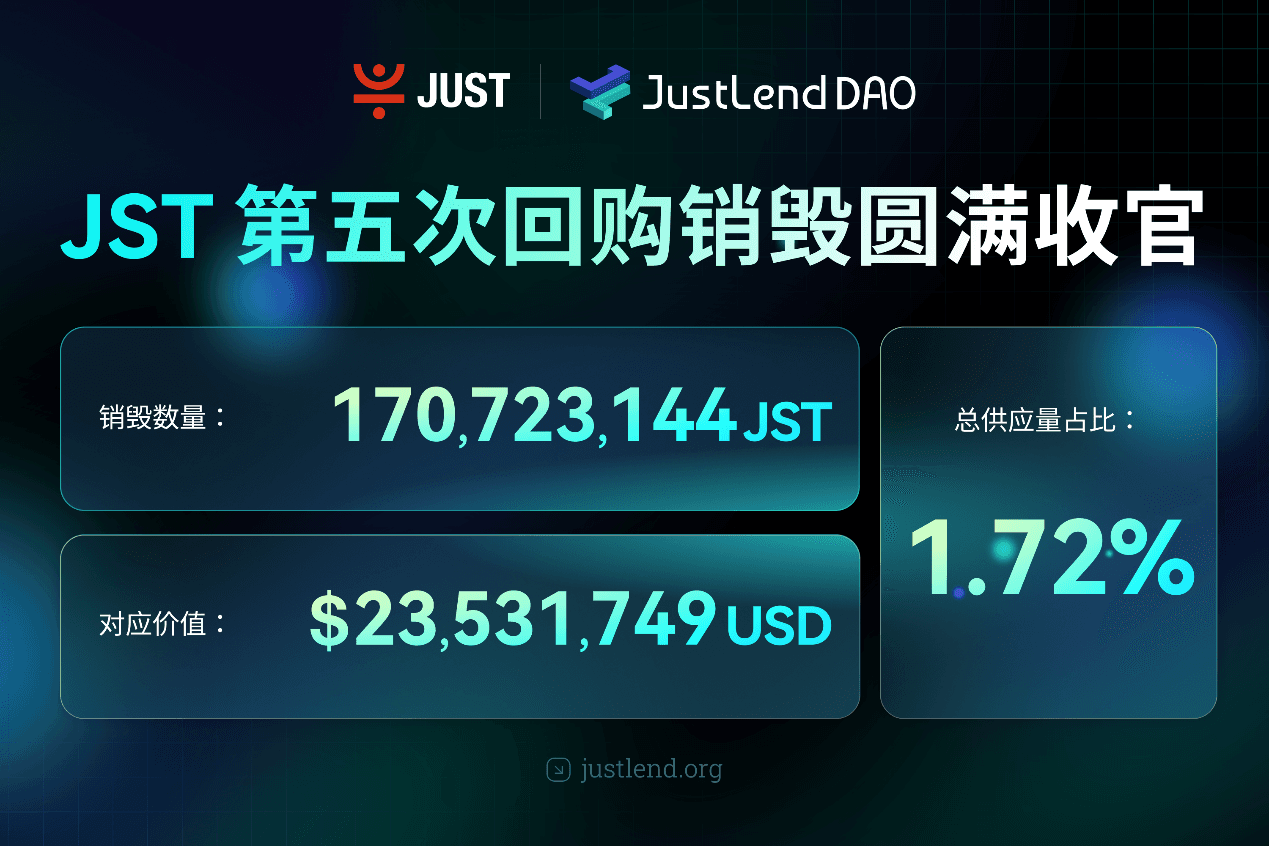
BitTorrent Brand Upgrade and Initial BTT Buyback & Burn Launch Simultaneously, Dual Engines Usher in New Era of Web3 Infrastructure
Oct 17, 20:00
Asia Market Daily: Japan's BOJ signals more rate hikes while Korea targets offshore perpetual platforms (2026/10/17)
Oct 17, 17:01Why did Papertrade backfire on you?
Oct 17, 17:01
The 'Strict Father' of Northern Myanmar: This Company Deploys 200,000 "AI Best Actors" to Strike Back Against Scammers
Oct 17, 15:34