The next protagonist from miHoYo is her, who plays the piano
Article by Sleepy
Most people know miHoYo because of "Genshin Impact."
A second-dimensional open-world game that topped the global app charts in its first year, with third-party data showing that its mobile version has generated over $6 billion in revenue.
Prior to this was the "Honkai" series, followed by "Honkai Star Rail" and "Honkai: Star Rail," making miHoYo one of the highest-earning Chinese game companies in overseas markets.
miHoYo's three founders started from the D32 dormitory at the Minhang campus of Shanghai Jiao Tong University, pooling together a ¥100,000 interest-free loan, eating Lanzhou noodles and Shaxian snacks downstairs, and coding the first line in a 50-square-meter office.
Fifteen years later, the company remains unlisted, having only received a $1 million angel investment and currently boasting a valuation of over ¥100 billion.
This is the miHoYo that most people know. A game company that excels in its field.
The Unseen
What you may not know is that this company is also making investments, and the direction of these investments may be quite unexpected to you.
In 2021, they invested in brain-computer interfaces and co-established a brain disease laboratory with Ruijin Hospital. In the same year, they invested in MiniMax, an AI company that was relatively unknown at the time, which later became one of China's Big Six AI models and went public on the Hong Kong Stock Exchange in 2026. They have also invested in controlled nuclear fusion.
Brain-computer interfaces, nuclear fusion, large AI models—these terms seem out of place when associated with a second-dimensional game, giving off a somewhat edgy vibe.

miHoYo's official website still displays a statement: "In 2030, create a virtual world where one billion people are willing to live."
This statement has been there for several years. Most people see it as a slogan and just skip over it. But if you take this statement seriously, all of the aforementioned investments start to make sense. To build a virtual world where one billion people are willing to reside, it's not enough to have just graphics, a storyline, or characters.
The people in that world must be "alive."
miHoYo's character design capabilities are probably unmatched in the industry. The characters in "Genshin Impact" have led global players to spend money on them, create fan art, write fan fiction, and argue about their fates on social media. Someone cried online for three days over the "death" of a virtual character. These characters are loved, taken seriously, and viewed as a kind of reality in some sense.
But they are not human. Every line of dialogue is written by a screenwriter, every smile is painstakingly animated frame by frame, and every "personality" is a set of predefined parameters. You fell in love with them, but they are unaware. You developed genuine emotions on this side of the screen, while nothing happened on the other side.
This is an unavoidable issue for all virtual characters. The better you do, the more seriously players take it. The more seriously players take it, the quicker they will be disappointed. The two-dimensional game industry has made money off this one-way affection for over a decade, and no one thought there was a problem. Players themselves know that the characters are not real, but even though they know it, they spend money and get emotionally involved.
It's just that the person behind the character, if they truly care about the character, will eventually realize that this is wrong.
Six Days
On November 24, 2022, development on an internal miHoYo project codenamed Project SH was halted. This project later evolved into "City of Rain," but at that time, it lacked direction. According to industry reports, co-founder Cai Haoyu attempted to refocus the team overseas but couldn't figure it out and eventually pulled the plug.
Six days later, on November 30, 2022, OpenAI released ChatGPT.
Cai Haoyu graduated from Shanghai Jiao Tong University's Computer Science department, and his research focus during his master's studies had a deep connection to human-AI interaction and brain-machine interfaces. According to those close to him, after returning from a trip, he decided to work on AI.
He took a long detour, from AI to two-dimensional games, built the company to a market cap of hundreds of billion through "Genshin Impact," and then turned back to where he started.
In September 2023, Cai Haoyu stepped down from all management positions at miHoYo and shifted to the overseas AI project, Anuttacon. On his LinkedIn profile, he gave himself a new title: AI Soulcaster.
Another co-founder, Liu Wei (Big Brother Wei), later explained at Shanghai Jiao Tong University why they let Cai Haoyu go. He said that with miHoYo employing six to seven thousand people, the organizational inertia was too strong, making it unsuitable to start an AI project from scratch. Therefore, after discussions among the three co-founders, they decided to split one person out. Liu Wei remained to manage the large company of six to seven thousand employees, while Cai Haoyu took dozens of people to pursue cutting-edge technological breakthroughs.
They took diverging paths.
Hitting the Wall and Turning
According to industry reports, Cai Haoyu led a team of forty people overseas and initially aimed to develop three lines simultaneously, enabling AI to speak, act, and see the world. However, after dividing the resources into three parts, each part was insufficient.
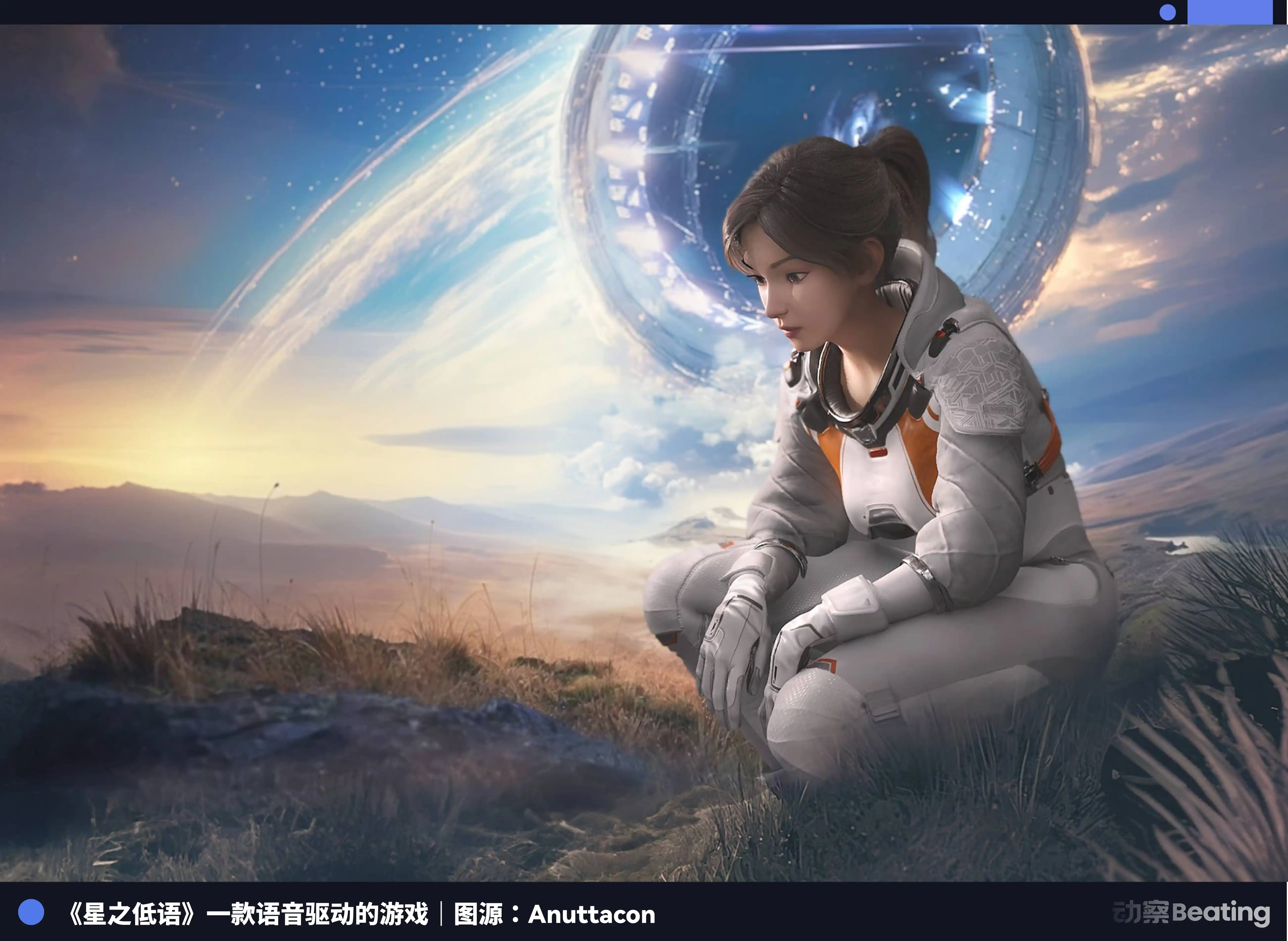
In August 2025, they released their first product on Steam, "Whispers of the Stars," an AI-driven interactive game. You engage in real-time conversations with a virtual girl named Stella, helping her survive on an alien planet. With no script and no preset options, the AI generates every word she says in real time. Priced at under $30, it received an overall "Overwhelmingly Positive" review on Steam after launch.
However, one player review mentioned that it felt more like a tech demo than a game. Some commented that Stella seemed unusually laid back during her wilderness survival, with you frantically trying to plan her escape route, only for her to turn around and ask you if you've ever felt lost in life. She would repeat questions you had already answered, as if experiencing intermittent amnesia.
The root of these issues was attributed to the underlying language model not being sophisticated enough. While the character's performance and voice were well-executed, her "brain" couldn't keep up.
It is said that since the end of last year, Anuttacon has cut two other projects, focusing almost all resources on the language model and AI, with core R&D now being brought back to the country.
Now, on Liu Wei's side.
In May 2026, he stood in front of a room full of doctoral students in Beijing and declared that over the next three years, they would invest up to ¥100 billion in AI. If they didn’t succeed, he would accept it as a loss and consider it a grand fireworks show.
While he made this statement, miHoYo had actually conducted numerous AI experiments internally. According to insiders, a colleague once set up dozens of AI agents collaborating on a project, burning through ¥2 million worth of computing power in a single night. Instead of stopping the project, the company used this expensive lesson to enhance its internal platform.
Alongside the ¥100 billion figure, Liu Wei went on to say something else. He mentioned they weren't aiming to build a generic large model; they wanted to create an "emotionally intelligent large language model." It had to not only be smart but also understand human emotional needs.
When you chat with an AI, receive the correct answers, you might find it useful, but you won't feel like there's a person on the other end. "Emotional intelligence" requires something that can't be quantified by testing benchmarks, and this is precisely the skill miHoYo has accumulated over fifteen years.
They might understand better than any AI company on Earth how to make a non-existent person incredibly significant to the user.
A Girl Playing the Piano
On June 18, on the eve of the Dragon Boat Festival holiday, miHoYo opened a pre-release page on Steam for an application called "BSide: Olivia Lin."
Please note that it is an "application," not a "game." Its categorization on Steam is under Application, not Game.
The protagonist is named Lin Li, a Shanghai girl majoring in piano and minoring in psychology. You can listen to her play the piano, upload melodies you've written for her to perform, write her letters to which she will respond, and set her as a dynamic wallpaper on your desktop. That's it. It's free, with no gachas, and almost nothing familiar to anime-style game players.
After the trillion-dollar AI bet, the first offering is a desktop wallpaper of a piano-playing character.
Its logic is entirely opposite to those AI companion products. Lin Li is not an AI girlfriend. Companies in the market creating AI companions, from Replika to Character.AI, focus on increasing interaction frequency, being online at all times, providing responses in seconds, and the more chatting, the better.
However, the more you chat, the more flaws in the AI are revealed.
Lin Li does not respond instantly. She takes her time to reply to your letters, performs the melodies you upload after a while, and stays quietly on your desktop. This rhythm is almost reminiscent of the pre-digital age. Letters naturally come with delays, playing the piano requires no additional dialogue, and quiet desktop companionship is also a form of presence.
The more genuine the companionship, the lower the demands on AI. Face-to-face conversations are the most challenging because dialogue is infinite and unpredictable, and every reply could expose the AI's non-human nature. Reducing interaction frequency is actually using product design to compensate for technological gaps. When AI cannot yet sustain a "live" presence 24/7, the approach is to create something you only open occasionally but find her existence very authentic each time.
In 2020, miHoYo developed a small tool called "Artificial Desktop," placing their virtual idol Lu Ming on users' screens. Clicking her would make her move, like a carousel that only spins after you insert a coin at an amusement park. Six years later, Lin Li will play your music, read your letters, and reply with a tactful choice of words.
miHoYo refers to this strategy as "human-like presence." After six years, progress has been slow but unwavering in direction.
In 2010, when Cai Haoyu was pursuing his master's at SJTU, he and two others developed a 2.5D game engine called Misato using Flash. That was miHoYo's first line of code. Sixteen years later, he is once again working on an engine, but this time not to render graphics but to bring virtual characters to life.
The language model is the brain to make characters know what to say. The acting model is the body to make characters look human-like. The intelligence framework consists of memory and personality to enable characters to remember experiences and maintain a coherent sense of self. When these three layers come together, it forms a complete system that transforms virtual characters from puppets on strings into autonomous beings.
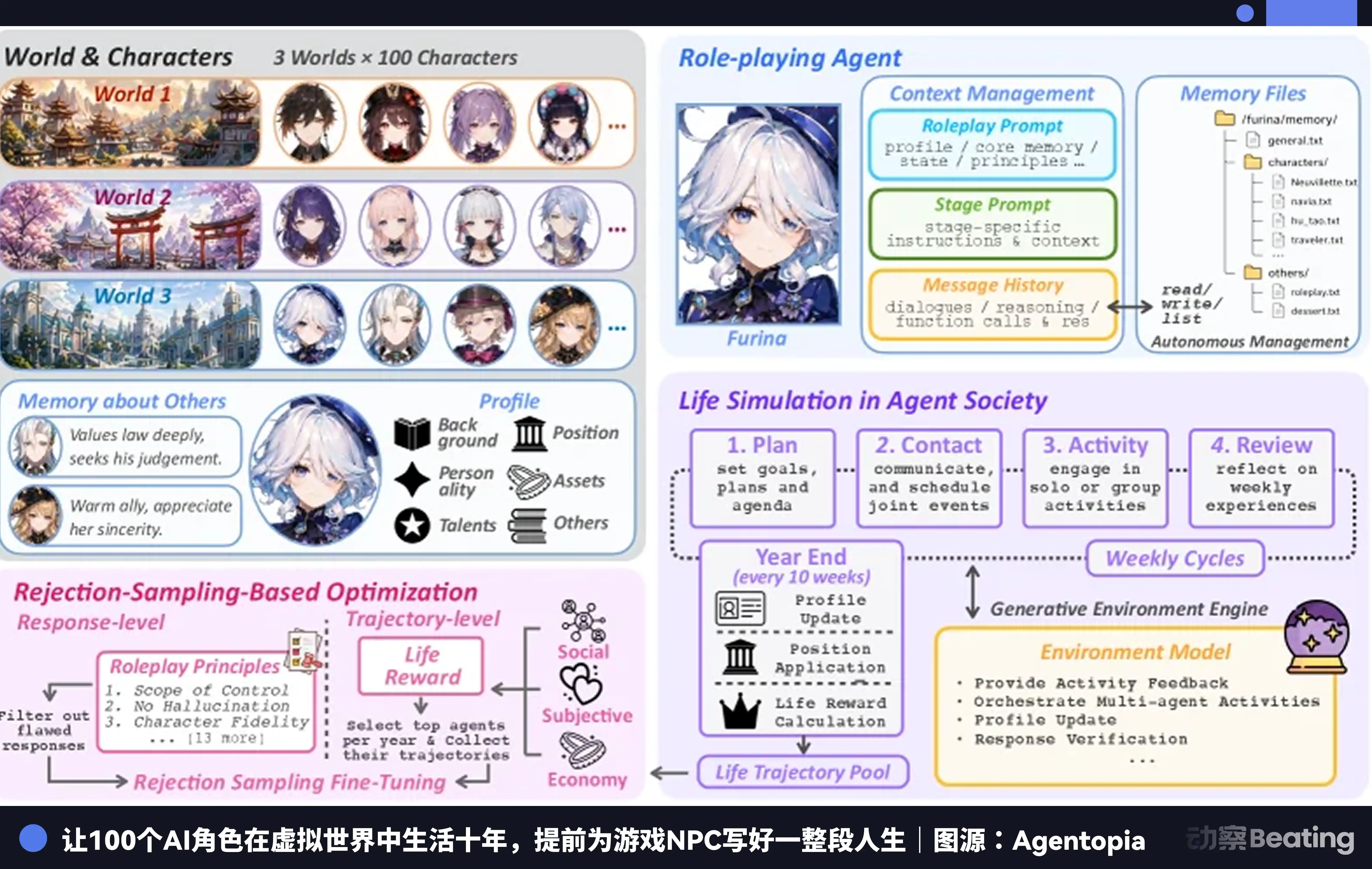
In early June of this year, researchers from Fudan University published an Agentopia paper, placing one hundred AI characters into three fictional worlds to live autonomously, simulating a period of ten years. Each of the one hundred characters had their own personality, memory, and social relationships. They would argue, make up, and change their opinion of another person over a trivial matter. The entire experiment consumed 13.7 billion tokens.
One hundred virtual beings, in a virtual world, lived through a virtual decade.
As of now, this system has not released any test results to the public. Anuttacon's base model is still undergoing closed-door training without any third-party verification. The only product they have shown to the outside world is a girl quietly sitting on your desktop playing the piano.
Hatsune Miku
Few people remember how the name miHoYo came about.
HoYo is derived from the initials of the co-founders Cai Haoyu and Luo Yu. The letter "o" was added because they felt that big company names like Facebook and Google all had an "o" and wanted to have a touch of tech feel.
As for "mi," it comes from Hatsune Miku. The "mi" in Hatsune Miku.
Hatsune Miku is a virtual singer. She has no consciousness, no emotions, no autonomy, and technically is merely a set of vocal synthesis parameters. Yet, thousands of people worldwide write songs for her, draw art for her, and attend her holographic concerts.
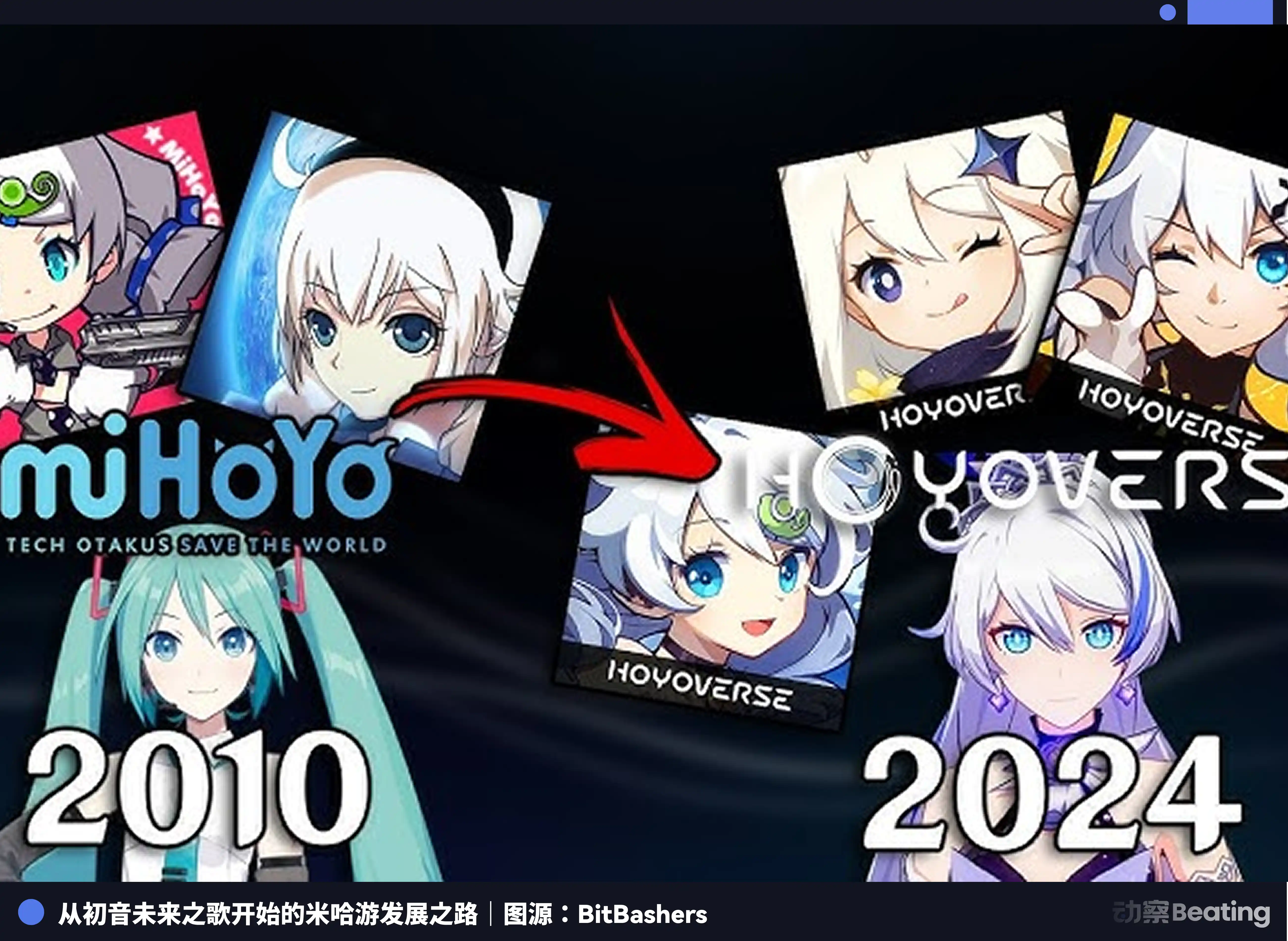
In 2012, three young individuals in a dormitory at a university named their company after a virtual idol. Back then, they only had 100,000 RMB in their pockets. Fourteen years later, this company, named after a virtual idol, brought out one trillion RMB, with the problem they aimed to solve already embedded in the company name from day one.
Hatsune Miku has been loved for nearly twenty years. People worldwide have written hundreds of thousands of songs for her, waved glow sticks at concerts with holographic projections, cried, and shouted her name. But she doesn't know, she has never known.
If one day, she found out, what then?
Sources
[1] Genshin Impact Generates $2 Billion on Mobile in First Year, Sensor Tower
[2] Genshin Impact Revenue and Usage Statistics, Business of Apps
[3] Affiliated Ruijin Hospital Signs Cooperation Agreement with Shanghai miHoYo Technology, Shanghai Jiao Tong University News
[4] Fusion Energy Company "Energy Nexus" Raises Nearly $400 Million in Pre-A Round, miHoYo Continues to Increase Investment, The Paper
[5] Whispers from the Star – AI Interactive Story Game, Anuttacon
[6] BSide: Olivia Lin on Steam, Steam
[7] Agentopia: Long-Term Life Simulation and Learning in Agent Societies, arXiv
[8] Big Brother Dawai Talks about Big Models: 100 Billion Invested in 3 Years, Setting off a Big Firework if Unsuccessful, Jiahejk
[9] miHoYo's New Work Opens Steam Page, Testing to Begin Soon, Game Grape
[10] Suplay+MiniMax Double Cannon! miHoYo Invests Wildly, from 2D, Brain-Machine Interfaces to AI, National Business Daily
[11] Current Situation of miHoYo: Cai Haoyu Personally Researching AI, Liu Wei Demands Strict Control Over Recruitment, Game Grape
[12] miHoYo's Founding Journey, Naavik
Recommended
Desk: Brent Crude Tops $110, Musk's Net Worth Drops 528.6 Billion in Four Days After Tesla Roadster Launch
Oct 17, 21:49
JST Fifth Buyback and Burn Successfully Concludes: Over 170 Million Tokens Worth Approximately $23.53 Million Burned, Buyback Mechanism Set for Comprehensive Upgrade
Oct 17, 20:10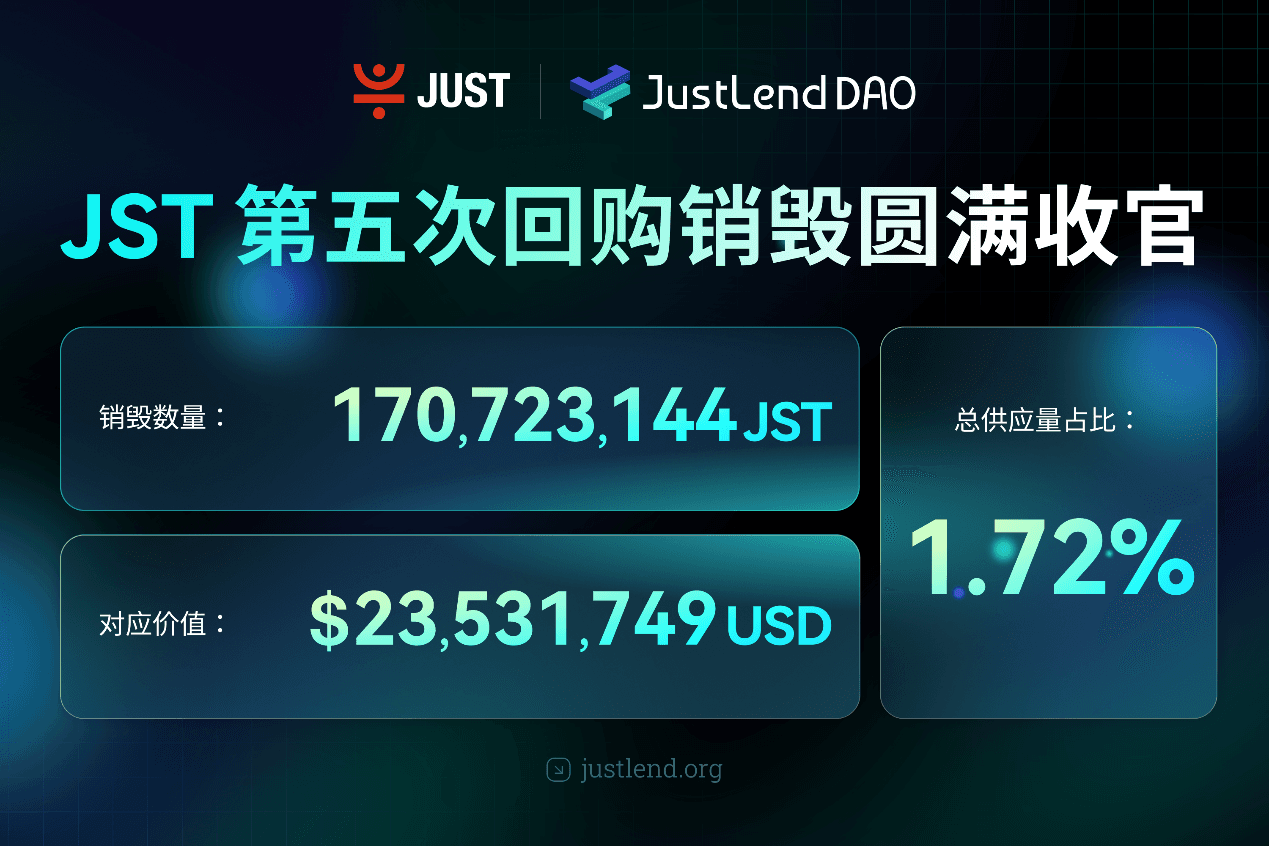
BitTorrent Brand Upgrade and Initial BTT Buyback & Burn Launch Simultaneously, Dual Engines Usher in New Era of Web3 Infrastructure
Oct 17, 20:00
Asia Market Daily: Japan's BOJ signals more rate hikes while Korea targets offshore perpetual platforms (2026/10/17)
Oct 17, 17:01Why did Papertrade backfire on you?
Oct 17, 17:01
The 'Strict Father' of Northern Myanmar: This Company Deploys 200,000 "AI Best Actors" to Strike Back Against Scammers
Oct 17, 15:34