Model Deployment Power Shifts from Silicon Valley to the White House | Rewire News Morning Brief

Publication Date: 2026.06.26 · BlockBeats Connection
The White House Requests OpenAI to Postpone GPT-5.6 Launch, Apple Raises Prices Across the Board by 20% Due to Memory Shortage. One turned model release into a national approval process, the other shifted the cost of AI to consumers.
1|White House Requests AI Company to Postpone Model Launch for the First Time, GPT-5.6 Enters "Government Approval Channel"
The White House Office of Science and Technology Policy (OSTP) and the National Cyber Director's Office jointly requested OpenAI to postpone the public release of GPT-5.6, stating that they are establishing a security assessment framework for cutting-edge models. This marks the first time the U.S. government has actively intervened before a model launch, requesting AI companies to restrict the release scope of new models.
During an internal all-hands meeting, Altman told employees that GPT-5.6 will first be previewed in a limited manner for a small group of government-approved corporate clients, with the White House individually reviewing the admission list. The probability of GPT-5.6 being released by the end of June on Polymarket has dropped to 7.7%. On the same day, The New York Times reported that OpenAI is leaning towards delaying its IPO until next year, and The Economist published an article stating that a bipartisan consensus has been reached in the U.S. that "AI is dangerous."
Two weeks ago, Anthropic was forced to suspend external access to Mythos, and now OpenAI's new model also needs to wait in line for government clearance. Model releases are transitioning from a company's product cadence to a process requiring government approval, and once this authorization is established, every cutting-edge model will need to pass through.
(Source: The Information / Axios / TechCrunch / The Verge / OSTP)
2|Apple Raises Prices Across the Board by Up to $1300, AI Data Centers Are Eating Up Your Memory
Apple has announced across-the-board price increases for Mac, iPad, and home devices. The MacBook Neo has increased from $599 to $699, the MacBook Air from $1099 to $1299, and the most extreme M3 Ultra Mac Studio from $3999 to $5299, a $1300 increase. iPhone prices have not been adjusted yet, but TechInsights estimates that in order to maintain the profit margin for the iPhone 18 Pro, Apple will need to add $270 to the end-user price.
The price increase is rooted in the AI data center's squeeze on memory chips. About 70% of global memory capacity is consumed by servers, leaving less than 30% for consumer electronics. Memory prices have more than doubled since October 2025, and analysts expect another 30%-40% increase in 2026. On the same day, Bloomberg reported that Apple will skip the high-end M6 chip and directly transition to the AI-specific M7 chip line.
Microsoft Surface, Xbox, Nintendo Switch, PlayStation 5, and Meta Quest 3 have all been impacted by the same round of price increases. Apple is just the largest and latest entrant. The cost-saving and efficiency-improving promises of AI have had the opposite effect on the supply chain.
(Source: TechCrunch / The Verge / 36Kr / TechInsights)
3|Z.ai Market Cap Exceeds HK$1 Trillion, Anthropic Cuts Off China's AI Acceleration
Reuters reported that the Chinese AI company Z.ai announced that its latest model, GLM-5.2, has reached the cutting edge level, with an inference cost about one-sixth of equivalent models in the U.S., ranking fourth in the Artificial Analysis leaderboard and second in the Code Arena programming leaderboard. Since its listing on the Hong Kong Stock Exchange in January this year, Z.ai's stock price has surged over 2000%, surpassing a market cap of HK$1 trillion (approximately $128 billion) this week and planning a secondary listing in Shanghai.
But the flip side of speed is risk. Axios reported that the agent capability of GLM-5.2 has approached Claude Opus 4.8, and security researchers are concerned that open-source models are significantly lowering the threshold for malicious attacks. On the same day, The Information and 36Kr reported that Google is restructuring its AI programming team to catch up with Anthropic, and after key researchers left, this ad hoc team has been formally solidified.
Anthropic's original intention of cutting off supply for Mythos was to curb capability outflow, but China's response is not waiting for access to be restored but accelerating self-reliance. The $128 billion market cap is the weight of that response.
(Source: Reuters / Axios / The Information / 36Kr / Artificial Analysis)
4|Ellison's $450 Million "Dark Pool Investment" Secures Stargate Lead Role, Son's Advocates Ground Offensive
**Exclusive:** Fortune reports that Oracle co-founder Larry Ellison donated approximately $45 million to a non-profit organization supporting a Trump 2024 run. This undisclosed donation was first reported this week. Oracle later secured a key role in the $500 billion Stargate AI infrastructure project.
The same day, SoftBank CEO Masayoshi Son dismissed Musk's space-based data center idea at a shareholder meeting, stating that "the early bird gets the worm," emphasizing the importance of the next few years over a decade later. SoftBank had already invested $19 billion in Stargate last year. In a $7 billion all-stock acquisition, Anthem acquired touch-chip company Synaptics, betting on "physical AI," expanding its target market to $2.43 trillion after the deal's completion.
Three pieces of news point to the same strategic window. There are three ways to obtain a ticket to the AI infrastructure game: buy political relationships, compete on deployment speed, or acquire pieces of the technology puzzle. The window is narrowing.
(Source: Fortune / CNBC / SEC)
**5|Core Inflation Reaches 3.4%, Hitting a 20-Month High, Wall Street Begins Pricing Risk into AI Market
In the U.S., core PCE in May rose by 3.4% year-on-year, the highest since October 2023. Overall PCE increased by 4.1% year-on-year, the highest since April 2023. Energy prices surged by 23.5% year-on-year, with the transmission of the Iran conflict's impact on oil prices still unfolding.
Market signals are diverging. Bloomberg reports that Wall Street has added "AI backlash" as a new risk factor to the tech market. Microsoft's performance since the beginning of the year is the worst since the dot-com bubble burst (Barron's), NVIDIA's stock price fell below $200, intensifying competitive threats. However, there are no signs of a slowdown in AI capital expenditure: Amazon announced an additional $13 billion investment in AI infrastructure in India by 2030, while TSMC revealed at a closed-door meeting that the N2/A16 advanced process capacity will see a three-year compounded annual growth rate of 70%.
Macroeconomic indicators and AI capacity expansion are moving in opposite directions. Inflation is heating up, AI capital expenditure is accelerating, and the market is hesitating. It is impossible for all three to continue simultaneously.
(Source: CNBC / Barron's / TechCrunch / 36Kr / BEA)
Worth Knowing ↓
The United Nations halts the evacuation of 11,000 crew members from the Hormuz Strait. A cargo ship was hit by shrapnel 7.5 nautical miles southeast of Oman, with the U.S. attributing the attack to the Iranian Revolutionary Guard. The ceasefire memorandum signed last week has not deterred hostile actions. (Source: Axios / Al Jazeera / UN IMO) (Continued from yesterday's report)
Kraken plans to acquire a 15% stake in DeFi lending protocol Aave for a valuation of $385 million. A centralized exchange acquiring equity in a decentralized protocol further narrows the gap between CeFi and DeFi. (Source: CoinDesk)
SBI acquires Japanese crypto exchange Bitbank for $289 million. One of Japan's largest financial groups makes a full-fledged entry into crypto infrastructure, positioning Tokyo as a hub for compliant crypto trading in Asia. (Source: The Block / Finextra)
Ford rehires quality inspectors due to AI vision detection falling below standard. The first batch of real-world data on AI substitution in manufacturing shows that at least in the quality inspection process, human inspectors are more reliable than AI. (Source: Bloomberg)
General Intuition raises $320 million in funding at a $23 billion valuation, betting on AI agents trained with electronic game data. Millions of hours of gameplay data are being redefined as material to train human-like intuition. (Source: TechCrunch)
Goldman Sachs leads a $110 million Series C round for financial AI company Taktile. Wall Street is funneling funds into vertical AI tools for the financial sector, rather than general-purpose large models. (Source: Finextra)
BTC miners predict Bitcoin will drop to $44,000 by the end of the year. Strategy's STRC falls below face value by 26%, MSTR hits a 16-month low, and a quant fund notes a rare consistency in on-chain signals. (Source: CoinDesk / The Block) (Continued from yesterday's report)
Recommended
Desk: Brent Crude Tops $110, Musk's Net Worth Drops 528.6 Billion in Four Days After Tesla Roadster Launch
Oct 17, 21:49
JST Fifth Buyback and Burn Successfully Concludes: Over 170 Million Tokens Worth Approximately $23.53 Million Burned, Buyback Mechanism Set for Comprehensive Upgrade
Oct 17, 20:10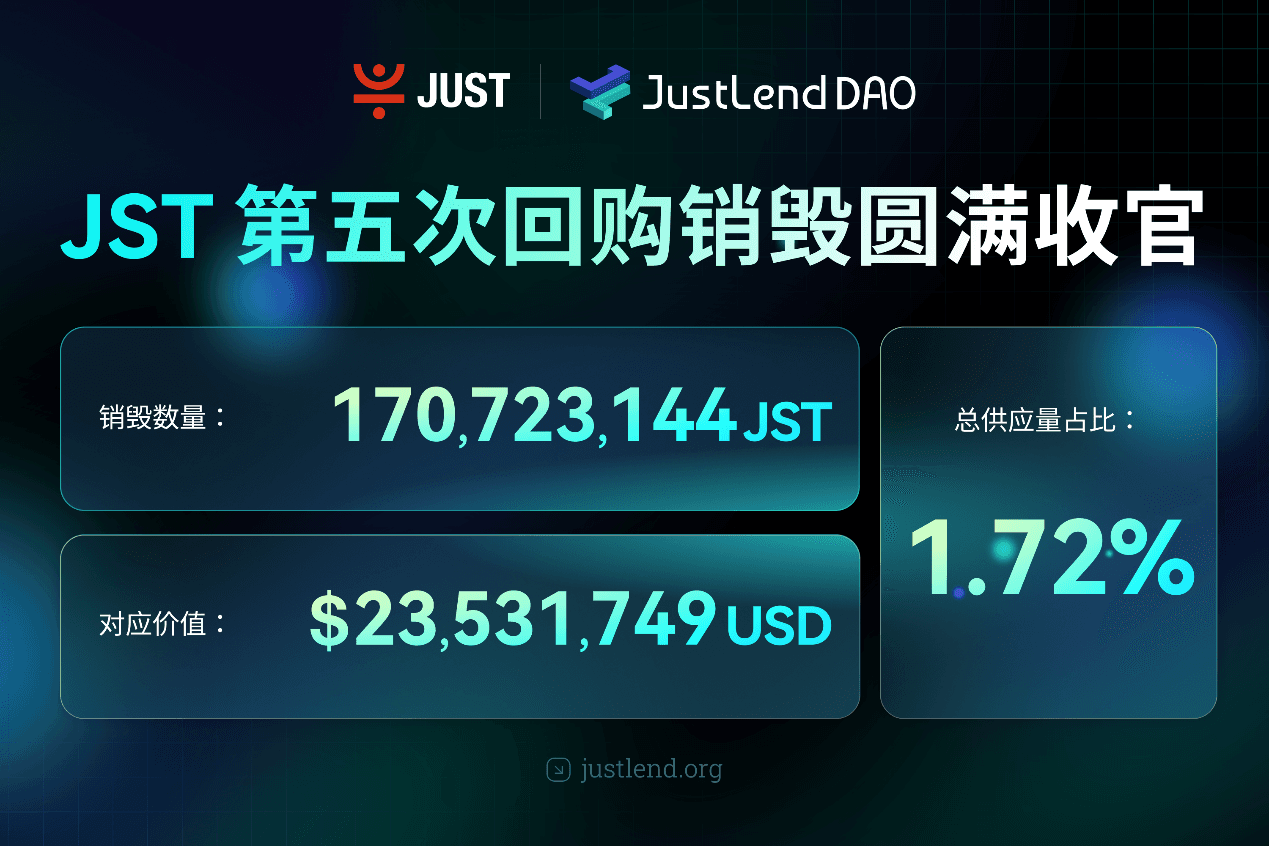
BitTorrent Brand Upgrade and Initial BTT Buyback & Burn Launch Simultaneously, Dual Engines Usher in New Era of Web3 Infrastructure
Oct 17, 20:00
Asia Market Daily: Japan's BOJ signals more rate hikes while Korea targets offshore perpetual platforms (2026/10/17)
Oct 17, 17:01Why did Papertrade backfire on you?
Oct 17, 17:01
The 'Strict Father' of Northern Myanmar: This Company Deploys 200,000 "AI Best Actors" to Strike Back Against Scammers
Oct 17, 15:34