
Transformer Octuplets Nine Years Later: Google Didn't Keep a Single One

On June 18, Noam Shazeer, one of the co-authors of the Transformer paper, announced his departure from X to join OpenAI. Two days later, John Jumper, the 2024 Nobel Prize winner in Chemistry and leader of the AlphaFold team, also announced his departure from Google DeepMind to join Anthropic.
These two pieces of news had a significant impact on the capital market: Alphabet's stock price, Google's parent company, plummeted by more than 7%, causing a market capitalization loss of over $300 billion. Several analysts attributed this sell-off to a "talent drain." Analyst Gil Luria from D.A. Davidson bluntly stated that Shazeer joining OpenAI and Jumper joining Anthropic, departing one after the other, has made the market concerned that Google is losing ground in the AI talent war.
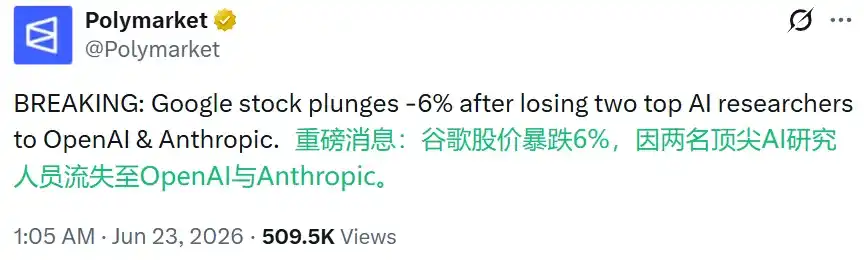
Shazeer's departure is particularly intriguing—this is his second departure from Google.
In 2021, he left the company to found Character.AI due to dissatisfaction with Google's reluctance to publicly release the chatbot he led the development of. In August 2024, Google spent approximately $2.7 billion to acquire Character.AI's technology rights and promptly brought him back to DeepMind, appointing him as the Vice President of Engineering for the Gemini project, jointly leading the project with Jeff Dean. Less than two years later, he left again, this time to the rival OpenAI.
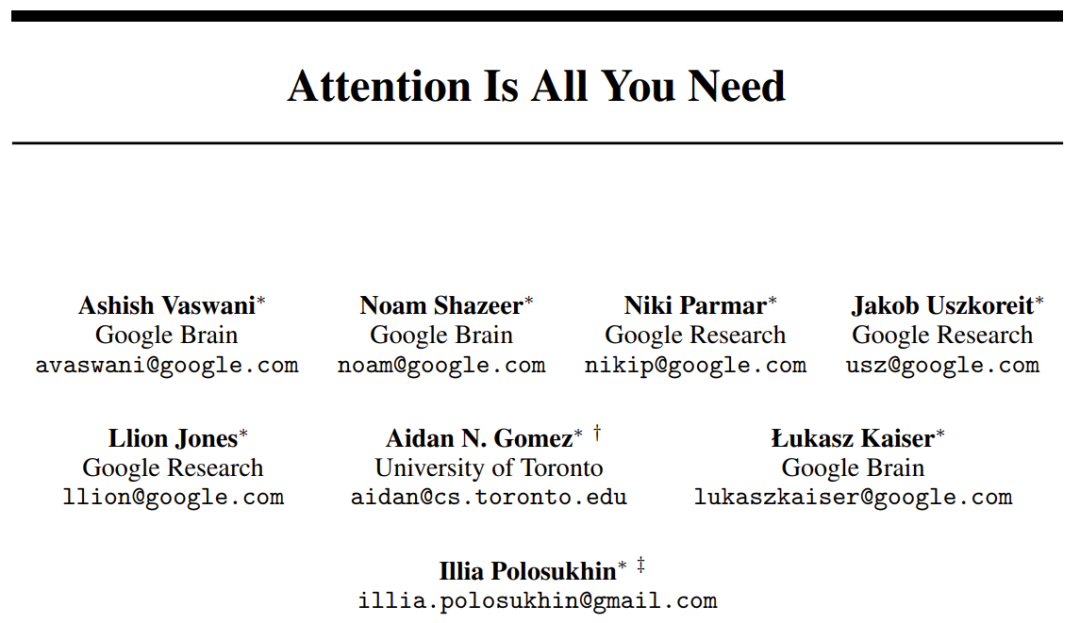
Thus, all eight co-authors of the paper "Attention Is All You Need," published nine years ago, have now left Google.
User Tyler Maran created a graphic showing where they have ended up, which has been widely circulated on social media.
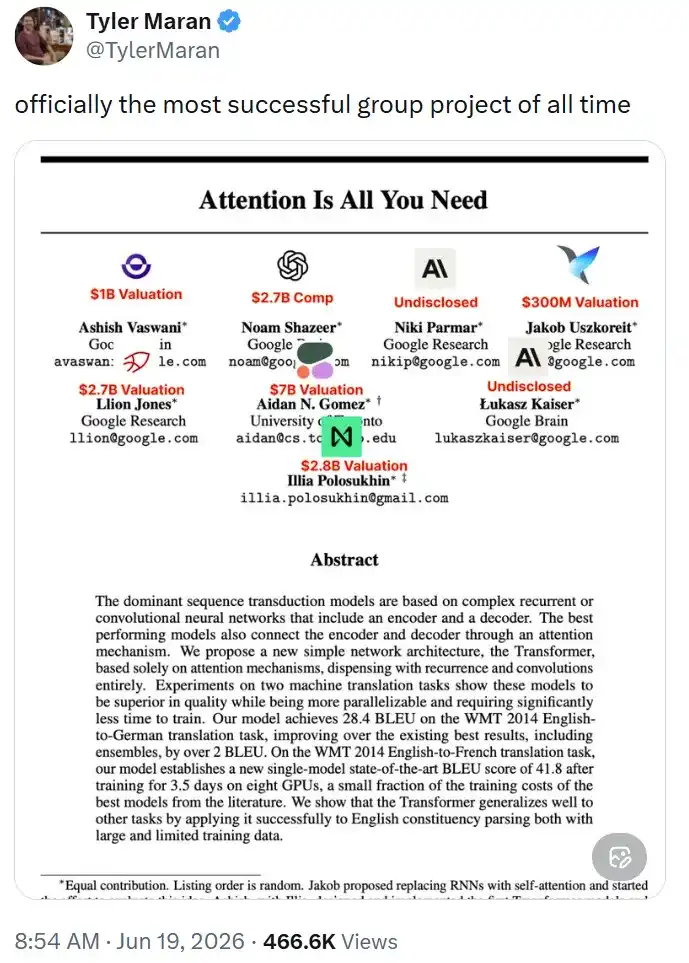
However, this graphic may soon become outdated. In the past two days, there have been rumors in the market that NVIDIA is quietly absorbing the core team of Essential AI, including one of the Transformer paper authors and Essential AI's co-founder and CEO, Ashish Vaswani. As of the time of writing, neither NVIDIA nor Essential AI has made an official statement regarding this matter.
Seizing this opportunity, we might as well take a complete inventory of the nine-year career of these eight individuals known as the "Fathers of Transformers," as well as their current whereabouts.
It should be noted that the order of authors of the paper "Attention Is All You Need" is random. The paper's footnote clearly states: All authors contributed equally, and the order is random, so there is no such thing as a "first author" or "corresponding author." This article also introduces these eight individuals in the order originally credited in the paper.
"The Origin of Everything": Eight Googlers Up to No Good
To understand their current whereabouts, we must first go back to 2017. At that time, the mainstream approach in machine translation was the Recurrent Neural Network (RNN). The model had to process the sentence one word at a time in order, like queuing to cross the road in a single file, unable to perform parallel computation, making training slow and expensive.
The eight individuals from Google Brain decided to try out a nearly reckless idea: throw away the entire recurrent structure, leaving only the "attention mechanism," allowing the model to see the entire sentence at once and decide for itself which words to focus on. The phrase in the paper's title, "Attention Is All You Need," was a play on The Beatles' song "All You Need Is Love" and has since become a form imitated by many paper titles.
The authors' contribution statement briefly records what each person specifically did:
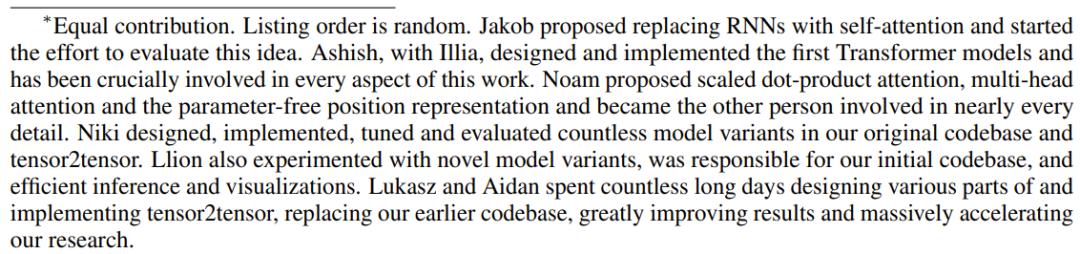
· Jakob Uszkoreit first proposed using self-attention to replace the recurrent structure and led the early validation of this idea;
· Ashish Vaswani, together with Illia Polosukhin, designed and implemented the initial Transformer model, participating in almost every aspect of the project;
· Noam Shazeer proposed the scaled dot-product attention, multi-head attention mechanism, and parameter-free positional encoding, and was another individual who was deeply involved in almost everything;
· Niki Parmar designed, implemented, and debugged numerous model variants in the initial codebase and later in the tensor2tensor framework;
· Llion Jones also explored many new model variants, taking responsibility for the initial codebase, inference efficiency optimizations, and visualization work;
· Łukasz Kaiser and Aidan N. Gomez spent endless days and nights building various modules of tensor2tensor, replacing the early codebase, significantly improving experimental results and research efficiency.
This description indirectly reveals a detail: while the order of paper authorship is random, Uszkoreit, Vaswani, Polosukhin, and Shazeer clearly played more core roles at the architecture level, while Parmar, Jones, Kaiser, and Gomez carried the flag in engineering implementation and system construction—this was also an early footnote to the personalities and expertise differences when the eight later chose different paths.
The name "Transformer" itself also has a story. Uszkoreit liked the pronunciation of this word, so the team internally called themselves "Team Transformer," and the early design documents even featured drawings of six characters from the Transformers cartoon.
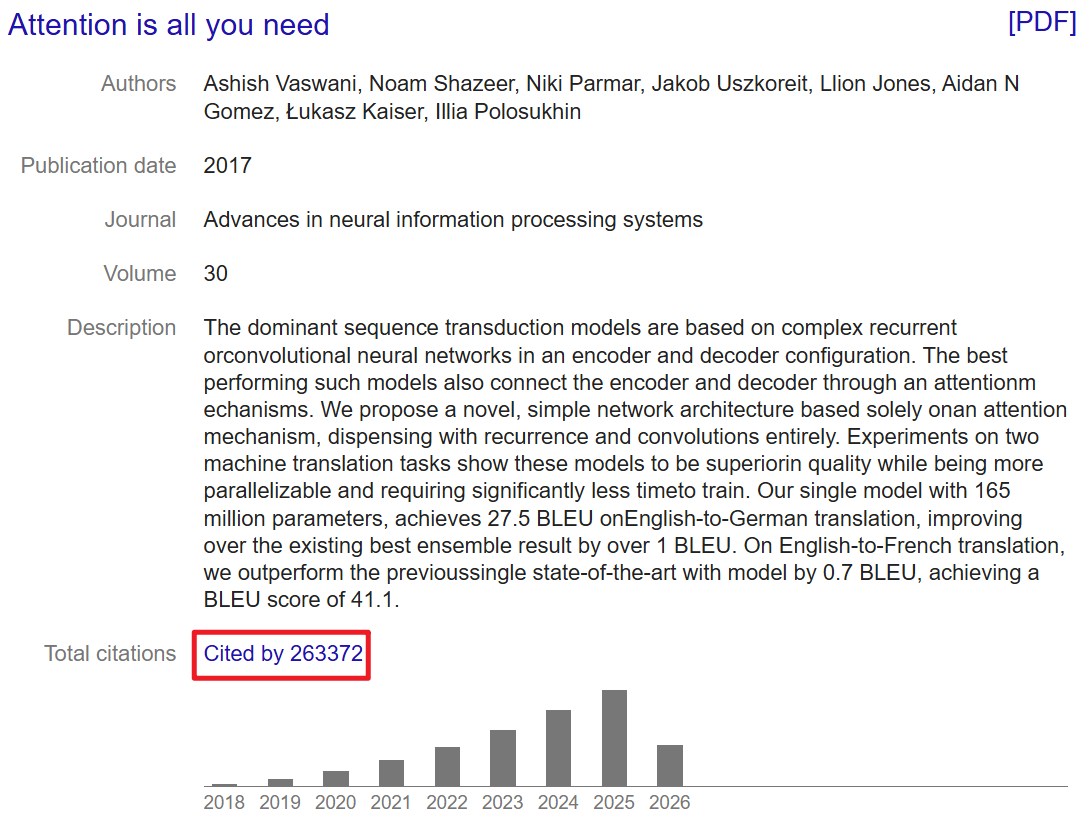
Since its publication, the paper has been cited over 260,000 times and is one of the most cited papers of the 21st century.
Ashish Vaswani
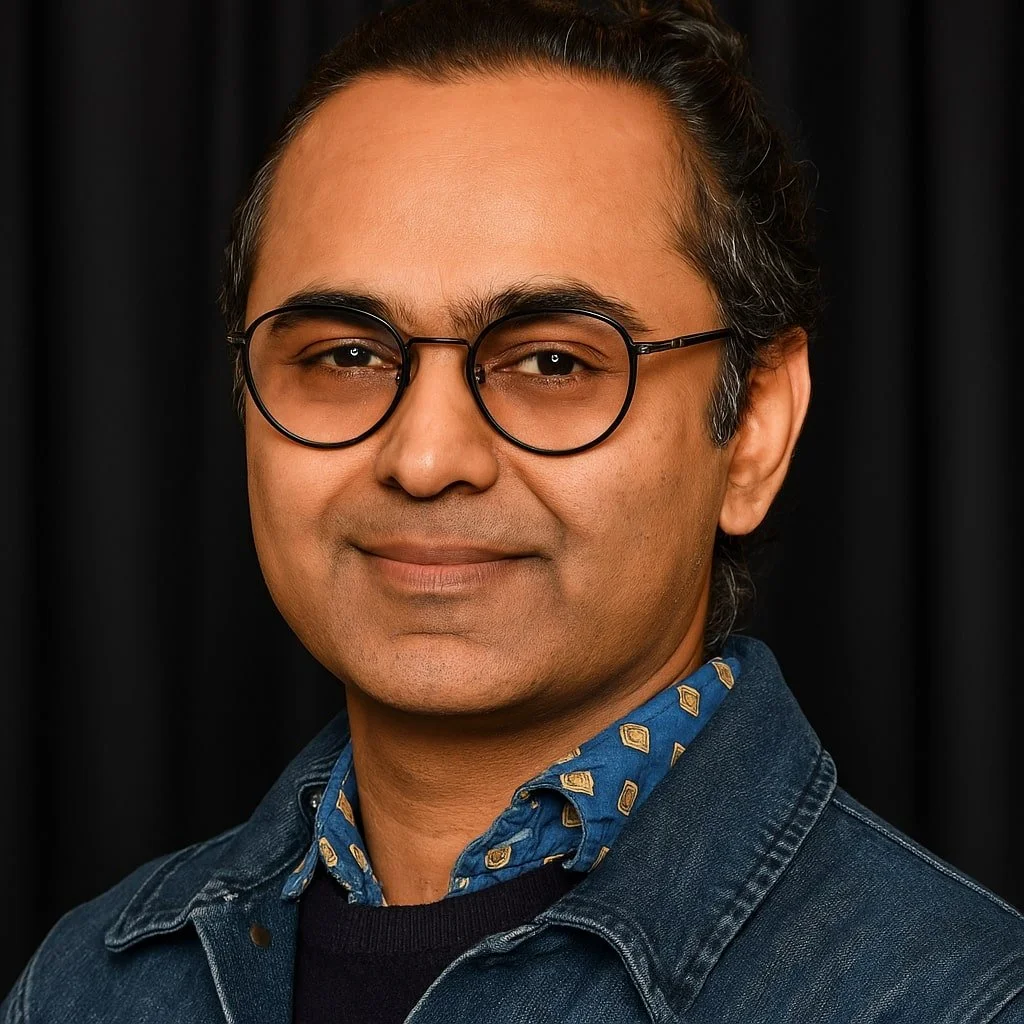
Vaswani, born in 1986, is Indian. In 2002, he obtained a Bachelor's degree in Computer Science from Birla Institute of Technology, Mesra, India. He then went to the U.S., where he pursued a Ph.D. under David Chiang at the University of Southern California, researching statistical machine translation and neural network language modeling. After completing his Ph.D., he worked as a research scientist at the Information Sciences Institute of USC for two years. In 2016, he joined Google Brain as a research scientist and worked there until 2021.
According to the author contributions of the paper, Vaswani, together with Illia Polosukhin, designed and implemented the original Transformer model and was one of the "core contributors who were involved in nearly every aspect of the project."
After leaving Google, Vaswani co-founded Adept AI in 2021 with Niki Parmar, and former OpenAI VP of Engineering David Luan, serving as Chief Scientist, aiming to build a "behavior model" that can autonomously perform actions in any software.
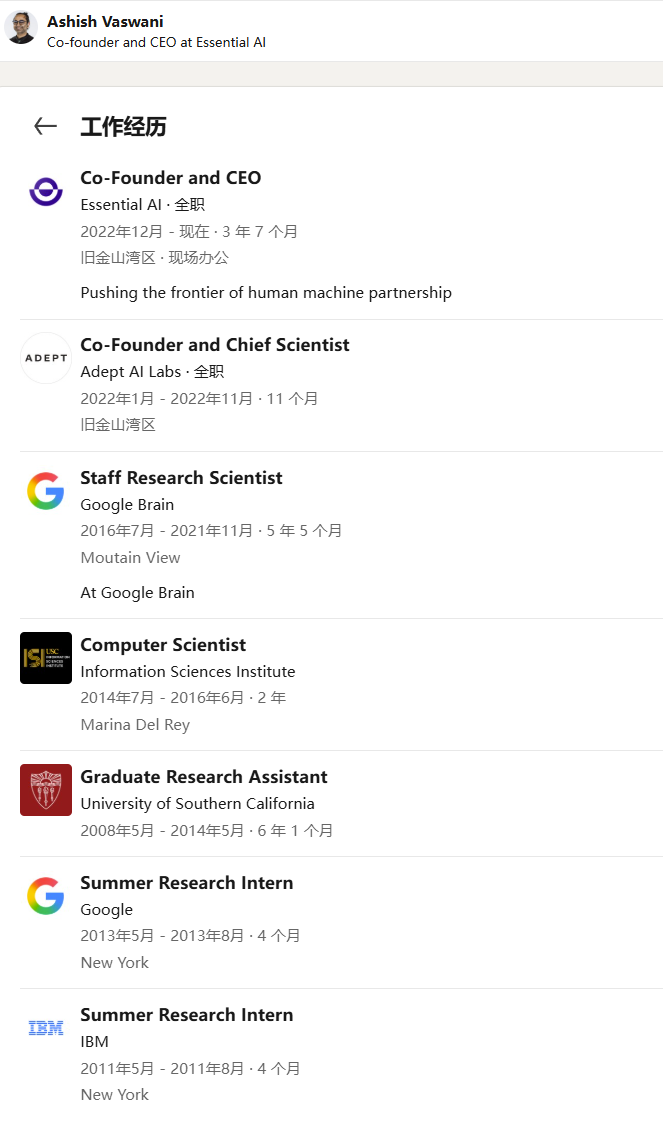
Adept once raised over $400 million, with a valuation of around $1 billion, but the product was slow to materialize, and internal disagreements arose within the team. Vaswani and Parmar decided to leave early—his tenure as Chief Scientist at Adept ended in November 2022.
In early 2023, Vaswani and Parmar joined forces again to co-found Essential AI, with Vaswani as CEO. The company received strategic investments from Google, NVIDIA, and AMD: a $8.3 million seed round led by Thrive Capital, a $56.5 million Series A round led by March Capital at the end of 2023, with participation from Google, NVIDIA, AMD, KB Investment, Franklin Templeton, and other institutions.
In early 2026, the company completed a $175 million Series B funding round led by Lightspeed Venture Partners, with follow-on investment from Thrive Capital, reaching a valuation of $1 billion, officially becoming a unicorn.
By the end of 2025, the company released its first open-source model series, Rnj-1 (named after the Indian mathematician Ramanujan).
However, in the past two days, there has been a sudden shift in the wind. It is reported that NVIDIA is recruiting Essential AI's core team, including Vaswani, who will be involved in the development of NVIDIA's open-source model, Nemotron.
Sources revealed that the reason is quite practical: Essential AI's financing is facing bottlenecks, and pulling Vaswani and his team out of the camp of NVIDIA's competitor, AMD (AMD has always been one of Essential AI's early strategic investors, and the company has long relied on AMD's GPUs), is itself a worthwhile deal.
Several Essential AI researchers (including Alok Tripathy, Saurabh Srivastava) have updated their LinkedIn profiles to show that they have joined NVIDIA. However, as of now, neither NVIDIA nor Essential AI have officially confirmed this news.
Noam Shazeer
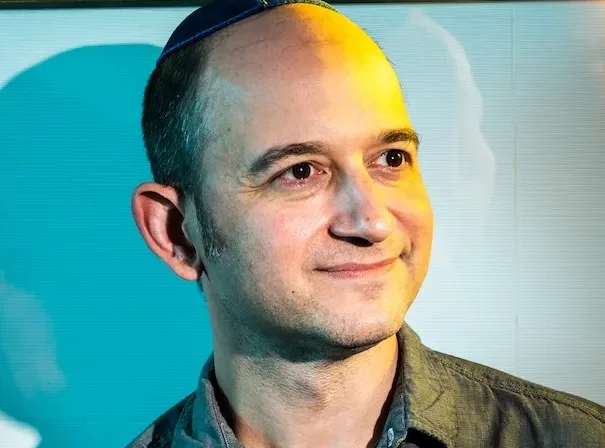
Shazeer was born in Philadelphia in 1976 and raised in an Orthodox Jewish family; his father, Dov Shazeer, was an engineer with a background in mathematics, and his sister was ordained as a rabbi by Hebrew College. Showing exceptional talent from a young age, Shazeer represented the United States in the 1994 International Mathematical Olympiad, where he earned a perfect score and a gold medal. He later pursued studies in mathematics and computer science at Duke University as a recipient of the Angier B. Duke Scholarship, also achieving recognition in the Putnam Mathematical Competition.
In 2000, Shazeer joined Google, where he became known for fixing the spelling correction feature in Google Search.
According to the acknowledgments in the Transformer paper, he was credited with proposing the scaled dot-product attention, multi-head attention mechanism, and parameter-free positional encoding, being someone who, apart from Vaswani and Polosukhin, "almost participated in every detail."
After co-authoring the Transformer paper in 2017, he and his colleague Daniel De Freitas created the chatbot Meena, but Google chose not to publicly release it due to cautious reasons. In 2021, the two decided to leave Google and founded Character.AI, which raised over $150 million from investors such as a16z, developing a popular role-playing chat application.
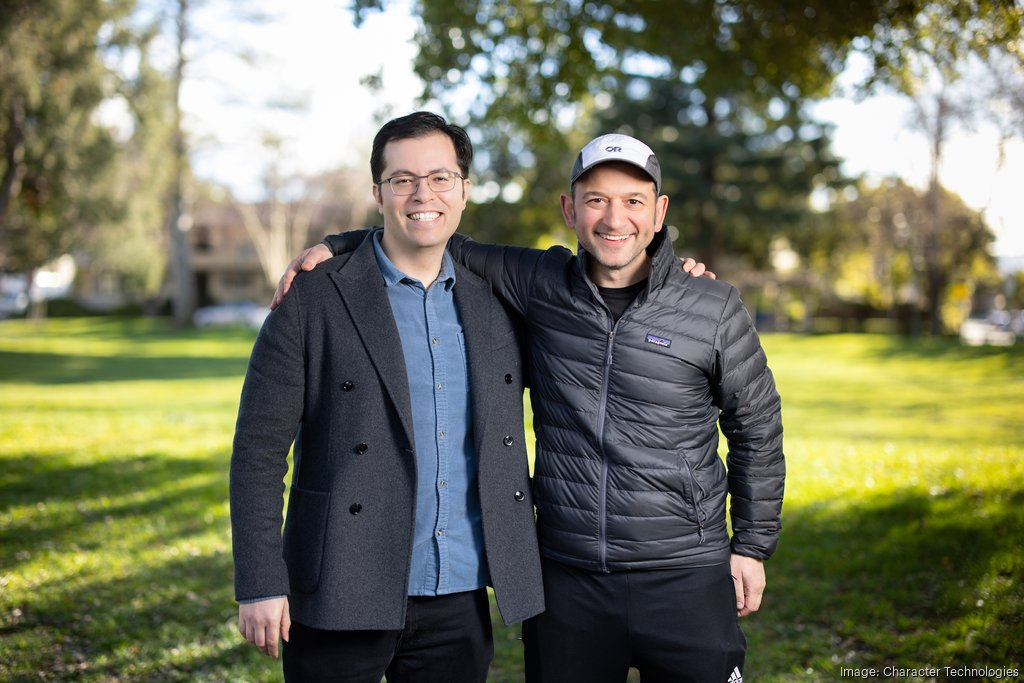
In August 2024, a significant turn of events occurred: Google reached a licensing agreement with Character.AI, reportedly valued at up to $2.7 billion. Shazeer and De Freitas, along with a small team, returned to Google DeepMind, where Shazeer was appointed Vice President of Engineering, co-leading the Gemini project with Jeff Dean and Oriol Vinyals.
Due to his personal stake of roughly 30% to 40% in Character.AI, this deal allowed him to cash out an estimated $750 million to $1 billion. In 2026, he was elected as a fellow of the National Academy of Engineering, reaching new heights in his career.
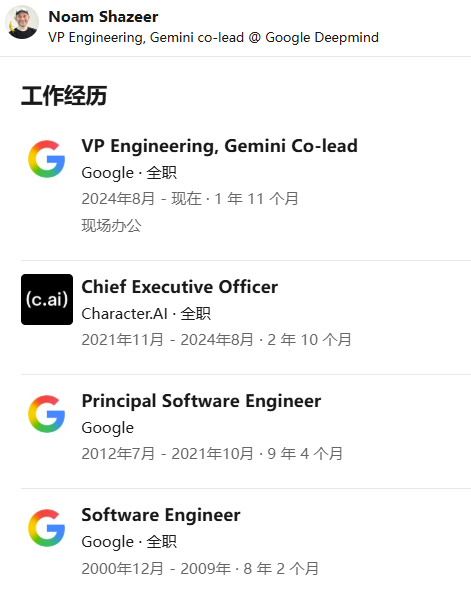
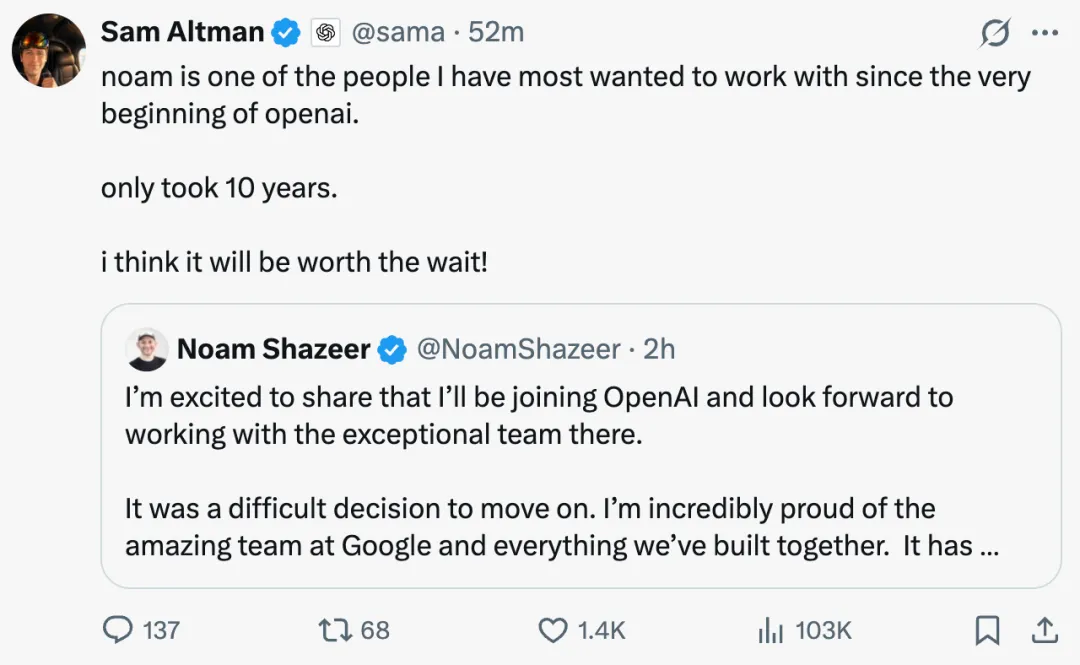
However, just a few months later, he once again decided to depart, this time joining OpenAI, where he is reported to be leading a direction called "Architecture Research," coinciding with OpenAI's recruitment drive to prepare for an IPO (the company secretly submitted an S-1 filing to the SEC on June 8, rumored to be valued at up to $852 billion).
OpenAI CEO Sam Altman made a rare public statement: "From the very first day of OpenAI's founding, he has been one of the people I most wanted to collaborate with," and he also said that this hiring "has been brewing for a full ten years."
For Google, this was a costly "failed buyback": a person they brought back two years ago for $2.7 billion has now defected to their arch-rival, which also became a direct trigger for Google's sharp stock price drop this week.
Niki Parmar
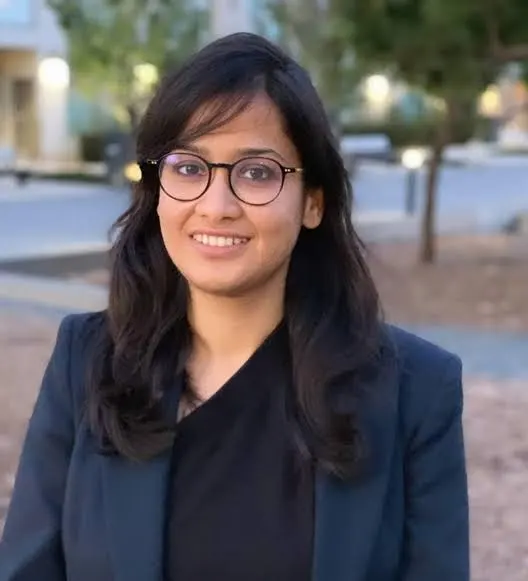
Parmar, born in Pune, India, completed her undergraduate studies at the Pune Institute of Computer Technology, majoring in Information Technology. During her time at university, she became interested in artificial intelligence and machine learning through online courses offered by Andrew Ng and Peter Norvig. She then pursued a Master's in Computer Science at the University of Southern California, where she worked with Professor Morteza Dehghani using machine learning methods to study social science problems.
In 2015, Parmar joined Google Research as a software engineer, then moved to Google Brain in 2017 as a research software engineer—reportedly, she was the youngest on the Google Brain team at that time and the only researcher without a Ph.D.
According to author contributions in research papers, she designed, implemented, and debugged countless model variants in the initial codebase and later in the tensor2tensor framework. After the publication of the papers, she continued to extend the Transformer beyond language into other areas, contributing to research that expanded the self-attention mechanism to image generation and computer vision.
In 2021, Parmar left Google and co-founded Adept AI with Ashish Vaswani, David Luan, among others, serving as Chief Technology Officer. Like Vaswani, she exited Adept early and in early 2023, co-founded Essential AI with Vaswani to continue as a co-founder.
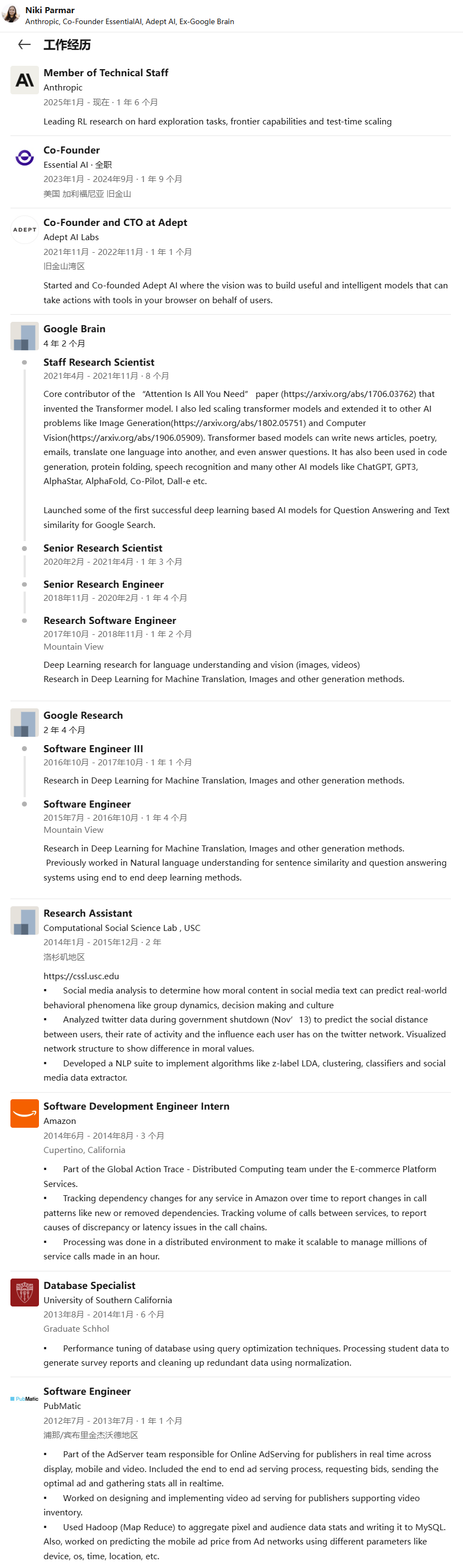
However, she did not wait for Essential AI's subsequent Series B funding round and unicorn status. At the end of 2024, Parmar quietly left Essential AI and made a move to Anthropic, publicly announcing this in February 2025. She wrote on X: "Feels right to share with you today, just as any other day: I joined Anthropic in December last year."
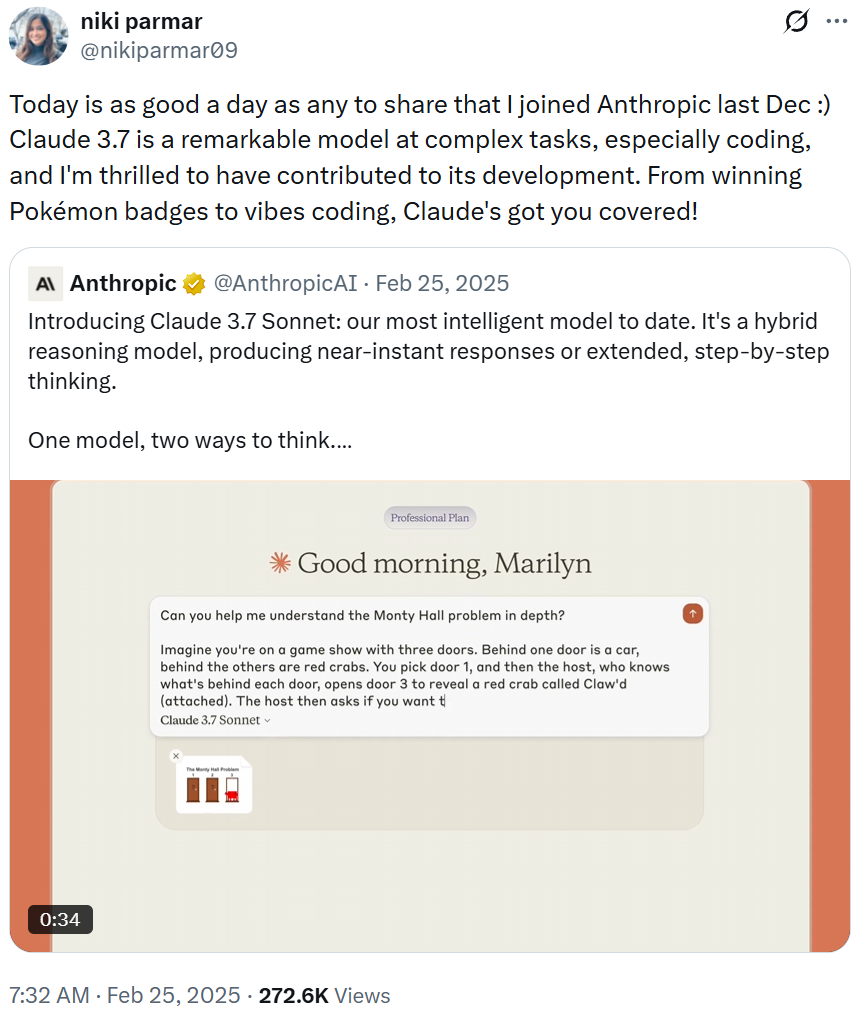
She later contributed to the development of Claude 3.7 Sonnet - one of the most significant model releases in Anthropic's history. Today, she is a member of Anthropic's technical team, focusing on cutting-edge capability research and reinforcement learning.
The two once inseparable co-authors and co-founders eventually embarked on two completely different paths: Parmar quietly withdrew more than a year early, seamlessly integrating into a top lab; while Vaswani chose to continue advancing Essential AI until this week, when the outstretched hand of a competitor was finally grasped.
Jakob Uszkoreit
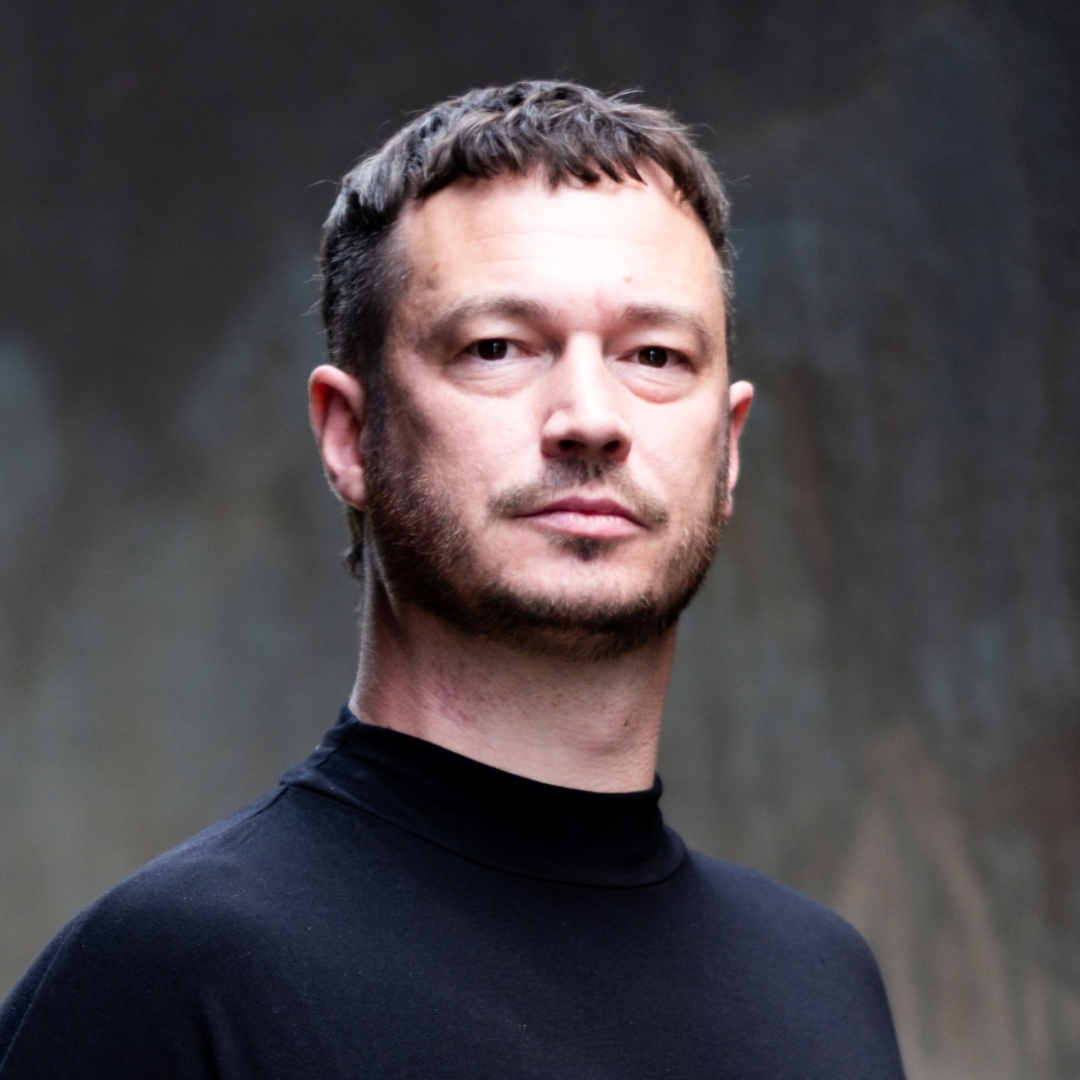
Uszkoreit was born into a linguistics family. His father, Hans Uszkoreit, is a renowned computational linguist. When his son proposed the hypothesis that "attention alone is all you need," even his father was doubtful. Uszkoreit obtained his Ph.D. from the Technical University of Berlin and later achieved the rank of "Distinguished Scientist" at Google Brain.
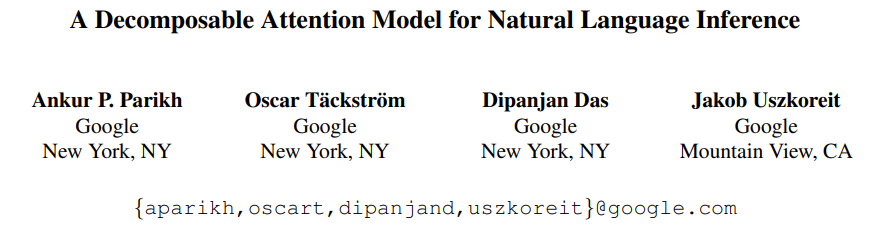
According to the author contributions in the paper, it was Uszkoreit who first proposed replacing recurrent neural networks with self-attention mechanisms and led the early validation of this idea - the seed of this hypothesis was actually planted in his 2016 paper "Decomposable Attention Models" co-authored with Ankur Parikh, Oscar Täckström, and Dipanjan Das.
The name "Transformer" was also chosen because he liked the sound of the word; internally, the team referred to themselves as "Team Transformer," and the cover of the early design documents depicted the six characters from the Transformers cartoon.
By the end of 2020, DeepMind's AlphaFold2 demonstrated that Transformer-style models could tackle the "biological holy grail" challenge of protein folding. He also increasingly realized that the reason why deep learning had not yet truly transformed biology was not due to algorithms, but to a lack of data. "It has almost become a moral obligation," he later recalled.
So in 2021, he co-founded Inceptive with Stanford biochemistry professor and renowned RNA design game Eterna developer Rhiju Das. The company is headquartered in Berkeley, with the research team based in Berlin—where he himself lives—and employees spread across Zurich, London, Vancouver, and several cities on the U.S. East Coast.
The core idea of the company is to do experiments in reverse: instead of starting with data to train a model, they use robots and humans to generate brand-new RNA experimental data on a large scale, which is then fed to the model for learning.
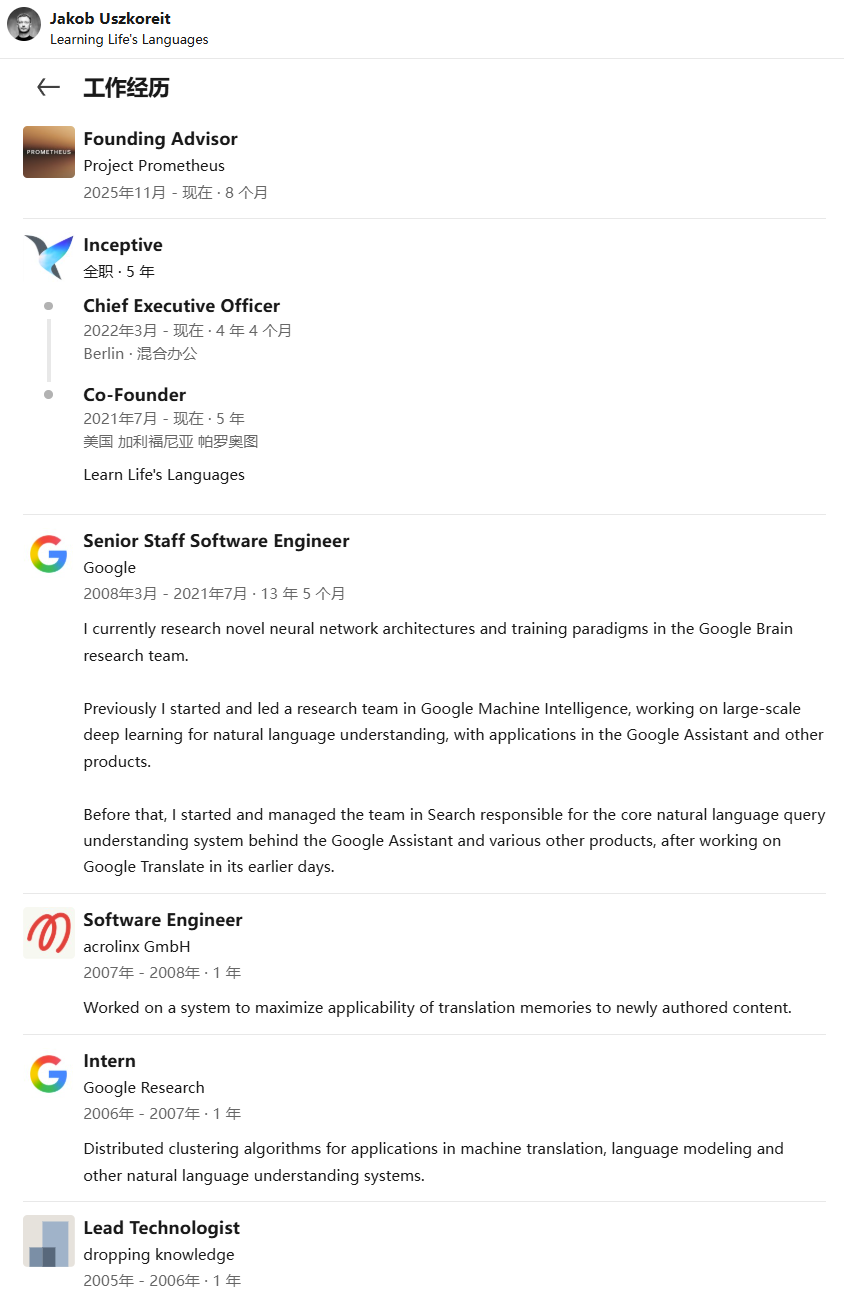
Inceptive has raised about $1.2 billion from entities like Nvidia, a16z, Obvious Ventures, and Section 32. The latest development occurred this month: in early June, the pioneer of RNA interference therapy, Alnylam Pharmaceuticals, signed a strategic partnership with Inceptive to accelerate the design of siRNA drug candidates using Inceptive's foundational model. The initial payment was $30 million, with reported potential total collaboration funding of approximately $2 billion.
In a statement, Uszkoreit said, "Most drug design still relies on trial and error—testing thousands of molecules, hoping one will succeed. Inceptive's starting point is different: life follows extremely complex rules that only AI can learn."
Among the eight authors, he is the only one who completely transitioned to the biotech field, which ironically confirms a prediction made in that paper years ago: the potential of attention mechanisms goes far beyond machine translation.
Llion Jones

Jones, a Welshman who graduated from the University of Birmingham, joined Google as a software engineer in 2011 and spent over a decade there. Among the eight authors, he is one of the few without a doctoral degree, relying purely on engineering intuition to find his way.
According to the author contributions in the paper, he explored numerous new model variants and was responsible for the initial codebase, inference efficiency optimization, and visualization work.
He later recalled that defining moment: "We had just started trying to cut off certain parts of the model just to see how much worse the effect would be. The surprising result was that it actually improved." This was the moment when the hypothesis that "the cyclic structure is actually redundant" was first validated.
In 2023, Jones and David Ha, who also came from Google, founded Sakana AI in Tokyo. "Sakana" means "fish" in Japanese. Ha serves as CEO, Jones as CTO, and another co-founder, Ren Ito, as COO.
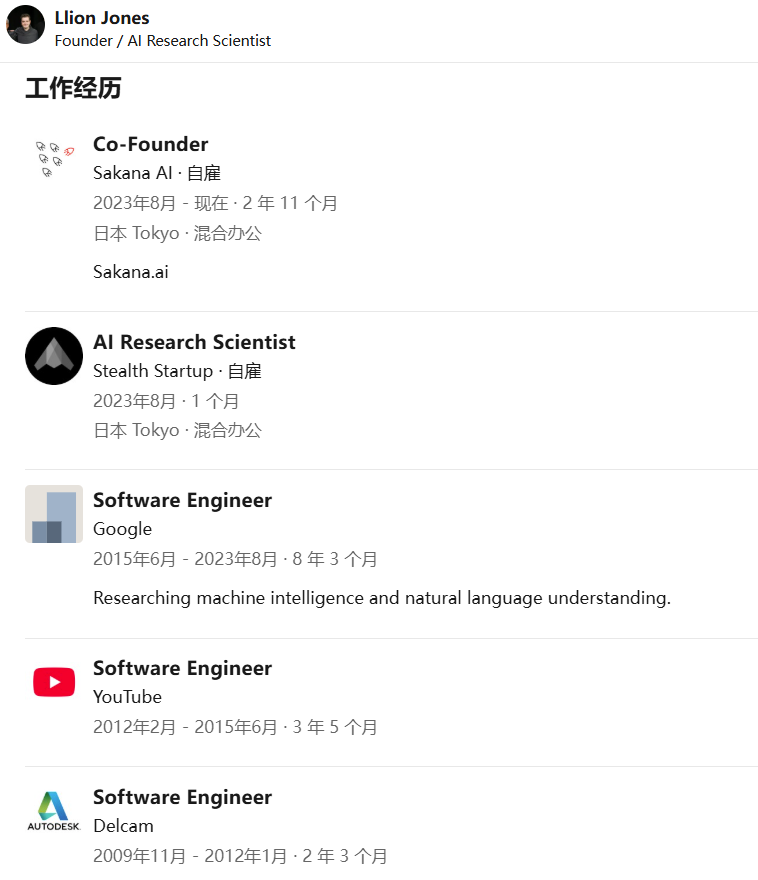
Jones is now based in Tokyo and describes himself on social media as a "Welsh AI researcher living in Tokyo." The company's research direction has a distinct anti-trend color: instead of blindly stacking computing power and parameters, it is better to draw on the logic of natural evolution, allowing a smaller group of models to cooperate like a school of fish. The company's flagship research achievements include the Continuous Thought Machine and the "AI Scientist" project, which can independently conduct end-to-end research.
Recently, the company has released the cutting-edge Sakana Fugu model.
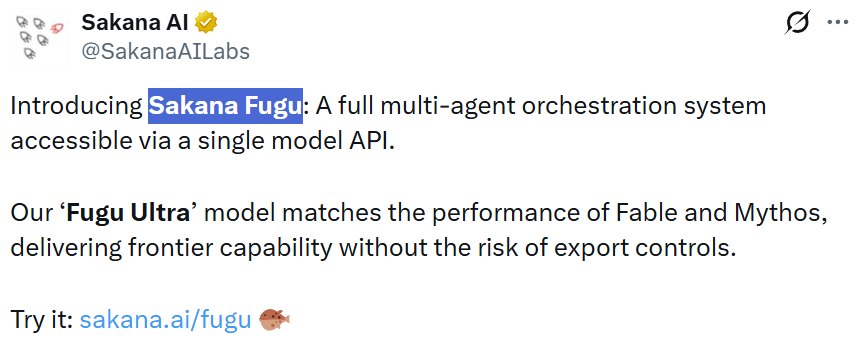
Sakana AI has raised a total of $379 million, including a Series B funding round completed in March 2026, with Mitsubishi Electric being one of its investors. In March 2026, the company also secured a multi-year cooperation agreement with Mitsubishi UFJ Financial Group (MUFG). The latter plans to use Sakana's technology to transform its banking systems, and it is reported that this collaboration could enable the company, with a valuation of about $1.5 billion, to achieve profitability within a year.
In various instances, Jones himself has expressed doubts about mere "scaling."
In March 2026, at an internal banking event, he said that current AI research faces an awkward reality: a large influx of investment and talent should theoretically lead to more breakthroughs, but the actual effect may be the opposite. Investors push for results, competition drives to grab the first-mover advantage, and the space left for researchers to "freely explore" is actually being compressed.
He mentioned that Sakana has always retained a small portion of research with "no KPI" because the next breakthrough is bound to come from this reckless long-term investment — exactly the way the Google Brain office nurtured Transformer back then.
He also made a repeatedly quoted statement: to truly replace Transformer with a new architecture, being "better" is not enough; it must be "clearly, unequivocally better."
Aidan N. Gomez
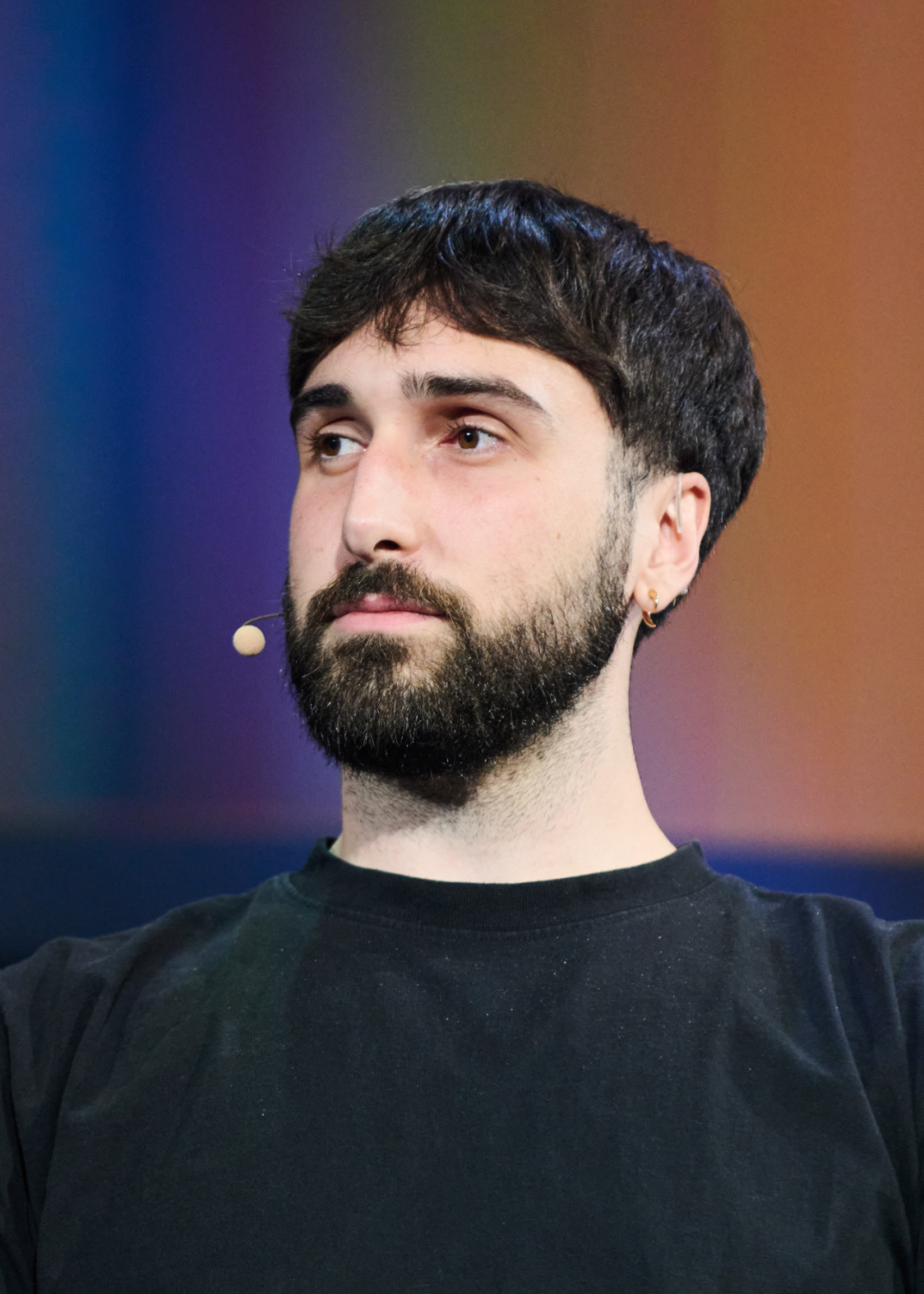
Gomez is the youngest of the eight authors. The year his paper was published, he was just a 20-year-old undergraduate intern at Google Brain, pursuing a double major in Computer Science and Mathematics at the University of Toronto.
According to the authorship statement of the paper, he and Łukasz Kaiser spent countless days and nights building various modules of the tensor2tensor framework, replacing early codebases, significantly improving experimental results and research efficiency. "At that time, I just wanted to understand how the attention mechanism worked," he later recalled. "I never thought it would become the 'mother of all architectures.'" After the paper, he pursued a Ph.D. at the University of Oxford, paused his studies to start a business, and only officially obtained his Ph.D. in 2024—it could be said that he was earning his degree while building his startup.
In 2019, Gomez, along with Ivan Zhang and Nick Frosst, founded Cohere, positioning the company as an enterprise AI service provider, deliberately avoiding the cash-burning competition of consumer-grade chatbots. They focused on data privacy, on-premise deployment, and multilingual capabilities, with most clients being large enterprises and governments.
In 2023, Gomez was named one of TIME magazine's top 100 most influential people in AI. He and his two co-founders also topped MacLean's magazine's AI Trends Vanguard list that year. In April 2025, he was selected to join the board of directors of the electric vehicle company Rivian.
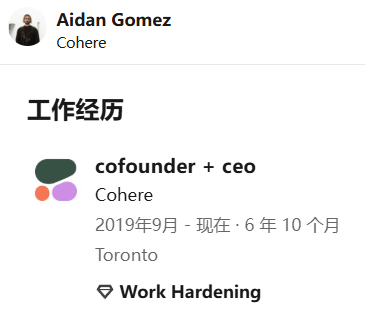
This relatively "unsexy" approach has actually led the company to achieve impressive financial results: as of mid-2026, Cohere's annualized recurring revenue has exceeded $200 million, growing sixfold in the past year, with a gross margin of around 70%. The company has raised nearly $1.7 billion in funding, with an estimated valuation of around $7 billion. In August 2025, they brought in Francois Chadwick, who was involved in Uber's IPO, as the company's first CFO. The employee secondary market share sale window has already opened once. Gomez himself has mentioned multiple times that an IPO is "coming soon," but as of now, the company has not filed for an IPO.
In recent years, Gomez has increasingly become a geopolitical spokesperson for AI. Just this week, he penned an article in Fortune magazine calling on countries to address the issue of "digital sovereignty."
The article directly referenced the recent tightening of Anthropic model access and warned that countries should not "lease" their futures to a few centralized tech giants. He proposed establishing a truly diverse ecosystem that would allow countries to rely on different AI vendors while maintaining their own values, languages, and legal systems.
He has also stated publicly that concerns about an "AI doomsday" scenario are exaggerated, and he is more concerned about the real-world risk of false information being automatically amplified on social media. Gomez's discussions nowadays involve not just the models themselves, but who has the authority to decide what kind of AI the world uses.
Łukasz Kaiser
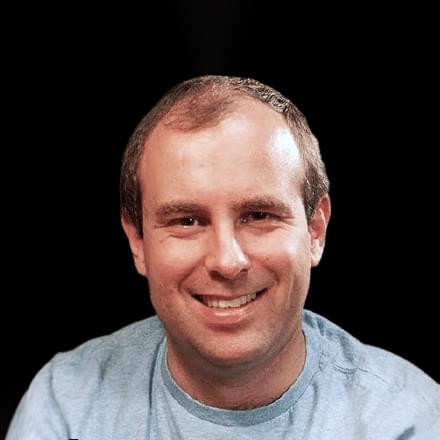
Kaiser, a Pole by nationality, initially trained in theoretical computer science disciplines such as logic, automata theory, algorithmic model theory, and game theory: he obtained dual master's degrees in Mathematics and Computer Science from Wrocław University, completed his Ph.D. at RWTH Aachen University in Germany, and later held a tenured position at the French National Center for Scientific Research (CNRS) and the University of Paris VII, focusing on pure theoretical research in logic and automata theory.
He later transitioned to applied work, spending almost 8 years at Google Brain, where he was also one of the co-authors of TensorFlow. He collaborated with Samy Bengio on early papers such as "Can Memory Networks Replace Attention?" and with Ilya Sutskever on "Neural GPU Learning Algorithms."
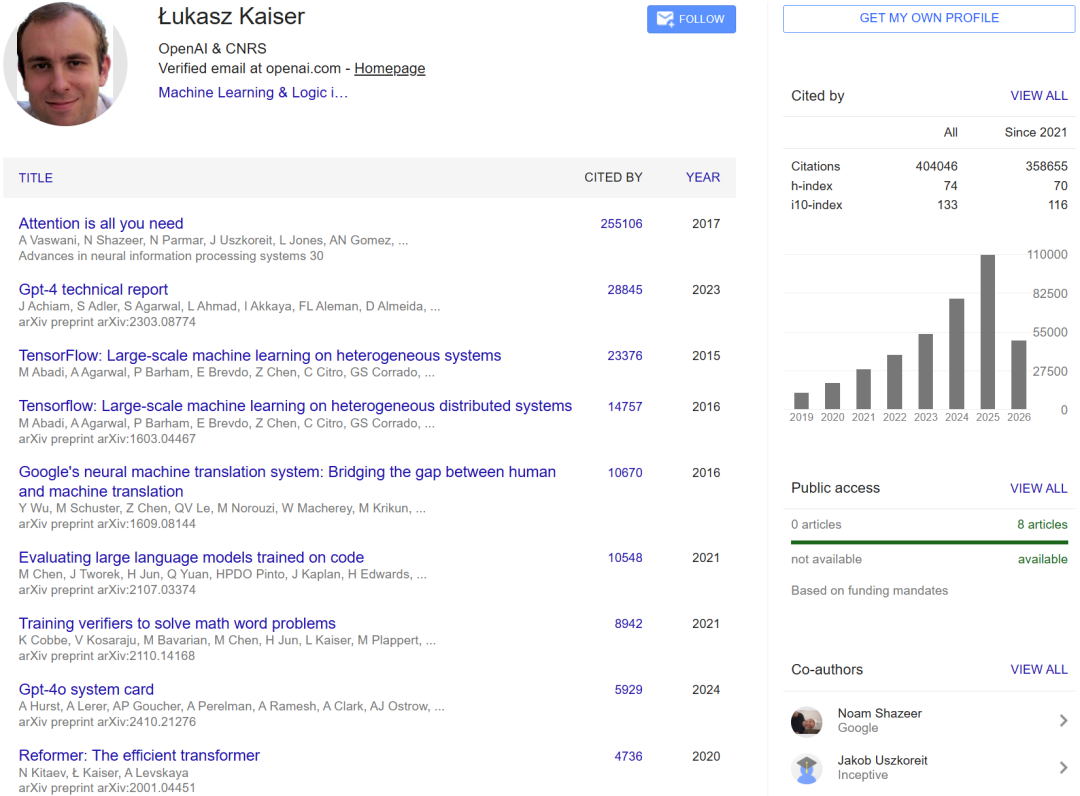
According to the author contribution notes in research papers, he and Aidan N. Gomez spent countless days and nights building the tensor2tensor framework, significantly improving experimental results and research efficiency.
Among the eight authors, he is the only one who did not venture into entrepreneurship but chose to remain in large-scale labs for pure research.
In 2021, he joined OpenAI before the launch of ChatGPT. At OpenAI, he contributed to the development of Codex (which later became the technical foundation for GitHub Copilot) and the accompanying HumanEval programming benchmark. He was also involved in the research of the GSM8K math problem dataset, which early on demonstrated that "making the model do extra calculations and sampling more during reasoning" could significantly improve accuracy—a precursor to the later reasoning model paradigm.
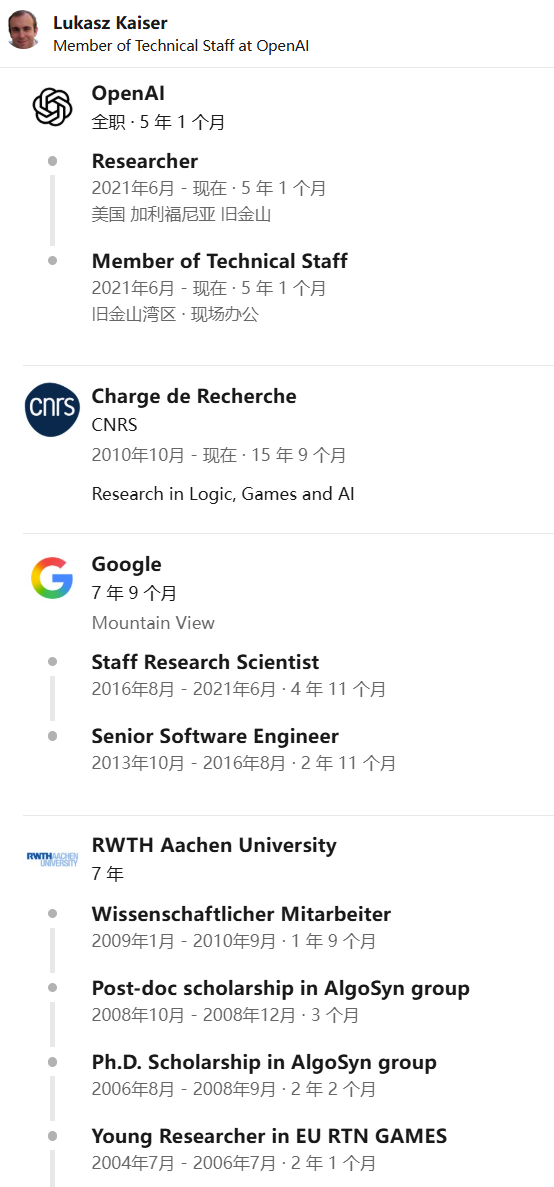
He was also one of the named authors of the GPT-4 Technical Report and later became a core contributor to OpenAI's first reasoning model, o1 (released in September 2024), holding a role considered at the level of a "Research Lead." He continued this role through o3 and subsequent updates to the reasoning paradigm, leading up to today's GPT-5 series.
Recently, he discussed on Matt Turck's MAD Podcast that Transformers have been mathematically proven to solve any problem as long as the model is allowed to generate a sufficient number of intermediate reasoning steps. In a way, this is a belated and more precise annotation on the paper from nine years ago.
Illia Polosukhin
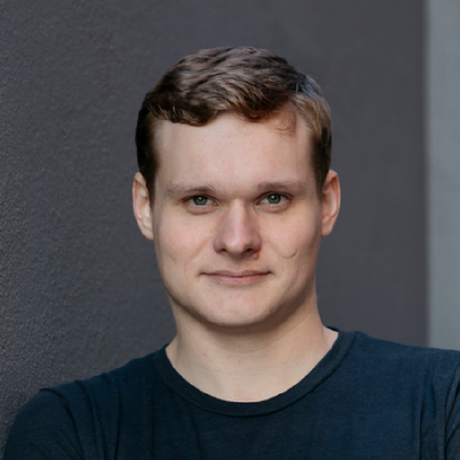
Polosukhin hails from Kharkiv, Ukraine, with a bachelor's degree in Applied Mathematics and a championship title in the International Collegiate Programming Contest (ICPC). Recalling that he developed an almost obsessive interest in artificial intelligence at the age of ten after watching "The Matrix," in 2014, he joined Google to work on TensorFlow-related research and conducted studies in machine reading comprehension and question-answering systems.
According to the author contributions section of the paper, he, together with Ashish Vaswani, designed and implemented the original Transformer model. His responsibility was primarily to validate the effectiveness of this architecture in machine translation tasks.
Following the publication of the paper, he left Google in 2017 and co-founded an AI company initially named NEAR.AI with Alexander Skidanov. However, they quickly realized that building decentralized infrastructure might be more intriguing than building models. Consequently, in 2018, the company transitioned into the blockchain project NEAR Protocol.
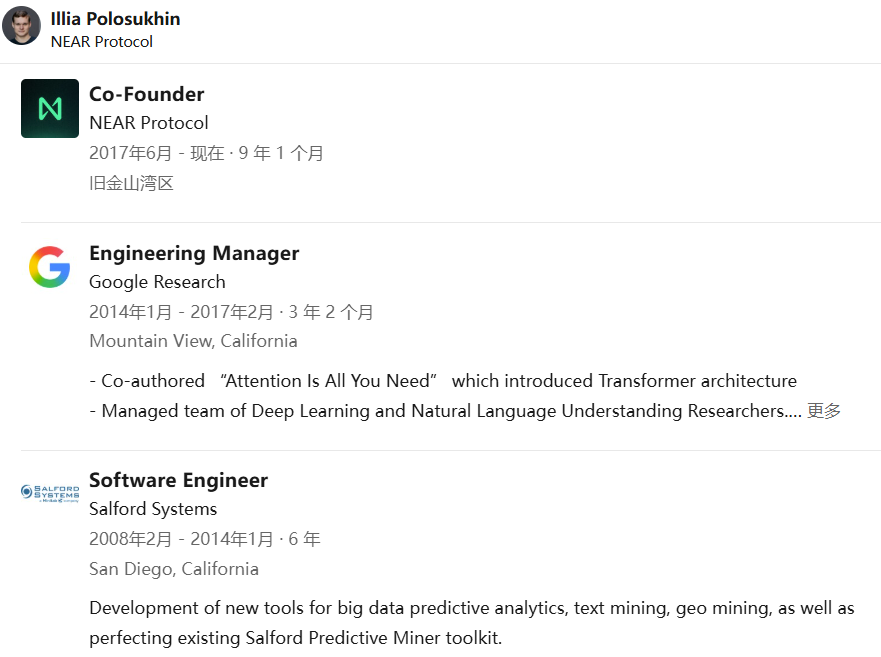
NEAR adopted sharding technology called Nightshade and provided an Ethereum-compatible Layer 2 network through Aurora. The mainnet was officially launched in 2020 and has since raised over $5.3 billion in funding from institutions such as a16z, Coinbase, Tiger Global Fund, Hashed, and Dragonfly Capital.
Today, Polosukhin is attempting to reconcile his initial two identities. In March 2026, he told the media, "The future users of blockchain will be AI agents, not humans," positioning NEAR as the "settlement layer" of the AI economy.
In April of the same year, he publicly called for the establishment of a more robust regulatory framework to address autonomous AI agents. He believes that existing institutions and systems are not yet prepared to handle issues of responsibility and systemic risks posed by such systems, advocating for a clearer accountability mechanism and a "human-in-the-loop" style of supervision.
He is currently based in Portugal. Inhabiting a unique space where he toggles between "having written a foundational LLM thesis" and "running a multi-billion-dollar blockchain company," he may be the only individual worldwide who can claim both.
The Eighth Road, Continuing the Exploration
In March 2024, at the NVIDIA GTC Conference, seven of the eight authors (Niki Parmar was absent for personal reasons) appeared together on stage as a group for the first time and were interviewed by Jensen Huang.
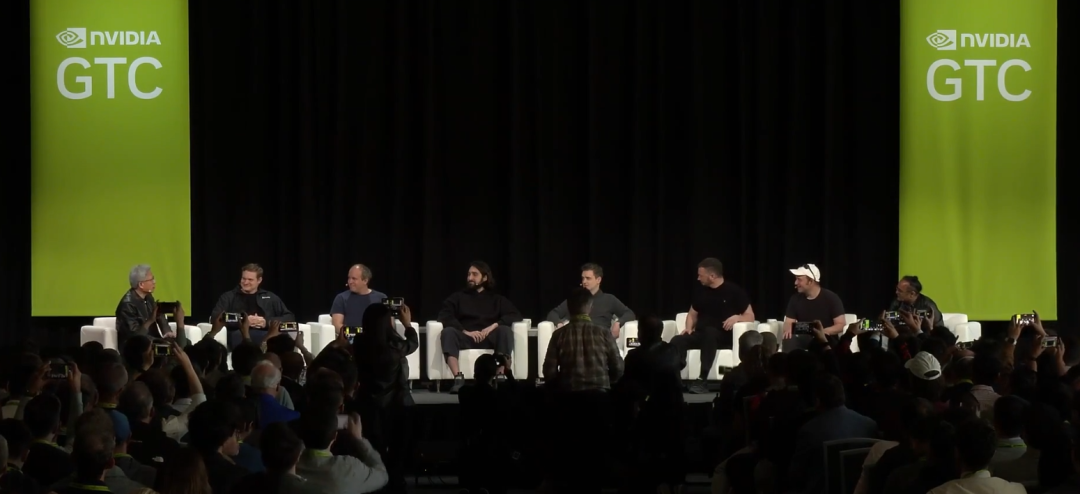
Jensen Huang said, "Everything we enjoy today can be traced back to that moment."
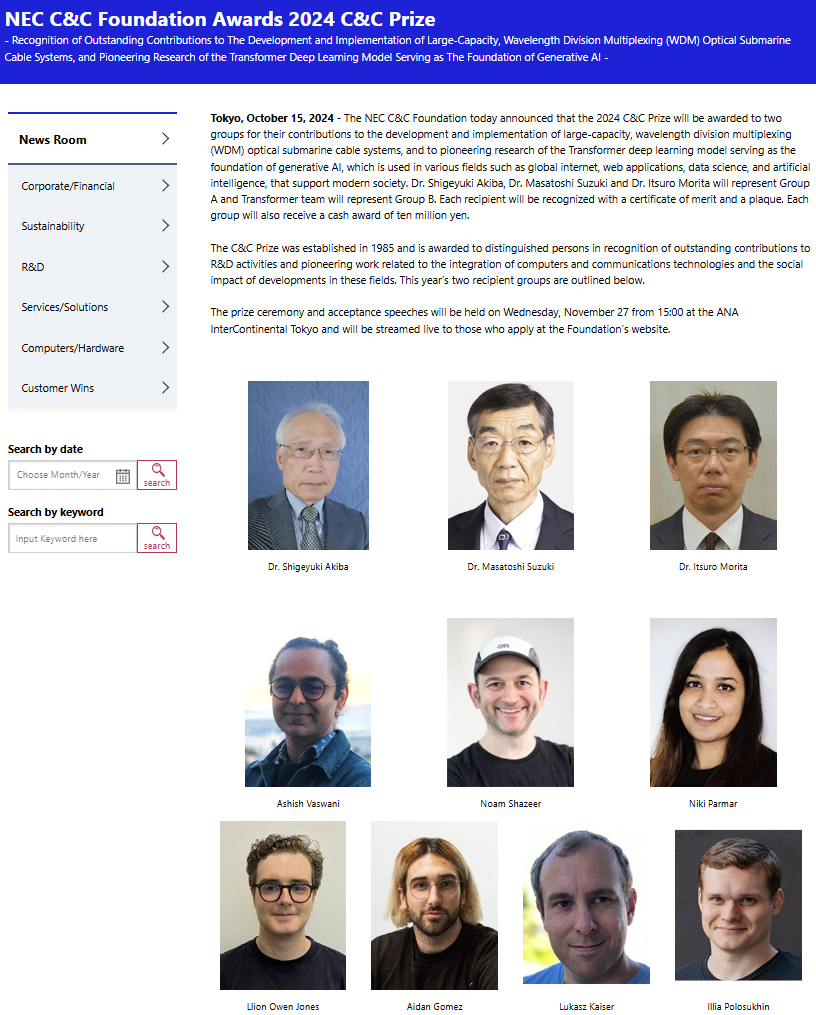
At the end of the interview, he presented each of them with a NVIDIA DGX-1 Supercomputer signed commemorative plaque engraved with "You transformed the world." In November of the same year, the NEC C&C Foundation in Japan awarded the C&C Prize to the "Transformer Team" consisting of these eight individuals, accompanied on stage by three senior engineers researching transoceanic submarine cable transmission technology. Infrastructure builders from two completely different fields were placed under the same award.
Nine years later, the life paths of these eight individuals had diverged to the point where they would hardly intersect again: the enterprise service track in Silicon Valley, the evolutionary algorithm lab in Tokyo, the molecular biology company in Berlin, the blockchain protocol in Portugal, and several leading AI labs that were still being reshuffled this week.
But if you were to put together the statements they had made over the years, you would find a common recurring judgment: No one truly believed that the Transformer would be the endpoint.
Aidan N. Gomez said the world needed something better than the Transformer; Llion Jones said the next architecture must be "significantly, unequivocally better" to replace it; and Łukasz Kaiser was still using mathematical language, attempting to clarify how far the architecture born nine years ago could still take humanity.
Perhaps this is the most enduring legacy of this paper: its eight authors scattered to the ends of the earth, yet not one of them stopped searching for the next answer.
Join the official Coincamps community:
Telegram: https://t.me/coin_camps
Recommended
Desk: Brent Crude Tops $110, Musk's Net Worth Drops 528.6 Billion in Four Days After Tesla Roadster Launch
Oct 17, 21:49
JST Fifth Buyback and Burn Successfully Concludes: Over 170 Million Tokens Worth Approximately $23.53 Million Burned, Buyback Mechanism Set for Comprehensive Upgrade
Oct 17, 20:10
BitTorrent Brand Upgrade and Initial BTT Buyback & Burn Launch Simultaneously, Dual Engines Usher in New Era of Web3 Infrastructure
Oct 17, 20:00
Asia Market Daily: Japan's BOJ signals more rate hikes while Korea targets offshore perpetual platforms (2026/10/17)
Oct 17, 17:01Why did Papertrade backfire on you?
Oct 17, 17:01
The 'Strict Father' of Northern Myanmar: This Company Deploys 200,000 "AI Best Actors" to Strike Back Against Scammers
Oct 17, 15:34