Morgan Stanley Analysis: As TSMC's Q2 Earnings Report Approaches, How Long Can the 66% Gross Margin Last?
TL;DR
· TSMC will hold its Q2 earnings call on July 16, with AI/HPC demand, 2nm progress, and margin outlook as the key focus areas.
· The company reported Q1 revenue of $35.9 billion, with a 66.2% margin; Q2 guidance is revenue of $39.0 billion to $40.2 billion, margin of 65.5% to 67.5%.
· HPC accounted for 61% of Q1 revenue, 7nm and below advanced processes contributed 74% to wafer revenue, high-performance computing and advanced nodes remain the growth drivers.
· TSMC expects its USD revenue to grow by over 30% in 2026, with capital expenditure approaching the high-end of the $52.0 billion to $56.0 billion range.
· AI orders remain strong, but challenges such as 2nm ramp-up, increased depreciation, overseas fab costs, and customer order pacing could impact the sustainability of high margins.
TSMC will hold its Q2 earnings call on July 16, 2026, at 14:00 Taiwan time, with a blackout period from July 6 to 15.
The focus of this earnings call is no longer just revenue growth. As the world's largest foundry, TSMC is on one end connected to mobile chip customers like Apple, Qualcomm, and on the other end, it caters to AI accelerators, cloud-native chips, and high-performance computing demand. The Q2 financial results will directly validate three questions: whether AI orders remain robust, if the 2nm ramp-up is progressing smoothly, and how long the nearly 66% margin can be sustained.
Over the past year, AI demand has consistently driven TSMC's revenue, margin, and capital expenditure higher. The market is now more concerned with whether the high growth brought by AI/HPC can continue to translate into high margins.
TSMC has already delivered a strong performance in Q1. The company's Q1 revenue was $35.9 billion, with a margin of 66.2% and an operating margin of 58.1%. In New Taiwan Dollars, Q1 revenue was NT$1.134103 trillion, net profit was NT$572.48 billion, and EPS was NT$22.08; revenue increased by 35.1% year-on-year, and net profit increased by 58.3% year-on-year.
The Q2 guidance remains at the higher end. TSMC expects Q2 revenue to be between $39.0 billion and $40.2 billion, with a margin of 65.5% to 67.5%.
This means that on July 16, the market will not only look at whether revenue falls within the guidance range, but also whether the margin can continue to stay above 65%. TSMC's current valuation and earnings expectations have already been built on assumptions of strong AI/HPC demand, tight supply of advanced processes, and high capacity utilization.
The early release of monthly revenue has signaled ongoing strong demand. TSMC's May 2026 revenue was NT$416.975 billion, a year-on-year increase of 30.1%; January to May cumulative revenue was NT$1.961804 trillion, a year-on-year increase of 30.0%.
However, revenue growth does not necessarily translate to synchronous profit growth. The initial stages of advanced process node expansion bring about increased equipment investment, higher depreciation, and yield ramp costs. Ultimately, what will determine market response is still the Q2 actual gross margin and the management's statement on the profit margin for the second half of the year.
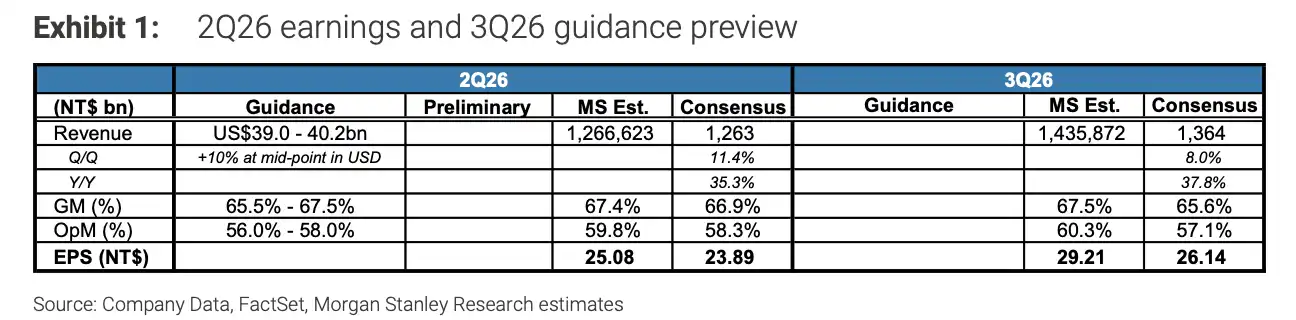
Morgan Stanley expects TSMC's Q2 gross margin to reach 67.4%, at the high end of the company's guidance
The current primary driver of TSMC's growth continues to be AI and High-Performance Computing (HPC). During the Q1 earnings call, the management referred to AI-related demand as "extremely robust" and raised the 2026 revenue growth forecast to over 30% in U.S. dollars.
The revenue structure further reinforces this observation. In the first quarter of 2026, HPC accounted for 61% of TSMC's revenue, and 7nm and below advanced process nodes accounted for 74% of wafer revenue. While this does not directly equate to the proportion of AI revenue, it is sufficient to illustrate that high-performance computing, advanced nodes, and demand from high-end customers have become the mainstay of TSMC's revenue structure.
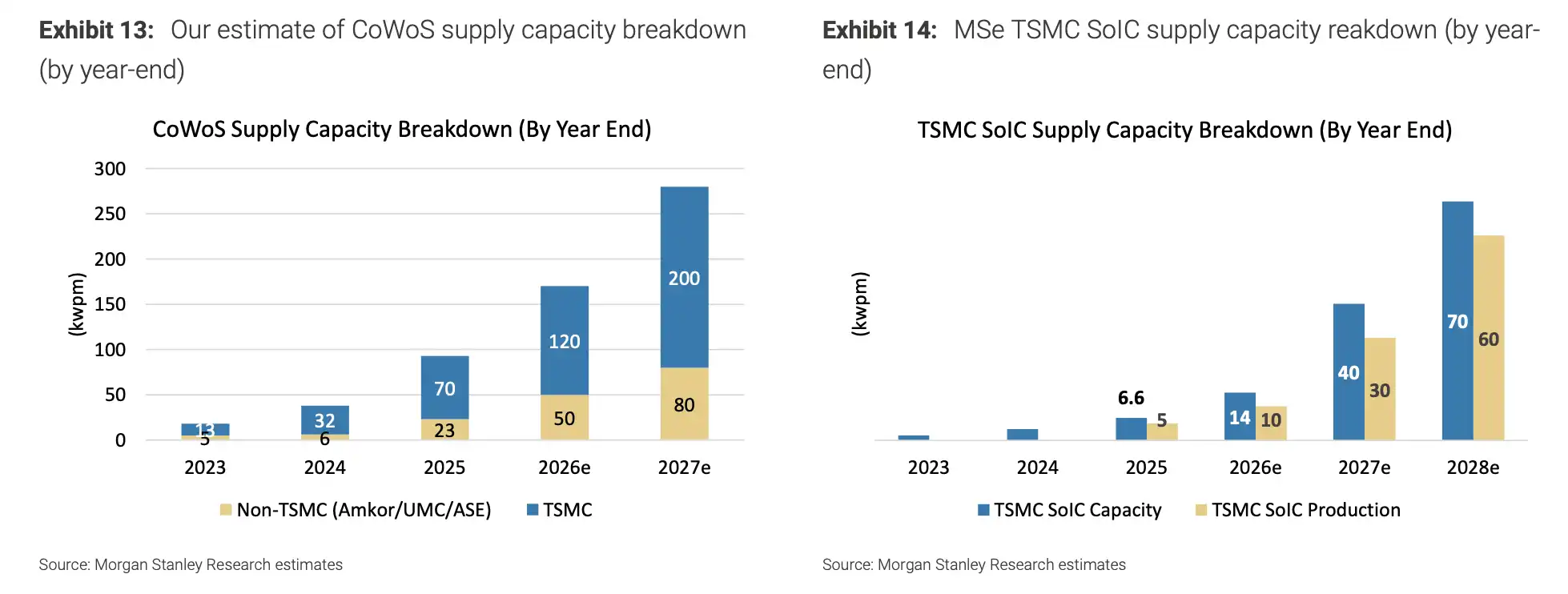
AI Chip Demand Drives Increased Advanced Packaging Capacity, CoWoS and SoIC Remain TSMC's Expansion Focus
The traction of AI chips on TSMC stems not only from the quantity of orders but also from the value of a single chip. AI accelerators and cloud-native chips are usually larger in size, more complex to manufacture, and rely more on advanced processes and advanced packaging. This raises the order value and makes it easier to maintain tight high-end capacity.
As long as AI capital expenditure continues to expand, TSMC finds it easier to maintain capacity utilization rates and bargaining power. This is also why the market sees TSMC as a critical performance validation point in the AI hardware chain.
However, TSMC typically does not individually confirm specific customer orders from companies like Apple, NVIDIA, Qualcomm, etc., in its financial reports. Investors mostly have to assess the true demand intensity through revenue structures, capital expenditures, monthly revenue, and management language. Therefore, the discussions in the July conference call regarding AI/HPC demand, customer inventory, and the order momentum for the second half of the year will be more crucial than individual quarterly data.
TSMC has already set the full-year 2026 capital expenditure target at the high end of the $52 billion to $56 billion range. This move indicates that the management is not seeing short-term order fluctuations but a long-term capacity gap driven by AI/HPC demand.
A higher capital expenditure helps TSMC secure future orders but also brings higher costs. The investment in advanced fabrication lines involves significant costs, and equipment and factory depreciation will gradually impact the income statement. Overseas fabs in the U.S., Japan, Germany, and other countries can diversify geopolitical risks but also come with higher operating expenses, management complexity, and supply chain costs.
Therefore, nearing the upper limit of capital expenditure is a double-edged sword. When demand is strong, it signifies TSMC's continued expansion of its leading position. When demand slows down, it can quickly translate into margin pressure.
This is also why the market continuously questions the gross margin. TSMC is currently not lacking in demand, but the real disagreement lies in whether these orders can continue to be fulfilled at high profitability.
In addition to Q2 performance, 2nm is a more critical variable for TSMC in the coming years. The management has previously stated that N2 entered mass production in the fourth quarter of 2025 and is ramping up in stages in Hsinchu and Kaohsiung, with demand coming from smartphones and HPC/AI.
For customers, 2nm will determine the performance limits of next-generation flagship smartphone chips, AI accelerators, and high-performance computing chips. For TSMC, 2nm will dictate the pricing, production capacity allocation, and gross margin level of advanced processes in the coming years.
What the market is concerned about now is not whether 2nm will enter mass production but how quickly the supply can expand after mass production, whether the yield can increase as planned, and if initial customer demand can justify the high capital investment.
If the 2nm ramp-up goes smoothly, TSMC can continue to dominate advanced process supply during the AI demand peak and maintain the bargaining power for high-end capacity. However, if yield, equipment delivery, or cost pressures exceed expectations, even with continued revenue growth, the gross margin may be dragged down.
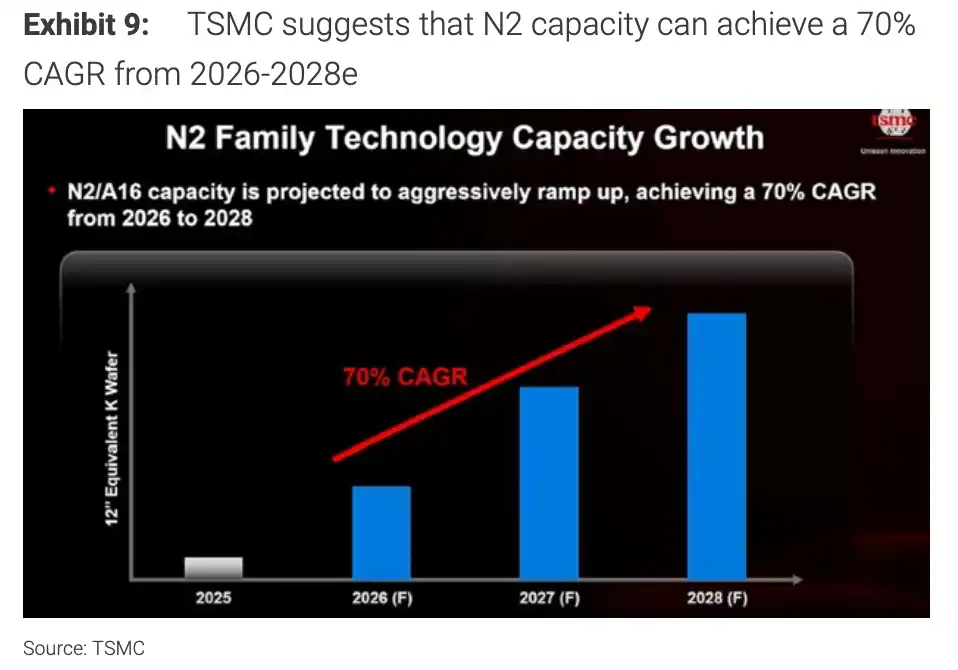
TSMC expects N2/A16 capacity to ramp up rapidly from 2026 to 2028, with a CAGR of around 70%.
On July 16, the focus of this earnings call is not just whether TSMC can meet its Q2 guidance.
More importantly, how will management describe the second-half AI/HPC demand, advanced packaging capacity, 2nm ramp-up progress, capital expenditure plans, and gross margin outlook.
If TSMC continues to maintain a strong demand outlook while keeping the gross margin within the 65.5% to 67.5% guidance range, the market's confidence in the AI hardware chain will continue to be supported. If management signals a more cautious approach to customer orders, inventory, or cost pressures, investors will reassess how long the high growth in the AI supply chain can be sustained.
TSMC's current strength comes from AI/HPC demand, advanced process node scarcity, and high capital expenditure for capacity expansion. Risks also lie along the same chain: demand, pricing, yield, depreciation, and overseas execution. Should any one link underperform expectations, the nearly 66% gross margin will face its first test.
Recommended
Desk: Brent Crude Tops $110, Musk's Net Worth Drops 528.6 Billion in Four Days After Tesla Roadster Launch
Oct 17, 21:49
JST Fifth Buyback and Burn Successfully Concludes: Over 170 Million Tokens Worth Approximately $23.53 Million Burned, Buyback Mechanism Set for Comprehensive Upgrade
Oct 17, 20:10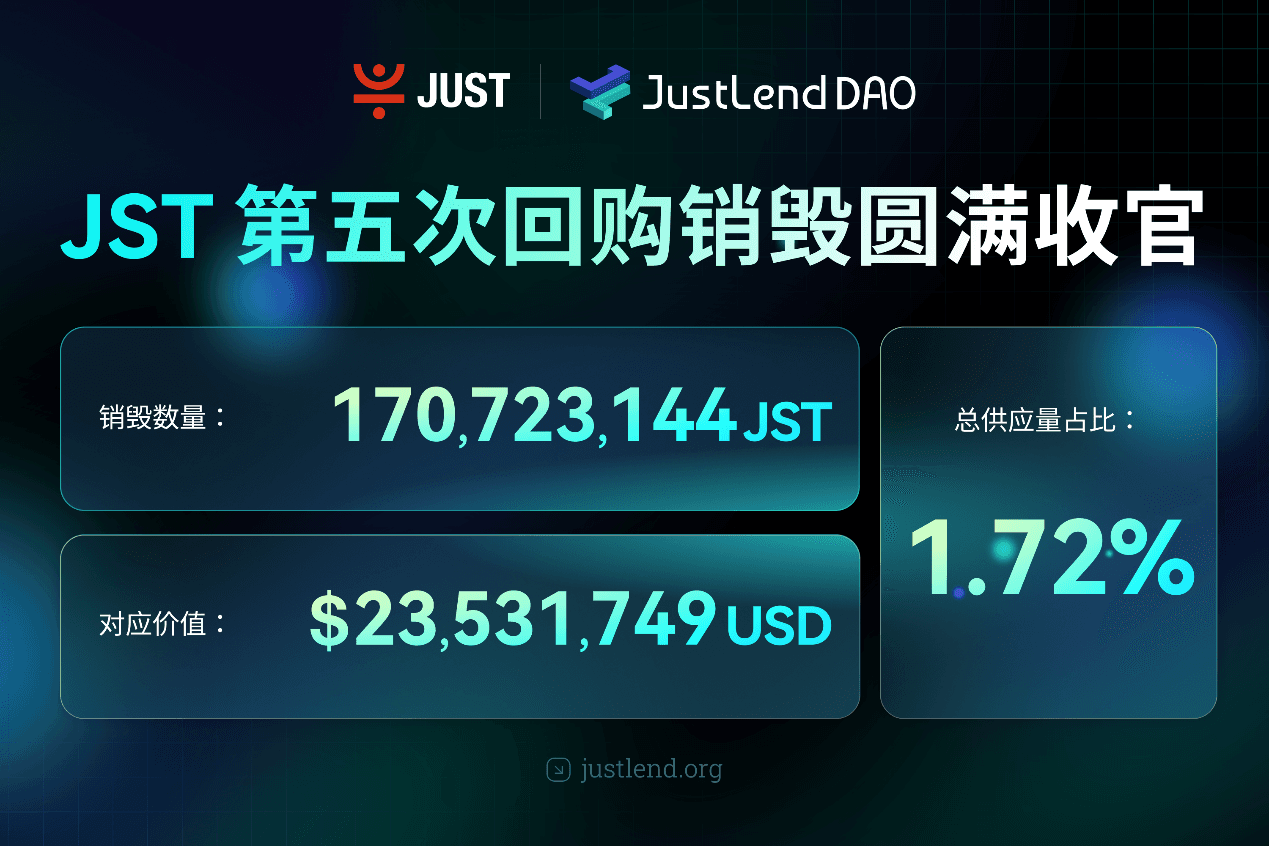
BitTorrent Brand Upgrade and Initial BTT Buyback & Burn Launch Simultaneously, Dual Engines Usher in New Era of Web3 Infrastructure
Oct 17, 20:00
Asia Market Daily: Japan's BOJ signals more rate hikes while Korea targets offshore perpetual platforms (2026/10/17)
Oct 17, 17:01Why did Papertrade backfire on you?
Oct 17, 17:01
The 'Strict Father' of Northern Myanmar: This Company Deploys 200,000 "AI Best Actors" to Strike Back Against Scammers
Oct 17, 15:34