Securitize has been listed, the first true "RWA First Stock" is here

TL;DR
· Securitize's listing day saw SECZ deployed in tokenized form on Solana and Avalanche.
· The focus of controversy lies not in the concept, but in whether the same common stock, regulated access, and on-chain liquidity can hold up.
· Related assets: SECZ, SOL, AVAX, RWA infrastructure.
On July 2, Securitize landed on the NYSE with SECZ and on the listing day deployed SECZ in tokenized form on Solana and Avalanche. According to data from RWA.xyz cited by CoinDesk, investors hold approximately $295 million in tokenized shares.
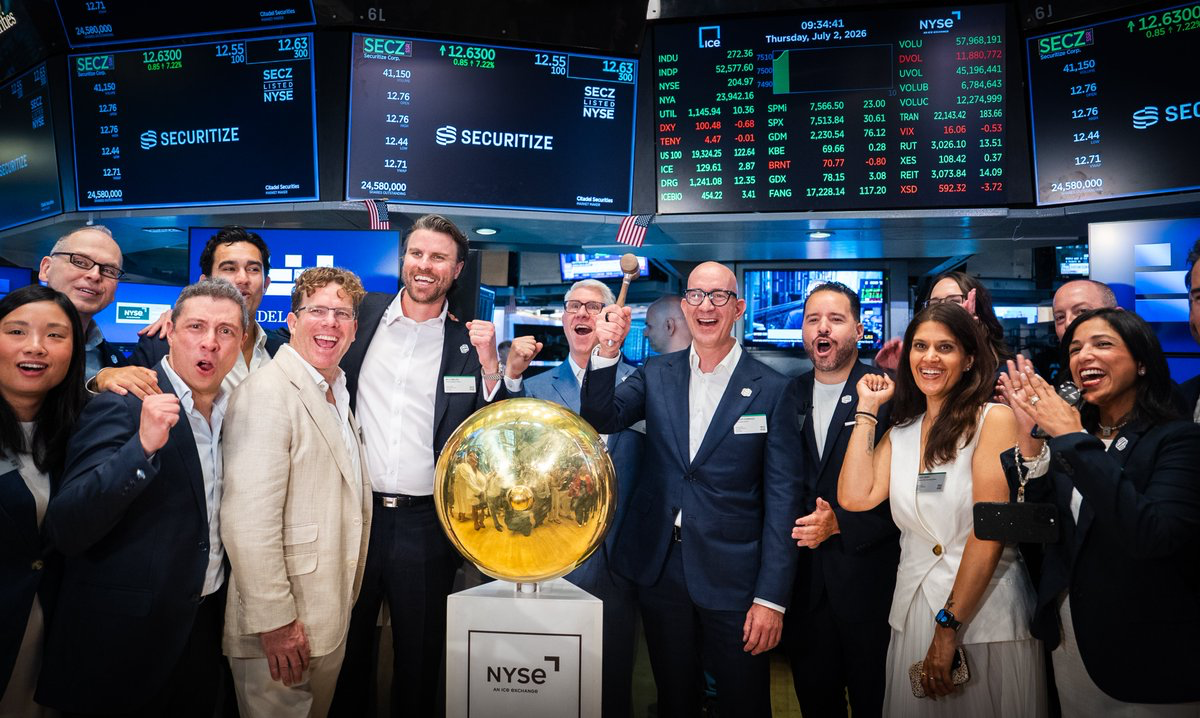
This event is easily interpreted as "US stocks going on-chain." However, for investors, the key is not the immediate appearance of 24-hour on-chain trading of stocks, but rather that publicly traded stocks going on-chain represent a sample closer to the issuer's self-demonstration.
Securitize Co-founder and CEO Carlos Domingo stated that this is a strong signal validating the belief in on-chain public equity. Some RWA observers in the X community, including @stackzz, are more cautious, still wanting to see on-chain ownership registration, actual settlement, secondary liquidity, and whether the on-chain version can operate smoothly during crowded exits.
The core issue with SECZ lies here. It is not about bringing stocks into a permissionless market, but about testing an on-chain path within the existing securities law framework characterized by "issuer self-demonstration, same common stock, restricted access."
Issuer Self-Demonstration Altered the Nature of the Sample
Putting stocks on-chain does not eliminate securities laws; rather, it changes the form of share ownership into on-chain records. Traditional stocks rely on brokers, clearing, and registry systems to confirm ownership, while the on-chain version attempts to make transfers, reconciliation, and equity distribution more automated.
Many past "tokenized stocks" had issues because the issuer was not involved. Investors often bought into certificates packaged by third-party platforms, which could be backed by custodied stocks or merely synthetic exposure. They could provide price exposure but struggled to prove that the listed company endorsed this equity infrastructure.
The difference with SECZ is that Securitize claims that the tokenized SECZ is meant to represent the same common stock traded on the NYSE, not a separate stock class, nor synthetic tokens or offshore packaging. This statement should still be understood as an arrangement in the company's perspective and does not mean that all legal details have been market-validated.
A $295 million scale is still not enough to change the capital market, but enough to shift the RWA narrative from relatively closed assets such as government bond funds and private credit to the more sensitive category of publicly listed company stocks.
Compliant Access is Part of the Product Design
This set of on-chain stocks is not open to everyone. According to the official Securitize press release, the tokenized SECZ is aimed at eligible U.S. investors and is accessed through the Securitize regulated platform. Investors need to complete platform account opening, KYC/AML, jurisdictional eligibility, and securities law requirements.
This cannot be simply understood as "SECZ can be freely bought and sold in wallets in the future." The official language is eligible U.S. investors, which should not be directly equated with accredited investors in U.S. securities laws, nor can it be simply interpreted as only based on asset or income thresholds.
Instead, this indicates its true positioning, where compliance is part of the product itself. Securitize's affiliated entities include an SEC-registered broker-dealer, FINRA/SIPC member, SEC-regulated ATS (Alternative Trading System), and SEC-registered transfer agent.
The transfer agent can be understood as the stock registrar, responsible for recording who actually owns the shares. The on-chain version of SECZ does not circumvent the New York Stock Exchange and securities laws, but operates within regulated accounts, identity verification, investor qualification reviews, and transfer restrictions.
What it aims to enhance is settlement speed, ownership record efficiency, potential fractionalization, and cross-platform composability, rather than turning U.S. stocks into tokens that can be freely transferred to any address.
Solana and Avalanche Take on the Execution Layer Role
The role of Solana and Avalanche in this matter also needs to be correctly positioned. They are not substitutes for securities laws, nor are they ultimate ownership arbitrators, but rather they serve as the execution layer for token records and transfer rules.
In public discussions, Solana's Token-2022 is frequently mentioned. It can be understood as a token standard more suitable for compliant assets, supporting rule checks during transfers, such as only allowing verified addresses to receive assets or temporarily halting transfers under specific circumstances.
However, whether Token-2022 is used for SECZ, and how specific features such as whitelisting, freezing, pausing, etc., are implemented, will still be subject to the company's subsequent technical disclosures. For public chain investors, the value of such discussions lies in pointing out the real need for institutional assets to be brought onto the chain, rather than giving premature approval to a particular chain.
Bringing institutional assets on-chain requires more than just being “cheap and fast.” The blockchain must be able to support permissioned access, regulatory compliance, low cost, and high throughput. At least in the case of SECZ, on-chain records still need to work alongside traditional registries, off-chain account systems, and investor accreditation. It is a hybrid system, not a pure on-chain market structure.
RWA's Trust Anchor Coming Closer to Public Equities
Securitize did not conjure this demonstration out of thin air. Official figures show that as of June 2026, the Securitize platform manages or has tokenized assets worth over $40 billion and has partnerships with BlackRock, Apollo, BNY Mellon, Hamilton Lane, KKR, VanEck, and other institutions.
On the first day of SECZ's listing, simultaneous tokenization was more like showcasing the past ability to serve external clients using its own publicly traded stock. Compared to whitepapers, concept validation, or third-party packaging, the issuer testing their listed stock in action indeed reduces the psychological barrier for newcomers.
This provides a stronger trust anchor for the RWA market. If other listed companies are considering bringing public equities on-chain, there is at least one precedent to study. It does not mean public equities will swiftly move en masse onto the blockchain, but it advances the conversation from “can we package price exposure” to “can the issuer engage with the infrastructure.”
For the RWA infrastructure, this is more important than individual asset sizes. Public equities involve trading, registry, voting, disclosure, and investor protection, leaving less room for error.
Liquidity and Rights Enforcement Determine Sample Value
SECZ is still a few variables away from a structural inflection point. The most direct one is secondary liquidity, whether the on-chain version has ongoing trading, reasonable spreads, and reliable market-making, rather than just achieving showcase scale on announcement day.
If most trading still stays between restricted accounts, market efficiency gains will be discounted. The long-term value of RWAs lies in reducing issuance, registry, transfer, and settlement frictions, but as security-like assets get closer to publicly traded equities, full permissionlessness becomes less likely.
Another variable is rights enforcement. While the company claims the tokenized version aims to represent the same common stock, voting, dividends, custody, dispute resolution, and the precedence between on-chain records and traditional registries need more real-world cases to validate. For investors, displaying ownership on-chain does not automatically resolve all legal disputes.
The most critical replication signal is whether more non-crypto native listed companies follow suit. Securitize itself is a tokenization platform with a natural strategic incentive for self-tokenization. If only infrastructure firms self-demo in the aftermath, it may still be perceived by the market as high-spec marketing; for SECZ to shift from a sample to early evidence of market structure change requires financial, tech, or consumer issuers adopting a similar path.
Recommended
Desk: Brent Crude Tops $110, Musk's Net Worth Drops 528.6 Billion in Four Days After Tesla Roadster Launch
Oct 17, 21:49
JST Fifth Buyback and Burn Successfully Concludes: Over 170 Million Tokens Worth Approximately $23.53 Million Burned, Buyback Mechanism Set for Comprehensive Upgrade
Oct 17, 20:10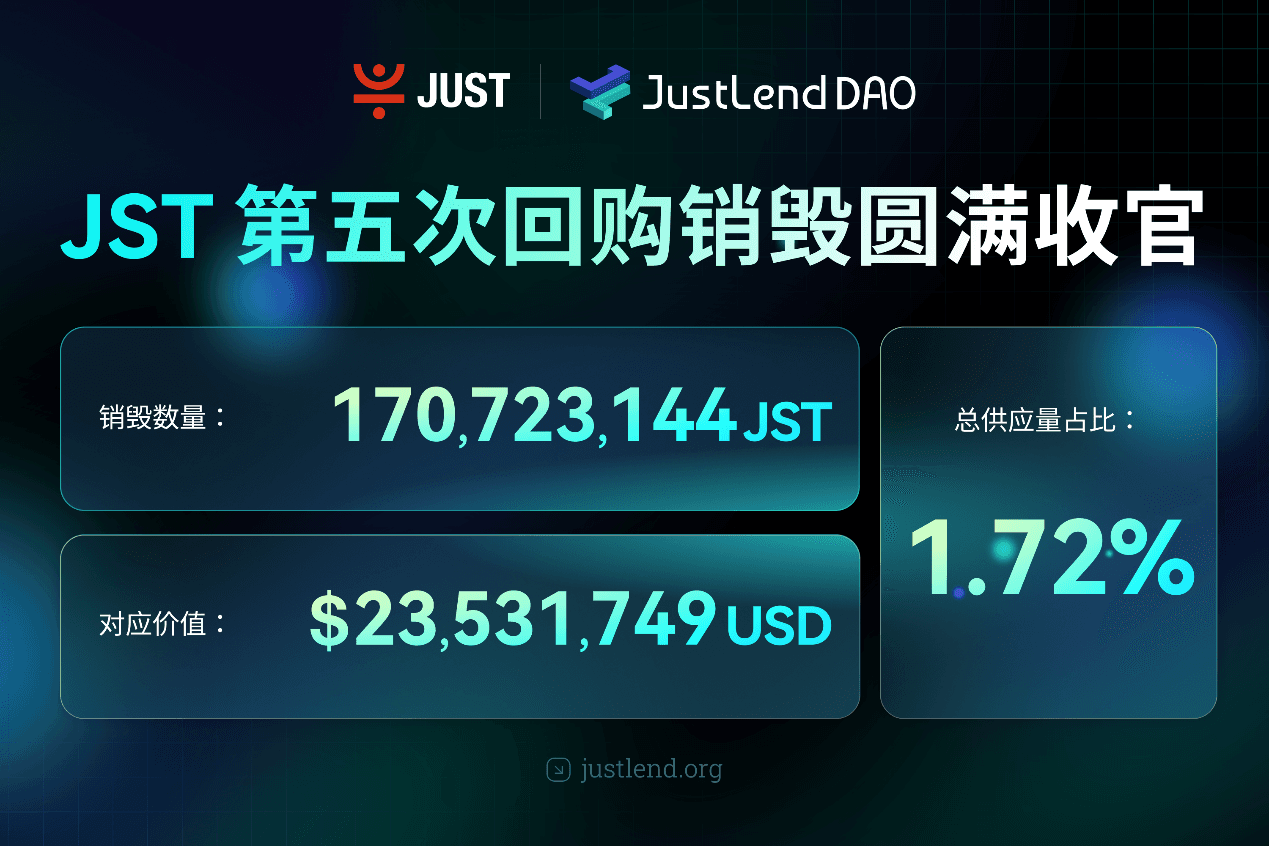
BitTorrent Brand Upgrade and Initial BTT Buyback & Burn Launch Simultaneously, Dual Engines Usher in New Era of Web3 Infrastructure
Oct 17, 20:00
Asia Market Daily: Japan's BOJ signals more rate hikes while Korea targets offshore perpetual platforms (2026/10/17)
Oct 17, 17:01Why did Papertrade backfire on you?
Oct 17, 17:01
The 'Strict Father' of Northern Myanmar: This Company Deploys 200,000 "AI Best Actors" to Strike Back Against Scammers
Oct 17, 15:34