OpenAI is looking to have the government as a stakeholder. Can regulatory certainty be "bought"?
TL;DR
· According to Axios, OpenAI is in early discussions with the Trump administration, and the proposal may involve transferring about 5% equity to a public wealth fund.
· The disagreement lies in whether the government would only receive economic benefits or also have a say in company governance through voting rights and board seats.
· Related entities: OpenAI, Microsoft, NVIDIA, Google, Meta.
According to Axios on July 2, OpenAI is in early discussions with the Trump administration, and the proposal may involve transferring approximately 5% equity to a vehicle similar to a public wealth fund to allow the American public to share in AI growth returns. No final agreement on the arrangement has been reached yet, and there has been no official announcement from OpenAI or the White House.
This is not a small figure. On March 31, OpenAI announced the completion of a $122 billion financing round, valuing the company at $852 billion post-investment. Based on this valuation, 5% would amount to around $42.6 billion. This is not a symbolic donation but a financial stake significant enough to alter the policy discourse.
What investors are concerned about is not whether the American people will quickly receive AI dividends but whether regulators, as cutting-edge models increasingly touch on national security, job disruptions, and social governance issues, will transition from external approvers to mutual beneficiaries of company growth.
This is also at the core of the disagreement between OpenAI and U.S. Senator Bernie Sanders. OpenAI's approach is to exchange a small percentage of economic ownership for public sharing and political buffering. Sanders' proposal in June is more radical, calling for a one-time 50% stock tax on large AI companies and allowing the government to influence company decisions through voting shares.
5% Discussion Arises from Policy Risk Mitigation
Frontier AI is no longer just a commercial product; it has entered the realm where the U.S. government believes preemptive intervention is necessary.
For the average investor, model releases can be understood as a form of "new drug launch." While companies think the product is ready and the market is anticipating new features for subscriptions, enterprise clients, and ecosystem growth, the government will be concerned about safety testing, social impact, and national competitiveness.
Pressure around the release plan for GPT-5.6 has already surfaced. According to AP, OpenAI was asked by the Trump administration to restrict GPT-5.6 Sol, making it available only to approved customers. OpenAI's official statement was more moderate, calling this a phased release requiring additional testing and coordination.
This cannot be framed as “Government Blocked Product, so OpenAI Traded Equity for Clearance.” There is no direct transactional relationship between the two. However, the timeline suggests that policy friction has started to impact product cadence, client base, and commercialization expectations.
OpenAI's lofty valuation is built on leading models, rapid product iteration, and commercial expansion. If critical model releases are contingent on administrative coordination, investors will likely factor in policy discount. Conversely, if the company can incorporate the government into its revenue-sharing structure, the market could reassess the extent of this discount.
Therefore, the market implication of the 5% plan is not a short-term boost for a specific version release. It is more akin to OpenAI attempting to shift the regulatory relationship from an external constraint to some form of alignment of interests. This shift will impact the risk pricing for Microsoft, NVIDIA, and the broader AI value chain, but it is still in the early stages of speculation.
Ultraman and Sanders Are Fighting for Control
A Public Wealth Fund is not complex. In simple terms, it is when the government channels the returns from a certain public resource into an investment pool and then redistributes some of the returns to the public. In its April policy paper, OpenAI proposed a Public Wealth Fund, aiming to allow citizens who are not involved in financial market investments to share in AI growth profits.
Ultraman's vision is to see AI as a kind of public good asset that will bring immense societal benefits. If a leading lab contributes a small portion of its equity to the public fund, ordinary people, even if they did not buy OpenAI stock, could indirectly partake in AI growth.
However, equity does not equal control. Equity can represent only economic interests or come with voting rights. The former is more like dividend rights, where the government receives returns but does not directly intervene in company decisions. The latter could influence the board of directors, major transactions, and company strategy.
Sanders' proposal is precisely aimed at control. His American AI Sovereign Wealth Fund Act suggests imposing a one-time 50% stock tax on large AI companies and including them in the fund. Its public statement mentions that the fund would be managed by an independent committee and use voting shares to influence company decisions.
In his column on June 3, Sanders explicitly stated that the government should acquire voting shares and have equal representation in the boards of relevant companies. His logic is that AI will impact employment, wealth distribution, and public safety and should not be solely decided by a few tech companies.
In this comparison, OpenAI's 5% discussion seems more like a proactive compromise. It acknowledges that the public should share in AI dividends but seeks to avoid handing governance directly to the government. For investors, the most critical aspect to discern is the ownership structure. If the 5% ultimately represents only a non-voting economic interest, it is more of a policy buffer cost. If it comes with governance rights, it signifies a change in the company's control structure.
Government Equity Investment Will Change Risk Profile
The most optimistic interpretation is that with the government becoming an economic beneficiary, it will be more willing to support the expansion of US AI companies. If regulators can also benefit from the value creation of OpenAI, they may pay more attention to product launches, the path to the capital market, and global competitiveness.
However, regulatory risks will not disappear. The government, acting as both a regulator and a shareholder, will bring new conflicts of interest. It may relax scrutiny due to its shareholding, or it may become more deeply involved in company decisions due to political objectives. Either way, it is not purely driven by market logic.
The term "government equity investment" is also oversimplifying when equated to "nationalization." A 5% equity stake without voting rights can hardly be called government control. But if the fund design, voting arrangements, and board rights are not clearly defined, the market cannot simply consider it as a dividend tool.
For companies like Microsoft, NVIDIA, Google, Meta, the impact is not a short-term order. A more reasonable understanding is that policy variables in the AI industry chain are being front-loaded. While in the past, investors mainly looked at computing power demand, model capabilities, cloud revenue, and capital expenditures, they now also need to consider how leading labs are handling the relationship between public benefit, regulatory approval, and national competitiveness.
One important point to note is that the public reports are closer to OpenAI and Ultraman hoping that leading labs will participate in similar arrangements, and does not necessarily mean that Anthropic, Google, Meta have already joined the negotiations. If the mechanism is extended to other companies, it may become a new template for US AI governance.
Equity Terms and Congressional Procedures Determine Pricing
This discussion is still in the early stages, with the most important variables yet to be determined. Whether the 5% is common stock, non-voting shares, or some kind of fund equity with special terms will determine whether it is a policy hedge or a governance entry point.
Congressional procedures are also crucial. A permanent AI public wealth fund that distributes benefits to the national public will likely require legislative support. Without congressional authorization, it is difficult for the proposal to transition from discussions between companies and the government into a sustainable public financial mechanism.
Whether other AI labs will follow suit will also impact market pricing. If only OpenAI participates, it is more like a single company's political risk management. If more leading labs are included in the same framework, it may become the entry cost for the US frontier AI.
It is premature to write off the 5% discussion as a completed transaction, or to equate it with the imminent release of GPT-5.6. It is more of an early signal: the valuation of frontier AI companies is extending from model capabilities and computing power inputs to whether political pressure can be institutionally managed. The real validation points are whether the equity has voting rights, whether the fund receives legislative support, and whether the company can still maintain its product release cadence.
Recommended
Desk: Brent Crude Tops $110, Musk's Net Worth Drops 528.6 Billion in Four Days After Tesla Roadster Launch
Oct 17, 21:49
JST Fifth Buyback and Burn Successfully Concludes: Over 170 Million Tokens Worth Approximately $23.53 Million Burned, Buyback Mechanism Set for Comprehensive Upgrade
Oct 17, 20:10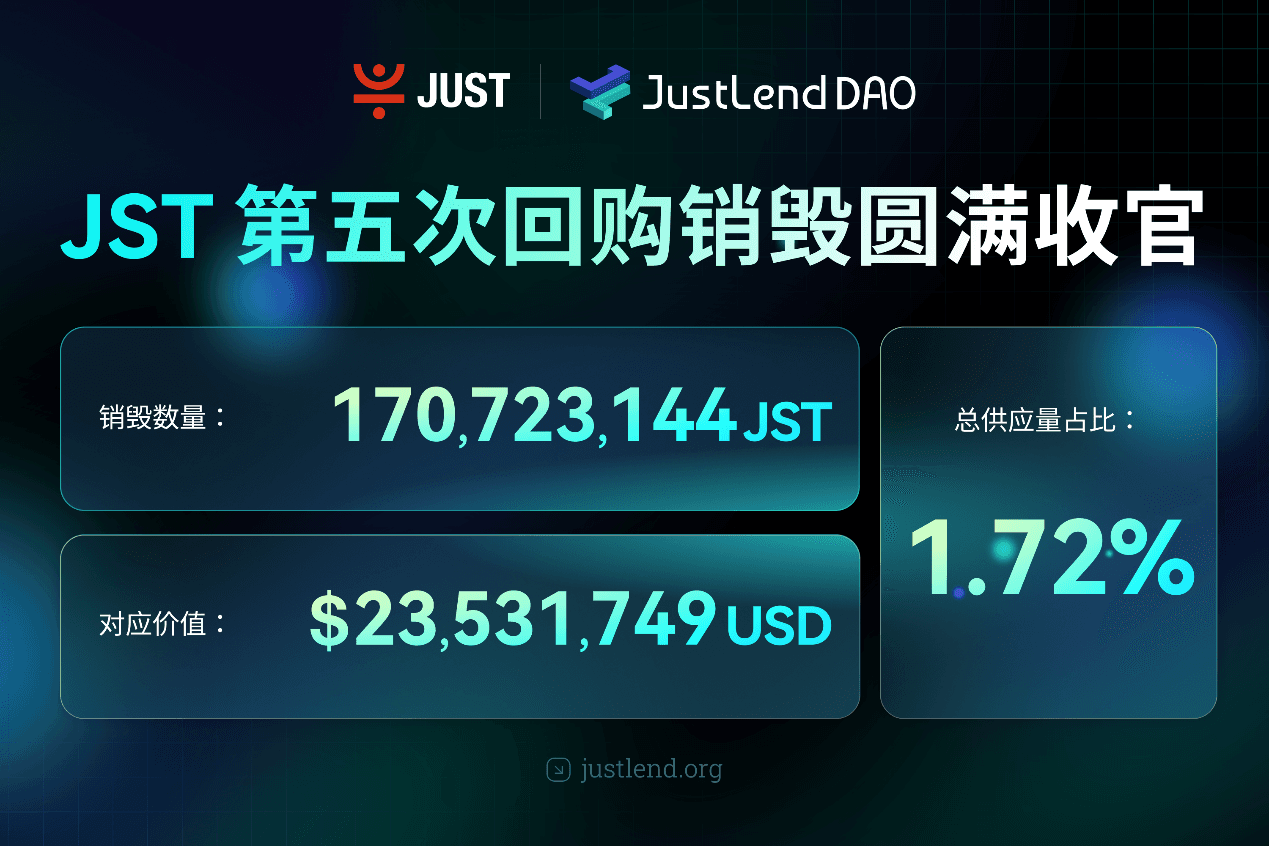
BitTorrent Brand Upgrade and Initial BTT Buyback & Burn Launch Simultaneously, Dual Engines Usher in New Era of Web3 Infrastructure
Oct 17, 20:00
Asia Market Daily: Japan's BOJ signals more rate hikes while Korea targets offshore perpetual platforms (2026/10/17)
Oct 17, 17:01Why did Papertrade backfire on you?
Oct 17, 17:01
The 'Strict Father' of Northern Myanmar: This Company Deploys 200,000 "AI Best Actors" to Strike Back Against Scammers
Oct 17, 15:34