Europe's First Quantum Computing Company Lands on Nasdaq, Should Quantum Stock Be Bought Based on Performance or Based on Options?

TL;DR
· IQM landed on Nasdaq through SPAC on July 2, with a pre-listing equity valuation of approximately $1.8 billion.
· The company has revenue, orders, and system deliveries, but quantum computing commercialization is still in its early stages.
· Related targets: IQMX, IONQ, RGTI, QBTS, HON.
IQM Quantum Computers merged with Real Asset Acquisition Corp. and debuted on the Nasdaq Global Select Market on July 2, with ADS ticker IQMX and warrant ticker IQMX WS. According to the company's public disclosures, IQM is the first pure-play quantum computing company in Europe to list on a major U.S. exchange, with a pre-listing equity valuation of approximately $1.8 billion.
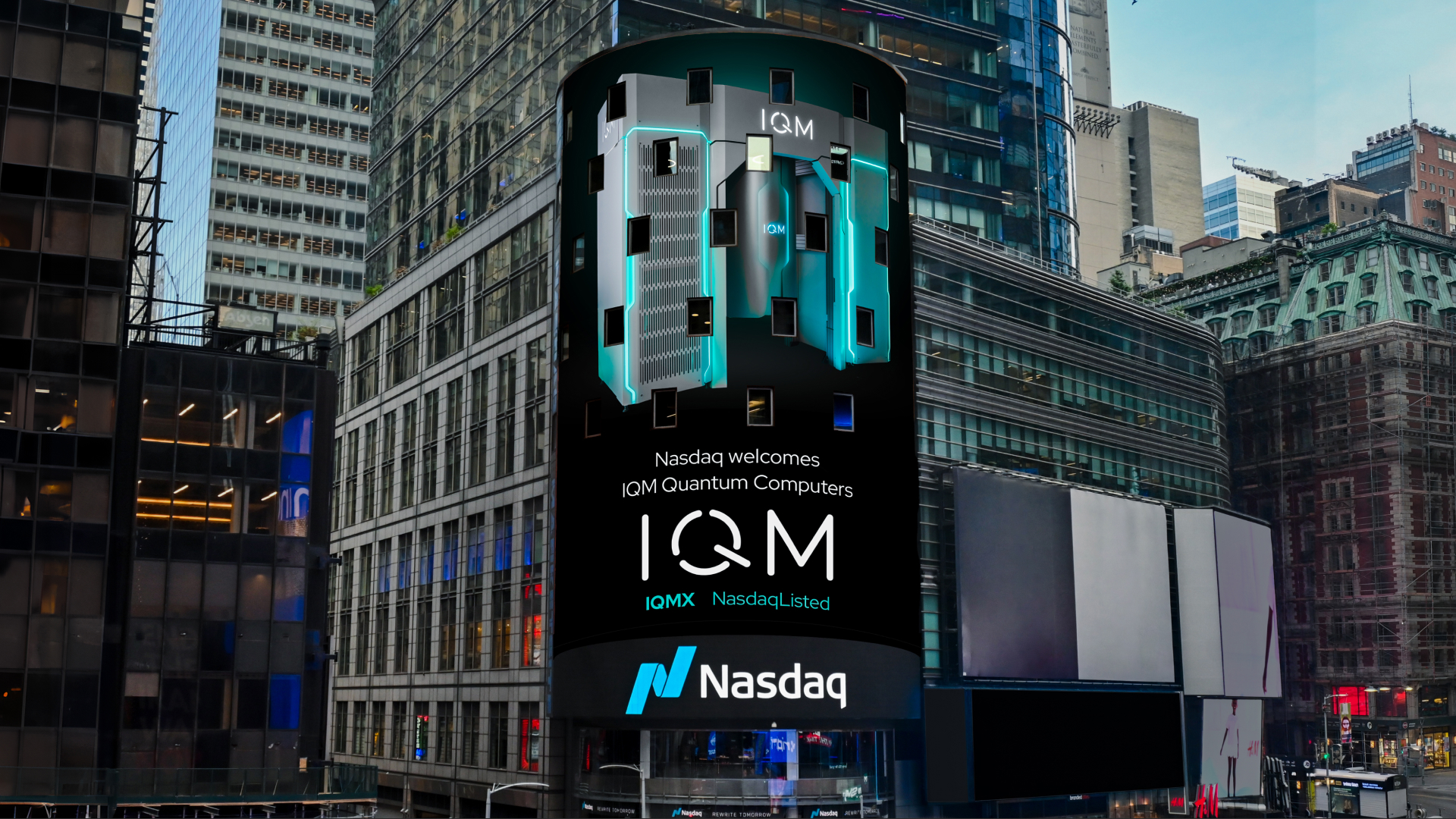
This seems more like a valuation system migration. A European quantum hardware company previously priced by government projects, research institutions, and private capital has now entered the U.S. stock market, subjecting itself to public scrutiny based on revenue, orders, cash, and technology roadmap.
The story presented by IQM's management is that the company has already made system sales, received customer orders, and possesses in-house manufacturing capabilities. The proceeds from the listing will be used for global expansion and fault-tolerant roadmaps. The listing documents also indicate that the company is engaged in emerging technology, faces significant technical challenges, and may fail to commercialize or gain market acceptance.
The issue for investors to assess lies here. IQM has actual deliveries, not just a conceptual stock. However, the primary purchase at the current valuation still represents long-term technology options rather than a proven profit model.
European Quantum Hardware Enters Public Pricing
The first significance of IQM's listing is that quantum computing now has a tradable public valuation anchor. Previously, when investors discussed quantum stocks, they mostly looked at IonQ, Rigetti, D-Wave, or considered IBM, Google, Honeywell's related businesses as in-house options of large companies. With the addition of IQM, the European superconducting quantum hardware roadmap has also been included in the same comparison.
This path was through a SPAC. It went public by merging with a pre-existing listed shell company, a process that is typically faster than a traditional IPO. However, after listing, it can easily involve redemptions, liquidity, and valuation fluctuations. For early-stage deep tech companies, SPACs do not prove the maturity of the business model; instead, they mainly provide early access to public market financing.
The company's announcement shows that the merger and PIPE financing brought in approximately €1.987 billion, equivalent to $2.335 billion in net proceeds. Post-transaction reserve cash is approximately €337 million, close to $400 million. This money is mainly used to further invest in chips, control systems, cooling equipment, software stack, and global delivery.
IQM focuses on on-premises full-stack systems, which means delivering a complete set of processor, control hardware, cooling equipment, and software to customers. For national laboratories, supercomputing centers, and government-related organizations, on-premises deployment corresponds to sovereignty control and integration capability.
Revenue and Delivery Reduce Pure Conceptual Risk
IQM's strongest valuation support lies in its existing revenue and delivery. The company's 2025 revenue is €31 million, approximately $36 million. The backlog orders are around $77 million. Public materials show that the company has sold 23 quantum computers, with disclosed delivery quantities appearing in different stages as 15 units and 18 units, written as 15 to 18 units for prudence, constructing systems exceeding 30 units.
These numbers may not be significant in traditional tech companies, but they carry weight in the quantum hardware industry. Quantum computing is still in its early stages, with many companies mainly relying on research partnerships, cloud-based trials, and roadmap narratives. IQM has at least proven one thing: there are already institutions willing to pay for current systems.
The customer profile also delineates boundaries. The current primary buyers are not large-scale enterprise application customers but research institutions, national laboratories, supercomputing centers, and European sovereign tech projects. They purchase quantum computers not usually to replace existing computing clusters next year but to advance capability, train teams, and test hybrid computing architectures in advance.
This gives IQM's revenue credibility but should not be overly extrapolated. Selling systems does not equate to application breakthroughs. Having backlog orders does not mean stable cash flow. Entering Nasdaq does not signify the industry crossing a technological inflection point.
Fault-Tolerance Roadmap Is the Biggest Technical Hurdle
The real challenge of quantum computing is not building a functioning machine but making it reliable enough, large enough, affordable enough, and capable of repeatedly solving commercially valuable problems. The risk disclosures in IQM's IPO filing primarily revolve around these hurdles.
Fault-tolerant quantum computing involves turning unstable physical quantum bits into more reliable logical quantum bits through error correction and redundancy, allowing the machine to run longer and solve more valuable algorithms. Currently, many quantum computers are still in the NISQ stage, characterized by high noise, medium scale, and early error-prone status.
Fault tolerance is not a one-time software upgrade. It requires higher-quality quantum bits, lower error rates, a more complex control system, and hardware on a far greater scale than is currently available. The industry generally believes that a truly usable fault-tolerant system will require an order of magnitude more physical quantum bits to support it.
This is also the difference in investment pace between quantum and AI. AI can leverage existing semiconductor, cloud service, and enterprise software ecosystems to spread, with faster commercial feedback. Quantum computing must first cross the physical engineering threshold before discussing large-scale commercial workloads.
The management of IQM emphasizes existing deliveries, orders, and manufacturing capabilities. The IPO funds will help the company advance towards larger-scale systems and fault tolerance goals. However, cautious investors see another side: current revenue is relatively small compared to an $1.8 billion valuation, customer concentration is in research and government-related scenarios, ongoing R&D investment will result in cash burn, and future financing may still be needed.
Order Fulfillment Determines Valuation Patience
After IQM's IPO, what investors should focus on the most is not the heat of the quantum concept, but whether orders can be continuously converted into revenue. If the $77 million in hand orders can be delivered steadily, it will enhance market confidence in its commercial traction. If the conversion is slow with many delays, the valuation will once again be torn between long-term imagination and cash burn.
The customer structure is also crucial. As long as revenue mainly comes from government, research institutions, and supercomputing centers, IQM's commercialization still resembles infrastructure pre-deployment. Once enterprise customers start paying continuously for specific business scenarios, the market will reassess the possibility of quantum computing transitioning from scientific research procurement to commercial budgets.
Cash burn will become a hard constraint in the public market. The funding cushion brought by the IPO can reduce short-term financing pressure, but quantum hardware follows a path of heavy R&D, heavy engineering, and heavy delivery. If fault tolerance progress is slower than the roadmap, the company needs to explain how long existing cash can support them and whether the next round of financing will dilute shareholders.
IQM's IPO has opened a public market window for quantum computing, allowing this long-term option to start undergoing quarterly data validation. Whether the quantum concept can transition from long-term imagination to current investability, the answer will first be reflected in orders, deliveries, and cash flow.
Recommended
Desk: Brent Crude Tops $110, Musk's Net Worth Drops 528.6 Billion in Four Days After Tesla Roadster Launch
Oct 17, 21:49
JST Fifth Buyback and Burn Successfully Concludes: Over 170 Million Tokens Worth Approximately $23.53 Million Burned, Buyback Mechanism Set for Comprehensive Upgrade
Oct 17, 20:10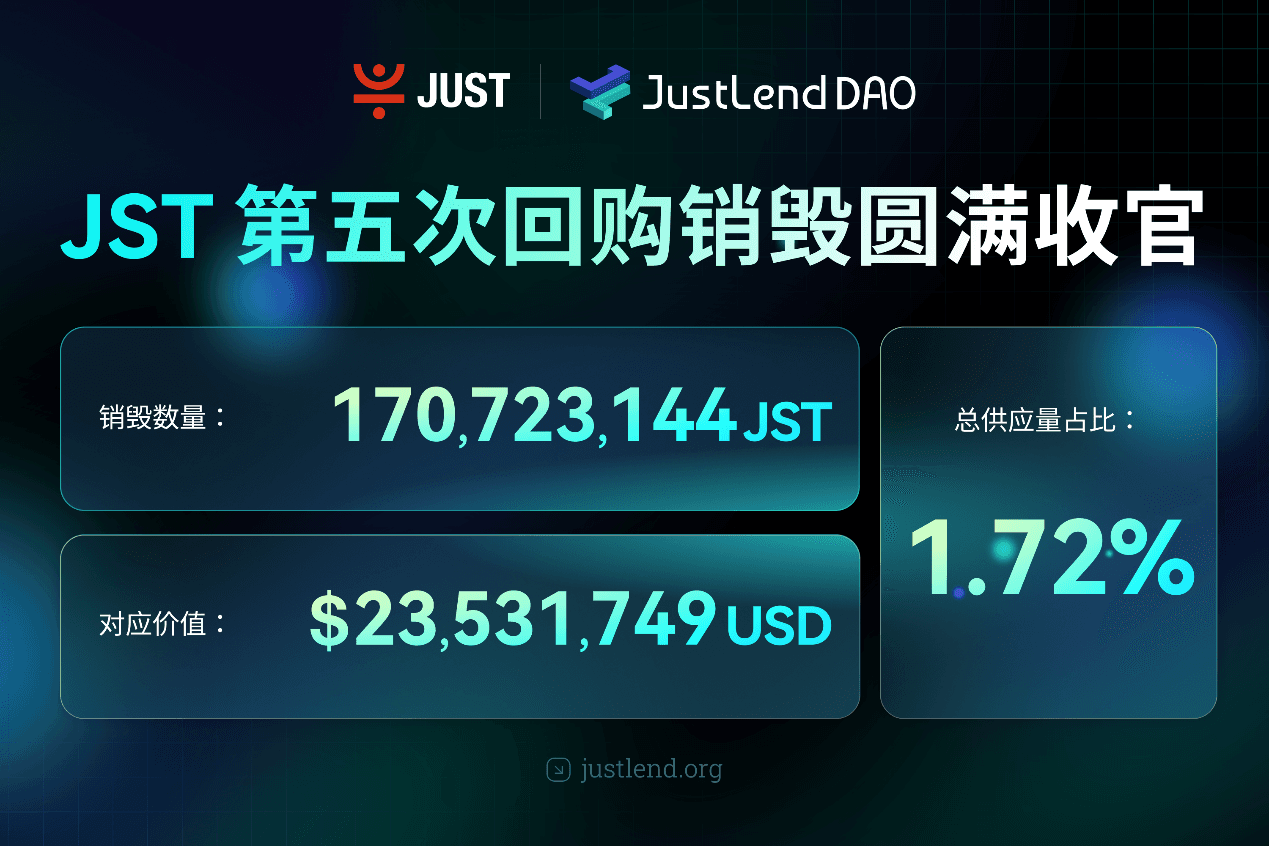
BitTorrent Brand Upgrade and Initial BTT Buyback & Burn Launch Simultaneously, Dual Engines Usher in New Era of Web3 Infrastructure
Oct 17, 20:00
Asia Market Daily: Japan's BOJ signals more rate hikes while Korea targets offshore perpetual platforms (2026/10/17)
Oct 17, 17:01Why did Papertrade backfire on you?
Oct 17, 17:01
The 'Strict Father' of Northern Myanmar: This Company Deploys 200,000 "AI Best Actors" to Strike Back Against Scammers
Oct 17, 15:34