The US labor force participation rate has fallen to a five-year low, prompting a new discussion in the market about interest rate cuts.

TL;DR
· U.S. June Nonfarm Payrolls added 57,000, below the market expectation of around 110,000, with a 74,000 downward revision to the combined data for April and May.
· Unemployment rate fell to 4.2%, but the labor force participation rate also dropped to 61.5%, which the market interpreted as a more dovish policy signal.
· Related assets: Gold, U.S. Treasuries, U.S. Dollar, Bitcoin, and other rate-sensitive assets.
The U.S. Bureau of Labor Statistics released the June Employment Report on July 2, showing that nonfarm payrolls in the U.S. increased by only 57,000, significantly below the market's previous expectation of over 110,000.
Intuitively, the unemployment rate falling back to 4.2% may seem like good news. However, after the data was released, the U.S. Dollar weakened, U.S. Treasury yields declined, and Gold rose. The market's trading direction is closer to reducing tightening bets and reconsidering potential future rate cuts.
This report does not directly prove that the U.S. economy is entering a recession. What it has altered is an anchor that has supported a somewhat hawkish expectation over the past few months: that the labor market remained strong enough for the Fed to continue with high-interest rates.
Downward Revision Weakens Employment Resilience Narrative
The most direct impact of this employment report is that the job additions were too few, and the previous data was not as robust as expected.
In June, nonfarm payrolls added 57,000, below market expectations. The data for April was revised down from 179,000 to 148,000 additions, and for May, it was revised down from 172,000 to 129,000, with a total downward revision of 74,000.
A single month's shortfall from expectations can still be explained as short-term noise by the market. However, when the low data is combined with previous downward revisions, the trading implications change. It indicates that the labor market cooling may not have started only in June but that the old data did not fully reflect it.
Previously, one of the reasons why the Fed maintained high-interest rates and even kept the option to raise rates was that the job market could still tolerate a tightening environment. Now, this rationale weakens, naturally giving a higher weight to a more dovish policy path in the rate markets.
Rate futures trading reflects the Fed's future actions. The weaker the job market, the less need there is for further rate hikes, making discussions about future rate cuts easier to heat up. This change will suppress the U.S. Dollar and short-term Treasury yields while supporting assets sensitive to real rates like Gold.
Unemployment Rate Decline Anomaly from Participation Rate
The most easily misread figure this time is the unemployment rate.
Under normal circumstances, a decrease in the unemployment rate usually signifies an improvement in employment. However, the unemployment rate only counts those who are actively "looking for a job but can't find one." If a person gives up looking for a job or temporarily exits the labor force, they are no longer included in the unemployment rate.
So, it's important to look at the labor force participation rate. The labor force participation rate (the percentage of the working-age population that is working or actively looking for work) measures how many people in the working-age population are either working or actively seeking work. A decline in this rate often indicates that some people have left the "on-field" employment statistics.
In June, the U.S. labor force participation rate dropped to 61.5%, with a decrease of about 507,000 people in the household survey measure of employment. The decrease in the unemployment rate is not solely due to more people finding jobs; it may also result from a contraction in the labor supply.
This is where the anomaly in market reaction arises. On the surface, the unemployment rate is lower; however, a closer look reveals that the participation rate decline dampens this good news. It's not a typical sign of a robust job market but rather resembles a cooling-off period in the employment market, with some people exiting the statistics.
For the Federal Reserve, this combination poses challenges. A weakening job market would increase the rationale for a policy shift towards easing. Still, if wages remain sticky, a quick pivot to aggressive easing becomes difficult.
Market Trading Policy Path, Not a Recession Conclusion
Following the data release, the market's initial reaction is focused on changes in policy trajectory rather than the U.S. economy's collapse.
Gold prices rise, the U.S. dollar weakens, and Treasury yields decline. The underlying rationale behind these movements is that weak employment reduces the necessity for the Federal Reserve to continue tightening, reigniting discussions on rate cuts. As expectations for rate cuts increase, the relative attractiveness of cash and dollar-denominated assets decreases, benefiting non-yielding assets like gold. The rise in Treasury prices and the decline in yields also align with dovish expectations.
For the crypto market and growth stocks, the transmission mechanism is more indirect. They do not directly benefit from deteriorating employment but rather because the market is beginning to envision a future with expanded liquidity and lower real interest rates, easing valuation pressures.
However, this logic has its limits. If employment only moderately cools off, dovish policy trades favor risk assets. Yet, if employment deteriorates rapidly, leading to recession trading, corporate profits, consumer spending, and risk appetite will all be under pressure, and the liquidity boost may not offset the fundamental impacts.
Wage Restraint Limits Easing Speculation
This report is not sufficient to support the conclusion that "the Fed will rapidly and continuously cut rates" because wage pressures have not completely dissipated.
In June, average hourly wages rose by 0.3% month-on-month and 3.5% year-on-year. While this growth rate is below the extreme levels seen in the high inflation period, it still indicates that wage growth has not significantly faltered. For the Federal Reserve, as long as wages remain sticky, service inflation could continue to pose a challenge.
The industry structure has not experienced a comprehensive stall. The leisure and hospitality sector saw a reduction of 61,000 jobs, the most eye-catching part of the report. However, sectors such as professional and business services, healthcare, and social assistance continued to grow. This differentiation resembles more of a labor market cooldown rather than a synchronized collapse across all sectors.
A more accurate statement would be that the employment resilience narrative has weakened, the policy pivot space has opened up, but the recession pricing has not yet completed. The former is favorable for gold, US Treasuries, and some risk assets, while the latter may lead to a shift towards hedging and profit downgrades.
Inflation and the Continuity of the Next Jobs Decision Trade
What the market needs to confirm is not how bad this month's nonfarm payrolls were, but whether they will form a continuous signal.
If the next jobs report continues to remain below trend levels and the participation rate keeps declining, the market will be more inclined to view June as the starting point of a labor market weakening. At that time, the Fed's dovish expectations may be further strengthened, and the US dollar and Treasury yields will continue to be under pressure.
However, if subsequent employment data rebounds, or if wages remain in a high range on a year-on-year basis while inflation data does not cooperate, the Fed will find it difficult to use a weak jobs report as a reason for a rapid rate cut. The loose expectations that gold and risk assets traded on before will also face selling pressure.
This report provides investors with a clear hint: do not just focus on the unemployment rate, and do not equate weak nonfarm payrolls directly with a recession. It is the simultaneous shift of participation rate, wages, and inflation that will determine how far this round of trading can go from a "dovish signal."
Recommended
Desk: Brent Crude Tops $110, Musk's Net Worth Drops 528.6 Billion in Four Days After Tesla Roadster Launch
Oct 17, 21:49
JST Fifth Buyback and Burn Successfully Concludes: Over 170 Million Tokens Worth Approximately $23.53 Million Burned, Buyback Mechanism Set for Comprehensive Upgrade
Oct 17, 20:10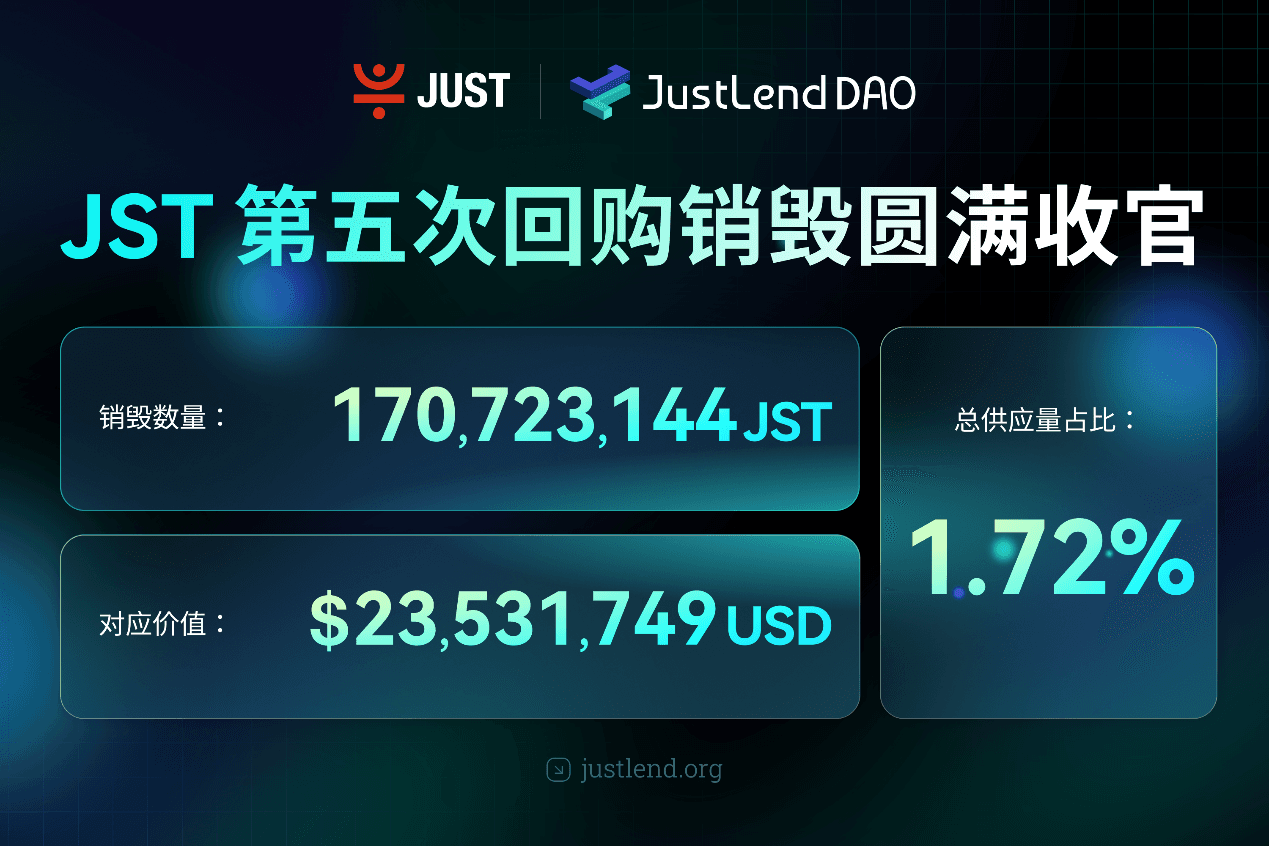
BitTorrent Brand Upgrade and Initial BTT Buyback & Burn Launch Simultaneously, Dual Engines Usher in New Era of Web3 Infrastructure
Oct 17, 20:00
Asia Market Daily: Japan's BOJ signals more rate hikes while Korea targets offshore perpetual platforms (2026/10/17)
Oct 17, 17:01Why did Papertrade backfire on you?
Oct 17, 17:01
The 'Strict Father' of Northern Myanmar: This Company Deploys 200,000 "AI Best Actors" to Strike Back Against Scammers
Oct 17, 15:34