Liang Wenfeng has no life, Yang Zhilin has no way out

This past week, with the release of Kimi K3, the entire U.S. tech community was collectively lamenting why someone as outstanding as Yang Zhilin did not stay in the U.S.
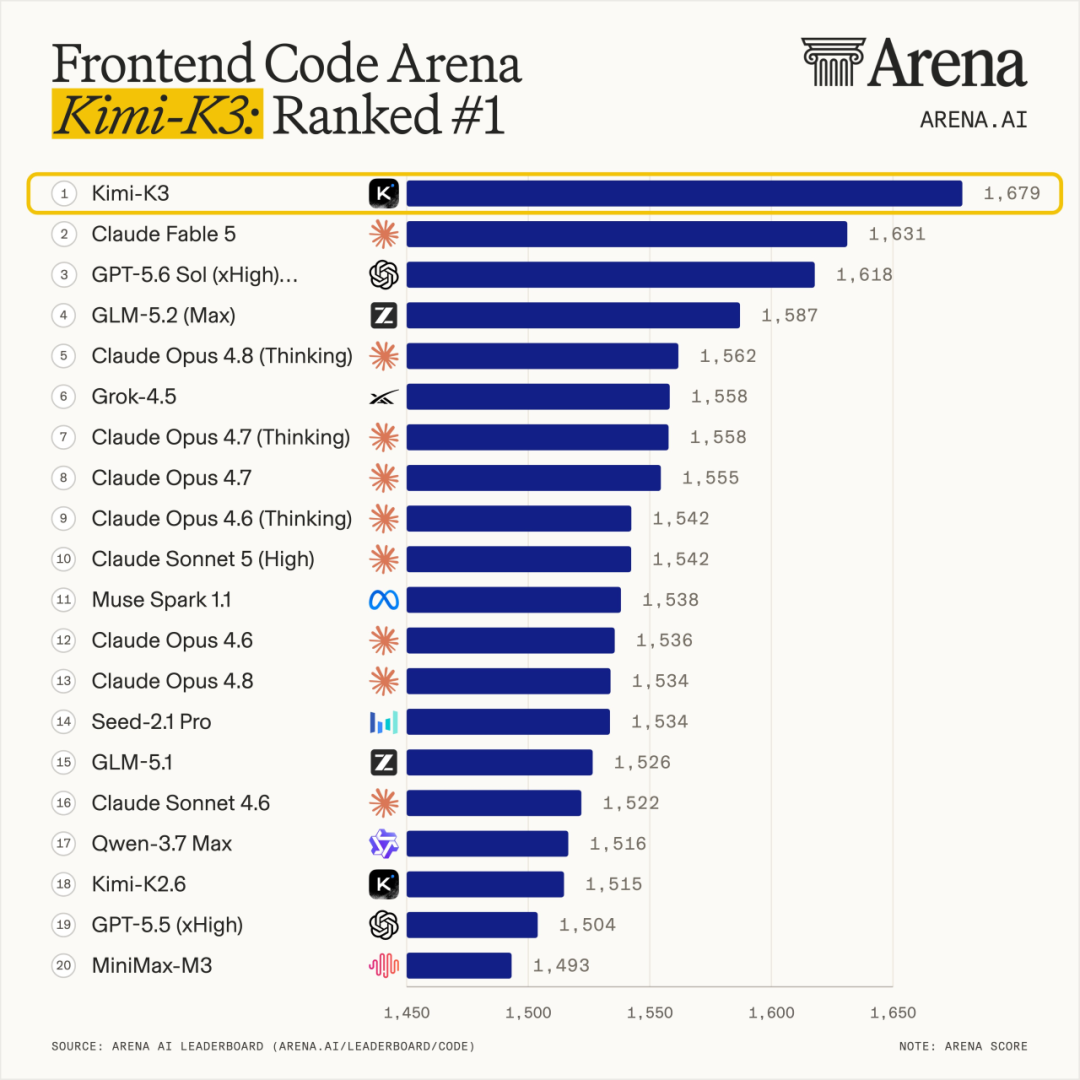
Kimi K3 Surpasses All Models in Front-end Ability
This topic received over five million views on X. David Sacks, the former AI head at the White House before Trump, who was directly loyal to Trump, stated that he has now shifted a large amount of work from Claude to Kimi, saying, "It's much more fun because it [Kimi] gets the work done directly instead of lecturing you." Meanwhile, Silicon Valley's veteran venture capitalist Vinod Khosla attributed this to immigration policy, claiming that the U.S. is scaring away outstanding talent.
As speculation continues to grow, Yang Zhilin's Ph.D. advisor Salakhutdinov publicly showcases his favorite student on social media while also clarifying the reason why Yang Zhilin did not stay in the U.S.: "If he doesn't even have the courage to try entrepreneurship, Yang Zhilin says he will regret it for life."
On the other side of the ocean, there is another name from Guangdong who is well-known in the Chinese AI community, Liang Wenfeng.
Liang Wenfeng, seven years older than Yang Zhilin, was born in Wuchuan, Zhanjiang. A programmer who has been engaged in quantitative trading for fifteen years, he has hardly ever been interviewed, has no social media accounts, and his colleagues' only summary of his personality is "other than programming, he has no other hobbies." After the release of his DeepSeek R1 in January 2025, Nvidia lost nearly $600 billion in market value in a single day, a moment referred to as the Sputnik moment in Silicon Valley. While the whole world was looking for him, he returned to his hometown to play soccer for a few days.
Two Guangdong natives, one born in Wuchuan and the other in Shantou, separated by the Leizhou Peninsula. Their companies are on the same track, following almost completely mirrored paths, yet each fork in the road actually stems from their true personalities.
A Radio and a Band
Liang Wenfeng was born in 1985 in Mileling Village, Tanba Town. Both of his parents were teachers at the local primary school. With few toys at home, the most important item of his childhood was a Yeyup brand radio, which he dismantled and reassembled countless times.
This quiet child showed his uniqueness at an early age. His junior high school teacher remembered that he was not a bookworm, nor necessarily more diligent than others, but he had self-studied high school math in junior high and started flipping through college textbooks, "as if he didn't need to spend a lot of time to excel in each subject."
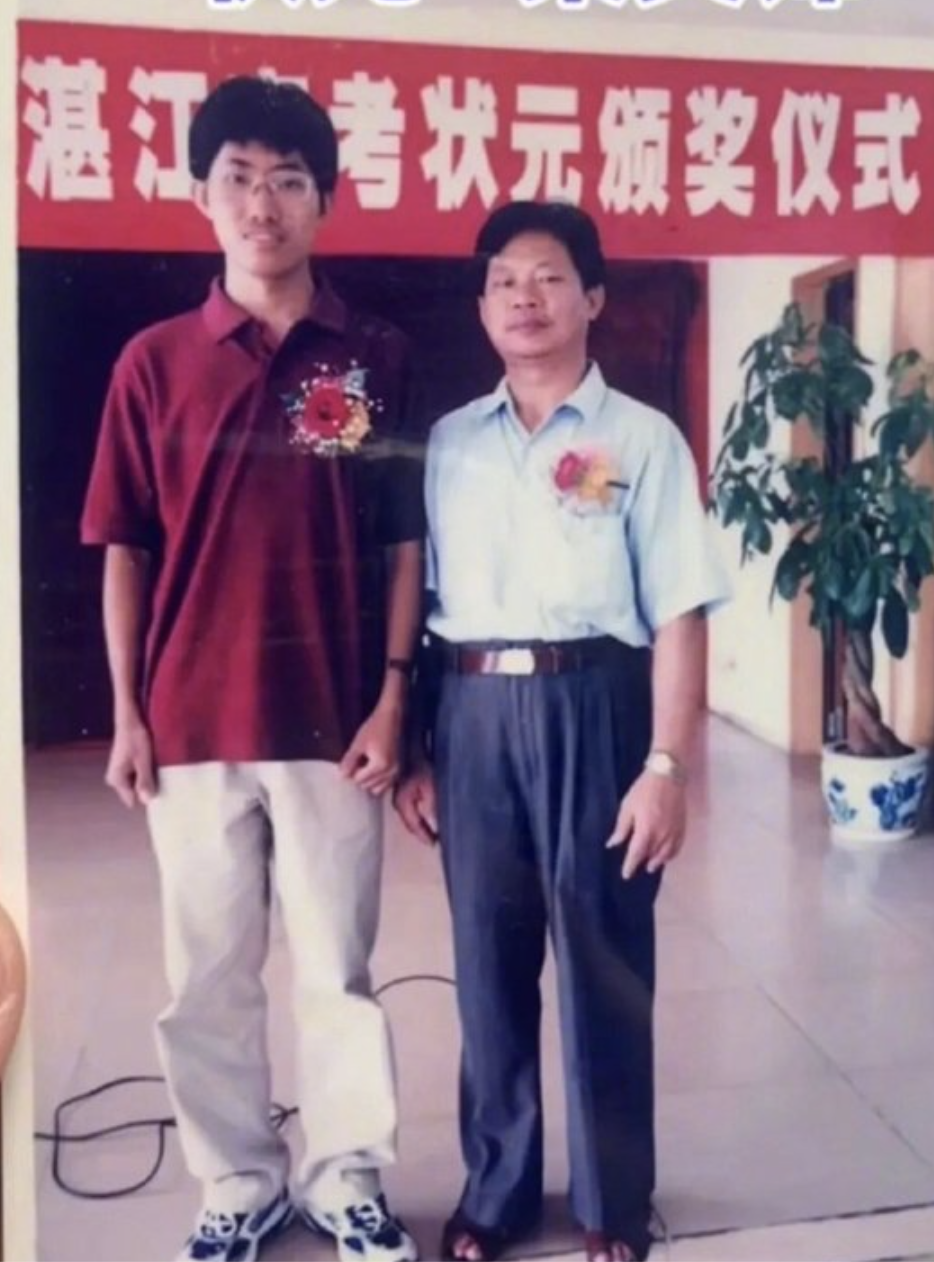
In the 2002 National College Entrance Examination, he scored 806 points, becoming the top scorer in Zhanjiang City. A photo of him receiving the award can still be found today: wearing a dark red short-sleeved shirt with a large red flower on the chest, his expression stiff, clearly pushed onto the stage by a teacher. That autumn, he entered Zhejiang University to study Electronic Information Engineering. However, in the following twenty years, this person never appeared in any event worthy of being photographed again.
Seven years later in Shantou, another child from Guangdong had grown up. Yang Zhilin, born in 1992, ranked first in his year for four years in the Computer Science department at Tsinghua University, with over twenty published papers. While these achievements were not uncommon at Tsinghua, what was uncommon was that he, in addition to these accomplishments, formed a rock band named Splay, derived from a type of data structure, and served as the drummer himself.
He later explained: "At that time, I felt there were many things I wanted to express, including the pressure from reality and the absurdity of the environment." They wrote a song about a daydream of overnight entrepreneurial success and sudden wealth, "partly out of empathy, and partly as a reminder not to become too utilitarian."
Many years later, this band would unexpectedly reappear in the story in a way no one could have anticipated: the bandmate, Zhou Xinyu, became a co-founder of the Dark Side of the Moon.
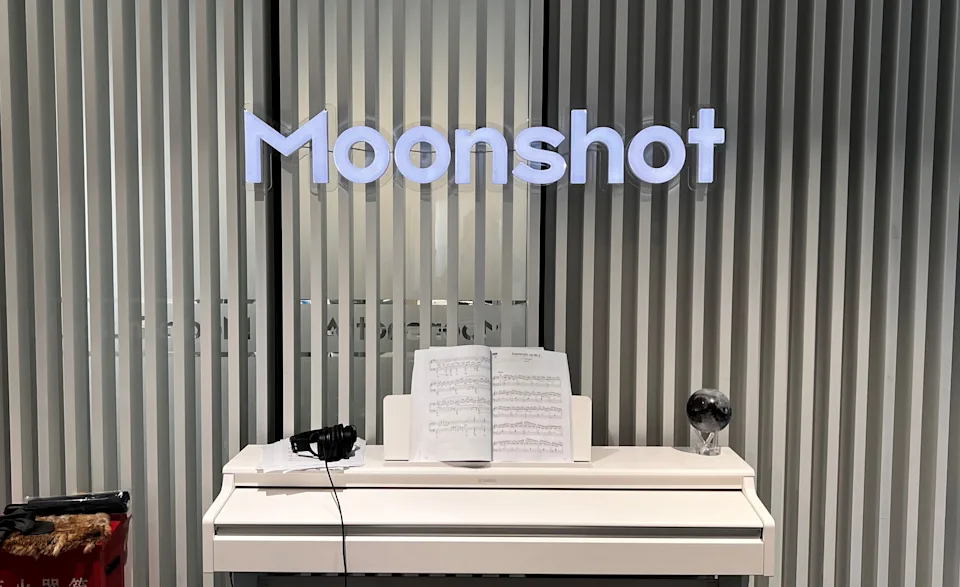
At the entrance of the Dark Side of the Moon's office sits a white Yamaha electric piano with Pink Floyd's 1973 album "The Dark Side of the Moon" resting on it. The company's name was inspired by this album.
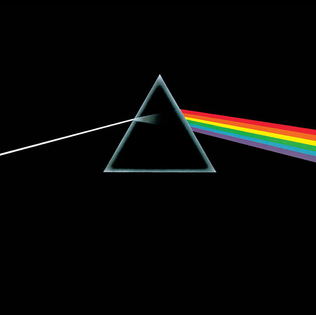
The Dark Side of the Moon Album
One dismantled radio that didn't need anyone to see it, one drummer who had something to express. Almost every decision these two individuals made over the next twenty years stemmed from this.
Rental House in Chengdu and Corridors of CMU
After graduating from Zhejiang University, Liang Wenfeng didn't go to a tech giant to receive a prestigious business card. Instead, he went to Chengdu, hiding in a cheap rental house, conducting various algorithm experiments, attempting to implement AI in traditional industries, all of which failed. The founding teams of China's top quantitative funds mostly have pedigrees from overseas hedge funds, while Liang Wenfeng charted his own path from that rental house.
In 2015, he co-founded Magic Square with his classmates from Zhejiang University. What followed was a series of actions that were almost incomprehensible at the time: in 2019, he invested nearly $200 million to build a self-owned cluster with 1,100 GPUs; in 2021, he added another $1 billion, hoarding around ten thousand A100 GPUs.
For quantitative trading, you don't need this many GPUs. Liang Wenfeng himself admitted that for trading purposes, a small number of GPUs would suffice. Those who had dealt with him in his early years recalled that when they saw him hoarding GPUs to train models, they only thought that this was a tech geek with a terrible haircut burning through money.
However, what he did was exactly the opposite of what everyone understood. He wasn't using AI to reduce costs and increase efficiency in finance; instead, he was using finance to provide funding for AI research. The usual sequence for most Chinese AI companies is to secure financing first, then develop products, and finally seek cash flow. But he completely reversed the order: first, he created a cash-flow machine, and then used it to acquire the freedom to conduct research.
Yang Zhilin chose a different path, a path strewn with flowers and thunder.
After graduating from Tsinghua University, he went to Carnegie Mellon University (CMU) for his Ph.D. During this time, he conducted research at Google's and Meta's AI labs. In 2017, he focused all his efforts on language models, later stating that this was the "only important problem." During his Ph.D., he published two papers: one teaching AI to remember longer contexts and another that outperformed Google's strongest model in 20 tests, with a total citation count of nearly twenty thousand.
Years later, Kimi became an overnight sensation by being able to input long texts. Many people thought this was a differentiating selling point hastily created in 2023, but it was actually the direction he had identified during his Ph.D., just taking a different form.
In 2016, while still pursuing his Ph.D., he co-founded Recurrent Intelligence, which focused on sales call analysis. Sequoia Capital and Matrix Partners China were both shareholders. This entrepreneurial experience allowed him to witness early on the roughness of technology implementation, but it also planted a landmine under his feet that would only be detonated eight years later.
Upon completing his Ph.D. in 2019, his advisor connected him with a senior Apple executive to whom Yang Zhilin could report. The executive inquired if Yang Zhilin was willing to join Apple, even in Apple's China office. However, Yang Zhilin turned down the emails from Apple and the Silicon Valley offer, deciding to return to China.
At that time, Liang Wenfeng was hoarding GPUs in Hangzhou, while Yang Zhilin was waiting in Beijing. Neither of them knew of the other's existence or that these two names would represent today's Chinese AI community.
A Month's Window and a Catfish
On November 30, 2022, ChatGPT was launched, causing a collective insomnia among Silicon Valley's tech circle. Yang Zhilin recalled that many of his friends were anxious, experiencing FOMO, unable to sleep, and many of them turned to entrepreneurship.
“We started focusing on fundraising in February 2023. There was no chance to delay it until April. But doing it in December 2022 or January 2023 was also not an option due to the pandemic; everyone was caught off guard,” said Yang Zhilin, seizing this one month, during which he did not rest a single day.
In March 2023, Dark Side of the Moon was established with Tsinghua alumni Zhou Xinyu and Wu Yuxin as co-founders. It is said that they raised an initial $60 million, gathered around 40 AI researchers in three months. Then came the steepest curve in China's large model financing history: Sequoia and ZhenFund entered, with Alibaba leading a $1 billion investment, followed by Tencent, Meituan, and Xiaohongshu, pushing it all the way up to $3.3 billion. Kimi, relying on a 200,000-word long text, became the first widely used large model product among many Chinese people.
During that period, Yang Zhilin lived in a dual state. On the outside, he narrated the grandest story, estimating the probability of the scaling law not holding to be close to zero, likening entrepreneurship to driving towards an endless snow-capped mountain, and referring to the first year as creating a prototype rocket and discovering a bit of the fuel formula. Internally, he had to focus on the most trivial algorithms: when computing power was tight, one machine was at 260 today, 340 tomorrow, dropping back in a few days, deciding whether to buy or rent, which channel to go through, contacting and adjusting every day. Half scientist's conviction and half savvy small business owner were both embodied in this 31-year-old man.
But everything given by the capital had long been priced. To sustain the growth curve, in October 2024, Kimi spent $220 million in a single month, and an additional $200 million in November, burning more than the entire third quarter within two months. The drummer who wrote a song mocking overnight wealth had become the most aggressive founder in the entire industry. It wasn't that he had changed; it was the $3.3 billion valuation making decisions for him.
Liang Wenfeng entered the scene in Hangzhou in an almost deliberately contradictory manner.
In 2023, DeepSeek spun off from Magic Square and rejected any external investment. The team had fewer than 140 people, almost no returnees, all fresh graduates from domestic universities and young people who had only graduated for a few years. There were no KPIs, no hierarchy, and ideas could be directly implemented.
Former employees recalled to The Washington Post that Liang Wenfeng would delve into the details of training strategies, read papers and write code with researchers, “completely unlike a boss, more like a geek.” He explained why he recruited fresh graduates instead of poaching industry veterans: “Experienced people would unequivocally tell you what to do, but inexperienced individuals would explore repeatedly.”
In May 2024, DeepSeek-V2 lowered the API price to one yuan per million tokens, and ByteDance, Alibaba, Baidu, and Tencent were forced to follow suit. The entire industry thought this was a long-planned business war. His response was, “We didn't intend to become a catfish; we just accidentally became one.”
Pricing is just above cost, with "no money to be made, and no windfall profits." While the Internet crowd talks about market share, entry points, and network effects in price wars, he talks about cost accounting. However, it is precisely this emotionless price reduction that is most deadly. It directly drags the large-scale API from a high-margin narrative into the pricing logic of infrastructure.
Yang Zhilin and Liang Wenfeng. Two completely different business models have been compared by the outside world at some point.
The Suspended Yang Zhilin
The landmine buried by Yang Zhilin eight years ago exploded in November 2024.
In his previous entrepreneurial project, five old shareholders of Cyclical Intelligence brought an arbitration case in Hong Kong, China, accusing him of initiating the financing of a new company before obtaining full shareholder exemption.
On December 5, Zhu Xiaohu launched an attack on his WeChat moments, focusing on Zhang Yutong: the former Jinshajiang partner received an initial 14% of 9 million shares on the dark side of the moon for free, exceeding the 9.5% allocated to Cyclical Intelligence as the "parent." Zhu Xiaohu's proposed solution was almost humiliating: apologize, return shares, or cut ties with Zhang Yutong.
At 9:40 p.m. on December 6, Yang Zhilin issued a 1300-character long article. Instead of cutting ties, he stood his ground: Zhang Yutong is a co-founder, and the shares are the consideration for years of future work. The departure process from Cyclical received signatures from every director. Those close to the company relayed the internal attitude: she and the dark side of the moon are already integrated and cannot be separated.
Zhu Xiaohu openly stated that he completely didn't understand. In a purely commercial coordinate system, there really is no solution, and cutting ties is the only rational option. However, in Yang Zhilin's decision-making coordinates, there are other considerations. Salakhutdinov's subsequent clarification provided a footnote: this is the kind of person who "will regret for a lifetime if they don't try." Once a decision is made, there is no turning back, even if the cost has been laid out on the table.
The real hammer fell over forty days later.
On January 20, 2025, R1 was released. Free, open-source, with inference capabilities rivaling OpenAI's o1. The Hangzhou team of over 100 people turned the global capital market upside down within a week. Carnegie researcher Matt Sheehan said something interesting: DeepSeek was not the Chinese pre-selected company, and its skyrocketing success even surprised China.
Meanwhile, Liang Wenfeng was celebrating the Chinese New Year in his hometown of Wuchuan. On the afternoon of January 27, he played football with his middle school classmates in the village. The village entrance was crowded with tourists taking photos, with the main attraction being the football field.
For Yang Zhilin, this was a double kill. Before the arbitration was over, R1 directly sentenced him to the death penalty for his past year's strategy: users acquired through paid acquisition were worthless in the face of a free and stronger competitor. Public opinion has turned against him, with an article titled "Yang Zhilin, the Suspension of a Post-90s Idealist." Suspension here means feet off the ground. He used to worry about becoming utilitarian when writing songs, and now the whole world says he is both utilitarian and a failure.
On the dark side of the moon in early 2025, there was still money in the bank, but very little influence.
The Reversal Against Gravity
The next year is a crucial year for Yang Zhilin.
Yang Zhilin almost completely denied his past self of the previous year. He stopped advertising, cut redundant businesses, streamlined to the basic model, and turned to open source. In a conversation at GeekPark, he said the organization's inertia wanted to do more and more, "We have to fight against this gravity."
While this may sound easy, in practice, it means admitting that the strategy was wrong, laying off people he had hired, and bowing to the opponent who almost killed him. Most 33-year-old founders cannot get over this hurdle. Yang Zhilin did it very decisively, perhaps because open source and long-termism were his default settings, and buying users through closed source was just a costume put on him by capital, which he has now taken off.
In July 2025, the trillion-parameter K2 was open-sourced. In November, K2 Thinking outperformed GPT-5 on several of the toughest Agent benchmarks, and Hugging Face co-founder Thomas Wolf asked on Twitter: Is this another DeepSeek moment?
In the early hours after the release, Yang Zhilin, with Zhou Xinyu and Wu Yuxin, held an AMA on Reddit, answering 21 questions in a row. He clarified that the $4.6 million training cost was not an official figure, acknowledged that the GPU quantity was less than their American counterparts, "but we pushed the performance of each card to the extreme." When asked about their views on OpenAI burning cash, Zhou Xinyu responded casually: "We don't know either, only Sam knows, 'We have our own pace.'"
Their own pace. The dark side of the moon in 2024 couldn't utter these five words. At that time, its rhythm was that of investors, that of ROI from advertising. Giving these five words back to Yang Zhilin was precisely Liang Wenfeng. R1 proved that open source plus algorithmic efficiency can work in China, essentially pitching to his own board on behalf of Yang Zhilin. The person who was nearly killed by DeepSeek turned around to thank it for saving his life.
The market's response was also very direct. On the last day of 2025, the dark side of the moon announced a $500 million Series C round, with Alibaba, Tencent, and Wang Huiwen all participating, valuing the company at $4.3 billion with cash reserves exceeding $10 billion. In less than 20 days after the release of K2.5, revenue surpassed that of the entire year 2025, monthly subscription orders increased by over 80 times, entering the top ten on the global Stripe leaderboard. And then came K3 this week.
Seven years ago, the Ph.D. student who said, "Not trying will lead to a lifetime of regret," has now made the U.S. tech community begin to doubt life and has become an example used to criticize the White House.
The Hermit's Bill
But reality always shows both sides. After 2025, it's Liang Wenfeng's turn to foot the bill.
He may not have a life, but his employees do. Luo Fulai, Wang Bingsuan, Wei Haoran, Ruan Chong, these names are shining core members within DeepSeek. Starting in 2025, they have successively left, with many directly taking on roles as business leaders elsewhere.
The word on the street is quite heartbreaking: when colleagues of similar rank can leave and earn so much, why can't I? A research utopia with no hierarchy, no KPIs, and no discussions of money relies on members' loyalty to the problem itself. However, R1 raised everyone's market value tenfold, and loyalty now has a priced opponent for the first time.
Money also became an issue. The scale of the magic square management shrank from its peak to just over $20 billion, and the batteries that generate electricity for love are leaking. Thus, an unimaginable scene occurred: the person who once said, "There is no short-term financing plan," began meeting with investors.
The asking price started at $5 billion for a single investment, later reduced to $1.5 billion. However, throughout the entire negotiation, what he repeatedly emphasized was not the valuation or equity ratio but the same condition: no poaching of DeepSeek's people, no instigating them to go out and start their own businesses. A financing round turned into a non-poaching agreement. He could give up shares, but what he couldn't give up was the atmosphere of that laboratory.
By 2026, two paths led to a situation that no one had expected.
Yang Zhilin, cutting spending, optimizing the performance of each H800 unit, and setting his own pace, is becoming more and more like Liang Wenfeng. Liang Wenfeng, meeting with VCs, worrying about retaining talent, and for the first time, being distracted by such secular organizational issues, had to step out of the laboratory.
What was once a person stockpiling and another person seizing an opportunity, the person stockpiling water now finds that the reservoir can also leak, while the person seizing the opportunity finally welcomes their own tide.
Two Cantonese Individuals Rewriting China's AI Game
At the most bustling time for China's AI entrepreneurship, two names were thrust into the limelight: Liang Wenfeng and Yang Zhilin.
They don't quite resemble the founders familiar to the Chinese internet community of the past decade. They have no famous catchphrases, no legendary anecdotes from high-end dinners, and no strong desire to shape themselves into legendary entrepreneurs. However, their positions stand closer to the intersection of money, power, and the zeitgeist than most entrepreneurs of the past.
What sets Liang Wenfeng apart is that he seems to have almost no "personal life." In public reports, he appears more like someone swallowed by work: from quantitative investing, to building a computing power cluster, to DeepSeek, his narrative rarely involves family, consumption, hobbies, socializing, almost entirely filled with models, architectures, computing power, organization, and originality.
Yang Zhilin's uniqueness is that he seems to have no "way out." After the establishment of the Dark Side of the Moon, Kimi quickly became one of China's most watched AI applications, with financing, valuation, user growth, model iterations, commercialization, and arbitration by old shareholders all simultaneously weighing on this company. The faster it runs, the less it can afford to pause and explain for too long.
This is where the two individuals are most alike and yet most different.
Liang Wenfeng seems like a technology idealist who emerged from the depths of the capital market. He first proved in Magic Cube Quant that AI could directly change the flow of money, then turned this ability to large models. DeepSeek's story was not initially driven by financing but by the funds, computing power, and engineering culture accumulated by Magic Cube. What the outside world later remembered was R1, V3, low-cost training, and the open-source impact on the U.S. market, but more crucially: Liang Wenfeng early on defined the problem as the gap between "originality and imitation," rather than "how Chinese large models applications can make money."
This made him seem anti-commercial yet extremely commercial.
He was anti-commercial in that he repeatedly played down short-term monetization in public interviews, unwilling to portray DeepSeek as an internet story of user grabbing and market share snatching. He was extremely commercial in that every step he took aimed directly at the AI industry's most fundamental cost structure: training efficiency, inference costs, model architecture, talent density, chip constraints. If a model could approach top-tier capabilities at a lower cost, what it changed was not a product ranking but the entire industry's imagination of capital expenditure.
This is also why the global market's reaction to DeepSeek's explosion was so intense. It was not just another Chinese chatbot; it was a reminder to investors that the most expensive logic chain in the U.S. AI narrative over the past two years may not be as solid as imagined. Larger models, more GPUs, higher capital expenditure do not necessarily equate to an insurmountable moat.
Yang Zhilin faces a different destiny.
From its inception, the Dark Side of the Moon has been in the spotlight. The founder's resume is impressive enough: Tsinghua undergraduate, Carnegie Mellon Ph.D., involved in important research like Transformer-XL, XLNet; the company was founded in 2023, and Kimi differentiated itself with long context and quickly became an AI product that even ordinary users could perceive. It did not, like DeepSeek, emerge as a research organization discovered by the tech community first but entered mass products, the capital market, and industry narratives earlier.
This has given Yang Zhilin a huge advantage and also a huge burden.
The advantage is that Kimi has product intellect. Many people seriously used domestic AI for the first time not because they understood a technical report, but because Kimi could read long articles, organize materials, and handle workflows. As AI moved from the laboratory to the office, it needed an entrance that could be remembered by ordinary people, and Kimi once seized this position.
The burden is that once product intellect is established, it must be continuously nurtured. Users will wait for a stronger model, investors will wait for higher revenue, the team will wait for greater option value, and competitors will wait for you to make a mistake. The more funding Moon's Dark Side receives, the higher its valuation, and the less likely Yang Zhilin will be able to retreat to a quiet researcher position.
By 2026, this pressure became even clearer. Public reports indicate that in May 2026, Moon's Dark Side completed a new financing round of about $2 billion, with a post-money valuation exceeding $200 billion; the company's official website also placed Kimi K2 and the code, Agent ability at the core. The capital market did not give it applause but rather a bill: you have to prove that you are not just the company with the best product models, but also that you can maintain a dual technological and business lead in the face of DeepSeek, Alibaba, Byte, MiniMax, Zhifu, and other attacks.
What's even more troublesome is the shadow left behind by Yang Zhilin's previous entrepreneurial project. In 2024, media outlets such as the South China Morning Post reported that Moon's Dark Side founder Yang Zhilin and co-founder Zhang Yutao were arbitrated in Hong Kong, China by a former investor in Circulate Intelligence; Yang Zhilin claimed to have completed the necessary procedures to leave Circulate Intelligence and start a new business, while the investor presented a different view. The core of this dispute is not just a personal dispute between a founder, but a sharper issue in the Chinese AI entrepreneurship wave: when the value of a new company soars, where exactly is the boundary between the old company, old shareholders, old team, old intellectual property, and new financing?
Yang Zhilin cannot just portray himself as a genius researcher. The scale of financing, commercial revenue, product iteration, expectations of going public, legal disputes, all require him to become a more complete and ruthless CEO. A researcher can prove himself with a paper, but a CEO must prove himself with an organization. A paper can be signed, but an organization cannot run solely on signatures.
The more low-key a person is, the more they are magnified by the times. The more a person wants to move forward, the more they are caught up by the past.
In this round of the Chinese AI story, the ultimate winner may not necessarily be the best storyteller. It is more likely to be someone who can withstand three things at the same time: technological uncertainty, the patient consumption of capital, and the cost of being both mythologized and judged as a founder.
It is actually unknown whether Liang Wenfeng has a personal life. And it is not yet the final answer whether Yang Zhilin has a way out.
But at least for now, they both don't have much space to return to an ordinary person's status.


Recommended
Desk: Brent Crude Tops $110, Musk's Net Worth Drops 528.6 Billion in Four Days After Tesla Roadster Launch
Oct 17, 21:49
JST Fifth Buyback and Burn Successfully Concludes: Over 170 Million Tokens Worth Approximately $23.53 Million Burned, Buyback Mechanism Set for Comprehensive Upgrade
Oct 17, 20:10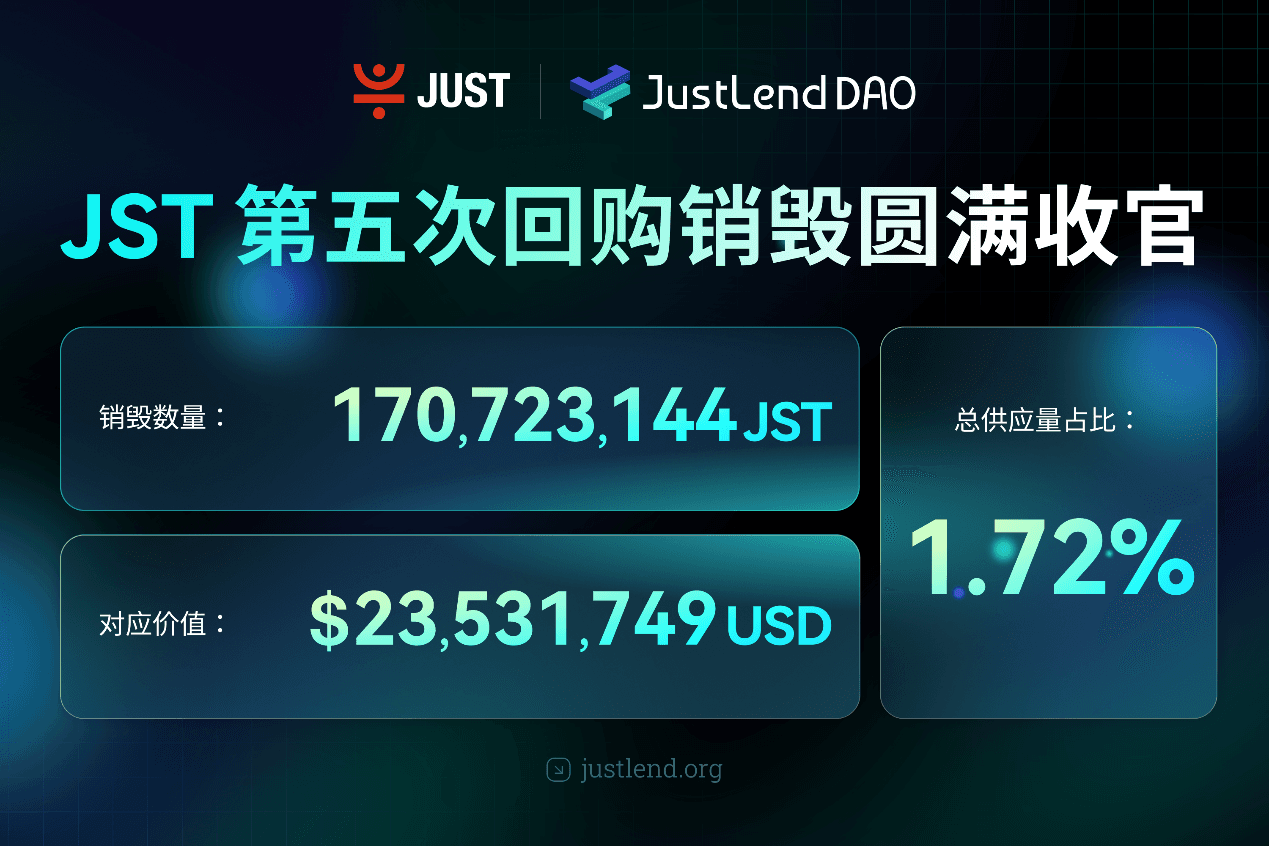
BitTorrent Brand Upgrade and Initial BTT Buyback & Burn Launch Simultaneously, Dual Engines Usher in New Era of Web3 Infrastructure
Oct 17, 20:00
Asia Market Daily: Japan's BOJ signals more rate hikes while Korea targets offshore perpetual platforms (2026/10/17)
Oct 17, 17:01Why did Papertrade backfire on you?
Oct 17, 17:01
The 'Strict Father' of Northern Myanmar: This Company Deploys 200,000 "AI Best Actors" to Strike Back Against Scammers
Oct 17, 15:34