Japan Wants to Use AI to Buy Growth, Will the Bond Market Trust It?

TL;DR
· On July 21, the Japanese Cabinet decided on the "Basic Policies for Economic and Fiscal Management and Reform 2026," shifting the fiscal focus towards stabilizing and reducing the debt-to-GDP ratio.
· Market debate revolves around whether strategic investments in AI, semiconductors, and other areas can outpace long-term interest rates in nominal growth.
· Related assets: Japanese government bonds, the yen, Japan's semiconductor supply chain, AI infrastructure, robotics, and energy management sectors.
On July 21, the Japanese Cabinet approved the "Basic Policies for Economic and Fiscal Management and Reform 2026," also known as the "Basic Policies 2026," elevating strategic areas such as AI, semiconductors, defense, quantum technology, energy, and robotics, while shifting the fiscal target towards stabilizing and reducing the debt-to-GDP ratio.
The "Basic Policies" are Japan's annual key economic and fiscal roadmap, influencing subsequent budgets and industrial policy priorities. The traditional fiscal anchor the market is familiar with is the primary balance, which is whether the government can cover its daily expenses with tax revenue, excluding interest payments.
This shift has roiled the market, not because Japan is starting to prioritize AI, but because the Suga Cabinet aims to change the fiscal narrative from "Can we achieve a balanced budget this year?" to "Can future growth contain the debt?" If investors believe investments can drive productivity and tax revenues, it will be seen as a growth policy; if not, it may be priced in as fiscal loosening.
The divide is already reflected in government bonds and the exchange rate. The Suga Cabinet advocates for "responsible and active fiscal policy" to support strategic investments, boost the growth rate, and make debt-to-GDP stabilization its core target. However, Nomura Institute of Capital Markets Research economist Norihide Kinai cautioned in a July 21 article that the original proposal had already caused turbulence in the yen and bond markets, with the 10-year Japanese government bond yield briefly reaching 2.9%, suggesting that textual revisions may not be sufficient to restore trust.
Shifting the Fiscal Anchor from Annual Balance to Debt Ratio
The official document places a strong emphasis on stabilizing and reducing the debt-to-GDP ratio, highlighting multi-year fiscal management, budget reform, and reducing reliance on supplementary budgets.
The debt-to-GDP ratio is more akin to a long-term health indicator than a single-year deficit. As long as the nominal economic growth rate exceeds the long-term interest rate, there is a chance for the debt ratio to stabilize or decrease; if interest rates rise faster, even if the government claims expenditures are for growth, the debt burden will increase.
The new narrative that the Kabinet is attempting to convey is that Japan's long-term low growth, aging population, and labor shortage have already constrained its potential growth rate, and it is difficult to break out of this cycle simply by reducing expenditure. Rather than mechanically aiming for a certain year to achieve a primary budget surplus, it is better to allocate fiscal space to areas that can enhance productivity.
Bond investors' concerns are also relevant here. The primary balance target is a simple and observable fiscal goal that can restrain budget impulses. With this anchor weakened, the government needs to establish new credible rules to prevent the concept of "multi-year management" from being misunderstood as deferring constraints to the future.
¥370 Trillion Is Not Solely an AI Budget
The most misinterpreted figure by the market is ¥370 trillion. In public reports, this figure is often summarized as the scale of public and private sector investment in strategic areas such as AI and semiconductors by the fiscal year 2040. However, the Cabinet Office had previously provided a more detailed explanation: the investment scale in 62 key products and technologies by the fiscal year 2040 exceeds ¥370 trillion, with "physical AI+semiconductors" accounting for around ¥78.5 trillion.
This distinction is crucial. The ¥370 trillion is not a one-time additional budget allocated by the government, nor is it entirely dedicated to AI and semiconductors. It is more like a long-term industrial investment portfolio covering various areas such as AI, semiconductors, defense, quantum technology, energy transition, and robotics applications.
The Japanese narrative on AI is also different from that of the United States. The U.S. market is more focused on large-scale models, cloud capital expenditure, and computing power competition, while Japanese policy tends to integrate AI into factories, energy systems, city infrastructure, and elderly care services to address labor shortages, rising maintenance costs, and manufacturing efficiency bottlenecks.
Semiconductors play another role. Japan hopes to reclaim a portion of its industrial position in the global AI infrastructure expansion through materials, equipment, advanced manufacturing, and the reconstruction of the domestic supply chain. From a fiscal perspective, this transformation must ultimately translate into investment, employment, profits, and tax revenue.
This chain is quite lengthy. The policy framework needs to translate into projects, projects need to translate into production capacity, and production capacity needs to translate into productivity and tax revenue. If any link in the middle is delayed, the government bond market may demand higher interest rates as compensation.
The Government Bond Market Trades on Credibility
While the Japanese stock market may initially trade on policy optimism, the government bond market trades on fiscal credibility. As long as investors doubt that fiscal rules are becoming more lenient, long-term yields will rise, subsequently squeezing policy space.
This is also at the core of the current controversy. The government wants to justify expansion through growth, but the market will first look at interest costs. If long-term interest rates continue to rise, Japan's fiscal costs will increase, reducing the space left for strategic investment. With growth investments yet to materialize, financing costs rising, the policy narrative will come under pressure.
The Japanese yen is also on the same chain. A decrease in fiscal credibility may weaken exchange rate confidence; if strategic investments raise long-term growth expectations, it may also attract funds flowing back into Japanese assets. For overseas investors, pricing of Japanese assets will no longer be based solely on the Bank of Japan's policy, but also on the credibility of the fiscal anchor.
AI and semiconductor optimism cannot be understood in isolation. The related sectors may receive policy support expectations, but if Japanese government bond yields rise too rapidly, both growth stock valuations and yen asset risk premiums will be affected. The market is not trading on whether Japan is investing in AI, but on whether Japan can prove that these investments are yielding returns.
Nominal Growth Rate Determines Success of New Framework
This new framework must ultimately undergo two tests: whether the nominal growth rate can sustainably exceed the long-term interest rate, and whether subsequent budgets can control the pace of government debt issuance.
If the next few budget cycles show that strategic investment is merely packaging more spending as a growth narrative, lacking clear projects, output, and fiscal constraints, the concerns of the cautious camp will prevail. Japanese government bond yields, the yen, and overvalued tech sectors may all come under pressure again.
If AI, semiconductor, and infrastructure investments begin to materialize as corporate capital expenditure, productivity gains, and tax revenue growth, while the government still manages to maintain a declining debt-to-GDP path, the market will gradually reprice this shift as a growth policy, rather than fiscal recklessness.
This new fiscal anchor adopted by Japan is harder to prove. Basic fiscal balance can be calculated from the budget sheet, but outperforming rates will require actual economic realization. The Suga administration has placed its bet on strategic investments, and government bond yields will continue to provide market ratings.
Recommended
Desk: Brent Crude Tops $110, Musk's Net Worth Drops 528.6 Billion in Four Days After Tesla Roadster Launch
Oct 17, 21:49
JST Fifth Buyback and Burn Successfully Concludes: Over 170 Million Tokens Worth Approximately $23.53 Million Burned, Buyback Mechanism Set for Comprehensive Upgrade
Oct 17, 20:10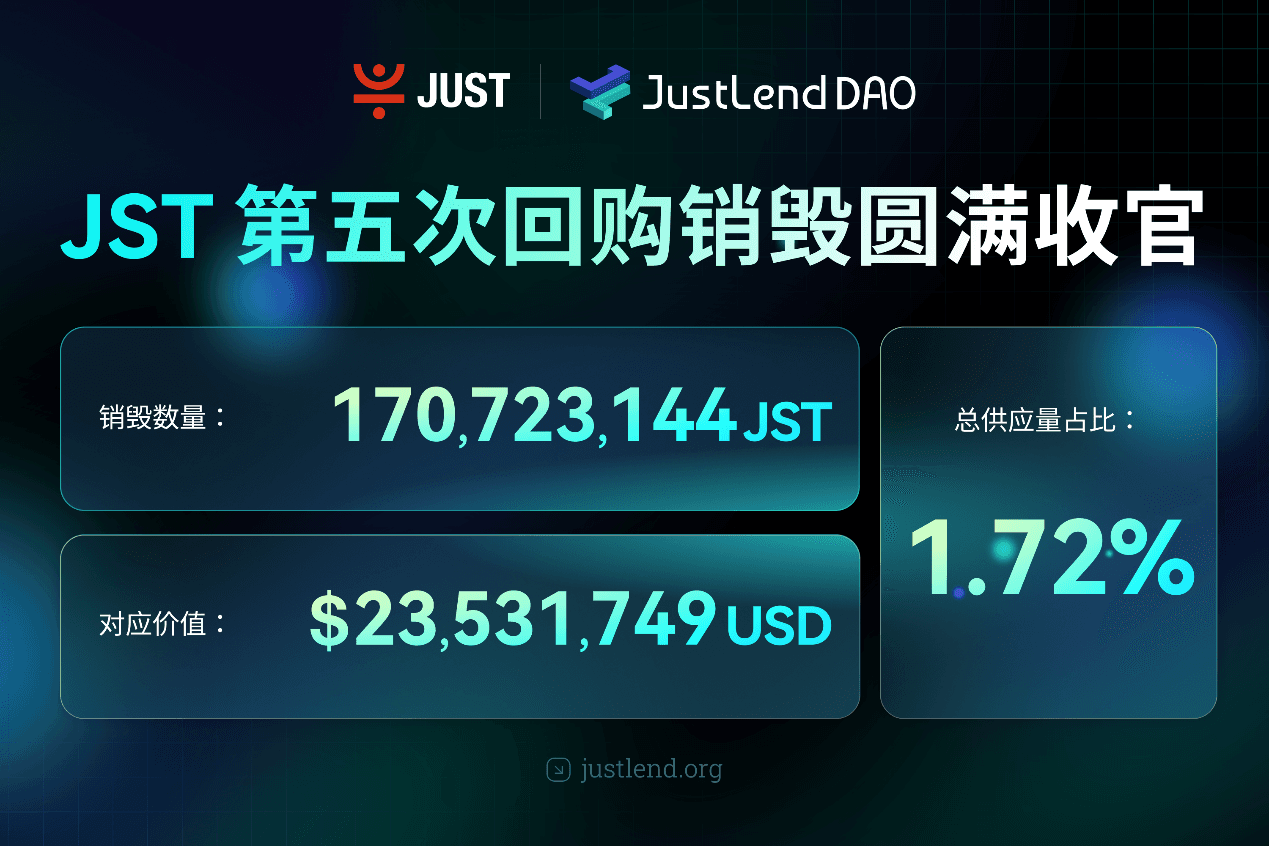
BitTorrent Brand Upgrade and Initial BTT Buyback & Burn Launch Simultaneously, Dual Engines Usher in New Era of Web3 Infrastructure
Oct 17, 20:00
Asia Market Daily: Japan's BOJ signals more rate hikes while Korea targets offshore perpetual platforms (2026/10/17)
Oct 17, 17:01Why did Papertrade backfire on you?
Oct 17, 17:01
The 'Strict Father' of Northern Myanmar: This Company Deploys 200,000 "AI Best Actors" to Strike Back Against Scammers
Oct 17, 15:34