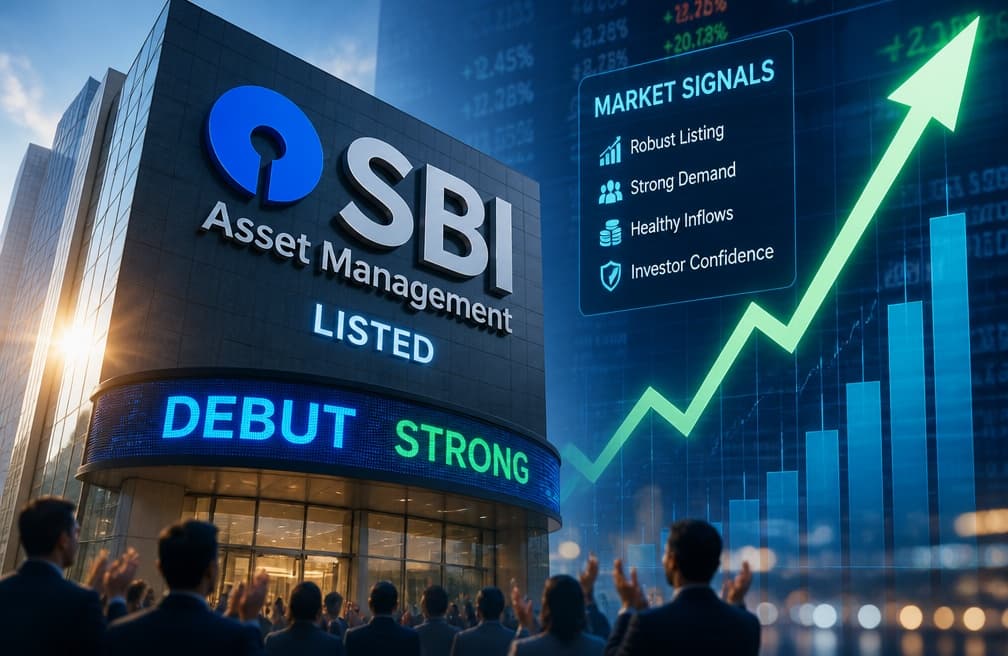
India's largest asset manager SBI Mutual Fund has debuted, what signals can be seen from the trading data?
TL;DR
· SBI Funds Management debuted on the Indian market on July 21st with an issuance size of approximately $1 billion, oversubscribed by about 42 times.
· The first-day price increase was moderate, indicating investors' willingness to acquire Indian core assets but not to chase prices unconditionally.
· Related entities: SBI Funds Management, HDFC AMC, Nippon Life India AMC, State Bank of India, Indian ETF, Reliance Industries/Jio ecosystem.
SBI Funds Management debuted on the Indian market on July 21st with an issuance size of approximately $1 billion, oversubscribed by about 42 times, and closed the first day with a price increase of around 6.3% from the issuance price.
These numbers are more informative than "a large IPO succeeded this year." The subscription multiplier indicates that the Indian market can still absorb large volumes of high-quality assets, but the first-day price increase did not meet the 16% premium expectation from the grey market before listing. Buyers were present, but they were not unconditionally chasing prices higher.
The market's focus is not just because SBI is India's largest asset management company. There are larger projects on the horizon, such as NSE, Reliance Jio, among others. If SBI had failed, it would have been challenging to revive the Indian IPO window; if SBI had succeeded but with a modest price increase, the answer would be more complex: the window is open, but priority is given to strong brands, strong cash flow, and companies that can clearly explain their long-term penetration rates.
This also underscores the divergent attitudes of local brokerages and some international investment banks. Indian institutions such as Equirus, Emkay, Kotak emphasize valuation, cost efficiency, and industry growth; some international investment banks have withdrawn or reduced their participation due to lower underwriting fees. The disagreement is not about whether there is demand in India but about who holds the pricing power in this round of demand.
42x Oversubscription Validates Demand, 6% Price Rise Conforms to Reality
For investors, an IPO is a stress test of risk appetite. Whether a large project can be sold and whether the price can be stabilized after listing will affect the expectations of subsequent issuers, funds, brokerages, and secondary market funds.
The signal SBI has given this time is "Demand exists, but don't buy recklessly." According to Business Standard and Reuters, SBI Funds Management's issue size is approximately ₹98.13 billion, equivalent to $1.03 billion, with an overall subscription of around 41.6 to 42 times, and qualified institutional buyers' subscription at around 140 times.
The strong subscription indicates both institutional and retail funds are willing to participate in India's core financial assets. The first-day price increase of about 6% to 7% also indicates that the market does not see it as a risk-free arbitrage. The grey market premium reflects pre-listing speculation, with post-listing prices closer to levels that real funds are willing to pay.
Therefore, SBI seems more like providing a price anchor for the Indian IPO market. Strong assets can be issued, large funds are willing to participate, but pricing cannot rely solely on scarcity and brand narrative. Subsequent projects that are overvalued may still face discounts, reduced volumes, or delays.
Low Underwriting Fees are Repositioning the Investment Banker Role
A more unusual variable in the SBI event is the underwriting fee. The underwriting fee can be understood as the issuance fee companies pay to investment banks during listing, covering due diligence, roadshows, sales, and risk underwriting. The lower the fee, the more money the issuer saves, and the weaker the incentive for the investment bank.
According to Bloomberg and other media reports, Citi and JPMorgan had previously exited related deals due to low fees. Some reports mention a rate of about 0.01%, based on anonymous sources, which cannot be taken as the new standard for all Indian IPOs, but is enough to explain why international banks are losing interest.
This should not be simplistically interpreted as "Wall Street bearish on India." A more reasonable explanation is that strong brand issuers like SBI have the ability to push transaction terms more in their favor. Backed by India's largest banking system, its asset management business cash flow is relatively stable, and investors also agree on industry growth.
For such issuers, the marginal sales value provided by the investment bank is diminishing, where brand, parent bank channels, and local distribution networks are more critical. Domestic brokerages are familiar with local funds and retail channels, willing to exchange project resources for lower fees; international banks, if they insist on past high fees, may only retain a presence in more complex, more international transactions.
There are risks here as well. If low underwriting fees are only a special case for SBI, the impact is limited; if weaker issuers replicate this, it could lead to insufficient roadshows, lower pricing quality, and weakened post-listing support. Low fees are the result of strong issuers, not a template that all IPOs can copy.
Asset Management Growth Supports Valuation, but Cycles Will Still Affect Pricing
SBI's successful subscription can be attributed to the long-standing narrative of the Indian asset management industry. Asset management companies earn money through management fees, with the key variable being the AUM. The larger the AUM, the more the product structure tilts towards equity and long-term funds, usually resulting in higher revenue quality.
The Indian mutual fund industry is still in the stage of increasing penetration. Systematic Investment Plan (SIP), which involves regular investment in mutual funds, allows residents' funds to continuously enter the market, and the demand for wealth management beyond bank deposits is also rising. As per AMFI data, as of June 2026, the average AUM of the Indian mutual fund industry is approximately ₹84.18 trillion.
SBI's leading position is also supported by data. Public information shows that based on the average AUM for the quarter ending March 2026, SBI Funds Management is around ₹12.5 trillion, with a market share of approximately 15.3%. This sets it apart from being just a mid-sized asset management company driven solely by market trends.
Growth expectations support sector valuation. CRISIL and some brokerages have forecasted the industry's annual compound growth rate for the coming years to be around 16% to 18%. This may not be an explosive new trajectory, but for asset management companies, steady growth combined with economies of scale are sufficient to provide profit resilience.
However, this growth rate is not set in stone. Factors such as Indian stock market performance, interest rate environment, regulatory rules, and residents' risk appetite can all influence fund inflows. SBI's modest first-day increase aptly demonstrates that investors buy into the long-term story but are unwilling to pay a hefty premium upfront.
Jio and NSE to Test the Waters
The true test post-SBI's listing lies not only with SBI itself but in whether subsequent large offerings can follow suit. Reliance Jio/Jio Platforms has already received board approval in June and filed a draft red herring prospectus, while NSE has been listed by several media outlets as one of the potential large IPOs in 2026. However, the specific issuance pace will depend on regulatory approvals, valuations, and market conditions.
If these projects progress smoothly at a reasonable valuation, SBI will be seen as the starting point for a window of opportunity. With funds willing to buy Indian core assets, issuers will be able to negotiate fees and terms more assertively. Indian domestic brokerages, already listed asset management peers, and related ETFs may continue to benefit from this thematic trend.
If the subsequent projects face delays due to valuation, macroeconomic fluctuations, or geopolitical risks, SBI will resemble more of a selective success. It proves that a strong brand issuer can navigate volatility, but it doesn't guarantee that all Indian IPOs will command a premium.
The low underwriting fees must also be included in the same validation framework. Only when non-SBI type issuers can complete high-quality issuances at lower costs, signaling an increase in issuers' bargaining power, can it be considered a structural change. Otherwise, this will be seen as a favorable transaction carried out by a strong market leader leveraging their brand and channels. For investors, this aspect is more crucial than a few extra points gained on listing day, determining the next phase of Indian IPO trading.
Recommended
Desk: Brent Crude Tops $110, Musk's Net Worth Drops 528.6 Billion in Four Days After Tesla Roadster Launch
Oct 17, 21:49
JST Fifth Buyback and Burn Successfully Concludes: Over 170 Million Tokens Worth Approximately $23.53 Million Burned, Buyback Mechanism Set for Comprehensive Upgrade
Oct 17, 20:10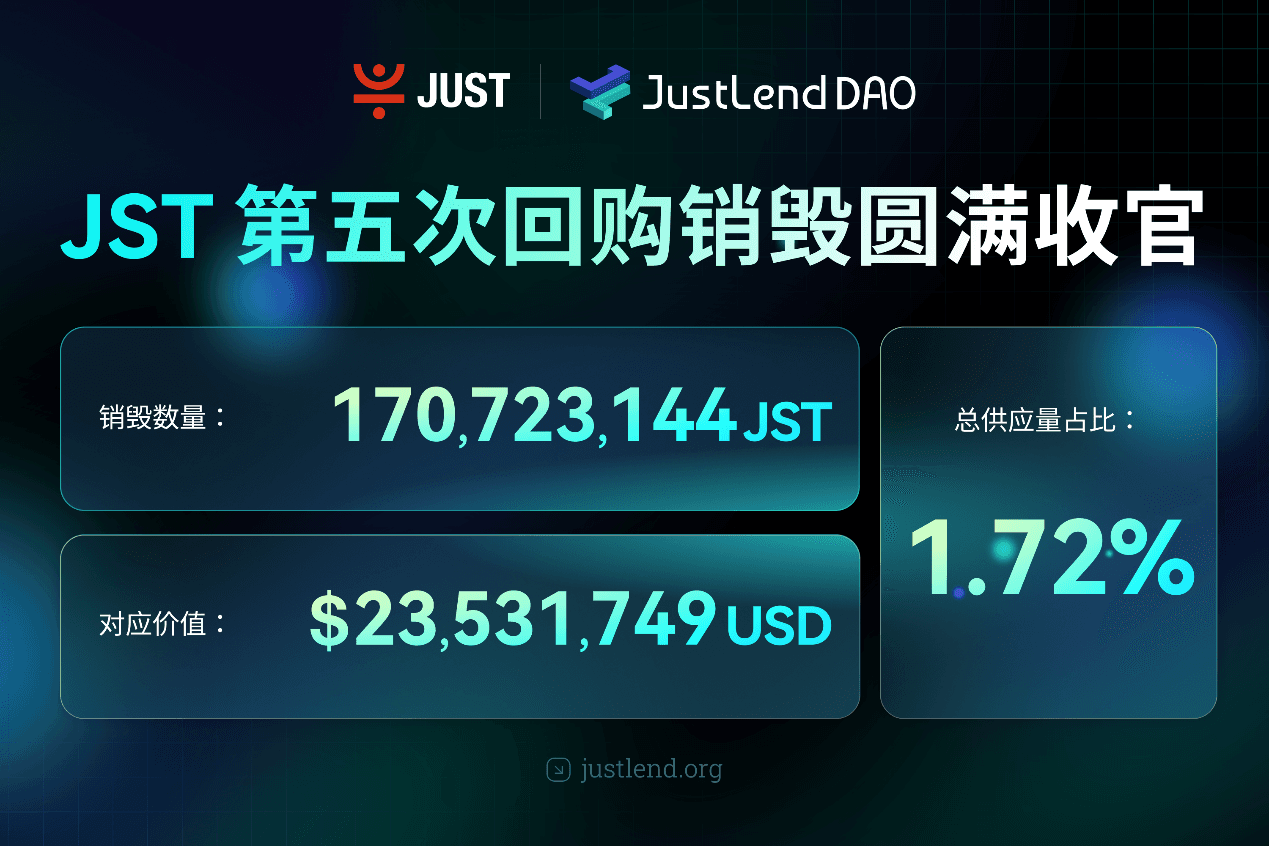
BitTorrent Brand Upgrade and Initial BTT Buyback & Burn Launch Simultaneously, Dual Engines Usher in New Era of Web3 Infrastructure
Oct 17, 20:00
Asia Market Daily: Japan's BOJ signals more rate hikes while Korea targets offshore perpetual platforms (2026/10/17)
Oct 17, 17:01Why did Papertrade backfire on you?
Oct 17, 17:01
The 'Strict Father' of Northern Myanmar: This Company Deploys 200,000 "AI Best Actors" to Strike Back Against Scammers
Oct 17, 15:34