Bitwise: The Next Bull Market Battlefield Is Hidden in These Two Asset Classes

The crypto market has finally shown signs of a bottom. Since July 1st, Bitcoin has risen by 9%, while the Nasdaq 100 has fallen by 6% during the same period. Inflows into crypto ETFs have turned positive, and market sentiment continues to improve. Although it is still too early to determine if the market has completely stabilized, various positive signals have prompted many to start questioning the direction of the subsequent market trend.
Last Friday, an investment advisor asked me, "If the market has already bottomed, what assets will lead the next crypto bull market?"
Generally speaking, during the crypto winter, this question is difficult to answer. The main theme of a new bull market often only becomes clear after the trend has run its course.
However, this time, I believe the answer is already evident: the core narrative of the next crypto bull market will be the integration of on-chain finance with traditional finance.
In other words, the key focus of the future market will revolve around stablecoins, asset tokenization, 24/7 trading, instant settlement, and the growth of institutional-grade decentralized finance (DeFi) to a multi-trillion-dollar scale. Blockchain will disrupt the existing financial system, much like the internet reshaped the media and retail industries in the early 21st century. I expect this to be the largest crypto cycle in history for two reasons: first, this market movement is based on real-world utility and revenue drivers rather than pure speculation; second, the target market of this cycle is much larger than in previous cycles — aiming at the global financial market rather than being limited to the crypto industry itself.
Some may find these trends obvious: asset tokenization will inevitably lead the next bull market, stablecoin volumes will eventually surpass trillions of dollars, and major Wall Street institutions will sooner or later transition to on-chain. After all, crypto infrastructure offers many natural advantages compared to the traditional financial system: 24/7 trading is far more convenient than limited trading hours; instant settlement is superior to T+1 delivery; global interoperability transcends geographical limitations. I am not the only one holding this view; the Chairman of the U.S. Securities and Exchange Commission, the CEOs of the world's largest asset management companies, and the CEOs of the world's largest banks all agree.
However, even though the trends seem clear, the majority of investors have not yet positioned their assets for this prospect. Many are still wondering if the crypto industry has already "missed the boat." Within this cognitive gap lies a significant investment opportunity.
So, how should we position ourselves in the new bull market? One can pay attention to two key entities that are driving industry convergence from different directions: Hyperliquid (token HYPE) and Robinhood (stock symbol HOOD).
Breaking Out from the Crypto Industry
Hyperliquid (HYPE) is a layer-one public chain (similar to Ethereum, Solana), originally designed to build a perpetual derivatives trading market primarily focused on crypto assets. Initially, investors speculated on assets like Bitcoin and Ethereum through the Hyperliquid platform.
However, with its outstanding technical experience — user-friendly operation, instant settlement, 24/7 trading, and other advantages, the platform quickly expanded its business scope outward. Today, nearly half of Hyperliquid's trading volume comes from traditional assets such as oil, silver, and the S&P 500 index. The platform is also continuously expanding into commodities spot trading, prediction markets, options trading, and is competing with a slew of exchanges including CME, Nasdaq, ICE, Kalshi, and Coinbase.
Hyperliquid's rapid development has put pressure on its competitors. CME has even sued the U.S. Commodity Futures Trading Commission (CFTC) in an attempt to hinder the regulatory acceptance of perpetual futures products pioneered by Hyperliquid.
Even amidst the crypto winter, the HYPE token has still seen a 146% increase in value this year. The growth data is substantiated: Hyperliquid's platform surpassed $1 billion in total revenue in June, with projected annual revenue of $8 billion. The platform will use 99% of the revenue to buy back the native token HYPE on the open market, continuously reducing the circulating supply. In my view, even if the HYPE price doubles again, the valuation is still within a reasonable range.
Entering from Traditional Finance
Robinhood has chosen to stand on the side of traditional finance and drive this industry convergence.
Robinhood itself is a traditional securities broker, competing with institutions like Charles Schwab for retail and professional investors. Over the years, Robinhood has had a much more open attitude towards crypto assets than its peers and was the first major brokerage to launch direct cryptocurrency trading.
At the same time, Robinhood fully agrees with my proposed "industry convergence" viewpoint. CEO Vlad Tenev stated that asset tokenization "will ultimately reshape the entire financial system"; the crypto industry and traditional finance "have long been two independent systems, but the two will eventually merge completely." He predicts that the boundaries between the two will eventually disappear.
On July 1st, Robinhood doubled down on this trend by launching its proprietary Layer 2 blockchain, Robinhood Chain. This public chain is open to users in 120 countries (not yet available in the U.S.), allowing users to trade tokenized stocks 24/7 all year round. The chain also interoperates with major decentralized finance protocols: users can swap assets on Uniswap, collateralize assets for borrowing on Morpho, or stake assets as margin on the Lighter platform to trade perpetual contracts. Within just two weeks of its launch, Robinhood Chain has surpassed $300 million in assets under custody and processes 3.6 million transactions daily.
This passage is worth a close read: earlier this month, Robinhood solely relied on technology to roll out a set of financial services in 120 countries, enabling users to instantly and uninterruptedly trade tokenized stocks, engage in margin trading and leverage, with a significant number of users already participating.
Skeptics may point out that early on-chain activity was predominantly meme coins rather than stocks, which is indeed true. However, the trading volume of tokenized stocks has reached a substantial level, with a real user base, and I expect both types of transactions to continue growing.
One thing I am certain of: Robinhood's major competitors are closely watching this project and starting to consider: should we also follow suit? Do we need to build JPMorgan Chain, UBS Chain, Bank of America Chain? The trading activity demonstrated during Robinhood's early launch is something no institution can ignore.
Two Types of Investment Targets Poised to Shine
I believe that the next bull market cycle is large enough to drive most assets in the industry upward. I am optimistic about mainstream crypto assets like Bitcoin, Ethereum, Solana, and publicly traded companies involved in crypto.
However, there are two types of investment targets that will have particularly outstanding growth potential.
1. Hyperliquid Sector: Native crypto financial applications with solid revenue and a quality tokenomic model
What sets the Hyperliquid sector apart from other crypto applications is its core advantage of maintaining real revenue and a robust token mechanism (99% of revenue used for HYPE buyback and burn). Many investors have seen numerous crypto apps with large user bases and transaction volumes but struggling token prices, whereas the Hyperliquid model aligns perfectly with these investors' expectations.
In the long term, I believe there will be a plethora of new crypto projects emulating HYPE’s tokenomics, giving rise to a batch of promising next-generation token investment opportunities. Simultaneously, I also focus on mature projects that have established a business scale and actively bind token value with deep platform utility. For instance, Uniswap and Aave, both platforms have significant volume and are rapidly optimizing their tokenomics; Morpho is also evolving in the same direction.
2. Robinhood Track: Mature Traditional Enterprises Operating on Crypto Infrastructure
Industry disruption will reshape market share dynamics. The popularization of stablecoins, asset tokenization, and the implementation of blockchain transaction infrastructure represent the biggest technological transformation in the financial markets in the past fifty years, with significant changes quietly taking place.
To identify winners, the key is to focus on enterprises that have already scaled their crypto business, rather than just being in the proof-of-concept stage. Proof-of-concept projects are low-cost and easy to attract media attention, but they struggle to accumulate valuable experience. Leveraging the industry knowledge gained from operating on a public chain that serves 120 countries, Robinhood is far beyond what any small-scale pilot project can compare to.
The enterprises I continue to monitor include Coinbase, Figure, and BlackRock; at the same time, I also keep an eye on Visa, Stripe, and even JPMorgan Chase. Of course, there are other participants as well, but the above-mentioned enterprises are all actively engaged in this transformation.
Grasping the Mega-trend of Industry Convergence
There has long been a consensus in the crypto industry: a sign of blockchain's greatest success is the "invisibility" of the technology—when blockchain is deeply integrated into the underlying architecture of the financial system, users may not even perceive the presence of blockchain when using services.
I have always believed that when the next bull market arrives and traditional finance is inseparable from the crypto industry, the above vision will become a reality. Investors should proactively position themselves in line with this trend.
Note: Sometimes, when evaluating a company's crypto strategy, it is necessary to look at its actual actions rather than its public relations rhetoric.
Recommended
Desk: Brent Crude Tops $110, Musk's Net Worth Drops 528.6 Billion in Four Days After Tesla Roadster Launch
Oct 17, 21:49
JST Fifth Buyback and Burn Successfully Concludes: Over 170 Million Tokens Worth Approximately $23.53 Million Burned, Buyback Mechanism Set for Comprehensive Upgrade
Oct 17, 20:10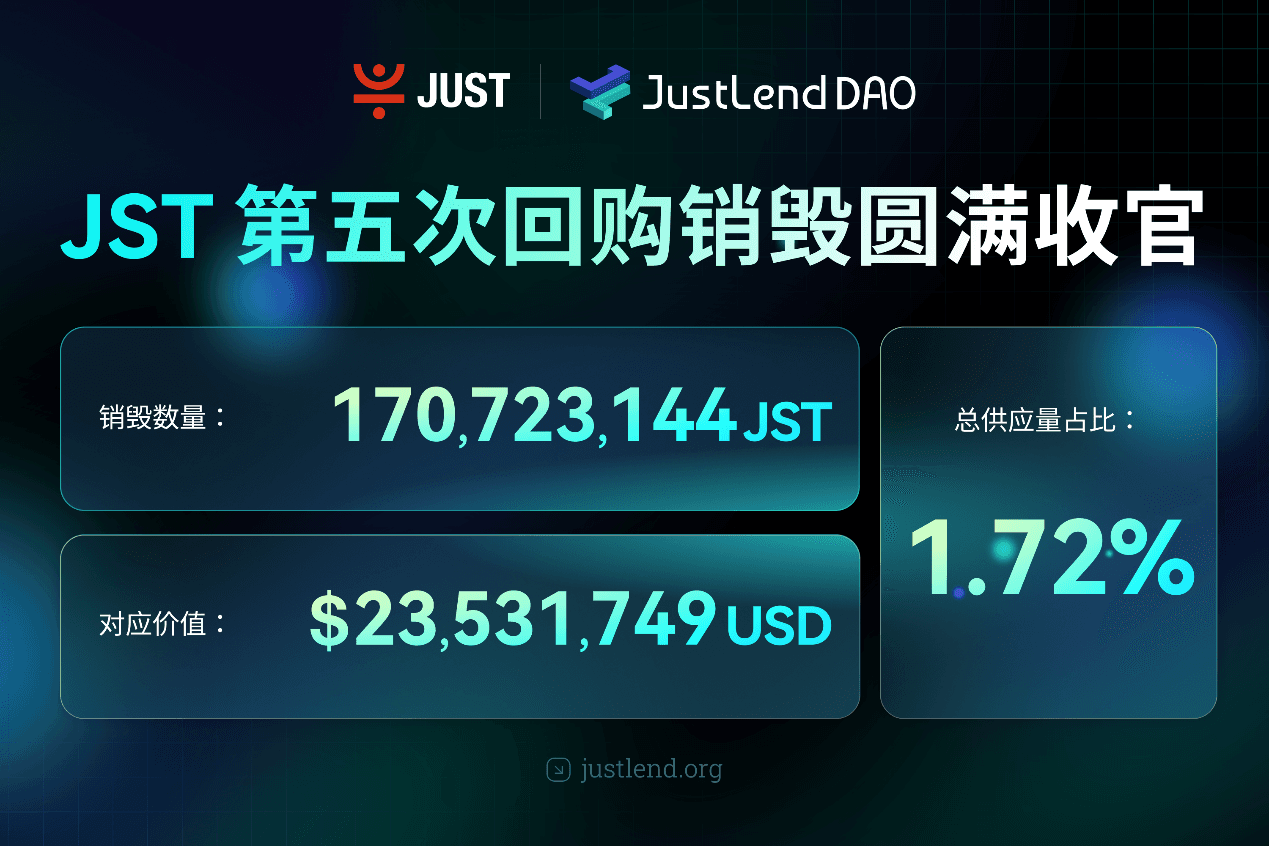
BitTorrent Brand Upgrade and Initial BTT Buyback & Burn Launch Simultaneously, Dual Engines Usher in New Era of Web3 Infrastructure
Oct 17, 20:00
Asia Market Daily: Japan's BOJ signals more rate hikes while Korea targets offshore perpetual platforms (2026/10/17)
Oct 17, 17:01Why did Papertrade backfire on you?
Oct 17, 17:01
The 'Strict Father' of Northern Myanmar: This Company Deploys 200,000 "AI Best Actors" to Strike Back Against Scammers
Oct 17, 15:34