The Eternal Fragmentation of Money: Third-Party Payments Lack Primacy

As the storm approaches, and the wind fills the building, Stripe is once again attempting to acquire PayPal. History repeats itself, as 30 years ago, Peter Thiel's PayPal merged with Musk's original X.com.
I don't understand why everyone is discussing PayPal's lackluster growth, as if this FinTech race is full of pitfalls for us. Twenty years ago, Peter Thiel embarked on a journey from payments, initiating his first entrepreneurship, and the PayPal Mafia ruled the roost. Where Musk went, the people wholeheartedly welcomed, truly seizing the opportunity. That vibrant vitality, the flourishing of all things, is still vivid in front of our eyes. Just twenty years later, has the Payment industry turned into our burial ground?
Growth is a Miracle, Stablecoins Are Not
"Stripe's failure to go public during the pandemic is now seen as a mistake"
All of Stripe's efforts have been aimed at the distant dream of going public. Amid the pandemic's deluge, Stripe reached a $100 billion valuation for the first time.
However, failing to follow the likes of Coinbase in going public led to a continuous decline in its valuation. Mistaking the zeitgeist opportunities for personal efforts, Stripe, after careful consideration, embarked on the path of acquisitions.
Starting with a developer-friendly model, with API integration as simple as a click, Stripe's appeal to developers is undeniable. This is also the most unique strategy in the payment industry, not entangled in rates and scenarios, but reaching the actual people behind the scenes.
Stripe hopes to repeatedly leverage its experience, starting from the B-end to payment collection systems, from the C-end to stablecoins, and even laying out the ACP/MPP protocol on the Agent side, aiming to reshape the entire payment industry.
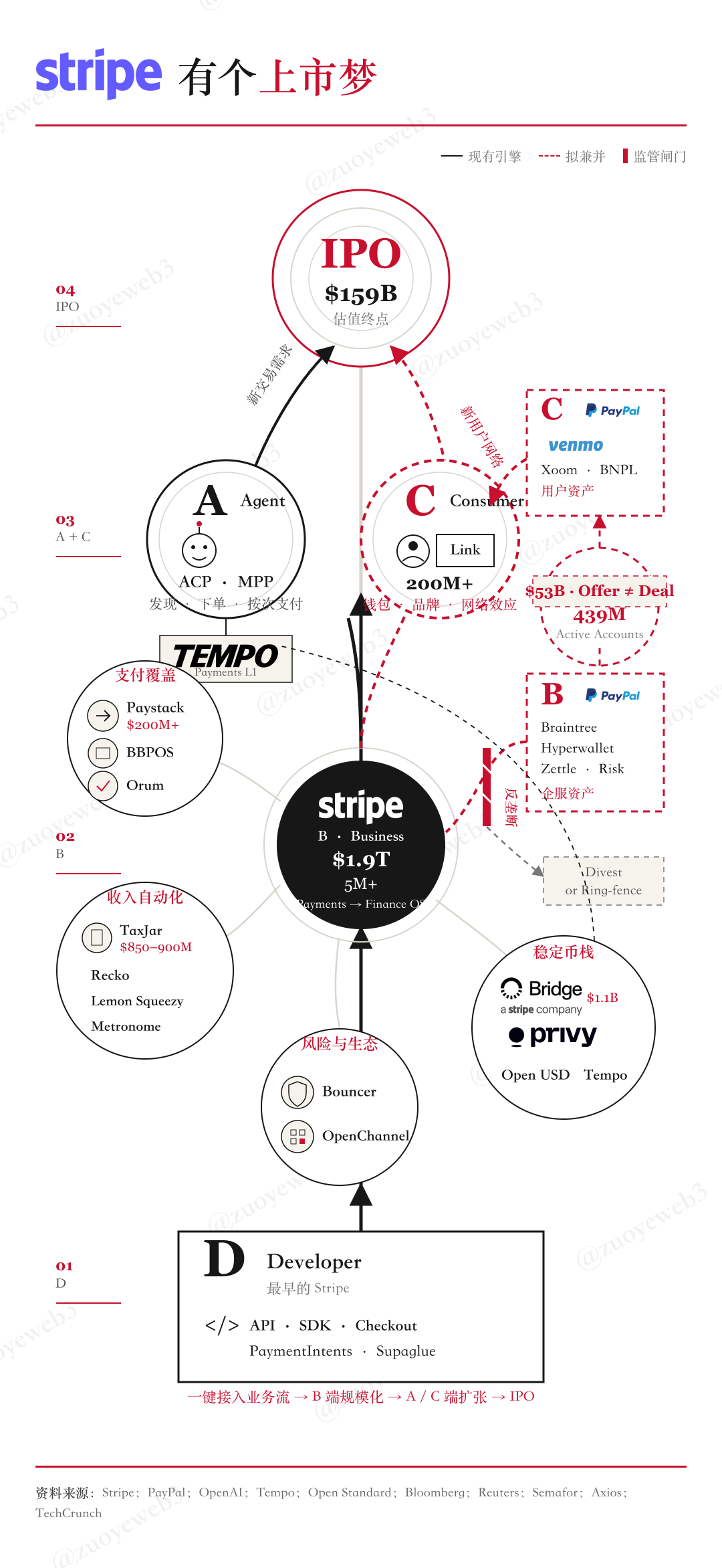
Image Description: The Rocky Road to Stripe's IPO
Image Source: @zuoyeweb3
The payment industry has always had two characteristics that also hinder Stripe's continued progress:
1. The highly fragmented nature of the payment industry remains unchanged. Succeeding in a single country, a specific industry, or even a few companies allows one to survive indefinitely, impervious to external forces;
2. Payment is a subsidiary of the banking industry, with developers and B/C-end companies ultimately being externalized versions of banking processes. Stablecoins are eventually incorporated into the banking system.
In particular, the series of acquisitions of stablecoins, from the issuance of Bridge to Privy's wallet integration, and even Tempo and OpenUSD, make it difficult to replicate Stripe's past success.
The motivation behind the acquisition of PayPal is actually Stripe's attempt to use stablecoins to break into the unsuccessful C-end market phase and to attempt to complement its own business with PayPal's C-end business.
The issue with PayPal is not its inability to keep up with the times; from Venmo to PYUSD, none have managed to reverse PayPal's downward trend.
In other words, PayPal is simply too old. The structural incapacity of the entire company means that revitalization cannot be achieved simply by launching new businesses.
Stripe, which launched slightly later, still hopes to add more narrative possibilities for itself before its IPO.
If Stripe, with its backend focus, dominates the developer market, then the stablecoin market, which encapsulates the frontend—network issuance, has likely reached the end of its story. Tempo and OpenUSD may impact Circle's stock price, but they cannot touch Tether.
If the ceiling for Stripe is set at Coinbase or Circle, then its IPO is destined to break below the offer price. Compared to Adyen's market value and Airwallex's valuation, Stripe's stablecoin narrative and X Agent narrative are useful.
Stablecoins are not part of the daily routine of the current payment system but are a visible trend;
Agent still needs to find a way to enter the existing system.
In positive news, Agent has already aggressively purchased computing power and tokens with stablecoins. However, aside from eliminating suspicions of quantity, Agent has yet to enter the Web3 business, let alone the more conservative corporate and banking systems.
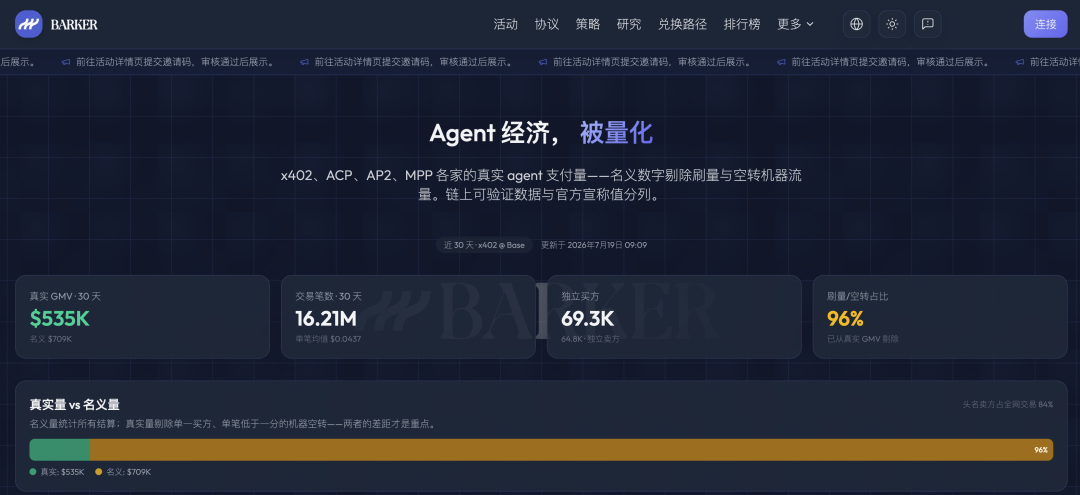
Image Description: Agent is currently mainly used for brushing volume
Image Source: @BarkerMoneyX
End A (future), End B, End C, End D (prosperity), but Stripe's valuation is hard to escape the reasonable value limit of $500 billion in FinTech, $1 trillion includes too much active imagination.
If it is impossible to briefly reach the future, then expanding scale and the ecosystem, are the only points Stripe can exert force on, you can understand Stripe as an option product.
· Agent will use the OUSD stablecoin, running on Tempo, and Stripe should be on the level of Visa;
· Agent will use stablecoins, but if OUSD fails, Tempo seizes part of the market, Stripe should have a $1 trillion valuation + Tempo public chain valuation;
· It is very difficult for the Agent economy to come true, and Agentic Payment is covered by new concepts, then Stripe should at least have its own business.
Of course, investment losses are regrettable, but missing out will be a lifelong regret. Starting from the dilemma Stripe poses to the primary market, how the entire payment industry will evolve is also worth further consideration.
Payment is just the entrance, value-added services profit
“Agent is a visible future, provided it can survive till that day”
Standing in the middle of 2026 is a very delicate node, a clear bill passed through the final time window, stablecoin returns may be decisive.
At the same time, the long-term future of the Agent economy is now focusing on alternative models for white-collar and blue-collar workers, as well as hardware areas such as new wearable devices, AIOS phones, and more.
Regarding the transformation of payments by Agent, which has not attracted social attention, it is reasonable to believe that this is the opportunity hidden by stablecoins, the β opportunity brought by the times.
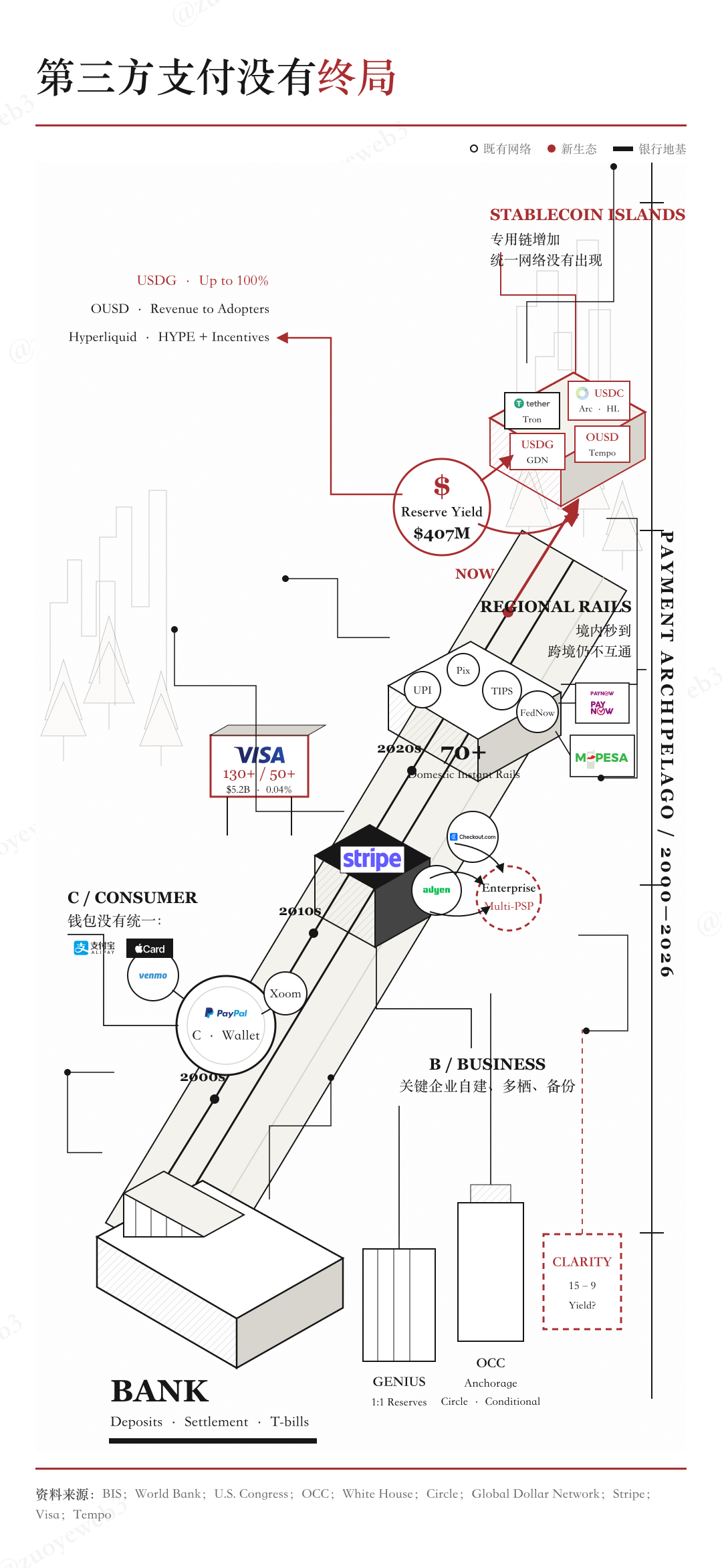
Image Description: The Eternal Movement of the Payment Industry
Image Source: @zuoyeweb3
However, the operating model of the payment industry, which was previously built on "License + Localization," may face continued disruptions from clearing networks.
On the front end, stablecoins still need entry points such as fiat onramps, as well as on-chain circulation, deposit confirmation, and off-ramp for conversion. This is also where the banking industry's regulatory compliance confidence lies.
In the past 30 years, the FinTech wave facilitated by the internet has ultimately increased the banking industry's control over payments, unlike industries such as publishing, retail, entertainment, and dining, which were directly transformed or even disappeared.
Under the tide of technology, although banks have become increasingly transparent, they still hold the terminal touchpoints of cash and account opening branches. In a sense, the fragmentation of the payment industry can be attributed to the segmentation by bank blocks and regions, and licenses and sovereign boundaries are nothing but an acknowledgment of reality.
However, within the actions of Stripe and Circle lies another possibility for payments: customer acquisition through stablecoins on the front end and profit through clearing on the back end.
Stripe and Circle are actually quite similar, representing a future cross-over form between FinTech and Crypto, both working on public blockchains (Tempo vs. Arc), stablecoins (OUSD vs. USDC), and clearing networks.
The reason it's not about stablecoin issuance revenue sharing is that Circle has already started subsidizing Hyperliquid channel partners, and OUSD directly shares profits with partners. The two parties have already started zero-sum competition, which is certainly not the future.
However, for the first time, the clearing system enables both public blockchains to earn payment and stablecoin network effects revenue purely based on capital efficiency, without the need to subsidize partners forcibly.
The clearing system is not complicated. Traditional fiat clearing relies on card networks, SWIFT, central banks of various countries, and commercial banks, which are already overburdened.
On the other hand, emerging stablecoin public blockchains have no historical burden and can focus on improving clearing efficiency. As Circle and Stripe secure OCC Special Purpose National Bank Charters (conditional approval), after sharing stablecoin profits, they will inevitably move towards clearing.
As for the settlement network, it is possible to partially detach from the commercial banking system and retain the profits within its own hands.
Conclusion
Stripe missed the IPO window during the pandemic, entering the trench warfare of third-party payments. This battle follows the eternal Verdun pattern, where no amount of scale can crush the local, cross-industry small players.
A new way of living must be adopted, facing the banking industry with efficiency. From PayPal to Stripe, from stablecoins to Agents, the four generations of the payment industry stand together. Will they succeed this time?
Recommended
Desk: Brent Crude Tops $110, Musk's Net Worth Drops 528.6 Billion in Four Days After Tesla Roadster Launch
Oct 17, 21:49
JST Fifth Buyback and Burn Successfully Concludes: Over 170 Million Tokens Worth Approximately $23.53 Million Burned, Buyback Mechanism Set for Comprehensive Upgrade
Oct 17, 20:10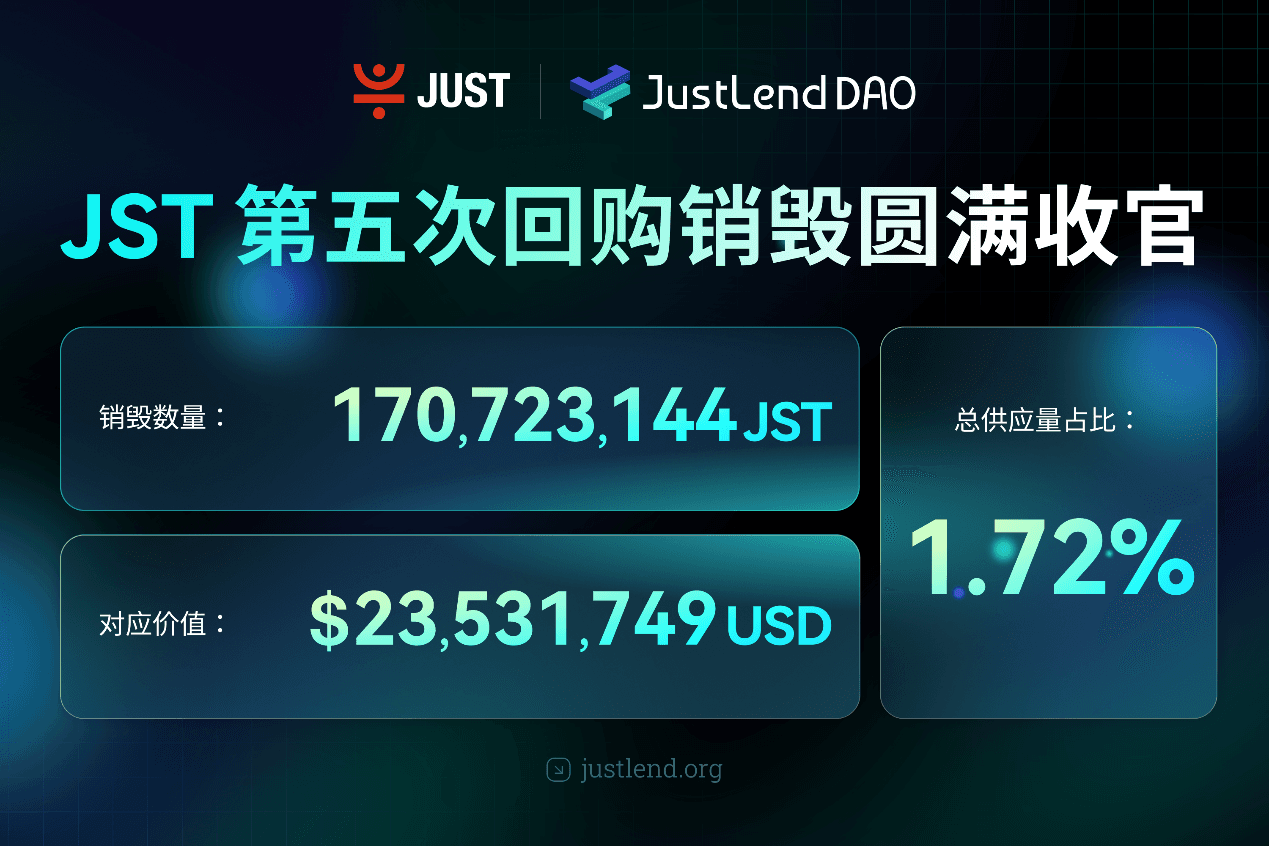
BitTorrent Brand Upgrade and Initial BTT Buyback & Burn Launch Simultaneously, Dual Engines Usher in New Era of Web3 Infrastructure
Oct 17, 20:00
Asia Market Daily: Japan's BOJ signals more rate hikes while Korea targets offshore perpetual platforms (2026/10/17)
Oct 17, 17:01Why did Papertrade backfire on you?
Oct 17, 17:01
The 'Strict Father' of Northern Myanmar: This Company Deploys 200,000 "AI Best Actors" to Strike Back Against Scammers
Oct 17, 15:34