Movement Bankruptcy: No Hackers, No Exit Scam, Died by a Self-Signed Contract

On July 15, 2026, the Delaware Bankruptcy Court received a Chapter 11 filing. The applicant, MVMT Labs, formerly Movement Labs, a former Ethereum Layer 2 star project, led by Polychain, backed by the Trump family's World Liberty Financial platform, once rumored to be preparing for a $1 billion Series B funding round at a $30 billion valuation.
The bankruptcy filing shows that the company's current assets are between $10,000 and $50,000, with debts of up to $10 million, owed to not more than 299 creditors.
At the top of the list of creditors is the company's co-founder Rushi Manche, who was fired by the company, with unsecured claims exceeding $1.6 million. He also holds 34.25% of the company's equity.
In a company's bankruptcy liquidation, the person owed the most is its own ousted founder.
The ability of the crypto industry to write absurd comedy scripts has once again surpassed all screenwriters.
Once Glorious
Movement Labs was founded in 2022, with the two founders, Cooper Scanlon and Rushi Manche, both in their early twenties. The project's technical narrative was very alluring: bringing the Move language into the Ethereum ecosystem. The Move language originated from Meta's failed stablecoin project Diem, with its own story arc of "big company castoff's comeback."
Capital quickly bought in. In 2023, they secured a $3.4 million seed round, and in April 2024, completed a $38 million Series A round, led by Polychain Capital, with a total financing of about $41.4 million. In January 2025, Fortune reported that the company was preparing for a $1 billion Series B round at a $30 billion valuation.
A bigger endorsement came from the political sphere. The Trump family's crypto project, World Liberty Financial, acquired and publicly endorsed the MOVE token. In that window of the "American on-chain renaissance" narrative, Movement had almost all the trending labels: Move language, L2, institutional capital, White House concept.
On December 9, 2024, MOVE made its debut on Binance, marking its shining moment.
The unraveling began the very next day.
An Agreement of Epic Proportions
The day after listing, a wallet associated with market maker Web3Port started selling off 66 million MOVE tokens, approximately 5% of the total supply, cashing out around $38 million. The price of the coin took a nosedive.
A CoinDesk investigation in April 2025 uncovered the inside story.
The circulation path of these tokens led to an intermediary entity, Rentech, which previously had no digital footprint. Contract documents revealed that Rentech played dual roles in the same transaction: appearing as an agent of the Movement Foundation on one side and signing on behalf of a Web3Port subsidiary on the other. The same company seated on both sides of the negotiation table.
The Foundation's legal counsel's assessment after review was that this "may be the worst agreement ever seen," yet the agreement was signed without hesitation.
The agreement also included a cleverly designed clause: if MOVE's valuation reached $5 billion, Web3Port could liquidate the tokens, with profits split fifty-fifty with the Foundation. Analysts interpreted this as effectively embedding a "pump and dump" strategy into the contract, turning the project's foundation into a profit-sharing entity for dumping the price.
According to reports from Cointelegraph and other media outlets, the mastermind behind Rentech was Singaporean finance professional Galen Law-Kun, although Rentech denied any misrepresentation.
A Domino Effect
Following the scandal's exposure, every link on the chain began to fall.
Binance banned the implicated market maker's account. Coinbase halted MOVE trading on May 15, 2025, stating that the token no longer met listing standards. The Foundation severed ties with Rentech, initiating a $38 million USDT buyback plan in an attempt to stabilize the market.
A $38 million dump, followed by a $38 million buyback. The numerical symmetry was almost ironic: the project team used actual funds to repurchase the amount others had dumped for cash.
A personnel earthquake ensued. Manche was first suspended and later fired, with the company accusing him of signing undisclosed agreements. Manche's counterattack was equally fierce: in July 2025, he sued his former employer in a Delaware Chancery Court, successfully securing legal fee indemnification, a cost directly tied to the U.S. Department of Justice's grand jury investigation into the MOVE token issuance.
That $1.6 million claim most likely came from here. The company's legal fee obligation from firing him ultimately became a top line item in the bankruptcy filing.
The core development work was transitioned to a new entity, Move Industries, led by Torab Torabi, with the project's focus shifting from "Ethereum L2" to sovereign L1, emphasizing cross-border payments and stablecoin settlement in emerging markets. The project also claimed to have secured access to licensed payment infrastructure in the US, Canada, and the EU. While this strategic pivot sounded pragmatic, the capital markets did not provide a second chance.
Autopsy Report
Following the bankruptcy news, the MOVE price hovered around $0.0108. Compared to the price range during its listing, the token's drop would require a "reset to zero" phrase to describe it.
Torabi emphasized on X that Move Industries and the bankrupt applicant MVMT Labs are separate legal entities, with development and chain operations running as usual. "We continue to focus on building," he said. This narrative of separation is not unfamiliar in the crypto industry: The company may have died, but the chain lives on; equity may have been wiped out, but the foundation remains; founders may have left, but the narrative continues under a new guise.
Reflecting on the entire case, the truly memorable moments are hidden in the timeline.
From listing on Binance to market makers dumping, just one day apart;
From scandal exposure to founder stepping down, approximately a week later;
From a star project to bankruptcy filing, a span of nineteen months.
The speed at which the crypto market can destroy a project is as fast as the speed at which it can hype one up.
In this collapse, there were no hackers, no exit scams, no lost private keys. What killed Movement was a contract signed by one of their own, a contract reviewed by legal, known to be toxic, yet still executed.
The industry has spent years building a security system to defend against external attacks, but there are still no audit tools for attacks from a pen signature.
The bankruptcy process will deal with assets of less than $500,000. The real unresolved issue left for the entire industry is: Which intermediary holding the "worst agreement in history" is now sitting in the boardroom of the next star project?
Recommended
Desk: Brent Crude Tops $110, Musk's Net Worth Drops 528.6 Billion in Four Days After Tesla Roadster Launch
Oct 17, 21:49
JST Fifth Buyback and Burn Successfully Concludes: Over 170 Million Tokens Worth Approximately $23.53 Million Burned, Buyback Mechanism Set for Comprehensive Upgrade
Oct 17, 20:10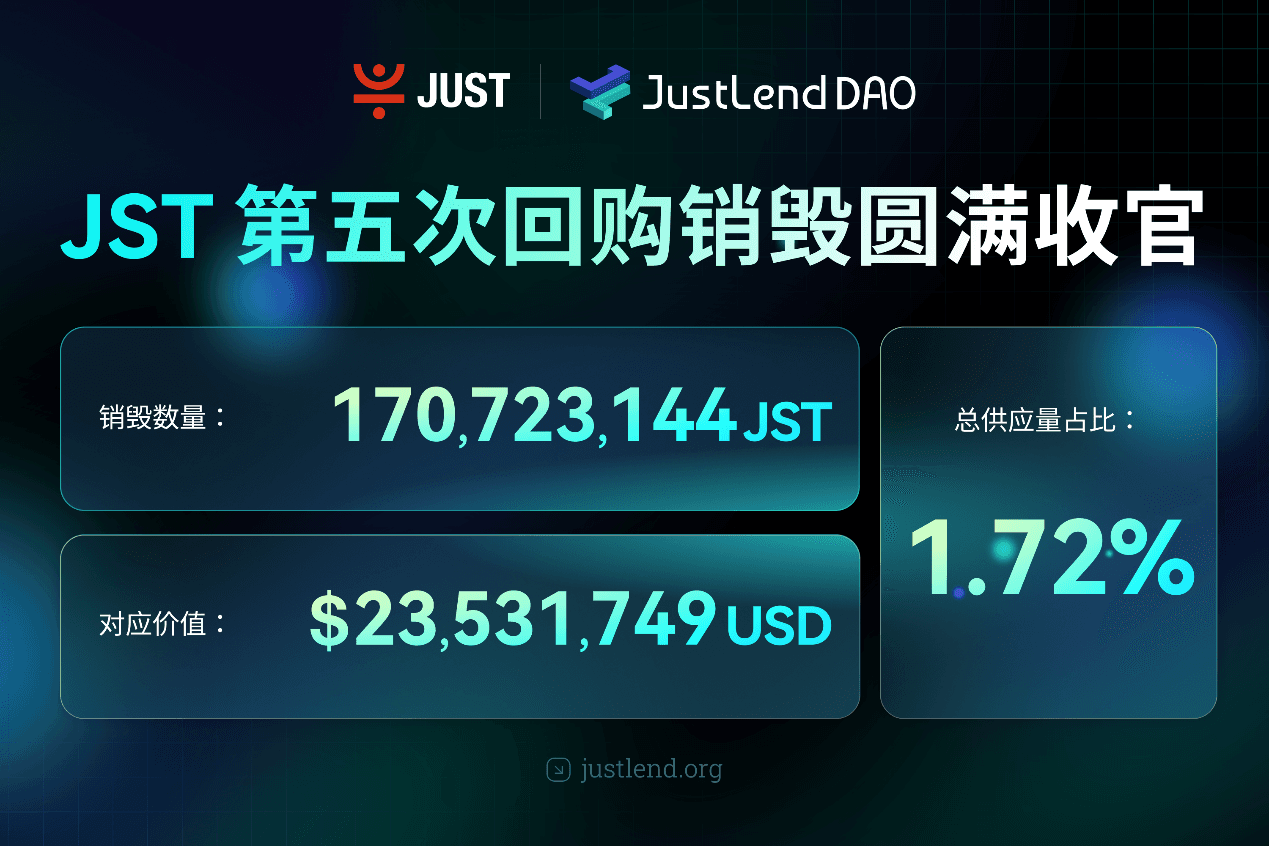
BitTorrent Brand Upgrade and Initial BTT Buyback & Burn Launch Simultaneously, Dual Engines Usher in New Era of Web3 Infrastructure
Oct 17, 20:00
Asia Market Daily: Japan's BOJ signals more rate hikes while Korea targets offshore perpetual platforms (2026/10/17)
Oct 17, 17:01Why did Papertrade backfire on you?
Oct 17, 17:01
The 'Strict Father' of Northern Myanmar: This Company Deploys 200,000 "AI Best Actors" to Strike Back Against Scammers
Oct 17, 15:34