Kimi K3 Reimagining AI Narrative: Will Affordable Models Disrupt the Compute Craze?
TL;DR
· Following the release of Kimi K3, AI-related stocks saw a decline last Friday, replaying market concerns over DeepSeek R1's computational power cost.
· The U.S. cloud giants have a $700 billion AI infrastructure plan this year, a key figure impacting valuations in the era of open-weight models.
· Open models may suppress prices of closed-source models but could also drive increased AI adoption, not necessarily signaling a peak in computational demand.
In a report aimed at retail investors, Deutsche Bank pointed out that after the Moonshot AI's Kimi K3 release, AI stocks experienced another "DeepSeek Moment" last Friday: the market began to question again whether the massive AI infrastructure spending by U.S. tech giants, often in the hundreds of billions of dollars, remains justified if China's open-weight models can approach cutting-edge closed-source models at a lower cost.
This is not merely a technical debate. The report mentioned that last Friday, the "Tech Seven Giants" saw a decline of about 1.8%, and the Philadelphia Semiconductor Index dropped around 1.6%, resulting in a weekly decline of over 10%. Alphabet's Google, Microsoft, Amazon AWS, Meta, and Oracle are expected to invest around $700 billion this year in building AI capabilities, representing a 70% increase from last year.
Investors' anxiety is quite straightforward: the AI bull market in recent years has been built on the assumption that stronger models require more chips, more data centers, more power, and higher capital expenditures. However, following DeepSeek R1, Kimi K3 once again reminded the market that cheap, lightweight, downloadable, and modifiable models are catching up to the closed-source giants.
The impact caused by DeepSeek R1 in January 2025 is still part of the market's memory. The report recalls that at that time, the market was concerned that a Chinese team had created a "good enough" model with older chips at a lower training cost, leading to NVIDIA's market cap evaporating by about $600 billion in a single day.
The issues brought by Kimi K3 are similar: if open-weight models can reach a usable level in many applications, do enterprises still need to continue paying a premium for the most expensive closed-source models? Do cloud providers still need to build data centers at the current pace? Will chip demand shift from "the more, the better" to "the cheaper, the more efficient, the more distributed"?
The key point here is not whether Kimi K3 has completely surpassed OpenAI or Anthropic but whether it is disruptive enough to challenge some default assumptions of the AI business model. As long as "good enough" models become increasingly affordable, pricing power of closed-source model providers will be squeezed, and the growth narratives of cloud providers and chip companies will face more scrutiny.
This is also why a model release event ripples through the stock market. Among the Big Seven tech companies, several are both providers of AI models and applications and the world's largest data center buyers; the semiconductor index directly bears the market's expectations for changes in demand for GPUs, network devices, and AI servers.
Many AI models referred to by the market as "open source" are more accurately described as having "open weights."
Closed-source models are most like "plug-and-play" services. Flagship models such as OpenAI's GPT, Anthropic's Claude, etc., are usually controlled by developers in terms of model weights, training methods, pricing, updates, and security restrictions, and users interact with them through applications, APIs, or cloud services. Their advantages are convenience, stability, and high integration, while the disadvantage is that users find it hard to grasp underlying control and must accept the provider's pricing and rules.
Models with open weights, on the other hand, release trained parameters for users to download, deploy, fine-tune, and even technically modify some security settings. DeepSeek R1, Meta's Llama, and several models from Mistral are closer to this category. They may not necessarily disclose complete training data, training code, and replication details, so they are not equivalent to strictly open-source systems.
This difference is crucial for enterprise customers. Models with open weights mean more control: companies can run the model on their own servers, reducing reliance on external APIs; they can also customize for industry, language, or task; for institutions where data in finance, healthcare, government, etc., cannot freely leave the local environment, local deployment is more appealing.
But "downloadable" does not mean "free." Companies still have to pay for computing power, electricity, engineering, monitoring, maintenance, and security costs. Open models may not necessarily have the same level of general capability, product experience, and service commitment as closed-source flagship models. In other words, their impact lies not in overnight replacement of closed-source models but in providing customers with another option.
Models like Kimi K3 first challenge "scarcity."
If strong models can be replicated, modified, and hosted by more developers, AI models themselves may increasingly resemble basic software infrastructure rather than high-margin products enjoyed by a few companies. Closed-source model vendors can still make money through products, data, security, and ecosystems, but it will be harder to charge high prices solely based on "model capability leadership."
The second area under pressure is pricing power. As AI agents and enterprise employees use more tokens, model call costs are transitioning from small bills in the pilot stage to significant items in the corporate budget. As AI subsidies decrease and leading model vendors start more explicitly charging by token, cost-sensitive customers will be more willing to try open models.
The third is capital expenditure. The AI investment scale of current U.S. tech giants is already very large, with Google, Microsoft, AWS, Meta, and Oracle's approximately $700 billion AI capability building plan this year being one of the most closely watched numbers in the market. If businesses can use smaller, cheaper, and more specialized models to solve most tasks, investors will naturally ask: Is the growth in spending on chips, networks, power, and data centers happening too quickly?
The fourth is the U.S. technology moat. China's continued rollout of open-source models has weakened the market's imagination of the United States' AI leadership position as "unshakable." The report mentioned that this year on the OpenRouter developer platform, the number of tokens processed by Chinese models has exceeded that of American models. This does not mean that the U.S. AI advantage has disappeared, but it does mean that developer usage and ecosystem diffusion are becoming more diversified.
All of these impacts point to one result: Closed-source models are still the benchmark for cutting-edge capabilities, but the narrative of "closed-source models monopolizing everything" is weakening.
The market is most likely to interpret such events as "cheap models impacting chip demand." However, the report's assessment is more balanced: Strong open models do challenge the business model of closed-source models and semiconductor demand expectations, but they may also benefit AI adoption, application development, and enterprise customization.
The reason is that price drops usually lead to increased usage. Cheaper, more efficient models will enable more companies to integrate AI into customer service, offices, R&D, advertising, coding, data analysis, and internal processes. Companies that previously thought API costs were too high, data could not leave the premises, and models were uncontrollable may now start deploying AI because of open-source weight models.
This is close to the logic of Jevons Paradox: After technological efficiency improves and unit costs decrease, consumption actually increases. The improvement in steam engine efficiency did not reduce coal demand; instead, it expanded the use of steam power. AI may experience a similar situation—single inference becomes cheaper, but the number of calls, application scenarios, and end users increase significantly.
Therefore, computational power demand may not have peaked, but the demand structure may change. A few cutting-edge closed-source models will still require the most powerful training and inference clusters; a large number of open models may be deployed on the cloud, on-premises servers, mobile devices, cars, and other edge devices. Chip demand may also shift from a sole focus on the most powerful GPUs to a greater emphasis on inference efficiency, networking, power, storage, and edge computing power.
For application companies, open models may actually reduce input costs. Businesses can use cheaper models for vertical scenarios, software companies can develop more specific products on top of models, and cloud providers can continue to make money by hosting open models, providing inference services, and enterprise support.
The most likely scenario is not open source defeating proprietary software or proprietary software re-monopolizing, but rather the long-term coexistence of both.
The proprietary model will continue to play a role in cutting-edge capabilities, industrial-grade quality, security assessment, and deep product integration. The open weight model, on the other hand, will force proprietary vendors to control prices, increase flexibility, and shift competition from "whose model weight is stronger" to data, product design, memory capabilities, security, efficiency, and ecosystem services.
The open weight model from model companies is not necessarily altruistic. Developers can earn money through hosted APIs, premium subscriptions, faster inferencing, enterprise support, fine-tuning, security services, and SLAs; cloud service providers can sell the compute power required to run open models; consumer platforms can embed model capabilities into recommendations, advertising, and user experiences; and app companies can build features at a lower cost.
What remains unresolved is the boundary of responsibility. The open weight model gives users more control but also makes users bear more testing, security protection, cybersecurity, update, and reliability responsibilities. Once the model is downloaded, modified, and deployed locally, determining who is responsible for misuse, failures, or security incidents will be more complex than in a closed-source API model.
Regulation could similarly alter the competitive landscape. Proprietary model vendors like Anthropic advocate for catastrophic risk testing, external evaluation, and ongoing disclosure requirements for cutting-edge AI developers; critics, however, are concerned that excessive regulation will give well-funded large companies an advantage, stifling open ecosystems and small team innovation.
Therefore, the "Second DeepSeek Moment" brought by Kimi K3 is not just a simple AI bearish catalyst. It is more like a stress test: a $700 billion AI spend, proprietary model charges, U.S. technological advantage, and chip demand all have to answer the same question—where will the money in the AI industry come back from when "good enough" intelligence becomes cheaper.
Recommended
Desk: Brent Crude Tops $110, Musk's Net Worth Drops 528.6 Billion in Four Days After Tesla Roadster Launch
Oct 17, 21:49
JST Fifth Buyback and Burn Successfully Concludes: Over 170 Million Tokens Worth Approximately $23.53 Million Burned, Buyback Mechanism Set for Comprehensive Upgrade
Oct 17, 20:10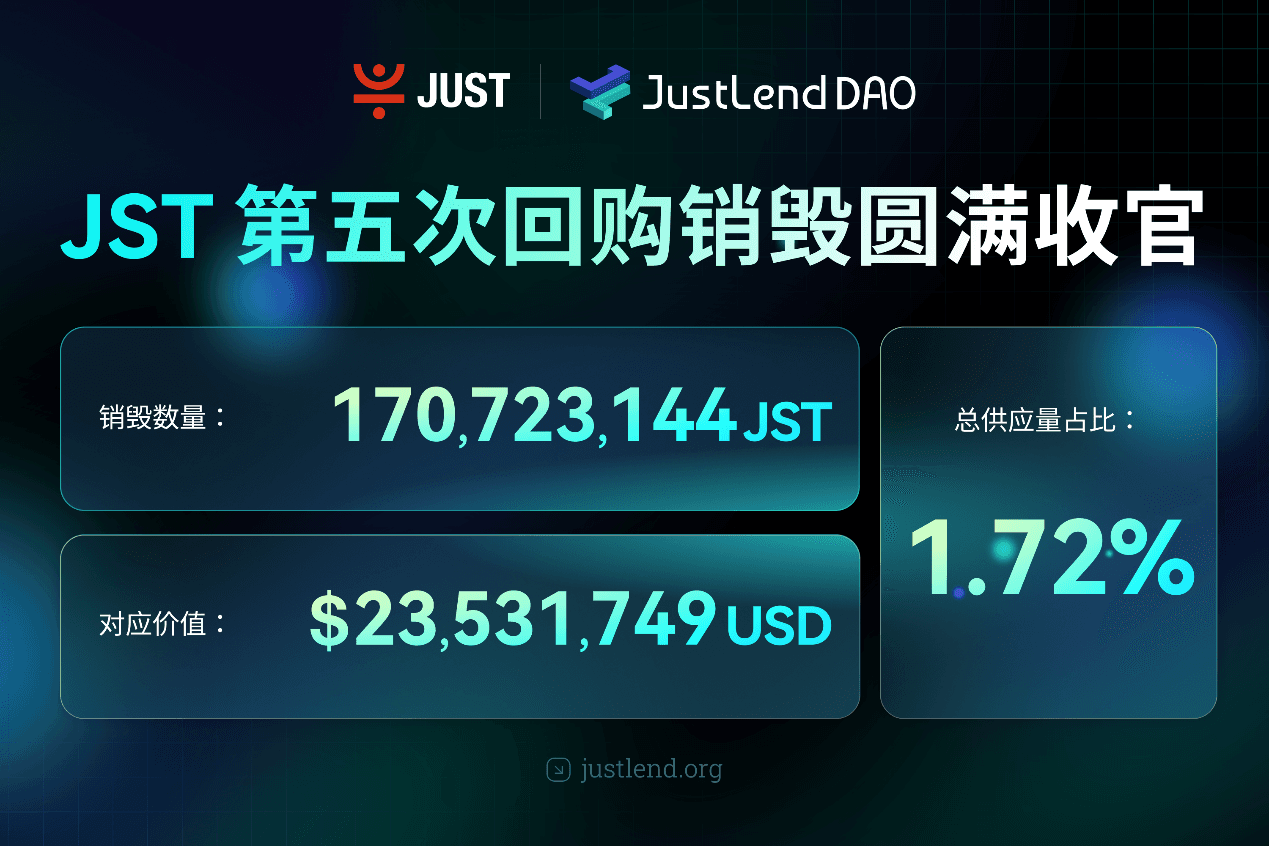
BitTorrent Brand Upgrade and Initial BTT Buyback & Burn Launch Simultaneously, Dual Engines Usher in New Era of Web3 Infrastructure
Oct 17, 20:00
Asia Market Daily: Japan's BOJ signals more rate hikes while Korea targets offshore perpetual platforms (2026/10/17)
Oct 17, 17:01Why did Papertrade backfire on you?
Oct 17, 17:01
The 'Strict Father' of Northern Myanmar: This Company Deploys 200,000 "AI Best Actors" to Strike Back Against Scammers
Oct 17, 15:34