Amazon AGI Organization Layoffs: Will AWS's AI Valuation Anchor Change?
TL;DR
· Amazon confirms AGI organization has cut some positions, while emphasizing the continued focus on large AI models.
· Market speculation revolves around whether this adjustment signifies a shift towards in-house model downgrading or a refocus on customer-facing initiatives.
· Related Tickers: AMZN, AWS, Anthropic, AI Cloud Infrastructure.
Amazon confirmed on July 22nd that some positions within its AGI organization have been eliminated, stating that the company is still working on large AI models, which it deems as one of its most critical endeavors. As reported by Reuters, Amazon explained this adjustment as a reallocation of resources towards areas considered most crucial for customers in the future.
The specific number of layoffs in this round has not been disclosed, and it should not be directly interpreted as Amazon giving up on AGI. Instead, it appears to bring to the forefront the contradictions within Amazon's AI narrative: while big tech continues to invest billions in AI infrastructure, teams closest to the long-term AI ambitions are undergoing organizational contraction.
For investors, the concern lies not in how many people Amazon has let go, but rather in the reassessment of AWS' AI valuation anchor. Previously, the market was willing to pay a premium for big tech's AI investments, assuming that the stronger the models, the greater the future revenue. The more pressing issue now is when these investments will translate into customer payments, cloud revenue, and margin improvement.
AGI (Artificial General Intelligence) can be understood as a long-term goal that remains to be achieved, aiming to enable AI to learn across domains and solve problems akin to humans. It represents a futuristic vision but does not necessarily translate into immediate revenue. What AWS needs is to package AI capabilities into services that enterprises can buy, use, and customize now.
The Greater the AI Investment, the Tougher the Trade-offs for Organizations
The key to these layoffs lies not in whether Amazon will continue to develop models. The official statements have already set the boundary: large models remain a priority, but resources must be directed towards projects that are most important to customers.
The organizational actions indicate that AI investment has not halted, but the tolerance for missteps in investment is decreasing. In December 2025, Amazon reshuffled its AI leadership, with Andy Jassy appointing Peter DeSantis to oversee a new organization focused on AI models, chips, and quantum computing. By the end of 2025, Rohit Prasad departed, leaving Pieter Abbeel in charge of cutting-edge model research within AGI. A report cited by Reuters also mentioned the departure of AGI Lab head David Luan in February 2026.
Viewed together, these changes show that Amazon is not exiting the AI arms race but rather restructuring its internal investment portfolio. Long-term research still holds narrative value, but projects closer to customers, revenue, and productization are receiving higher priority.
This is also the backdrop to big tech AI transactions. Over the past two years, the market has primarily traded who is willing to spend money, who has computational power, and who has models. Now, capital expenditure itself is no longer scarce enough, and investors are beginning to inquire about return on investment: whether model teams, chips, data centers, and talent can ultimately translate into revenue.
Nova Forge Provides Commercialization Leverage
To understand this adjustment, we need to look at AWS's Nova Forge announced in December 2025 during AWS re:Invent. It is not just an ordinary chatbot but a service that helps enterprises train custom models.
In the traditional path, if a company wants to have a cutting-edge model tailored to its industry, they either have to train from scratch, incurring very high costs, or fine-tune a ready-made model with limited capabilities and controllability. The idea behind Nova Forge is to allow customers to start from the checkpoint (training intermediate archive) in the Amazon Nova model training process, mix their own data and Amazon-curated datasets at different training stages.
Amazon calls this open training. In simple terms, companies do not have to build a large model from scratch but rather start with a model base that Amazon has already trained to a certain stage, injecting their industry knowledge in advance. This way, they can inherit foundational capabilities and more easily develop domain expertise.
This path is crucial for AWS as it attempts to turn model capabilities into cloud service products. Customers are not just calling a model interface but training, hosting, deploying, and optimizing their models on AWS. If the product succeeds, it could lead to computational consumption, platform stickiness, and ongoing operational revenue.
However, existing information does not prove that the decommissioned AGI resources have shifted towards Nova Forge. A more cautious assessment is that the AGI organization's adjustment and customer-oriented products like Nova Forge have emerged simultaneously, indicating Amazon's preference to emphasize commercialization projects.
AWS's Competitive Focus Shifts to Customer Customization
Amazon's position in the foundational model competition has always been quite unique. It not only develops Nova but also invests in Anthropic and maintains AWS's neutrality as a cloud platform and the model ecosystem.
This determines that AWS may not necessarily rely solely on having the most powerful global model. For enterprise customers, the model leaderboard is important but not the only criterion. The more practical questions are whether they can access internal enterprise data, meet security and compliance requirements, reduce training costs, and operate alongside existing cloud services.
The core of this competitive logic is precisely what Nova Forge represents. It shifts the battlefield from a ranking of general model capabilities to whether enterprises can train their own models at a lower cost. If this approach is successful, AWS can integrate AI revenue into its core cloud computing business rather than betting solely on a consumer-grade AI product.
This also explains why Amazon is simultaneously holding on to the AGI narrative while downsizing certain positions. The former is to maintain long-term technological vision, while the latter forces teams to allocate resources toward directions that are more easily validated by customer demands.
For AMZN, the market will ultimately not only focus on whether Amazon has an AGI team. More importantly, it will question whether AWS can demonstrate that AI services boost customer spending, enhance stickiness, and do not significantly drag down profit margins.
Orders and Profit Margins Will Provide the Answer
This round of layoffs could easily be misinterpreted as two extremes: either Amazon's AI failure or an inconsequential routine optimization. The current information does not support such conclusions.
A more reasonable assessment is that Amazon is still in the AI arms race, but internal budgets and talent allocation are shifting toward directions that can be sold to customers. This change is meaningful to investors because AMZN's AI premium will increasingly rely on the commercialization results of AWS rather than solely on model narratives.
Several specific issues will serve as validation points. Whether Nova Forge can secure real enterprise customers, whether customers are willing to continue paying, whether the trained models are more cost-effective than ordinary fine-tuning—all these factors will determine its effectiveness as a product.
Another variable is talent attrition. If the AGI team restructuring is merely optimizing non-critical positions, the impact will be limited. However, if core research and engineering talent are leaving, Amazon's long-term competitiveness in proprietary models will be weakened. The tension between official statements and organizational reality will ultimately be digested through product adoption rates, AWS AI revenue, and capital expenditure returns in subsequent financial reports.
Recommended
Desk: Brent Crude Tops $110, Musk's Net Worth Drops 528.6 Billion in Four Days After Tesla Roadster Launch
Oct 17, 21:49
JST Fifth Buyback and Burn Successfully Concludes: Over 170 Million Tokens Worth Approximately $23.53 Million Burned, Buyback Mechanism Set for Comprehensive Upgrade
Oct 17, 20:10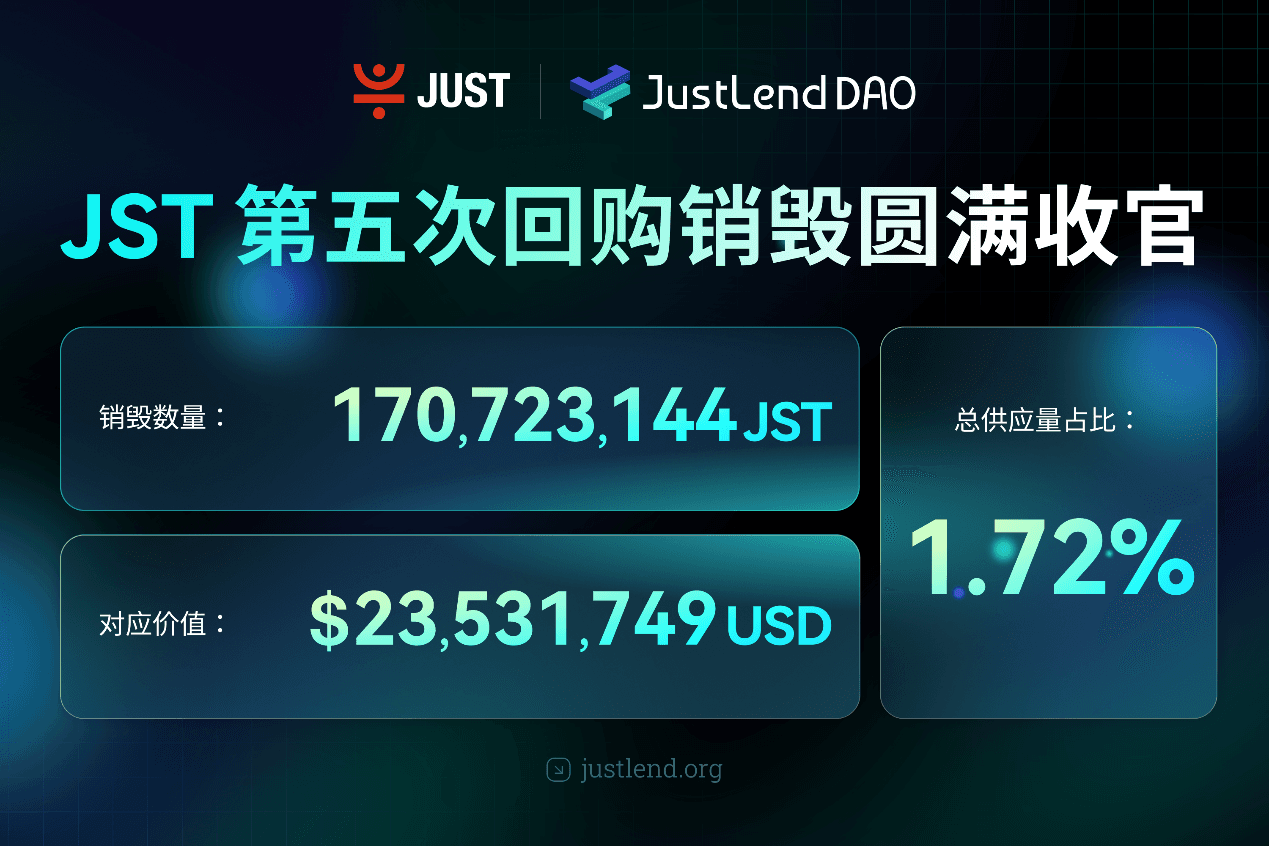
BitTorrent Brand Upgrade and Initial BTT Buyback & Burn Launch Simultaneously, Dual Engines Usher in New Era of Web3 Infrastructure
Oct 17, 20:00
Asia Market Daily: Japan's BOJ signals more rate hikes while Korea targets offshore perpetual platforms (2026/10/17)
Oct 17, 17:01Why did Papertrade backfire on you?
Oct 17, 17:01
The 'Strict Father' of Northern Myanmar: This Company Deploys 200,000 "AI Best Actors" to Strike Back Against Scammers
Oct 17, 15:34