From Perpetual Contract Dominance to Shutdown: BitMEX's Decade of Rise and Fall

Editor's Note: Today, BitMEX announced that it will officially close its trading platform on September 23, 2026, and has stopped all new user registrations with immediate effect. BitMEX, co-founded by Arthur Hayes, Benjamin Delo, and Samuel Reed, was the first exchange in the crypto industry to introduce and successfully popularize perpetual contracts, profoundly influencing the development of the entire crypto derivatives market.
In 2020, the U.S. Department of Justice and the Commodity Futures Trading Commission (CFTC) charged co-founder Hayes and others with violating the Bank Secrecy Act and failing to establish an effective anti-money laundering system, alleging that BitMEX illegally provided services to U.S. customers. Subsequently, BitMEX's market share continued to shrink, and its industry-leading position was gradually replaced.
In February 2025, there were rumors in the market about its sale, but no further progress was reported. This article was published on February 6, 2021, documenting the early rise and fall of this "futures contract king." The following is the original content.
The Crazy Rich
Arthur Hayes's life is fascinating, much like the billionaire Bobby Axelrod in the TV series "Billions," just swap New York for Hong Kong and inject some Silicon Valley flair.
One moment Hayes is skiing in Hokkaido, the next he's showcasing his skills in an underground parking lot in Hong Kong Central. Meanwhile, he keeps an eye on a seemingly obscure cryptocurrency exchange where over $3 trillion has flowed through.
This African American banker turned maverick contemporary fintech icon, with movie-star looks and wealth, is FBI-described quite differently: operating in the "shadows of financial markets," a fugitive "flouting" the law.
The indictment against Hayes was unsealed in October, and the New York prosecutor is seeking his arrest and trial on two felony charges, which could lead to a 10-year prison sentence. However, he remains at large in Asia.
This is a tale of new money versus old money, where financial wunderkinds have disrupted the industry's old guard, and U.S. authorities are attempting to apply 20th-century law to 21st-century innovation.
The prosecutor has accused Hayes and his business partner of violating the Bank Secrecy Act by failing to implement and maintain a sufficient anti-money laundering program to evade criminals and dirty money.
Meanwhile, Hayes' colleagues in the cryptocurrency space believe he is being punished for creating a groundbreaking product that has left legislators and regulators perplexed, posing a threat to some of the biggest players in certain markets once widely adopted.
Some high-profile legal experts have gone as far as to decry the U.S. v. Arthur Hayes case as largely unprecedented absurdity.
As the U.S. Securities and Exchange Commission (SEC) appears to kowtow to Wall Street titans, eager to punish those who squeezed banks and hedge funds on their GameStop and other stock positions, driven retail traders, Hayes may just be the patient zero in exposing the hypocrisy of the high finance industry, a hypocrisy that is increasingly laid bare.
Genesis
The 35-year-old Hayes disappeared from the internet in October last year. But the crypto high roller hasn't always been so elusive.
He was born into a middle-class family working for General Motors and subject to the automaker's ever-changing fortunes. Splitting his formative years between Detroit and Buffalo, Hayes, guided by his mother Barbara, managed to steer her talented son to Nichols School, a private educational institution founded in 1892.
“He excelled in all things, from academics to the playing fields, to building lasting friendships,” read a testimonial by Barbara on a fundraising page on the school's website.
“Nichols gave him the foundation, the challenge, and at one time provided him with a scholarship that allowed him to grow,” returned Hayes, sponsoring a scholarship to ensure “a deserving student will have the opportunity to experience the excellence of a Nichols education and the lasting benefits it brings.”
After graduating from the Wharton School, he headed to Hong Kong, serving as an exchange-traded fund (ETF) market maker at Deutsche Bank and Citibank, unlike mutual funds, these hybrid securities can diversify investor risk and be traded like stocks. In May 2013, just as Hayes was poised to make his mark, a pink slip appeared before him.
One afternoon, while having tea at Marina Bay Sands Hotel in Singapore, he explained, "Bankers will tell you that everyone has a bullet with their name on it." Marina Bay Sands Hotel is the iconic hotel featured in the climax of the movie Crazy Rich Asians.
He was dressed in his standard attire: a tight T-shirt, jeans, and an expensive watch (Hublot Big Bang). "I'm not married, I don't have kids, I have no obligations. I used to be an investment banker, so I'm not sleeping on the streets. I want to build something."
Back to that pink slip. Eight years ago, Hayes was unemployed, and he decided to go solo, combining his skill in designing innovative financial instruments with a newfound passion: cryptocurrency, specifically Bitcoin.
Initially, Hayes was just a nobody in the vast ocean of cryptocurrency, among whom were tax evaders, drug dealers, arms traffickers, child pornographers, libertarians, and rogue bankers yearning for a return to the gold standard.
They were disillusioned with the old-world banking industry and its slow pace, cumbersome account opening, and fund transfer validation requirements, feeling that the relationship between the financial industry and government had become too cozy.
In their view, starting with the U.S. government and spreading outward, they believed and took action as if they monopolized currency, resisting the crypto uprising. People invested in anonymous digital assets to profit, hide wealth, and shake off the establishment.
The crypto gold rush initially attracted three types of players: those with gilded resumes and foresight, boiler room loan sharks who could recite enough buzzwords to secure financing, and the inevitable parasites who latched on and tried to feed off others.
Unsurprisingly, Hayes stood among the clever ones.
"I bought my first Bitcoin from Arthur in 2013," recalled Jehan Chu, a New Jersey native who made his way to the Asia Pacific region via a circuitous route. While studying for his undergraduate degree at Johns Hopkins University, he taught himself how to code, hitting the tail end of the late-1990s first internet boom. After working at a small web development shop in New York, Sotheby's called, seeking Mr. Chu's assistance in developing their digital business."
"We sold the famous 'Declaration of Independence' in 2000," he said, pointing to the last remaining copy of the 'Declaration of Independence' in private hands.
Following this $8.14 million transaction, the online market saw a downturn, and Chu made his way to Hong Kong, helping Sotheby's cater to their super-wealthy Asian clientele, many of whom seemed to have an insatiable appetite for art and antiquities.
In his spare time, Zhu Jiehan organized a cryptocurrency enthusiast brainstorming session. What started with five people at a smoky bar in Sheung Wan quickly grew into a community of thousands.
By 2016, Zhu had "turned his OCD into a career" and founded Kenetic, a cryptocurrency venture capital firm that has now invested in over 150 companies. At the same time, he watched in amazement as his friend Hayes flourished in the crypto world, transitioning from a manual trader to an industry titan. Arthur Hayes' initial foray was into arbitrage trading: buying Bitcoin on one market and selling at a premium on another.
It wasn't until October 2013 that he encountered trouble accessing his cryptocurrency sent to Mt. Gox, a Tokyo-based Bitcoin exchange that helped customers convert their Bitcoin holdings into traditional fiat currencies such as USD, EUR, GBP, or CNY. In early 2014, Mt. Gox announced that hackers had stolen nearly $500 million from its exchange. Unlike most other investors (around 24,000), Hayes managed to withdraw his funds and learned a crucial lesson in the process: exchanges were a single point of failure in an otherwise secure Bitcoin ecosystem.
Mt. Gox may stand out as the most infamous case, but dozens of exchanges have been hit, and countless billions of Bitcoin and other cryptocurrencies have vanished.
To arbitrage, Hayes decided to take his money elsewhere. When he heard that Bitcoin's trading price in mainland China was significantly higher, he bought bundles, moved his coins to a Chinese exchange, converted to CNY, and walked around with a backpack full of cash.
"Over the course of a few days, I, along with some friends, crossed the border into Shenzhen by bus, had lunch, then came back across the border with a legal amount of cash," he recalled. It was a clever trick and quite profitable.
However, the real-world risks of transporting physical cash across borders made him think. Why not establish an online exchange where people could profit from Bitcoin using derivatives?
This idea required serious technical research—not just to build it but to convince a deeply skeptical crypto community. Luckily, Hayes had addressed the security and accounting loopholes that plagued early exchanges.
Bitcoin and Beer
In January 2014, Hayes arranged to meet Ben Delo at a luxurious rooftop pool. Delo, a talented British mathematician and programmer, was reportedly voted by his Oxford University peers as the most likely to become a millionaire and the second most likely to end up in jail. After graduating in 2005, he worked at IBM, two hedge funds, and moved to Hong Kong before joining J.P. Morgan.
When Hayes and Delo came together, there was little sign they would disrupt the order. On paper, both had similar backgrounds: elite education and corporate experience.
Yet each was an exception. Hayes, the son of auto workers, had forsaken the standardized, heavily regulated world of investment banking for the wild west of crypto, where rules are few and far between.
Sir Jonathan, the Dean of Worcester College, Oxford, said Delo "overcame significant challenges in his school career, securing a place at Oxford from a local state school."
In fact, as the child of a civil engineer father and a schoolteacher mother, Delo had been expelled from three primary schools before being diagnosed with Asperger's. At Oxford, he dual-majored in Mathematics and Computer Science, achieving a First in both subjects, a perfect GPA.
As the two planned to turn Hayes's vision into reality, Delo, the backend expert designing complex algorithms and high-speed trading systems, said they needed a frontend web developer.
Hayes happened to know just the person, a young American programmer and tech evangelist named Sam Reed, whom he met at one of Reed's talks where Reed warned aspiring techies not to join startups, whose founders often exploit and squeeze their programmers.
When Hayes pitched Reed his idea for a Bitcoin derivatives exchange, Reed didn't think twice before signing on.
Reed, the youngest of three boys, grew up in Manitowoc, Wisconsin. His father was an Air Force network administrator, and his mother had worked as a newspaper editor. Surrounded by old computers at home, Sam managed to fix them up, landing his first paid gig at 12: debugging and repairing computers for friends and neighbors.
Reed may have been much younger than Hayes and Delo, but he had the longest time in the crypto game. In 2009, while in his senior year in Washington, this self-proclaimed "Bitcoin hipster" was mining Bitcoin on his laptop when it was worth next to nothing. Reed had amassed about 100 Bitcoins along the way, but accidentally wiped the private keys needed to access them while reformatting his hard drive, permanently losing them.
Compared to Hayes and Delo, Reed was less institutionalized. He had worked at a major defense contractor, finding the corporate world stifling, and bided his time in several startups and freelance gigs before finding his way to Hong Kong in 2013.
During an alumni online career forum, he sat in a small cabin in Thailand and recorded a video where Reed shared tips about the crypto business.
His insights included: "In the gold rush, if you don't want to mine gold, you sell shovels."
Reed had said that he had been considering the idea of building an exchange for cryptocurrency trading and explained his reasoning: "If you can chop off the bank, you've chopped off most of the complexity. You've chopped off a lot of the AML, KYC, things related to U.S. law, you've also gotten rid of a lot of fraud, because all of that, you know, through proper design, money on the internet is actually verifiable."
Hayes, Delo, and Reed began to seriously investigate what they referred to as the Bitcoin Mercantile Exchange (BitMEX). Hayes was the CEO, Delo was the COO, and Reed was the Chief Technology Officer (CTO).
Although these titles sound grandiose, BitMEX initially consisted of just three laptop-wielding guys working in a Starbucks in the Jardine House during the day, a Hong Kong skyscraper from the 1970s adorned with porthole windows. In the evenings, they would return to Hayes's apartment with 7-Eleven beers.
Nasdaq Meets Vegas
BitMEX is described as a "peer-to-peer trading platform offering Bitcoin leveraged contracts." It allows users to effectively bet on the future price of the currency with leverage of up to 100 times. In plain terms, a client with $10,000 in a BitMEX account can seamlessly execute a $1 million trade. The exchange's allure is that people can potentially earn big money by putting in relatively small amounts of crypto seed capital.
In a blog post on the BitMEX website, Hayes wrote, "Trading without leverage is like driving an automatic Lamborghini, you know it's safer, but that's not why you bought it." His friend Zhu Jiehan compared BitMEX to Nasdaq, "if Nasdaq were in Las Vegas".
When asked about the potential catastrophic consequences of allowing people to trade with such high leverage on margin, Zhu insisted that personal responsibility had always been at the core of the crypto ethos. "You open a 100x? First of all, make sure you read the fine print, mom isn't here to make sure you don't fall off the skateboard."
Hartej Singh Sawhney is another colorful character in the American expat crypto scene. In his own words, his turban is made from "a secret fabric," with a namesake clothing line.
Sawhney has always expressed understanding of BitMEX's business model, insisting, "They are running a rather complex gambling environment. But I am a believer in free markets, and in my view, BitMEX should be able to put forward anything; their terms are very clear."
Six years ago, BitMEX's birth was perfect timing, but also full of danger. In the eyes of U.S. authorities, Bitcoin was then transitioning from a currency favored by bad actors (evidenced by the 2013 shutdown of the infamous illicit drug and firearms marketplace "Silk Road") to an investment-grade asset being purchased by institutional players as a hedge against inflation and for the promise of outsized returns. Hayes, Delo, and Reed sat in the catbird seat, amassing vast fortunes. According to sources familiar with their finances, all three men are billionaires. But at the same time, they were outsiders suddenly playing in a field where insiders sought collaboration.
Their high-speed, high-leverage features were reminiscent of those potentially toxic financial instruments that would eventually draw regulatory scrutiny, later eliciting laughter in Adam McKay's 2015 film "The Big Short" adapted from Michael Lewis's bestseller, even though BitMEX was growing rapidly, it also came with terrible risks.
"This thing has developed very quickly. It didn't even exist 10 years ago," J. Christopher Giancarlo explained, who served at the powerful Commodity Futures Trading Commission (CFTC) during the Obama administration and later as CFTC chairman during the Trump administration. "Regulation always follows innovation, and sometimes, in democratic countries, it lags a bit behind other jurisdictions." Giancarlo has been pressing Congress for years to enact a comprehensive regulatory framework covering the crypto space. Instead, lawmakers have relied on laws from the 1930s — the Securities Exchange Act and the Commodity Exchange Act — which were later amended post the 2008 financial crisis.
However, these rules are still very outdated. Therefore, according to Giancarlo, regulators have to decide how to oversee pioneering platforms like BitMEX, if any. "There are about 8000 identified new platform tools," he said. In each case, regulators must ask, "Do they fall under CFTC jurisdiction, SEC jurisdiction, or no regulatory jurisdiction?"
Magic Notions
Understanding what BitMEX is selling may not be as important as understanding who it is selling to. In our early conversations, Hayes insisted that BitMEX is very cautious, with "no U.S. customers" and has set up technical barriers, such as blocking U.S. IP addresses to prevent American customers from accessing the platform and keeping U.S. regulators at bay.
But U.S. officials say otherwise. They haven't forgotten that BitMEX had many U.S. users, with a significant number of them flocking to BitMEX by using Virtual Private Network (VPN) software to mask their location. Despite Hayes's banking background and the department's dedication to enforcing Anti-Money Laundering (AML) and Know Your Customer (KYC) requirements, he was deeply immersed in the libertarian world of crypto technology, seemingly turning a blind eye to certain realities. These include: the far-reaching influence of U.S. authorities, a long memory, and the ability to take people down, especially brash upstarts.
"Hayes is a disruptor," argued his friend Mertim-Demiros. "He's not afraid to be controversial, and, you know, history isn't kind to these people."
As Chief Strategy Officer of the digital asset investment firm CoinShares, Demiros has been dubbed the Sheryl Sandberg of the crypto-tech world. Born in the Netherlands to Turkish parents, Demiros moved to the U.S. at the age of 10, studied math and economics at Rice University, earned an MBA from MIT where she taught FinTech and blockchain strategy, later bringing these disciplines to students at Oxford. It's easy to see why Hayes and Demiros became friends and kindred spirits.
"I feel like an outsider," she said, "In a way, I'm a woman, I didn't get Silicon Valley funding, my mom and dad aren't wealthy.... My background is different from many in this industry, and when I walk into the room, people still raise their eyebrows.
"Hayes is the same way," in Demiros's view, "He doesn't have famous VC backers, he doesn't have the advantages others do." Hayes's original sin might be that he refuses to play the game. "He doesn't care about the pretense and bullshit, he doesn't care about Silicon Valley and think tanks, all the stupid things done for prestige. He just doesn't care.... Sometimes, people's greatest qualities are also their biggest flaws."
BitMEX was established in the Seychelles, a move that allowed the startup to grow rapidly, minimize its tax exposure, and Western governments struggle to understand even the novel financial instruments and markets BitMEX was building, let alone a new form of governance.
In an investor presentation in 2015, Hayes put forth this view: "Bitcoin derivatives are unregulated globally.... Regulatory bodies are still trying to figure out fiat-to-bitcoin exchanges."
It was a magical idea. "There were no rules at the beginning, the government wasn't interested in laying down the law," Zhu remembered, "You'd go to them seeking guidance, but you got nothing."
“Is this illegal? There is no black and white,” he said, only after the fact would there be subtle warnings to guard against crypto, usually in response to some previously unclarified wrongdoing by regulators, what Zuhier Khan saw as chaos,
Hayes saw as opportunity.
In the nearly a year post-BitMEX launch, BitMEX's business was unremarkable. “There were days when we didn’t trade,” Hayes recalled. “No one was buying or selling,” trading fees on the platform barely covered the server bills, and Reed paid the bill on his credit card.
While Hayes and Delo stayed in Hong Kong, Reed, after getting married, moved back to the U.S., settling in Milwaukee, where he operated out of a coworking space.
However, the time zone difference worked in their favor. Delo and Reed, in a quintessentially entrepreneurial fashion, took turns being on ‘standby’ to handle customer support issues 24/7.
By the end of 2015, when it started offering 100x leverage to clients – five times more than the closest competitor, the company’s fate changed.
The next year, with Brexit and the election of Donald Trump, political turbulence upped the volume of cryptocurrency trading. By 2017, BitMEX had to hire 30 employees to deal with the explosive growth in trading volume. The company moved into new office space, only to outgrow it quickly.
By 2018, BitMEX had become a high-stakes bazaar trading billions of dollars daily. In one meeting, Hayes remarked, “in terms of volume, we are the largest exchange in the world.”
He said BitMEX was “one of the most liquid exchanges in the world, across any asset class.” By that measure, it was on a par with the NASDAQ and the New York, London, and Tokyo stock exchanges. In just four short years, Hayes’ once run-down casino was now this grand house. (Since the unsealed indictment in October, BitMEX has suffered a significant blow, seeing a sharp decline in market share and trading volume.)
Sharks and Lambs
In May 2018, on the opening day of Consensus (the crypto world’s equivalent of CES), Hayes pulled up in an orange Lamborghini to the Hilton hotel in Midtown Manhattan, tweeting, “Did you see my ride to #Consensus2018 today?”
A friend insisted that he was just mocking the thousands of attendees gathered in the hotel, those who talked big about cashing out on cryptocurrency and blockchain technology, but in reality had successfully burned millions of dollars of venture capital on shady ICOs. Yet, in hindsight, the ostentatious Lamborghini was likely Hayes painting a target on his own back.
Indeed, the company's partners have different attitudes towards their image and thriving business. Hayes doesn't mind stirring the pot, immersing himself in the role of a financial maverick. Reed maintains extreme discretion, being a secretive billionaire walking the streets of Milwaukee.
However, Ben Delo seems eager for mainstream recognition. When BitMEX was declared the world's largest cryptocurrency exchange in 2018, a series of British newspapers referred to him as the "UK's youngest self-made billionaire."
In October of that year, he donated £5 million to Worcester College, Oxford, and a few months later, he signed the "Giving Pledge," "a public promise to commit the majority of their wealth to philanthropy," designed by Bill and Melinda Gates as well as Warren Buffet.
In a letter explaining his decision, he wrote: "At age 16 in the UK, I was asked to list my aspirations for the future. I answered succinctly: computer programmer, internet entrepreneur, millionaire, and I have been incredibly fortunate to surpass these goals and am pleased to be signing this pledge."
Two years ago, BitMEX leased the 45th floor of the Center, Hong Kong's most expensive real estate, also home to Goldman Sachs, Barclays, Bloomberg, and Bank of America. Hayes, Delo, and Reed are really moving into this building.
But BitMEX was quick to express its attitude, so the office was equipped with accessories that none of the old guard companies had: a large aquarium housing live sharks.
Taipei Showdown
By the summer of 2019, the volume of funds traded through BitMEX was staggering. On June 27, the company announced a new daily record, with a trading volume of $16 billion.
Two days later, Hayes tweeted, "One trillion dollars traded in a year, the data doesn't lie, BitMEX ain't nothing to fuck with, @Nouriel see you Wednesday."
The person he cursed on Twitter was Nouriel Roubini, a respected New York University economics professor and one of BitMEX's fiercest critics. Roubini, also known as Dr. Doom, was a member of the Clinton administration's Council of Economic Advisers and served in the Treasury, the IMF, and the World Bank. In other words, like Hayes, he comes from an elite background.
On July 3rd, the two faced off on stage at the Asia Blockchain Summit in what was billed as the "Taipei Throwdown," complete with the theme from Rocky blaring overhead as they assumed their positions.
The Professor took the stage first and went straight to the point. "In this particular industry, you see some despicable behaviors... ... criminals, scammers, promoters, and next to me, there's a gentleman whose clientele consists of degenerate gamblers and retail investors, non-accredited investors."
Rubini emphasized in his Italian-accented English, "There's this fantastic account on Twitter called BitMEX Rekt, where rekting means 'bastard,' and every second someone gets liquidated by these guys, thousands of people are left in financial ruin."
He accused the company of regulatory violations and argued that in BitMEX trading, "everyone gets rekt," except for Hayes and his cohorts, Rubini stated, as they receive commissions and fees and maintain a liquidation fund profiting from the bankrupt.
Hayes quickly fired back, "BitMEX. One hundred times leverage. So what? You can trade that leverage wherever you want. In the United States, we have something called exchange-traded funds-ETFs. There's a great... ... it's (based on) shorting volatility... ... February 2018, in the most regulated financial markets in the world, on the day with the highest liquidity, all these nice banks, people in suits, Ivy Leaguers, your ETF fucking goes to zero. Rekt!"
For someone known for building and pushing ETFs, it was a strange statement.
In fact, Hayes had many fans in the audience that day who believed he, like Facebook's Zuckerberg, had created a full market from scratch, an influential, secure, high-profit platform people never knew they needed.
However, with Hayes's speech, other similarities to Zuckerberg were also glaring: arrogance, disdain for authority, and a tone leaning towards self-destruction, all on full display in Taipei.
When the host questioned BitMEX's decision to incorporate in Seychelles where there are no regulations, someone suggested that there, the New York Department of Financial Services and the New York Attorney General aren’t the only game in town, we have to bow down and kowtow to the U.S. government because it's regulated. Now, I don't know, that's really not my game."
When asked if he would acknowledge the different regulatory strategies between U.S. and European regulators versus the Seychelles regulator, Hayes said, "It's just more expensive to bribe them." So how much did Hayes pay to bribe the Seychelles authorities? His answer was, "One coconut".
A few weeks later, Dr. Doom fired back with a column titled "The Great Crypto Heist." In it, he raised red flags about systemic illicit activities in offshore exchanges. Still seething in Taipei, he directed his fury at BitMEX and its CEO, accusing them of shady business practices such as front-running their own clients with an in-house for-profit trading desk and earning up to half of their profits from liquidations, indicating BitMEX had a strong incentive to defraud those trading on the platform.
Next, Roubini delivered a fatal blow. "BitMEX insiders have revealed to me that this exchange is being used on a daily basis by terrorists and other criminals from Russia, Iran, and elsewhere to launder illicit funds; the exchange has taken no action to stop this as it profits from these trades." Finally, he lashed out at regulatory agencies, saying, "During the metastasis of the crypto cancer, regulators have been snoozing."
Demeros had a more charitable view of the Taipei spat: "This is an example of Hayes performance art, Hayes is a performer, he created a scene."
She marveled at the adulation from complete strangers, even those who had been rekt on BitMEX, who would approach Hayes on the street wanting to give him a hug.
"For many, Hayes is like an idol," she said. "He believes we (the crypto crowd) are going to change the world. He believes in the monetary revolution. He thinks what we as an industry are doing is profound. But he also believes that it should be fun, irreverent, that we should be able to laugh at ourselves, and that we should be able to talk nonsense."
Crisis
On October 1, 2020, at 6 a.m., FBI agents parked their cars outside a cozy suburban home in Boston. Records show the house was purchased a year earlier by a Delaware LLC, and the true owner of the property, Sam Reed, was handcuffed and taken away.
Hours later, Audrey Strauss, the Acting U.S. Attorney for the Southern District of New York (SDNY), and William Sweeney, the Assistant Director in Charge of the FBI's New York Field Office, announced the indictment of BitMEX founders Hayes, Delo, and Reed, along with their friend and first employee Gregory Dwyer. They were charged with violating and conspiring to violate the Bank Secrecy Act by "willfully failing to establish, implement, and maintain an adequate anti-money laundering program." Each charge carries a maximum sentence of 5 years in prison. Reed, the only defendant in the U.S. at the time, was released after posting a $5 million bail and surrendering his passport.
FBI's Sweeney lambasted Hayes as saying, "A defendant boasting that his company was incorporated outside the United States because bribing regulators in that jurisdiction only costs 'one coconut'." He warned, "They will soon realize that the cost of their alleged crimes will not be paid in tropical fruit, but could result in fines, restitution, and federal imprisonment."
Professor Rubini has been sounding the alarm for over a year, and in October, the federal government responded. But it wasn't just the Department of Justice; the Commodity Futures Trading Commission (CFTC) aimed to protect retail and institutional investors from fraud, manipulation, and abusive practices related to the sale of futures and options.
The CFTC filed a civil enforcement action against BitMEX and its founders, alleging they operated an unregistered trading platform and failed to implement required anti-money laundering procedures.
This criminal case has left legal observers shocked. "I don't know, I've been doing this for a long time, no other criminal prosecutions, certainly no individual criminal prosecutions, have been solely based on a failure of an anti-money laundering program," said Laurel Loomis, a financial crime expert who worked at the Department of Justice for 16 years, prosecuted the DOJ's first cryptocurrency case, and is now in private practice at O'Melveny & Myers advising cryptocurrency and blockchain companies. Like other senior DOJ officials I interviewed, she was shocked by the lack of more substantive charges.
"In an indictment, you usually see charges related to specific criminal activity, whether it's fraud, credit card theft, child pornography, terrorism financing. In this indictment, you don't see any charges related to those things." (Of course, prosecutors who received about 100,000 pages of BitMEX documents during the investigation may bring new charges if they deem it necessary, possibly through superseding indictments.)
In contrast, when the DOJ went after another cryptocurrency exchange called BTC-e in 2017, it brought 21 counts, including identity theft and aiding drug trafficking, as well as helping criminal organizations launder money, including those allegedly responsible for the Mt. Gox hack.
Loomis believes that through BitMEX, U.S. authorities have sent a message to the largest, most prominent players in the digital asset derivatives space, "We want to make sure you understand this industry is within our purview."
Regarding the civil action, a source familiar with the government's thinking said BitMEX did not get its way with the CFTC's "carve-out" within its jurisdiction. In fact, unregistered exchanges like BitMEX are allowed to sell leveraged products to U.S. retail investors but must close those trades within 28 days. The issue is that some of BitMEX's most popular products, namely perpetual swaps, are designed not to expire but rather to allow people to maintain trading positions.
In short, Hayes, Delo, and Reed, these three savvy guys, with the help of a slew of high-priced attorneys, became sacrificial lambs of the 1936 Commodity Exchange Act. The 2010 Dodd-Frank Act revised this. Further clarification on such transactions was provided by the new guidance issued by the CFTC just last March.
The committee didn't buy the company's claim of American exclusion. According to a civil filing, BitMEX's majority of volume and fees come from U.S. customers. Prosecutors alleged that the company's Anti-Money Laundering (AML) and Know Your Customer (KYC) policies and practices were mere window dressing.
BitMEX allowed customers to open accounts with anonymous email and password, deposit Bitcoin, and did not collect any documentation to verify the identity or location of the vast majority of users. "The CFTC has sought the disgorgement of ill-gotten gains, civil monetary penalties, restitution of customer benefits, permanent registration and trading bans, and a permanent injunction from future violations," the federal regulator told the court. (The company announced in January that all user information on the platform had been verified).
Officials spent a considerable amount of time and planning to accuse BitMEX's founder, alleging he committed serious offenses, which angered the broader crypto community.
Some strongly believe that this game is rigged. "Show me one bank that hasn't been involved in money laundering, and I'll show you a piggy bank," Zhu Jehan told me. "It's a double standard. Who went to jail for HSBC's money laundering? Do you know about their dealings with Iran and all those sanction violations? They just got fined."
He's not wrong. After HSBC admitted to laundering nearly $1 billion for the Sinaloa Cartel and transferring funds for sanctioned clients in Cuba, Iran, Libya, Sudan, and Burma, the Justice Department chose not to prosecute the bank or its officials but instead had it pay a $1.92 billion fine and install court-mandated compliance monitoring.
This is hardly an outlier. Barclays, BNP Paribas, Credit Suisse, Deutsche Bank, ING, Lloyd's Banking Group, Royal Bank of Scotland, and Standard Chartered have all paid fines for activities including money laundering, sanctions violations, and large-scale tax fraud.
In the high stakes of finance, charging individual executives is rare. "You can Google 'Morgan' and 'fraud' to see what comes up," Sawhney suggested, "Wells Fargo, JPMorgan, they've all admitted to fraud, yet their penalties or fines are not as severe as what we've seen with Hayes."
In fact, a mere 48 hours before announcing charges against Hayes and his partners, JPMorgan Chase had already "reached a resolution" with the Department of Justice, the Commodity Futures Trading Commission, and the Securities and Exchange Commission, a euphemism in which the bank agreed to pay nearly $1 billion to settle two separate fraud schemes: one involving precious metals futures and the other involving treasuries and bonds.
The FBI's Swinney was also one of the people who announced the deal, saying, "For almost a decade, many JPMorgan traders and sales personnel openly disregarded U.S. laws that are designed to prevent illegal activity in the markets... Today's deferred prosecution agreement... serves as a stark reminder that others who are engaged in this type of conduct will be actively investigated and prosecuted."
Really? Since 2000, the largest bank in the United States, JPMorgan Chase, has already paid out hundreds of billions in fines, with over $20 billion in anti-money laundering fines alone. However, its CEO and Chairman Jamie Dimon and his top lieutenants have not faced criminal charges. Instead, Dimon even participated in the 2020 presidential race, taking home $31.5 million in salary and bonuses last year. "You look at the history of the past ten years of anti-money laundering cases, you don't see a lot of individuals being named," articulated lawyer and crypto expert Rimon, "Of course, when you're talking about procedural violations as opposed to actual evidence of money laundering, then that's why you don't." So, this is unusual. I think it's deliberate. I think the decision has been made by the government here to send a message."
Deterrence is certainly a key part of the U.S. criminal justice system. But so is prosecutorial discretion. Whether it's a big bank, or even a major pharmaceutical company like Purdue, whose owners, the Sackler family members, have been accused of knowingly addicting millions of Americans and causing hundreds of thousands of deaths (a charge the Sackler family denies).
Commenting on the Gentleman's Agreement, Zhu echoed the sentiment of many.
"These multinational corporations controlled by the elite are very adept at dealing with government agencies. This is not quid pro quo; it's a kind of effective partnership that includes illegal activities and enforcement, and it's meticulously designed. People of the Sackler family will not be arrested."
"I can push back on that point," former CFTC Chair Giancarlo responded, "the CFTC has not lagged one bit on the criminal prosecution side." He cited examples like Refco and Peregrine Financial, where, at the urging of the commission, CEOs were later charged by the Department of Justice and sentenced to lengthy imprisonments.
Giancarlo earned the nickname "Crypto Dad" for suggesting to Congress "not contempt, but an open mind toward Bitcoin."
In short, he is not anti-crypto. He said neither is his former CFTC colleagues, who put the crypto community on notice last year that the agency takes its jurisdiction and authority seriously. "BitMEX apparently did not get the memo, and the CFTC came down on them with a sanction."
However, these charges still caught BitMEX's executives off guard. At the time the indictment was unsealed, Delo, a Hong Kong resident, was in the UK. While U.S. prosecutors have not initiated extradition proceedings (in part due to the COVID-19 pandemic), sources close to Delo say he will appear in court if an extradition process is announced.
Hayes, I'm told, may be in Singapore, where he is said to have a residence, and when or if he will return to the U.S. to face the charges is still an open question.
However, even if they ultimately beat the government at trial or settle beforehand, it may not be the end of their troubles. BitMEX and its founders are facing lawsuits from investors and customers who claim to have lost money trading on a platform that turned against them.
However, perhaps the most eye-catching allegation has come from an early investor named Frank Amato, who brought a lawsuit seeking to liquidate his claimed stake in the company. (A spokesperson for BitMEX's holding company said the case has been dropped after the dispute was settled under a confidentiality agreement.)
In a filing by Amato, he alleged that Hayes, Delo, and Reed "began diverting funds long ago… (and) knew no later than January 2019 that they were under investigation by the CFTC, and co-founder Reed made false statements to the commission."
A source familiar with Amato's lawsuit told me that after learning of these circumstances, it is alleged that the pair paid themselves a total of $140 million in compensation on multiple occasions, although these figures could not be verified. Given that executives often receive bonuses based on company performance, this may not be far-fetched, but even for three billionaires, these numbers are quite substantial.
Recommended
Desk: Brent Crude Tops $110, Musk's Net Worth Drops 528.6 Billion in Four Days After Tesla Roadster Launch
Oct 17, 21:49
JST Fifth Buyback and Burn Successfully Concludes: Over 170 Million Tokens Worth Approximately $23.53 Million Burned, Buyback Mechanism Set for Comprehensive Upgrade
Oct 17, 20:10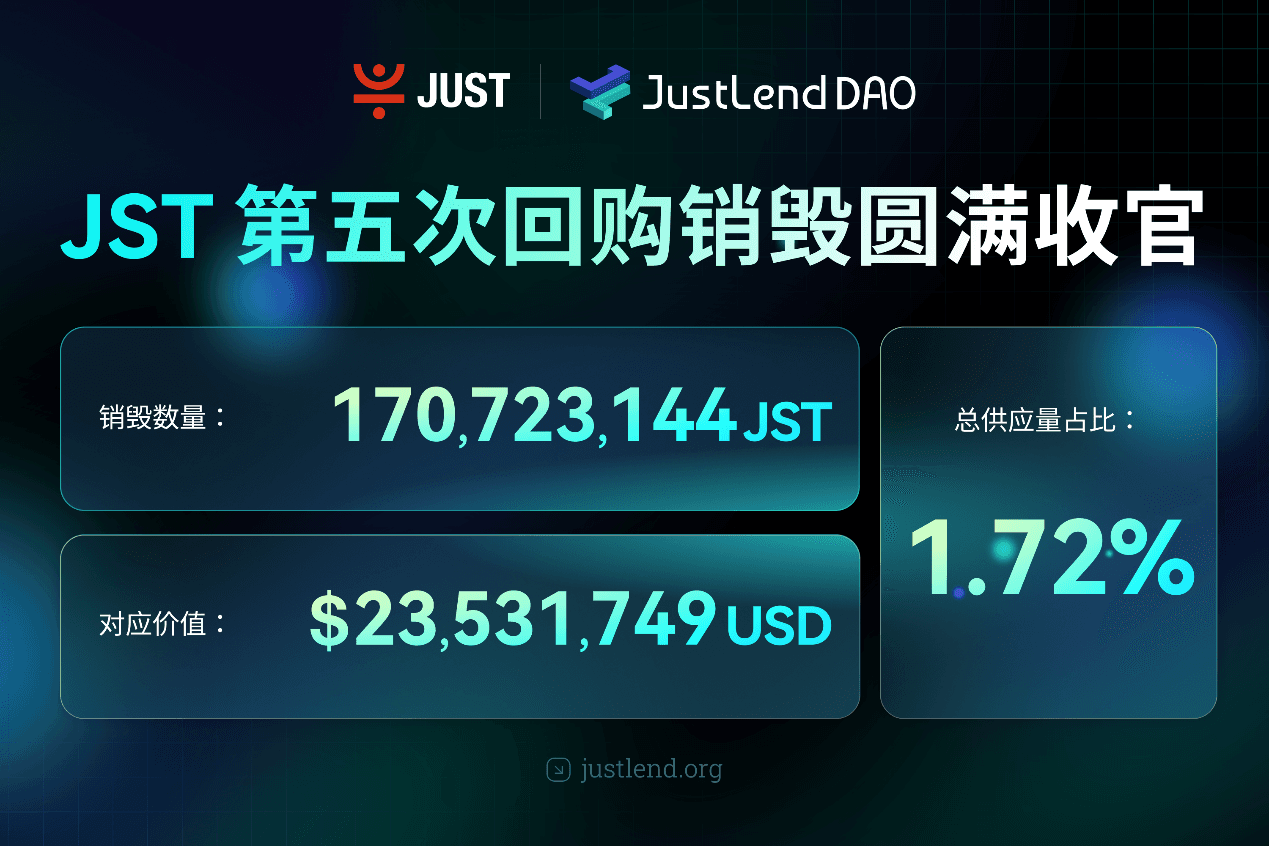
BitTorrent Brand Upgrade and Initial BTT Buyback & Burn Launch Simultaneously, Dual Engines Usher in New Era of Web3 Infrastructure
Oct 17, 20:00
Asia Market Daily: Japan's BOJ signals more rate hikes while Korea targets offshore perpetual platforms (2026/10/17)
Oct 17, 17:01Why did Papertrade backfire on you?
Oct 17, 17:01
The 'Strict Father' of Northern Myanmar: This Company Deploys 200,000 "AI Best Actors" to Strike Back Against Scammers
Oct 17, 15:34