Goldman Sachs Cries AMD Target Price of $640: Microsoft, Anthropic Begin Deploying Helios, AMD's AI Compute Narrative Enters Execution Phase

TL;DR
· Goldman Sachs reiterates a Buy rating on AMD with a 12-month price target of $640, implying an 18.6% upside from the current stock price.
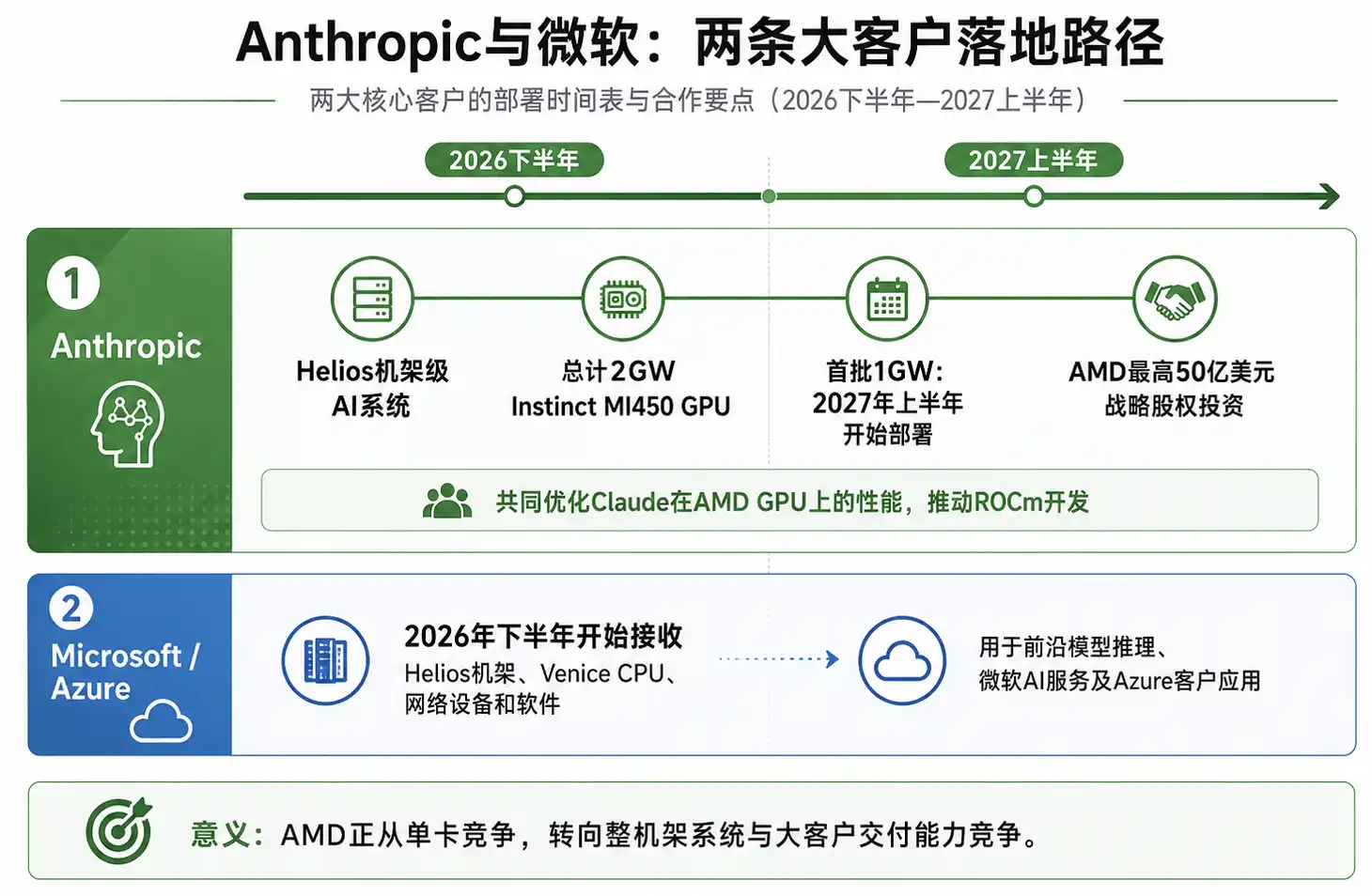
· The collaboration between Anthropic and Microsoft is a key driver, with Helios rack deployment expected mainly from the second half of 2026 to 2027.
· A $2 trillion market assumption relies on agent-based AI throughput, with risks still centered around ROCm ecosystem and customer delivery.
Following the event in San Francisco on July 23, AMD received a reiterated Buy rating from Goldman Sachs, setting a 12-month price target of $640. The core rationale behind this is the company's partnerships with Anthropic and Microsoft, along with the forecast of a $2 trillion total addressable market in 2030, reinforcing its growth narrative in AI infrastructure.
This was not merely a GPU parameter release. AMD is attempting to shift the AI competition from a single chip to a delivery model encompassing "whole-rack system + CPU + network + DPU + software tools + large customer deployment." For investors, the key question has transitioned from "Does AMD have a stronger GPU?" to "Can it secure a sufficiently large AI cluster order and deliver on time?"
The target price provided in the report is $640, based on a 32x P/E multiple and an estimated normalized EPS of $20. Based on the current stock price of approximately $539.69, the potential upside is around 18.6%, with the company having a market cap of approximately $89.05 billion.
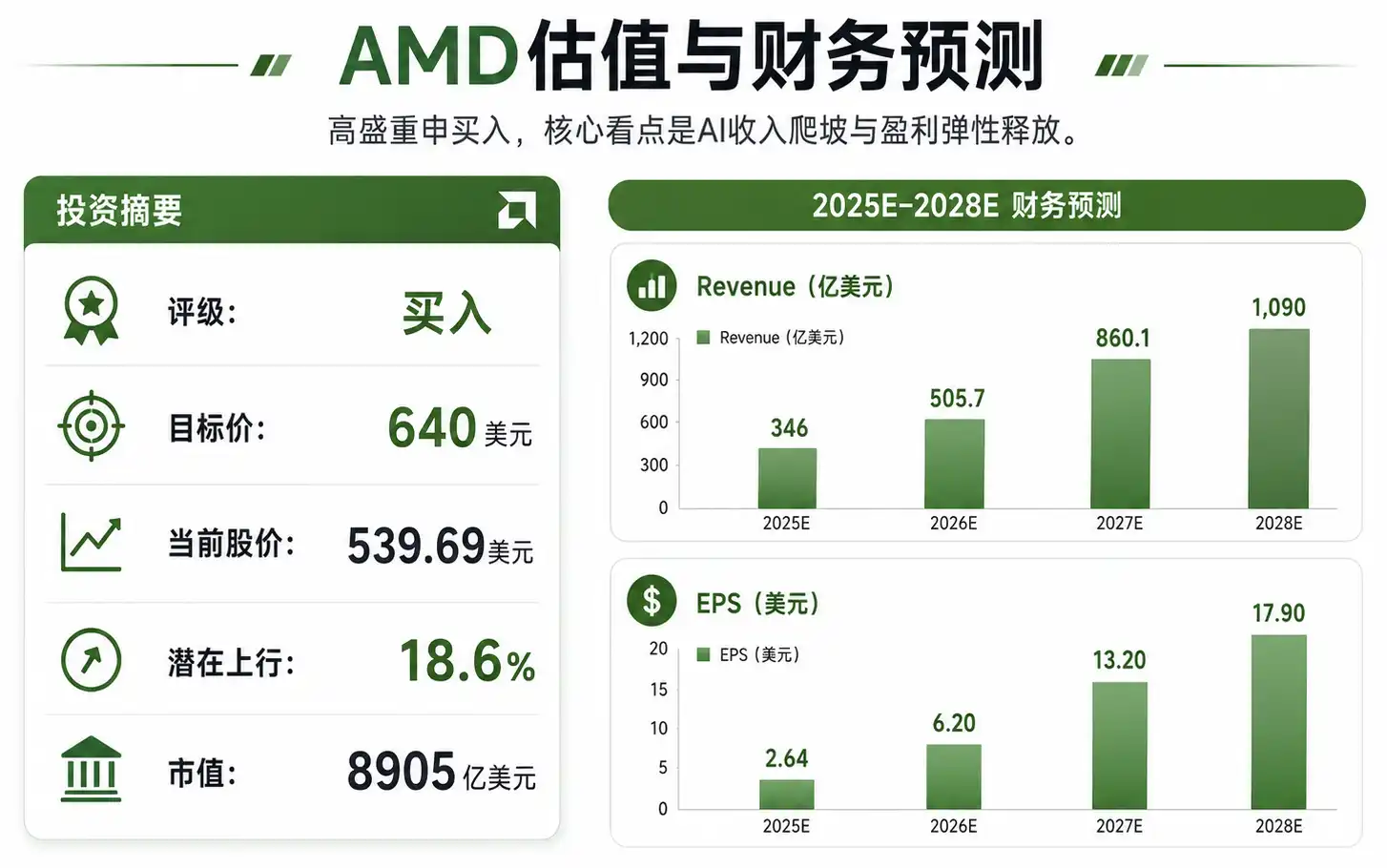
Revenue is projected to increase from around $34.6 billion in 2025 to $109 billion in 2028, with EPS rising from $2.64 to $17.90, and a target price of $640.
The most direct order signal comes from Anthropic.
AMD has entered into a strategic partnership with Anthropic, where Anthropic will deploy a total of 2GW of Instinct M1450 GPUs in the Helios rack-level AI system. The initial 1GW deployment is expected to start in the first half of 2027. AMD also plans to provide Anthropic with up to $5 billion in strategic equity investment, and both parties will collaboratively optimize the Claude model's performance on AMD GPUs and accelerate ROCm software development.
The significance of this type of collaboration goes beyond chip sales. For AI chip suppliers, the deployment with top-tier model companies determines ecosystem credibility. If Anthropic continues to migrate or scale the Claude workload to the AMD platform, it will help AMD demonstrate that its GPU, server systems, and software stack can handle large-scale training and inference workloads.
Microsoft is providing another avenue for implementation. After expanding their Azure partnership, Microsoft plans to start receiving Helios racks, Venice CPUs, networking equipment, and software in the second half of 2026 for cutting-edge model inference, Microsoft's own AI services, and customer applications. Microsoft will also launch two new virtual machines based on the next-generation 2nm Venice CPU and expand the deployment of Pensando DPU in network services.
This means AMD aims to sell GPU, CPU, DPU, and networking equipment simultaneously in cloud provider scenarios, rather than just appearing as an accelerator card supplier. For Azure, if the AMD platform can provide sufficient performance and supply flexibility, it will help reduce pressure on a single supply chain.
The most striking figure in the report is AMD's upward revision of the total addressable market (TAM) to $20 trillion by 2030.
Within this, the data center AI accelerator TAM has been raised from $200 billion to $14 trillion, corresponding to a 40% compound annual growth rate; the server CPU TAM has been raised from $26 billion to $220 billion, corresponding to a 50% compound annual growth rate. AMD also anticipates that by 2030, the company will hold a 50% share of the data center CPU market.
At the heart of this assumption is Agentive AI. Compared to single-query AI, Agentive AI requires tool invocation, task planning, context reading, multi-step workflow execution, and handling more inference and orchestration requests. The computational demands extend not only to GPUs but also to CPUs, which must handle scheduling, data preprocessing, system services, and multi-agent workflow orchestration.
This is also the new narrative AMD wants to tell: AI infrastructure expansion not only drives accelerator demand but also boosts server CPU, networking, and system-level solution requirements. If the company can bundle EPYC CPUs, Instinct GPUs, Pensando DPUs, and networking equipment into the Helios rack, the revenue potential will be greater than that of single-chip sales.
However, this $2 trillion is not the realized market size but a prediction based on the widespread adoption of AI in the 2030s. It requires businesses and cloud providers to continue expanding AI inference deployments and also demands that AI applications truly move from pilots to high-throughput production workloads.
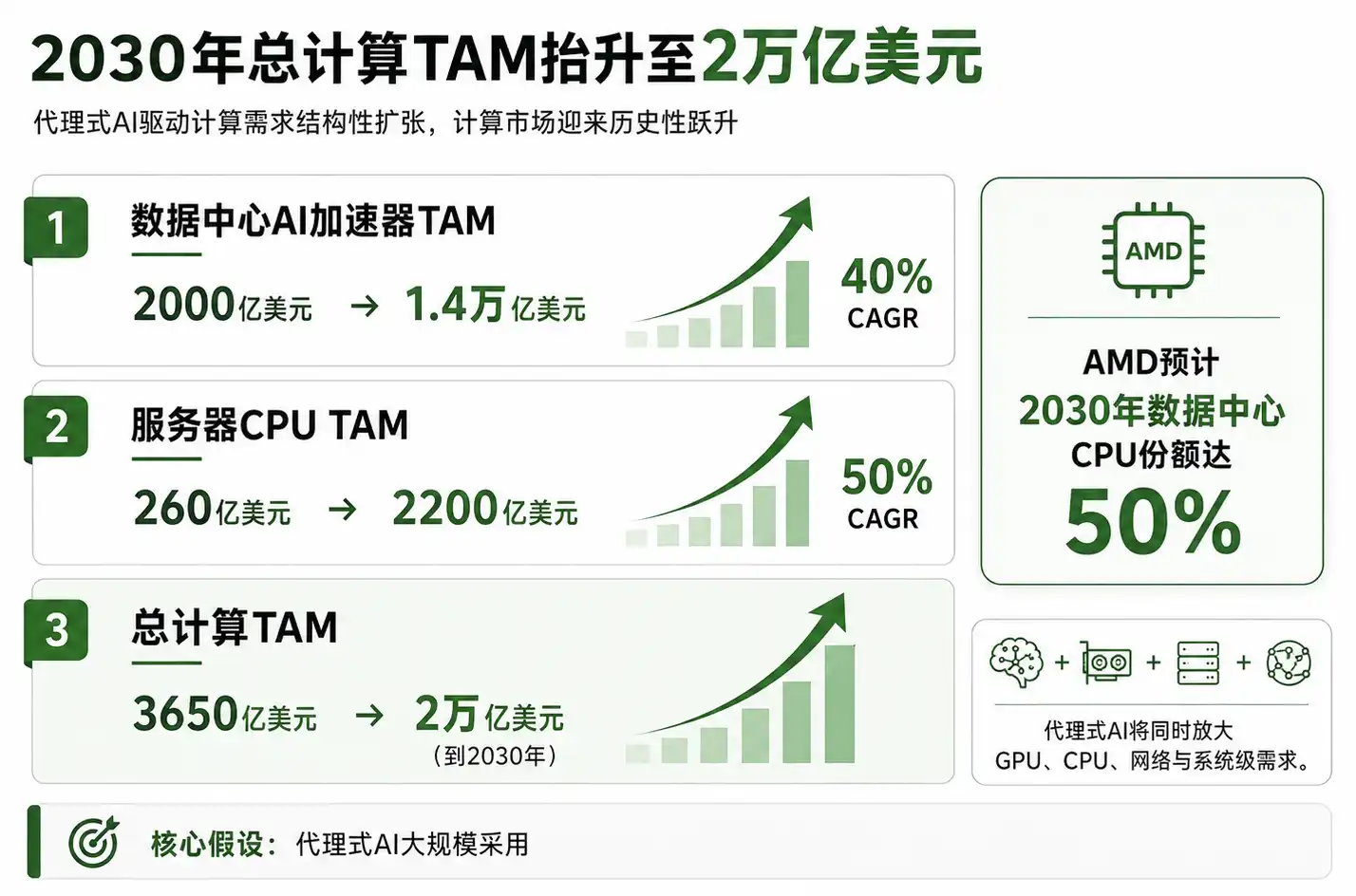
The accelerator TAM has been raised from $200 billion to $1.4 trillion, the CPU TAM from $26 billion to $220 billion, totaling the TAM for computation at $2 trillion.
At the product level, Helios is the core carrier of AMD's event this time.
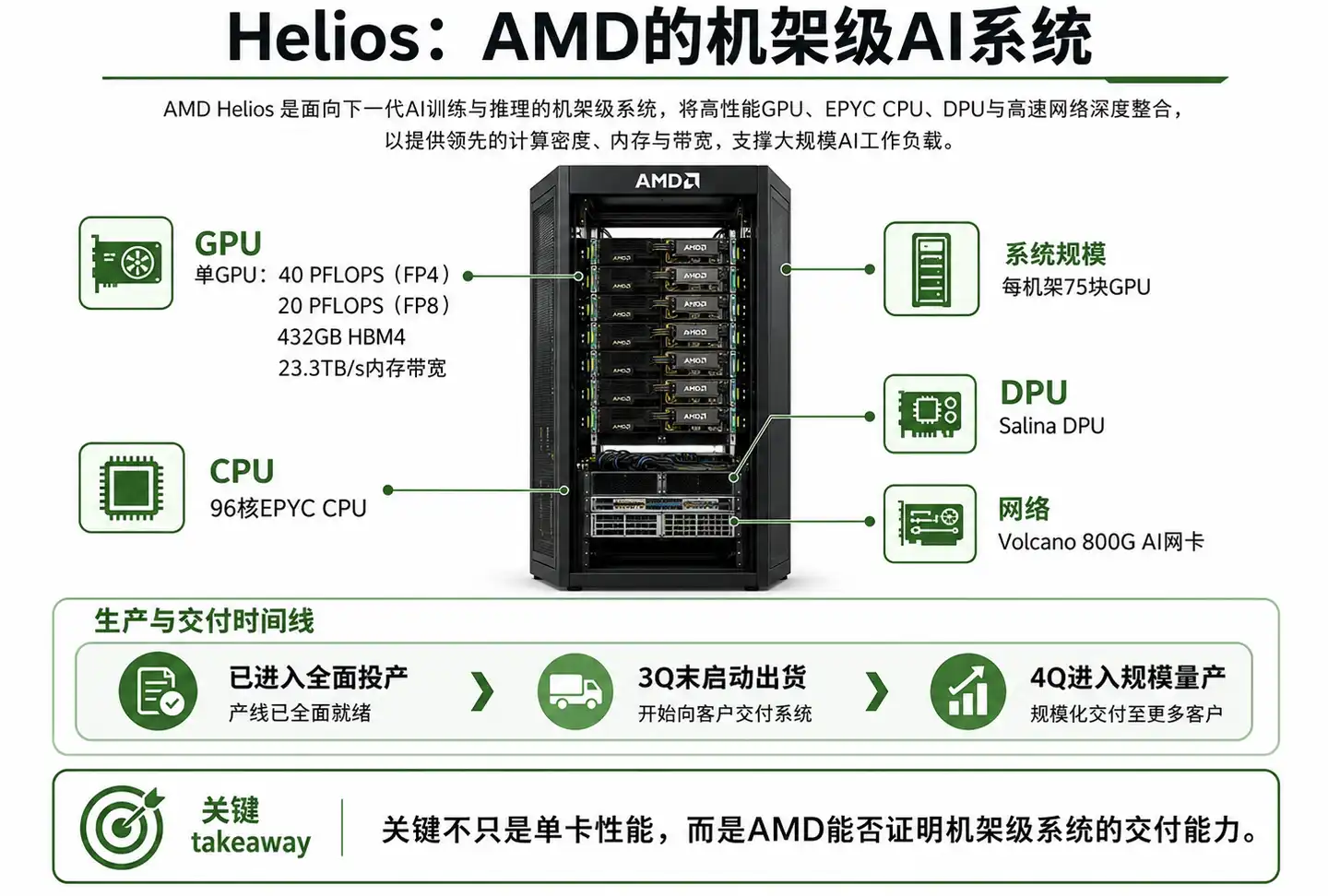
The next-generation Helios AI rack platform is based on the CDNA 5 architecture, with a single GPU achieving a peak performance of 40 PFLOPS (FP4) and 20 PFLOPS (FP8), equipped with 432GB of HBM4 memory and a 23.3TB/s memory bandwidth. Each rack integrates 75 GPUs connected via UALink over Ethernet, and is paired with a 96-core EPYC CPU, Salina DPU, and Volcano 800G AI NIC.
The focus of these parameters is not on single-point performance, but on AMD's move towards a full rack form factor. AI clusters are increasingly relying on system-level design: GPU interconnectivity, memory bandwidth, network throughput, CPU scheduling capabilities, and software stack all impact the final training and inference efficiency.
Helios has entered full production, with plans to start shipping by the end of the third quarter and ramp up to volume production in the fourth quarter. Microsoft will receive Helios from the second half of 2026, and Anthropic's initial 1GW deployment will begin in the first half of 2027, indicating that true large-scale customer validation is still to come.
AMD has also partnered with Cerebras to combine the Helios system with the Cerebras wafer-scale engine to create a high-performance AI inference solution, aiming to achieve lower latency, higher energy efficiency, and up to 5x improvement in watts per token. This solution is expected to be launched through the Cerebras Cloud in the second half of 2026.
On the software side, the ROCm.ai platform has been officially launched, integrating AI tools such as Cursor, Claude, Codex, and Gemini to provide developers with an AI-driven software development experience. The accompanying Hyperloom optimization layer has optimized over 14,000 models, delivering an average performance improvement of 3.3x compared to ROCm 7.
However, the ROCm.ai and Cerebras partnership is more suitable as a complement to the Helios ecosystem rather than the focus of this article. Ultimately, investors will look to see if customers can stably use the AMD platform in real-world workloads, rather than just relying on the length of the tool and partnership lists.
Goldman Sachs Financial Forecast shows that AMD's 2026 revenue is estimated at around $505.7 billion, with an EPS of $6.20; 2027 revenue is around $860.1 billion, with an EPS of $13.20; 2028 revenue is around $1.09 trillion, with an EPS of $17.90.
These forecasts imply that the market has high expectations for AMD's AI revenue growth, margin improvement, and operational leverage release in the next two to three years. The $640 target price not only accounts for current product releases but also includes Helios shipments, Microsoft Azure deployment, Anthropic's initial 1GW deployment, and ROCm ecosystem enhancements, all progressing simultaneously.
The real rift lies here.
First, the adoption speed of Agentive AI may be slower than expected. If enterprise AI workflows do not expand rapidly, the assumption of a $20 trillion total computing market in 2030 may be revised downward.
Second, there is still a time lag in large customer GPU deployments. Microsoft's Helios reception is expected to start in the second half of 2026, while the initial 1GW deployment of Anthropic is projected to begin in the first half of 2027. Short-term financial reports cannot fully validate the revenue contribution of these partnerships.
Third, competitive pressure will not disappear. NVIDIA still holds a dominant position in AI accelerators and software ecosystems. Whether ROCm can narrow the developer experience gap will affect AMD's substitutability among large-scale customers.
Fourth, the x86 architecture also faces market share risks in the enterprise AI landscape. If more customers adopt custom chips, Arm servers, or other heterogeneous solutions, AMD's expectations for CPU TAM and a 50% data center CPU share will be challenged.
This makes AMD's story more like an execution test: the reports have pushed the market space, customer orders, and target price to higher levels. Whether the stock price can continue to digest these numbers depends on whether Helios can ship on schedule, whether Microsoft and Anthropic can expand deployments as planned, and whether AI demand can truly support the $20 trillion market in 2030.
Recommended
Desk: Brent Crude Tops $110, Musk's Net Worth Drops 528.6 Billion in Four Days After Tesla Roadster Launch
Oct 17, 21:49
JST Fifth Buyback and Burn Successfully Concludes: Over 170 Million Tokens Worth Approximately $23.53 Million Burned, Buyback Mechanism Set for Comprehensive Upgrade
Oct 17, 20:10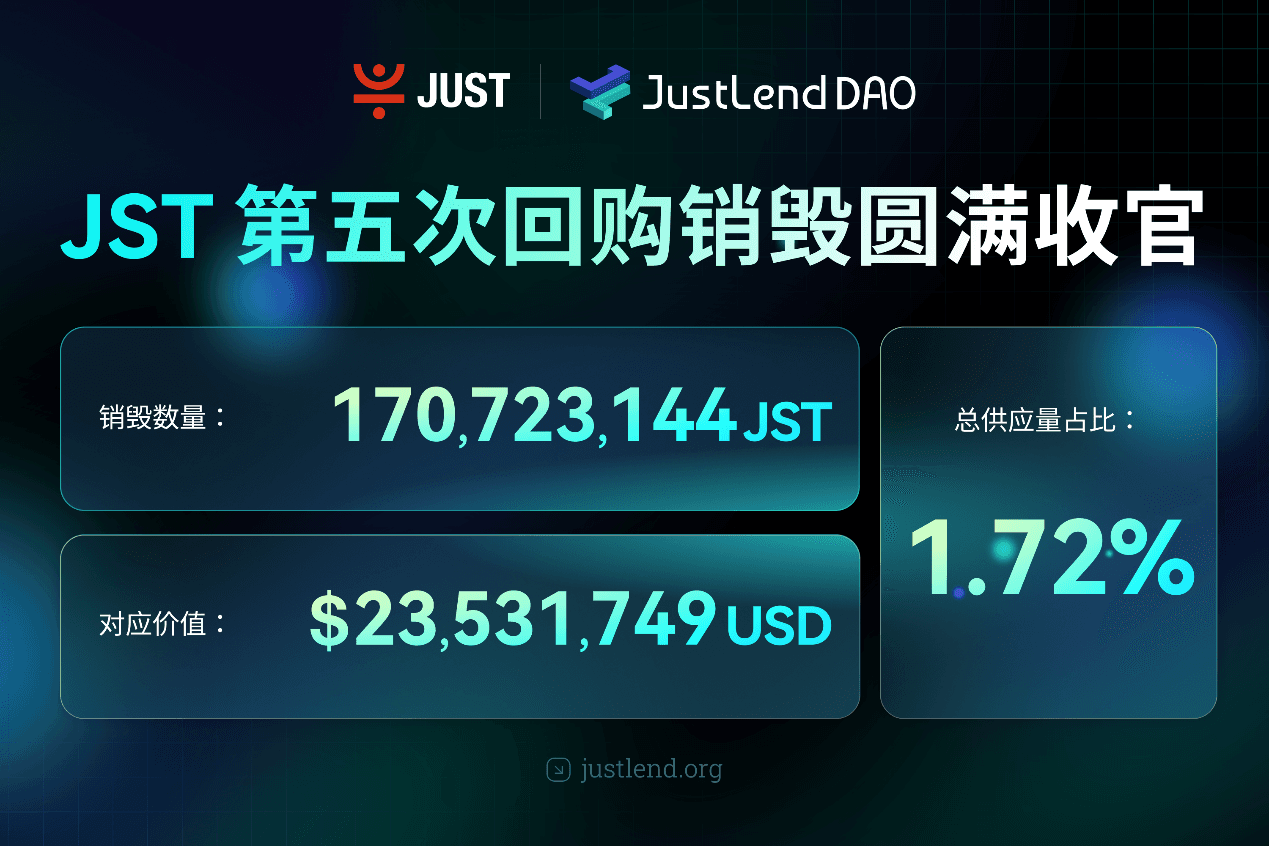
BitTorrent Brand Upgrade and Initial BTT Buyback & Burn Launch Simultaneously, Dual Engines Usher in New Era of Web3 Infrastructure
Oct 17, 20:00
Asia Market Daily: Japan's BOJ signals more rate hikes while Korea targets offshore perpetual platforms (2026/10/17)
Oct 17, 17:01Why did Papertrade backfire on you?
Oct 17, 17:01
The 'Strict Father' of Northern Myanmar: This Company Deploys 200,000 "AI Best Actors" to Strike Back Against Scammers
Oct 17, 15:34