Interview with Matching Hearts Founder Xinxun Zeng: From Kimi's Departure to His AI Matchmaking Journey

During WAIC, Zeng Xinxun's product did not appear at any booth.
The only time he publicly introduced "Liang Pei" at the venue was during a flash debate held by the WeChat Mini Program team. The debate topic was: Should AI emotional products allow users to "use and leave" or pursue "long-term stickiness"?
Zeng Xinxun chose the former.
In an industry where every product tries their best to retain users, he believes the true success of a dating app is for users to quickly find the right person and then leave. AI should not be a substitute for a long-term relationship; it should step back after making a match.

Zeng Xinxun Invited to Attend WAIC 2026 by WeChat
A year ago, Zeng Xinxun left Kimi and started working on this AI matchmaking product called "Liang Pei." Before this, he had worked in search recommendation at WeChat and TikTok, with his last position being the AI search technology lead at Kimi.
Search solves the match between information and needs. Now, he wants to replace documents with people.
Upon entering Liang Pei, users first need to have a roughly 20-minute voice conversation with AI to help the model understand their personality, experiences, and partner preferences. The AI then compares the profiles of two individuals, analyzing the probability of their compatibility. Once communication begins, it can also act as an "avatar" and "advisor," answering awkward questions, reviewing chat records, and helping individuals assess the progress of a relationship.
However, the truly unique aspect of this product is not solely the AI.
Liang Pei requires users to fill out profiles carefully, only allowing one match at a time, not restricting the exchange of WeChat contacts between both parties, and introducing a membership plan offering a "refund if not married in three years" policy. Nearly every design aspect actively departs from the registration conversion, activity, and retention metrics valued by traditional internet products.
Why would someone who worked in search want to use AI to manage intimate relationships? What should AI do for people, and where must it stop? How does a product that aims for users to leave quickly plan to make money in the end?
We had a chat with Zeng Xinxun.
A Product Grown from a Problem
Zeng Xinxun was no stranger to entrepreneurship.
Over a decade ago, he was a student at Southern University of Science and Technology. At the time, food delivery platforms had just emerged, and he and his classmates started a network restaurant called "Nanfeng DianDian," delivering cooked food to university dormitories.
This endeavor also stemmed from his own life.
He was a heavy user of food delivery services. In an era where one still needed to browse menus, make phone calls, and repeat address details, he felt that ordering a meal should not be so cumbersome. So, he deconstructed the offline restaurant process, attempting to use the internet to handle ordering, preparation, and delivery.
Over a decade later, he entered a well-established matchmaking market with numerous products that had been around for over twenty years, and he still drew inspiration from his own life.
Encounter a problem first, then create a product. This was the most familiar entrepreneurial approach for Zeng Xinxun.

Zeng Xinxun's first entrepreneurial venture targeted the university market, focusing on delivering to dormitory beds
On rainy days, orders would skyrocket
Dynamic Observation: When you started your first business in campus food delivery, there wasn't a dominant platform in the market. Now, in the matchmaking industry, you are facing a market that has existed for over twenty years with a wide array of products. What similarities do you see between these two entrepreneurial experiences?
Zeng Xinxun: All of my product ideas actually come from my own life.
I ventured into food delivery because I was a super heavy user of such services. I would order over a hundred times a year. At that time, ordering food required lengthy phone conversations, and I felt that the process was too complicated. There should be a more rational and digitalized solution, so I decided to create one.
Initially, we operated at several universities in Guangdong and accumulated many users. At the beginning, I did not think about platforms, competition, or future market structure. My competitors were not other food delivery platforms but rather the old experience of ordering food via phone calls. Later on, with the entry of major platforms like Meituan, with their funding and subsidies, burning through billions or tens of billions, we were eventually pushed out. But that's a story for another day.
Liang Pei is similar; its inspiration came from my own dating experiences.
The difference is that matchmaking is already a track with a history of over twenty years, with platforms like Zhenai.com, Jiayuan.com, and subsequently newer ones like Soul, Momo, TanTan, and many other dating products. I was once a heavy user of these products, but I felt that they did not truly solve my problem. With the advent of AI, I believed this experience could be entirely transformed.
Interview Beating: What was your dating experience like?
Zeng Xinxun: When I started my first business, I took a break from school for three years, so when I graduated from college, I was already 25 years old. Looking back, from 18 to 25, I was either busy with entrepreneurship or working and preparing to graduate, without ever seriously being in a relationship. I felt it was a pity. If the age from 20 to 30 is a precious time in life, half of it had already passed, and I was still single. So after graduation, I really made "finding a partner" my KPI.
At first, I looked around me to see if there were suitable candidates among my colleagues and classmates. After a thorough search, I found that most of the people I admired were already in relationships. So I started to attend various activities. I participated in company-organized hiking, mountain climbing, badminton, ultimate frisbee, werewolf games, murder mystery games – anything that gave me the opportunity to meet new people. I also attended alumni networking events organized by the school and even posted on the company's internal friendship forum.
After trying offline methods without success, I turned to dating apps.
I spent over a year on these apps and still didn't meet the right person. Eventually, feeling a bit disheartened, I uninstalled the apps. A few months later, New Year's Day came. I realized another year had passed, and I hadn't achieved this goal. Feeling a bit unwilling to give up, I reinstalled the apps.
After going back online, I noticed that in the past few months, I had only received one message, which was from my current wife. We chatted online for a day, met the next day, and got together on the first day we met. It's been six years now, and we have a one-year-old daughter.

Zeng Xinxun with his wife and daughter
This process made me realize that finding a truly suitable partner today is really not an easy task.
Whether looking within your circle, expanding it by participating in activities, or joining an online platform that seems to offer many choices, there are many difficulties. These difficulties were hard to address in the past because relationships between people are too non-standard. I think large-scale models' fuzzy understanding ability has, for the first time, the opportunity to address some of these issues.
A Luxurious Two Thousand Words
When using dating apps, Zeng Xinxun wrote a personal introduction of over two thousand words for himself.
Inside are his personality, family, education, and entrepreneurial experience, as well as future plans, lifestyle, diet, and daily routine. He hopes to present himself as comprehensively as possible. If there are any aspects that the other party cannot accept, it is best to eliminate him as soon as possible.
After writing it, the number of 'likes' he received actually decreased. However, it was these two thousand words that ultimately led him to meet the right person.
His wife's classmate was the first to see his profile and forwarded it to the group chat. She registered the software because of this profile and sent him a message. However, at that time, Zeng Xinxun had already uninstalled the app and only saw it a few months later.
Both of them wrote very detailed descriptions of themselves. Zeng Xinxun wrote over two thousand words, and his wife also wrote over a thousand words.
They didn't meet each other because of too many choices, but precisely because both were willing to open up about themselves earnestly.
Beating Dynamics: What do you think is the core issue with past dating or marriage apps?
Zeng Xinxun: The first step is that users provide too little information. On many dating apps in the past, besides a few photos and some tags, it was difficult to truly understand a person. The lack of information is partly due to willingness; many people don't have high expectations for dating apps and are reluctant to invest. On the other hand, it is also an ability issue. Not everyone can logically and systematically introduce themselves, and many may not truly understand themselves.
Then, you can only increase understanding through chatting and meeting gradually. This process requires three things.
First is time. You may need to spend an entire weekend afternoon meeting someone. Second is money; there are costs for meals and transportation. Third, and most importantly, is energy. You need to warmly introduce yourself to a stranger, patiently listen to the other person, and show interest in their life.
However, the two of you probably won't be a good match in the end, and all the previous investment becomes a sunk cost.
My patience, time, and emotions should be reserved for people who are more worth investing in. There is no need for everyone to go through trial and error on their own with each person. At the very least, AI can help first by providing more context and then screening out obviously unsuitable people before the meeting.
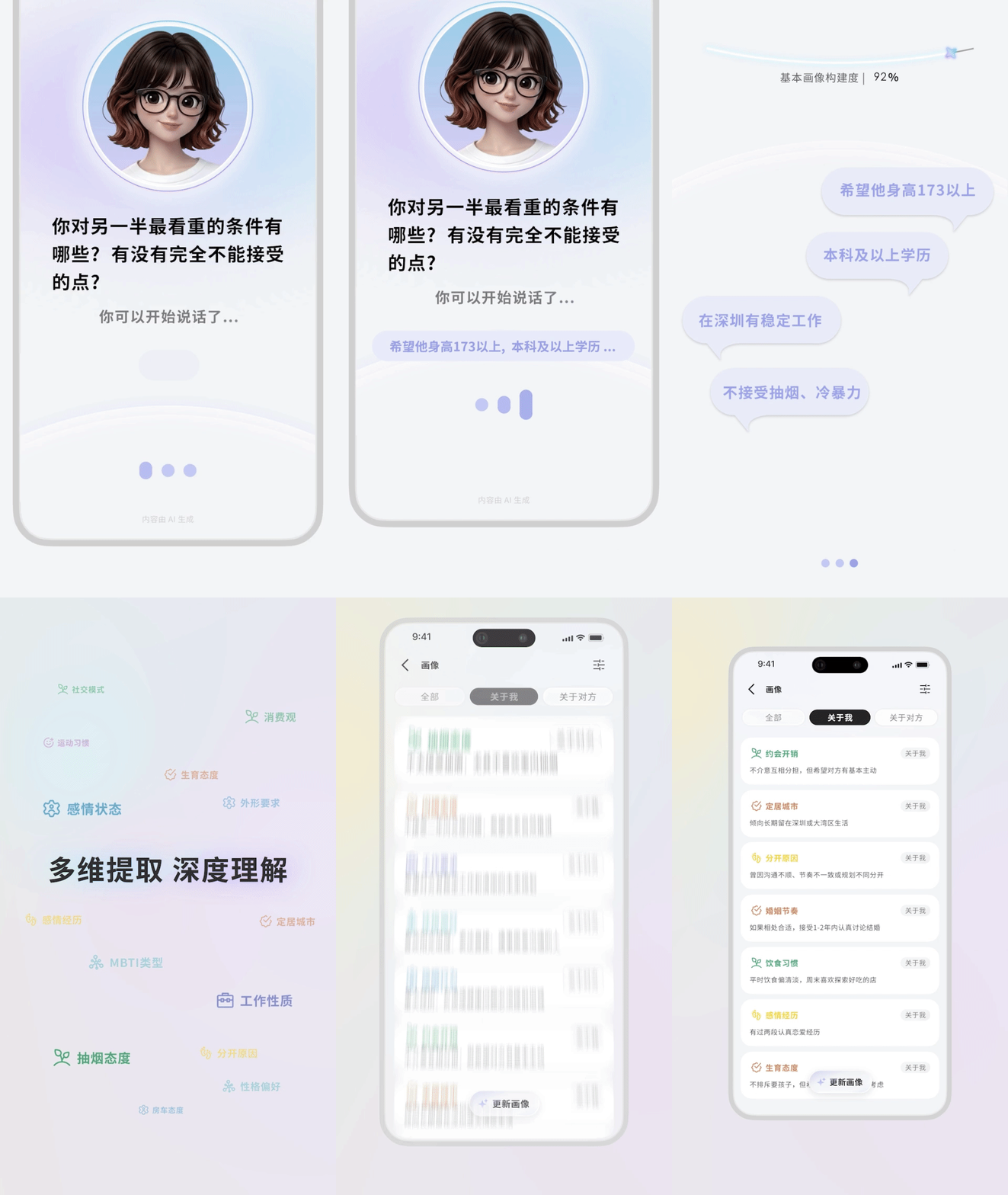
AI Voice Interaction Page for Ideal Matches
Insight into Beating: However, encouraging users to provide more information is not a natural outcome with AI alone. How specifically can we enhance the richness of the information provided?
Zeng Xinxun: We have turned the information filling process into a segment of AI-guided voice dialogue. Not everyone is capable of writing a short essay, but if someone talks to you for 20 minutes, as long as you are willing to cooperate, most people can explain their situation quite well.
What kind of person you are, whether you prefer stability or adventure, whether you want to continue your career or lead a relatively quiet life, your views on marriage, children, and the city – all of these can gradually unfold in a conversation.
We have internally compared some competitors, such as Love on the Vine and Holding Hands. The average user profile in these platforms is only about a hundred words. Currently, the average user profile in Insight into Love is over four hundred words.
When a person is no longer just a few photos and a few tags but becomes a more three-dimensional presence, both parties have a basis for judging suitability.
Insight into Beating: When people introduce themselves, they often subconsciously package themselves. How can AI distinguish between a person's self-imagination and their real state?
Zeng Xinxun: We cannot completely distinguish, and I don’t think that is our obligation.
In normal social interactions, everyone tends to slightly package themselves. After you see someone's self-description, you naturally take it with a grain of salt. Someone says they are 1.7 meters tall, they might be 1.68 meters; someone says they are 1.8 meters tall, they might be 1.75 meters. But you need to have an original price before deciding on any discount.
What we do is have everyone provide a more comprehensive, more three-dimensional "original price." As for the actual situation, it still needs to be gradually confirmed in the subsequent interactions. This is still better than having no information at all and starting from scratch.
Insight into Beating: With more information available, why do traditional products still struggle to make good matches?
Zeng Xinxun: Even with a lot of information, past products may not necessarily understand.
Back then, I wrote two thousand words, but the platform did not recommend me to someone who might truly appreciate such content. Is my wife the only person in the whole of Shenzhen who might like me? Definitely not. The reason is that for traditional recommendation algorithms, two thousand words may just be a piece of text that is two thousand words long. It can extract keywords, add tags, and then match these tags, but it is challenging to grasp the underlying meaning.
For example, if I have written about my entrepreneurial experience, it may indicate that I am more inclined towards risk-taking, but it could also suggest a lack of preference for stability in life. Some people may see this as a red flag, while others may actually like it.
I once met a girl introduced by a teacher. We chatted on WeChat for a week, hit it off well, and there was even a bit of a flirtatious tone. However, after our first meeting where I talked about my entrepreneurial experience, she told me to forget about it. She was looking for a more stable life and didn't want to live in constant worry, switching between the fear of unemployment and the fear of a failed startup.
But I have also encountered people with completely different views. She didn't enjoy working in a corporate setting all the time and instead wished for a partner willing to take risks.
The same trait can be a flaw to some and an asset to others. If technology fails to understand this difference, it can only lead to ineffective communication.
In the past, I worked at Kimi on AI search, which essentially involved understanding user needs first, then understanding documents, and determining if they could match. Now, it's just turning that document into another person.
AI Doesn't Meddle in Love
AI delving into romantic relationships is a delicate matter.
If a product aims for chat duration, it is better suited to be a companion; if it targets matchmaking efficiency, it appears more like a mediator; if its goal is to provide more choices, it will keep presenting new people to the user; if establishing a real relationship is seen as success, it must also know when to bow out.
The same technology, due to different service metrics, ultimately serves entirely different people.
The boundary Zeng Xinxun drew for AI is that it can understand, filter, rephrase, remind, but it can't make someone fall in love with another.
AI handles the parts that don't require human intervention, leaving time, effort, and emotions for the parts that truly need human involvement.
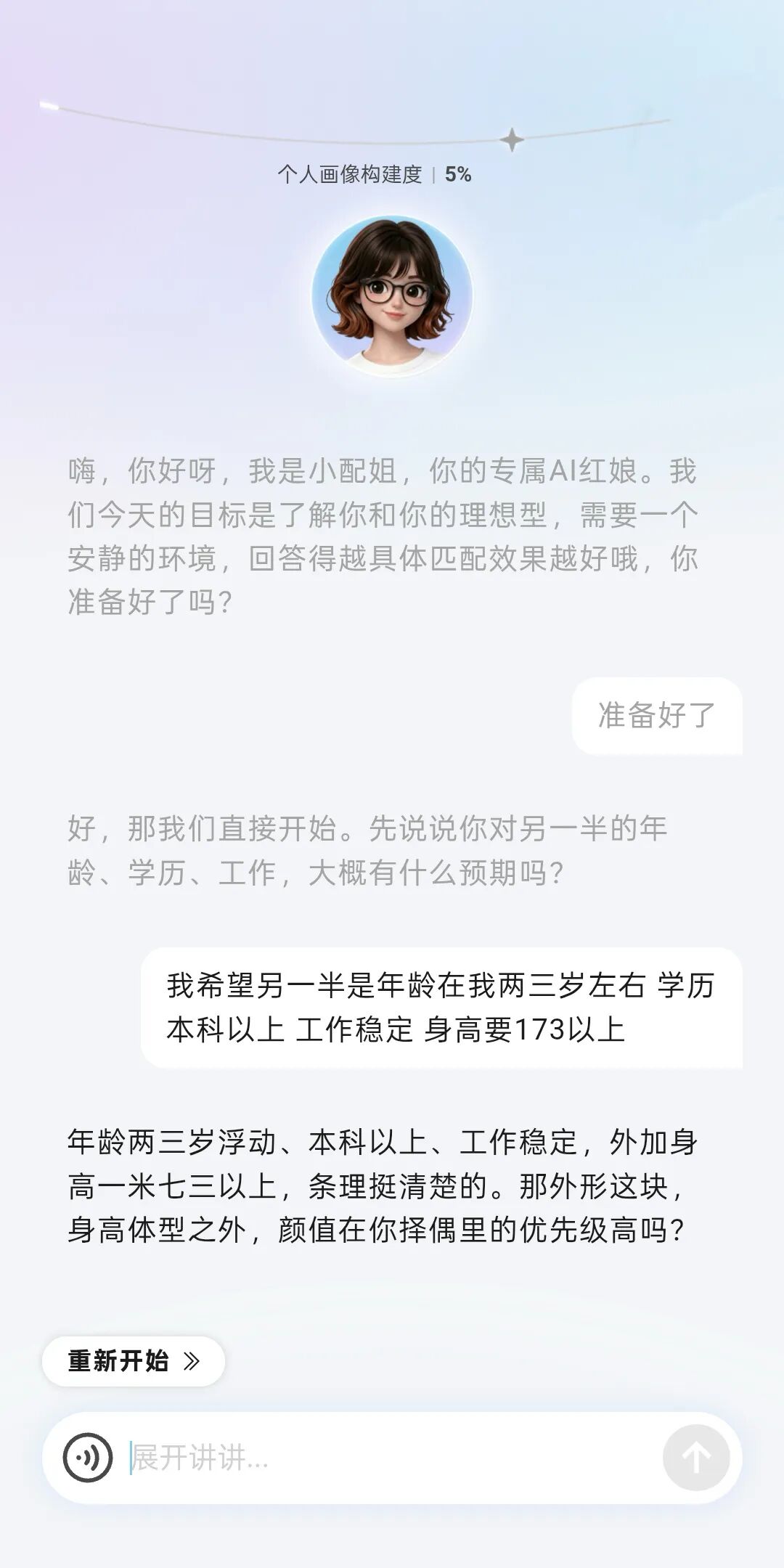
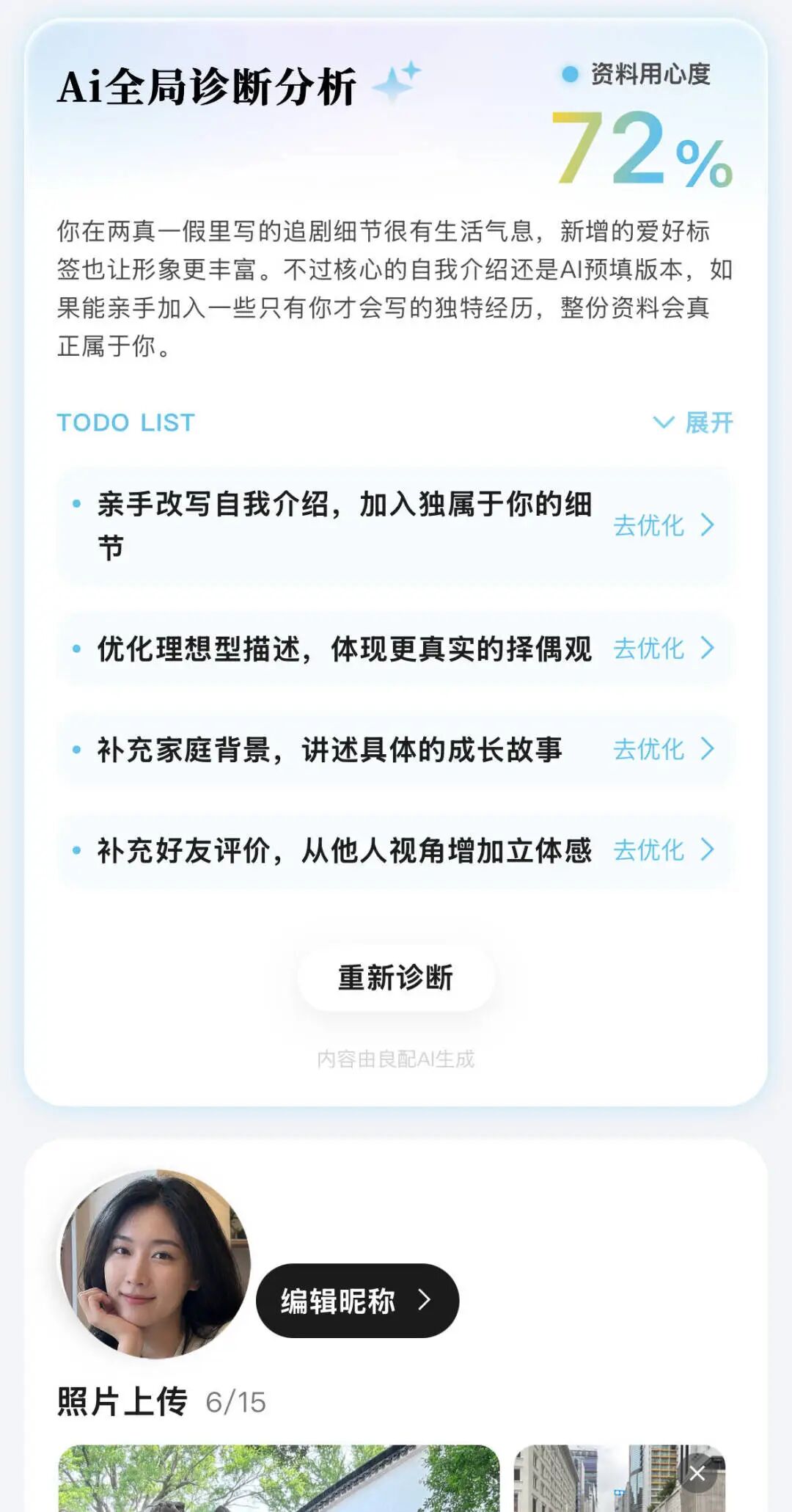
Dynamic Outlook Beating: Where do you think AI should specifically intervene in a relationship, and where should it draw the line?
Zeng Xinxun: AI is meant to assist humans, not make decisions for them. It can't pick a person for you and say, "You two are a perfect match, be together." That would be absurd.
Chemistry between people is necessary. You need to meet, spend time together, and invest time to build a connection. These can only be done by humans.
However, not all tasks need to be done by humans throughout the entire process. In the first step, AI can help you explain the information. In the second step, it can understand this information, conduct searches, and make recommendations. In the third step, during the communication between two people, it can also take on some mediating work.
For example, in our platform, we have set up an AI avatar. Each user has their own avatar, which others can ask questions.
Some questions are more repetitive, such as future plans for which city to live in, whether there are marriage plans; some questions are more awkward, such as past relationship experiences, family situations, house-buying plans, whether parents have retirement funds, and views on dowries.
If the answers are already in the user's information, the AI avatar can answer directly. If not, it will anonymously rephrase the question to the individual to solicit an answer, and will adjust the wording, removing some expressions that may make people uncomfortable.
This way, it can both supplement a person's profile and avoid everyone having to act like customer service, repeatedly answering the same questions.
Dynamic Insight Beating: Besides answering questions on behalf of others, how does the AI Consultant intervene in the conversation between two people?
Zeng Xinxun: The AI Consultant reads the information and chat records of both parties, providing advice to the users.
We once saw a pair of users. A guy and a girl both separately asked the AI the same question: Based on the chat records, does the other person have feelings for me? They actually both wanted to advance this relationship, but were unsure.
In the past, you might ask friends or best friends, but you need to re-explain a long context, and your friends don’t understand the other person. The AI Consultant has a relatively complete perspective in this scenario.
We later prepared to add a feature. If both parties ask similar questions, a hidden easter egg will appear, called "Coincidence" or "Intuition," telling them: You are both actually curious about each other.
What everyone is truly afraid of is being the only one invested, afraid of becoming a clown. Few people would mind a mutual feeling that has already been confirmed.
There was another girl who was chatting very well with a guy, but on the third day, the guy suddenly stopped replying. She messaged him in the morning, afternoon, and evening, then asked the Consultant: Why is he not replying to me?
Initially, the Consultant told her that the other party is pursuing a Ph.D., which may be busy, so she can wait a bit longer. The next day she came back asking how much longer to wait. The AI told her to wait up to three days. If there is still no response after three days, it is not just busyness; the other party may also lack the desire to continue this relationship.
On the third day, she came to ask whether she should end the match, and the AI suggested she end it, which she eventually did.
Later when we followed up with a phone call, she said she did indeed like the boy's profile very much, so she was unwilling to give up easily. However, being in the situation made it difficult for her to make a decision for herself. The AI provided her with an exit strategy that allowed her to review and leave.
Dynamic Observation Beating: Aren't you worried that users will leave the Good Match directly after exchanging contact information?
Zeng Xinxun: If they leave, they leave. We aim to address users' needs to find a partner. If you exchange contact information, it means the relationship has progressed to a stage where you need to switch to another platform for communication, and our mission has already been partly accomplished. Why should I keep you here?
Initially, some users were very cautious when exchanging contact information. They would send a WeChat QR code and then retract it, or divide the phone number into three parts before sending, perhaps because they were used to other platforms restricting off-platform communication.
Later on, we added prompts. When the system detected users sending a WeChat ID or phone number, it would directly inform them that the platform does not restrict exchanging contact information.
It is a good thing for users to enter into real relationships.
First Eliminate Those Who Are Not Serious
Most internet products try to lower the barrier to registration as much as possible. Profiles can be filled in later, identities can be authenticated later; first, let users in, and then figure out how to increase engagement and retention.
Good Match chose the opposite direction.
Users need to complete about a 20-minute AI conversation, and their profile needs to meet certain standards before they can formally enter the product. It also has real-name verification, unmarried verification, and real-person avatar verification.
These steps will reduce the registration conversion rate and also cause some people who are just casually browsing to exit early.
This is exactly the design intention. Zeng Xinxun does not intend to persuade everyone to stay. He first determines which type of people are worth serving, and then keeps those who do not belong to this stage out.
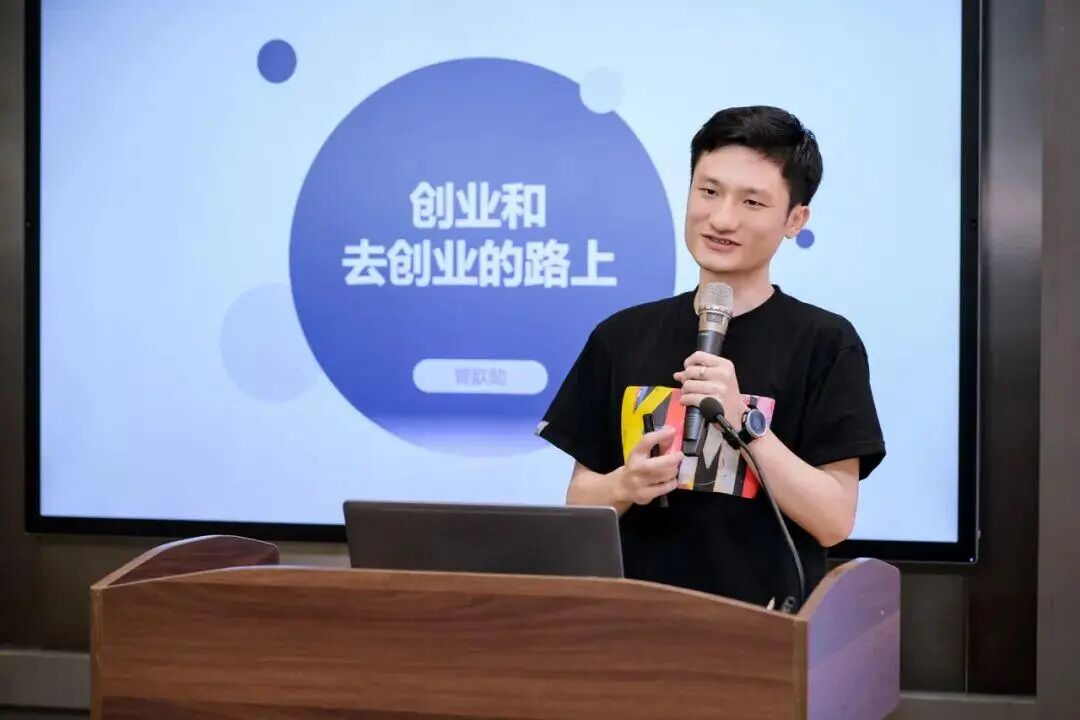
Zeng Xinxun attending an alumni event
Dynamic Observation Beating: What kind of users are you really targeting?
Zeng Xinxun: Currently, it is mainly urban white-collar workers. Because users need to express themselves quite clearly and also be able to articulate their demands. This is related to age, education, and life experiences.
But there is only one essential requirement: Ta does want to seriously find a partner now.
People are in different stages and have different attitudes towards relationships. Sometimes it's just casual browsing, sometimes it's a rush to get married, and sometimes it's preparing to actively seek a partner. Good matches are only suitable for the last category of people.
The initial 20 minutes of conversation and the carefulness of the profiles are designed to naturally filter out users who currently do not belong to this category of people.
This way, those who remain in the product at least know that both parties have the same expectations. Everyone is willing to seriously engage in a relationship with the goal of a long-term commitment or even marriage.
Dynamic Beating: Why does Harmony Matchmaking set up one-on-one matches? Before confirming if someone is suitable, users usually want to compare several options.
Zeng Xinxun: On other platforms, users can usually chat with many people simultaneously. They express interest in many people, and when those people respond, they end up with many chat partners. A few chats here and there may lead to nothing in the end.
In the Harmony Matchmaking mechanism, you can express interest in different people, but as soon as one person responds, both sides enter a one-on-one matching state. At this point, the two individuals will no longer see other recommendations or receive messages from others. It's only when one party decides to unmatch that they go back to the recommendation list.
AI can handle the initial filtering, but once a potentially suitable match is found, you need to invest time and attention to potentially develop a relationship.
In the previous product mechanisms, no one believed they were being taken seriously. You didn't know if you were the tenth person on the other person's list. We hope that AI and humans can form a division of labor. AI does the initial screening and understanding work, while humans handle the emotional investment part.
The prerequisite for one-on-one matching is that you shouldn't treat others as backup options.
Dynamic Beating: Does this mechanism end up putting pressure on people? Unmatching feels a lot like directly rejecting another person.
Zeng Xinxun: This is indeed a common concern raised by users. Many people rarely say no directly, so there is a psychological burden when unmatching. However, if the fear of rejection leads to keeping dozens of uncertain chat partners, the ultimate result may be that no one is taken seriously.
Initially, my investor also opposed the one-on-one mode. She said that as an investor, she needs to see many projects, make comparisons repeatedly, before investing in one. So why, when looking for a partner, after seeing one person, can't you look at others?
My response is that when an investor is evaluating a project, they are in a relatively strong position to make a decision. However, in an intimate relationship, both parties are equal. While you are choosing others, others are also choosing you.
If everyone wants to keep their options open at the same time, they may end up in a common dilemma. Everyone has many people on their list, but no one is willing to commit first.
We discussed this issue at length and conducted some user interviews. In the end, she agreed that one-on-one matching may be a well-suited mechanism that is highly differentiated and also has the potential to improve matching outcomes.
Beating AI: Will this technology be expanded in the future to find friends, companions, or for workplace socializing?
Xinxun Zeng: At the very least, it will not be part of the Well-Matched product. A product needs to solve one problem first before it can continuously delve deeper into that problem.
There are now some AI social products that want to help users find friends, companions, romantic partners, and jobs all at once. They want to do everything, but in the end, each type of relationship can only be superficially addressed. This is because if any one feature is developed deeply, it will make users pursuing other purposes feel redundant.
Well-Matched will first thoroughly address the issue of marriage and relationships. This technology may be used in other products in the future, but it will not try to squeeze all relationships into a single product.
No Belief in Retention
“Encouraging users to leave as soon as possible” is not a novel concept in the realm of dating products.
The Hinge dating app has long defined itself as an app “designed to be deleted” and has established Hinge Labs, involving behavioral researchers to study what kind of profiles, matches, and interactions are more likely to lead users to real dates.
Well-Matched has taken this a step further.
It not only does not consider retention as a success metric but also attempts to link revenue with the ultimate outcome. After users purchase the “Marriage Guarantee Membership Plan,” if they do not get married within three years, they can request a full refund.
In Xinxun Zeng's design, this is a business model derived from the product's values. The platform cannot expect user success on one hand and rely on users staying indefinitely to make money.
However, deriving product mechanisms from values does not mean that it is inherently a viable business.
Beating AI: Why was “marriage” ultimately defined as the product delivery rather than matching, meeting, or establishing a romantic relationship?
XinXun Zeng: This model was derived step by step. We use AI, which consumes Tokens, and have invested a lot of resources to help users. The goal should be to make it easier for them to find a match, rather than to make them linger on the platform.
Given this, our business model cannot be solely tied to user engagement time. Otherwise, we would be working against ourselves: on one hand, we want you to succeed, but on the other hand, we don't want you to succeed. Therefore, revenue should be tied to outcomes.
But what constitutes success needs further definition. In the first version, we considered the exchange of contact information and moving offline as success. This milestone is very easy to verify—just check if both parties have exchanged WeChat. However, users do not consider it a success. They may say, "I just added them on WeChat, we haven't met yet," or "We met but it didn't go well, so how can that be a success?"
So, we push further. Establishing a romantic relationship is likely seen as a success by most. However, it is challenging to verify. Anyone can claim they are not in a relationship, and the platform has no way to confirm this.
The next level is marriage. Marriage is a mutually agreed-upon success milestone, also verifiable through marriage registration. Therefore, the final solution became using marriage as the deliverable.
In terms of timelines, we once conducted a small sample survey of over a hundred registered married couples. According to our findings, if two people met after completing their education and starting work, rather than evolving from a student relationship, most would decide on marriage within three years of meeting. Thus, we arrived at the "refund if not married in three years" policy.
We aim for the entire product to form a closed loop with success rates. By improving matching and communication effectiveness, users can more easily achieve success, allowing the platform to generate revenue.
Beating Dynamics: Your team currently consists of 17 members, but none have a background in psychology or intimate relationship research. Relying solely on models and product experience, how do you ensure the matching logic is reliable enough?
XinXun Zeng: Indeed, we don't have such members at the moment, but we will in the future. Once Hinge reached a certain scale, they also established their research team dedicated to studying intimate relationships and user behavior within the product.
While there are many theories from psychology researchers in universities, the platform has first-hand data. User interactions, communication styles, and relationship development data are aspects only the product can continuously access.
In the future, we also hope to establish a similar team to study how relationships form on the platform and then use these findings to further optimize the model. Our goal is to make compatibility one of the most comprehensive models understanding intimate relationships.
Products Should Have Their Own Judgment
Xinxun Zeng roughly divides product managers into two categories.
One type believes more in experience, intuition, and value judgment. The other type relies more on data, experiments, and reusable methods.
He also correlates these two tendencies with his own work experience, feeling at WeChat that a product must first have a stable set of values; while in the TikTok and ByteDance ecosystem, he experienced heavy A/B testing and rapid iteration, letting data decide on different solutions.
Liang Pei is closer to the former.
Many of its choices may not perform the best in short-term data. A 20-minute voice chat will reduce the registration rate, one-on-one interactions will decrease the number of interactions, allowing WeChat exchanges will lower retention, and refunds without marriage will slow down revenue.
These choices rely on the founder making a judgment first, and then using the product to prove whether the judgment is correct.

2019-2022, Xinxun Zeng worked at Tencent WeChat Search Team
动察 Beating: You divided product managers into "Experience Camp" and "Method Camp," and also related it to your work experience at WeChat and ByteDance. What is the difference between these two approaches?
Xinxun Zeng: In fact, I am closer to the WeChat approach. During my time at WeChat, I felt that a good product should have its own values, its own judgment. It may not have the best data on every individual metric, but these judgments remain consistent, eventually leading the product onto its own path.
Another approach is to experiment with everything first. Whether to place this button here or there, whether to add or remove a step in the process, all decisions are made through A/B testing. In the end, you may get a product without obvious flaws, but it also lacks standout features. It's like a very average hexagon, with each side being almost the same.
For those involved in product development, if you strip away human judgment, humans become more like machines responsible for launching experiments.
From a market perspective, it also means that products are easily homogenized. Because all companies use similar data and experimental methods, they may end up with similar conclusions.
After homogenization, competition is no longer based on product insights, but on traffic, funds, and external resources. It is challenging for startups to compete with tech giants in these areas.
So I think startups need to create products with judgment. Judgment may be right or wrong, but the product should have its own personality.
Dong Cha Beating: But the founder's personal judgment could also be wrong. For example, in one-on-one matching, both investors and some initial users were against it. How do you decide when to stick to your own idea?
Zeng Xinxun: Investors can provide suggestions, but the final decision lies with the team.
Today Capital's style is that if they have a suggestion for the invested startup, they will bring it up several times. But if they can't convince the founder, they won't insist anymore. In the end, it's still the founder's decision.
We had a lot of discussions about the controversy of one-on-one matching.
The investors arranged for the team to conduct some user interviews and indeed found that some people really liked it, while others felt a lot of pressure. Instead of ignoring this feedback, we continued to discuss what the key north star metric for a successful match should be.
If the north star metric is chat quantity, activity, or retention time, one-on-one matching may not be the best design. But if the north star metric is to help users quickly enter a serious relationship, it might be the right approach.
That's why a product should first decide who it serves, what success means, and then determine how data should be used. It's not just about a certain metric going up; it must be right.
Dong Cha Beating: Many designs can be replicated. What can prevent big platforms from quickly implementing the same feature after successful matching validation?
Zeng Xinxun: Unless another me emerges.
There are many decisions in a successful match that go against past products. One-on-one matching, a higher profile threshold, not restricting users from exchanging WeChat, and using marriage as the outcome are not things that can be replicated by just adding an AI chatbot. They are based on a complete understanding of marriage and dating products.
Until we prove these things right, others won't copy because these designs seem to compromise the data that traditional internet cares most about. By the time we prove they are correct, we have accumulated more users, data, and understanding of intimate relationships.
Technically, it's the same. Truly integrating AI into a specific business process to solve real problems is not as easy as it seems.
Of course, in the end, this part still needs to be proven by the product's results.
Watchtower Effect: When Xu Xin met you for the first time, he decided to invest. What did you say at that time?
Zeng Xinxun: I didn't talk about a grand narrative, and I didn't even have a complete BP at that time. What I talked about was how I looked for a partner, why I wanted to do this, and how my technical background matched this problem.
She was also looking into AI for matchmaking at that time. Matchmaking can be divided into finding jobs and finding partners. She had already seen some AI recruitment projects but was not particularly satisfied. In the partner-finding direction, one of the earliest projects she saw was ours.
Our conversation at that meeting was very detailed. In the first hour, she hardly asked about the product; instead, she started asking about my high school experience. Why did I choose this university, what did I study, what did my family do, and why did I start a business before. It wasn't until the second hour that she began to ask me what I really wanted to do now. By the third hour, she was telling me about her investment experience at Sequoia Capital and the entrepreneurs she had met.
At the angel round stage, the specific product idea may still change in the future. She was more focused on evaluating me as a person, whether my past experiences, technical background, and what I want to do now were all aligned.
Where Founders Should Be
Before the official launch of Liangpei, the initial team of 7 people was scattered across 5 cities. Within a month, they all resigned, relocated, and gathered in Shenzhen.
Now the team has expanded to 17 people.
Zeng Xinxun has worked on search recommendations and AI search. He could continue to stay in the Futian office, training models, improving matching algorithms, and reviewing user interactions.
However, the biggest constraint of the product now is not that the model doesn't know who is suitable for whom, but even if it does, that person may not be in the candidate pool.
The matchmaking product is a business highly dependent on density.
Users not only need to be in the same city but also need to meet each other's age, gender, lifestyle, marriage plans, and emotional preferences. The thinner the user pool, the less meaningful the algorithm becomes.
As a result, the founder's role has also undergone a change.
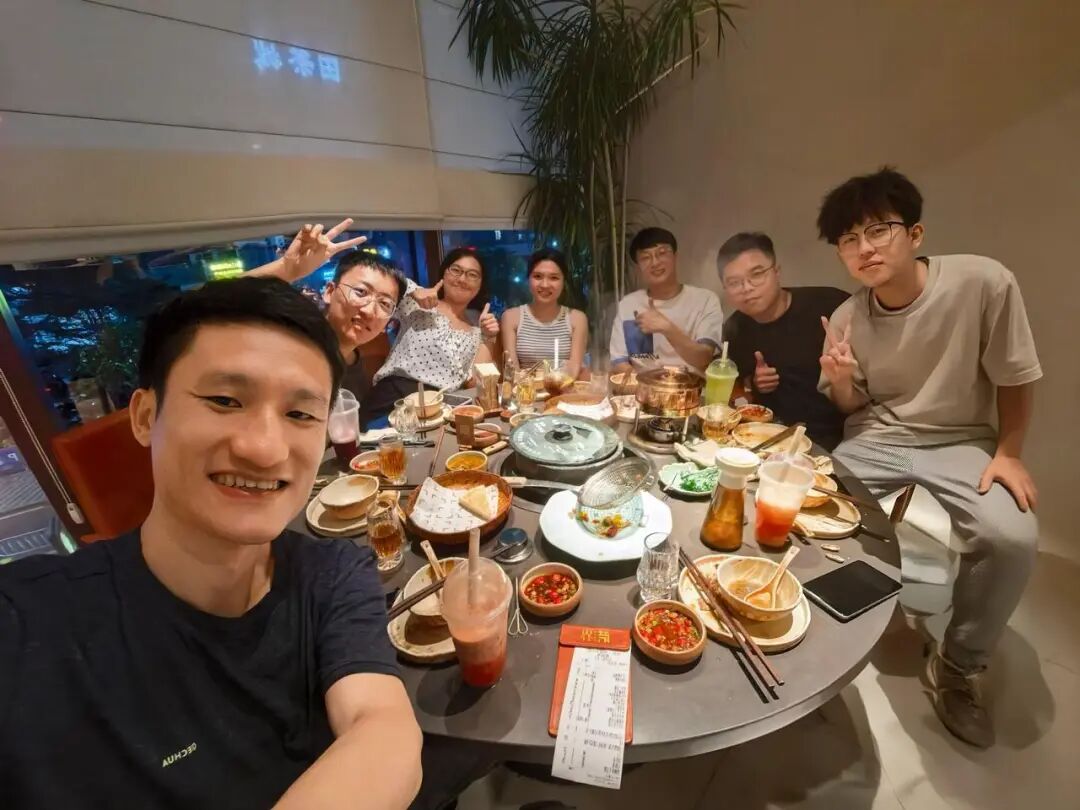
Liangpei's initial team of 7, with 5 relocating from out of town
Interviewer: Over the past year, you've mostly been in the office working on the product. Why have you now started to frequently participate in events, meet with investors, and engage with the media?
Zeng Xinxun: Founders need to know at all times which aspect needs them the most.
During the R&D phase, the most important things are the product and the team, so I should immerse myself in that. Now that the product has launched, the next phase's key aspects are user growth, fundraising, and PR, so I should be out there doing these things.
I also observed this change when I was at Kimi. During the R&D phase, founders may focus all their energy on the product and team and not appear frequently outside. When it's time to push the product to market, they need to come out again to explain the product, stand on stage, and establish partnerships.
I am now in this phase as well. The team will focus on user growth while continuing to invest in model development, making the large model better understand the matching between people. Both of these things require money and visibility.
Interviewer: What is Lianpei's key goal in the next phase?
Zeng Xinxun: First, increase the number of users. No matter how good the algorithm is, if there are no suitable people in the candidate pool, there will be no matches. In the end, if everyone's scores are very low, it may not be due to an inaccurate algorithm but because that person is really not in the pool.
We hope to first have over 10,000 active users in several major cities. Once a city reaches a certain density, matching will truly be meaningful. That's when we can see if the algorithm has improved the success rate, if the one-on-one mechanism is effective, and if users find it easier to enter a relationship.
Pushing forward with the next round of fundraising is also important, but in the short term, user density is paramount.
After Exiting the System
In Season 4 of "Black Mirror," in the episode "Hang the DJ," there is a dating system called Coach.
It arranges partners for everyone and sets a duration for each relationship. Some relationships can only last twelve hours, while others can span several years. Users don't need to judge if someone is right for them; they just need to obey the system, go on date after date, and wait for it to eventually calculate the best match.
When Amy and Frank were first paired together, the system only gave them twelve hours. When the time was up, they were forcibly separated and entered into new relationships. Later, when they met again, they decided not to follow the system, climbed over the wall together, and escaped from it.
It is not until the end that the audience realizes that everything that happened earlier was just a simulation within the dating app.
In a thousand simulations, in the vast majority of versions, both Amy and Frank choose to rebel against the system and run towards each other. The software translates the results of these mutual escapes into a matching probability in real life.
The system ultimately proves that the way they are right for each other is not by making them follow the algorithm, but by finding that they are willing to leave the algorithm for each other.
This is a very delicate position for AI when it intervenes in intimate relationships.
It can gather data, arrange meetings, calculate probabilities, and even point out potential conflicts between two people in advance. But the moment a relationship truly begins is often the moment when people no longer rely entirely on it.
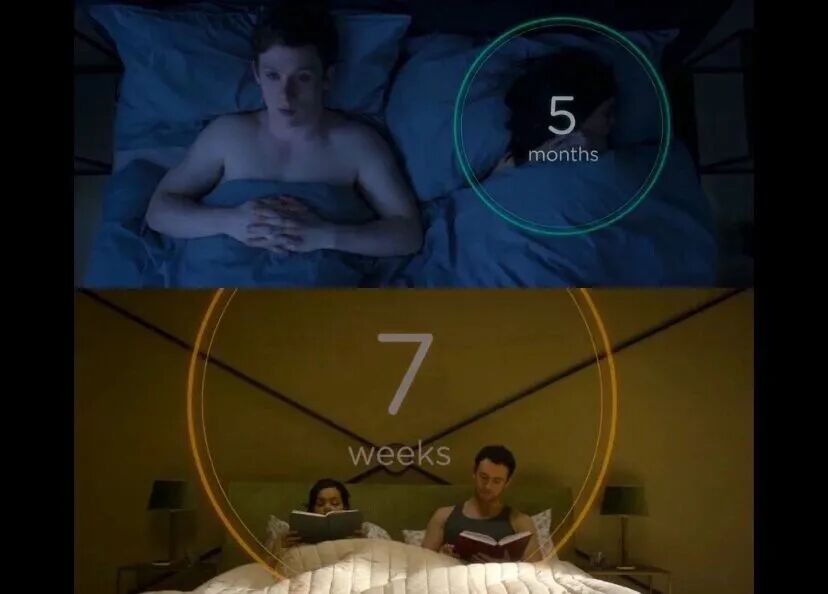
Still from "Hang the DJ"
Zeng Xinxun's approach to arranging good matches is similar to this.
AI first helps users understand themselves, filters out obviously incompatible people, and then puts two potentially suitable individuals in front of each other. When they start investing time, building rapport, and even switch to WeChat to continue chatting, the product should take a step back.
In this logic, user churn is not a loss but a success.
While this product logic is very sound, the business logic has not yet been fully established.
If a user does not get married within three years, the membership fee needs to be refunded; during this period, the platform still has to bear the costs of tokens, verification, service, operations, and user acquisition. Marriage is also influenced by family, city, economy, personality, and individual choices, making it difficult to attribute entirely to a single algorithmic match.
A more realistic issue is that good matching still needs to rapidly expand its user pool. Marriage matching heavily relies on user density in the same city, similar age range, and aligned needs, and factors such as a 20-minute voice call, one-on-one matching, and stricter verification requirements may actively deter some people.
These designs may filter out those who are not serious about relationships but could also make it harder for a product that inherently requires scale to achieve it.
How to price memberships, how to hold funds, what income will cover the costs over three years, how the platform can confirm if a marriage was facilitated by a good match—these questions still remain unanswered.
Currently, "refund if no marriage" seems more like a strong product commitment rather than a validated business feedback loop.
In "Hang the DJ," the two individuals exit the system for their match to be truly validated.
Harmony also hopes that users will leave in this way.
But it first has to prove that it can last until that day.
Recommended
Desk: Brent Crude Tops $110, Musk's Net Worth Drops 528.6 Billion in Four Days After Tesla Roadster Launch
Oct 17, 21:49
JST Fifth Buyback and Burn Successfully Concludes: Over 170 Million Tokens Worth Approximately $23.53 Million Burned, Buyback Mechanism Set for Comprehensive Upgrade
Oct 17, 20:10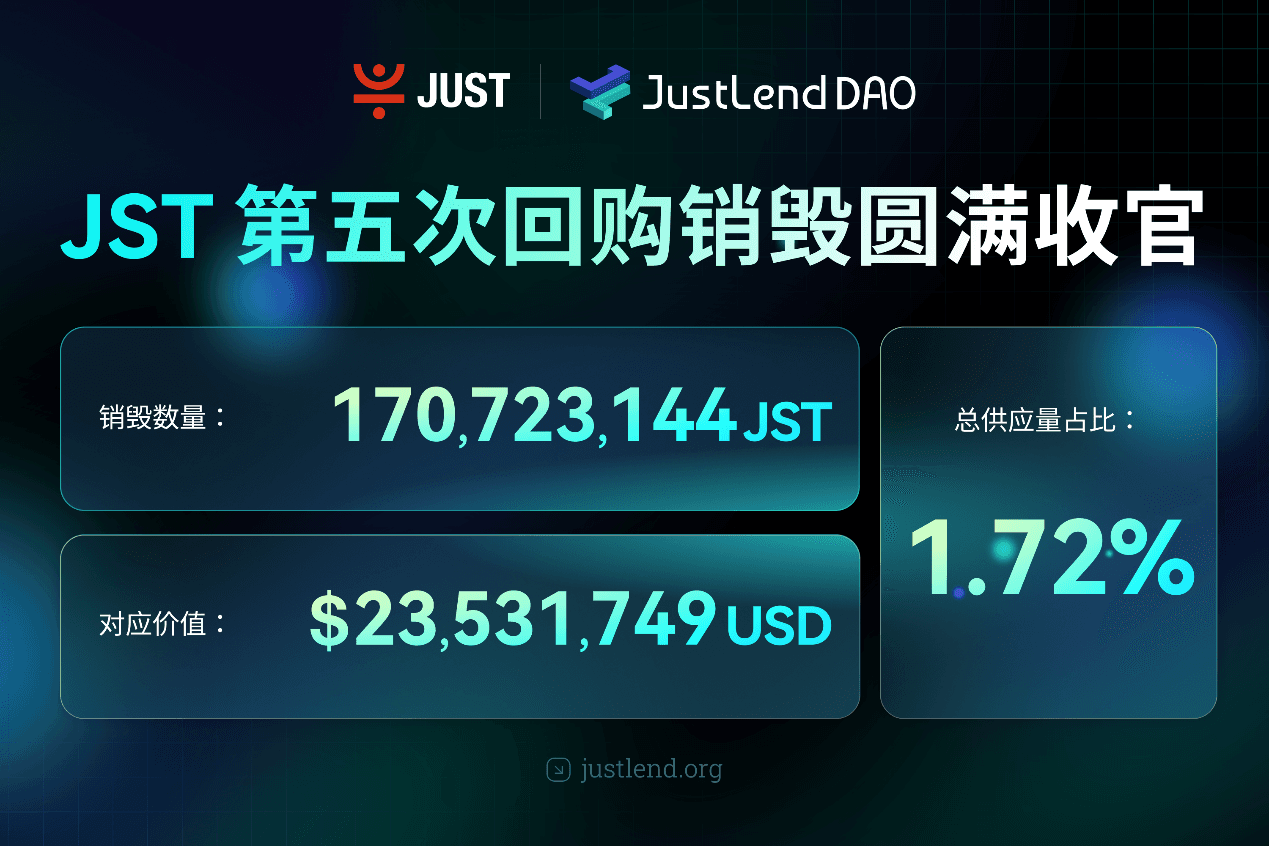
BitTorrent Brand Upgrade and Initial BTT Buyback & Burn Launch Simultaneously, Dual Engines Usher in New Era of Web3 Infrastructure
Oct 17, 20:00
Asia Market Daily: Japan's BOJ signals more rate hikes while Korea targets offshore perpetual platforms (2026/10/17)
Oct 17, 17:01Why did Papertrade backfire on you?
Oct 17, 17:01
The 'Strict Father' of Northern Myanmar: This Company Deploys 200,000 "AI Best Actors" to Strike Back Against Scammers
Oct 17, 15:34