Will the Fed Really Hike Rates This Week? Market is Betting Not on July Decision
TL;DR
· Prior to the July meeting, interest rate futures at one point priced in a probability of over 30% of a rate hike.
· The debate revolves around whether oil prices, employment, and inflation stickiness will force the Fed to abandon the rate cut narrative.
· Key assets to watch: US Dollar, US Treasuries, Gold, Bitcoin, Nasdaq, Brent Crude, WTI.
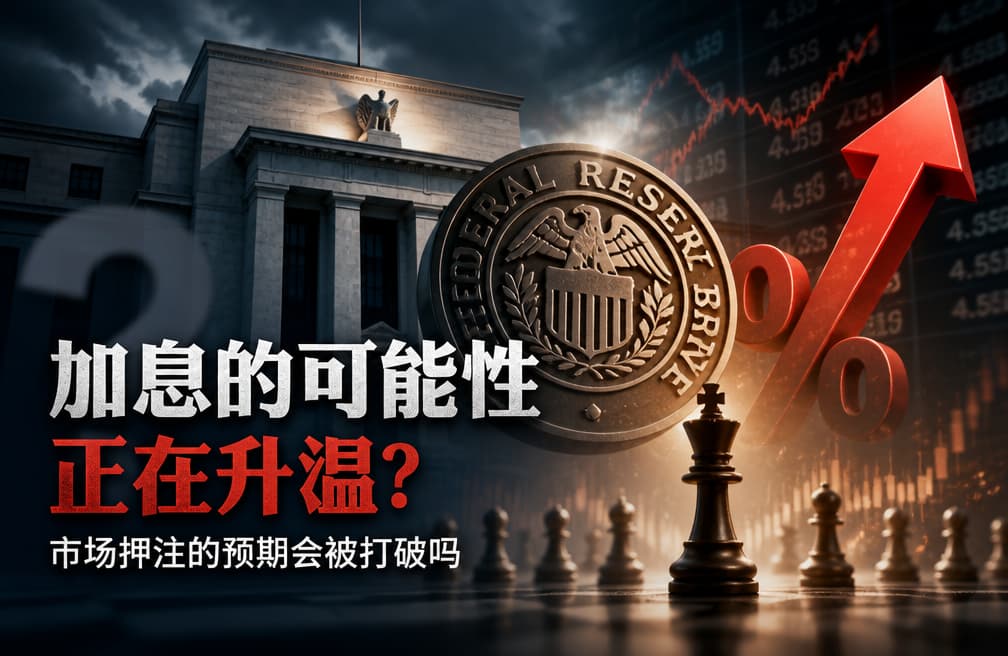
The Federal Reserve will hold its interest rate meeting on July 28-29. Ahead of the meeting, the interest rate futures market briefly pushed the probability of a 25 basis point rate hike in July to over 30%.
This pricing does not align with most macro forecasts. The June FOMC statement confirmed that the federal funds rate target range remains at 3.50%-3.75%. According to Bloomberg reports and a survey of market participants, most economists still lean towards no action in July.
It's important for retail investors to understand that CME FedWatch is not a central bank forecast but a policy probability inferred from futures prices. According to Kiplinger citing CME FedWatch on July 24, the probability of no change was 64.2%, with an implied rate hike pricing of around 35%. Different platforms may show real-time fluctuations.
Therefore, what investors should really focus on this week is not whether there will be a rate hike in July, but whether the market is abandoning the most comfortable assumption of the past few months: that inflation will continue to ease, and the rate cut is just a matter of time.
Interest Rate Path Repricing
When the market prices in a rate hike, it signals that the cushion for rate cut trades has diminished. For risk assets, a one-time 25 basis points hike is not the main issue; sustaining a higher rate for longer will alter valuation anchors.
If the Fed simply stays put but emphasizes inflation risks, energy prices, and labor tightness in its statement and chair's press conference, the market will interpret it as a hawkish signal. For the US Dollar, US Treasuries, Gold, and Bitcoin, guidance direction sometimes matters more than the actual rate action.
Long-term bond yields have already come under pressure. According to the Fed's H.15 data, the 30-year Treasury yield has recently hovered around 5.06%-5.17%, reaching 5.17% on July 24, sitting in a high range not seen since 2007. The rise in long-term yields signifies the market demanding higher compensation.
This will compress the pricing space of overvalued assets. Growth stocks and Bitcoin may not necessarily drop due to a rate hike, but if the market begins to believe that real interest rates will be persistently high, the valuation of future cash flows and high-risk assets will be recalculated.
Oil Prices Lowering Inflation Tolerance
Oil prices have been the first spark of this divergence. Since 2026, conflicts in the Middle East and Iran have repeatedly pushed up energy prices. Brent crude oil briefly rose above $100 per barrel last week, then fell back as the US and Iran paused attacks, with some contracts on July 27 returning to around $90 or lower.
Rising oil prices not only affect fuel costs. Transportation, chemicals, aviation, and manufacturing input costs will all be repriced. The Fed usually "looks through" short-term energy shocks, assuming the shock is short enough and does not spill over into wages and core service prices.
The US June CPI is still at 3.5% YoY, core CPI is at 2.6% YoY, still a distance from the 2% target. If the oil price shock is just a few weeks of geopolitical disturbance, the Fed can choose to wait. But if it overlaps with potential tariffs, supply chain costs, and energy demand, the downward path of inflation will narrow.
This is also where economists and traders differ. Economists are more concerned with whether the published data can prove a second surge in inflation, so they tend to stay put in July. Traders, on the other hand, are more willing to price tail risks early.
Strong Employment Weakens Case for Rate Cuts
The second variable is the labor market. Last week, US initial jobless claims fell to 187,000 people, the lowest since 1969. The plain language meaning is that companies are not laying off large numbers of workers, and the job market is still tight.
For the Fed, if employment is too weak, it would provide a reason for rate cuts, but if it is too strong, it would increase resistance to inflation. As long as household income and spending resilience remain, companies are more likely to pass on cost increases to end prices, making it harder for service inflation to quickly fall back.
This does not mean that the US economy is necessarily overheating. Single-week initial claims data may be influenced by seasonal, statistical, and industry factors, and cannot independently prove the re-spiraling of wages and inflation. But it is enough to weaken the argument that "the economy is rapidly cooling, so rate cuts must be implemented as soon as possible."
Market reactions are therefore focused on the interest rate path rather than simply trading recession. The current situation is more like a combination of "upward inflation risks, while growth still shows resilience." For the Fed, this is the most challenging state to deal with: rate cuts fear inflation, while rate hikes fear hitting assets and credit.
Hawkish Voices Provide Traders with a Narrative
The market pricing has suddenly become more confident, partly due to a clearer hawkish tone emerging from within the Federal Reserve. Dallas Fed President Lorie Logan publicly advocated for a "modestly higher" interest rate on July 16, citing the need to better balance inflation and employment goals.
Cleveland Fed President Beth Hammack's recent remarks were also interpreted by the market as leaning hawkish. These individual statements cannot be directly equated to the overall FOMC stance or preemptively seen as dissenting votes at this week's meeting. However, for the market, such statements provide a narrative pivot point.
This is at the core of the clash of views. The interest rate futures market represented by CME FedWatch is combining oil prices, employment, and hawkish remarks into a probability that the Fed may need to tighten policy again. Most economists still believe that the current data is insufficient to prompt an immediate shift to rate hikes at the July meeting.
Both sides are not answering the same question. Economists are answering "What is the Fed most likely to do this time," while traders are answering "If the old narrative is wrong, how much probability am I willing to pay for?" The former is the baseline forecast, while the latter is more like risk insurance.
Can High Rates Return to the Baseline Scenario?
If the July meeting simply maintains the interest rate, it should not be simplistically seen as a dovish victory. What truly impacts asset prices is whether the statement and press conference elevate energy, employment, and inflation stickiness and whether the Fed hints at potential future policy rate hikes.
Conversely, if oil prices continue to fall, core inflation subcomponents do not spread, and tariff impacts do not materialize into visible price pressures, then over 30% of the priced-in rate hike before the meeting may prove to be excessive. By then, the support for the dollar and short-term rates will weaken, and long bonds and risk assets may experience a reverse correction.
The border of this round of trading lies in the evidence being enough to support a policy risk shift but not sufficient to prove that the Fed has already restarted the rate hike cycle. For investors, the key decision this week is not whether to bet on a July rate hike but whether the path to higher rates is moving away from tail risks and edging closer to the market's baseline scenario.
Recommended
Desk: Brent Crude Tops $110, Musk's Net Worth Drops 528.6 Billion in Four Days After Tesla Roadster Launch
Oct 17, 21:49
JST Fifth Buyback and Burn Successfully Concludes: Over 170 Million Tokens Worth Approximately $23.53 Million Burned, Buyback Mechanism Set for Comprehensive Upgrade
Oct 17, 20:10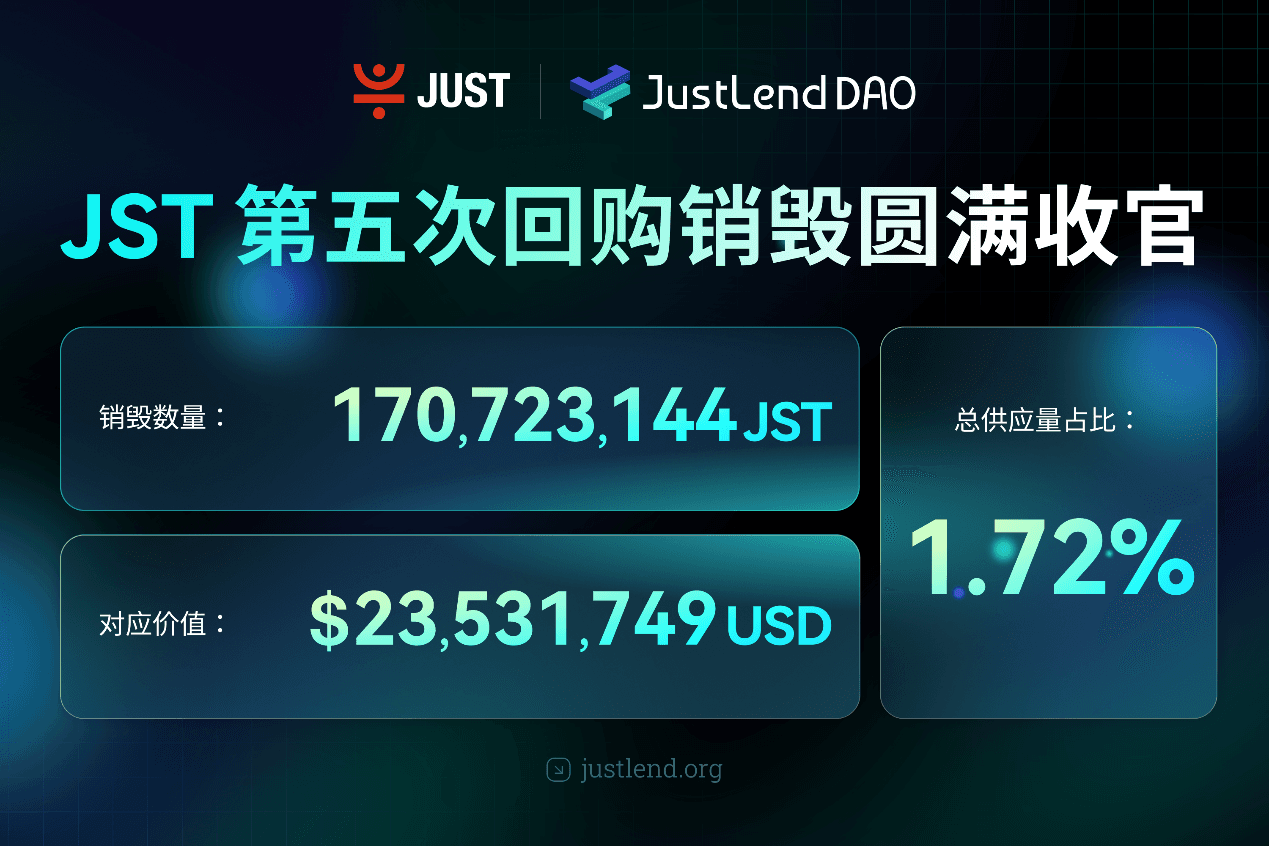
BitTorrent Brand Upgrade and Initial BTT Buyback & Burn Launch Simultaneously, Dual Engines Usher in New Era of Web3 Infrastructure
Oct 17, 20:00
Asia Market Daily: Japan's BOJ signals more rate hikes while Korea targets offshore perpetual platforms (2026/10/17)
Oct 17, 17:01Why did Papertrade backfire on you?
Oct 17, 17:01
The 'Strict Father' of Northern Myanmar: This Company Deploys 200,000 "AI Best Actors" to Strike Back Against Scammers
Oct 17, 15:34