Bank of America Analysis: DRAM Prices May Increase by 30%-40% in the Third Quarter, AI Servers to Further Squeeze Supply

TL;DR
· Bank of America's channel checks indicate that the July PC DRAM contract price increased by 15-20% compared to June, with the third-quarter ASP growth potentially reaching 30-40%.
· Alphabet's official statement only mentioned a significant increase in capital expenditure in 2027, with nearly $300 billion estimated by Bank of America analysts.
· Samsung's share buyback and early dividends are still pending confirmation at the July 30 earnings call, with supply expansion and CXMT market share increase being the main risks.
Bank of America's latest channel checks have further raised expectations for a memory price hike. In July, more Tier 2 OEMs and module factories accepted a 15-20% higher PC DRAM contract price compared to June, and the average DRAM selling price in the third quarter may increase by 30-40%, significantly higher than TrendForce's previous forecast of 13-18%.
The highlight of this price hike is not only the higher spot prices but also downstream buyers starting to accept higher prices in quarterly contracts. Once the PC DRAM contract price increases, supply chain tightness moves beyond just the trading platform to procurement budgets and inventory planning.
AI servers remain the key driver. The demand for HBM, high-capacity DRAM, and server memory continues to absorb capacity, squeezing the supply of mainstream PC DRAM and some DDR4. For Samsung Electronics, SK Hynix, and Micron, the contract price increase is higher than market expectations, directly impacting the profit outlook for the second half of the year.
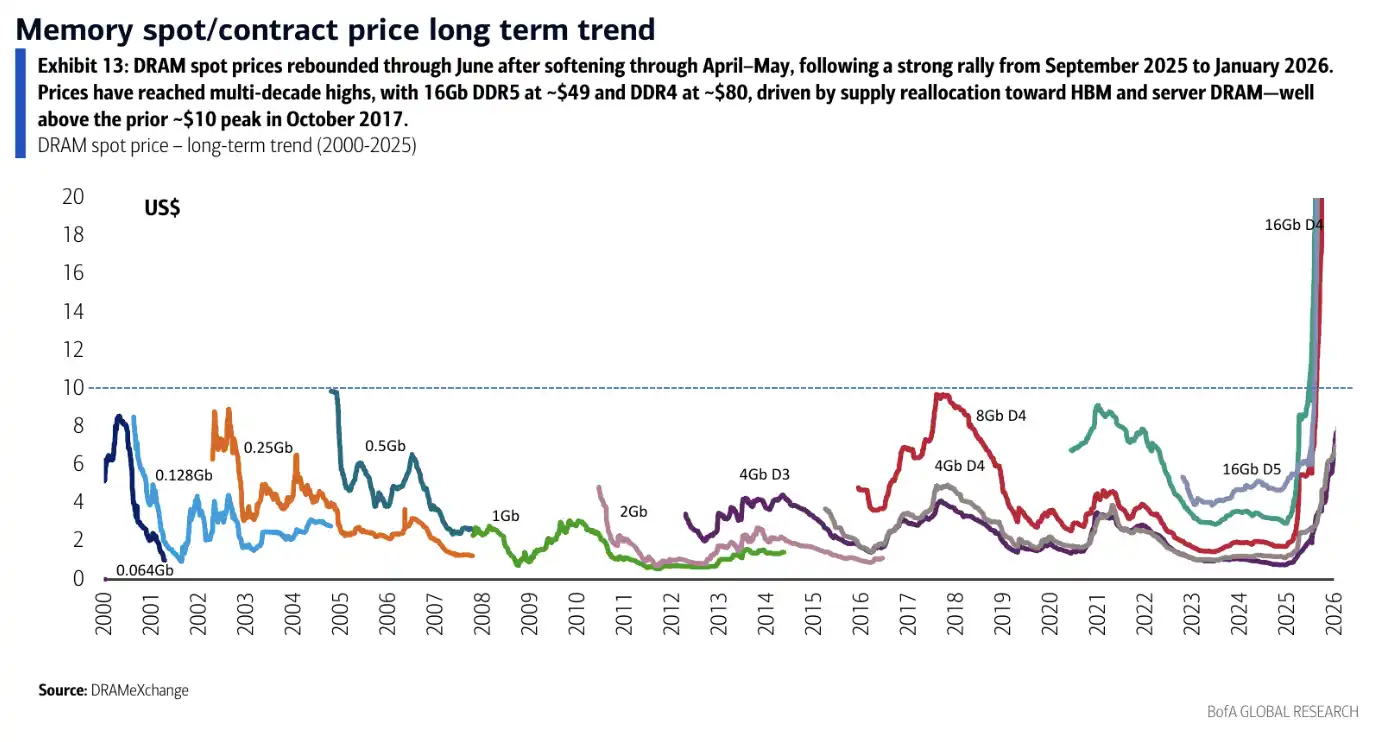
TrendForce's forecast on July 3 stated that the contract price for general DRAM in the third quarter would increase by 13-18% QoQ, and NAND Flash contract prices would rise by 10-15% QoQ. The analysis at that time already factored in support from AI server demand and the impact of PC DRAM supply being squeezed by server capacity reallocation.
Bank of America's channel checks offer a more aggressive outlook. If the average DRAM selling price increases by 30-40% QoQ in the third quarter, memory manufacturers' price assumptions for the second half of the year will see a significant upward revision.
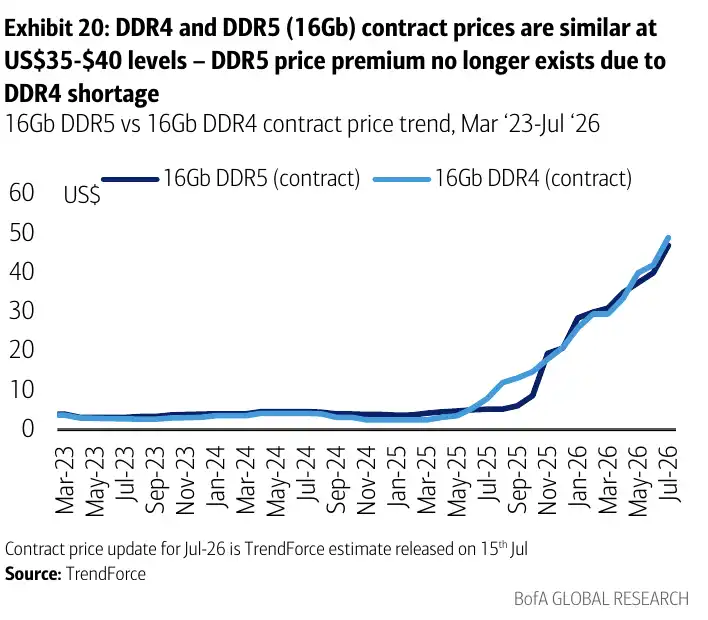
The contract price for 16Gb DDR4 and DDR5 has simultaneously risen to around $35-40, with the price hike now extending from the spot market to quarterly procurement contracts. Source: TrendForce, Bank of America Global Research
The spot price is also supporting the futures contract price increase. A source report indicates that the 16Gb DDR5 spot price is around $50. The DDR4 spot price mentioned in the article is above $80, based on Bank of America's report. This price point may differ from the derivative prices shown on some public quoting websites; hence, it is more suitable as a report reference rather than a publicly quoted market price.
Server memory is also at a high level. According to Bank of America, the contract price for a 64GB DDR5/DDR4 server module has exceeded $1000, with DDR5 at around $1400. In other words, the price increase is not limited to a single product category but is evident across PC, server modules, and high-end DRAM simultaneously.
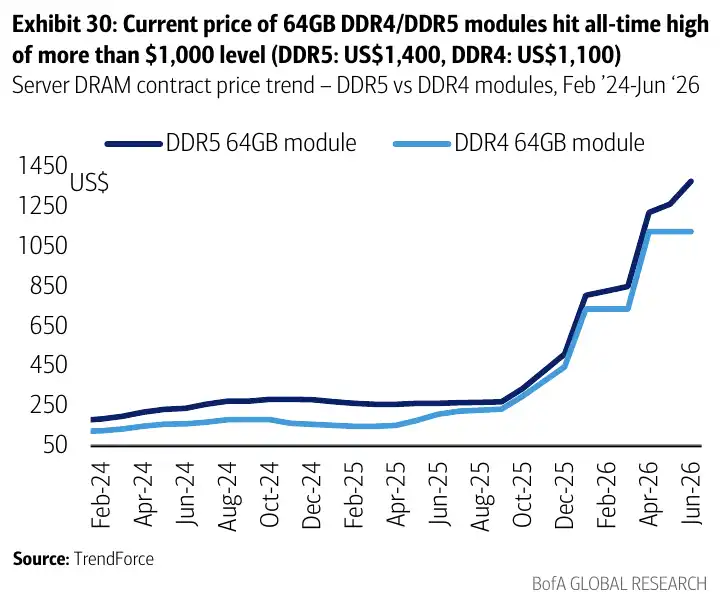
The price of 64GB server DRAM modules has hit a historic high, with DDR5 around $1400 and DDR4 around $1100. Source: TrendForce, Bank of America Global ResearchGoogle AI Capital Expenditure Seen as High but Not Official Guidance
The most striking number on the demand side comes from Alphabet/Google's capital expenditure.
In Alphabet's official June investor materials, the 2026 capital expenditure guidance is $180-190 billion, stating that 2027 will see a "significant increase" over 2026 but does not provide an official guidance of $300 billion. Bank of America analysts estimate a higher range, around $195-205 billion for 2026 and nearly $290-300 billion for 2027.
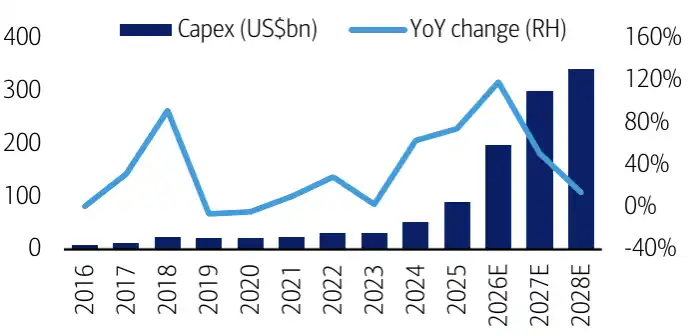
Bank of America expects Alphabet's capital expenditure to continue to increase significantly in 2026-2027; the forecasted values in the chart are analyst estimates, not Alphabet's official guidance.
Under this assumption, memory chip purchases in 2027 could increase by over 50% compared to 2026. This assessment is still within the analyst's model and not concrete orders in place, but it explains why memory stock prices are highly sensitive to cloud company capital expenditure expectations.
Alphabet's second-quarter performance has also boosted market confidence. The company revealed that Alphabet's revenue grew by 24% year-over-year, Google Cloud revenue surged by 82% year-over-year, and the cloud business backlog reached $514 billion. The growth in the cloud business and strong AI demand will make investors more willing to believe that large tech companies still have the capability to continue investing in AI infrastructure.
However, the capital expenditure forecast still depends on the company's future guidance and actual order validation. If the AI server deployment is delayed, the growth pace of memory procurement will also be extended.
Trade data also indicates that memory demand remains high.
According to South Korean customs data reported by KBS World, from July 1 to 20, South Korea's exports totaled $54.9 billion, a 52.3% year-on-year increase. Semiconductor exports reached $22.1 billion, up 180.6% year-on-year, accounting for 40.3% of total exports. This provides a real order backdrop for the strong demand for AI servers, enterprise procurement, and restocking.
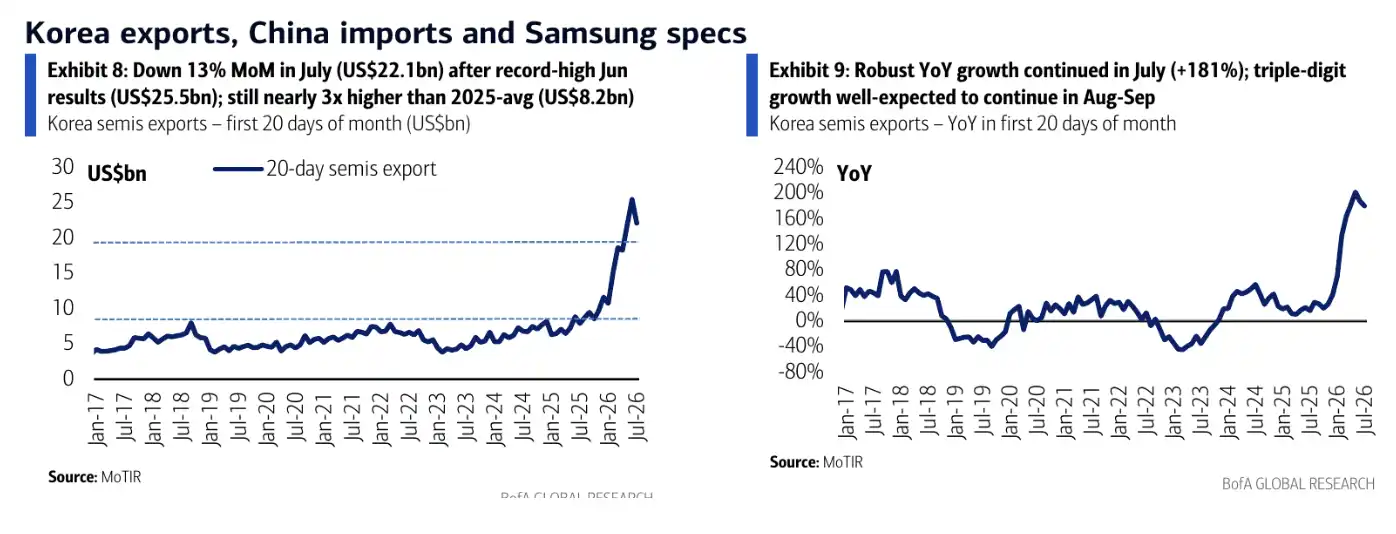
South Korea's semiconductor exports were about $22.1 billion before July 20, up 181% year-on-year, with the absolute scale still close to a historical high.
Chinese import data needs to be treated more cautiously. The initial draft stating "China's June memory chip imports were $32 billion, up approximately 249% year-on-year, accounting for 54% of total imports" lacks publicly verifiable sources. The publicly available criterion is cited from Zhejiang Hengshang's "China Chip Product Trade Monthly Monitoring Report," stating that in May 2026, China imported memory chips worth $30.77 billion, accounting for 54.3% of chip imports, a 248.7% year-on-year increase.
This criterion still indicates that China's memory import market is at a high level, but the timeframe should be adjusted to May. In the short term, even if CXMT continues to expand production, the Chinese market still relies on Korean and global leading suppliers for high-end DRAM, server memory, and some AI-related products. In the medium to long term, the increase in domestic supply may first impact DDR4 and some consumer DRAM prices.
NAND prices are also on the high side. The source report shows that the spot price of a 1Tb NAND wafer is about $25.5, a 2% weekly increase. However, the main theme of this round is the higher-than-expected PC DRAM contract price and AI capital expenditure driving force, with NAND serving more as evidence of the tight supply and demand situation in the memory sector.
In addition to price and demand, Samsung Electronics may signal a new shareholder return initiative.
According to the Samsung website, the company will hold its second-quarter earnings conference call on July 30 at 10:00 KST. Market expectations include whether they will announce a large-scale stock buyback plan and whether they will pre-issue a portion of the 2026 cash dividend.
This part is still only a potential catalyst, not a confirmed fact. The actual scale of the buyback, dividend payout ratio, and timing of execution will depend on Samsung's official financial report, the profitability of the semiconductor division, cash flow arrangements, and available treasury stock.
For memory stocks, the price surge is driven by fundamentals, AI capital expenditure supports demand, and Samsung's buyback and dividend are emotional catalysts. The combination of these factors will increase market attention, but cannot replace real orders and profit realization.
The current memory fundamentals are strong, but how long can the price increase last depends on two factors.
First, whether the AI capital expenditure of large tech companies can meet high expectations. Google's nearly $300 billion capital expenditure by 2027 is an estimate by Bank of America analysts, not an official commitment from the company. If cloud providers slow down data center construction, both memory procurement growth and price sustainability will be reassessed.
Second, supply expansion may bring pressure back after 2026-2027. After the memory price hike, manufacturers will be more willing to expand production and reallocate capacity. If the newly added supply is released intensively while demand growth slows, both DRAM and NAND prices could decline.
CXMT's production expansion is also a long-term pressure. In the short term, its impact on the market share of Korean manufacturers' high-end products is limited. However, if the increase in mid-range and low-end supply exceeds expectations, DDR4 and consumer DRAM may be affected first. Memory manufacturers are currently benefiting from price elasticity, but they will soon face the gap between order realization and the return of supply.
Recommended
Desk: Brent Crude Tops $110, Musk's Net Worth Drops 528.6 Billion in Four Days After Tesla Roadster Launch
Oct 17, 21:49
JST Fifth Buyback and Burn Successfully Concludes: Over 170 Million Tokens Worth Approximately $23.53 Million Burned, Buyback Mechanism Set for Comprehensive Upgrade
Oct 17, 20:10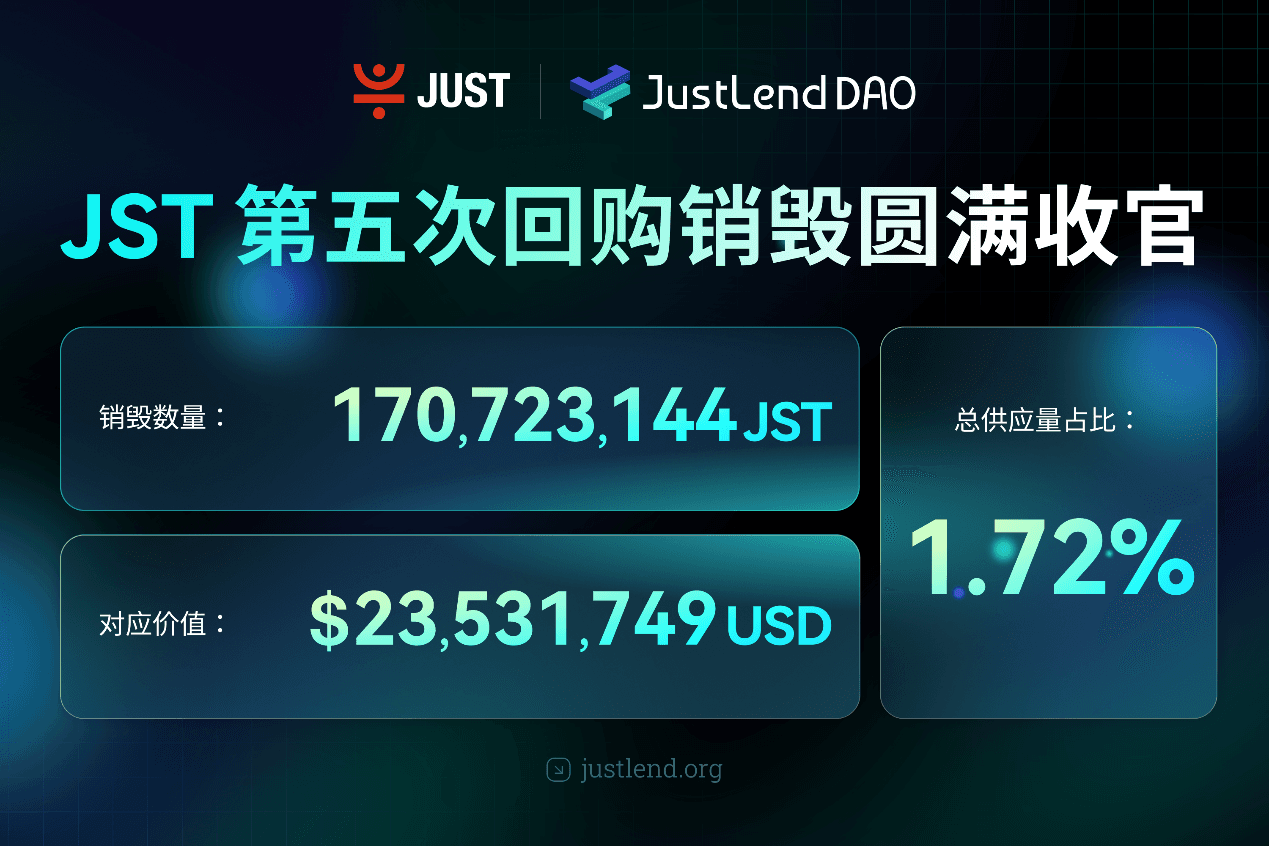
BitTorrent Brand Upgrade and Initial BTT Buyback & Burn Launch Simultaneously, Dual Engines Usher in New Era of Web3 Infrastructure
Oct 17, 20:00
Asia Market Daily: Japan's BOJ signals more rate hikes while Korea targets offshore perpetual platforms (2026/10/17)
Oct 17, 17:01Why did Papertrade backfire on you?
Oct 17, 17:01
The 'Strict Father' of Northern Myanmar: This Company Deploys 200,000 "AI Best Actors" to Strike Back Against Scammers
Oct 17, 15:34