Bernstein Analysis: Three Giants Control 90% of the Market, Why is MRDIMM More Bullish on Ripple?

TL;DR
· Bernstein maintains Outperform rating on Montage Technology, with an H-share target price of HK$520 and an A-share target price of ¥400.
· Its broader calculation shows that the 2030 Memory Interface Chip TAM could reach nearly $20 billion.
· Rambus also benefits from AI server upgrades, but market share, customer base, and cost structure limit flexibility.
According to public reports and Bernstein's latest report, Montage Technology has been maintained an Outperform rating, with the H-share target price raised to HK$520 and the A-share target price raised to ¥400.
This report brings a relatively obscure AI hardware segment into the spotlight. Following AI server upgrades, the data transfer pressure between the CPU, memory, and acceleration chips has increased, amplifying the value of the memory interface chip. In particular, with MRDIMM entering the server platform, the interface silicon content required per module is about 10 times that of traditional RDIMM.
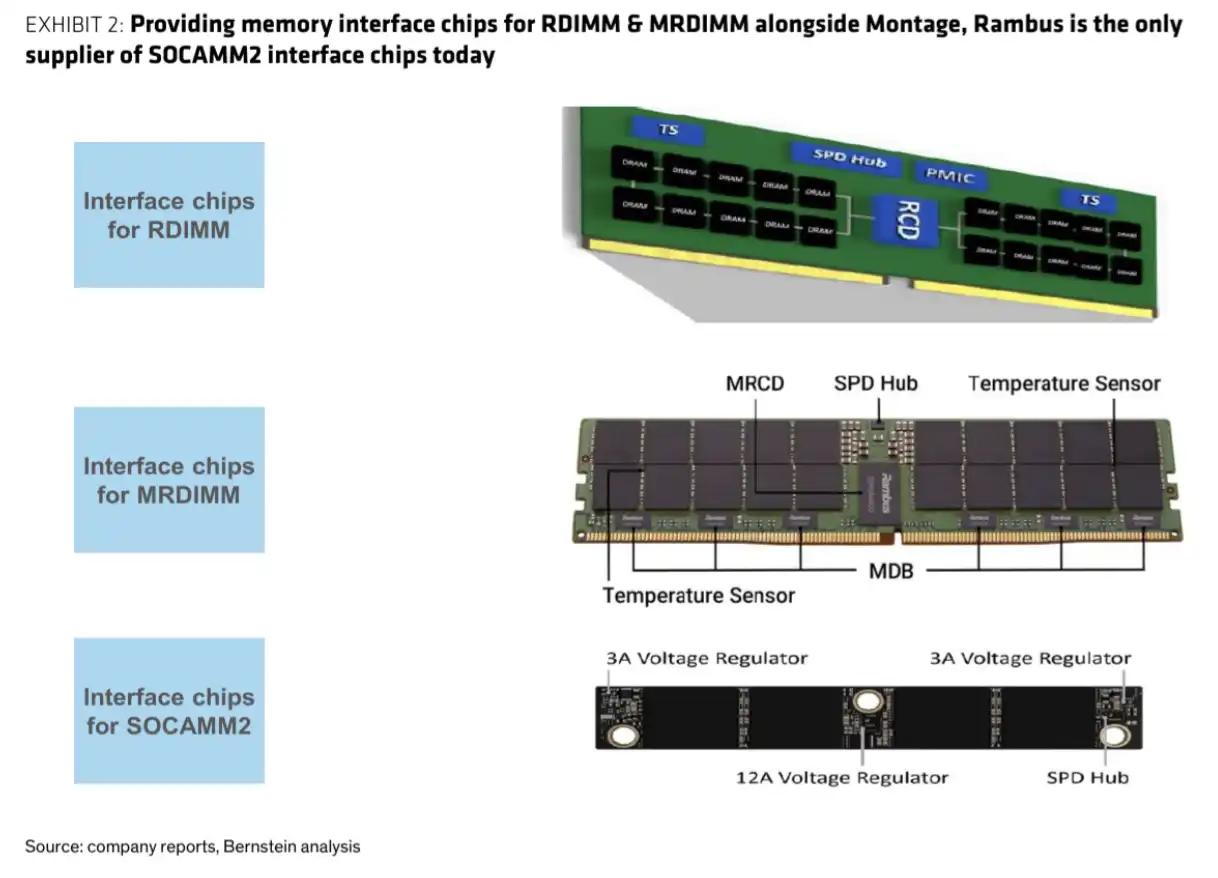
RDIMM, MRDIMM, and SOCAMM2 Interface Chip Structure
Bernstein's assessment is that by 2030, the global memory interface chip market size under its broader scope could reach nearly $20 billion. It is necessary to add a caveat here: the Hong Kong Stock Exchange documents and Frost & Sullivan's previous scope show that the global memory interconnect chips market is expected to increase from about $1.2 billion in 2024 to $5 billion from 2030, significantly lower than Bernstein's scope. The difference between the two mainly lies in market boundaries and product inclusion criteria.
The memory interface chip was not originally the most prominent part of the AI industry chain, but changes in server architecture are making it more expensive.
In Bernstein's calculation, the global memory interface chip TAM is expected to have a compound annual growth rate of approximately 65% from 2025 to 2030, reaching nearly $20 billion in 2030. Among them, MRDIMM-related MRCD and MDB chips contribute to about 73% of the market space.
The underlying logic is not complicated. Servers require higher memory bandwidth, and after the traditional RDIMM is upgraded to MRDIMM, both the number and complexity of interface chips increase. A public report mentioned that the value of the MRDIMM single-module interface chip may increase from about $7 to $70 to $80.
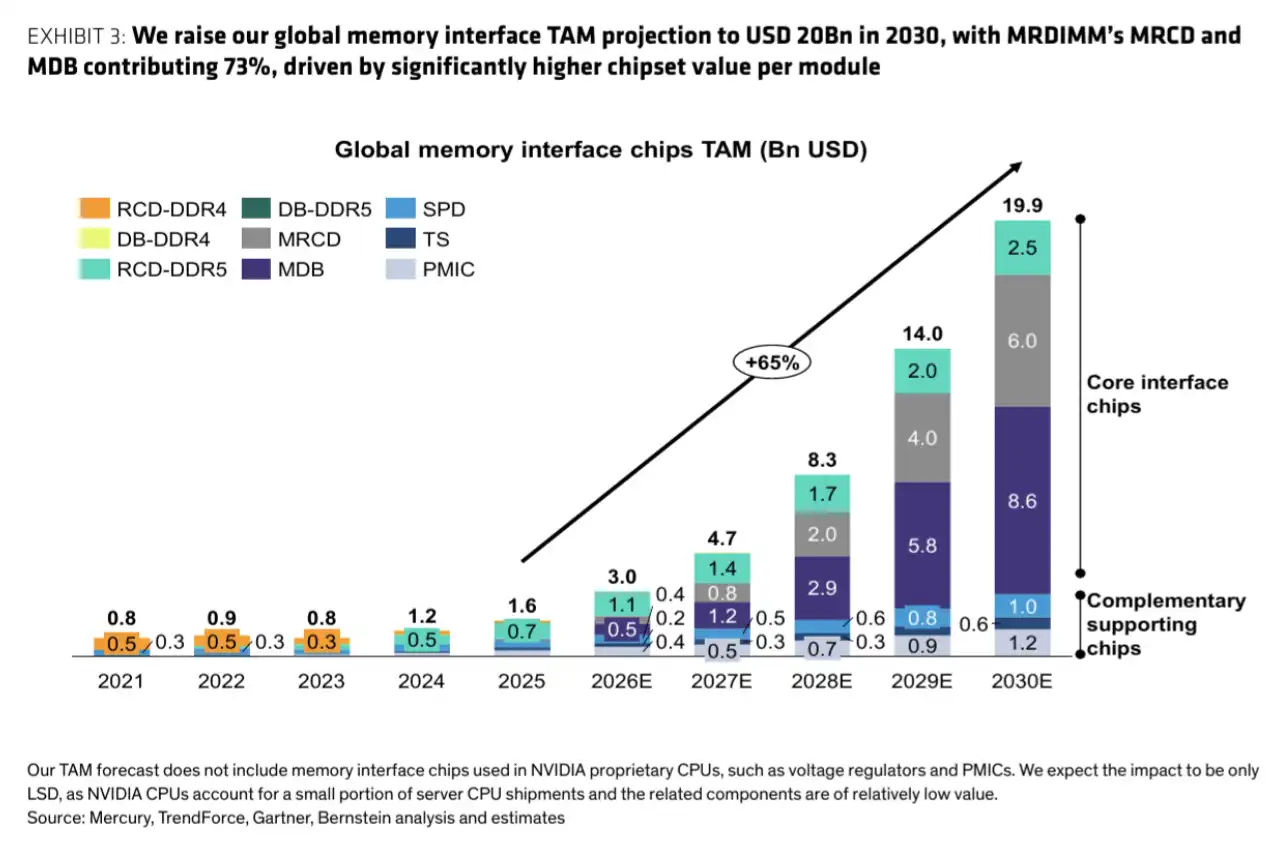
The global memory interface chip TAM is expected to grow from around $800 million in 2021 to about $19.9 billion in 2030, with MRDIMM-related chips contributing approximately 73%.
This expansion is mainly driven by three factors. AI servers are boosting server CPU demand, CPU-side memory channel and module upgrades are bringing more interface chips. Iterations in DRAM technologies such as DDR5 and MRDIMM are increasing the value per single module. Growth in AI ASICs will also raise demand for complementary products like CXL, PCIe, memory controllers, and security IPs.
However, the nearly $20 billion is not a guaranteed outcome. It depends on server CPU shipment volumes, MRDIMM penetration rates, and the pace of Gen2 MRDIMM adoption. If CPU shipments recover slowly or if Gen2 MRDIMM deployment lags expectations, the market expansion rate will be dampened.
Bernstein's sensitivity analysis provides a lower limit reference. Even if by 2030 server CPU shipments are only 60 million units and MRDIMM penetration is only 10%, the memory interface chip TAM would still be around $8 billion.
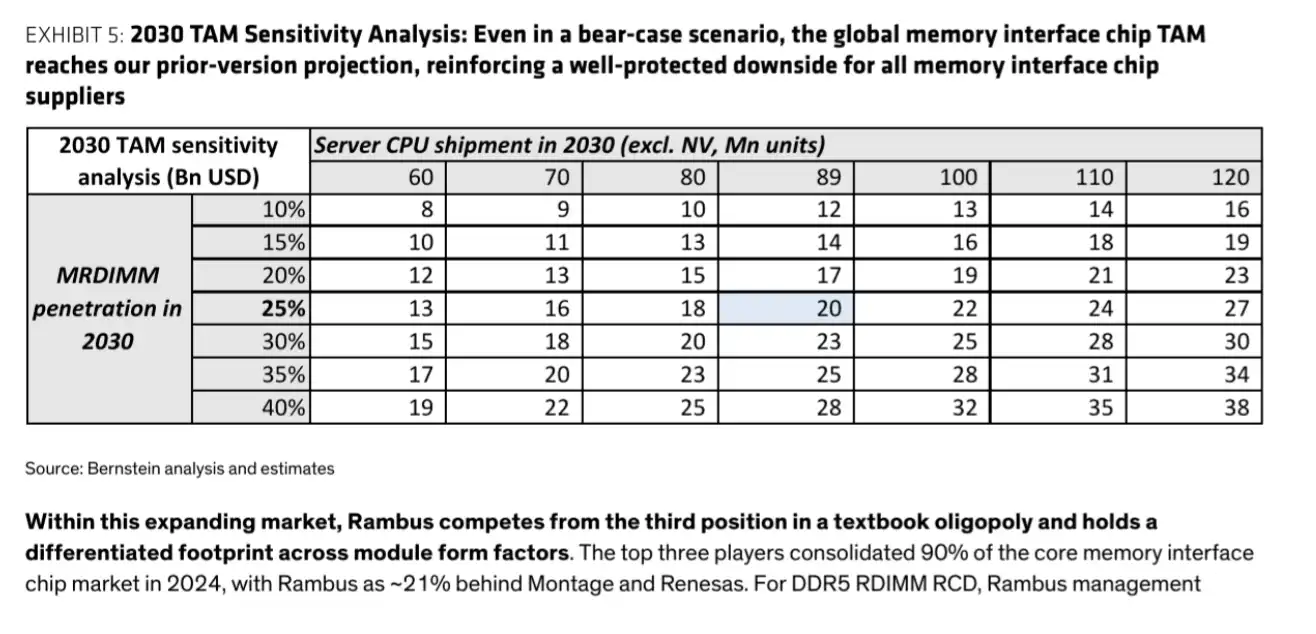
A sensitivity analysis of the 2030 TAM shows that in a bear market scenario with 60 million server CPU shipments and 10% MRDIMM penetration, the market would still be around $8 billion.
The memory interface chip market is already highly concentrated.
Based on Bernstein's revenue estimates, by 2024, Montage Technology, Renesas, and Rambus collectively hold over 90% of the core memory interface chip market. Montage Technology holds around 37%, Renesas around 36%, and Rambus around 21%. Hong Kong Exchange filings also indicate that Montage Technology held approximately 36.8% of the global memory interface and interconnect chip revenue share in 2024.
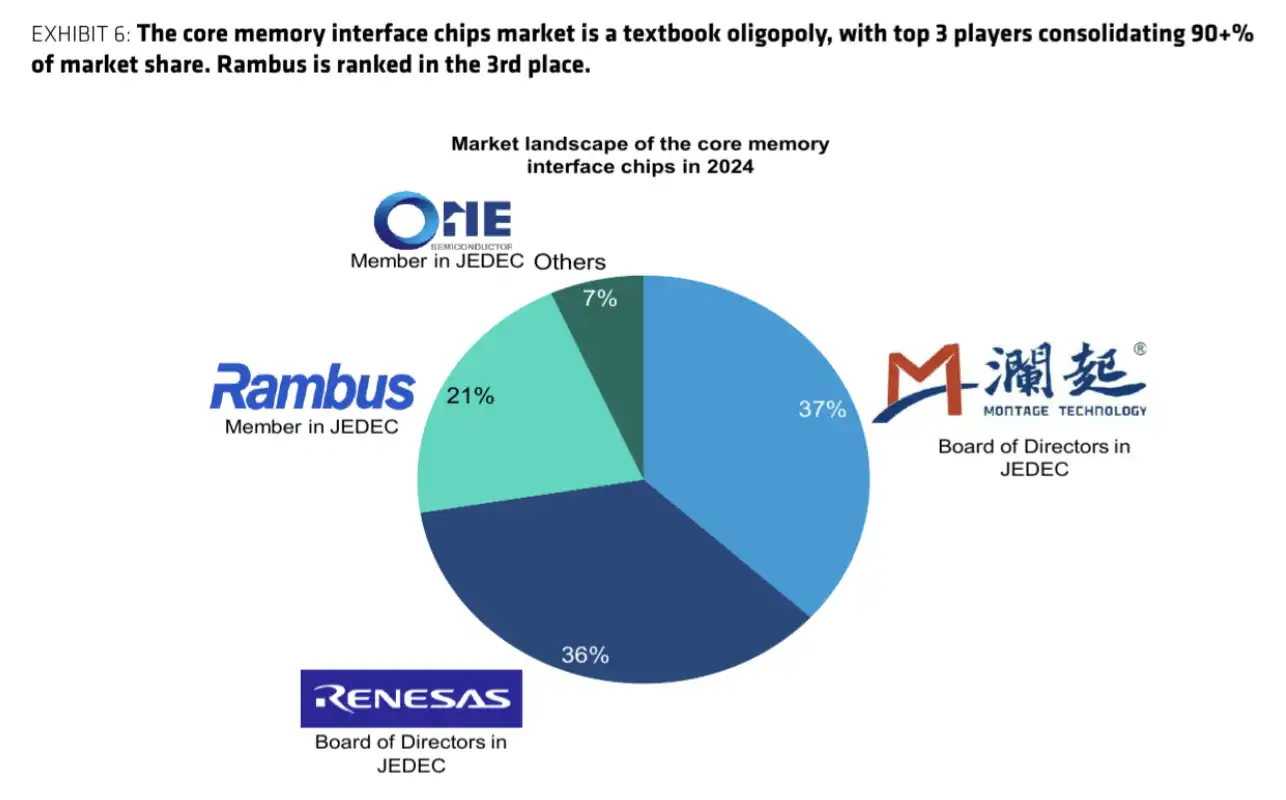
By 2024, the core memory interface chip market share is as follows: Micron with 37%, Kioxia with 36%, Rambus with 21%, and others with 7%, totaling over 90% for the top three.
The additional market brought by AI server upgrades is likely to first flow to existing leading suppliers. However, the positioning of these three companies is not the same.
Micron is more advanced on the DDR5 RDIMM and MRDIMM roadmap and is closer to the common validation requirements of DRAM manufacturers. High-speed memory interface chips require high interoperability, and customers often prefer to obtain a more complete chip set from a single supplier to reduce validation and mass production risks.
Rambus is also catching up. Bernstein predicts that Rambus's share of the MRDIMM interface chip set may increase from 2% in 2026 to 18% in 2030, but starting from a lower point, catching up will take time. Its advantage lies in a wider product line, having already launched the SOCAMM2 interface chip set, and covering supporting products such as SPD, PMIC, temperature sensors, etc.
Rambus's relationship with DRAM manufacturers is also more complex. Over the past 20 years, through patent litigation and settlements with DRAM manufacturers such as Samsung, SK Hynix, and Micron, the company has established long-term DRAM royalty income. Stable contracts bring cash flow but may not necessarily help it secure the most favorable position in the new generation MRDIMM common validation.
Rambus is not a company excluded from the AI server market. Based on the company's official 2025 revenue breakdown, Product revenue is approximately $3.478 billion, Royalties are about $2.794 billion, Contract and other revenue are about $805 million, accounting for approximately 49%, 39%, and 11% of total revenue, respectively.
This also points to the issue. Close to forty percent of Rambus's revenue comes from royalties, which are stable but growing slowly. DRAM royalties are usually constrained by long-term contracts, and the company's management also indicates that this business is generally flat, making it difficult for them to fully benefit from the elasticity brought by DRAM's volume and price increases.
The IP and licensing business can also benefit from AI ASIC, edge AI, and security demands. Rambus can provide memory controllers, CXL/PCIe interconnect, and security IP. However, compared to Micron's concentrated bet on high-growth interface chips, Rambus's business is broader, and the growth translates into profits more slowly.
The cost side difference is more direct. Rambus had approximately $188 million in R&D spending in 2025, with an R&D revenue ratio of about 27%. By Bernstein's report, during the same period, Lianqi Technology had around $127 million in R&D spending, with an R&D revenue ratio of about 17%. A broader business implies heavier investment, and the efficiency of translating each dollar of R&D investment into revenue is also more tested.
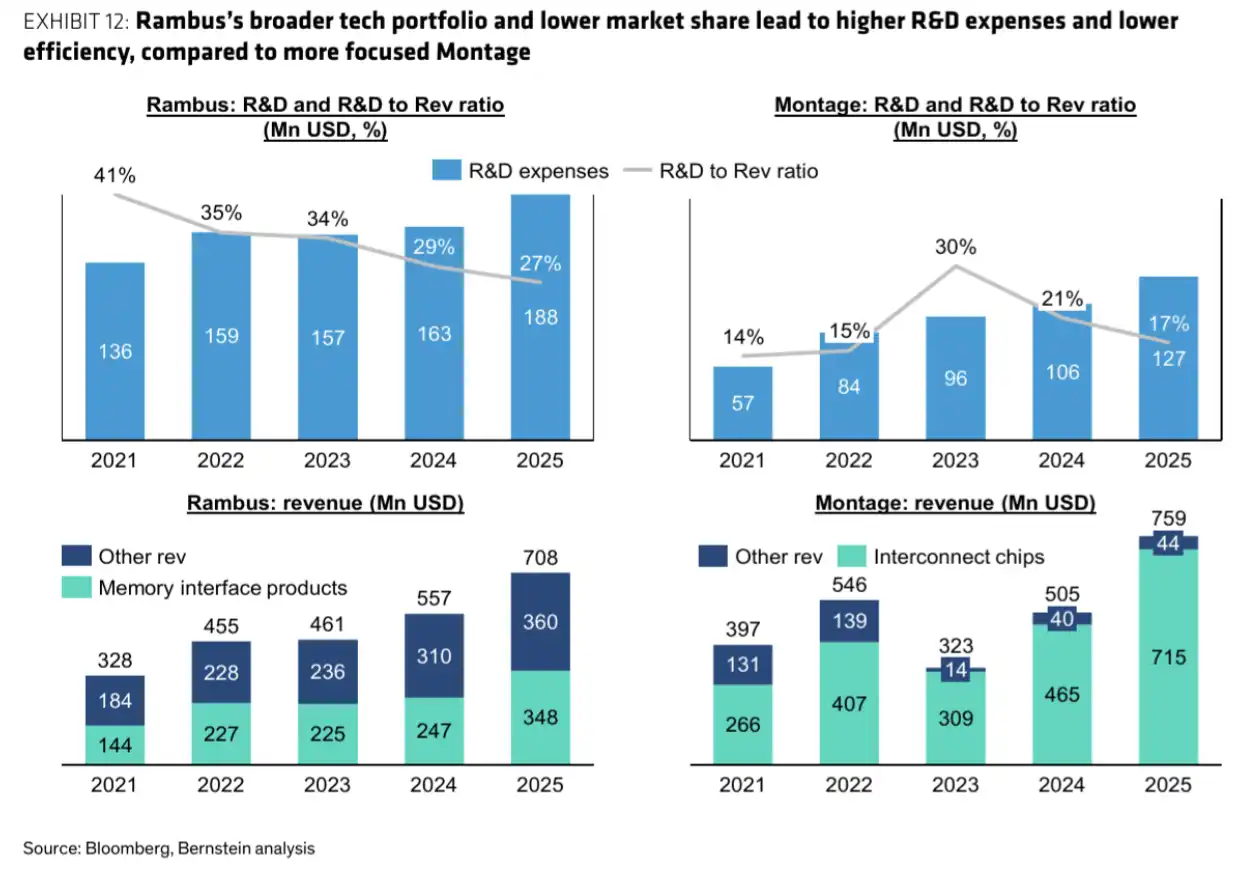
Rambus had around $188 million in R&D spending with an R&D revenue ratio of 27%, while Lianqi had around $127 million with an R&D revenue ratio of 17%.
This is also the core disagreement behind the valuation and target price differences between the two companies. Lianqi Technology has a lower proportion of low-growth businesses, with revenue more concentrated on high-growth memory interface chips. Rambus has AI uplift, but its overall flexibility is discounted by royalty and licensing businesses.
The most newsworthy aspect of this report is not simply stating that memory interface chips benefit from AI, but rather widening the gap between the companies.
If MRDIMM volume ramps up smoothly, the value of a single-module interface chip will increase from single-digit dollars to $70 to $80. Leading suppliers like Lianqi Technology, Renesas, and Rambus will all enter a larger market. However, who can grab a larger share depends on MRDIMM co-validation, customer relationships, product portfolio, and R&D efficiency.
For Rambus, the unresolved issues are whether MRDIMM share can rise from a low starting point to double digits, if DRAM manufacturers are willing to give it more room in dual-sourcing and co-validation, and whether the licensing business can enter larger-scale AI ASIC projects.
Recommended
Desk: Brent Crude Tops $110, Musk's Net Worth Drops 528.6 Billion in Four Days After Tesla Roadster Launch
Oct 17, 21:49
JST Fifth Buyback and Burn Successfully Concludes: Over 170 Million Tokens Worth Approximately $23.53 Million Burned, Buyback Mechanism Set for Comprehensive Upgrade
Oct 17, 20:10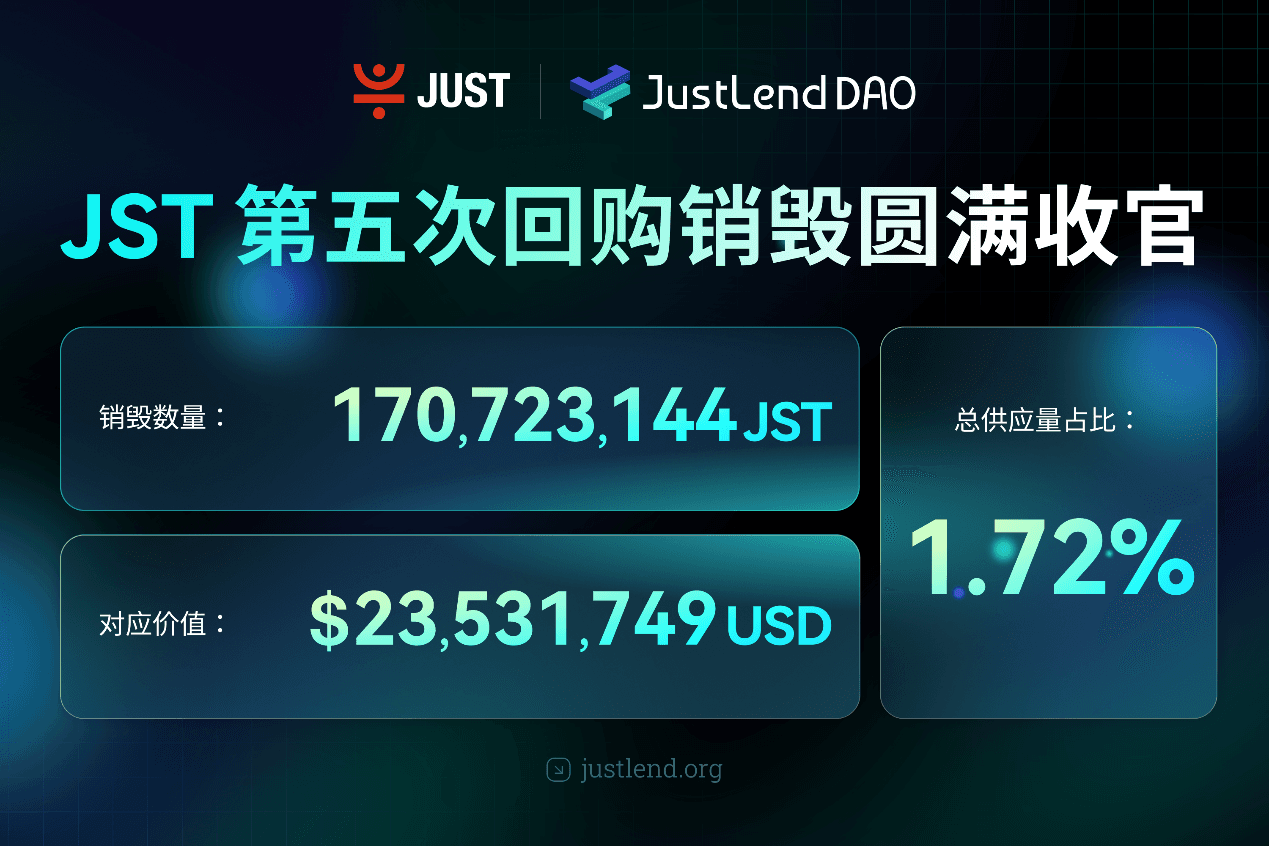
BitTorrent Brand Upgrade and Initial BTT Buyback & Burn Launch Simultaneously, Dual Engines Usher in New Era of Web3 Infrastructure
Oct 17, 20:00
Asia Market Daily: Japan's BOJ signals more rate hikes while Korea targets offshore perpetual platforms (2026/10/17)
Oct 17, 17:01Why did Papertrade backfire on you?
Oct 17, 17:01
The 'Strict Father' of Northern Myanmar: This Company Deploys 200,000 "AI Best Actors" to Strike Back Against Scammers
Oct 17, 15:34