CME Launches Single Stock Futures Trading, Stock Market Futures Aligning with Commodities

TL;DR
· CME has launched cash-settled single-stock futures, covering targets such as Nvidia, Tesla, Apple, Micron, SPCX, and more.
· Low margin requirements, nearly 23-hour trading, and linear P&L fill the tooling gap between stocks and options.
· Underlying targets: CME, NVDA, TSLA, AAPL, MU, SPCX, AMZN, META.
CME launched single-stock futures on July 27th, with the initial offering including 55 standard contracts and 22 mini contracts, covering over 50 U.S. stock targets, including Nvidia, Tesla, Apple, Amazon, Meta, Micron, and SPCX.
For investors, this provides a new way to express views. Betting on the movement of popular U.S. stocks doesn't necessarily require only buying stocks, purchasing options, or seeking synthetic exposure in other markets. By incorporating single stocks into the futures framework, CME allows investors to trade directionally with lower margin requirements over extended trading hours.
Single-stock futures are not a new product. The U.S. market experimented with them over twenty years ago, with OneChicago eventually closing in 2020. This time around, CME is testing whether U.S. single-stock futures can regain liquidity with a more mature retail derivatives market and widespread adoption of mini contracts.
Stock Directional Trading Gets a Futures Makeover
Single-stock futures can be understood as the futures version of stock directional trading. Investors do not need to physically buy or borrow stocks, and there is no stock delivery at maturity; instead, cash settlement occurs. If the underlying asset rises, long contracts make money; if it falls, short contracts make money.
The most significant difference from spot stock trading is capital efficiency. According to the CME FAQ, due to CFTC and SEC rules, initial and maintenance margin requirements for long and short positions are at least 15% of the current notional value. While actual broker or clearing margins may be higher, this threshold is still lower than the typical requirements for a stock margin account.
Low margin does not equate to low risk; it signifies higher leverage. In the event of adverse movement in the underlying asset, losses are calculated based on the full notional exposure and may exceed the initial margin deposited. Traders accustomed to trading crypto perpetual contracts are familiar with this logic; however, for novices who only buy stocks, understanding leverage is the risk that needs to be grasped first.
The difference between it and options is that the profit and loss are more linear. Options involve time value, volatility, strike price, and Greeks, where even with the correct market direction, one may lose money due to time decay. The profit and loss of single stock futures are more similar to the stock itself, making it more suitable for expressing a simple directional view or for hedging.
Another change is the trading hours. CME single stock futures trade on Globex from Sunday to Friday, with trading hours from 5:00 p.m. to 4:00 p.m. Central Time, with a daily 1-hour maintenance period, amounting to nearly 23 hours each day. This covers a broader post-market news window for Asia, Europe, and US stocks.
CME Betting on Market Structure Transformation
Tim McCourt, CME Group's Global Head of Equity Index and Alternative Investment Products, stated in the announcement that clients want to more precisely manage individual stock price risk while leveraging centralized clearing to enhance capital efficiency. CME's goal is not only to increase speculative tools but also to extend trading habits from stock index futures to individual stocks.
This logic is viable because CME already has a mature stock index futures user base, market-making system, and clearing network. Institutions can combine broad-based index futures with single stock futures for finer risk adjustments, while active retail users can utilize micro contracts to lower the entry barrier.
The multiplier for standard contracts is 100 shares, while for micro contracts, it is 10 shares. Taking popular tech stocks as an example, micro contracts are more suitable for users with smaller account sizes but who still want directional exposure. Today's retail traders are also more familiar with options, futures, perpetual contracts, and post-market volatility.
CME Chairman and CEO Terry Duffy does not shy away from acknowledging past failures. According to media reports, he mentioned during an earnings call that early attempts at single stock futures were a "complete failure," but since 2000, there have been significant changes in technology, market structure, and investor demands. This assessment is a prerequisite for the success of this round of products.
It will not replace options; rather, it is more like a third type of tool between stocks and options. It is more capital-efficient than spot trading, more linear than options, and more standardized than some OTC or on-chain synthetic assets.
SPCX is the Subject of Discussion and a Stress Test
Among these contracts, SPCX is one of the most widely recognized subjects. The CME's SER document specifies Space Exploration Technologies Corp Stock Futures, with the standard contract code as SSPCX and the micro contract code as TSPCX. SpaceX landed on the Nasdaq Global Select Market and Nasdaq Texas on June 12, 2026, with the stock ticker symbol SPCX.
The focus of SPCX is not on "unable to buy spot," but on its short listing time, high attention, and strong volatility expectation. Investors have a greater demand for off-exchange trading, shorting, and derivative exposure for such assets. Single-stock futures provide a more direct directional tool for these types of assets, without the need to deal with stock borrowing, physical delivery, or complex options structures.
It also serves as a mechanism stress test. For highly liquid stocks like NVIDIA, Tesla, and Apple, the futures price is more likely to align with the spot price. For assets with a short listing time and high attention, investors need to observe whether the settlement reference, intraday quotes, bid-ask spread, and market depth are stable.
CME's cash settlement framework relies on a clear underlying asset price basis. The FAQ shows that the final settlement price at expiration uses the official closing price of the underlying asset on major listed exchanges. The rules address the expiration pricing issue, but traders are more concerned on a daily basis about whether there is continuous quoting during the trading day and whether the bid-ask spread will suddenly widen during news periods.
Liquidity Determines Tool Value
The biggest enemy of single-stock futures is not the product design, but self-bootstrapping liquidity. Traders require tight spreads to enter the market, and market makers need active traders to quote prices. Once this cycle starts, the product will become more and more useful; if the launch fails, it is difficult to retain users even with low margin requirements and long trading hours.
OneChicago's lesson lies here. Single-stock futures are not lacking in theoretical applications, but if there is low trading volume, high educational costs, and weak brokerage promotion, it is challenging for them to become mainstream trading tools. This time, CME has a stronger platform, a more mature clearing network, and greater retail access, but these can only increase the chance of success and cannot replace real trading.
Risk should also be considered on the same chart. Post-market and significant price swings after news events may be magnified during low-liquidity periods; with lower margin requirements, investors are more likely to underestimate the speed of loss from full exposure. Futures interfaces improve trading efficiency but also amplify the feedback speed of incorrect positions.
This more reasonable positioning of single-stock futures this time is CME's provision of a new interface for popular U.S. stocks and SPCX. Its specifications are already clear: minimum margin of at least 15%, nearly 24/7 trading, linear P&L, and centralized clearing. Its success still needs to be validated by trading data.
Trading volume in the first month after launch, open interest, bid-ask spread, and market depth will better illustrate the situation than the product announcement. If contracts for NVIDIA, Tesla, SPCX, and others achieve stable liquidity, it will become a new item in the tech stock trading toolbox; if orders remain at the novelty stage, U.S. single-stock futures will still face the old problem: the tool is useful, but no one is using it.
Recommended
Desk: Brent Crude Tops $110, Musk's Net Worth Drops 528.6 Billion in Four Days After Tesla Roadster Launch
Oct 17, 21:49
JST Fifth Buyback and Burn Successfully Concludes: Over 170 Million Tokens Worth Approximately $23.53 Million Burned, Buyback Mechanism Set for Comprehensive Upgrade
Oct 17, 20:10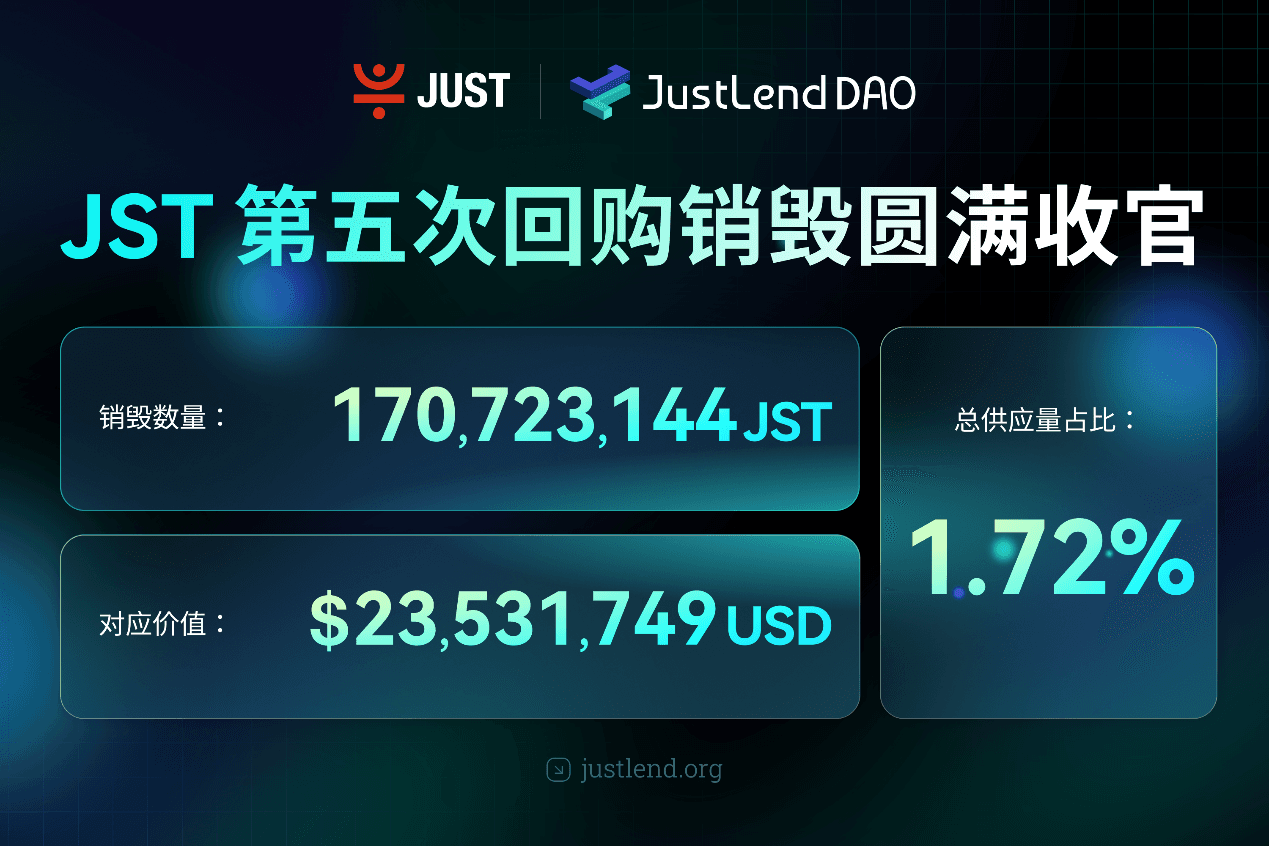
BitTorrent Brand Upgrade and Initial BTT Buyback & Burn Launch Simultaneously, Dual Engines Usher in New Era of Web3 Infrastructure
Oct 17, 20:00
Asia Market Daily: Japan's BOJ signals more rate hikes while Korea targets offshore perpetual platforms (2026/10/17)
Oct 17, 17:01Why did Papertrade backfire on you?
Oct 17, 17:01
The 'Strict Father' of Northern Myanmar: This Company Deploys 200,000 "AI Best Actors" to Strike Back Against Scammers
Oct 17, 15:34