Sam Altman's Latest Interview: What Mindset and Judgment Should We Have in the Face of Exponential Change?
Original Text: Deep Thoughts
Have you ever thought about a startup that has only been established for two weeks, being able to redesign a complete set of mainstream office software, including documents, spreadsheets, and presentations, all reimagined around AI? This is not something I made up. Sam Altman (OpenAI Co-founder and CEO) mentioned this in a recent interview after meeting such a company. Ten years ago, you could pretty much predict what a ten-week-old startup would look like. Now, if a startup that is only ten weeks old still looks like what startups looked like ten years ago, it means it's already falling behind.
This interview was very informative, covering topics such as entrepreneurship, OpenAI's journey over the years, as well as how he deals with pressure and makes trade-offs. I have compiled and added my own interpretations to the parts that resonated with me the most, and I'm sharing them with you.
Most People Are Still Choosing Easy Battles
Altman mentioned that the current time is quite interesting, with costs rapidly decreasing and the time to do things getting shorter, making it the most advantageous time for startups. This phenomenon is happening in many fields simultaneously, making it theoretically the best era for entrepreneurship. However, he observed a somewhat contradictory trend where most startups are still doing the same thing, creating an AI agent for a particular industry. While this path may work and even be profitable, it is unlikely to be the companies that will truly be remembered in this era.
What struck me as profound was his subsequent statement. Even though the tools have completely changed, and the model capabilities are still improving, people are still hesitant to truly bet on something that cannot be done now but will be achievable in two years. The temptation to directly use today's agent to solve the immediate problems is understandable, but that is not the path he would choose.
Upon reflecting, I realized that this is fundamentally a matter of patience and belief. Being willing to lay the groundwork for something that cannot be achieved at the moment is essentially a bet on the model continuing to strengthen and on the correctness of one's judgment. Most people cannot do this, not because they fail to understand the trend, but because they cannot resist wanting to see immediate returns.
Believing in Exponential Growth Is Much Harder Than It Seems
Altman mentioned a method that he has always used. Every time he meets a new person, he mentally plots a coordinate for this person, determining where they are currently and then, on subsequent meetings, observing how far and how fast this person has progressed. He said this is similar to how he assesses the advancement of model capabilities; essentially, he has a profound trust in exponential growth, whether it's in a person, a company, or a model.
He said that if he were still advising entrepreneurs, this is the one thing he would most want them to truly understand. He also said that the reason why this is so hard to be widely accepted is because the market itself has not yet adapted to the fact that the capability of the model will continue to grow exponentially, so starting now to work on projects that require smarter and cheaper models to be viable is actually completely reasonable.
I think this passage is particularly worth pondering. Believing that a curve will continue to rise indefinitely sounds like a very simple principle, but to base an entire decision on this belief requires much more courage than imagined. Most people's intuition about exponentials is wrong; they either underestimate the accumulation in the early years, or during the fastest climbing period in the middle, they begin to doubt whether things are about to stall.
The Ability to Tolerate Chaos Can Only be Learned Through Experience
There was a part that left a deep impression on me. Altman said that no matter how well a person understands a concept in their mind, there are certain abilities that can only be truly acquired through repeated experiences, such as operating in chaos, and then believing that you will eventually figure it out, that it won't kill you, that even though you don't know how to solve it now, you will. He said this is something that can only be learned and not taught, and he believes that this is the biggest shortcoming of many young founders—they have not experienced the gradual process of getting along with chaos.
He also used a very straightforward analogy. The first time you face a major crisis that could kill the company, it feels like the sky is falling, but after you get through it the tenth time, you'll think, I've survived the first nine times, so this time probably won't be so bad. He later realized one thing: bad things will always happen, so instead of resisting, it's better to learn to accept this uncomfortable process. He said most people think the opposite of a bad experience is a good experience, but in fact, the opposite of a bad experience is no experience, and in the not too distant future, you will sooner or later enter a phase where there are no ripples, so even a terrible experience is worth being grateful for.
After reading this sentence, I was stunned. We are too accustomed to treating pain as something to avoid as much as possible, but if the opposite is not comfort but emptiness and numbness, then enduring chaos seems to be not just a cost but more like a part of being alive.
What a Trustworthy Company is Really Promising to the World
When Altman talked about mission, he mentioned something he cares about a lot. One of the AI risks he is most concerned about is when a small group of people or a company believes they should control the entire world, which he calls AI authoritarianism. So what OpenAI wants to do is to make intelligence extremely abundant and extremely cheap, putting it into everyone's hands rather than a few. He emphasized in particular that they do not intend to do every vertical product themselves but rather to do the underlying intelligence well, allowing the entire economic ecosystem to grow various things on this foundation.
There was a paragraph that I found particularly interesting. He said that the things needed to create abundant intelligence – chips, energy, data centers, robots – happen to be exactly what humans will need most once intelligence becomes truly abundant. Even if ideas and creativity become worthless, we still live in a physical world and still need things to be actually made. So, energy and robots are not just stepping stones to that goal, but also things that will be immediately needed afterwards.
When I read this paragraph, my initial reaction was that this logic is quite simple. Ultimately, no matter how smart something is, if you want something to happen in reality, someone has to move the matter. But on second thought, this actually reminds us not to think of intelligence as too abstract. No matter how impressive the model is, in the end, its implementation will rely on a pile of very cumbersome, very physical infrastructure.
The Invention of the Company Is More Important Than Many Technologies Themselves
Altman talked about his childhood contemplation, as he was always curious about the Industrial Revolution. He wondered which technology, out of the bunch that coincidentally emerged in the same period and expanded at a similar pace, was actually the most crucial. Looking back from today's perspective, he believes that the truly key invention was actually the concept of the joint-stock company. Before that, business relied on trust among acquaintances, a bunch of family businesses with no concept of shareholders. After the emergence of joint-stock companies, nation-states endowed this new entity with an unprecedented status. While not giving it state power, they granted it capabilities far beyond those of individuals – the ability to mobilize capital, engage in highly risky and speculative ventures, and enable different companies to specialize in different aspects and collaborate.
He mentioned a graph that I am eager to look up, showing the decline in the proportion of the world's population living in extreme poverty and the reduction in infant mortality rates throughout human history. If we were to extend human history as a whole and mark the time when the joint-stock company was invented, the shape of these curves would notably change thereafter. He said that this was a remarkably extraordinary performance of capitalism in human society.
This passage really opened my mind. When we usually talk about startup companies, we are always discussing products, funding, and growth, rarely taking a step back to consider the company itself as an organizational form, which is essentially a technological invention that binds the interests of a large group of people together. From this perspective, entrepreneurship is fundamentally about leveraging this invention and then adding your own on top.
Believe Only a Few Things and Stay Flexible About Everything Else
Speaking about how to plan for the long term, Altman mentioned that he is not very good at working backward from the future to the present. His preferred approach is to first establish a few directions that he firmly believes in and then step forward from the current point in time, figuring out what can be done now and what can be done this year, with long-term planning for five or ten years being a rare occurrence. He mentioned seeing too many people burdened with a set of beliefs about the future, only to find themselves constrained by their rigid worldview. You may witness companies that were in the rocket business suddenly pivoting to AI – this is such a scenario. The truly useful approach is to hold on staunchly to only a few deeply believed things and to remain flexible about everything else, securely holding onto the core.
He mentioned a friend's company's core value, called the critical path, which means always focusing on the biggest obstacle in front of you, moving it out of the way, then finding the next one, moving that, and repeating this action. He said that over the years, he has always been clear that the critical path of his life is to make intelligence abundant, as long as there is no eerie concentration of power, he believes this will bring about tremendous prosperity. He said he is rarely tempted by other thoughts, rarely thinks about whether to change goals, but recently started to seriously think for the first time about what comes next, if superintelligence is really about to be created, what the next step should be.
I found it quite moving when reading this. A person who can focus on a key path for so many years, almost never distracted by other opportunities along the way, is more difficult than any planning methodology. In the end, the struggle is not really about how accurate the planning is, but about whether you can believe in a few things in the long term and filter out all the remaining noise.
Dare to Fly at the Edge
Altman mentioned that he has always believed in one principle: when in a slightly risky edge state, if the plane is ready, then board the plane. He told a story from the time when ChatGPT was just released, at that time, leaders from around the world were very nervous, some doubted if this thing was getting out of control, he could feel a storm brewing. So he listened to Brian Chesky's (Airbnb co-founder) advice and decided to go on an intensive short-term tour, Chesky had done a similar scale trip himself, to about eight cities, but they went straight to 28 countries in 35 days. He said he basically lived on the plane, the experience was very strange, although the seat was comfortable, traveling itself is very draining, jet lag, his bed, his office, all were missed.
He also mentioned an interesting criterion for judging whether something is a true trend or a false trend. The appearance of a false trend is that a bunch of people hype it up, but those who actually buy the product use it for a while and then don't like it, they won't design their lives around it, and eventually, the thing gathers dust. He gave VR as an example. The appearance of a true trend is that this thing will continue to appear in your daily life. For him, ChatGPT is almost used every day, sometimes for three hours a day, sometimes hardly at all, but it has always been a constant part of his life. He said this judgment method was summarized by him after seeing numerous startups at YC (Y Combinator). If you are willing to spend time analyzing this data, you can really see a lot.
I really like this method of judging true and false trends because it is simple enough. You don't need to look at complex growth curves, just ask one question: has this thing quietly embedded itself in your daily rhythm, or did it just excite you for a while and then get tossed aside.
Asking for the Impossible Can Sometimes Bring the Impossible
Altman shared an example of proactive asking with Codex (OpenAI's programming agent application), which he said was a profound experience of asking for something. At that time, they were significantly behind Claude Code (Anthropic's programming agent product) in the programming track. Normally, in such a situation where overturning a product category already dominated by someone else seems impossible, most people would give up and pivot to a different direction. However, they believed this matter was too important to abandon easily, so they assembled a team and entrusted them with this almost suicidal task. The result was an achievement rarely seen in business history. Now, among the best programmers around, the most widely used programming tool is this product.
He was very straightforward in saying that without the proactive asking at that time, assigning this nearly impossible task to the team, none of this would have happened. His explanation was that programming is too important for RSI (Recursive Self-Improvement), not to mention the economic value behind it. They couldn't convince themselves to give up on this track.
When I read this passage, I was thinking that proactive asking, although sounding simple, actually goes against a very strong social default setting. Everyone defaults to the idea that the winner has already been determined, so trying to compete is doomed to fail. But what Altman did here was to refuse to accept this default setting, to first assume it's possible, and then try.
The Decision to Kill a Project and the Team's Emotional Restart
In the interview, they discussed a very heart-wrenching issue: when a project has been running for over a year, has spent a lot of money, a lot of computing power, a lot of people's hard work, users are using it, and they love it, yet the plug has to be pulled, how is such a decision made? Altman said this isn't something that can be decided in one meeting; it's more like an accumulation of awareness over time. You gradually realize that this computing power, these people, this product direction, placed elsewhere can create greater value, and then you have to make this painful decision.
He gave two examples: when GPT-3 (OpenAI's early language model) was successfully running, they shut down a robot project that was equally exciting at the time and consolidated all resources into it. Recently, after the programming agent was successfully running, they again shut down Sora (OpenAI's video generation product) and the browser, two equally promising directions, to fully focus on programming. He said this doesn't mean Sora wasn't doing well; if they had continued to invest, it could have been very successful. It's just that putting the computing power and resources into the programming agent was more critical at that time.
Regarding how to get the team to accept this shift, he said that everyone actually understands the mission, understands the trade-offs behind it, even though it may be difficult at the moment. The team is also clear in their hearts why this needs to be done. Some people may be unhappy, but more people will say, "I understand why this needs to be done; it is right for the mission."
I think the most challenging part of this section lies not in the decision itself, but in how to make a group of people who have already put in a year of effort believe again that the next thing is equally worth going all in for. This requires not only judgment but also very strong communication and leadership skills.
Push Hard Only Where You Are Good, Find the Right People for the Rest
When discussing how to become better at something, Altman mentioned Johnny Ive (former Chief Design Officer at Apple) as an example. He said the most important lesson he learned from Johnny is that truly great design is more about thoroughly studying the problem itself rather than having a sudden inspiration for a solution. If you are too eager to rush to an answer or too quick to lock yourself into a solution, what you produce usually won't be very good.
He also readily admitted that he is not good at product development. He does not subscribe to the idea that you should only hire people who are deeply knowledgeable in your own field. He said he knows nothing about design, but after talking with Johnny for thirty minutes, he can tell that this person is truly talented. His principle is that instead of forcing himself to improve in areas where he naturally lacks ability, it's better to focus all efforts on strengthening what he is already good at.
There was also a rather personal detail he mentioned. During the time he was working on Sora, in order to understand the product experience, he intentionally got himself addicted to TikTok. Initially, it was just for learning, but then he found that he really liked it. What started as a quick ten-minute session before bed turned into an hour, then into three hours on a Saturday afternoon lounging on the couch. He said it felt great at the moment but he clearly knew this was not good for him. Eventually, he turned off notifications for most apps, even messaging apps, and deleted TikTok because he felt that it had too much power over him, and he couldn't control it.
When I read this part, I was quite surprised. A person who is working on creating more powerful AI products every day can also be harmed by something of his own creation and has to resort to the most basic method of turning off notifications and deleting the app to regain control. This reminds me of one thing: judgment is not something that is achieved once and for all; it requires constant self-management, even for those who understand the product design logic the best.
Some Personal Reflections
After listening to the entire interview, I feel that the underlying theme throughout is not any specific methodology but a mindset of facing uncertainty. Believing that the index will continue to rise, enduring chaos until it is no longer frightening, holding onto only a few deeply held beliefs, speaking up when necessary, letting go when necessary, and focusing all efforts on what you are truly good at. Each of these principles is not groundbreaking when viewed individually, but the real challenge lies in being able to do all these things simultaneously in an environment where all assumptions are being overturned.
Altman ended with a sentence that left a deep impression on me. He said that most startup companies today still look very similar to those from ten years ago because they have been taught the same so-called best practices. At most, there may have been a change in wording, such as advocating for hiring fewer people and allocating more funds to tokens, but this is far from sufficient. I believe this sentence is actually a reminder for everyone. The tools have completely changed, and if our mindset remains stuck in the old paradigm, then regardless of how radical we may sound, the products we create will most likely still belong to the past.
Recommended
Desk: Brent Crude Tops $110, Musk's Net Worth Drops 528.6 Billion in Four Days After Tesla Roadster Launch
Oct 17, 21:49
JST Fifth Buyback and Burn Successfully Concludes: Over 170 Million Tokens Worth Approximately $23.53 Million Burned, Buyback Mechanism Set for Comprehensive Upgrade
Oct 17, 20:10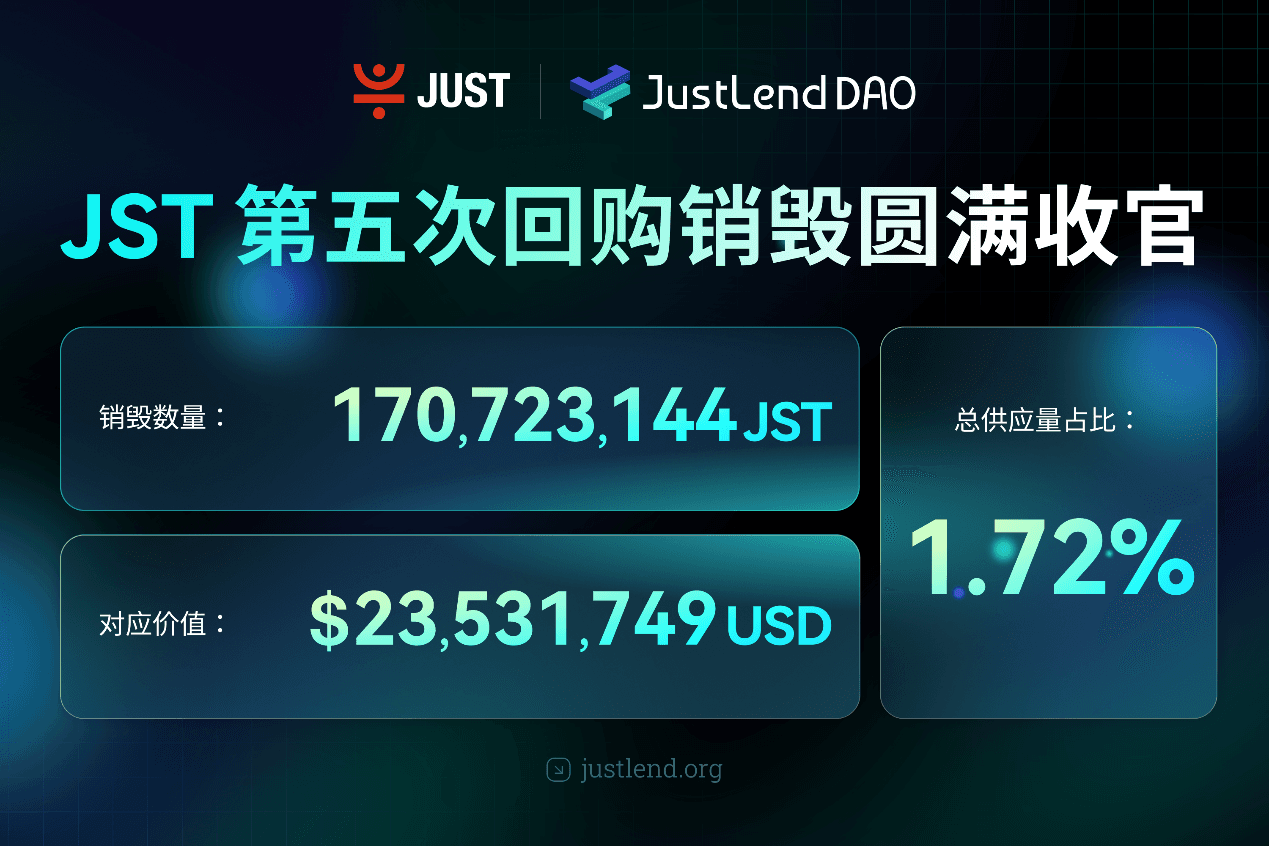
BitTorrent Brand Upgrade and Initial BTT Buyback & Burn Launch Simultaneously, Dual Engines Usher in New Era of Web3 Infrastructure
Oct 17, 20:00
Asia Market Daily: Japan's BOJ signals more rate hikes while Korea targets offshore perpetual platforms (2026/10/17)
Oct 17, 17:01Why did Papertrade backfire on you?
Oct 17, 17:01
The 'Strict Father' of Northern Myanmar: This Company Deploys 200,000 "AI Best Actors" to Strike Back Against Scammers
Oct 17, 15:34