Haseeb on Crypto VC: Sorry, Some Things Will Never Come Back

In an interview with MAD Society on July 15, 2026, Dragonfly Managing Partner Haseeb Qureshi discussed crypto venture capital, founder judgment, and industry long-term trends. He believes that the key to venture capital is to seize a few non-consensus opportunities. Outstanding founders should have prominent "peak abilities," but a lack of integrity and inconsistency are clear warning signs. Haseeb also stated that some structured products, single-asset tokenization, and other directions are unlikely to form long-term businesses, while DeFi, stablecoins, payments, and prediction markets will continue to exist. In the long run, cryptographic technology will eventually be integrated into various financial and technological products, and the label "crypto company" may gradually disappear.
The audio transcription was completed by GPT and may contain errors; please watch the original video on YouTube.
Poker and Venture Capital: Building Judgment Discipline in a Long Feedback Loop
Haseeb Qureshi: There isn't much overlap between poker and venture capital. Poker and trading are very similar because they have very fast feedback loops, allowing for very tight, rapid iterations. When you play a hand, you immediately know if you've won or lost and whether your decision was correct.
However, in venture capital, the feedback loop is very slow. When you invest in a founder, it may take many years to know if your initial judgment was correct. In the first year, you may see some initial signs, such as the company’s growth and gaining some market recognition. Even if a company has completed Series A or even Series B funding, it may still suddenly encounter problems. It may seem to be progressing smoothly for several years, but the founder may have a fatal flaw that eventually causes them to fumble the ball on the last play of the last game of the season.
So the reality is, it's challenging to quickly assess whether you, as a venture capitalist, are doing well enough. Many funds raised money based on early portfolio markups, only to later discover that there were no real winners in the entire portfolio. Suppose you had early investments in Axie Infinity or OpenSea. You might have thought at the time, "Wow, I'm an amazing investor, I'm doing so well."
Several funds also made early investments in FTX. People would say, "Oh my, this person is simply a prodigy in the investment world. Can you believe they participated in FTX's seed round?" But just a few years later, the situation became, "Well, this fund doesn't seem that special now." Because its most prominent star project has already gone bust.
Venture capital is very unique in this regard. This means, first, you must proactively build a feedback loop for yourself rather than expect the world to give you direct feedback. As a venture capitalist, you must continuously learn and improve, but the success of an investment is often only realized many years later. Therefore, feedback must come more from your own evaluation of your performance rather than external results. For many people, this is very challenging.
Another difference between venture capital and poker is that venture capital is a team sport, while poker is a solo game. You are certainly playing cards with others, but fundamentally, you are alone against the entire table. Venture capital is not like this. You can only succeed if the founders you invest in succeed; you can only truly win if your fund succeeds and the projects done by other partners in the fund also succeed. Therefore, venture capital heavily relies on collaboration and relationships.
However, if you are a poker player, you basically don't need to care about other people in the world. As long as you can sit at the table, play well, and continue to profit, even if you have no friends, you can still become a successful poker player. This is another very different aspect between the two. Most truly exceptional venture capitalists are very good at managing relationships. I don't think I am particularly good at this, but I have certainly improved a lot compared to the past, and I am better at building relationships than most traders I know.
Most traders don't need this. Like poker players, they don't need to be friendly, excel at interpersonal skills, or have a vast network. Therefore, the abilities in poker that can truly help you succeed in venture capital are mainly the ability to think clearly about risks and the ability to control emotions well. I have found that many venture capitalists are not actually good at these. They may be very emotional and have difficulty dealing with conflicts.
These happen to be two things that I am relatively good at. However, to be honest, compared to other core competencies required in venture capital, I don't think the importance of these skills is that high.
Who is the "GOAT" of Crypto VC?
Haseeb Qureshi: Who's the best at hitting the ball? I would say it's probably the most controversial investor in our industry, Kyle Samani. Of course, he has now moved past the stage of personally hitting the ball, like Babe Ruth retiring. But in terms of measuring by the internal rate of return and P&L generated per dollar invested, he may be more outstanding than anyone else in the industry. Therefore, if there is a "GOAT" in the venture capital field, it can only be Multicoin Capital's founder, Kyle Samani.
He is a very non-consensus person. Wherever he goes, he often sparks a lot of controversy. But he is a true contrarian investor, and the best venture capitalists usually possess this contrarian thinking: they do not simply replicate what others are doing.
As for how to hit that ball, I think this is the most challenging part of venture capital. You can easily convince yourself to believe in a project, such as: "a16z Crypto is also investing in this deal," "Paradigm is also investing in this deal," or "this company is really hot right now, trending on Twitter, everyone is talking about it." Especially in the crypto industry, many investments are made before the project has achieved product-market fit.
For example, there is a new Layer 1 about to launch; or suddenly Bitcoin Layer 2 becomes very popular, Babylon is hot, and other similar projects are also hot. These concepts may not have proven themselves at that stage, but they have received significant attention, rapidly spreading in everyone's minds and collective discussions. In this situation, it is difficult to firmly tell yourself, "No, I am right, I don't believe in it," or conversely to firmly believe, "I believe in this project. Even though no one is talking about it now, and no one cares, everyone will care in the future."
It is very difficult to do this. As for how to quiet your mind, focus on hitting the ball, I think the answer lies in the discipline established by the investment committee. This is also why venture capital firms typically operate as teams rather than individual investors. When you make judgments alone, you are very susceptible to group pressure. There are too many external voices and too many forces that can influence your thinking.
But when you are part of an investment firm, and that firm has established an institutionalized culture, such as "we will not believe anything without verification," the situation is different. Even if you have been influenced to some extent, your partners may not be influenced. Your partners may say, "I will never approve this investment solely based on these claims.
You have to prove to me. If Bitcoin Layer 2 is indeed that good, bring out the data, bring out the evidence. What is your argument? Let's truly lay out the logic and go through it step by step." If you can't do that, I won't believe it. This discipline is what Dragonfly has gradually developed over the years and is the culture we have formed as an investment firm. But if an organization lacks this discipline, I think it is challenging to become a truly outstanding investor.
What is the biggest blind spot for Crypto VCs?
Haseeb Qureshi: I think if you are a crypto venture capitalist, you are essentially a product of the crypto cycle. Anyone who has been in this industry long enough has experienced the market's ups and downs and has also experienced a certain emotion: "Well, these things don't really matter, everything is meaningless."
Not long ago, "Financial Nihilism" was still the dominant cultural trend on Crypto Twitter. People believed that these things were all unimportant, had no real value, and were all just memes.
The situation is different now. I wouldn't say today is still about financial nihilism, but more like: "Not everything is unimportant, but only a few things are important, and only things that generate income are important. Projects without income are not important." If you are a crypto venture capitalist, you can easily fall into this view: the market is caught in a Hegelian dialectical cycle, things come and go, go and come, and the future always holds endless prosperity and downturns waiting for us.
The longer you stay in the crypto industry, the more cycles you will experience, and in the end, everything seems to be cyclical, under which there are more cycles. But if you are hypnotized by this view, believing that things will inevitably develop in this way, I think you may make a very serious mistake as an investor because you have not thought deeply enough about what changes the future may hold.
Another question that I think people don't think about enough is: Crypto venture capital may truly come to an end at some point. There may be a last year when there are significant investment opportunities, and after that, there may not be many new opportunities in this space. For example, social media was one of the most important technology trends of the 2010s. You can look at Google, Facebook in the public markets, and Microsoft entering this space through the acquisition of LinkedIn. The largest social media networks have continued to grow and expand.
However, venture capital for social media companies basically ended around 2009. After 2009, there were hardly any new social media companies created. ByteDance behind TikTok is almost the only company that has successfully built a truly meaningful business after that. Although the products themselves have evolved, the platform landscape has hardly changed. It's still basically Meta, WhatsApp, Instagram, etc., which existed in 2009.
So, the crypto industry may also follow a similar development path. Even if the crypto industry continues to grow, stablecoins continue to grow, Bitcoin continues to grow, Ethereum continues to grow, all these metrics continue to trend upward, but assuming that by 2030, almost all important companies have already been established, existing platforms have become very large and are still growing, then the space left for new players to enter the market and disrupt them may be very limited.
I don't know if this scenario will definitely happen. Even if it does, I don't know exactly when. But it is almost certain to happen at some point. Almost all industries will eventually develop in this way, especially in industries with economies of scale and network effects, both of which the crypto industry happens to have.
But I believe that most crypto venture capitalists have not seriously considered this issue. This may be a potential blind spot: because we have always been doing this in the past, we assume that we can continue to do so indefinitely in the future. In the consumer industry, new consumer companies may always emerge. However, it is uncertain whether new crypto companies will continue to emerge indefinitely. It may or may not.
Which Hot Tracks in the Crypto Industry Are Difficult to Sustain Long Term?
Haseeb Qureshi: In fact, many tracks are already essentially dead or dying. Occasionally, we still receive introductions to some of these projects, such as someone saying, "I'm working on a Bitcoin Layer 2 with lending capabilities." We still occasionally see these projects, but they are now quite rare. One type of project I often see now is structured products built on Hyperliquid. For example, someone might say, "This is a CLO built on top of Hyperliquid. The CLO market itself is very large, so there will definitely be a huge CLO market on Hyperliquid as well."
We still see many similar complex financial products trying to launch on Hyperliquid or some relatively independent trading venue. I think these projects may soon decrease because they are not real businesses. Building only one type of financial product is hard to constitute a business. Historically, very few companies have been able to build a real business solely by selling a single financial product.
Especially when you do not control the distribution channel. If the distribution channel is controlled by Hyperliquid, then you are essentially just a reseller; or conversely, Hyperliquid is just a reseller channel for your product. Neither scenario is a particularly attractive business model.
What other tracks might disappear? Many people are currently tokenizing individual assets, such as "I want to tokenize a gold mine" or "I want to tokenize these cars." However, this is also not a company; at most, it is only a product. This product's existence may be a good thing. But unless you are tokenizing truly massive assets like U.S. Treasury bonds or stocks, and can scale them sufficiently while truly addressing the distribution problem, those projects that simply say, "I want to tokenize this asset I own, please invest in me, venture capitalist," I think will gradually disappear, and may even already be disappearing.
In the traditional venture capital field, there is a classic joke: there are some directions like a "pothole" where founders always keep falling into. When transitioning, founders often coincidentally think of the same idea and then repeatedly pursue it, even though venture capitalists are always telling them not to.
One typical direction is the dating app. Founders always seem to consider whether to create a dating app whenever they think about pivoting. This is usually because most founders are young and single, so they spend a lot of time pondering dating issues. Another common direction is "Co-Founder Matching." Founders often come up with this idea because they themselves are looking for a co-founder, so they feel they should develop an app to help others find co-founders.
There are also plenty of productivity tools, such as "I want to build a better to-do list app" or "I want to create a better Asana." These fall into the category of a "bad idea rut." People always circle back to these directions. The crypto industry, of course, also experiences a similar phenomenon.
One of the most common ones I've seen is the "Bloomberg of the Crypto Industry." This is quite interesting because as early as about ten years ago, when I first started in venture capital, the "Bloomberg of the Crypto Industry" was already not a great idea. At that time, people were pitching me this kind of project, and almost every year since then, someone else continues to pitch it. However, they usually don't really understand what they are talking about. What does a "Crypto Industry Bloomberg Terminal" actually mean is somewhat vague. What specific features should it provide? What problem should it solve? These questions often do not have clear answers.
Now it's already 2026, and you need a more precise, more accurate entry point, rather than relying solely on the slogan of the "Bloomberg of the Crypto Industry." I don't know if this can be considered a trend; it's more like an interesting little phenomenon: many such ideas always linger in the industry and never truly disappear.
How Can Young Investors Stay Objective and Make Clear Judgments Amid Market Hype and Noise?
Haseeb Qureshi: Frankly, my advice is to interact less with some people. I think many newly minted venture capitalists make a mistake of interacting with too many people, leading their own views to become an average of the views of the people around them. As a venture capitalist, forcing yourself to think independently is crucial. It's easy for people to tell themselves, "Of course, I am thinking independently, I have my own ideas, I have written blogs, and I take notes after discussing with others." But the easiest way to lose your ability to think independently is by interacting with too many strongly opinionated people.
I'm not saying you shouldn't interact with anyone. But most venture capitalists I know are essentially collages of the views of the seven people they interact with the most. The more time you spend alone, thinking, reading, and learning, the more likely you are to develop genuinely unique viewpoints. These viewpoints may not be correct or precise, but at least they are different from the views of those around you.
And the most likely way for you to achieve excess returns is to think differently from others. Of course, there is a risk of misjudgment in doing so, but it could also mean that you are correct in something that everyone else has overlooked.
As a venture capitalist, what you are rewarded for is this ability. You don't actually get heavily penalized for being wrong in judgment. Suppose you have a portfolio of 50 projects, and 15 of them were misjudged, who would care? What truly matters is whether you have seized on that one project that everyone else missed but you judged correctly. And this comes from your unique thinking ability.
This also requires a certain level of confidence. It is a very easy and safe practice to communicate with many people. You can say, "Well, this is my view on the new type of bank because I have talked to five people, and they all have these views on the new type of bank, so I averaged their opinions and will share them in the next podcast episode."
But not doing this demands much more from you. You need to reexamine these viewpoints, make judgments from scratch, and truly independently think about what you believe in. And as I said earlier, the cost of misjudgment is not actually that high. I believe most people are truly optimizing on how to make themselves look smart or good at their job rather than how to actually do their job well.
That's why I always say Kyle Samani is the greatest in the history of venture capital. He's crazy, right? He clearly lives in his own world and has very strange views on many things. He has missed out on many trends and often confidently says, "I think something will definitely happen next." Only to be completely wrong. But that doesn't matter at all. As long as you are correct in one judgment, and that one time is enough to cover all other mistakes, who would care?
Venture capital is not a business where you have to appear faultless or make a certain audience or focus group think you are smart and respectable. The true way to win in venture capital is to be correct on the one thing that everyone else misjudged.
What are the experiences of raising $1 billion?
Haseeb Qureshi: During the fundraising process, you will realize that there are radically different ways of fundraising, and each way can lead to success. One way is to truly build trust with someone, understand them on a personal level, get them to identify with you, and be willing to invest in you because they believe in who you are and your vision.
I am not good at this method, not at all. I am a rather socially inept person. It may not seem like it, but it is indeed the case. Faced with many investors and allocators of capital, I find it difficult to establish deep relationships with them. Fundraising has many successful strategies, and there is no one path. The area where I find more success and which is relatively my strength in fundraising is dealing with institutional investors. What institutional investors value the most is whether you can demonstrate an extremely high level of ability, knowledge, and a comprehensive understanding of your field.
But if the other party is a family office or individual investor, the relationship and trust often become much more important. They usually want to know you for a long time, truly understand who you are and how you work. They want to be able to call you anytime, even occasionally share a beer with you. Institutional investors, on the other hand, are looking for something else: they want to confirm that you are the best person in this industry. Compared to everyone they have met or heard of, you are the most skilled at doing this.
You need to present the tightest, most reliable argument, explain why you will win, and others will lose, and provide facts and performance as evidence. Fundraising of this kind is usually where I excel. But the reality is, if you are raising a large amount of money for a fund, this is still a team effort. You need people skilled in different fundraising methods, each covering different parts of the fundraising market.
If you are an entrepreneur, you typically mainly raise funds from venture capital firms, may also come into contact with some corporate investors or individual investors, but mainly venture capital firms. And venture capital firms are actually quite similar to each other. If you are a fund, you need to raise funds from different pools of capital, and the differences between these pools are very large, far from being as similar as venture capital firms are to each other. Fundraising from university endowments, hospital foundations, insurance companies, public pension funds, and family offices are all completely different experiences.
Facing these different groups, you need to use different skills, different angles, and different narratives to make fundraising truly effective. Therefore, fundraising itself is an independent capability. Truly excellent venture capitalists are good at both investing and fundraising. Over the years, I have made some progress in fundraising, but I still cannot be considered a world-class fundraiser.
What traits do successful founders generally possess?
Haseeb Qureshi: From my observation, a high degree of mental flexibility is perhaps the best predictive indicator. People often think that being a founder requires certain entrepreneurial skills or CEO skills. However, the reality is, if you have founded a successful company, your job will change every two to three years. Leading a company of just 3 people, 15 people, 100 people, and 1,000 people actually requires entirely different capabilities.
It's a bit like going from the head of the PTA to a small town mayor, and then to the President of the United States. These are actually three completely different jobs that require entirely different skills. Someone who can serve as the U.S. President does not necessarily mean they will be an excellent PTA member, nor does it mean they will be an exceptional small-town mayor.
True adaptable founders usually maintain a strong curiosity for learning, are willing to change their minds, abandon old frameworks, and adopt new ones. On the other hand, founders who are not good at dealing with scalability often say: "When we were only 7 people, I always did things this way, why is no one listening to me anymore? Why has the product development speed slowed down? Why are there suddenly so many political issues in the company?"
They would think that these are all problems that must be solved completely. They might say: "There is too much waste in the company now, many bureaucratic issues have arisen in our management, I must fire them all and take the company back to its most basic state." I'm not saying these problems don't exist at all; they often indeed do. As the company scales, experiencing growing pains is almost inevitable.
However, the best founders will proactively explore: how their work should change as the company grows to a certain size. They will also adjust their abilities to meet the new job requirements. Managing a company with 1,000 employees is more like governing a small town. You need political skills and diplomatic skills to manage an organization of this size.
In contrast, managing a company with only 7 people mainly relies on execution ability. A team of 7 people does not need much management because everyone is in the same boat, rowing in the same direction. You don't even need too much communication; just see what others are doing and move forward together.
But when a company has 50 people, 100 people, or even 1,000 people, everything revolves around communication. In a company with 1,000 employees, you personally are almost impossible to have a substantial impact on the company by doing the work yourself. Everything you do is done through directing the entire team as a leader, clarifying the direction for them, inspiring them to put in extra effort, truly focusing on every detail in the product, and building an excellent product. This is why I say, for most founders who have already grown their company to a certain size, the most difficult thing is to adapt to these changes in their job role. Not everyone can do this well.
When we assess whether a founder is likely to succeed, we usually look for their particularly outstanding "peak ability." Our philosophy is to invest in a person's strengths rather than invest in a person with no obvious weaknesses. Almost every great founder has weaknesses. For example, in the early days of founding Facebook, Mark Zuckerberg was clearly not an excellent leader and had very obvious weaknesses in leading a team. But in his area of expertise, he reached a world-class level.
Almost all founders are like this. Uber founder Travis Kalanick is also a very famous example. He has extremely prominent strengths, but also very obvious weaknesses. This is almost a universal rule in the entrepreneurial field: the most outstanding founders are usually not well-rounded individuals. Those with a broad range of talents are more suitable to serve as executives in a company that has already scaled up. They almost never truly mess things up, rarely say the wrong things, and are not likely to make others feel deeply dissatisfied with them. Such people would be excellent managers in mature large companies.
However, they are usually not good at going from 0 to 1, nor are they good at leading a startup through the successive phase transitions that occur during the growth process. So, we can accept founders with serious flaws. To invest in truly great companies, I believe you must accept this. What we cannot accept is a founder who does not have particularly outstanding abilities in any aspect.
Host Mia: Then let me turn the question around. What signs indicate that a founder may not succeed? Let me set a scenario: the project idea is great, has scalability potential, the team is excellent, everything on paper seems fine, they have even successfully attracted a lot of quality fund investments, but you always feel that something is off. What is usually the problem?
Haseeb Qureshi: One of the most obvious issues is integrity. If this founder is not completely honest or transparent, it can be very dangerous. Of course, every company tends to exaggerate to some extent during fundraising, saying things like, "We will dominate the world," "We will reach an incredible scale," "We will achieve this, and that," "We will partner with a certain company tomorrow." But when you continue to inquire, "Specifically, what kind of partnership?" things may start to become vague.
Confidence is one thing, but confidence sliding into dishonesty is another. This is a very strong warning signal because this kind of behavior only escalates. I have never seen it improve as the company develops, only seen it worsen.
So, this is almost a problem that can directly terminate the investment process. If we find a founder engaging in repeated dishonest behavior, we will say, "Forget it, we won't invest." Another issue is whether actions align with words. Many investors make a very common mistake: they love the story, love the founder, love the team, love the market, but some things just don't add up.
For example, the founder says they are very eager to close this funding round, but in reality, they are very procrastinating, and progress is not swift. Or, the founder claims to have high confidence in the company, with a high demand for investment in the market, but is willing to compromise on all funding terms, even accepting a less than ideal valuation. These behaviors are inconsistent, and the whole story is not entirely coherent.
Inexperienced investors often overlook these issues. They may think, "Maybe it's just because I'm so exceptional that the other party is willing to offer me such terms," or they may look for some seemingly harmless explanation for these inconsistencies. But almost every time, when a startup's actual behavior doesn't align with the story it's telling, it means you're missing some information. And when you don't know what you're missing, that usually isn't in your favor. In fact, that's the answer: if you don't know what the problem is, it's likely not something that benefits you. If you truly understood the truth, you might not want to invest anymore.
So, what I'm talking about is not a specific issue but a type of phenomenon. As your investment experience grows, you will gradually learn to recognize them. You'll develop an intuition: "Wait a minute, my alarm bells are already ringing. Let's hit the brakes first; something doesn't add up, but we don't know what exactly." When you don't know what the problem is, it's likely not an answer you'd like to see.
Host Mia: How often do you encounter founders lying? Is this a common situation?
Haseeb Qureshi: Most projects never progress to the stage where this needs to be investigated. Whether founders lie or not isn't crucial because we may have decided not to invest from the outset, or we might not even proceed with further due diligence. When we do get to the in-depth due diligence stage, instances of founders lying are relatively rare, but not so rare that they never happen at all.
What's more common is actually hype. For example, the other party may say, "We're about to partner with NVIDIA," or "ByteDance really wants to participate in this funding round." But when you actually reach out to ByteDance or NVIDIA, they may say, "We're still considering it." This situation is very common. I usually don't directly consider it a lie. The founders are obviously trying to persuade us to invest, and they are genuinely excited about their company. They may not even accurately assess the situation and sincerely believe that the other party will definitely participate, they just don't know the final outcome yet.
After all, this is their own startup, and these founders may still be young and inexperienced. So, I generally don't conclude, solely based on this exaggeration, that "this person is untrustworthy, and they are deceiving me." However, if someone is truly lying about a crucial fact, that's very rare. But such a scenario does happen, and once it does, the investment process is basically terminated outright.
Host Mia: In the past, solo founders were usually not well-received, but now in the AI era, solo entrepreneurship seems to be gaining more recognition. Did you previously have a framework for evaluating solo founders? Why do you think there was such a bias in the past? Can one truly run an entire company alone now?
Haseeb Qureshi: Yes, and solo entrepreneurship has always been possible. The issue is not how difficult it is to start a business alone, but rather that among those who choose to start a business alone, there is often a sort of reverse selection. If you are truly exceptional, there are usually people willing to work with you, to co-found a company with you, and you have the ability to find very strong co-founders. If no one is willing to start a business with you, it may mean that you have not yet realized that your abilities are not sufficient to work alongside those you want to collaborate with; or it may be that you think you are stronger than everyone else, but in fact, you are not. Perhaps it is simply that you cannot get along with others. And that is not a good sign for starting a company because you need to win allies and clients, do good recruitment, and retain employees, and so on.
However, if we believe that the individual in question does not have any issues but simply chooses to start a business alone, then we do not mind and can fully accept it. Therefore, a solo founder is not necessarily a negative signal; it's just that statistically, the likelihood of a solo founder turning into an unqualified founder is somewhat higher.
Another issue is that founders often have some kind of fatal flaw. For instance, a founder may have extremely strong technical skills but lacks any business acumen, business experience, or sales experience. If they were to start a business with someone who has these abilities, then the team could be complementary and cover each other's weaknesses. In this scenario, we would not be as worried about the downside risk for this founder-CEO duo. However, if they are a solo founder, we would be more concerned: who is there to stop them from making mistakes?
Even if they were to later hire a Chief Business Officer or a Chief Operating Officer, the reality remains that the founder always holds a special place within the company. Regardless of whether the founder is aware of their weaknesses or has hired a COO for this purpose, this fact does not change. Professional managers such as COOs, CBOs, or heads of sales always hold back to a certain extent because they do not truly have control over the company. When one lacks control, it means the founder will create a "power-distorted field" within the company, regardless of whether the founder himself is aware of this.
If there is another co-founder within this "distorted field" sitting in this bubble with the founder, they can have a very powerful corrective effect to help the company avoid failure due to the founder's weaknesses. This is why venture capital firms pay attention to the issue of co-founders. But if a founder does not have these obvious weaknesses, then solo entrepreneurship is also completely fine.
Navigating the Crypto Startup Journey During Industry Downturns
Haseeb Qureshi: Without understanding a person and their specific circumstances, I am very reluctant to give advice. It's a bit like giving life advice to a young person. You know they are in college, so you tell them, "You should do this, choose this major, and then do those things." But in reality, you do not know this person, nor do you understand their environment, particular situation, and personal capabilities.
I believe that giving generic advice without understanding the specific situation is not just challenging, but likely irresponsible. The only advice I think might be universally helpful is that many times, what truly hinders people from making the right decision is shame. People feel a strong sense of shame due to the time, effort, money already invested, funds raised, and reliance on their team. These emotions prevent them from making the ultimately right decision.
And the right decision could be to close the company, accept an acquisition, pivot to something else, or even persevere. But for many founders, the most destructive factor is feeling shame for making a certain decision or deviating from the current established path. So, the only advice I can offer is: make every effort to let go of this shame. Try to imagine that the person in this situation is not you, but someone else. Faced with the exact same situation, what advice would you give to them?
Host Mia: I think this largely depends on whether they have confidence in believing their judgment is correct. So, this question can also be reframed: How should we view the industry's current state? Perhaps people can gain some insights from it and make their own decisions.
Haseeb Qureshi: I think it's obvious that some things in this industry will never come back. If you're still holding onto an NFT, hoping for another NFT cycle to come around one day, then I would say you might want to let go of that and move forward to find other directions that are more worth your time, capital, and talent. On the other hand, there are areas in the industry that will indeed come back because they have strong cyclicality. DeFi is a typical example. Many DeFi projects are currently in a very tough spot, but I believe DeFi will never disappear. It will become a foundational part of how the future world and the crypto industry operate.
So that's why I say it's difficult to discuss these issues in broad strokes. Tolstoy has a very famous line in "Anna Karenina": "All happy families are alike; each unhappy family is unhappy in its own way." I think this quote also applies very well to startups.
NFT Won't Come Back, but DeFi, Stablecoins, and Payments Will Stay Long-Term?
Haseeb Qureshi: I believe the prediction market will persist, Layer 1 will endure, and DeFi will also endure. The layer connecting the on-chain and off-chain worlds will evidently persist, including fiat on/off-ramps and various fund flow channels. Cross-border remittances will persist, payments will endure, stablecoins will clearly persist, including stablecoin issuers, payment rails providers, etc.
In my view, these domains can almost certainly be expected to remain important. As for most other domains, it is much harder to say.
Host Mia: You predicted that a major tech giant would either integrate or launch a cryptocurrency wallet this year. Which Web2 company is currently closest to actually doing this? And which company has completely missed the train?
Haseeb Qureshi: First, it's important to note that my prediction has already proven to be correct. I made this prediction back in January of this year. Subsequently, around March, there were reports that Meta would be launching its own stablecoin wallet. So, I have been right on this prediction. Meta has announced that they will provide stablecoin settlements for content creators in emerging markets. I recall this feature was launched on Instagram. Next, they will continue to expand this business and may soon launch a wallet.
Evidently, ever since Libra, Mark Zuckerberg has been very bullish on the crypto industry. He clearly believes in this space. So I think Meta may be the company that is likely to be the first mover in this race. However, if you look at the recent announcement of Open USD, also known as OUSD, you will see another possibility. OUSD is launched by a stablecoin alliance that includes various companies. Google is also on the list as a member of the Open Standard Alliance.
Therefore, there may be a future gUSD, the so-called "Google USD." It could be introduced as a wrapped version built on top of OUSD. OUSD is expected to launch later this year. However, I have some skepticism about OUSD. I have been discussing this on Twitter recently. I should have also mentioned this on the "Chopping Block" show this week, where I expressed that the success of OUSD may not be very high.
The reason is that this alliance consists of around 140 companies. It is somewhat like a United Nations-style organizational model: too many participants, everyone wants to be part of decision-making, and responsibility is divided among the members. Such a model usually does not lead to good outcomes. Just this morning, we have already seen some signs. I was discussing this on Twitter at that time too. Some Korean companies that were listed, such as Samsung, Dunamu, and other enterprises, publicly stated afterwards: "We don't know why we are on this announcement. We are not aware of it, have not signed any formal agreements, and do not understand why they included us."
More companies may respond in a similar manner, saying, "We thought we only signed an MOU and did not agree to you announcing to the world that we are participating in launching a stablecoin." By the way, about five years ago when Libra was launched, something similar happened. So, an old story is playing out again.
Host Mia: I'm not sure. Meta often talks about doing something, keeps the product running for a while after launch, and ultimately doesn't really succeed. So, when I hear that Meta is going to launch a wallet, my first thought is: How long can this product last? Three months?
Haseeb Qureshi: I also don't know how long it will ultimately last, but how can we not consider this? Meta is a top-ten global market cap company. When it comes to reaching emerging markets, no other company can compare to Meta. Look at regions like India, Southeast Asia, and Latin America, where many people's daily lives are almost inseparable from WhatsApp. Instagram is clearly ubiquitous on a global scale as well.
These are massively scaled platforms with very broad reach. Therefore, I wouldn't underestimate Meta's move to launch a stablecoin wallet. Among the companies that can reach a large number of user wallets, the only company that may have a stronger reach than Meta is Binance.
Why Isn't the Best Technology Always the Winner?
Haseeb Qureshi: I used to believe that the best technology would always prevail. I was a staunch believer in this early on, but I gradually gave up that view and no longer believe in it. Instead, it's a combination of multiple factors, including market entry strategy, distribution channels, partnerships, product quality, and user experience, all the obvious factors. I think it comes as no surprise to anyone that "the best technology may not always win."
But I may have had a somewhat idealistic view in the past: the crypto industry was initially created by technologists, and those true technical experts who delved deep into the underlying code and algorithms were also the taste-makers of the industry. They would ultimately stand guard for others, judging which technologies were excellent enough, which systems were robust enough and trustworthy to be used with confidence. However, today we have entered a world where many people are no longer so concerned about these issues. Perhaps this is a normal phenomenon, maybe even inevitable. Nevertheless, seeing the industry may eventually converge on some solutions that are not necessarily the best we can offer is still somewhat regrettable.
Host Mia: Have there been other beliefs you used to hold but no longer resonate with?
Haseeb Qureshi: I once believed that cryptocurrency fundamentally opposed state power and, as its scale grew, it would eventually be banned in almost every place. Cryptocurrency would have to continue to develop in this underground, anti-authority state and prove its value.
But that's absolutely not the world we live in now. Bitcoin has become the underlying asset for ETFs in the United States, Japan, Hong Kong (China), and Europe, and stablecoins are now also legalized. You can now instantly send $100 million to someone in North Korea, and no one will stop you before the transfer takes place, with the stablecoin system itself being entirely capable of operating legally. Of course, transferring funds to North Korea would clearly violate sanctions and is illegal. However, technically preventing a stablecoin from reaching its destination address beforehand is not how the current stablecoin system operates. This system itself is fully within the legal framework.
The world we see today has taken me by great surprise. Ten years ago, I would never have predicted this. It fundamentally changes my understanding of the essence of cryptocurrency and the role it will play in the entire financial system. In the past, cryptocurrency was a rebellion. The current situation is a bit like the United States. The United States itself was established in a rebellion. A group of people thought taxes were too high, so they took up arms, overthrew the existing government, and built a new nation from scratch.
But now, the United States has become the establishment itself. It is now one of the world's longest-running independent constitutional governments. If you live long enough, you eventually see yourself turn into your parents. That's probably the moral of this story. Bitcoin was born out of a rebellion against the banking system, but now, we are beginning to negotiate with banks. In fact, that is exactly what is happening around the "CLARITY Act." So, things are indeed changing.
What is the biggest mistake the crypto industry has made?
Haseeb Qureshi: The biggest mistake we've made is idolizing Sam Bankman-Fried. I believe that's the biggest mistake the industry has made.
Host Mia: Is that the most serious out of everything that has happened in this industry?
Haseeb Qureshi: Yes, I would say so.
Host Mia: Do you think we'll encounter similar events in the future?
Haseeb Qureshi: Probably not. It's a bit like the global financial crisis. Back then, it was a crisis triggered by real estate, but the next crisis usually doesn't appear in exactly the same form because people will establish many defense mechanisms and rules to detect similar issues earlier.
Now, we have proof of reserves, as well as numerous detectives and analysts continuously monitoring on-chain data, marking the flow of funds in and out of various exchanges, and checking the solvency of platforms. Various regulatory measures being introduced now, including the rules Binance must comply with in the EU, are essentially aimed at preventing the next FTX from emerging.
This means that we may not see another FTX that is exactly the same. However, other issues will still arise. This is certainly not the industry's last failure, nor will it be the final public scandal. However, it is likely to be the last crisis of this kind.
Host Mia: This industry has experienced some major turning points, and FTX should be one of them. Of course, these turning points do not always make the industry worse; some moments have brought about significant positive changes to the entire industry.
Do you think there will continue to be such major moments in the future? As the industry matures, the likelihood of such events seems to be decreasing. For example, Trump issuing a token was a very significant event. I feel like there is almost a big event every year, but I don't know if we will gradually lose these major turning points as the industry continues to mature. Do you think we will still see such moments in the future?
Haseeb Qureshi: I believe that there will definitely be more major moments in the future. Just look at the Open Standard. The Open Standard was announced just two days ago, and it is an alliance composed of some of the world's largest companies. Companies like BNY Mellon, major banks, Google, Samsung, and others are involved, and they have stated, "We are going to launch a stablecoin together to compete with Circle and Tether." It's insane.
If the stablecoin market could grow to $30 trillion by the end of this century, the path to achieving this goal will likely take a similar form. I don't know if Open USD will ultimately succeed. Obviously, I have doubts about it. But at the very least, it shows that history has not ended. We are still in the early stages of development in this industry.
Although I have talked about things that won't come back and mentioned that people shouldn't complacently assume that everything will automatically rewind and replay in the same way as before, the crypto industry is evidently still very early, and the story is far from over. In terms of the overall size of the financial asset market, the total market value of stablecoins is currently about $315 billion. If you are BlackRock or a large financial institution, this number is not actually that big.
Compared to real-world USD liquidity and the scale of U.S. Treasury bond issuance, the stablecoin market is still relatively small. It is growing rapidly and gradually gaining systemic importance, but it has not yet truly reached a systemic level of significance. Its share of the total USD supply is still only a few basis points. However, this will change. When it does, we will see more crazy things happening in this industry.
The manifestations of these things will be different, not an exact replica of past events. But this story is definitely far from over. I anticipate that much more will unfold in the next decade.
Will Crypto VCs Eventually Be Replaced by Generalist Funds?
Haseeb Qureshi: That's a great question. One thing is clear: when cryptocurrency truly succeeds and crosses the chasm, its successful mode is to become ubiquitous, integrating into everything like plumbing.
Social networking was also once a separate investment category. In the era of Facebook, LinkedIn, and Snap's rise, "social" was seen as a standalone track. However, eventually, social networking became just a feature. Now, when you develop an app, you might include social features, but that doesn't mean you're starting a social networking company. Social features have just become a part of all products gradually.
Cryptocurrency will evolve in the same way. In the future, "crypto" will no longer be the identity of an entire company but just a feature in the company's product. Companies might say, "We have a stablecoin settlement layer," "We use on-chain analytics," "We also provide a related feature," but cryptocurrency itself is no longer the sole reason for a company's existence.
I believe this is the direction we are heading. In fact, this transition may already be underway. In such a world, if a company's core is not in crypto but it has some crypto features, investors no longer need to possess extremely unique crypto expertise. It's similar to investing in a company with social features that is not a social media company. You don't need to have a unique set of social media expertise to judge if the company is worth investing in.
So, I think this is the direction of the future. In this scenario, the answer is: to be an excellent venture capitalist, you must truly excel at venture capitalism itself and possess all the skills required of excellent VCs. At that time, generalist investment firms will enter your track, fintech investors will enter your track. If it's a project combining crypto and AI, AI investors will also enter your track.
You must become a better partner, a better VC, provide better help and advice to founders, and have the ability to support the founders you collaborate with. If you can't do that, you're not qualified to continue managing funds. It's as simple as that. This answer may seem straightforward, but the truth is crystal clear: if cryptocurrency ultimately triumphs, its victory will be in becoming ubiquitous. And those companies employing crypto tech will no longer be called crypto companies. They will just be companies.
Recommended
Desk: Brent Crude Tops $110, Musk's Net Worth Drops 528.6 Billion in Four Days After Tesla Roadster Launch
Oct 17, 21:49
JST Fifth Buyback and Burn Successfully Concludes: Over 170 Million Tokens Worth Approximately $23.53 Million Burned, Buyback Mechanism Set for Comprehensive Upgrade
Oct 17, 20:10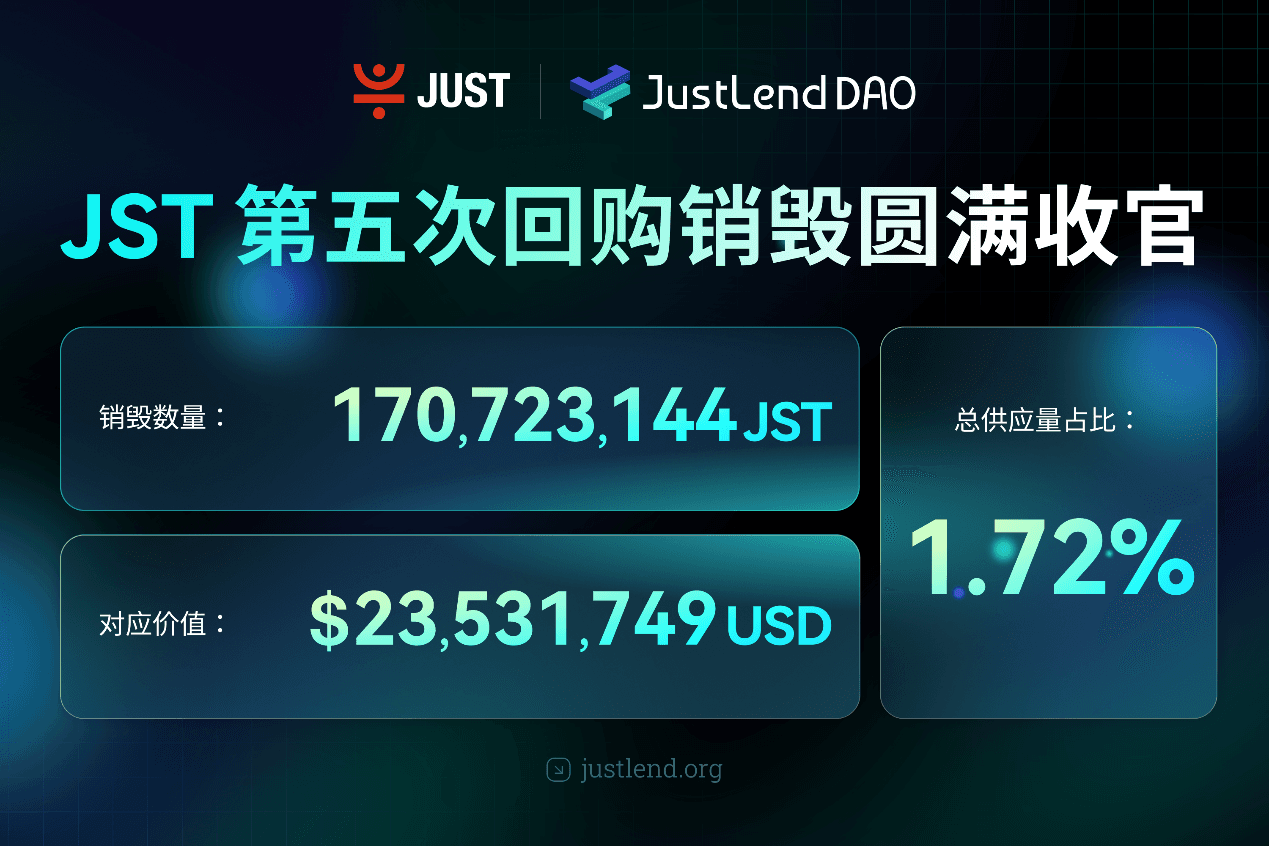
BitTorrent Brand Upgrade and Initial BTT Buyback & Burn Launch Simultaneously, Dual Engines Usher in New Era of Web3 Infrastructure
Oct 17, 20:00
Asia Market Daily: Japan's BOJ signals more rate hikes while Korea targets offshore perpetual platforms (2026/10/17)
Oct 17, 17:01Why did Papertrade backfire on you?
Oct 17, 17:01
The 'Strict Father' of Northern Myanmar: This Company Deploys 200,000 "AI Best Actors" to Strike Back Against Scammers
Oct 17, 15:34