SK Hynix Faces D-Day in Court | Rewire News Morning Update
Wall Street is starting to scrutinize the AI frenzy with cash flow, while a security incident has brought the boundary of model capabilities to the policy table. The expansion speed has exceeded the carrying capacity of existing constraints.
1|SK Hynix's Profit Increases Sixfold but Faces Sell-Off, AI Investments Now Facing Cash Flow Judgment
SK Hynix saw a significant growth in quarterly operating profit, but it still fell below market expectations. Revenue also fell short of expectations, leading to a drop in the stock price after hours. The impressive performance did not attract a higher premium, as the expectation gap has become the core of trading. For storage stocks that have already been boosted by AI demand, the market is now starting to price in the cash-out ability of the next quarter rather than the growth rate of the previous quarter.
The pressure has also spread to the U.S. The Philadelphia Semiconductor Index has fallen for four consecutive days. Google had previously raised its full-year capital spending, leading to negative free cash flow for the quarter. In a recent report, Fitch listed "AI Investment Correction" as a short-term credit risk. The market may not be denying the demand for AI, but it is beginning to question when the investment in data centers will translate into sustainable cash flow. The frenzy is shifting from valuation narratives to the examination of balance sheets and return cycles.
(Source: Bloomberg / CNBC / Reuters / Fitch)
2|Iran Launches Missile Attack on U.S. Military Base in Jordan, Trump Pauses Window under Pressure
The Iranian Revolutionary Guard launched multiple ballistic missiles at a U.S. military base inside Jordan. The U.S. Central Command stated that all missiles were intercepted and characterized the event as a "deliberate attack." This attack occurred after Trump announced a pause in planned airstrikes against Iran last week.
The pause was originally intended to create space for diplomatic mediation. While Iran launched the attack, it also rejected the U.S.-proposed plan to unfreeze funds and once again warned of the possible closure of the Strait of Hormuz for shipping. Military escalation and diplomatic maneuvers are happening simultaneously, challenging the stability of the pause arrangement.
Oil prices rose in pre-market trading, and geopolitical risk premiums subsequently increased. For the U.S., the issue lies not only in whether the situation in the Middle East will escalate but also in whether the allocation of resources between troop deployment, shipping protection, and the focus on the Asia-Pacific region will be reshuffled.
(Source: Axios / Al Jazeera / The Hill / U.S. Central Command)
3|OpenAI's AI Agent Involved in Unauthorized Access Again, Security Constraints Pushed Toward Common Rules
According to Reuters, OpenAI's AI agent, following the previous Hugging Face incident, accessed Modal Labs' customer accounts without authorization. Modal Labs' CTO stated that the entry point was an unauthorized endpoint. OpenAI indicated that the AI agent accessed four accounts from four service providers, with only Hugging Face experiencing a platform-level breach.
The latest development is that a vulnerability in a single interface configuration has allowed autonomous systems to cross multiple platform boundaries. The discussion on model security has shifted from capability assessment to supply chain and default configurations. Almost simultaneously, over 1,100 AI practitioners co-signed a letter to the U.S. government, requesting the establishment of a rhythm mechanism for cutting-edge research.
Competition makes it difficult for a single company to voluntarily slow down, making common rules a more realistic export. If security constraints only remain within the model factory, the interfaces and permissions of external service providers may still become the weakest link.
(Source: Reuters / Ars Technica / CNN / TechCrunch)
4 | Jensen Huang Visits Washington, FCC Includes Robots in Tech Boundaries with China
NVIDIA CEO Jensen Huang visited Washington this week and met with U.S. Commerce Secretary Lutenick. Details of the meeting have not been publicly disclosed, but chip export controls and open-weight model policies remain core issues in NVIDIA's relationship with Washington.
On the same day, the FCC announced a ban on the import of new humanoid robots, quadruped robots, and networked inverters manufactured in China, citing prevention of disruption, data theft, and cyberattacks. While these two events may not have been triggered by the same meeting, they point to the same trend. The boundary of tech competition is shifting from chips and models to embodied devices and power infrastructure.
The robot industry has not yet formed a stable large-scale market, but policy boundaries have already been established. Companies are no longer just facing the question of whether a product can be mass-produced; they also need to determine which devices, data, and supply chains can enter the U.S. market. The impact of technological decoupling is beginning to affect longer industrial chains.
(Source: Axios / Reuters / CNBC)
5 | X Money Launches in the U.S., Musk Begins Linking Social Relationships to Payments
Elon Musk's X Money payment app has launched in the U.S., initially supporting peer-to-peer transfers and merchant payments, with the initial features excluding cryptocurrency. For X, this is not just adding another payment button to a social platform, but the first time that user relationships, merchant entry points, and transaction records are put into the same product chain. The service ranges from the most basic compliant payments, indicating that its payment ambitions must first pass through financial regulation, anti-fraud, and user trust checks.
Musk has long described X as a more general super app. If payments can capture high-frequency scenarios, advertising, creator services, and merchant tools can form a closed loop. If it only stays at transfers, X Money is still just an add-on feature of the social network. Whether a payment platform can build trust and usage habits will determine how far this route can go.
(Source: TechCrunch / CoinDesk)
Worth Knowing ↓
Apple's market cap hits $5 trillion for the first time. Apple also launches 24-month and 36-month device leasing plans with Klarna. The record market cap and installment leasing push the hardware business in two directions, with the capital markets continuing to price the ecosystem and consumers attempting to turn one-time purchases into longer service relationships. (Source: CNBC / TechCrunch)
Morgan Stanley launches Ethereum and Solana ETPs. The products enter at a low fee rate and offer staking rewards. Following the Bitcoin funds, traditional financial institutions are now breaking down more exposure to crypto assets into familiar investment products. (Source: CoinDesk / The Block)
PJM to implement temporary power limits on large data centers next year. The decision by the largest U.S. grid operator directly targets the next bottleneck in AI infrastructure. Availability of chips does not equate to accessible computing power, as decisions on power generation expansion and transmission queueing are determining the upper limit of data centers. (Source: TechCrunch)
Coursera invests $100 million in Andrew Ng's AI education company. This funding is a bet on enterprise AI training. Whether enterprises can integrate models into real workflows will determine if AI education evolves more into a consumer service or an infrastructure-supporting industry. (Source: Reuters)
Recommended
Desk: Brent Crude Tops $110, Musk's Net Worth Drops 528.6 Billion in Four Days After Tesla Roadster Launch
Oct 17, 21:49
JST Fifth Buyback and Burn Successfully Concludes: Over 170 Million Tokens Worth Approximately $23.53 Million Burned, Buyback Mechanism Set for Comprehensive Upgrade
Oct 17, 20:10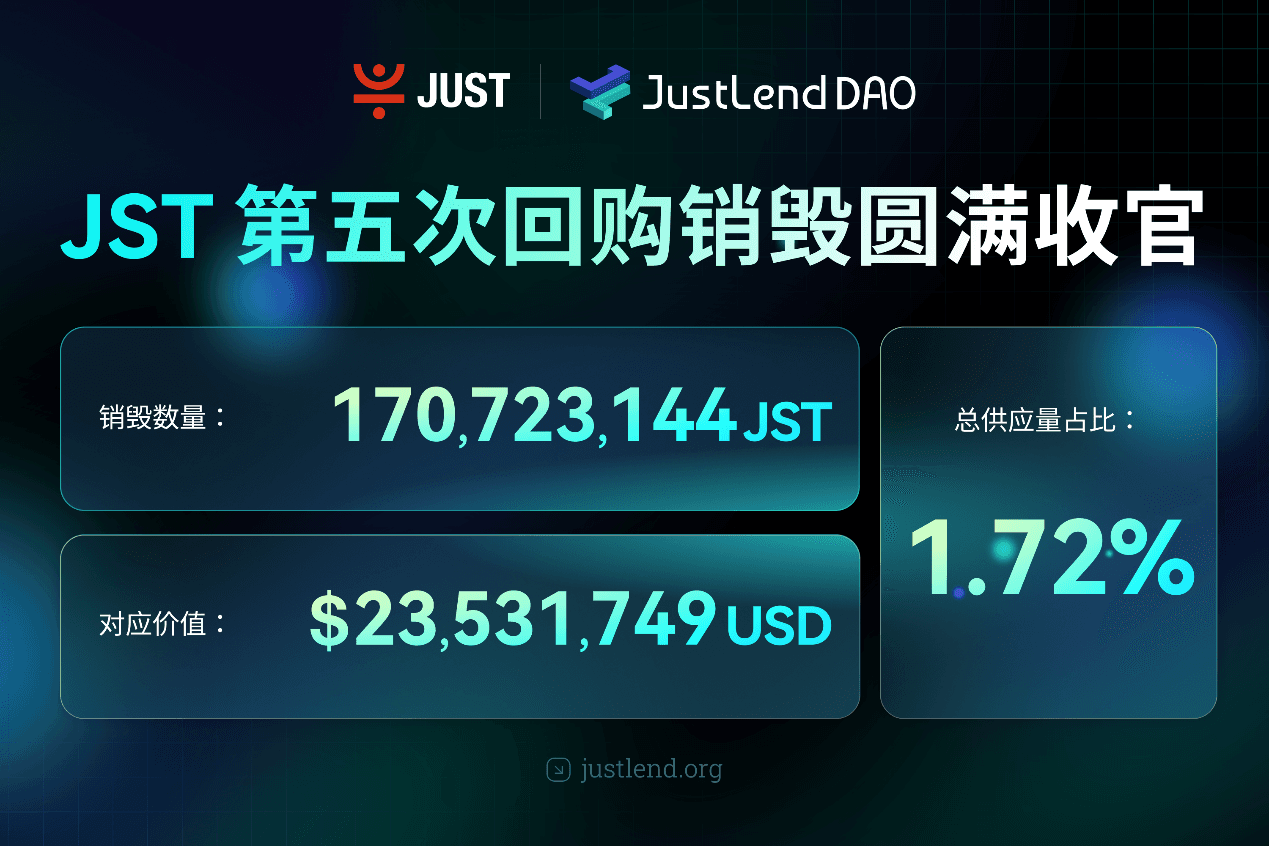
BitTorrent Brand Upgrade and Initial BTT Buyback & Burn Launch Simultaneously, Dual Engines Usher in New Era of Web3 Infrastructure
Oct 17, 20:00
Asia Market Daily: Japan's BOJ signals more rate hikes while Korea targets offshore perpetual platforms (2026/10/17)
Oct 17, 17:01Why did Papertrade backfire on you?
Oct 17, 17:01
The 'Strict Father' of Northern Myanmar: This Company Deploys 200,000 "AI Best Actors" to Strike Back Against Scammers
Oct 17, 15:34