In the Micron Q2 Earnings Call, What Is Wall Street Watching For?
SK Hynix has just released its strongest-ever Q2 financial report, but due to overly high market expectations, the market reaction has been very poor. Operating profit saw a significant increase but still fell below market expectations. Revenue also fell short of expectations, leading to a drop in the stock price after hours. The impressive performance did not result in a higher premium, and the expectation gap has instead become the focus of trading.
The issue of the expectation gap was actually anticipated in the market not long ago. Two weeks ago, the South Korean investment firm KIS had already reduced Hynix's profit forecast, but the market's fragility turned out to be more severe than we had imagined.
Rumors have circulated in the market about the content of the conference call following Hynix's financial report. The CEO's speech itself had little new content, with more attention being paid to the questions from Wall Street institutions afterward. Their questions revolved around the areas that fund managers are most concerned about.
Q2 2026 Operating Performance (CEO Hong Hyun-joong)
In the second quarter, the strong demand brought about by AI infrastructure investment expansion continued amid a tight supply environment, maintaining an upward price trend. DRAM and NAND saw significant price increases on top of the previous quarter, with server DRAM and enterprise SSDs, among other AI-related products, being the main drivers of this round of growth. Q2 revenue was 79.3 trillion KRW, up 51% QoQ and 257% YoY, reaching a new historical high following the previous quarter.
DRAM
Under constrained supply conditions, the company expanded sales focusing on HBM and AI server DRAM products, achieving a high single-digit growth in shipments QoQ, in line with previous guidance. Sales of server-grade LPDDR products (including SOCAMM) saw significant growth. Driven by the continued strong price trend of traditional DRAM, DRAM ASP increased by approximately 30% QoQ.
NAND
Building upon a low base due to reduced shipments in the first quarter, along with the expansion of enterprise SSD sales, NAND shipments recorded a mid-double-digit growth QoQ, in line with guidance. Revenue from enterprise SSDs doubled compared to the previous quarter, while revenue from large-capacity enterprise SSDs of 30TB and above more than doubled. Driven by overall price increases across all products, simultaneous price hikes for DRAM and NAND, and cost structure improvements, NAND ASP rose by 50% at the mid-range level QoQ.
Profit and Loss
In the second quarter, operating profit was 60.5 trillion Korean won, up 61% QoQ and 557% YoY; operating profit margin increased by 5 percentage points to 76% QoQ, reaching an all-time high in both operating profit and margin. Depreciation and amortization in the second quarter were 4 trillion Korean won, with EBITDA at 64.6 trillion Korean won and an EBITDA margin of 81%. Net non-operating income was 62.2 trillion Korean won, including a 1.1 trillion Korean won exchange gain from the exchange rate increase and 63.3 trillion Korean won from investment asset disposal and valuation gains. As a result, pre-tax profit was 122.7 trillion Korean won, net profit was 93.9 trillion Korean won, and the net profit margin was 118%.
Financial Position
As of the end of the second quarter, cash and cash equivalents (including short-term investments) amounted to 88 trillion Korean won, an increase of 33.6 trillion Korean won from the end of the previous quarter; interest-bearing debt decreased by 0.7 trillion Korean won to 18.6 trillion Korean won. The net cash position expanded to 69.4 trillion Korean won, and the debt-to-equity ratio improved by 5 percentage points to 7% compared to the end of the previous quarter.
Market Outlook
AI technology is evolving into an Agentic form capable of autonomously performing complex tasks for extended periods. With AI increasingly integrated into various services such as search, programming, and productivity tools, the scope of demand continues to expand. From a storage perspective, in addition to the high-performance storage required to enhance AI server performance and scale systems such as HBM, the demand for server DRAM supporting Agent-type services is also increasing; the role of high-performance enterprise SSDs in processing the continuous AI output more efficiently is also expanding. This has led to a structural shift in demand, with AI storage growing in tandem with traditional storage.
Meanwhile, as AI models improve and software optimization advances, the computational power and costs per task continue to decrease. The company believes that efficiency improvements will not suppress overall infrastructure demand but will instead lower the price and usage barriers for AI services, thereby expanding the user base and application scope.
Major tech clients are increasing their infrastructure investments due to the growing usage of AI services and a shortage of computing power; supported by the revenue and profit growth from AI services, their storage procurement appears to be steadily expanding. In fact, major clients are still requesting increased storage supply. In the PC and mobile application sectors, there have been temporary sales adjustments due to storage shortages; however, with easing supply constraints and accelerated AI service adoption, these two segments are expected to gradually regain growth momentum.
Under supply constraints, DRAM demand is expected to grow by 20% in the mid-range, while NAND demand is expected to grow by 10% at the high end. If future supply constraints ease and suppressed potential demand is met, the market's growth trajectory could further shift upwards.
On the supply side, achieving substantial improvement in supply-demand balance in the short term remains challenging. This is due to the increasing complexity of advanced processes utilized in HBM and AI server storage, as well as the construction period required for new capacity. It is expected that the tight supply-demand situation will persist for a considerable amount of time.
Regarding medium- to long-term supply stability, the company is advancing discussions with customers on Long-Term Agreements (LTAs). As of now, LTAs have been concluded with around 10 customers, including key customers, and discussions are ongoing with other major industry participants. These LTAs are not merely quantity arrangements but strategic partnerships: they are intended to ensure medium- to long-term supply stability and align with customers' technology roadmaps for developing next-generation storage products. The specific pricing structures vary depending on customer and product characteristics and are designed to address price fluctuations; at the same time, financial mechanisms such as escrow are introduced to guarantee contract performance and enhance visibility and reliability of customers' medium- to long-term demand plans. Building on this foundation, the company will enhance investment and production operational efficiency to strengthen the foundation for medium- to long-term operational stability and sustainable growth.
Third Quarter Business Plans and Technological Advancements
DRAM shipment volume in the third quarter is expected to increase by approximately 10% compared to the second quarter, with the company actively responding to demand focusing on server products; NAND bit shipment volume is expected to show a low single-digit percentage increase quarter-over-quarter.
As AI models become increasingly complex and performance requirements for storage rise, the scope of competition has expanded from the design of individual storage products to system architecture and packaging technologies. Relying on a portfolio of DRAM and NAND products, including HBM, and its collaborative development capabilities with customers, the company is leading storage innovation from a system perspective.
HBM4: Through continuous product optimization, the company has achieved industry-leading energy efficiency and cost competitiveness while meeting the data processing speed required by customers, demonstrating its differentiated technological capabilities. The company began mass production and shipments in the second quarter and plans for full-scale ramp-up in the second half of the year.
HBM4E: Samples have been delivered to a major customer in the first half of the year. The product utilizes a mature and mass-production-stable optimized process, and the follow-up development is expected to proceed smoothly. Leveraging a stable supply capacity and cost competitiveness supported by high yield and excellent quality, along with industry-leading performance, the company will continue to maintain its leading position in HBM.
Traditional DRAM: Full-scale delivery of SOCAMM2 products based on the 1c nm process began in the second quarter. The company will optimize the product line according to customer development progress and prepare for sampling to expand its customer base.
NAND: Accelerating the transition to advanced processes, the company will focus on strengthening its product portfolio with high-capacity, high-performance products to meet market demand. In the previous quarter, the 321-layer product accounted for the highest proportion of NAND output, and the company plans to increase its share of domestic production capacity to around 50% by the end of the year as originally scheduled.
In a market environment of persistent supply-demand imbalance, stable supply capacity—defined as the ability to deliver the required quantity at the customer's requested time—is now a core operational competitiveness alongside technological strength. In response to robust customer demand and medium- to long-term growth opportunities, the company will continue to advance production expansion investments in the short term to enhance supply response capacity: It will accelerate the mass production schedule of M15X ahead of time and increase investment to rapidly expand capacity, while the Pyeongtaek Fab 1 is set to complete cleanroom line opening in early 2027. Due to the accelerated progress and expanded investment scale, capital spending for 2026 is expected to reach the upper end of the range in the 40 trillion KRW level.
In the medium to long term, based on discussions with customers and market demand forecasts, the company will proactively prepare future capacity reserve infrastructure. It recently announced a new investment plan to strengthen advanced packaging capabilities and a new NAND production base, M17; at the same time, it revealed a medium- to long-term plan for establishing a new semiconductor cluster in South Korea to address long-term demand post-Pyeongtaek. The subsequent actual construction, equipment installation, and capacity expansion will be phased in consideration of factors such as customer demand visibility and investment efficiency. While maintaining capital spending discipline, the company will not delay medium- to long-term growth opportunities, strengthen supply response capacity, and ensure financial soundness.
About ADR Issuance
On July 10, the company's ADR was successfully listed on the Nasdaq market in the U.S., marking the largest issuance by a foreign company in a U.S. IPO. The significance of this listing lies not only in fundraising but also in confirming global market trust in the company's technological competitiveness and growth potential, while also expanding the company's connection points with the next-generation computing ecosystem. Building on this foundation, the company will strengthen strategic partnerships with key customers and partners, explore new business opportunities, and contribute to the semiconductor industry's development and AI system growth through continuous technological innovation.
Financial Soundness and Shareholder Return
Driven by the expansion of profitability and cash generation to historic highs, the company's financial capability has been further strengthened. Meanwhile, as structural growth opportunities in the AI era continue to expand, the scale of investment required to capture these opportunities has increased significantly. In this environment, the company prioritizes investing in growth opportunities that can generate high profitability and strategic value, while striving to build a financial structure that can sustain stable operation even in market fluctuations, and continuously sharing the results with shareholders.
Despite the expected increase in future investment needs, the company believes that its significantly enhanced cash generation capability is sufficient to meaningfully expand shareholder returns while achieving future growth investment goals and maintaining financial soundness objectives. The company is currently reviewing various additional shareholder return execution plans from multiple perspectives.
Q&A Session
Question 1: J.P. Morgan, Jay Kwon
Q: Recently, some large tech companies are considering leasing data centers, and more efficient AI models are continuously emerging, causing the market to worry that AI infrastructure investment may slow down or even decline. Based on the company's communication with customers, how does it view the AI infrastructure investment trends of major CSPs? What does this mean for HBM, DRAM, and NAND demand?
A: The company understands the origin of the above concerns. However, the company does not see these trends as a signal of a slowdown in AI investment, but rather as a transition to increasing the utilization and accelerating the monetization of the already built AI infrastructure.
For major CSPs, AI competitiveness is closely tied to their core competencies in search, advertising, cloud services, software, and other areas, so investments geared towards enhancing AI capabilities will likely remain robust.
Likewise, the company does not believe that more efficient AI models will reduce infrastructure demand. After the efficiency improvement of models and systems, the same infrastructure can support more users and services, expanding the accessibility and adoption of AI. The recent explosive growth in demand following the emergence of highly efficient AI models is evidence that efficiency improvements lead to broader AI adoption and use, rather than a decrease in infrastructure demand.
This judgment is also supported by discussions with major customers regarding the medium to long-term demand outlook. While the timing of individual projects may vary due to factors such as power supply and data center construction, the company believes that AI infrastructure investment will remain robust beyond next year underpinned by AI competition among CSPs and the continued expansion of AI services.
Therefore, the overall storage demand will continue to expand: not only for HBM used for AI computing power, but also for server DRAM supporting Agentic AI, and high-performance, large-capacity NAND to accommodate the expansion of AI services and data growth.
Question 2: Hana Securities, Kim Rok-ho
Question: The company recently proposed a significant expansion plan in the medium to long term. What is the basis for the long-term storage demand that supports this strategy? Does this include demand locked in through long-term agreements? Additionally, the capacity expansion has raised concerns in the market about possible oversupply. How does the company view this?
Answer: The company's medium to long-term capacity strategy is built on structural growth in storage demand being driven by AI expansion, as well as ongoing discussions with core customers regarding longer-term requirements.
Recent cooperation between the company and customers is evolving from transactional relationships to more strategic long-term partnerships. The willingness of customers to sign long-term agreements and build partnerships is evidence of the sustainability of AI ecosystem demand.
SK hynix's current capacity expansion is based on market demand visibility obtained through customer partnership. Actual capital investment and capacity ramp-up will be phased based on demand visibility, investment efficiency, and other factors, aligning the expansion with confirmed customer needs flexibly. The company believes that its medium to long-term investment plan will not immediately lead to oversupply.
Question 3: Meritz Securities, Kim Sunwoo
Question: Regarding Long-Term Agreements (LTA), competitors have recently completed and announced LTAs. Although the company has briefly mentioned this in its performance explanation, could you further elaborate on SK hynix's LTA framework, such as contract duration and pricing structure?
Answer: The LTAs that the company is currently discussing with customers come in various forms, designed differentially based on customer and product characteristics. The contract duration is usually around five years, with specific terms varying depending on the customer and product.
The pricing structure will also not be uniform. The company is exploring various pricing mechanisms with customers to better cope with price fluctuations, aiming to reduce the uncertainty brought by short-term market fluctuations while enhancing the long-term operational stability for both customers and the company.
Meanwhile, considering the impact of demand fluctuations on inventory cycles, securing effective procurement commitments is equally important. Therefore, in addition to long-term volume commitments, the agreement also includes mechanisms such as collateral to strengthen contract performance and demand visibility, with specific terms varying based on each customer's requirements and contract structure. This structure allows customers to develop more reliable long-term procurement plans while enabling the company to optimize investment and production planning based on improved demand visibility.
Regarding the percentage of sales covered by LTAs, the company cannot provide specific figures at the moment but will maintain it at an appropriate level based on market conditions and customer demand: enhancing performance resilience on the downside and retaining flexibility to capture incremental demand and growth opportunities when the market improves.
Building on its long-term collaboration with major AI clients such as NVIDIA, the company has established a strong profit foundation in HBM. Looking ahead, the company will continue to strengthen its leading position in HBM and leverage the demand visibility and operational flexibility obtained through LTAs to achieve a balance between stability and profitability.
Question 4: Daiwa Capital Markets, SK Kim
Q: The question is about DRAM. The second-quarter DRAM ASP growth seems to be lower than market expectations. What are the reasons for this? What is the outlook for the second half of the year?
A: Based on customer demand and the medium- to long-term product strategy, the company manages the sales mix between HBM and traditional DRAM. In the second quarter, the shipment of some high-value-added products was postponed to the second half of the year, impacting the blended ASP due to changes in the product mix; these factors will gradually ease in the second half of the year.
With HBM4 shipments ramping up across the board and an increase in 1z nm traditional DRAM shipments, bit growth in the second half of the year is expected to exceed the first-half level.
Additionally, considering changes in customer demand and product mix, the growth in HBM4 sales and the contribution of high-value-added products will also have a positive impact on the blended ASP. The increase in shipments combined with continued product mix improvements will drive ASP and performance higher in the second half of the year.
In terms of sales strategy, the company does not focus on short-term price fluctuations or short-term profits but considers demand visibility, long-term customer relationships, and the supply-demand situation in each product segment holistically. This principle will remain unchanged as the company aims for stable and sustainable performance growth while seizing market expansion opportunities.
Question 5: SK Securities, Han Dong-hee
Question: The question is about HBM. Some market views suggest that competitors have made rapid progress in HBM recently. What are the key competitive advantages of the company's HBM4, and what are the key differentiating factors to maintain a leading position in the HBM market?
Answer: The competitiveness of HBM4 depends not only on delivering the required performance but also on achieving scalable supply with stable yield and consistent quality.
Since the HBM2 generation, SK hynix has continually validated these capabilities. The competitiveness accrued by the company in terms of listing timing, product performance, mass production yield, quality, and customer trust cannot be easily replicated in the short term.
Building on this foundation, the company has begun mass production of HBM4 for key customers in the second quarter. Currently, the yield and quality of HBM4 have reached a level close to that of mature HBM3, with the current focus being on steadily expanding capacity.
As mentioned earlier, the company has also completed customer sampling of HBM4E. This product adopts an optimized manufacturing process that has been validated for both technological maturity and mass production stability, with development progressing smoothly according to the roadmap, targeting mass production to commence in 2027.
The company's preparedness extends beyond this and includes forward-looking layouts for next-generation technology. In addition to hybrid bonding, the company is developing a technology for heat dissipation for future products such as HBM5: this technology integrates heat dissipation components into the package, with an expected thermal resistance reduction of over 30%, thereby enhancing system stability and operational efficiency in high-performance, high-density AI environments. (The acronym for this technology is pronounced "IBM" in the transcription, and the description here is based on its functionality.)
As the AI market continues to expand and AI accelerators become increasingly complex in performance and packaging, the company believes that customers will increasingly value a partner with validated manufacturing capabilities, quality, and reliable supply. HBM is a high-value-added product, and any quality issues could bring significant costs to customers and have broad implications for the entire system.
Based on early collaborative development experiences with customers and long-term strategic partnerships, the company will continue to reliably deliver the right products at the right time and lead the migration to next-generation technologies to maintain its leading position in the HBM market.
Question Six: UBS, Nicolas Gaudois
Question: How is the 2027 HBM pricing negotiation progressing? Could you please provide an update on the contract discussions, including HBM4E and HBM4, as well as the outlook on actual prices?
Answer: The company is currently in discussions with key customers regarding the 2027 HBM supply volume and pricing, and the negotiations are progressing smoothly with support from stable customer demand. Contract terms and price details for individual customers cannot be disclosed.
Over the past few months, there has been a significant increase in traditional DRAM prices, which may have some impact on the price discussions for HBM; however, HBM pricing is not solely determined by traditional DRAM prices.
Compared to traditional DRAM, HBM requires a much greater investment of resources, including more wafers, advanced manufacturing processes, TSV, and packaging capacity. With each product generation, customer demands for performance and quality continue to rise, and product development and certification are becoming increasingly complex.
Therefore, the company's price discussions will take into account a range of factors: traditional DRAM pricing and market supply and demand, resources and opportunity costs related to HBM production, technical complexity, and the value the product provides to customers. The goal is to achieve a reasonable level of profit aligned with the differentiated value offered while leading a healthy AI ecosystem and sustainable growth.
Building on its accumulated technological leadership, cost competitiveness, stable manufacturing capabilities, and the trust and collaboration with customers, the company will maintain the solid profitability of the HBM business through successful product generation transitions and continuous customer value creation, solidifying its strategic partnership position for growth with customers in the AI era, focusing on long-term sustainable growth and profitability.
Question Seven: CLSA Securities Korea, Sanjeev Rana
Question: The question is about capacity expansion. Apart from the recently announced large-scale investment in Korea, the market is also discussing overseas expansions to the U.S., Japan, and other countries. Could you please provide details on the company's investment strategies and direction in Korea and overseas?
Answer: In the AI era, having only technological leadership is not enough; the ability to supply the required quantity at the right time has also become a critical component of competitiveness. Especially at the current moment of extreme supply tightness, providing the necessary storage products to the ecosystem is the supplier's responsibility.
The company's medium- to long-term investment direction is: to invest in AI storage as needed, while executing capital expenditures based on business feasibility and investment efficiency. Over the medium to long term, the optimal combination of maximizing the use of existing production sites and building new infrastructure where necessary will be pursued to ensure additional manufacturing capacity.
Within South Korea, the company will continue to position Icheon and Pyeongtaek as the core production hubs for next-generation DRAM and AI storage, while enhancing Cheongju's manufacturing capabilities in NAND and advanced packaging. (The transcription lacks or misidentifies the base names, following the company's current production site description.) The announced large-scale investments are also part of this strategy, aimed at proactively securing the manufacturing foundation and infrastructure needed to support future demand.
Regarding future production sites, the company does not differentiate between domestic and overseas locations, and the basic approach is to make optimal decisions based on a range of factors such as integrated power supply, water resources and manpower, supply chain and semiconductor ecosystem, and customer accessibility.
It is important to note that as of now, there are no other decisions beyond the announced investments. Moving forward, the company will continue to ensure production sites are responsive to customer demand at the appropriate times, enhancing investment efficiency by utilizing existing assets and evaluating additional investments.
Question 8: Daishin Securities, Ryu Hyung-kyun
Q: The question is about NAND. As inference demand expands and KV cache unloading demand rapidly increases, how is the role of enterprise SSDs evolving? Can you explain the company's strategy in various product segments, including QLC SSDs for HDD replacement, and high-performance SSDs based on SLC mode? Competition in these segmented markets also seems to be intensifying.
A: As observed in the question, the AI market is shifting from being training-centric to being inference-centric, with NAND rapidly becoming a core component of AI storage hierarchy. Therefore, NAND demand centered around SSDs is rapidly increasing, a trend the company believes will continue.
At the same time, the company believes the AI storage market cannot be covered by a single technology: the requirements for latency, throughput, power consumption, capacity, and TCO vary by customer. Customers may not necessarily demand specific technologies or specific media; the key is whether each type of workload's performance requirements can be reliably met.
Recommended
Desk: Brent Crude Tops $110, Musk's Net Worth Drops 528.6 Billion in Four Days After Tesla Roadster Launch
Oct 17, 21:49
JST Fifth Buyback and Burn Successfully Concludes: Over 170 Million Tokens Worth Approximately $23.53 Million Burned, Buyback Mechanism Set for Comprehensive Upgrade
Oct 17, 20:10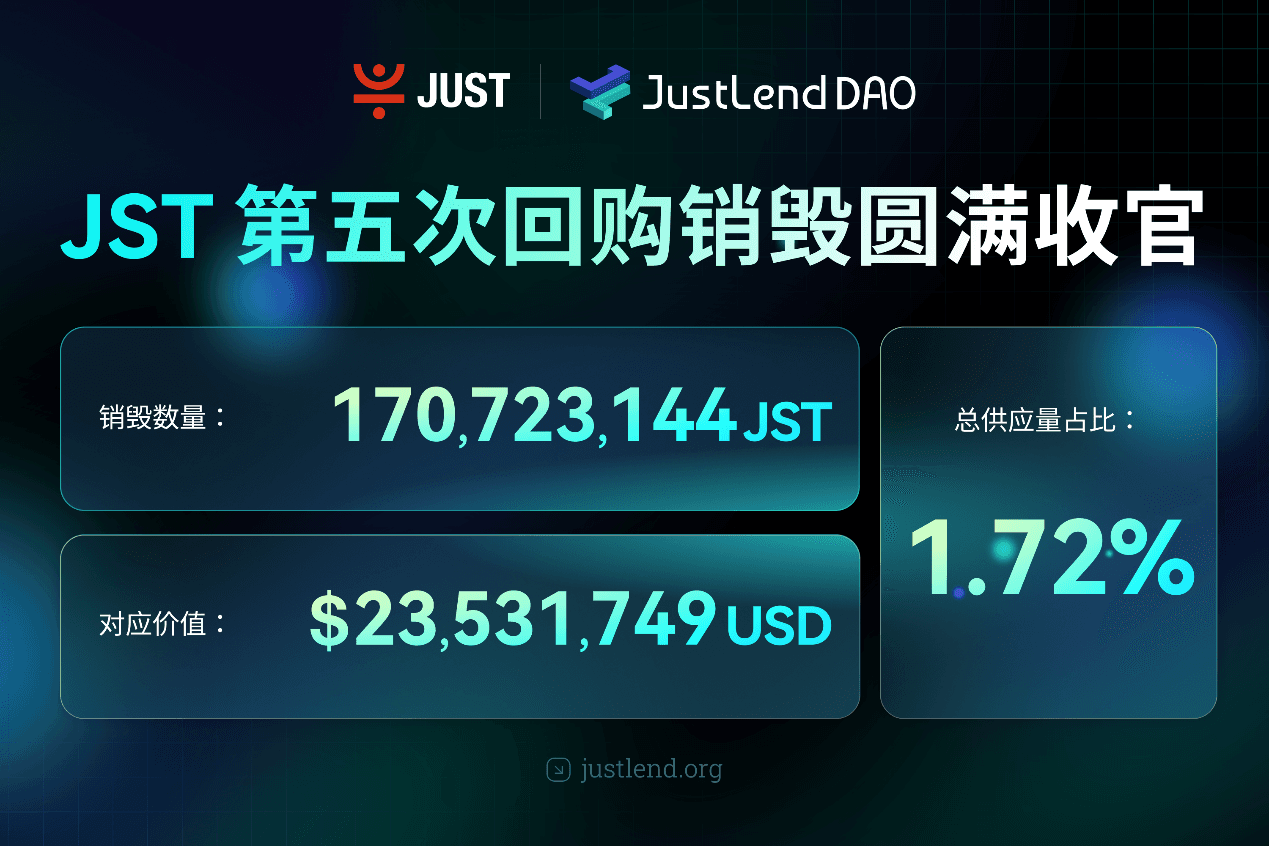
BitTorrent Brand Upgrade and Initial BTT Buyback & Burn Launch Simultaneously, Dual Engines Usher in New Era of Web3 Infrastructure
Oct 17, 20:00
Asia Market Daily: Japan's BOJ signals more rate hikes while Korea targets offshore perpetual platforms (2026/10/17)
Oct 17, 17:01Why did Papertrade backfire on you?
Oct 17, 17:01
The 'Strict Father' of Northern Myanmar: This Company Deploys 200,000 "AI Best Actors" to Strike Back Against Scammers
Oct 17, 15:34