Tonight's Interest Rate Decision: Economists are on the Sidelines, Market Signals 30% Chance
TL;DR
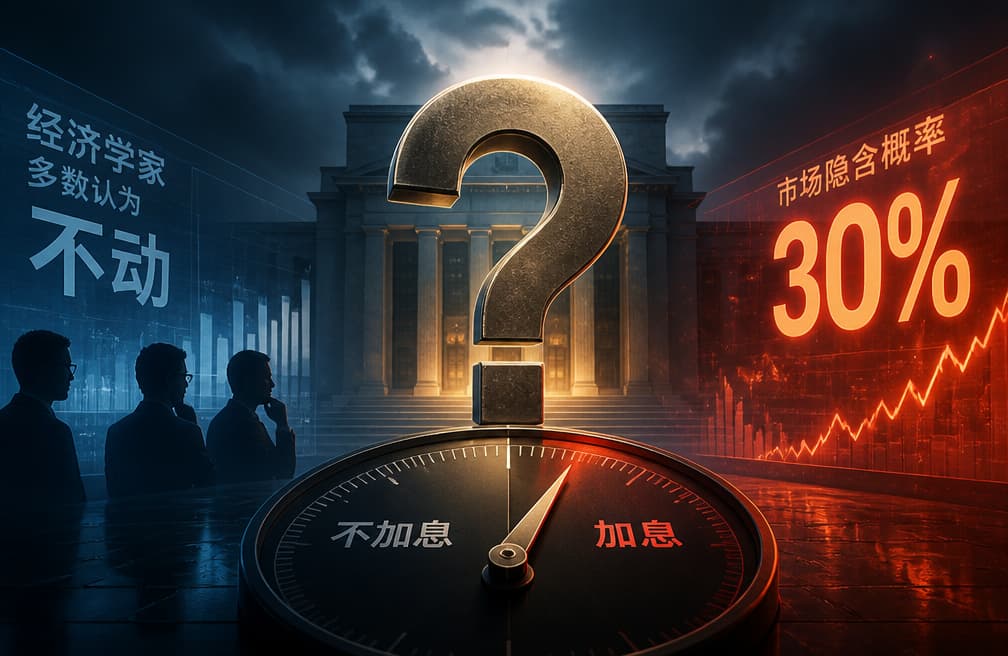
· A Reuters survey shows economists unanimously expect no rate hike in July, but the futures market briefly priced in about a 30% probability of a hike.
· The divergence is centered on whether the oil price shock will force Warsh to use a more hawkish communication to uphold inflation credibility.
· Related assets: US Dollar Index, USD/JPY, WTI/Brent Crude Oil, Gold, US Stocks, Bitcoin, and crypto assets.
Federal funds futures repriced ahead of the July FOMC meeting, as traders began to pay a higher price for the possibility of an unexpected Fed rate hike or a more hawkish signal.
The anomaly lies in the fact that economists' views were nearly on the opposite side. According to a Reuters survey on July 21, all 104 economists expect the July meeting to maintain the target range of 3.50%–3.75%, with 78 of them expecting no change by year-end. Yet the futures market briefly priced in about a 30% probability of a 25 basis point hike.
For investors, this is not just a guessing game for one meeting's outcome. The bigger question is whether the market is reinterpreting the Fed's response to an oil price shock since Kevin Warsh assumed the Fed chair on May 22.
If Warsh views the Middle East tension-driven oil price surge as a temporary supply disruption, the Fed is more likely to hold rates steady and wait for more data. If he is more concerned about oil price pass-through leading to secondary inflation, even if there is no rate hike tonight, he may reopen the possibility of a rate hike in September.
The Futures Market is Buying the Tail Risk of Hawkishness
Federal funds futures can be seen as contracts betting on the Fed's rate path. The more open interest there is, the more funds are betting or hedging around the resolution's outcome.
According to CME and media data clues, open interest in federal funds futures reached a high before the decision. This signal does not mean the market largely expects a rate hike, but it indicates that the pre-decision uncertainty has been traded into crowded positions.
The "25 basis point hike probability" follows the same logic. The probability from CME FedWatch comes from the 30-day federal funds futures price, not from economists' votes. The meaning of a roughly 30% probability is that tail risk suddenly becomes more expensive.
The market may not believe the Fed will act tonight. It seems more like preparing for two types of surprises. One is a direct rate hike, and the other is no rate hike, but the statement and press conference hint that a rate hike in September is now seriously on the table.
This has direct implications for asset pricing. The dollar will benefit from rate expectations. If the yen continues to face pressure at high levels, intervention risk will be reconsidered. Overvalued stocks and crypto assets will have to deal with higher discount rates and weaker risk appetite.
BofA and Citi Debate Oil Price Weighting
The disagreement between hawkish and dovish institutions is not about whether oil prices have risen, but about how the Fed should handle this increase.
According to a Reuters report on July 27, BofA, Deutsche Bank, and other institutions still see July as a stand-pat meeting as the baseline scenario, but believe that oil prices and the Middle East situation have made this meeting a dilemma. BofA's concern is that if the Fed completely plays down oil price pressures, it may challenge its inflation credibility.
This logic emphasizes a stress test for the new chair. With Warsh having just taken office, the market does not have enough samples to judge his policy stance. If he appears too dovish in the face of geopolitical shocks and inflation pressures, investors may question whether the Fed still prioritizes inflation containment.
Institutions like Citi lean towards a different explanation. They see the oil price rise primarily as a supply shock, with price pressures stemming from energy supply concerns rather than overheated U.S. demand. Rate hikes cannot produce more crude oil, and an overreaction may instead dampen growth.
The core concept is secondary inflation. While an oil price rise in itself can be a short-term disturbance, if it transmits to transport, goods, wages, and inflation expectations, it can become more persistent price pressure. Hawks worry about the latter, while doves believe it is not yet necessary to hike rates.
Therefore, the market is not debating the oil price itself, but rather the weight of oil prices in the Fed's reaction function. Will Warsh see it as temporary noise or as a reputational risk that needs to be preemptively contained?
The New Chair Amplifies Path Pricing
What makes Warsh's tenure unique is that the market has not yet formed stable expectations for his communication style. During the Powell era, investors had grown accustomed to seeking path hints from wording, dot plots, and press conferences. In the new chair phase, the weight of every sentence will be magnified.
If the Fed reduces forward guidance, emphasizes data dependence, and repeatedly highlights the need for flexibility, the market may appear to gain flexibility on the surface but will actually bear a wider range of interest rate outcomes. Traders cannot be sure of a stable policy path before the next meeting, so they will have to hedge in advance.
This also explains why economists can consistently predict a hold tonight, while the market is still willing to price in a hike. Economists are answering for the most likely outcome, while the market is still willing to pay for downside risk. They are measuring different things.
For the dollar, as long as Warsh does not explicitly talk down the hiking possibility, the strong dollar thesis still stands. For the yen, if the US-Japan rate spread expectations continue to widen, USDJPY's run to higher levels will test Japan's tolerance.
For risk assets, the most uncomfortable mix is not the hike itself tonight, but rather rising oil prices, a stronger dollar, and the Fed's reluctance to preclude a hike simultaneously. This would compress valuations, liquidity expectations, and risk appetite.
Even if the Fed keeps the target range unchanged at 3.50%–3.75%, as long as the statement places inflation risks higher or Warsh refuses to downplay the chance of a hike in September during the press conference, assets could still trade as if the outcome is hawkish.
The September window will determine how far this pricing can go
The baseline scenario is still a hold. The current market moves can only reflect traders significantly repricing the policy path and communication risks, not the Fed already deciding to resume the hiking cycle.
What the press conference will need to validate is how Warsh defines the oil price shock. If he emphasizes that the rise in energy prices still needs monitoring and long-term inflation expectations remain anchored, the market's hawkish pricing for July and September could retreat, and the dollar's rally could cool off.
If he repeatedly stresses that the oil price shock could transmit to broader prices and puts bringing inflation back to 2% at the policy forefront, the market will interpret this as the September window being opened. At that point, even if rates stay put tonight, the focus for trading will shift to whether the next meeting needs to be repriced.
The yen will be the most sensitive external pressure gauge. If USDJPY continues to climb, the risk of Japanese intervention will become a boundary the dollar bulls must contend with. For US stocks and crypto assets, the pressure is not on this single meeting but on whether the market is starting to accept a higher, longer rate path.
Recommended
Desk: Brent Crude Tops $110, Musk's Net Worth Drops 528.6 Billion in Four Days After Tesla Roadster Launch
Oct 17, 21:49
JST Fifth Buyback and Burn Successfully Concludes: Over 170 Million Tokens Worth Approximately $23.53 Million Burned, Buyback Mechanism Set for Comprehensive Upgrade
Oct 17, 20:10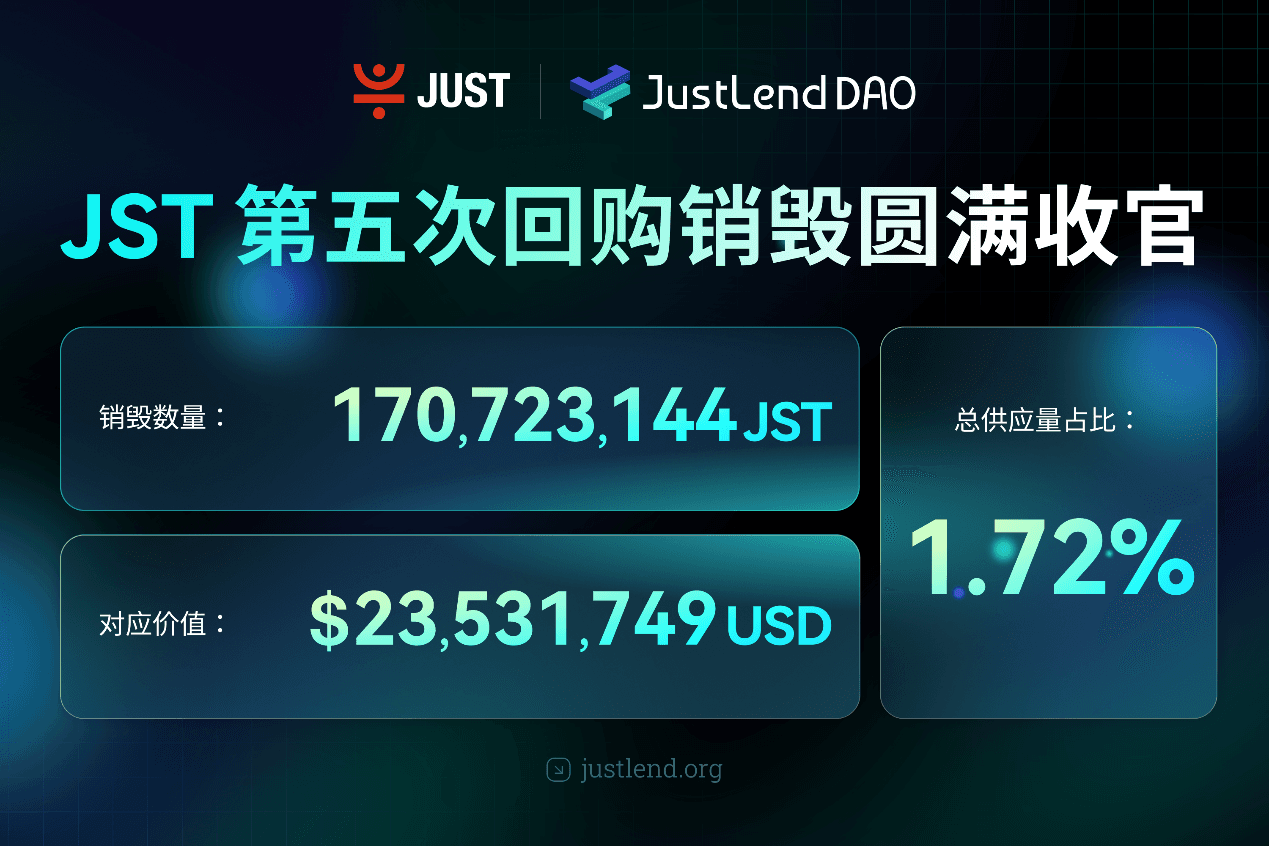
BitTorrent Brand Upgrade and Initial BTT Buyback & Burn Launch Simultaneously, Dual Engines Usher in New Era of Web3 Infrastructure
Oct 17, 20:00
Asia Market Daily: Japan's BOJ signals more rate hikes while Korea targets offshore perpetual platforms (2026/10/17)
Oct 17, 17:01Why did Papertrade backfire on you?
Oct 17, 17:01
The 'Strict Father' of Northern Myanmar: This Company Deploys 200,000 "AI Best Actors" to Strike Back Against Scammers
Oct 17, 15:34