Silicon Valley VC's On-Site Observation of Entrepreneurship in China: A More Stringent Capital Environment, Nurturing More Robust Companies

Translation: BlockBeats
Editor's Note: China's technology industry is becoming a reference that Silicon Valley cannot ignore.
From open-source large models, biotechnology to robotics, a group of Chinese companies are gradually changing the global tech competition landscape with lower costs, faster hardware iteration speed, and a more intensive industry chain collaboration. However, attributing this change solely to the number of engineers, manufacturing base, or policy support is still insufficient to explain the true competitiveness of Chinese tech companies.
This article attempts to start from the capital system to understand how the Chinese innovation ecosystem operates.
In Silicon Valley, funding for startups is usually seen as a long-term bet on future growth, with IPO, acquisition, or continued independent development as possible exit paths. The situation in China is more urgent. Many startups do not choose to go public when conditions are ripe but are forced to treat IPO as almost the only endpoint under fund term limits, buyback clauses, and investor exit pressures. The system of "selling equity to cover debt," personal buyback responsibilities, and an inactive M&A market together form a financing mechanism that is more stringent on founders.
This institutional arrangement clearly comes with a cost. It may compress long-term research and development space, trigger short-term packaging, over-financing, or even financial risks. However, on the other hand, when entrepreneurship becomes an almost "all-in" game, companies are also forced to maintain lower costs, faster execution speed, and stronger commercialization capabilities. The price competitiveness and expansion capabilities demonstrated by Chinese companies in overseas markets largely stem from the screening of this high-pressure domestic environment.
This article also reveals several structures in the Chinese venture capital market that are often overlooked by overseas observers: local RMB funds not only pursue financial returns but also undertake investment attraction, employment, and industry landing goals; USD funds seek a balance between capital returns and globalization; the direct participation of foreign funds continues to decrease. Meanwhile, financial advisors undertake functions such as project discovery, financing packaging, and relationship matching, filling a market gap that lacks an open professional network and relies on personal introductions and WeChat relationships.
Of course, there are deeper variables, such as national industrial policies.
Of course, this article carries a distinct Silicon Valley observer's perspective rather than a rigorous institutional study. However, it provides a core perspective worthy of discussion: China is not simply copying Silicon Valley but is forming a completely different innovation organizational structure.
This system may not be gentle enough and may not be suitable for all entrepreneurs, but it can concentrate resources, accelerate iteration, and shape a group of highly execution-capable companies in specific strategic industries.
To understand China's technological competitiveness, one must look beyond model parameters, funding amounts, and IPO valuations, and also understand the capital timeline, local governments, relationship networks, and exit pressures behind these companies. What truly drives China's tech industry forward may be this set of contradictory systems: on one hand, it creates pressure and risk, while on the other hand, it pushes speed, efficiency, and industrial ambitions to the extreme.
The following is the original text with slight reductions, without changing the original meaning:
Last month, I visited China, meeting with most top-tier investment firms and the management teams of several leading robotics and biotech companies.
There is a narrative trending in Silicon Valley now: China is winning in several key future areas—open-source AI, biotech, and robotics. The reasons supporting this concern are quite compelling.
The Chinese open-source model has become a batch of models most commonly used by Silicon Valley startups. After the U.S. government restricted Fable, ironically, China took on the role of supporting the global open AI technology stack.
In biotechnology, most projects in clinical trials in China are innovative therapies, while in the U.S., about half of drugs in FDA clinical trials are licensed from China. In the field of robotics, China not only has a structural advantage in scale production training data, but more importantly, its hardware development and feedback iteration speed are astonishingly fast.
But even with these advantages, Chinese people do not seem to be complacent. On the contrary, there is a widespread strong desire to understand what Silicon Valley is thinking. Silicon Valley is still seen as the global innovation hub.
A top venture capital professional even told me that whenever Benchmark or Sequoia releases a new podcast, he lists it as a must-watch for the entire company.
Chinese people are well aware of everything happening in the West. The content I post on X and LinkedIn is usually translated by mainstream Chinese AI media (Synced, Synced Review, or QbitAI) within a few hours. Even comments in X's comment section will be translated in the form of screenshots. You may not even realize it, but you are already somewhat famous in China.
This information asymmetry accelerates their learning speed, ultimately helping China narrow the gap with Silicon Valley. But at least for now, they still look up to Silicon Valley.
Overall, China's capital market maturity is relatively low, and it is much harsher on founders. This environment may breed companies with stronger execution abilities, enabling them to beat competitors in the global market; however, the significant pressure and personal responsibility may also stimulate more bubbles and fraud.
From Seoul to Tel Aviv, most global tech hubs have taken Silicon Valley as a template. Yet China has in many ways constituted another parallel universe. Understanding how China provides funding for innovation is an interesting path to observe how China has arrived at where it is today and where it is headed.
One surprising thing when meeting with many founders of robotics and AI companies is that they are almost all planning to IPO next year, and they have already started sprinting at full speed.
These companies do not reach the scale of Uber or the darker side of the moon—even for the latter two, listing on Nasdaq might not be easy—but everyone told me they are preparing for an IPO.
Why? Because they have no other choice. In China, many startups go public not because they are ready for it or because the market timing is right, but because they are forced to.
One of the most shocking facts for American founders is that many Chinese founders' investment agreements stipulate that they must return the investors' capital within a certain period at a rate of return higher than a certain minimum threshold. Sometimes the deadline is six to eight years. If they fail to meet this, the company or even the founder personally may have to bear repurchase and repayment obligations.
Chinese limited partners and general partners are less patient and more straightforward in their demands for results. There is even a term in Chinese specifically describing this phenomenon: "equity in appearance, debt in essence."
It is hard to imagine how innovation can occur in an ecosystem where a founder has to take on such a huge personal liability to start a high-risk venture. With the stakes so high, who would dare to start a business?
But Chinese founders are indeed willing to risk it all.
Such incentive mechanisms have shaped a group of the world's most efficient and resilient companies, as well as founders who truly devote themselves entirely to their companies. When they cannot make money in China's harsh competitive environment, they often choose to expand overseas and quickly overwhelm local competitors.
They are not sophomores at Stanford University who are just there for the experience, attending a Y Combinator program over the summer. For them, this is a game of either winning everything or losing everything.
This also raises two questions.
Why does the exit strategy have to be IPO? Can't companies be acquired, allowing investors to recoup their funds through acquisitions?
The answer is basically no.
China hardly has a truly mature M&A market, so startups usually can only exit through an IPO and must go all the way.
Chinese companies have a low valuation and low labor costs. Instead of acquiring a startup, large companies in China prefer to simply replicate its idea, and they are likely to do it faster.
Chinese companies are often very ambitious and tend to expand horizontally. A smartphone company in China may also produce sports cars and develop enterprise software at the same time. These factors together reduce their willingness to acquire other companies. There, almost no opportunity exists for a soft landing for entrepreneurial teams through "acqui-hiring."
However, a relatively favorable factor for Chinese founders is that the IPO threshold is generally lower than that of the NASDAQ or NYSE.
The lower threshold here does not necessarily mean more relaxed regulatory requirements, but rather a higher market acceptance of these companies, meaning that investors are more willing to buy their stocks.
In recent years, many Chinese tech companies have had little to no revenue or customers. According to current valuation standards in the U.S. tech market, their scale is far from sufficient, yet they have still successfully completed an IPO.
Of course, the Hong Kong stock market is currently in a bull market. As one of the few pure-play language model public companies, Infotrade has also seen a sharp rise in its stock price. However, these companies would probably not be able to go public in the U.S.
One explanation is that individual investors have a higher proportion in the Asian stock markets. Nevertheless, despite being the preferred listing venue for tech companies, the institutionalization level of the Hong Kong stock market is still higher than that of the A-share market.
We do not know how long this bull market in Asia can last. Many local institutional investors have begun preparing for a possible downturn in some of the hottest sectors, hoping to buy stocks at a low price after a market crash.
Another question is: Why are founders willing to accept such harsh terms?
Shouldn't the free-market competition among VCs gradually become more founder-friendly, as in the U.S. with institutions like Founders Fund and a16z leading the way?
Such a change is indeed happening. However, the VC ecosystem in China is still younger than that of the U.S. More importantly, the different capital sources available to Chinese founders correspond to vastly different incentive mechanisms.
Chinese founders typically have access to three types of institutional venture capital.
Local Currency Funds
These funds are often supported by provincial or municipal government funding, with usually stringent conditions attached. They often require companies to establish an office or factory locally to create jobs and attract talent.
The goal of Chinese currency funds is usually not only to obtain capital returns but also to undertake the task of driving the economic development of the limited partners' location. Their incentive mechanism is different from Western funds that focus solely on investment returns.
These requirements often focus on job creation and talent attraction, which in turn help stabilize the local real estate market through employment and population inflow.
So why would founders still accept this type of funding?
The reason is, if you want to enter the hottest sectors such as artificial intelligence, semiconductors, and robotics, which are also highly prioritized industries at the national level, sometimes only currency funds can invest, like DeepSeek, for example.
Domestic USD Funds
These institutions include traditional top-tier Chinese VCs such as Sequoia China, Hillhouse, ZhenFund, Qiming Venture Partners, and IDG. Qiming Venture Partners actually has little to do with U.S.-based Matrix Partners. Many of these institutions manage both USD and currency funds simultaneously.
Compared to the first type of capital, these funds are usually more founder-friendly. Over the past twenty years, many well-known Chinese companies have had their support.
This is the funding source that Chinese founders most hope to obtain, especially for companies planning to enter the global market. By the way, from the establishment of Sequoia China to its later split from Sequoia, it has always been the best-performing part of the Sequoia system.
Foreign Funds
The last type is pure Western funds like ours.
Historically, many Western funds have reaped huge profits in China, such as Coatue and Tiger Global. However, direct foreign investment in Chinese companies has now significantly decreased.
Benchmark's Series B investment in Manus is an exceptional case and is likely to be the last of its kind. Apparently, the consequences arising from this transaction further dampened foreign investors' enthusiasm.
Of course, investors always hope to think contrarian. Perhaps investing in China is the last truly contrarian investment proposition in the market.
I once asked a member of Founders Fund what other investment direction could still be considered contrarian. He also acknowledged that the cryptocurrency and defense technology sectors are already very crowded, and China may be the only remaining contrarian proposition.
The presence of FAs is also a unique feature of the Chinese venture capital industry.
FA stands for Financial Advisor, but everyone directly refers to them as FAs.
They are not the wealth management institutions that the name might suggest, but rather investment bankers focusing on early-stage financing, responsible for packaging, marketing projects, and matchmaking between early-stage startups and venture capital firms.
It is quite perplexing to find such a large intermediary layer in the entire financing ecosystem.
Venture capital firms actually outsource project sourcing and initial due diligence to FAs. FAs are often the first stop for founders to access capital. Many founders are also more willing to work with FAs to help themselves negotiate with savvy venture capital firms.
However, there is an evident conflict of interest in this setup.
FAs cannot continuously push poorly screened, low-quality companies to a venture capital firm, as they would lose the trust and eligibility to gain entry into that firm. FAs typically charge a commission of 2% to 5% of the fundraising amount. In that system, this has almost become a fixed fee.
I once asked a top investor why venture capital firms would allow this situation to occur. By relying on FAs, wouldn't they lose out on the excess returns brought by exclusive project access and fail to see good projects earlier than others? His response was: that's just how this industry operates.
Of course, they also invest in projects where no FAs are involved, but many of the best projects are led and coordinated by FAs in the initial funding rounds. FAs even design a full set of financing relay plans in advance: Sequoia China is responsible for the seed round, Hillhouse leads the Series A, and both participate in the Series B. This way, the company can build up financing momentum and truly accelerate.
China's social network is neither transparent nor easily understood by outsiders. This is the result of China's relationship-driven culture, which in turn continuously reinforces that culture, profoundly influencing the operational mode of daily business activities.
China is a society that operates based on "guanxi" or relationships.
LinkedIn has never truly entered the Chinese market, and local imitators have not been successful either. Typically, you can only meet someone through a mutual connection, and at best, you can join a larger group chat. The WeChat group chat has a limit of 500 people, whereas the iMessage group chat's limit of 32 people is hardly worth mentioning.
Just imagine, no cold emails, no LinkedIn messages, and basically no proactive outreach. This may partly explain why China has never fully developed a mature B2B SaaS industry. This culture has naturally also shaped the way venture capitalists interact with founders. Generally, investors do not directly message a founder.
Another reason FA exists is that they provide "relationship liquidity" for closed relationship networks.
Most Chinese people will maintain some form of anonymity online and on WeChat. If you add someone on WeChat, they are likely to use an anime, cartoon, or scenic picture as their avatar and use a nickname or pseudonym as their username. I have even encountered some Chinese individuals who refuse to reveal their real names and only want to use a nickname or a relatively non-personal English name.
Lastly, the final factor is the development direction and goals set by the state, meaning the industry policies driven by national planning. The Western attitude toward this model depends on whether you ask Capitol Hill or Silicon Valley, or which faction within.
The government plays a much more important role in China's innovation ecosystem than in the West. The government is not only a major limited partner in many funds but also attracts startups to set up local offices by enacting attractive regulations, providing tax incentives, and land benefits. The government also influences the direction of venture capital investments by clearly indicating which industry it wishes to develop. Over the past decade, the most typical example has been the Chinese domestic semiconductor industry.
The Chinese brain-computer interface industry provides a more vivid and personalized example of industrial policy.
As a certain local government is a proponent of brain-computer interface technology, I have had discussions with members of its affiliated investment organization, which has invested in many startups in this field. They explained that their primary goal is to establish this strategic industry rather than pursue venture capital returns. This is somewhat similar to In-Q-Tel in the United States.
Recommended
Desk: Brent Crude Tops $110, Musk's Net Worth Drops 528.6 Billion in Four Days After Tesla Roadster Launch
Oct 17, 21:49
JST Fifth Buyback and Burn Successfully Concludes: Over 170 Million Tokens Worth Approximately $23.53 Million Burned, Buyback Mechanism Set for Comprehensive Upgrade
Oct 17, 20:10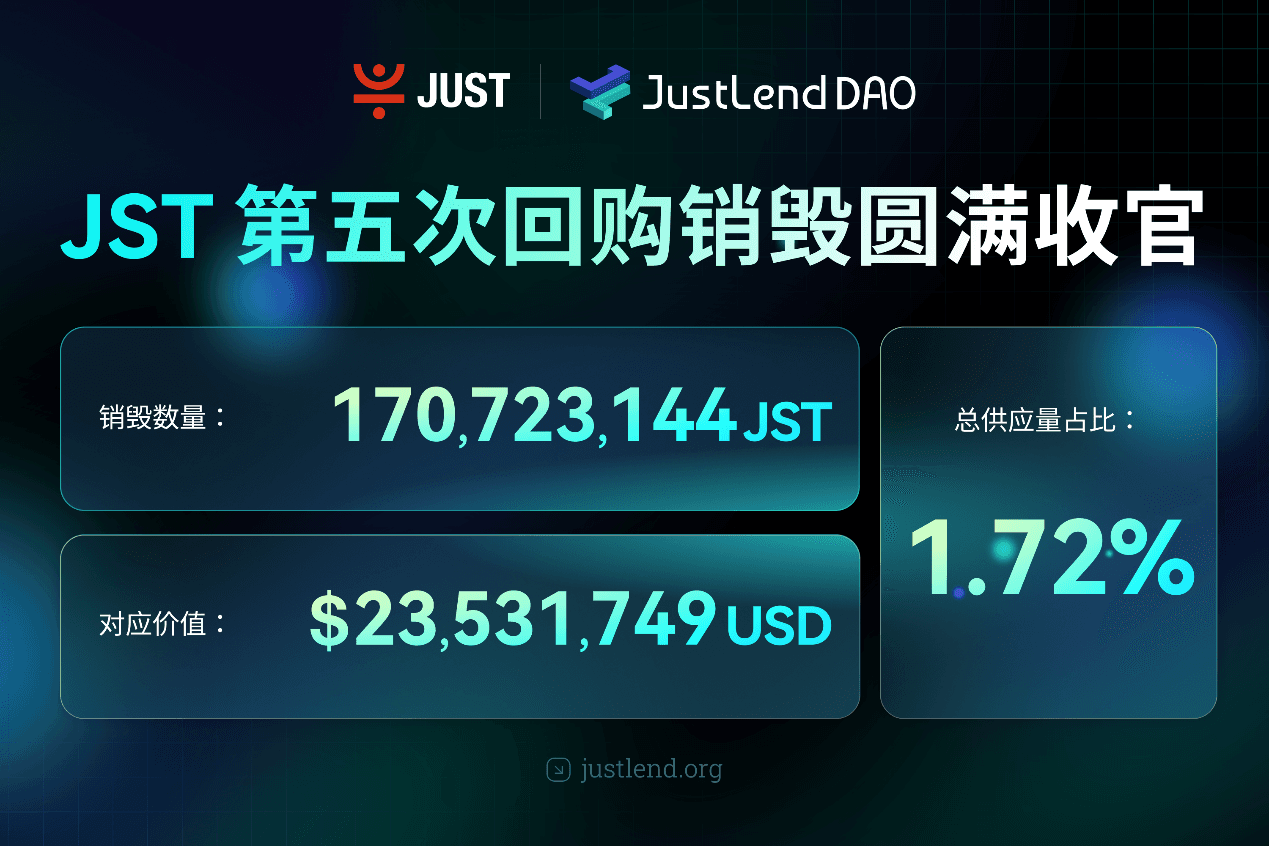
BitTorrent Brand Upgrade and Initial BTT Buyback & Burn Launch Simultaneously, Dual Engines Usher in New Era of Web3 Infrastructure
Oct 17, 20:00
Asia Market Daily: Japan's BOJ signals more rate hikes while Korea targets offshore perpetual platforms (2026/10/17)
Oct 17, 17:01Why did Papertrade backfire on you?
Oct 17, 17:01
The 'Strict Father' of Northern Myanmar: This Company Deploys 200,000 "AI Best Actors" to Strike Back Against Scammers
Oct 17, 15:34