Kimi Completes Over $3.5 Billion Financing, Valuation Rises to $350 Billion, Pre-IPO Round Launched Ahead of Schedule
Kimi has just released the model weights for K3, and the dark side of the moon has also closed its latest funding round.
According to the exclusive information obtained by a reporter from "Science and Technology Innovation Board Daily," the dark side of the moon has completed its Series F funding round with a funding amount exceeding $3.5 billion, bringing the post-investment valuation to $350 billion.
This funding round was not originally planned to raise this much money. Reports indicate that due to investors subscribing for an amount more than three times the original target, the dark side of the moon closed the Series F round ahead of schedule. The Series G funding round, originally planned to start in August this year, has also been launched early.
The Series G round will be the pre-IPO round before the dark side of the moon goes public, with the pre-investment valuation already increased to $500 billion.
Just a week ago, the market speculation was that after completing a pre-investment valuation round of about $31.5 billion, the dark side of the moon would start the final private funding round in August. Now, the final amount raised in the Series F round has exceeded $3.5 billion, with a post-investment valuation of $350 billion, and the next round did not wait until August. Both the funding and valuation have surpassed the original plans.
Since its establishment in 2023, the dark side of the moon has increased its valuation from $3 billion to $350 billion in just over three years. The ongoing pre-IPO round has now set the next price tag at $500 billion.

Over a Dozen Rounds of Funding in Three Years,
Valuation Soars from $3 Billion to $350 Billion
The dark side of the moon was founded in April 2023 by Yang Zhilin, Zhang Yutao, Zhou Xinyu, and Wu Yuxin.
Just about two months after its founding, the company raised over $200 million in an angel funding round, with a post-investment valuation of about $3 billion. For a large-scale model startup that had not yet formally launched a product, this was already a rare early-stage funding.
What truly brought the dark side of the moon into the heart of the capital table was the Series A+ funding round completed in February 2024.
This funding round exceeded $1 billion, with Alibaba leading the investment, and institutions and industry capital such as Sequoia China, Xiaohongshu, and Meituan participating, pushing the dark side of the moon's valuation to around $25 billion. Half a year later, the Series B funding round raised over $300 million, further increasing the company's valuation to $33 billion.
However, after that round of financing in 2024, the funding pace of the Dark Side of the Moon slowed down for a while.
During that year, significant changes occurred in the Chinese large-scale model market. Tech giants such as ByteDance and Alibaba continued to lower model prices, DeepSeek quickly rose to prominence with its open-source approach and cost efficiency, and the competition in general chatbot products gradually shifted from user growth to model capabilities, inference costs, and business revenue. Kimi, which once led the way in long-text processing, now finds it challenging to sustain a higher valuation relying solely on one product label.
It wasn't until the end of 2025 that the Dark Side of the Moon completed a $500 million Series C round of financing, bringing its post-investment valuation to $4.3 billion. After that, the company's financing speed notably accelerated.
In the first two months of 2026, the Dark Side of the Moon completed multiple rounds of financing consecutively, with the valuation soaring from the previous $4.3 billion to $10 billion, and further reaching $18 billion.
In May of this year, the company once again raised about $2 billion in a Series D round of financing, bringing the post-investment valuation to $20 billion. Besides internet companies and market-oriented investment institutions, participants now include China Mobile, Guozhi Investment, CPE Source Peak, and several state-owned background funds.
Just after the Series D round was completed, a new round of financing was launched in June. At that time, the rumored pre-investment valuation had already reached $31.5 billion. Today, this round concluded with a financing size of over $3.5 billion, raising the Dark Side of the Moon's post-investment valuation to $35 billion.
Looking back at this financing trajectory, the most significant change occurred in the past half year.
By the end of 2025, the Dark Side of the Moon's valuation was still $4.3 billion. Over a year and a half later, this number had reached $35 billion, an increase of over seven times. If the next round is completed at a pre-investment valuation of $50 billion, the Dark Side of the Moon's valuation increase over the past three and a half years will exceed 160 times.
The reasons given by investors are also becoming more direct. Previously, investors bet on Yang Zhilin and a tech team with ties to Tsinghua University. Now, they are betting on whether the Dark Side of the Moon can become one of the few companies in China to stay at the forefront of the global model competition.

After K3, the Dark Side of the Moon returns to the center of the stage
The timing of this early closing of the round of financing coincided precisely with the release of Kimi K3.
On July 16, the Dark Side of the Moon launched Kimi K3. On July 27, the company further opened up the full model weights, technical reports, and some key infrastructure technology of K3.
K3 is a hybrid expert model with a total parameter count of 2.8 trillion, activating 1.04 trillion parameters per inference, supporting a context size of 1 million tokens, and possessing capabilities in vision, programming, reasoning, and long-context tasks.
The Dark Side of the Moon stated in a technical report that K3 has reached state-of-the-art levels in tasks such as long-range programming, agent behavior, knowledge, reasoning, and vision. Its overall capability is very close to that of the strongest closed-source models, Claude Fable 5 and GPT-5.6 Sol.
Lists can change at any time, and the model company's own tests need to be taken with a grain of salt. The most significant impact of K3 is that it has pushed the boundaries of the open-weight model's capability forward.
For a long time, open-source models have mostly played the role of catch-up. Closed-source companies were responsible for training the strongest models, and six months to a year later, the open-source community would reproduce some of that capability at a lower cost.
K3 has changed this time lag. A Chinese company has directly released a model with capabilities close to the global cutting edge, allowing other developers to download, modify, deploy, and even continue training their own models based on it.
Of course, the model has not become cheap as a result. The weight file of K3 exceeds 1.5 TB, and even just loading the full model requires multiple high-end accelerators. For production deployment, hardware investment may be significant. Its "openness" mainly addresses whether enterprises can control the model, break free from a single API provider, and does not mean that everyone can run it on their home computer.
Nevertheless, open weights will still disrupt the business of closed-source companies.
When a sufficiently powerful model can be downloaded, enterprises have the opportunity to deploy it on their servers, keep the data internal, customize the model, and no longer be subject to a single company's token pricing forever. The barriers built by closed-source models based on their leading capabilities will also be diluted more quickly.
So after the release of K3, the debate quickly moved beyond technical rankings and entered the policy and commercial interests of the U.S. AI industry.

The Battle between Open Source and Closed Source
On July 24, companies and institutions including OpenAI, Google, Microsoft, NVIDIA, AMD, Meta, Hugging Face, and others publicly supported open-weight models and opposed the U.S. government's rush to restrict downloadable and deployable AI models.
Anthropic and Amazon were not included in the list of signatories. This prompted external questioning of whether Anthropic intends to use security and national security as reasons to restrict the development of open models, thus protecting its closed-source business from competitors.
On the same day as the K3 Open Weight release, Anthropic CEO Dario Amodei published an article responding to the controversy.
He stated that Anthropic has never advocated for a complete ban on open weight models. Open models that do not have dangerous capabilities are a public good that can reduce usage costs and create value for companies, developers, and researchers.
However, Amodei's core position has not changed.
He still advocates for continued restrictions on advanced chips and chip manufacturing equipment from flowing to China, opposes so-called "industrial-scale model distillation," and calls for sufficiently capable models to undergo mandatory security testing before release, regardless of whether these models are open or closed source.
On the surface, this debate revolves around security, but underneath lies a very real business issue.
Closed-source companies hope to maintain control of the most powerful models, charging fees through APIs and subscription services. Open models, on the other hand, allow capabilities to spread to more companies, lowering prices and reducing the distance between newcomers and leading companies. The faster the openness, the harder it is for a few companies to monopolize model capabilities on their servers in the long run.
K3, originating from China, is of a significant scale and its capabilities are already close to the cutting edge. For those supporting open models, K3 proves that the open approach can still produce top-tier models. For Anthropic, it also means that the competitive advantage built by American companies at great expense may spread at a faster rate.
As a result, the dark side of the moon has gained a capital value it didn't have before.
It is no longer just an AI application company with a large number of Chinese users or a basic model startup waiting for its business model to mature. After the release of K3, it has been reassessed within the context of global competition between open-source and closed-source, the U.S. and China, and model capability and computing power control.
A $3.5 billion funding and a $35 billion valuation are the answers provided by the capital market.
Recommended
Desk: Brent Crude Tops $110, Musk's Net Worth Drops 528.6 Billion in Four Days After Tesla Roadster Launch
Oct 17, 21:49
JST Fifth Buyback and Burn Successfully Concludes: Over 170 Million Tokens Worth Approximately $23.53 Million Burned, Buyback Mechanism Set for Comprehensive Upgrade
Oct 17, 20:10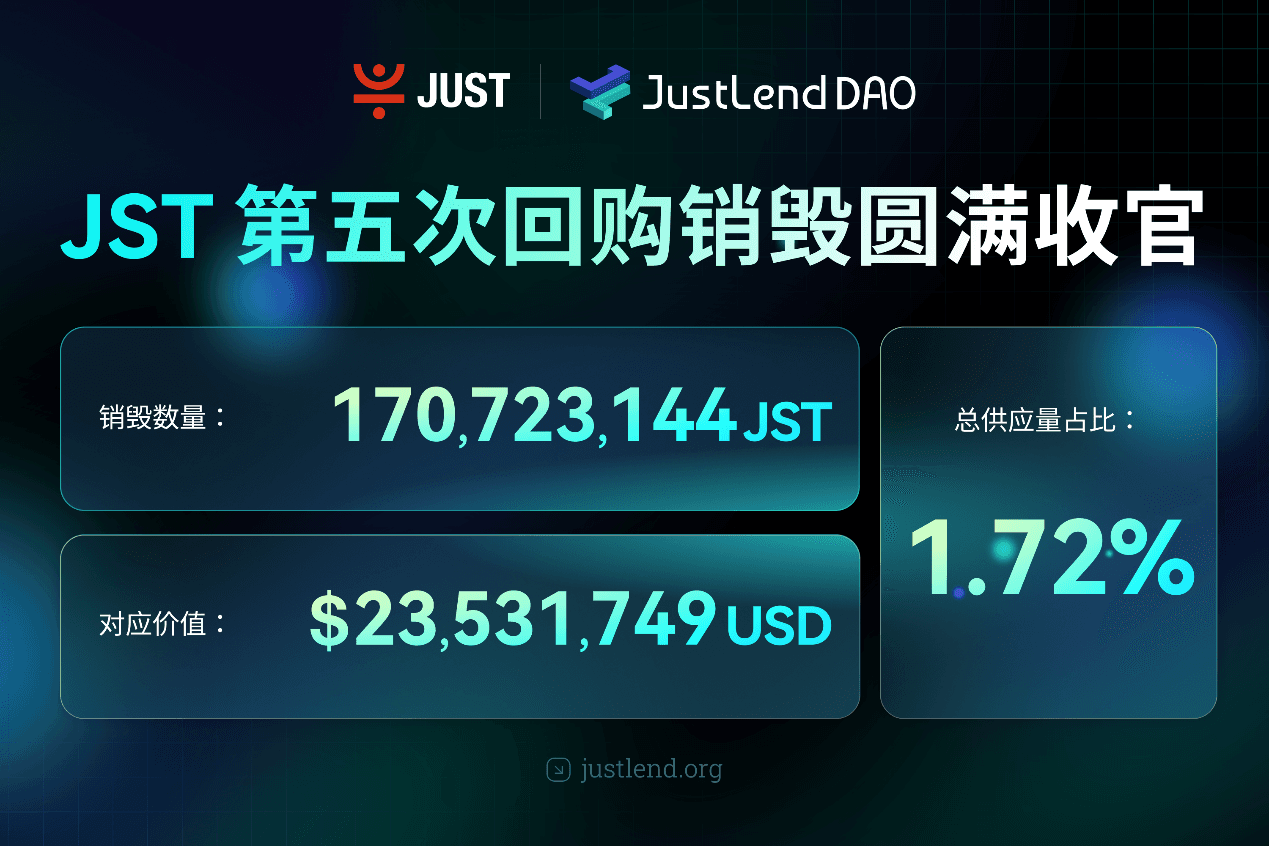
BitTorrent Brand Upgrade and Initial BTT Buyback & Burn Launch Simultaneously, Dual Engines Usher in New Era of Web3 Infrastructure
Oct 17, 20:00
Asia Market Daily: Japan's BOJ signals more rate hikes while Korea targets offshore perpetual platforms (2026/10/17)
Oct 17, 17:01Why did Papertrade backfire on you?
Oct 17, 17:01
The 'Strict Father' of Northern Myanmar: This Company Deploys 200,000 "AI Best Actors" to Strike Back Against Scammers
Oct 17, 15:34