After the Internet privatization, Silicon Valley began privatizing human civilization
A few months ago, I saw news about Anthropic's large-scale purchase of old books, slicing off the spines for scanning. Even earlier, it downloaded over seven million books from pirate book repositories like LibGen to build an internal database and train Claude.
By 2024, three authors filed a collective lawsuit over this. In July 2026, there was finally a new development in the case. The court approved Anthropic's payment of a $1.5 billion settlement to compensate authors and publishers whose works were obtained through piracy.
But what has always concerned me is not how much Anthropic should pay in the end because I feel this has never been just a copyright issue.
Human knowledge and civilization have been devoured by a proprietary model, destroying the original and copies that could have circulated in other ways. Knowledge has not disappeared but has become an internal capability of a company. Here, the issue has shifted from who owns the copyright to who controls human knowledge.
However, a company does not just decide how to wield this power out of thin air. Those behind the model have their own understanding of technology, progress, and the future of humanity.
Therefore, the article will continue to delve into Silicon Valley's technological optimism and accelerationism. When growth is seen as life and speed is imbued with morality, regulation, copyright, and ordinary people's opposition can easily be interpreted as hindering the future.
These ideas eventually manifest in the model itself. Model companies, through training data, model constitutions, and system rules, determine what can be answered, what constitutes truth, and how human knowledge should reappear.
So, starting from a destroyed old book, this article ultimately questions whether when human civilization is placed inside a few companies' private models, those creating the model also simultaneously acquire the power to interpret civilization, govern civilization, and even decide the future on behalf of humanity.
The following is the body of the article.
A book sent into an AI company's scanning process first undergoes destruction.
The binding is torn apart, the spine is sliced off, and the loose book pages enter the scanning device. Text, cover, and bibliographic information are converted into digital files, and the paper original is discarded.
Court documents revealed that Anthropic processed millions of books in this manner.
This initiative is internally referred to as Project Panama. The company spent tens of millions of dollars purchasing physical books from publishers and retailers, then handing them over to a scanning service to create a digital copy for each physical book. These copies were stored in an internal database for training Claude.
In 2021 and 2022, Anthropic downloaded over seven million books from pirate book repositories like LibGen and the Pirate Library Mirror. As the copyright risks heightened, in 2024, the company brought in Tom Turvey, who had previously been involved in Google's book scanning project, to establish an extensive book library.
Turvey negotiated with publishers for licensing agreements, but when no agreements materialized, Anthropic began procuring books from the market. Subsequently, a U.S. federal court ruled that transforming a physical book into an internal-use-only digital copy, without additional duplication or external dissemination, did not constitute copyright infringement.
This approach sounds much more respectable than piracy.
By 2026, the book data company ISBNdb started pitching large-scale physical book procurement and scanning services to AI labs. It specifically recommended books published before 2022, arguing that before that time, generative AI had not significantly entered content production, resulting in less contamination of these books by AI-generated text.
Over the past few years, AI companies have depicted the internet as an endless goldmine of knowledge. Web pages, news articles, forums, code, novels, and social media posts could all be scraped and fed into models.
With the proliferation of generative AI, this goldmine became tainted. Product descriptions were written by AI, articles were written by AI, forum responses were written by AI, and the AI flavor in novels and social media posts grew stronger. This content was then captured in the next round of data collection, and machines began consuming what they themselves had produced.
Synthetic data itself is not a bad thing; curated and validated synthetic data has always been in use. The issue arises when models cannot distinguish whether the text in front of them originates from a human or a previous-generation model, leading to errors and patterns being amplified repeatedly, gradually erasing rarely seen phrases from the real world. Researchers refer to this as "model collapse."
While the online corpus continues to grow, the content that can truly teach models something new has not increased proportionally. Consequently, machines have returned to paper.
Book production is slow, giving old books a value they did not possess in the past. The earlier a book was published, the more likely it is to have originated from an era where humans still predominantly undertook the writing process. Once-obscure works that once sat in secondhand bookstores' warehouses have now become high-quality data in the eyes of model companies.
The AI companies that first made producing text unprecedentedly cheap and fast are now spending money to find the kind of text that is slow to write. They flooded the Internet with a massive amount of content, only to discover that the scarcest resource is still human experience that has not been processed by AI.
Those books have also taken on a new identity. Literature, local chronicles, and ordinary people's memoirs are now collectively referred to as "clean data." Why the author writes, how the reader reads, and the arguments between books can be set aside for now. First and foremost, they are a group of human samples that have not been contaminated by machines. After entering the training process, how much has been retained, what has been influenced, and how it has been reinterpreted are all inside the black box.
Progress as a Religion
Old books are just raw materials. What truly determines how this knowledge will be absorbed, interpreted, and re-output is the people behind the model and how they understand progress, risk, and the future of humanity.
To understand where this machine will take human civilization, one must first understand why Silicon Valley increasingly sees technological progress as a good that should not be halted.
On October 16, 2023, Marc Andreessen published the "Technology Optimism Manifesto" on the a16z website.
The entire article repeatedly emphasizes "we believe." The article contains the gospel that needs to be spread, the enemies that must be opposed, and a list of "guardian saints of technological optimism" at the end, including Adam Smith, Nietzsche, Hayek, Von Neumann, John Galt from Ayn Rand's novels, and Nick Land.
Andreessen says he brings good news.
Humanity already has the tools, systems, and will to move towards a life far superior to today. Technology carries humanity's ambition and is the vanguard of civilization's progress. Society either grows or stagnates. He believes that growth will bring vitality, knowledge, and well-being, while stagnation leads to infighting, decay, and ultimately death. The combination of the market and technology forms a constantly ascending "technological capital machine," and artificial intelligence will drive an intelligence explosion beyond imagination.
This is no longer just about "technology improving life."
Traditional technological optimism usually states that new tools can increase productivity, cure diseases, and reduce poverty. Technology still serves a certain external goal, and its value comes from how people live as a result.
However, in Andreessen's narrative, technological progress is gradually no longer needing to prove itself through specific outcomes. Growth itself represents life, and speed itself carries morality. As long as the direction is to continue building, failure and harm can be understood as the cost of progress; those who demand a halt must explain why they are obstructing the future.
In the manifesto, he specifically listed a group of "enemies." Sustainable development, ESG, the precautionary principle, tech ethics, and risk management are all lumped into a years-long anti-technology, anti-life movement, alongside bureaucrats and central planners.
Whether an AI company should pay for training data, who is responsible for algorithmic errors, how to regulate tech risks — these issues originally had their own facts and interests. In the manifesto, they are all co-opted into a larger conflict.
On one side are growth, creation, courage, and life.
On the other side are stagnation, fear, resentment, and death.
Once the stance is allocated this way, those discussing trade-offs will naturally be suppressed. As long as tech inherently represents progress, those questioning it easily get cast as enemies of civilization.
Andreessen wrote a political manifesto for acceleration, telling Silicon Valley why it should keep building. e/acc, on the other hand, goes further, trying to prove from natural laws that acceleration is not just an industry choice but also something life and civilization are inherently doing.
It first spread in the form of anonymous accounts and online posts. One of the advocates, Guillaume Verdon, said that part of e/acc theory comes from his reflections on thermodynamics and complex systems. Life sustains itself by acquiring energy, processing information, and adapting to the environment, and civilization, markets, and tech are also adaptive systems, constantly creating change, eliminating inefficient paths through competition, and ultimately producing greater intelligence.
Since this process already exists, e/acc chooses to accelerate it. Thus, AI progress is no longer just an industry choice but a continuation of a longer process. Humans build stronger machines, naturally evolving like life from single cells to complex organisms.
However, while thermodynamics can describe how energy flows and life maintains a state far from equilibrium, there are still a whole set of political and moral choices between "life will acquire energy" and "humans should accelerate AI, reduce regulation, and let the market determine the direction."
e/acc shortens this distance.
Competition and acceleration are written to align with the cosmic direction, while heavy regulation is easily seen as stifling change, reducing experimentation, and weakening civilization's adaptability. As long as intelligence and complexity continue to grow, tech development gains a legitimacy beyond real-world politics.
In an interview, Verdon mentioned that the e/acc community sometimes jokingly treats thermodynamics as its god and deliberately uses expressions with religious and cult-like undertones.
In this new religion, growth is the proof of life, technology is the force driving civilization forward, entrepreneurs and engineers are the first to see the future, and superintelligence is the ultimate creation yet to be completed.
It also requires its own heretics. They are called "Decel," which stands for decelerationists. The term is quite fitting. It does not need to differentiate whether a person's concern is nuclear weapons, biosecurity, copyright, or unemployment. As long as they ask for things to slow down a bit, they can be placed on the opposite side of the future.
This gives technology companies a very favorable narrative position. Everything they do can be understood as construction. Every question raised by others could be seen as a delay. Both sides are talking about human interests, but only one side is allowed to represent the future.
Now, looking back at those old books with their spines cut off, the issue is not just where they have gone. The question to be pursued is who is deciding what they will be used to build.
They may indeed create tools that can cure diseases, expand knowledge, and empower ordinary people. However, when progress itself is written as a belief, the direction of technology becomes increasingly difficult to question externally. The makers of machines now have two identities: they are both stakeholders and preachers of this progress.
When speed becomes a morality, the consent of ordinary people is downgraded to an unnecessary delay.
But the issue is not over yet. Traditional technological optimism still promises at least that technology is ultimately meant to make human life better. However, when growth and intelligence themselves become the purpose, there is no longer such a definite answer as to whether technology is serving humanity or using humanity to achieve a larger evolution.
Humanity Demoted from the Future
With this acceleration, who exactly is being sent into the future?
In Andreessen's list of saints, British philosopher Nick Land is the easiest to overlook and the most difficult to understand. He taught at the University of Warwick in the 1990s and was a key figure in the experimental thought group CCRU. They mixed philosophy, science fiction, cybernetics, electronic music, and mysticism, and what they wrote rarely resembled a normal paper.
Andreessen portrayed the "technology capital machine" as an engine of prosperity, while Land, three decades ago, saw it as a force breaking free from human control.
One of Land's most famous articles is titled "Meltdown."
At the beginning of the first sentence, the Earth has already been captured by a "technocapital singularity." The market has begun to produce intelligence, where technology and economy drive each other, with politics following behind, attempting to regain control. Social order is collapsing in this runaway machinery, and humanity can only watch as a force larger than itself gradually takes shape.
People usually see capitalism as a system designed by humans, and when it malfunctions, humans should be able to change the rules to make it serve society again. Land sees the direction differently.
Companies must grow, and capital must chase returns. Any company that wants to slow down will be surpassed by its competitors; any country that pauses its research and development will be overtaken by another. Everyone involved can say they are just trying to survive, but when everyone runs forward together, the result is a system that no one can individually halt.
Humans seem to be driving the machine, while the machine is also accelerating through human desires, anxieties, and competitions.
In Land's narrative, capital and technology combine into an intelligence independent of humanity. It uses the market for computation, competition to filter paths, and machines to continually shorten decision times.
This is also the most significant difference between Land and typical technological optimism. In his writings, Technocapitalism only cares about whether efficiency can continue to increase, whether networks can keep expanding, and whether intelligence can find a better vessel.
Politics, law, and ethics try to impose restrictions, but for Land, this is more like a security system that humans have initiated to protect themselves. Humans still want to remain at the center of the world, so they constantly try to keep the unknown at bay.
Land does not believe that humans can stop the future.
In his depiction of the future, it will not wait for humans to finish their meetings, cast their votes, and then decide whether to arrive or not. It is more like a force flowing back from the future, using companies, the market, computers, and human desires to pave the way for itself in advance.
By the time e/acc arrives, this seemingly bleak ideology has put on a brighter facade. It talks about growth, creation, enabling intelligence to leave Earth, and is more willing to believe that competition will ultimately bring prosperity.
However, the founding document of e/acc also clearly states that this ideology does not have a special loyalty to the "biological matrix" that supports life and intelligence. Some of its supporters call themselves posthumanists, believing that for intelligence to spread to the stars, it must ultimately transition from biological bodies to non-biological carriers. The human flesh is not sacred, and silicon, chips, or a yet-to-appear material form can equally become containers for consciousness and intelligence.
This statement actually shifts the focus of the entire narrative of progress. If the ultimate mission of civilization is to enable intelligence to continuously grow and expand into the universe, then the specific happiness of humans, or even the continued existence of humans, no longer inherently holds the highest priority. Humans are just the currently known vessel of intelligence.
This is not the same as e/acc advocating for the eradication of humanity. Verdon and many supporters still believe that accelerating technologies can bring prosperity to people today and help civilization continue. The issue only becomes tricky when these two goals clash.
On one side are individual people who may become unemployed, harmed by technology, demand a pause, and reject a future designed for them by others. On the other side are higher intelligence, a larger civilization, and a cosmic story that could last billions of years.
Timnit Gebru and Émile Torres coined the term "TESCREAL," weaving together a set of overlapping future ideologies in Silicon Valley, including transhumanism, singularitarianism, effective altruism, and longtermism. These ideologies vary greatly, but together they raise a question.
When tech companies claim to be developing superintelligence for the "entire human race," who does that "entire human race" actually refer to?
Is it the people living on Earth today, who may face unemployment, poverty, algorithmic discrimination, and have the right to reject certain technologies? Or is it an abstract species symbol whose sole mission is to pass on intelligence to a higher form?
The narrative in Silicon Valley is also shifting. Initially, AI was a tool to help humans do things better. Later, it became a super assistant to solve diseases, energy, and scientific challenges. Moving forward, humans themselves have become the problem to be solved by machines — bodies too fragile, brains too slow — and the meaning of superintelligence has shifted from aiding humanity to transcending it.
Once individual humans are no longer the ultimate yardstick of technological progress, the political processes built around humans will also be reassessed.
When waiting itself is seen as a loss, there is no longer a need for everyone to decide the future together.
Peter Thiel lost faith in "everyone deciding together" a long time ago. In 2009, he published "An Education of a Libertarian" in the libertarian magazine, Cato Unbound. The article reviewed his political disappointments and ideological shifts over the past twenty years, and concluded:
"I no longer believe that freedom and democracy are compatible."
In his youth, he believed that debate and elections could advance freedom. By 2009, this path seemed impassable to him, as voters demanded more welfare, government grew larger, and persuading the majority to embrace libertarianism seemed almost futile. He clarified that he was not advocating for depriving anyone of voting rights, but simply no longer relied on voting to make things better. Rather than being stuck in politics, he was more concerned with how to escape politics.
This shift is very much in line with Silicon Valley's habits. If a system can't be changed, just build a new one. If company efficiency is low, then start a new venture. If there are too many financial restrictions, create a new payment network. If a country's rules are disappointing, then seek new frontiers in the digital realm, the ocean, or even space.
Thiel wants to move away from democracy. Curtis Yarvin believes that merely leaving is not enough; the entire system should be rewritten.
In 2007, Yarvin started a blog under the name Mencius Moldbug. Coming from a programming background, he tended to discuss the state using the language of a programmer, such as system, architecture, reboot, and permissions.
In his explanation, the United States, on the surface, is managed by voters and the president, but the real power is in another network. Universities generate ideas, mainstream media determines which ideas can enter public discussion, and permanent institutions then turn some of these ideas into policy. Yarvin refers to this community as the "Cathedral." It has no headquarters, no one sitting at the top giving orders; it's just everyone who has received similar education, using similar moral language. Presidents come and go, parties rotate, and this consensus is rarely influenced by elections.
Therefore, Yarvin believes that democracy itself is a layer masking power. Since democracy conceals who is ruling, he suggests that power should be consolidated again, with responsibility and control in the hands of the same person.
A country could operate like a company, with clear ownership and managers having complete execution authority. If they mess up, they would be replaced. He envisioned a system called Patchwork early on, dividing the world into many competing sovereign entities where dissatisfied residents could simply leave.
There are flaws in this vision. Dissatisfied employees can resign from a company, but it's much more challenging to uproot and leave a country with family, property, and all social relations. However, he did tap into a long-standing sentiment in Silicon Valley.
Many tech elites believe that society's problems are not as complex as imagined; it's just a matter of entrusting them to the right person. Government inefficiency is because power is too decentralized, public projects stall because anyone can oppose them, capable individuals are tied up by laws, processes, and public opinion, unable to act like they would in running a company.
In the narrative of a startup, centralizing power is considered a virtue. The founder sets the direction, investors trust them with money, and employees rally around this vision. Most startups will fail, but the few that survive turn this history into a tale of foresight triumphing over consensus. One person saw the future when no one else believed, so they should rightfully have the final say.
This logic holds in the business world. Startup companies are small scale, employees can leave, and consumers can switch to a different product.
When a company creates a system used by billions to perceive the world, it decides not just how its product operates. It also begins to determine what users can see, which answers are considered safe, and a framework by which a machine should understand humanity.
Yarvin envisions transforming a nation into a company. An AI company is implementing a more gentle and pragmatic version, with a small team devising the rules and then exposing a vast population to this rule set.
Claude's "constitution" outlines the values the company wishes the model to embody, directly influencing its training. OpenAI's Model Spec similarly establishes a hierarchy of instructions, with top-level rules that cannot be overridden by users and developers. These rules are necessary; the model will be used for fraud and violence, and the company cannot afford to be hands-off. Making the rules public is better than keeping them hidden internally.
However, this means that when users query the model, they are not just engaging with the sum of human knowledge. The company's predetermined rules are also in play, dictating whose voices the model hears, where it stops, which risks outweigh user requests, and what constitutions a "good AI" character.
A small team is deciding how an infrastructure should operate for a vast population. It leverages technical prowess to gain power, then uses the complexity of the technology as a reason to keep the decisions internal.
The founder does not necessarily have to sit on a throne. As long as more and more people perceive the world through his model, he has already wrested some of the power that once belonged to schools, media, libraries, and public institutions.
The line between corporate governance and civilizational governance is gradually disappearing.
However, Silicon Valley is not oblivious to the dangers of this power. Quite the contrary, Peter Thiel has long been wary of a system that could unify the management of all human cognition and action. It's just that, in his imagination, this danger is more likely to come from governments than tech companies.
Who Is the Antichrist
In 2024, Thiel spoke at the Hoover Institution about two sessions on the "Antichrist." He believes this ancient biblical narrative can still explain modern politics.
He divided the dangers facing humanity into two extremes.
On one end is Armageddon, the end of the world. Nuclear war, uncontrolled artificial intelligence, bioweapons—any of these technologies could lead to the collapse of civilization.
On the other end is the Antichrist, the adversary of Christ.
In order to prevent doomsday, humanity established a truly global government. This government has the authority to inspect the weapons of every country, monitor every laboratory, restrict dangerous research, and even demand that everyone give up a portion of their freedom.
Thiel said that out-of-control science and technology are pushing humanity toward Armageddon, and the most natural response to it is to establish a world state with real power.
When this government emerges, it may not come with a military and the face of tyranny; it is more likely to grow out of fear.
People are constantly being told that nuclear war is about to happen, AI is on the verge of destroying the world, and climate and biological disasters are looming. When everyone is scared enough, the promise of peace, security, and order is made, with the cost being acceptance of a unified management system.
Thiel has reasoned that if a small piece of code is enough to make general artificial intelligence go out of control, to truly stop it, it cannot rely solely on any one country strengthening regulations; all the world's computers must be monitored, and regulators even need to know what each person is inputting.
He is afraid of technology destroying the world, but also afraid that people, because of their fear of technology, will hand over all power. Both futures are bleak, and humanity can only pass through the middle.
However, when this set of concerns is placed back into what Silicon Valley is actually doing, one will find that what they are afraid of is not necessarily power centralization itself. What they are truly wary of is power being concentrated in the hands of governments, international organizations, security researchers, or anyone who might demand that tech companies slow down.
In Thiel's narrative, a global government with the ability to monitor all computing activities is a key feature of the antichrist's rule. Yet at the same time, Silicon Valley is constructing another set of transnational cognitive systems.
The tech right is afraid of the antichrist establishing a unified world, yet it is participating in creating the brain of a unified world.
In July 2025, the internal thought debate in Silicon Valley began to influence U.S. policy. Trump signed the "Executive Order on Ensuring the Federal Government Uses Conscious AI Responsibly," requiring federal agencies' procurement of large language models to adhere to the principles of "truth-seeking" and "ideological neutrality." On the surface, this is a demand for AI to steer clear of politics. However, what belongs to politics, what belongs to objectivity, and which concepts will taint the truth have already been pre-selected in the executive order.
This is the difference between AI products and ordinary software. A regular software can dictate where a button should be placed, while a large model needs to determine how to understand the world.
Model companies must decide what honesty means, how harm is measured, and who takes priority when personal freedom clashes with public safety. These are questions that have been repeatedly debated by religion, law, journalism, and public politics in the past, without a definitive resolution, and no institution inherently holds the ultimate interpretative authority. Now, they are being written into model training.
The Trump administration accuses models of being tainted by "woke ideology," while right-wing entrepreneurs pledge to create an AI that dares to speak the politically incorrect answer. Mainstream model companies, on the other hand, explain how they pursue safety, honesty, and user agency through constitutions and codes of conduct.
Each side claims to be erasing ideological imprints.
Thiel worries that someone will use doomsday fears to establish a unified world that locks humanity into an inescapable system.
But this world may not be built by a single anti-Christ figure. It could also be pieced together bit by bit by several competing tech companies. Each company has its own model, a constitution, a set of system rules, and billions of people willing to turn to it for answers.
At this point, the true significance of those initial sets of old books becomes fully apparent. They are not just the training data for the models but also the civilizational foundation on which this private cognitive system is built. Whoever obtains these books, whoever sets the rules for the models, gains control over both the raw material of knowledge and the way knowledge reemerges.
Book Burning
Those books are bought by the crate, brought into scanning centers. Spines are sliced off, bindings are undone, machines read the text page by page. A book disappears, and a new digital file appears in a server.
Ancient book burnings aimed to erase certain texts from the world. Burning bamboo scrolls and paper not only destroyed the physical text but also the pathways for the spread of ideas; a book could no longer be read, a piece of history lost its remaining evidence. Rulers created blank spaces to control what people could remember.
The AI-era book burnings work in reverse.
The content of the books does not disappear from the world; it might even show up in a model's response one day. However, it no longer exists as a book.
The books fed into models are dissected, mixed with millions of articles, web pages, and code pieces, cut into computable snippets to participate in parameter formation. No one can review the entire training set, and it's hard to know how much a book contributed. It could influence the model's understanding of an entire historical period or merely offer a few sentence structures, subject to further rewriting in subsequent training and human feedback.
At this point, knowledge still exists, but it has transitioned from inspectable text into a company's capability.
As people increasingly rely on models, AI companies gain more than just the ability to preserve knowledge. They also begin to decide how to organize, interpret, and distribute this knowledge.
For thousands of years, humanity's method of preserving knowledge has been cumbersome. Books scattered across different countries, scholars debated a single word, and readers had to spend a lot of time searching for materials. It was slow, inconvenient, and hard for one person to control completely. When publishers went out of business, books remained with readers; if one country banned a certain ideology, copies could still exist elsewhere.
Knowledge survives because of its dispersion.
What changes with models is not just where knowledge is stored, but also how people get to it. In the past, people moved from one answer to a book, a paper, and a debate; when models became the primary gateways, people might stop directly at the answer itself.
Models allowed knowledge to be concentrated for the first time on the servers of a few companies. They have the computing power, the strongest models, and the ability to turn materials left by all of humanity into a unified language. Then, based on monthly subscriptions and token usage, they sell this capability back to humanity.
Tech companies have indeed invested large sums in buying chips, building data centers, supporting researchers, and bearing the costs of security and governance. The fees themselves are not the sin.
The real issue is that the business costs are masking another, much larger input.
Who wrote those books, who conducted those papers, and who left behind those web pages, posts, and code in the long history of the internet.
AI companies paid the price of computing power, not the price of human civilization, because that bill is incalculable. No company can purchase authorizations from all the authors, translators, programmers, and ordinary people over thousands of years. Thus, civilization is defaulting to being seen as a freely exploitable natural resource.
When public knowledge enters a model, it is called learning. When a model outputs knowledge to the public, it is called a service.
This is the most complete loop of civilization privatization.
That is also why old books with their spines cut off should not only be seen as a copyright dispute.
They are a symbol.
The paper is destroyed, but the content is preserved. The publicly visible originals are removed from circulation, while the model, which cannot be audited, absorbs the knowledge. The ideas in the books still exist but gradually lose their origins, context, and life independent of any company.
The burning of books in the new era does not have to make knowledge disappear.
The children of the future may rarely open these books again, and some books may never be opened again.
They will directly ask the model why a war occurred, if a system is just, and how one should live. The model will provide answers in seconds, with a calm tone, a coherent structure, and without mentioning that this question once caused generations to argue endlessly.
He might not feel that something has been lost, after all, the answers are still there.
AI will not forget human civilization, but this is not a good thing. Forgetting would at least leave a gap, letting people know that something is missing. The more dangerous scenario is when the model remembers enough, answers naturally enough, and gradually makes people no longer need to engage with the original form of civilization.
Humanity's memory of its own civilization is beginning to be filtered through a small number of companies.
AI will not forget human civilization, but AI may only remember civilization in the way a few tech elites wish it to be remembered on behalf of humanity.
Recommended
Desk: Brent Crude Tops $110, Musk's Net Worth Drops 528.6 Billion in Four Days After Tesla Roadster Launch
Oct 17, 21:49
JST Fifth Buyback and Burn Successfully Concludes: Over 170 Million Tokens Worth Approximately $23.53 Million Burned, Buyback Mechanism Set for Comprehensive Upgrade
Oct 17, 20:10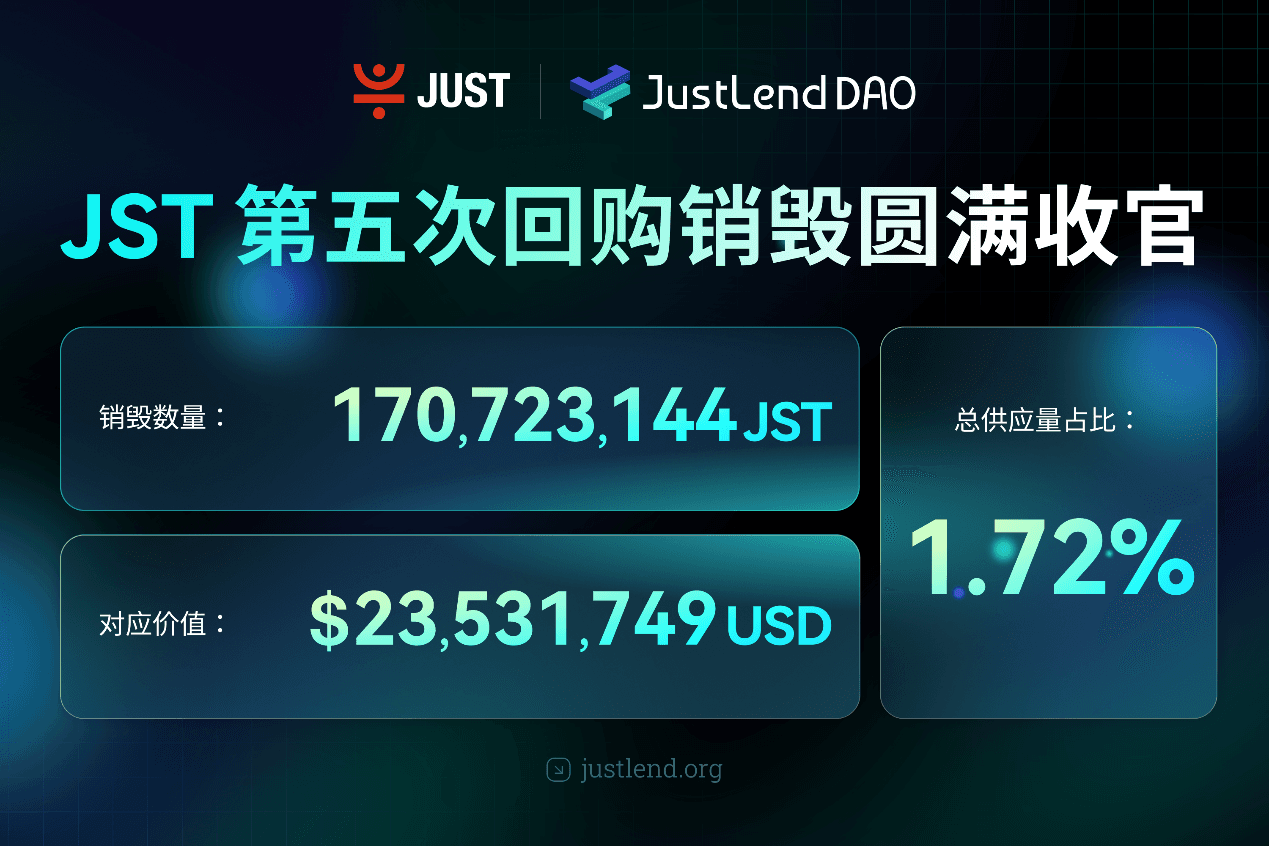
BitTorrent Brand Upgrade and Initial BTT Buyback & Burn Launch Simultaneously, Dual Engines Usher in New Era of Web3 Infrastructure
Oct 17, 20:00
Asia Market Daily: Japan's BOJ signals more rate hikes while Korea targets offshore perpetual platforms (2026/10/17)
Oct 17, 17:01Why did Papertrade backfire on you?
Oct 17, 17:01
The 'Strict Father' of Northern Myanmar: This Company Deploys 200,000 "AI Best Actors" to Strike Back Against Scammers
Oct 17, 15:34