SemiAnalysis Deciphers Epic Plunge: Not Over Yet

Original Text Translation: DeepTech TechFlow
Guest: Doug O'Loughlin, SemiAnalysis Analyst (Former Founder of Fabricated Knowledge)
Host: Dylan Patel, SemiAnalysis Founder
Podcast Source: SemiAnalysis Weekly
Original Title: Ep. 022 - Market Drawdown, Historic Bubbles, Funding The Buildout, AI Politics (Doug is Back)
Air Date: July 29, 2026
Disclosure: Both Doug O'Loughlin and Dylan Patel are employees of SemiAnalysis, a semiconductor industry paid research firm whose business model relies on industry cyclicity. The following content faithfully presents the original conversation and does not constitute investment advice.
Key Points Summary
Doug O'Loughlin makes a long-awaited return to SemiAnalysis Weekly amid a severe retracement in the semiconductor sector following the "best first half year ever" historically. The Korean KOSPI dropped 40%, retail investors with 2x leverage were wiped out, and SK Hynix missed expectations as its price growth slowed due to a shift to LTA. Doug compares the current situation to the 1980s Taiwan bubble, seeing a high resemblance in the bubble's behavioral patterns, but believes the fundamentals remain sound.
The duo engages in a heated debate on "How Big is the AI Demand Really." Dylan draws from SemiAnalysis' own experience: after deploying a coding agent, the company saw a 100x increase in AI spending, expanded from 9 to 90 users, and saw a 10x increase in usage per person. Doug does not deny the strong demand but raises a fundamental concern: while the supply side can be calculated, the demand side is a "trillion-dollar question" with no clear answer. More critically, scaling laws require chip doublings, but physical and institutional bottlenecks in labor, capital, and permits cannot double in sync. Large-scale cloud providers have already issued $450B in bonds this year, with funding coming from pension and retirement funds, while the retirement fund pool itself is shrinking.
Key Insights Summary
On Market Pullback
"By the end of Q2, this was the best performance in semiconductor history. Then we started deleveraging. The faster something rises, the stronger the gravity."
"Koreans have a 20-year record: always buying at the top. Bought banks in 2007, SaaS in 2021, this time yoloed themselves."
"KOSPI dropped 40%, those with 2x leverage went to zero instantly. Then came the self-fulfilling spiral: everyone saw their accounts shrink, decided to sell, further exacerbating the decline."
On Memory Cycle
"SK Hynix shifted to more LTA, price growth slowed from 3x to 30 to 50%. The finance sector's brains all went bad, only looking at the rate of change. When the second derivative comes down, they think the cycle is over."
"The semiconductor script is always the same: during shortages, everyone double-orders, factories see crazy demand and ramp up production. Then when demand sneezes, supply is still ramping, utilization drops from 100% to 50%, and only price cuts are possible."
On AI Demand
"The demand curve is the trillion-dollar question. The supply curve is relatively easy to understand, but whether the demand is 10x or 100x, no one knows."
"SemiAnalysis is a case in point: after the deployment of the coding agent, 9 technical users turned into 90 full users, and each person's token usage also increased by 10x. The company's AI expenditure increased by 100x."
On Supply Chain Bottleneck
"The U.S. is short of 100,000 electricians. Mid-level electricians earn $250,000 a year, and those willing to work overtime can reach $400,000 to $500,000. Some use Cessna small planes to fly electricians to remote sites."
"The hyperscale cloud providers issued $450 billion in debt this year, second only to the borrowing of the U.S. government and China. This money comes from retirement and pension funds, but the retirement fund pool will not double."
"TSMC directly and indirectly accounts for 20% of Taiwan's GDP. If it doubles again, Taiwan will need to have more children to have enough workers."
About AI Politics
"AI is less popular than ice cream, less popular than politicians. This has not been priced in. AI will be the scapegoat for the cost of living in the midterm elections."
"The ROSA Act passed the House by 300 to 20, but is stuck in the Senate. Corporate lobbying power is preventing legislation to restrict Chinese remote access to GPUs."
Body
Best First Half in Semiconductor History, Then It's Debt Payback Time
Dylan: Stock market pullback, all things AI in freefall. We're either pouring gasoline on the fire or offering a bit of comfort today.
Doug: By June 30, the end of Q2, this was likely the best performance in semiconductor history. Then we started to unwind. A lot of it can be attributed to technical factors: leverage, momentum reversal. But the reality is, the faster something rises, the stronger the gravitational pull. We're paying the price for the previous manic momentum rally.
Korea is crazy. Stocks hit limit down every day. There's a tweet that says, "How do I do my job?" The head of HR lost all the money, everyone is depressed because all stocks are down. If you look back at the history of Asian financial markets, this happens more frequently than you'd imagine.
My favorite book is about the Taiwan Bubble. Taiwan experienced a 100x bubble per capita, bank trades at a 500x P/E, everything was insane.
Dylan: When was that?
Doug: Late 1980s.
Dylan: Do you think Korea's fundamentals are different now?
Doug: Fundamentals are good. But the thing is, things are never as bad as the fear or as good as you imagine. SK Hynix disappointed today because they pivoted to more LTA. Ironically, when they were doing their ADR roadshow, they were bashing Micron for doing LTA at a lower price.
Memory prices tripled last year, and they are unlikely to triple again next year. They may increase by 30 to 50%. But the minds in the financial sector have all gone haywire, only focusing on the growth rate. In the history of the memory cycle, when the second derivative comes down, it usually marks the end. Because the growth rate won't plateau at 30%; it will plummet straight to -50%.
The script of this cycle is always the same: everyone invests in building fabs, capacity comes online, then they realize, "Oh my, why is the demand so low?" This is because there were double orders and triple orders before. Factories go from 100% utilization to 50%, and the only way to break even is to cut prices. That's the essence of the semiconductor market.
The KOSPI has now dropped by 40%. Those with 2x leverage are now wiped out. Then comes the self-fulfilling spiral: everyone sees their accounts shrinking, decides to sell, and exacerbates the decline.
Chinese Memory: Could Mess Up the Party, but Demand Still Outweighs Supply
Dylan: China's memory has recently entered the ecosystem, with CXMT and YMTC's massive IPOs. What's your take?
Doug: They have the capacity; even with low yields, it doesn't matter. Chinese companies are not competing on profit margins or EPS.
CXMT is now clearly the fourth player in the market, but in a shortage environment, they can still make money. Apple has started using CXMT's memory because Micron is engaging in "price gouging." No one cries in a casino, Tim Apple. You have to buy at market price.
CXMT might mess up the party, but the reality is that demand still outweighs supply. The real trillion-dollar question is: where is the demand? The supply curve is relatively easy to understand. We don't know the demand curve. We know that code agents and chatbots mean more demand, but we don't know if it's 10x or 100x. Supply will blindly ramp up until one day it hits the demand curve.
Code Agents Are the Inflection Point: SemiAnalysis Spending 100x on AI Themselves
Dylan: I think the demand is clearly very strong and will continue for a long time. Just looking at the internal usage in my own company is enough. If you believe that future demand will plateau or decline, you have to believe the model won't get any better. I see no signs of stagnation, only signs pointing in the opposite direction.
Doug: Let me play devil's advocate for a moment. The biggest short thesis is what? The pace of technological progress may outstrip the speed at which people can use it. Suppose AI's killer app is data entry; Kimi K3 is enough. We keep making faster cars, better products, but the real demand curve has been met by a product we already mastered.
This is like the internet bubble: it was said that "demand doubles every 90 days," but fiber optic technology improved 2 to 3 times a year. The last fiber's performance became 500,000 times its original, and then everyone said, "Wait, we don't seem to need this much fiber."
Dylan: I disagree, but it's worth discussing. My argument is: there are still 100 to 1000 times more people not using any models right now. Second, AI use cases are far beyond coding. It can also do video generation, drug discovery, material science. Some are using AI for superconductor components, how much is that worth? It's worth a lot of GPUs.
And coding itself is not just "centering a div." It represents a whole class of economic value far beyond frontend debugging tasks. Sam Altman talks about RSI (recursively self-improving), Anthropic has new models coming out. The coding agent was a clear inflection point in the Claude 4.5 version: you cross a certain intelligence line, and a whole new market emerges. What you couldn't do yesterday, you can do the next day.
Doug: You are a prototype user. At this time last year, the SemiAnalysis tech team of less than 10 people was using a coding agent, and then you and Dylan said, "Everyone in the company has to learn how to use this." Now we have 90 users.
Dylan: From 9 to 90, 10 times. And then within 3 to 4 months, each person's usage has also increased roughly 10 times. The company's AI spending increased by 100 times. Now the question is, will every company do this? Maybe not at our intensity, but many companies have a lot of work to cut.
H100 Won't Become Scrap Metal, But Models Are Getting Bigger
Doug: I think old chips will become worthless. Everyone says "H100 is an appreciating asset," but one day reasoning for a model will require 100 H100s. By then, you'll say, "Let the old lady retire, buy a B300." The real confirmation signal is when pricing differentiation occurs between B200 and B300.
Dylan: I completely disagree. The fundamental reason is: no one is going to take out H100 and replace it with B300. Data center design is completely different. You can't swap out Hopper for Blackwell or Rubin in the same room; you have to tear everything down and rebuild. So, to justify decommissioning an entire Hopper data center, you first have to prove that the revenue from those chips has fallen below the operating cost. This is not a variable cost; it's a sunk cost.
Doug: In a frictionless world, you are correct, but the world we live in is becoming more and more frictional. The friction of building new compute includes power permits, land, approvals.
Dylan: Yes, I agree. The scenario of GPU prices dropping is when model progress stagnates, and the scenario of prices rising is when model progress continues. There's also an X factor: government intervention in cutting-edge labs. If restrictions are placed on who can use the latest and greatest chips, demand will shrink, and the prices of older chips will also fall.
Capital and Electricians: The Physical Ceiling of Scaling Laws
Doug: What worries me the most is not the demand but the physical bottlenecks on the supply side. The first is electricians. The U.S. is short of 100,000 electricians. Mid-level electricians earn $250,000 annually and are willing to work 18 hours, which can go up to $400,000 or $500,000. There is a website tracking electrician recruitment; on the Wayback Machine, you can see the hourly wage go from $15 or $20 to $50, $100, or $200. It takes 18 months to train an electrician. Doubling that for the needed people, we have never trained so many.
The second is capital. The hyperscale cloud providers issued around $450 billion in debt this year, the largest in history, second only to the U.S. government and the Chinese government. Someone has to buy this debt. To get them to buy more, they have to offer higher interest rates. And the source of this money is largely pension and retirement funds. The retirement pool is structurally shrinking. Retirement funds have largely shifted to 401(k)s, which do not buy debt. So basically, you have to believe that everyone needs twice the insurance, but that doesn't make sense.
Scaling laws say, "Great, we'll make the model twice as big." But not everything can be doubled or tripled in sync.
Dylan: Wait a minute, are you saying that pensions are footing the bill for data center construction?
Doug: Yes. The pension was purchased in bulk before retirement, the baby boomer generation is all retiring, so this asset pool is quite large. But can it double? Can it triple? I don't think so. Life insurance is also a source. But you have to believe that everyone needs double insurance. No one will buy double life insurance.
Dylan: That's very interesting. Pensions are structurally shrinking, but there is indeed a lot of money there.
Doug: Another example is Taiwan, China. TSMC directly and indirectly accounts for 20% of Taiwan's GDP. If TSMC doubles or triples again, Taiwan will need to have more children to have enough workers. Taiwan is playing a single game. Taiwan's GDP has increased by 25% this year, all thanks to TSMC's chip baking. But if it doubles again, there won't be enough people.
AI Politicization: The Scapegoat of Midterm Elections
Dylan: Many people don't like AI, it hasn't been priced in. How could it be priced in? I think it's the midterm elections.
Doug: AI is probably fifth in priority, not in the top three. Healthcare, cost of living rank higher. No one will campaign on an AI platform.
Dylan: But AI will become a sub-proxy of the cost of living issue. It's not "Do we support AI," but "Concerns about the economy, weird tech bros, and AI." The ROSA Act passed the House 300 to 20, stalled in the Senate. Corporate lobbying is preventing it.
Doug: If it's not in the top three priorities, lobbying power will outweigh public opinion.
Dylan: But AI has already become people's scapegoat on other issues. Climate change, housing, inflation, AI and tech bros are all brought up.
Doug: There's an interesting poll: People who dislike data centers usually don't live near data centers. And those who do, especially young people, have a positive attitude because of job opportunities. I visited a data center near Buffalo, and the locals were very supportive. Building data centers in remote areas is actually a good thing; it broadens economic participation. A one-gigawatt data center requires about ten thousand people. 70 gigawatts are 700,000 jobs. This is starting to affect the votes.
Endgame: $5 Trillion Investment, $500 Billion Revenue
Doug: The future of technological prosperity will always come to fruition, the issue is the timing of cash flow. You spend a trillion, receive a hundred billion, it will indeed one day turn into a trillion. But maybe it's five years later, by that time you're like, "Dude, I'm broke."
Assuming the entire AI ecosystem currently has an ARR of $150 billion, with cumulative CAPEX of $1 trillion. A 15% revenue return, assuming a 50% profit margin, is 7.5%. Not bad, but not super lucrative either. You have to believe that $150 billion can turn into $500 billion, which is doable. Then $500 billion can support $2 to $3 trillion of CAPEX. But doubling again becomes very difficult.
OpenAI and Anthropic believe that pretraining is imminent because they are going public. The models pretrained in the end are indeed very good, revenue growth is rapid, but not fast enough to foot the bill. You've built a house you can't afford. You've invested $5 trillion, with a $500 billion revenue, that's ten years' worth of money.
Dylan: You said this is revenue, not profit. And when you say that, you know how high the profit margins are for the services these companies are providing now.
Doug: Right, we are not there yet. We are still on a narrow path, trying to align revenue. The hyperscale cloud providers have other cash-cow businesses, if they want to stop CAPEX, profits can immediately materialize. But as you invest more and more, the stakes get higher, the path gets narrower. At some point, you practically have to demand that everyone is using it. The issue is decision-makers and actual users are two completely different worlds. Zuck thinks everyone will be wearing Meta glasses burning trillion tokens a day in the metaverse, but Grandma in Nebraska can't even use a new iPhone.
Dylan: Revenue doesn't rely on Grandma. It relies on enterprises, banks, telcos, retailers, defense, and intelligence agencies. I see every bank, every telco, every retailer using this in their day-to-day operations. The more interesting constraints are on the supply side: can you get enough GPUs, can you hire enough people to sell.
Doug: Yes, the supply-side issue is more interesting and more challenging. Electricians, capital, permits, these things cannot double according to scaling laws. But given time, it will catch up. They might indeed issue a $1 trillion bond next year. The real issue is the path will narrow, stakes will get higher, and then you have to demand that everyone is using it. This adoption curve takes time.
Recommended
Desk: Brent Crude Tops $110, Musk's Net Worth Drops 528.6 Billion in Four Days After Tesla Roadster Launch
Oct 17, 21:49
JST Fifth Buyback and Burn Successfully Concludes: Over 170 Million Tokens Worth Approximately $23.53 Million Burned, Buyback Mechanism Set for Comprehensive Upgrade
Oct 17, 20:10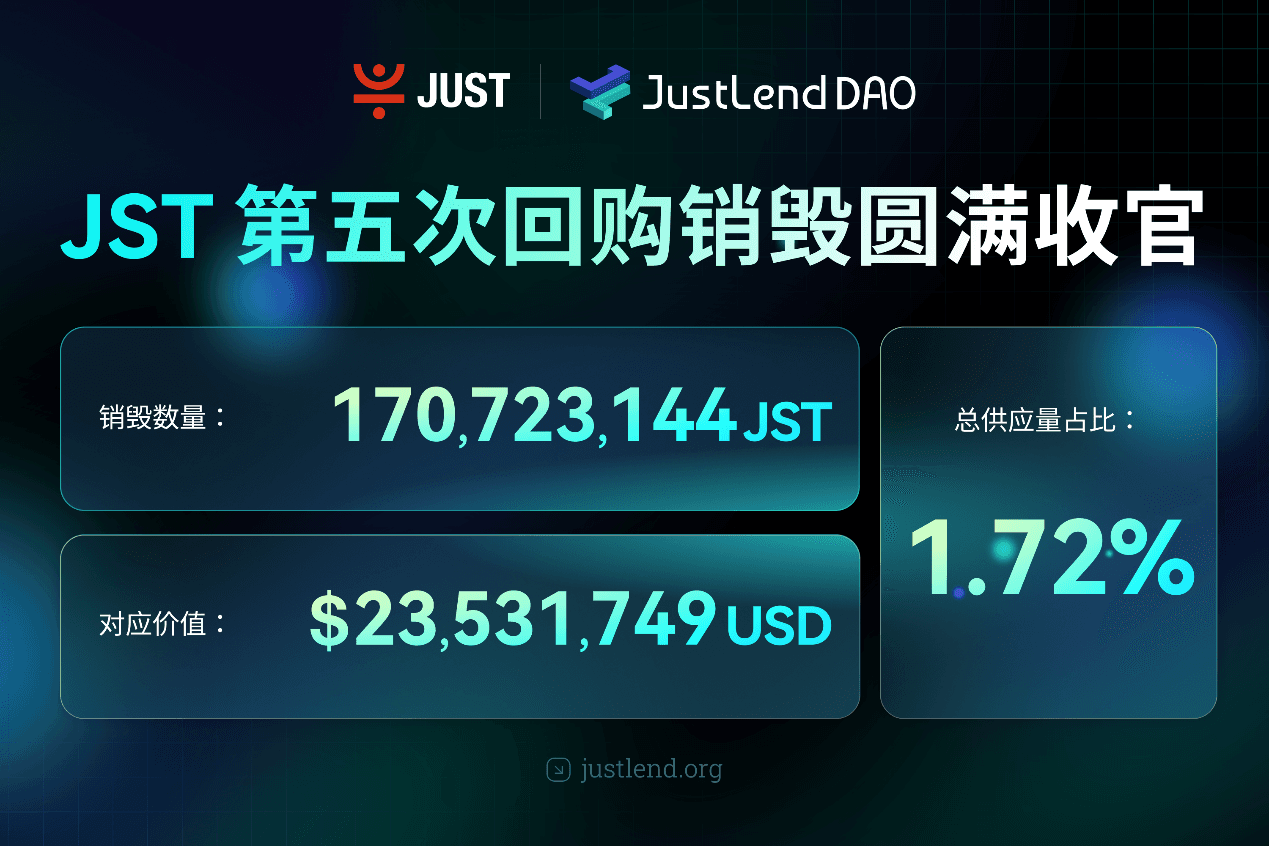
BitTorrent Brand Upgrade and Initial BTT Buyback & Burn Launch Simultaneously, Dual Engines Usher in New Era of Web3 Infrastructure
Oct 17, 20:00
Asia Market Daily: Japan's BOJ signals more rate hikes while Korea targets offshore perpetual platforms (2026/10/17)
Oct 17, 17:01Why did Papertrade backfire on you?
Oct 17, 17:01
The 'Strict Father' of Northern Myanmar: This Company Deploys 200,000 "AI Best Actors" to Strike Back Against Scammers
Oct 17, 15:34