The bankrupt Korean, sending a funeral wreath to the Korean government

Author|Jia Liu, BeatZ
What goes up must come down.
The South Korean stock market has always been a place of extreme volatility, where a "global superstar market" can turn into the "biggest stock market disaster" in less than a month.
How crazy is the South Korean stock market? The KOSPI index has experienced a total of 15 circuit breakers in history, with 9 of them happening this year alone, 4 of which occurred in July. On July 28th and 29th, the KOSPI even triggered a Level 1 circuit breaker for two consecutive days.
When South Korean netizens reach a certain level of despair, they are so exhausted that they start turning their tragedies into jokes just to muster the strength to continue watching the market.
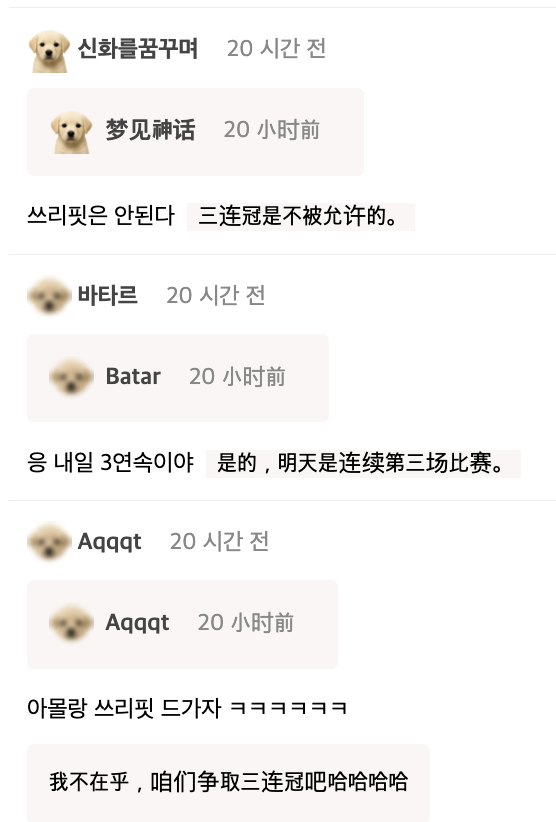
The so-called "three-peat" is a joke coined by South Korean stock investors in the past two days. Since they have already experienced two consecutive circuit breaker days, why not go for one more day to achieve a complete "hat-trick."
To understand how absurd this joke is, let's look at some statistics regarding circuit breakers in the South Korean stock market.
In the South Korean stock market, circuit breakers (서킷브레이커) were originally designed as a mechanism for a "historic-level disaster." A one-day drop of 8% in the index, sustained for a minute, triggers a Level 1 circuit breaker, halting the entire market for 20 minutes. From the first activation of this mechanism on the KOSPI in 2000 to the end of 2024, over a span of 25 years, it had only been triggered 6 times: during the 2000 dot-com bubble, the 2001 9/11 incident, the 2020 COVID-19 pandemic, and the "Black Monday" in 2024 caused by the unwinding of yen carry trades. Each of these events was significant enough to be written into textbooks.
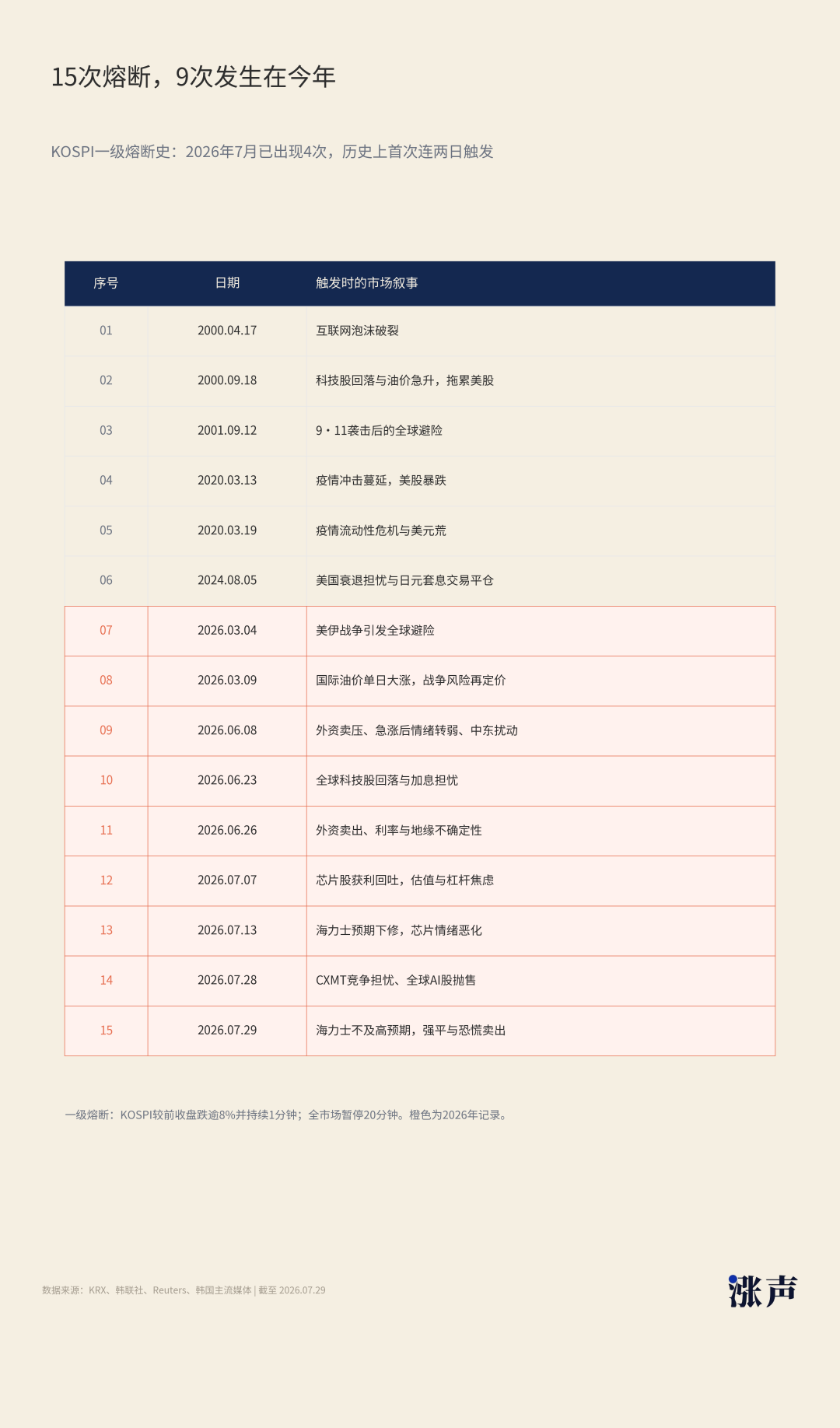
However, by July 29, 2026, circuit breakers had already been triggered 9 times in that year alone. In July 2026, circuit breakers were activated 4 times (on July 7th, 13th, 28th, and 29th). Out of the historically accumulated 15 circuit breakers, 9 of them occurred in the first half of 2026.
"What used to be a rare emergency brake situation that barely happened once a year now feels like a weekly routine." This is how South Korean netizens on stock forums lamented about the current state of affairs.
So, a modified version of an investment maxim inspired by Buffett began to circulate among Korean stock investors: "First rule: Do not buy, absolutely do not touch the Korean domestic stock market. Second rule: No matter what, adhere to the first rule."
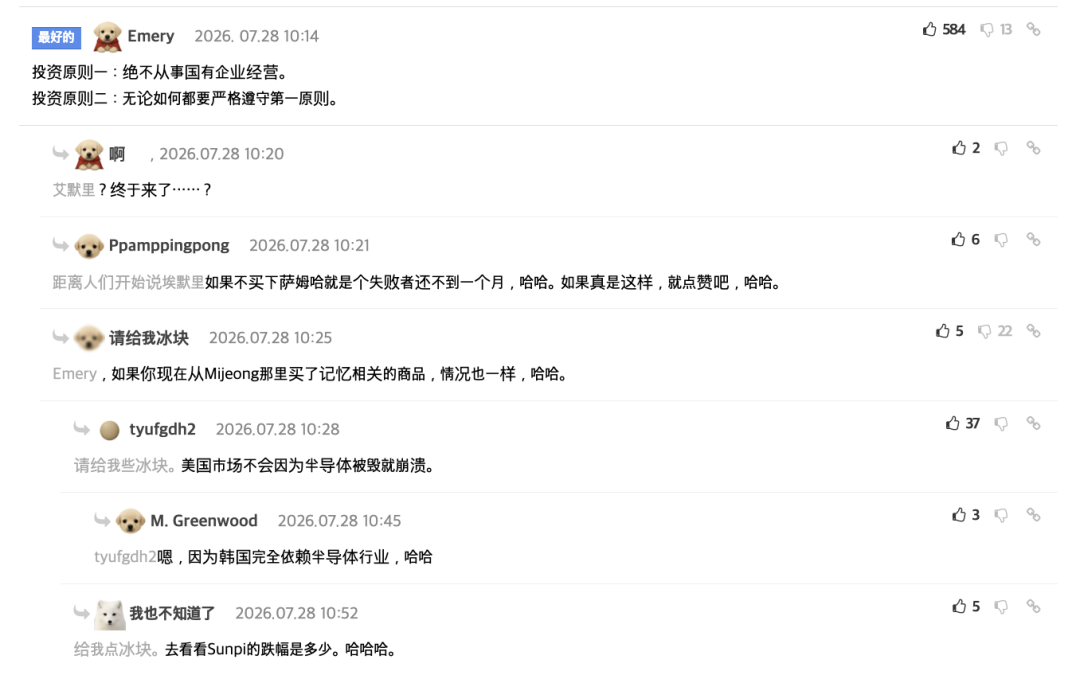
The Korean domestic stock market has also been likened to junk coins and the coin circle, not because stocks have actually turned into cryptocurrencies, but because people suddenly realized that the way they were holding stocks was becoming more and more like chasing a highly volatile, brakeless chip.
On Korean forums, they gave KOSPI a nickname, calling it "KSPY," with a precise mockery: "KSPY makes SPY look like child's play." SPY is a U.S. stock ETF tracking the S&P 500, always seen as a synonym for volatility; but compared to the Korean stock market, the S&P's slight fluctuations seem like child's play.
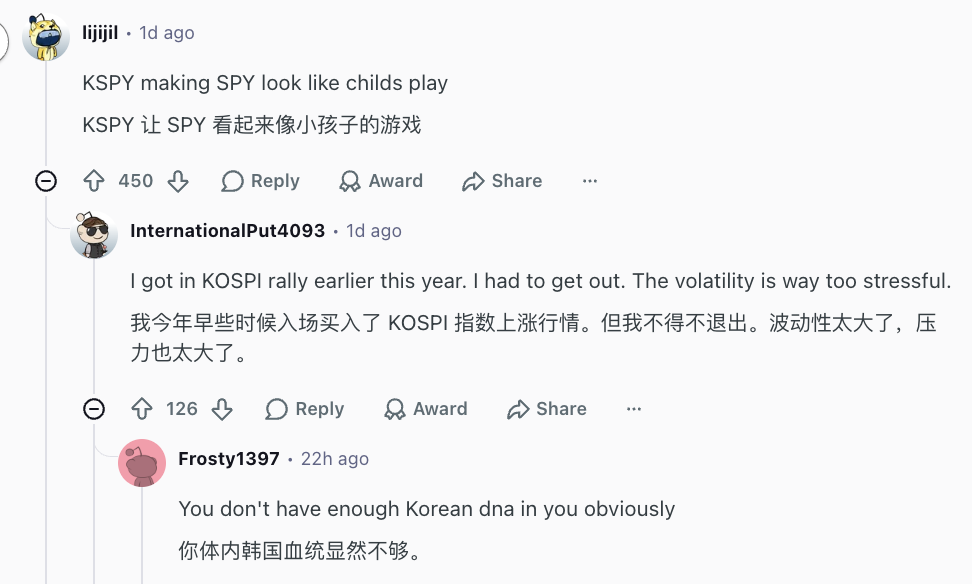
An American netizen shared his experience, mentioning that he also jumped into the KOSPI's uptrend earlier this year, "but I had to exit, the volatility was too high, the pressure was too much." The replies below were chilling: "Apparently, you don't have enough Korean blood in you." "You should use leverage to buy, only then can you have the most complete experience of the Korean stock market."
For readers of BeatZ who witnessed the surge and collapse together, we have witnessed this round of "building high, collapsing high."
Just half a year ago, KOSPI was still the best-performing global benchmark index: it closed at 4214 points at the end of 2025, hitting a historical high of 9385.59 on June 19, 2026, doubling and then some. Supporting this surge was the AI, storage, and semiconductor narrative led by Samsung and Hynix, the main storyline we have dissected repeatedly over the past few months. On June 22, SK Hynix's market cap surpassed Samsung for the first time in 25 years, seen as a symbolic peak of this bull market.
Then, in just a few weeks, this "world's most bullish" index tumbled from its peak, with the intraday low on July 29 already down 44% from the June peak. July is likely to be one of the most brutal months in KOSPI's recorded history, with a drop of almost 30%, wiping out market value in trillions of Korean won.
A market that stacked leverage among retail investors and concentrated heavily on weighted stocks plummeted from heaven to hell within weeks.
Soju, Part-Time Jobs, and Crying in the Hallway
Take a look at the online forums and social media in South Korea these days, and you can piece together a very specific portrait of the Korean people.
One Korean netizen posted: "Three days ago, I drank two bottles of soju in one go. After seeing the stock prices yesterday and today, I don't even have the desire to drink anymore. I am now frantically sending out resumes on AlbaMon and Job Korea (South Korea's two major part-time job search websites), hoping to find at least three jobs."
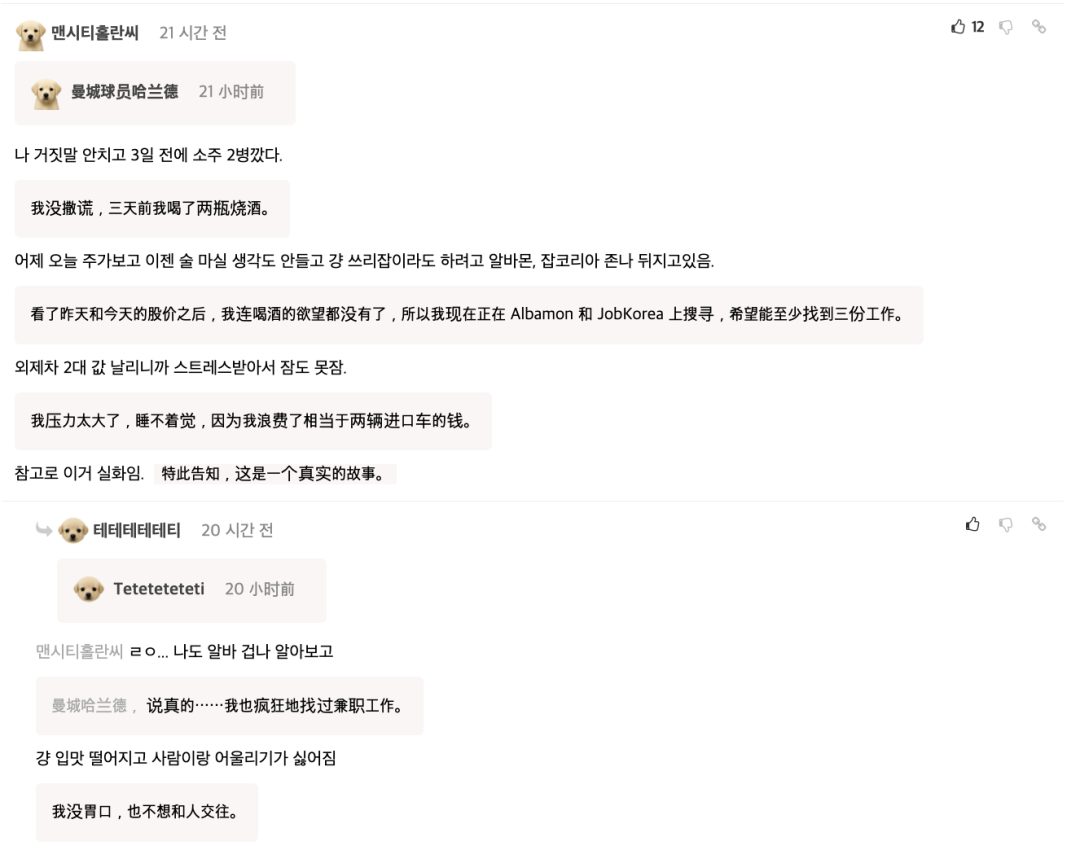
For this netizen, the money lost in this wave is equivalent to the price of two imported cars, and the stress is so high that they can't sleep.
Someone commented below: "To be honest, I have also frantically searched for part-time jobs. I have no appetite now and don't want to interact with people."
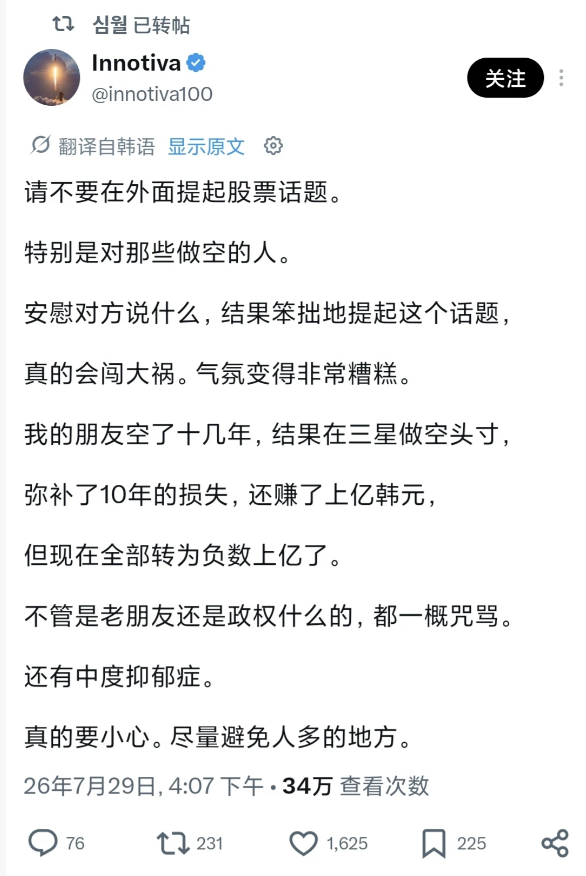
Other netizens have also expressed that they can't bring up the topic of stocks in public now and need to be careful even in crowded places.
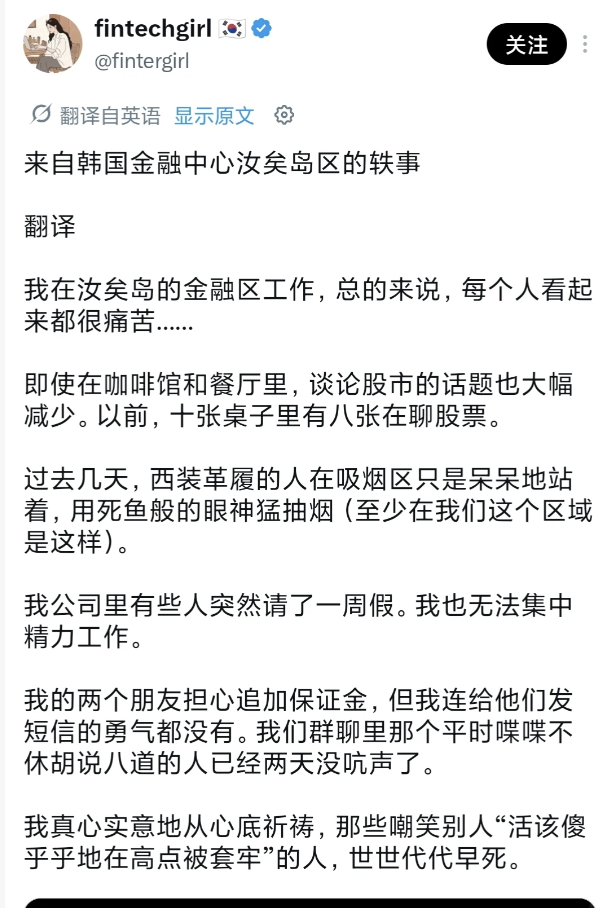
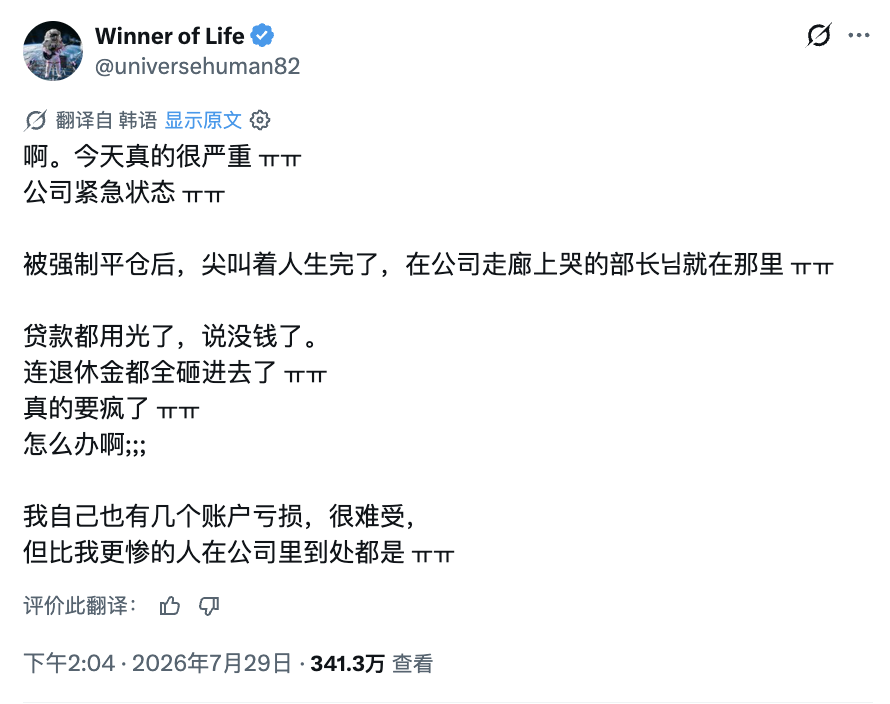
On X, a post translated from Korean by Grok has been widely circulated.
The poster calls themselves "Winner of Life" but only uses the ㅜㅜ symbols (which represent crying in Korean): "Today was really serious. The company entered an emergency state. After a department head was forcibly liquidated, he screamed 'life is over' and cried in the company hallway. He has used up all his loans, saying he has no money left, even putting all his retirement savings into it. He finally said, I also have several accounts in the red, it's very painful, but there are people who are worse off than me all over the company. This post has over three million views and has been shared across the entire internet."
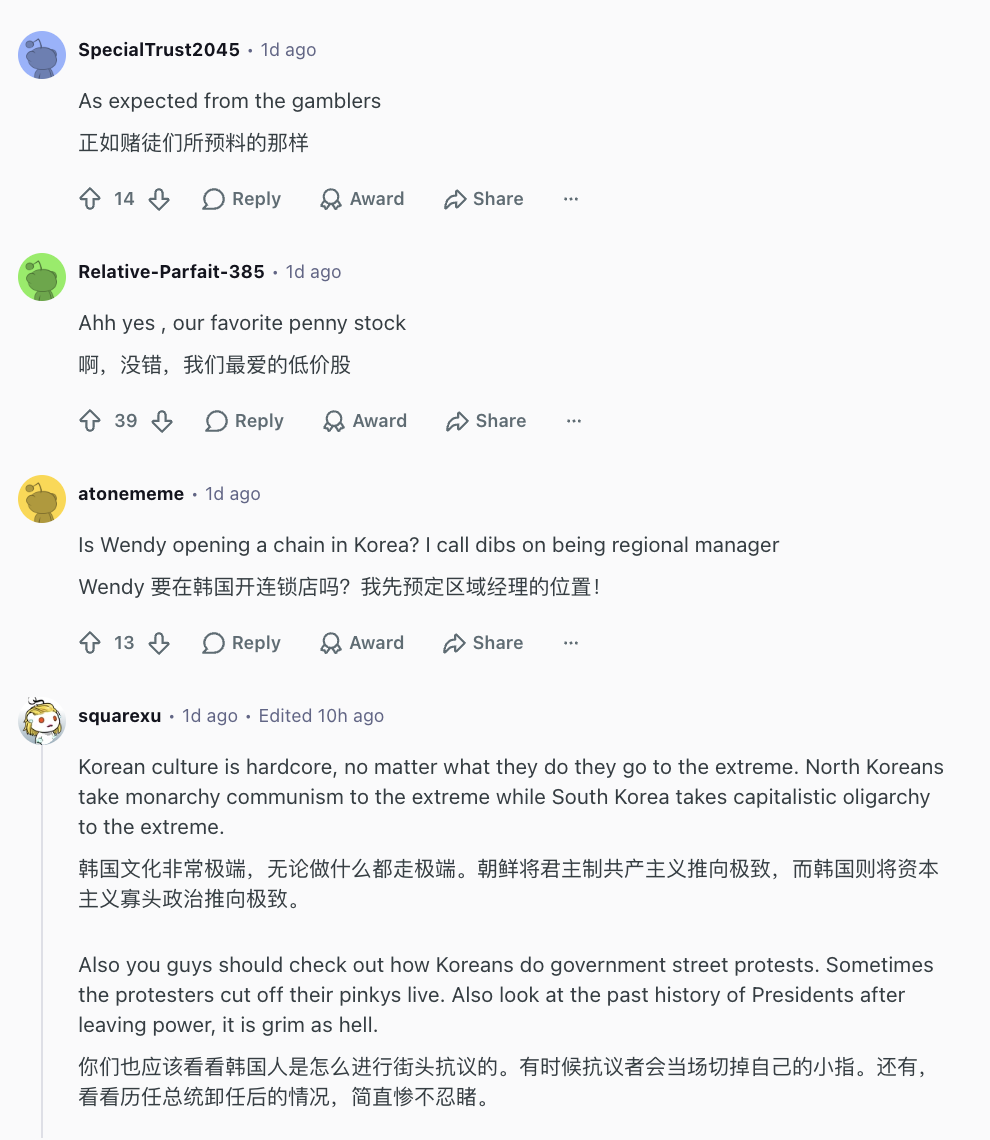
In addition, many netizens are worried about the current societal atmosphere in South Korea, fearing that it may lead to serious social issues. Many other netizens have pointed out the extreme side of Korean culture.
But more worried about the potential for serious social issues than the netizens is the South Korean government.
On July 28, on the same day as the market collapse, the South Korean government plans to establish a "National Suicide Response Office", in collaboration with the police and fire departments, to elevate the suicide emergency response from a local government level to a national level, and to continue to reach out and visit those who refuse psychological counseling after a suicide attempt.
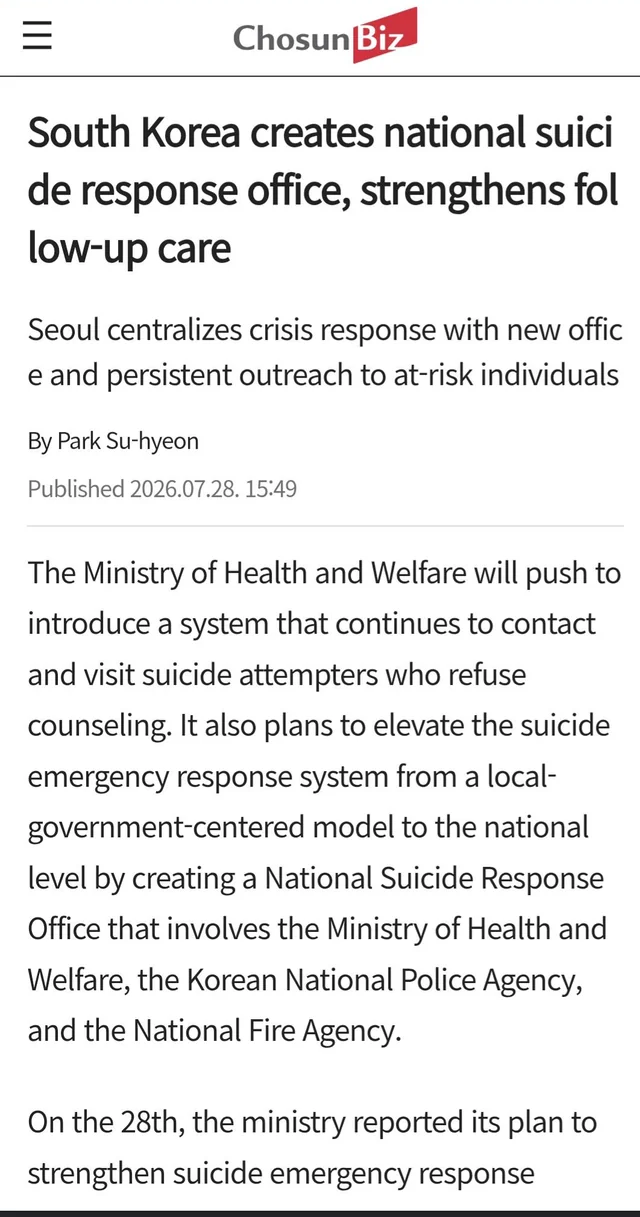
South Korean Government Plans to Establish "National Suicide Prevention Office"
This mechanism itself is a more macro-level crisis intervention, not necessarily only targeting the stock market crash; however, it appeared at this particular time and was quickly linked to the wave of bankruptcies by public opinion. When a country's stock market needs to be mentioned in the same week as a suicide prevention office, the joke can no longer be sustained.
Send Wreaths to the Entrance of the Seoul National Assembly
Establishing a "National Suicide Prevention Office" is not an overreaction by the South Korean government. After all, in front of the National Assembly gate on Yeouido Island in Seoul, there have already been more than 30 white wreaths.
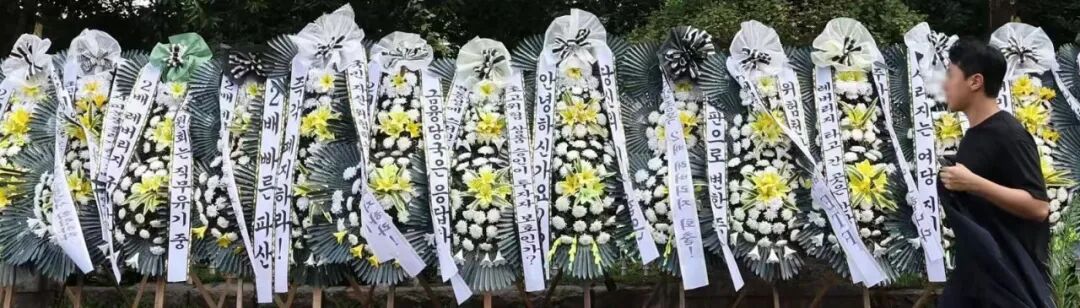
Entrance of Seoul National Assembly Filled with Wreaths
The funeral wreaths with white backgrounds and black lettering are lined up along the sidewalk in front of the assembly hall, and passing citizens stop to read the words on them or take photos.
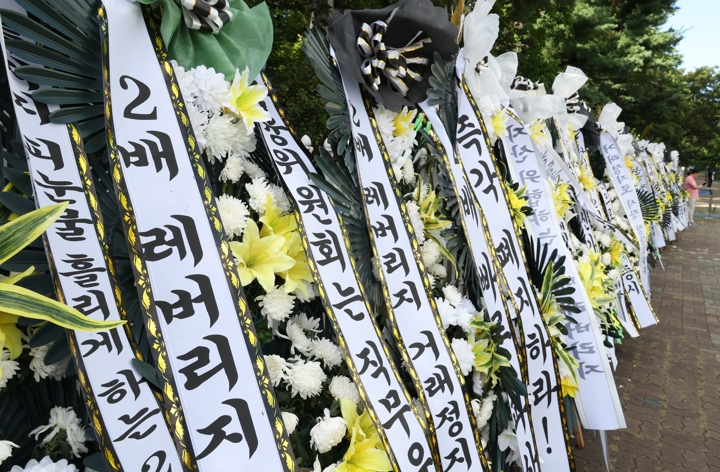
The wreaths are inscribed with statements such as "Investor Protection, Just Lip Service?" and "Mandatory Delisting," as well as "Samsung-LG Leveraged ETF, a Weapon," and so on.
The wreaths are from South Korean retail investors.
What they are demanding is the removal and abolishment of the "single-stock leveraged ETF" targeting Samsung Electronics and SK Hynix, these financial products. Koreans have given the nickname "Samsung-LG" to these two companies.
The basic principle of a regular ETF is diversification, usually covering ten or more stocks. However, a single-stock leveraged ETF only targets one stock, tracking its daily price movement at twice the rate. If Samsung goes up 10% today, it goes up 20%; if it goes down 10%, it goes down 20%.
Even more risky is the "negative compounding effect." As long as the underlying stock repeatedly fluctuates, the net asset value of these products will gradually diminish. Even if the stock stays flat, investors may still lose money.
This high-leverage gambling tool was listed in Korea only in May of this year. After the listing, funds poured in wildly, with over 70 trillion won invested in these few single-stock ETFs targeting Samsung and SK Hynix in just one month in July.
When the crash finally came, the mechanical rebalancing of these products (being forced to sell when prices fall) in turn amplified the index's volatility, creating a self-reinforcing downward spiral. Yields were almost halved, and retail investors lost everything. The assessment from financial regulators is that it was this that fueled the market's "abnormal fluctuations," turning the KOSPI into a casino-like gambling den.
Why Are South Koreans Pointing Fingers at the Government?
Most South Korean stock investors have now realized that it was precisely these high-leverage gambling tools that led to their financial ruin.
As a result, two individuals have been thrust into the spotlight; one is President Lee Jae-myeong. The other is the Blue House Policy Chief Jin Yong-chan.
Because it was they who oversaw the rapid listing of these single-stock leverage products.
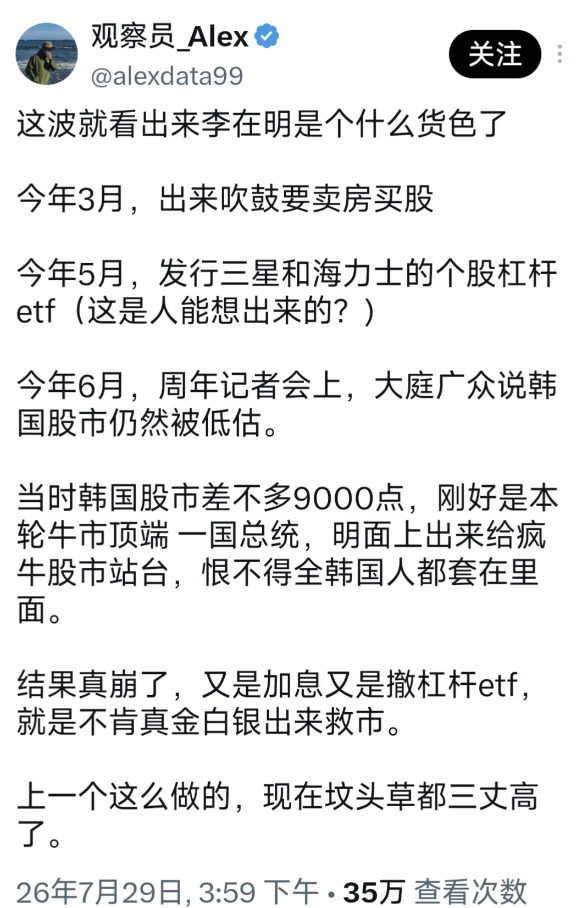
To understand why retail investors are directing their anger towards the government, especially towards Lee Jae-myeong, one must first go back to how he ended up in this position.
Lee Jae-myeong was deeply tied to the "KOSPI 5000" slogan. As early as his first presidential campaign in 2022, he shouted "KOSPI 5000," saying, "I don't think reaching 5000 points is difficult. If you believe in me, you should pay more attention to the stock market." That time, he narrowly lost to former President Yoon Seok-yeol.

To oppose former President Yoon Seok-yeol's "authoritarian rule," Lee Jae-myeong once went on a 24-day hunger strike in public
And Lee Jae-myeong, also known as the "strongest hunger-resistant king in Korea," during Yoon Seok-yeol's failed coup attempt, live-streamed himself climbing over a wall into the National Assembly building, initiating a parliamentary vote to repeal martial law.
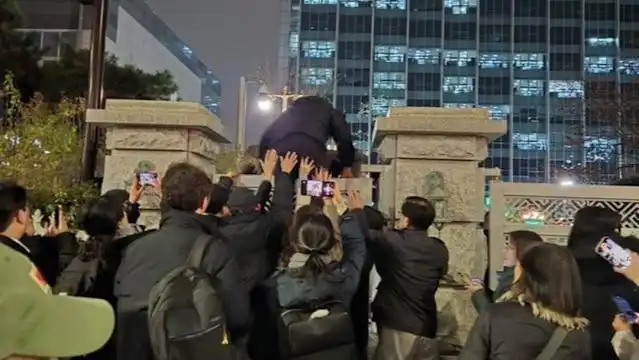
With the support of the people, Lee Jae-myeong climbed over the wall into the National Assembly
The image of him scaling the wall later became an iconic image among South Korean youth. Subsequently, Yoon Seok-yeol was impeached and removed from office, sentenced to life imprisonment on charges of "plotting an insurrection." Lee Jae-myeong, with the promise of "KOSPI 5000" and his popularity among the people, took over the Blue House in a by-election last June. To show his commitment, he even bought ₩40 million worth of domestic ETFs out of his pocket before the election and promised to invest another ₩1 million per month after winning.
After taking office, Lee Jaemyung's promises were quickly fulfilled. The KOSPI really reached 5000 points earlier this year, fulfilling the promise that had been questioned by countless people; it then skyrocketed to 9385. For a while, Lee Jaemyung seemed like a hero who could turn everything he touched into gold: Foreign capital poured in frantically, the index was the most eye-catching in the world, with an increase of over 100%.
The problem is that the promise was to "rise to 5000," but the reality was to "rise to 9000 and then plummet back to 5000." Both were at 5000 points, but the arrival felt like heaven while the return felt like hell. Retail investors went all-in with leverage at the peak, and now they are buried halfway up the mountain.
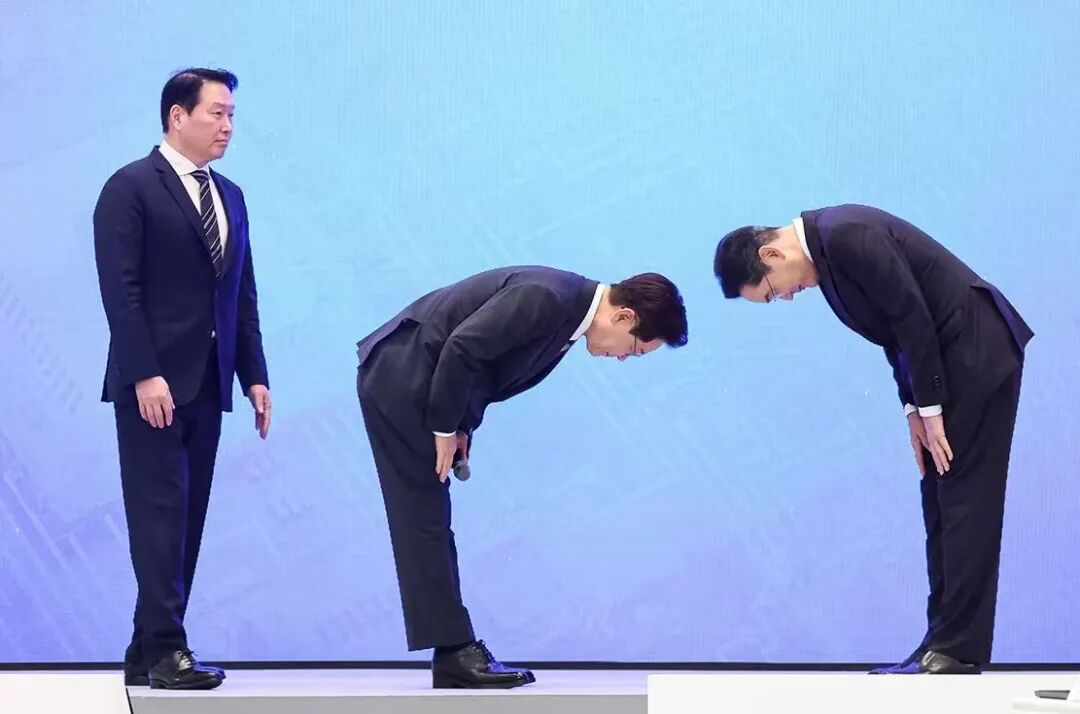
Lee Jaemyung (center) bows with Samsung Chairman Lee Jae-yong (right) and SK Chairman Choi Tae-won (left)
This "three-person photo" has also become a source of dark humor. During the bull market, they represented "KOSPI 5000," the AI chip giants, and the reassessment of Korean assets; after the crash, netizens took this formal photo as the "circuit breaker trio" at a repentance scene.
Some spoke up for the government. No matter how much you hate the government, the losses caused by leverage are entirely the investors' own greed and fault. "Would anyone smile and thank the government every day as their assets soared due to leverage? This is a typical case of 'My success is my own doing, but the failure is someone else's fault.'"
But the more mainstream emotion is anger.
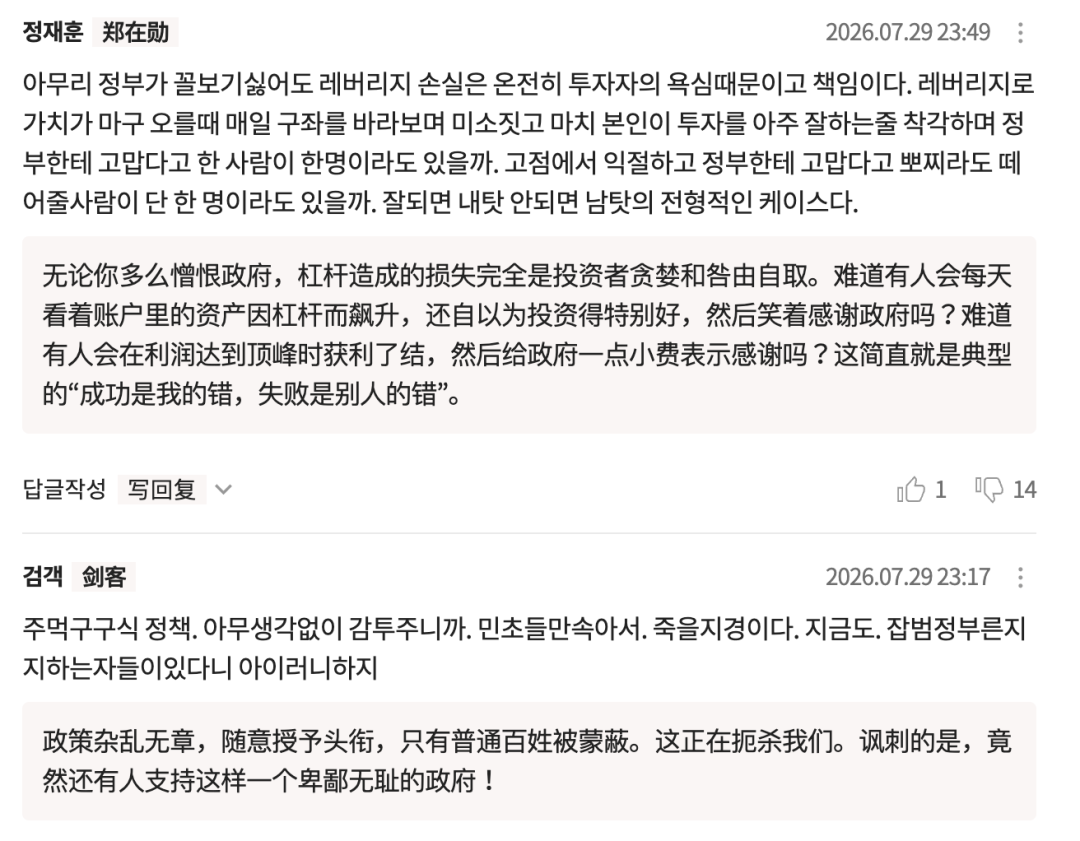
Some denounced this as "a chaotic policy, arbitrary granting of titles, leaving only ordinary people in the dark, which is strangling us," and then asked, "The irony is that there are actually people supporting such a despicable and shameless government."
They mockingly referred to the president's name, "Lee Jaemyung," as "Dae Jaemyung," literally meaning "Great Jaemyung," with a sarcastic undertone similar to the Chinese phrase "Great Comrade Jaemyung."
What infuriated South Korean netizens was the attitude of the South Korean government.
On July 29, while accompanying Lee Jaemyung on a state visit to Brazil, Kim Yong-ho held a press briefing in São Paulo. He did not apologize but instead said: We cannot attribute all the problems to leveraged ETFs.
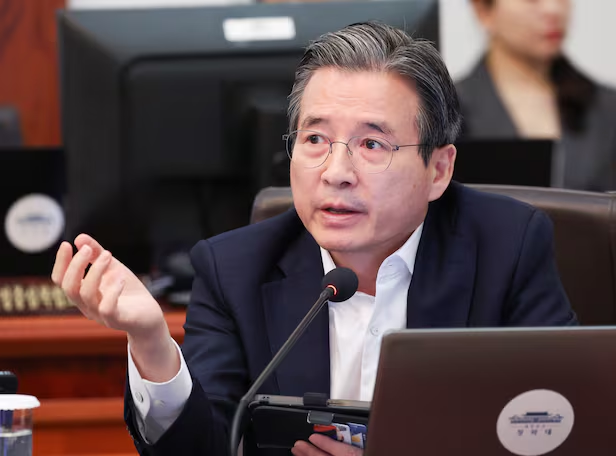
Jin Yong Fan, Head of Policy Office at the South Korean Presidential Palace
Jin Yong Fan has shifted the blame to “structural factors,” stating that the inherent volatility of the South Korean market is due to retail investors who “invest very energetically,” with a high proportion of derivatives. He mentioned, “A market may fluctuate by 10 in the core area, but when it comes to South Korea, it can be amplified to 20 or 30.”
This explanation has been widely interpreted within South Korea as an attempt to evade responsibility.
For the opposition party, this is an opportunity of immense proportions.
Therefore, the opposition People Power Party immediately called for Jin Yong Fan’s impeachment and pushed for a national investigation. They even accused the Lee Jae Myung administration of launching this high-risk product disregarding market doubts in order to support stock prices before the local elections on June 3.
The Lee Jae Myung government has begun emergency damage control. The financial authority announced that starting from August 5, the basic margin for trading leveraged ETFs will be increased from 10 million KRW to 30 million KRW, and they are also considering restricting new purchases to professional investors and reducing the leverage ratio by half. The top officials of the finance ministry, financial authorities, and central bank held an emergency “F4 meeting” overnight.
Could this be the beginning of the end for the Lee Jae Myung administration? It is hard to say. After all, the Blue House has its own curse, and South Korean presidents always seem to have a difficult time.
However, it is clear that the South Korean people are increasingly holding the government, especially Lee Jae Myung himself, accountable for the bursting losses.


Recommended
Desk: Brent Crude Tops $110, Musk's Net Worth Drops 528.6 Billion in Four Days After Tesla Roadster Launch
Oct 17, 21:49
JST Fifth Buyback and Burn Successfully Concludes: Over 170 Million Tokens Worth Approximately $23.53 Million Burned, Buyback Mechanism Set for Comprehensive Upgrade
Oct 17, 20:10
BitTorrent Brand Upgrade and Initial BTT Buyback & Burn Launch Simultaneously, Dual Engines Usher in New Era of Web3 Infrastructure
Oct 17, 20:00
Asia Market Daily: Japan's BOJ signals more rate hikes while Korea targets offshore perpetual platforms (2026/10/17)
Oct 17, 17:01Why did Papertrade backfire on you?
Oct 17, 17:01
The 'Strict Father' of Northern Myanmar: This Company Deploys 200,000 "AI Best Actors" to Strike Back Against Scammers
Oct 17, 15:34