Goldman Sachs Raises Microsoft Price Target to $640, Betting on Surge in Copilot Subscriptions

TL;DR
· According to a Goldman Sachs report, Microsoft's 12-month price target has been raised from $610 to $640 with a Buy rating maintained.
· Microsoft reported 4QFY26 revenue of $90.07 billion, with Azure growing by 43% and over 30 million paid seats for Copilot.
· Capital expenditure stood at $41 billion on a call-caliber basis, with Copilot renewals and consumption-based billing remaining key.
Following Microsoft's FY26 Q4 earnings report, Goldman Sachs has raised the 12-month price target from $610 to $640. The report's benchmark price is listed at $390.54, representing approximately 64% upside potential. Based on the recent market price of around $451, the upside potential is around 42%.
The key to this upgrade is not only Microsoft delivering another earnings report that exceeded expectations but also a clearer signal on the market's most concerning issue of AI investment returns. Microsoft is still spending heavily on AI data centers and cloud infrastructure, but Azure's growth continues to accelerate, with Microsoft 365 Copilot surpassing 30 million paid seats as enterprise customers begin to include AI features in office software and cloud service budgets.
Microsoft's announcement on July 29 revealed that 4QFY26 revenue was $90.07 billion, an 18% year-over-year increase, or 17% growth at constant exchange rates. Non-GAAP EPS was $4.74, up 23% year-over-year. The Intelligent Cloud segment's revenue was $39.06 billion, up 32% year-over-year, with Azure and other cloud service revenue growing by 43%.
This earnings report from Microsoft most directly addresses whether AI investment is beginning to translate into revenue growth.
Both 4QFY26 revenue and Non-GAAP EPS exceeded market expectations, with Azure and other cloud service revenue growing at 43%, surpassing the earlier expected range of about 40%. The adjusted operating margin reached 45%, up 80 basis points year-over-year.
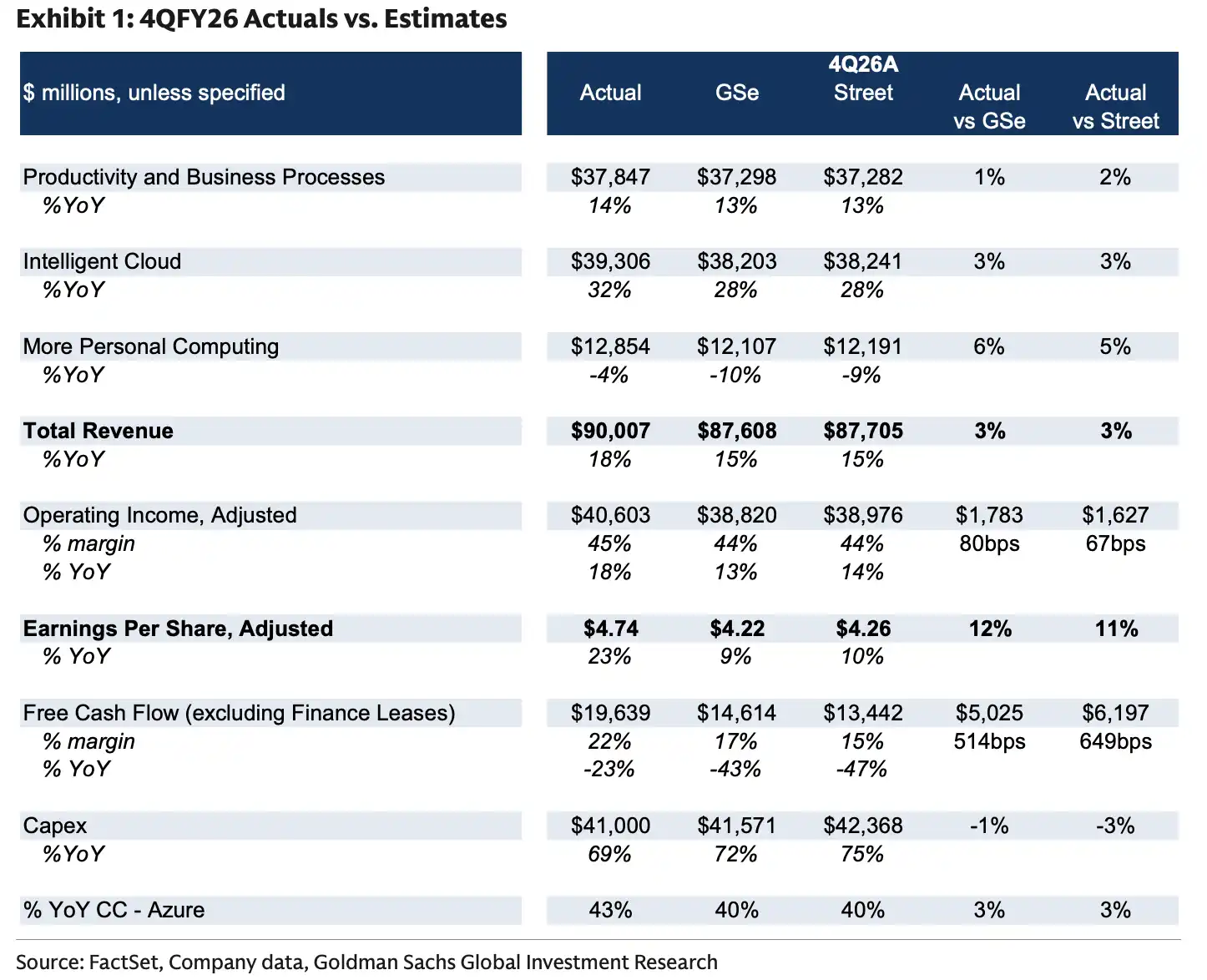
Actual 4QFY26 Performance vs. Goldman Sachs/Market Expectations: Revenue $90.07 billion, Non-GAAP EPS $4.74, Azure Growth 43%, all above expectations.
These numbers bring Microsoft's AI narrative closer to commercial validation. Over the past year, investors were mainly concerned that AI infrastructure investment would initially suppress free cash flow and profit margins, with revenue realization lagging behind. Now, cloud revenue, profit margin, and EPS have all exceeded expectations, providing the market with a reason to continue accepting high investment.
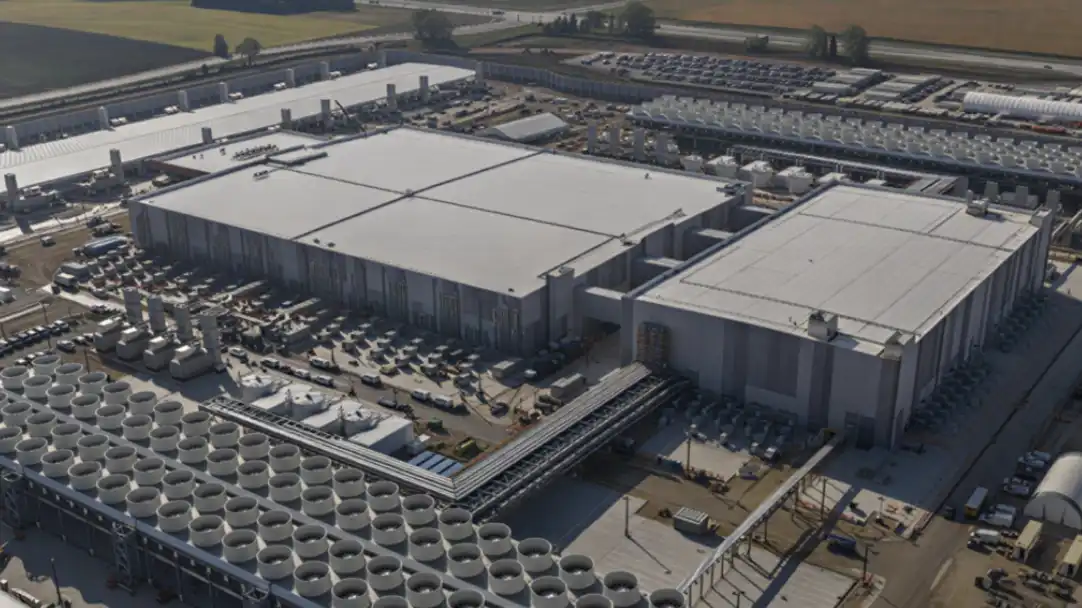
However, the intensity of investment has not decreased. According to Microsoft's earnings call, 4Q capital expenditures were $41 billion. In the cash flow statement, property and equipment purchases amounted to $35.802 billion, with additional financing leases. Free cash flow was around $19.6 billion.
This indicates that Microsoft is still in the AI infrastructure heavy investment phase. As long as Azure demand and Copilot adoption continue to grow, this investment will be seen as long-term capacity building; once cloud growth slows, the $41 billion quarterly spending level will again turn into pressure on profit margins and cash flow.
What can better explain Goldman Sachs' target price increase than cloud growth is the number of Copilot seats.
Microsoft disclosed that at the end of 4Q, Microsoft 365 Copilot paid seats exceeded 30 million, with a net addition of 10 million seats for the quarter. Information from the earnings call, as relayed in the research report, also showed that user satisfaction doubled over the past three quarters, with yearly per-user conversation volume doubling and average engagement approaching Outlook and Teams levels.
This provides more direct evidence for Microsoft's AI commercialization: Copilot is not just an enterprise trial feature but is entering more everyday office scenarios. For Microsoft, seat growth means future revenue can come from M365 package upgrades, AI feature add-ons, and consumption-based billing.
The E7 SKU has also been factored into the upward revision assumption. The research report stated that within two months of its launch, the product had been adopted by hundreds of enterprise customers, covering millions of seats, including a deployment of 400,000 seats at EY. Microsoft expects commercial cloud growth in M365 to accelerate throughout FY27, with driving factors including Copilot adoption, high-end SKU mix improvements, and expansion from pure per-seat charges to more consumption-based charges.
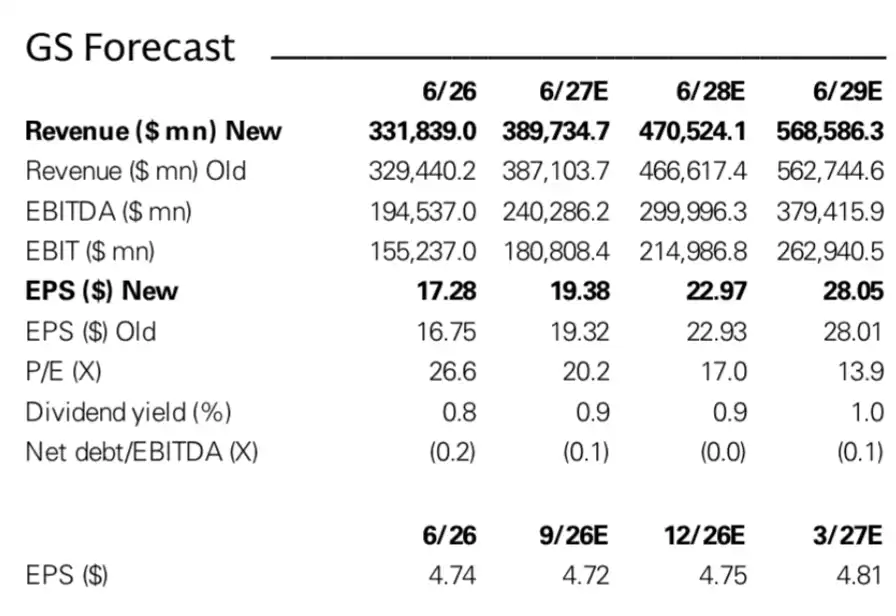
FY27 revenue raised to $389.7 billion, EPS $19.38, FY28 revenue $470.5 billion, EPS $22.97, FY29 revenue $568.6 billion, EPS $28.05.
Goldman Sachs raises FY27 revenue forecast to $389.7 billion from $387.1 billion; FY28 and FY29 revenue forecasts are $470.5 billion and $568.6 billion, respectively. Corresponding adjusted EPS forecasts are $19.38, $22.97, and $28.05.
These upward revisions are not overly aggressive, but the direction is significant. The upscale of Copilot and M365 has now been incorporated into the revenue and profit model for the next few years, moving beyond just product launches and customer pilot stories.
Another reason Goldman Sachs has set a higher price target for Microsoft is Microsoft's position in enterprise AI.
Enterprise customers need more than just a large model; they also require permission management, security compliance, data access, application integration, cost control, and deployment support. Microsoft's strength lies in Azure providing computing power and model services, M365 offering office gateways, GitHub covering developers, and Dynamics and Power Platform connecting business processes.
As AI transitions from model testing to enterprise processes, these gateways can more easily translate into revenue. Customers can continue to access AI capabilities in Outlook, Teams, Office, code development, and business systems, while Microsoft can bundle infrastructure, software subscriptions, and usage fees together.
The report mentions that Microsoft helps clients select and optimize models efficiently based on tasks through the Frontier program and model routing technology. In simple terms, instead of invoking the most expensive, largest model for every task, enterprises can combine different models based on complexity, cost, and response requirements.
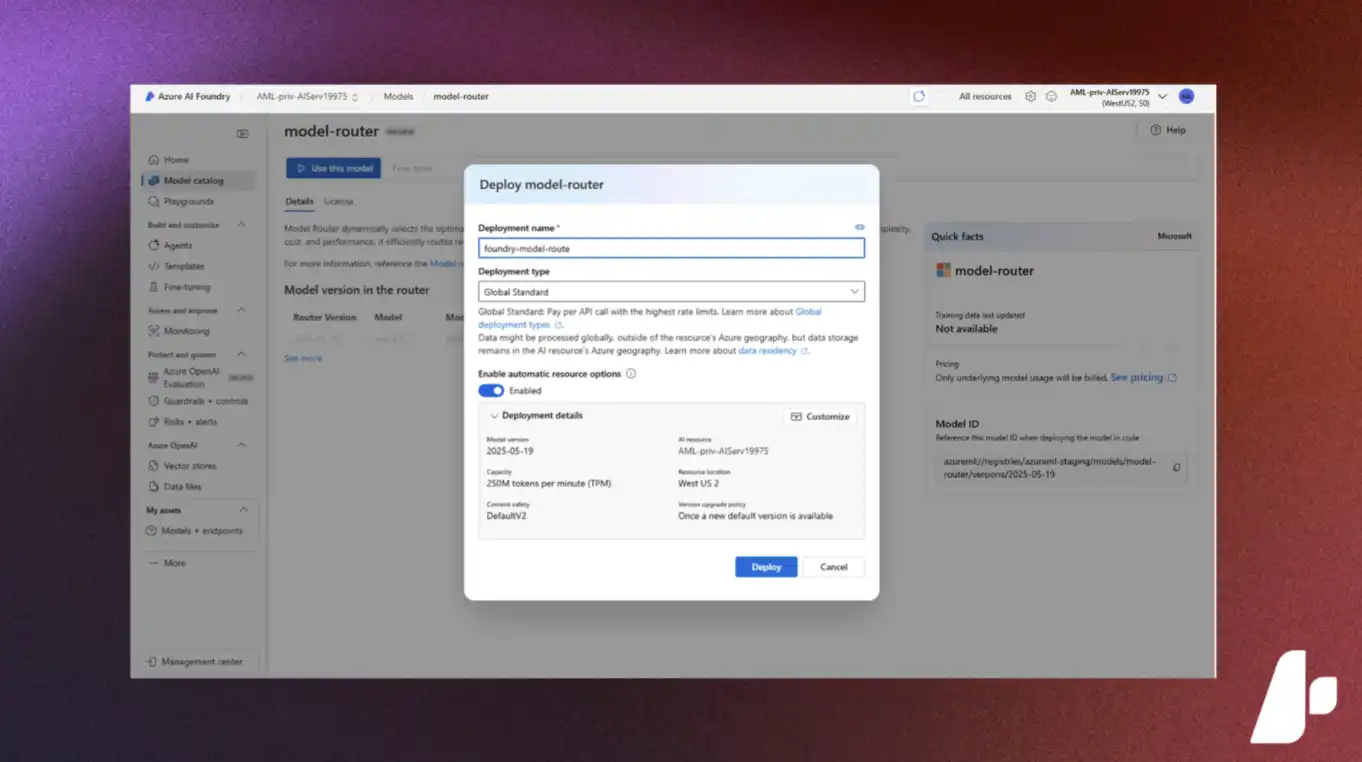
Azure AI Foundry's model routing mechanism allocates requests among different models based on task requirements to optimize quality, latency, and token costs.
This benefits Microsoft in two ways. Clients can more easily control AI usage costs, reducing deployment resistance; Microsoft can also deepen the integration of Azure, Copilot, and enterprise software, rather than just competing on price in the underlying computing power market with other cloud providers.
Behind the $640 price target, there are still several constraints.
The first is capital expenditure. Microsoft's 4Q capital expenditures were $41 billion, showing a high year-on-year growth rate, indicating that investment in AI data centers, GPUs, and cloud infrastructure is still high. If Azure and Copilot grow fast enough, this money can sustain future revenue; if revenue growth slows down, capital expenditure will compress free cash flow elasticity.
The second is production capacity and in-house chip development. Downside risks identified by Goldman Sachs include the internal silicon development ramping slower than expected, which could limit Microsoft's market share gains or weaken the potential for further margin improvement. For cloud providers, AI computing power depends not only on demand but also on chip supply, data center electricity, and the efficiency of in-house hardware.
The third is Copilot subscription conversion. Having over 30 million paid seats is a positive signal, but the number of seats does not equate to fully realized revenue. Future revenue elasticity hinges on whether businesses continue to pay, are willing to purchase higher-end SKUs, and if consumption-based billing is acceptable to customers.
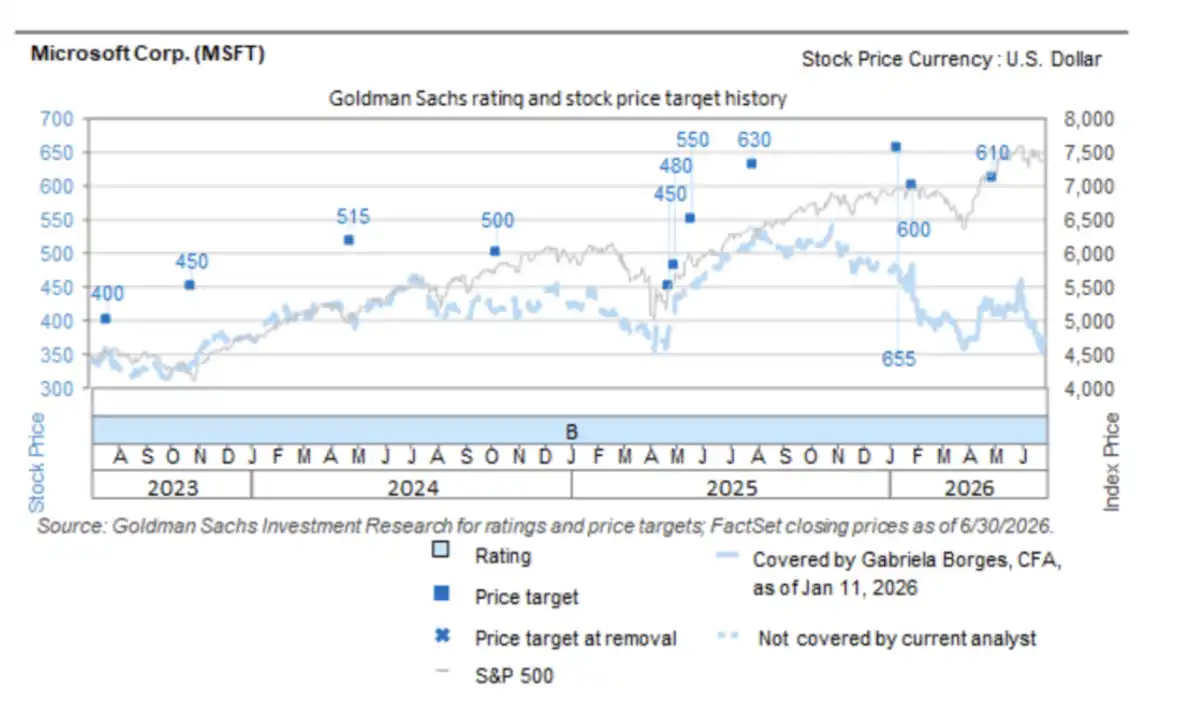
The target price has been raised from $610 to $640, while the report indicates a significant pullback in the stock price from its previous high.
The strong signal Microsoft is sending this time is that AI revenue is no longer just a future prospect. Azure is gaining momentum, Copilot seats have surpassed 30 million, and large customers have already adopted the M365 premium package. The harder part comes next: turning these seats into renewals, upsells, and usage-based revenue to sustain a $41 billion quarterly capital expenditure that continues to be embraced by the market.
Recommended
Desk: Brent Crude Tops $110, Musk's Net Worth Drops 528.6 Billion in Four Days After Tesla Roadster Launch
Oct 17, 21:49
JST Fifth Buyback and Burn Successfully Concludes: Over 170 Million Tokens Worth Approximately $23.53 Million Burned, Buyback Mechanism Set for Comprehensive Upgrade
Oct 17, 20:10
BitTorrent Brand Upgrade and Initial BTT Buyback & Burn Launch Simultaneously, Dual Engines Usher in New Era of Web3 Infrastructure
Oct 17, 20:00
Asia Market Daily: Japan's BOJ signals more rate hikes while Korea targets offshore perpetual platforms (2026/10/17)
Oct 17, 17:01Why did Papertrade backfire on you?
Oct 17, 17:01
The 'Strict Father' of Northern Myanmar: This Company Deploys 200,000 "AI Best Actors" to Strike Back Against Scammers
Oct 17, 15:34