Mainstream Media Reviews AI Stock Market Wizard's $45 Billion Liquidation: Silicon Valley's "Genius Worship" Collapse

Translation: BlockBeats
Editor's Note: The Verge's commentary "The loss of Situational Awareness" not only discusses leverage but also points the finger at Silicon Valley's adoration of the "young genius + grand AI narrative." The article argues that Leopold Aschenbrenner quickly gained influence, capital, and celebrity investors with a lengthy piece on AGI, but technical acumen, insider reputation, and asset management skills are not simply interchangeable. When a small-scale, inexperienced team begins to manage assets and leverage exposure that are not aligned with their capabilities, the risk is systemically amplified.
The author's central argument is that this crisis has exposed a typical organizational failure: individual prestige and insider endorsement have replaced scrutiny of investment capabilities, grand narratives have overridden risk control, and limited management experience has been swiftly magnified by external capital. The fund's real problem may not necessarily be a misunderstanding of AI's long-term direction, but a lack of basic constraints on leverage, liquidity, portfolio concentration, and tail risk. The more compelling a viewpoint, the more an organization needs to establish checks and balances to prevent turning "conviction" into an irreversible risk exposure.
The significance of this matter lies in the fact that AI investing is entering a phase where high capital inflows, lofty valuations, and crowded trades coexist. The long-term demand for cloud computing, chips, and model companies may continue to grow, but once market expectations, financing conditions, or delivery pace change, the first to bear the pressure is often not the industry trend itself, but asset prices built on high valuations and high leverage. For investment institutions, true "situational awareness" is not about believing in a certain future earlier than others, but about being able to control risk while betting on the future and ensuring the ability to survive into that future.
The following is the original text:
I'm no financial expert by any means, but now, I do have one piece of advice I can offer to those in the financial industry: when naming a hedge fund, never choose a name that will seem particularly ironic after the fund's blow-up.
For example, don't name it "Long-Term Capital Management" or "Amaranth Advisors" — a name derived from the immortal amaranth flower. And, of course, never call the fund "Situational Awareness." It sounds almost as bad as "Hubris, Inc."
In any case, the hedge fund named "Situational Awareness," founded by a former OpenAI employee, has a 24-year-old founder, with a focus on artificial intelligence. After experiencing weeks of poor performance in AI stocks, the fund has sold most—according to some reports, all—of its publicly traded stock holdings to Ken Griffin's Citadel.
Now, this is the situation that all of us have already "perceived."
You may recall that earlier this week I mentioned that the market has become particularly wary of AI-related risks. Now it seems we have finally identified the institution that was swimming naked when the tide went out.
Just how bad is the situation?
According to CNBC, this fund was valued at $45 billion in early July. After selling assets to Griffin, it is now valued at only $10 billion.
Previously, the record holder for the largest trading loss was Archegos Capital Management. According to The Wall Street Journal, that institution lost $8 billion in just 10 days in 2021. If the above figures are confirmed, "Situational Awareness" will have lost three times that record in AI investments.
Every detail of this disaster is more absurd than the last.
"Situational Awareness" has a total of only eight employees, with four being investment professionals. CNBC writes: "According to regulatory filings, the fund's largest holdings as of the end of the first quarter included Nebius Group, SanDisk, Micron, and CoreWeave. The decline in the value of these four stocks this month has all exceeded 35%."
In the coming days, we will likely hear more news, especially from the Wall Street pros standing on the opposite side of these jokers' trades.
How did things come to this?
The name of Situational Awareness LP is derived from a series of discussions on machine intelligence, albeit with shallow content. The articles were authored by the 24-year-old mastermind behind this fund—a man with the equally unusual name Leopold Aschenbrenner.
He wrote: "We are creating machines that can think and reason." This statement inadvertently reveals that he has no idea what "thinking" actually means.
He also wrote, "By 2025 or 2026, these machines will surpass many college graduates. By the end of the century, they will be smarter than you and I; we will see the arrival of true superintelligence. In this process, a national security force that has not been seen in half a century will be unleashed, and soon after, the 'project' will be launched. If we are lucky, we will engage in a comprehensive competition with the CCP; if unlucky, a full-scale war will break out."
Part of me really wanted to start with the first sentence of the article — "You can always see the future first in San Francisco" — and mock each of his assertions one by one. But I decided to restrain this impulse.
This series of articles forms the theoretical basis of the hedge fund. Ultimately, its logic is: General Artificial Intelligence really exists (laugh), and it will arrive in 2027 (laugh to death). Therefore, the entire purpose of this fund is to throw as much money as possible into AI stocks and then make a killing.
"This investment firm will basically become an AI think tank," Aschenbrenner said in a four-hour podcast interview with Dwarkesh Patel. A four-hour podcast, the favorite medium of expression for Silicon Valley elites.
He said, "Our understanding of the situation will far exceed those in New York managing funds. Our investment performance will certainly be outstanding. But equally important is that this situational awareness can help us understand what is happening, become a rational voice in public discussions, and qualify us to advise others."
I cannot describe how bad the charts in these articles really are, and how deeply they impress "a certain type of Silicon Valley male."
Axios has enthusiastically praised this series of articles, calling it "a useful and eye-opening comprehensive review of high-level Silicon Valley discussions." Shav Vimalendiran, co-founder of the AI company SAMMY Labs, also wrote that Aschenbrenner's insights "have broadened my perspective as an AI practitioner beyond purely the technical aspect." SAMMY Labs is an AI company trying to simplify legal texts.
Do you know who else liked this article? Ivanka Trump. She called it "an excellent and important article."
Investors in "situational awareness" include Stripe co-founders Patrick Collison and John Collison, as well as Meta AI executives Daniel Gross and Nat Friedman.
The fund's research director, Carl Shulman, previously worked at Peter Thiel's Clarium Capital. Later on, even Jane Street invested money. Jane Street is a highly influential Wall Street trading firm and a place where many young effective altruists— including Sam Bankman-Fried— like to join.
The Wall Street Journal wrote in June of this year: "Jane Street's investment in 'TrendSense' is particularly noteworthy, as the company rarely entrusts capital to external fund managers."
So why would these seemingly serious individuals invest in the first hedge fund managed by a 24-year-old? My most reasonable guess is that Aschenbrenner's investors rely on his accumulated social reputation and endorsements.
Social identification is the laziest and most easily disastrous way to vet a person. Just ask any Theranos investor; or go ask those who once entrusted their money to Bernie Madoff.
However, for Silicon Valley, this vetting process seems to be good enough.
At the age of 17, Aschenbrenner was dubbed an "economic wunderkind" by the renowned libertarian economist Tyler Cowen in certain Silicon Valley circles. According to Fortune, Emergent Ventures founded by Cowen has also granted him funding. Aschenbrenner has also published articles in the Stripe-sponsored publication "Works in Progress." While at Columbia University, he co-founded the school's Effective Altruism club.
In 2021, as a 19-year-old graduate of Columbia University, Aschenbrenner joined the FTX Future Fund. This is the charity arm of the cryptocurrency exchange FTX. Later, Sam Bankman-Fried's fraudulent activities were exposed, leading to the collapse of FTX. His colleagues at the fund included the "philosopher king" of the effective altruism movement, William MacAskill, and later the Chief of Staff at Anthropic, Avital Balwit.
After leaving there, Aschenbrenner immediately joined OpenAI's Super Alignment team. Fortune quotes several former colleagues as saying that he is "not good at handling politics and interpersonal relationships," and is arrogant and sharp-tongued.
《Fortune》 reporter Sharon Goldman wrote in a profile: “Several researchers also noted that at a holiday party, Aschenbrenner, in a casual group conversation, directly told then Scale AI CEO Alexandr Wang how many GPUs OpenAI had. In the words of one, he ‘just blurted it out.’” Both Wang and Aschenbrenner deny this ever took place.
Aschenbrenner was later fired from OpenAI for leaking internal information, although this incident was unrelated to the Scale AI matter. Two months after his dismissal, he published the series of articles titled “Perception of the Situation.”
Keen-eyed readers may have noticed that Aschenbrenner had no prior experience in fund management listed on his resume when he launched the hedge fund.
They may also have observed that Aschenbrenner's entire work history consisted of a few months at FTX and about a year at OpenAI. They might wonder: Did the Collison brothers, Gross, and Friedman have so much money to spare that they would fund this little troublemaker?
The answer is clearly yes.
Tax the wealthy! In the still seemingly idyllic year of 2024, Aschenbrenner described the fund’s investment strategy as follows: “Clearly, the First Rule and the Second Rule are to Avoid Liquidation.” He told Patel, “You have to time it right. The sequence of bets on the path to AGI is actually crucial. People underestimate that.”
In the coming days, we will likely have a more complete understanding of how “Perception of the Situation” collided with a wall and went up in flames. But for now, the situation is roughly this: Hedge funds often use leverage to magnify their investment size.
Therefore, if you truly believe AI represents the future, then as Bloomberg's Matt Levine wrote, you wouldn’t “put 100% of your own and your investors’ money into the AI craze.”
You would put the equivalent of 300% of the fund's size into the AI craze. This fund once claimed a return of 439%. But leverage that amplifies gains also amplifies losses.
If you borrow money to bet on AI stocks, and these stocks start to fall — as they have recently — the people who lent you money will issue a so-called "margin call," requiring you to provide additional loan collateral.
According to the Financial Times, Situational Awareness initially held conference calls with investors and lenders in an attempt to raise more funds. It even suggested to some investors that they could purchase some assets from its portfolio.
Subsequently, Situational Awareness sold a large portion of its publicly traded stock assets to Citadel, a firm owned by Griffin, this morning. The Financial Times reports that the scale of this portion of the publicly traded stock portfolio was originally $16 billion.
Publicly traded stocks are typically the most liquid part of any portfolio. According to the Financial Times, Situational Awareness still holds some unlisted assets, including $5 billion worth of Anthropic shares. CNBC states that Situational Awareness is also in talks to sell this stake, "but it's unclear if the trade has completed."
In 2024, Aschenbrenner said, "You must manage overall risk exposure very, very prudently. If you anticipate these crazy events happening, then in reality, some crazy things you didn't anticipate will happen as well."
One thing he didn't anticipate, perhaps, is that General AI would never actually arrive — at least not by 2027.
Aschenbrenner also said, "A friend joked that this investment company is the perfect hedge for me personally. Either AGI emerges in this decade, my human capital depreciates as a result, but I can convert it to financial capital; or AGI doesn't emerge, the fund performs poorly, but I'm still only in my twenties and still very smart."
Yes, Aschenbrenner is certainly still only in his twenties!
Recommended
Desk: Brent Crude Tops $110, Musk's Net Worth Drops 528.6 Billion in Four Days After Tesla Roadster Launch
Oct 17, 21:49
JST Fifth Buyback and Burn Successfully Concludes: Over 170 Million Tokens Worth Approximately $23.53 Million Burned, Buyback Mechanism Set for Comprehensive Upgrade
Oct 17, 20:10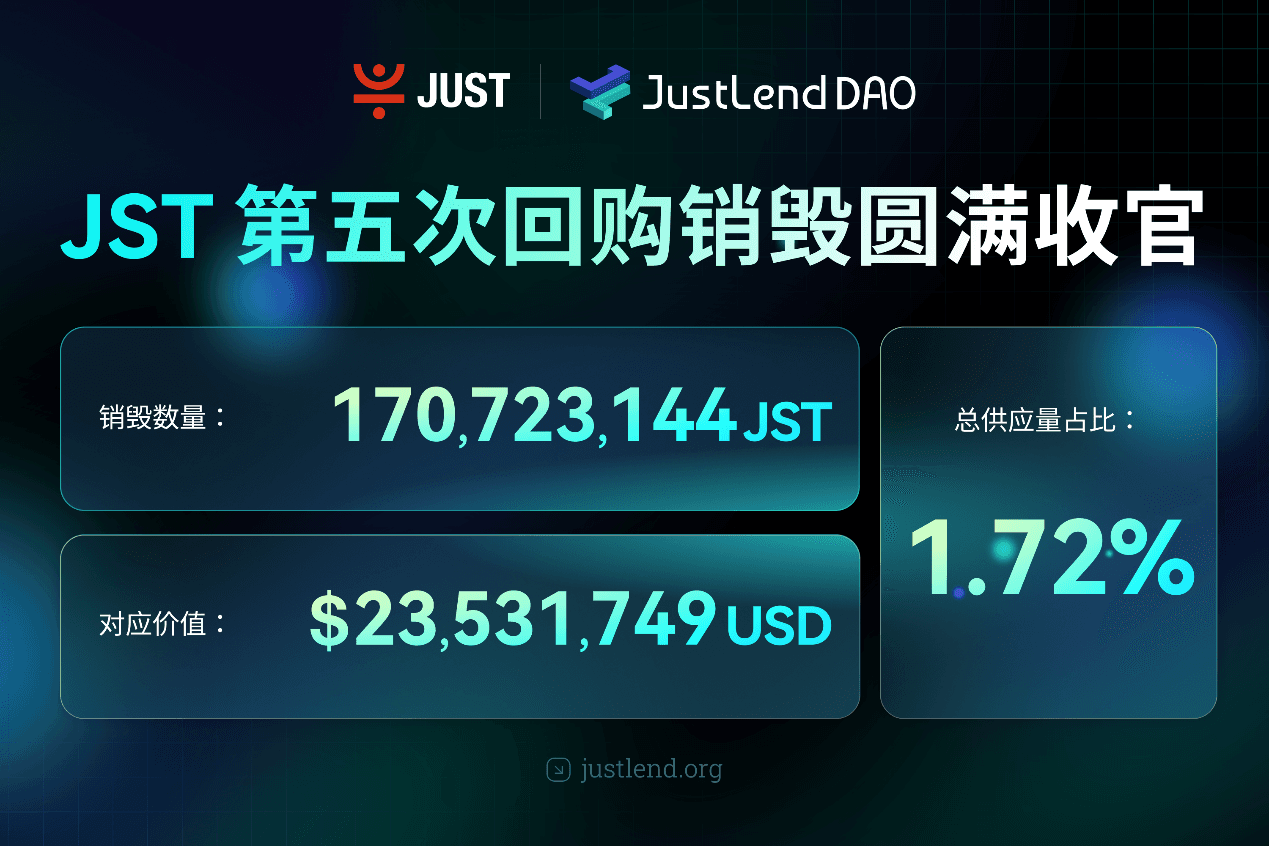
BitTorrent Brand Upgrade and Initial BTT Buyback & Burn Launch Simultaneously, Dual Engines Usher in New Era of Web3 Infrastructure
Oct 17, 20:00
Asia Market Daily: Japan's BOJ signals more rate hikes while Korea targets offshore perpetual platforms (2026/10/17)
Oct 17, 17:01Why did Papertrade backfire on you?
Oct 17, 17:01
The 'Strict Father' of Northern Myanmar: This Company Deploys 200,000 "AI Best Actors" to Strike Back Against Scammers
Oct 17, 15:34