Founder of Creader, Tim: Empowering AI to Remember the World and Preserve Stories for Authors

On July 23, Keigo Higashino passed away at the age of 68.
Over the past forty years, he wrote 106 books. "Journey Under the Midnight Sun," "Malice," "The Devotion of Suspect X," and "The Miracles of the Namiya General Store" together formed a vast parallel world.
Many readers are familiar with the world within those pages. They know that Kyoichiro Kaga will continue to investigate along the streets of Tokyo, that Detective Galileo can always see the hidden truth behind physical phenomena, and that beyond the cases, there are families in debt, students oppressed by academic pressure, and ordinary people unable to escape their past.
The crime is just the beginning; what truly remains in the story is how desires develop, secrets expand, and a person is slowly pushed towards their fate by their own choices.
Under Higashino's pen, the world seems real because everything has a origin. A lie told three chapters ago by someone will not simply disappear; a childhood experience will alter the destiny of those walking together many years later; a misplaced cup, an unsent letter – all may regain significance before the story concludes.
Detective fiction reduces the complex world into a scene that can be entered. In reality, many things remain unexplained, many relationships unresolved, but within these hundreds of pages, at least some traces can be traced, and some choices will have consequences.
Readers thus find a temporary foothold.
Writers ensure this parallel world always maintains its own gravity. The more intricate the worldview, the harder it is to sustain this gravity. Characters multiply, timelines intersect, a casually written line could become a foreshadowing tens of thousands of words later. A character cannot suddenly forget their past, a war cannot occur in the wrong year, and a relationship cannot change course without reason.
What long-form writing truly lacks is often the memory that carries the entire world.
And this is precisely the part that Creader aims to address. It extracts characters, locations, events, relationships, and timelines from novels and turns them into interconnected structures.
Amidst numerous AI products attempting to generate stories on behalf of humans, Creader's founder Tim is more concerned with another issue: Can technology enter the realm of creation without eagerly completing everything for the author?
This is not the first time Tim has approached this issue.
In 2014, Tim came to the UK. At that time, his English was not proficient, and web novels became his gateway to another world. Later, he studied computer science, worked on a reading platform, researched blockchain and intellectual property, and also joined a startup focused on IP-based infrastructure. Over a decade, technology kept evolving, but the core questions remained unanswered. How can one express the world in their mind fully without losing their judgment without the aid of tools?
By the end of 2025, Tim began to revisit this endeavor. He believed that the most crucial part of writing was still those moments that could not be rushed. The author did not yet know the answer, the characters still held multiple possibilities, and the story had not prematurely turned into something complete, smooth, yet no longer belonging to anyone.
The Gravity of the World
Tim loves reading web novels and historical fiction. Recently, he read a book set in the Xianfeng period. The author placed the characters in the Qing Dynasty, the Anglo-French allied forces, the Battle of Dagu Fort, and the changes in the Southeast Asian Chinese community. Real history formed the boundary, while fictional characters lived, migrated, and made choices within that boundary.
Tim enjoys this style of writing. History is not merely used as a backdrop but continuously seeps into the characters' destinies. A reader may get close to a real war because of a fictional character and, knowing the war's eventual outcome, worry about the character's as yet unrealized fate.
The credibility of the world comes from the connection between history, characters, and consequences.
动察 Beating: How do you determine if a story is a good story?
Tim: What matters most to me is whether the characters truly lived in that world. A story can have a very complex setting, but if the characters are merely tools to drive the plot, readers quickly notice. The stories that truly stick with me are the ones where every character has their reasons. Even if they do something wrong, you can understand why they ended up there.
Lately, I've been reading a lot of historical fiction and alternate history. Historical fiction is fascinating because the author cannot be entirely arbitrary. They must respect what has already occurred in history while creating characters within the gaps left by real history.
For example, I came across a novel set in the Xianfeng period, which involved the relations between England, France, and the Qing Dynasty, the Battle of Dagu Fort, and also the Chinese in Luzon and Java. At certain points, I pause to look up real history. A fictional story brings me back to reality.
For me, this is a sign of a story coming to life. It doesn't enclose you within the novel but rather starts you on a journey from the novel to reinterpreting the outside world.
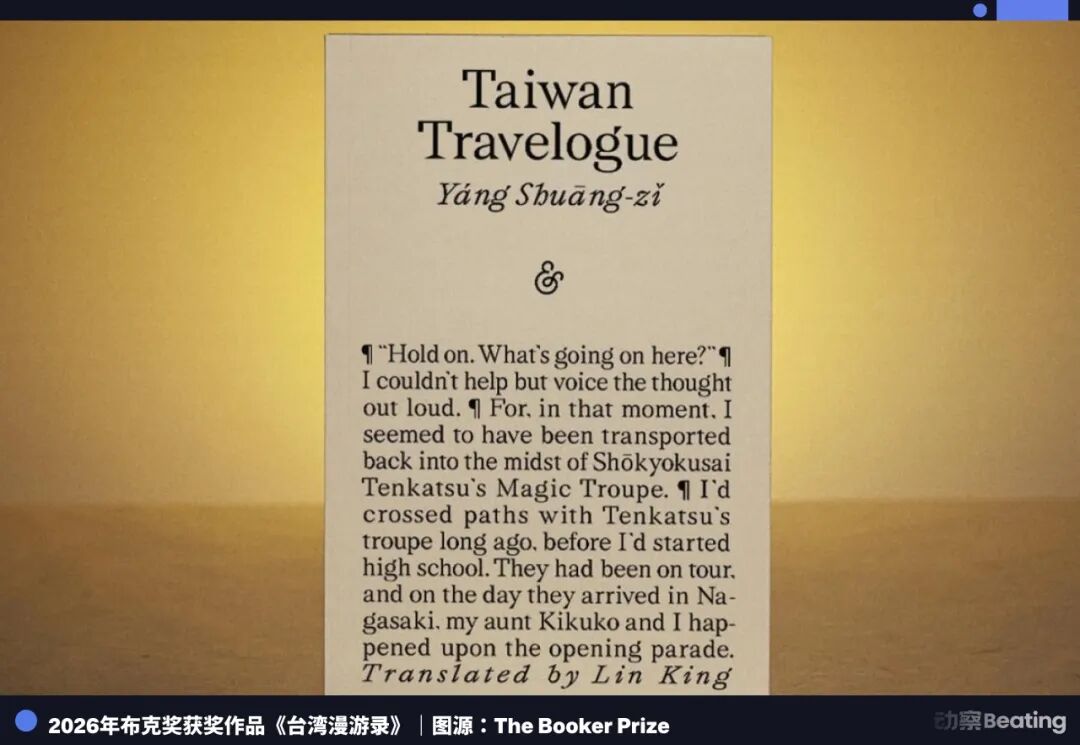
Dynamic Beating: You mentioned the novel "Notes of a Crocodile" that won the Booker Prize this year. What attracted you to it?
Tim: It is set in Japanese-occupied Taiwan, depicting the interactions between a Japanese female writer and a Taiwanese translator, exploring food, language, colonial relationships, and the emotions between the two. I really appreciate its treatment of "translation." Translation is not just about changing a sentence into another language; it's about how one person helps another understand a foreign place. There is knowledge and power dynamics at play. Who is describing this world and who is interpreting for whom will ultimately influence what the reader sees.
This also made me think that literature should not be the privilege of professional writers alone. Anyone who earnestly records their relationship with themselves and the world is already engaged in writing. Ordinary people's experiences may not lack value; often, they just lack a way to organize their experiences.
What technology can truly help with is this aspect, allowing things that have already been experienced to be expressed more fully.
A Thought Pursued for Over a Decade
In 2014, Tim came to the UK. In a foreign language environment, online novels provided him with initial stability. He was drawn to the vast world, clear rules, and evolving character relationships, and he began to consider whether the creation and serialization mechanisms that Chinese online literature had formed could appear in the English market.
To answer this question, he started learning computer science, later joined a large tech company in China, starting from operations; then, during his postgraduate studies, he delved into supercomputing, researching blockchain and intellectual property. He and his partners participated in competitions, wrote whitepapers, gave presentations, attempting to bring the rights and revenue distribution of stories onto the blockchain. Subsequently, he successively joined companies like Story Protocol and FLock, continuing to be involved in IP, blockchain, AI, and the developer ecosystem.
This path may seem circuitous, but ultimately, it led back to writing.
Dynamic Beating: What was the starting point for becoming a Creader?
Tim: I have always loved well-structured worlds since I was a child. I played Pokémon, Fire Emblem, Golden Sun, and built Gundam models. What attracted me was not just a single character but that these worlds had their own rules. Characters, places, history, and relationships could continue to expand, but they were not randomly put together.
Upon arriving in the UK, this feeling became even more pronounced. At that time, my English was not yet good enough, and online novels served as both an escape and a refuge for me. It allowed me to have a familiar world to enter into amidst an unfamiliar environment.
At that time, I was thinking about whether the creation and publishing mechanism of Asian online literature could establish itself in Western markets. To pursue this idea, I started learning about technology and even built some small websites. My undergraduate project was a reading platform. However, due to my limited technical skills and understanding of the business at the time, I did not truly pursue it further. But I never forgot about this.
Deep Dive into Beating: Why did you later shift towards blockchain and IP?
Tim: At that time, I believed that the most crucial issue in the creative industry might be ownership. The question of who wrote a story, how it is subsequently adapted, and how the revenue is distributed has always lacked transparency. Blockchain seemed to offer a new infrastructure where works could be registered, authorization relationships could be tracked, and income could be automatically distributed according to rules.
While this system could be technically viable, the deeper I delved, the more I realized that it did not address the fundamental issue of creation itself. Wallets, tokens, registration processes might actually complicate reading and writing. We solved how ownership is established after a work is completed but didn't answer how a work transitions from a vague idea to a real story.
This realization was also why I later changed course. The problem was not only in economic relationships but also in the human cognitive process.
Deep Dive into Beating: Why restart Creader now?
Tim: A very direct reason is that AI programming tools enable individuals to accomplish what previously required a team.
In the past, creating a complex product involved considerations of fundraising, hiring, and development cycles. Now, an individual can quickly prototype and validate the most critical parts. This brought me back to the problem I had ten years ago. However, generative AI also showed me another danger. Many products are accelerating output without truly helping creators think. It can swiftly provide you with a complete piece of text, but completeness does not mean it conveys what you intend.
I began to realize that what truly needs protection is not the act of writing but the ability to form judgments during the writing process.
The Writing of Memory
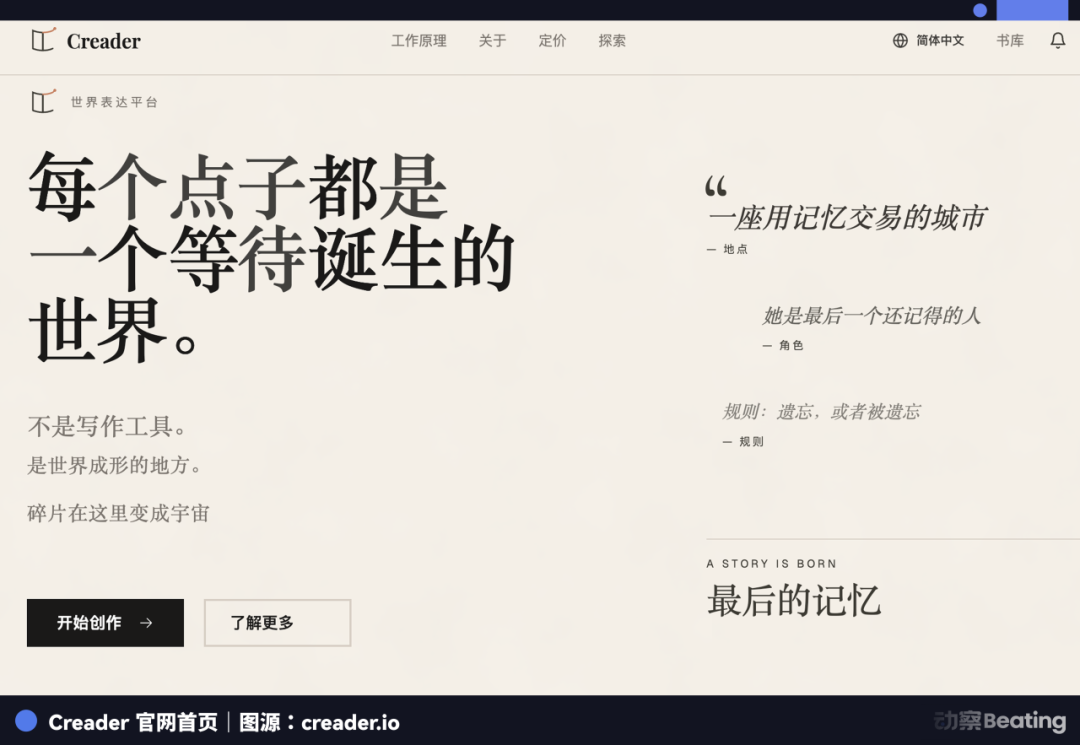
Tim refers to Creader as a "narrative engine." It seeks to preserve the author's familiar writing process—opening a chapter and diving right in. When assistance is needed, one can access dialogue, structural, and analytical panels; when not needed, these functions recede behind the page.
A novel is divided into several interconnected levels: main text, scenes, chapters, characters, locations, timeline, rules, and relationships. The system continuously reads the content written by the author, incorporating confirmed information into the internal record of the story.
In a continuously expanding world, what Creader seeks to maintain is beyond the reach of human memory limits.
Dynamic Insight Beating: Why do you refer to Creader as a "Narrative Engine" instead of an AI Writing Tool?
Tim: Because a writing tool easily brings to mind generation: you give it a prompt, and it writes a paragraph for you. But narrative is not just sentences. It also involves characters, events, time, relationships, and how the entire world operates. What Creader truly aims to handle is the connection between these elements.
We mainly focus on two types of consistency. The first is narrative consistency. For example, whether a character's transformation has been foreshadowed, whether a subplot has been resolved, or whether a chapter truly advanced the story. The second is temporal consistency. For instance, what a character currently knows, doesn't know, what they did three days ago, and whether the distance between two locations allows them to be in a certain place at a particular time.
Over time, many novelists find it challenging to remember the entire world simultaneously. What AI is best suited to do here is not to make decisions but to remember and remind.
Dynamic Insight Beating: In practical use, how does it differ from Word, Google Docs, or directly interacting with a large model?
Tim: We want the primary pathway to always be writing. Users should be able to start on a blank page without needing to complete dozens of character profiles first or learn a complex piece of software. Other functionalities should be like side quests, appearing as needed.
For example, if you get stuck halfway, you can open a panel with a shortcut key to ask what a specific character did before or to check if this section contradicts an earlier setup. After writing, the system can also provide comments like an editor.
The issue with general chat tools is that every conversation is pushing you into the next round. It's easy to keep generating new content but challenging to maintain a long-term structure within a story.
Creader extracts story facts from the main text. Characters, locations, events, and relationships are no longer just names scattered throughout tens of thousands of words but enter the same knowledge system. The AI doesn't refer to a temporary chat log; instead, it taps into the internal reality that has already been established in this story.
Dynamic Plotting: Will This Make Novels Formulaic?
Tim: This is something we are very cautious about. In the early stages, we chose works such as "Dream of the Red Chamber" and "Hamlet" as the corpus for narrative analysis modeling, and later expanded to about thirty works. The purpose is not to learn the style of a particular author, much less to tell authors how to imitate, but to find some issues that remain valid across different works.
For example, whether a descriptive passage serves a narrative function, whether a metaphor comes from authentic character observation, or whether a conflict changes the relationship between characters. The system can raise these questions, but it cannot turn literature into a uniform answer.
We are closer to being editors than ghostwriters. An editor can say, for example, that this part seems to lack motivation, this storyline has not appeared for a long time, or this explanation is too detailed. But the author is free to disagree. In literature, there is no scoring standard that everyone must adhere to.
Dynamic Plotting: Does Creader Allow AI Generation?
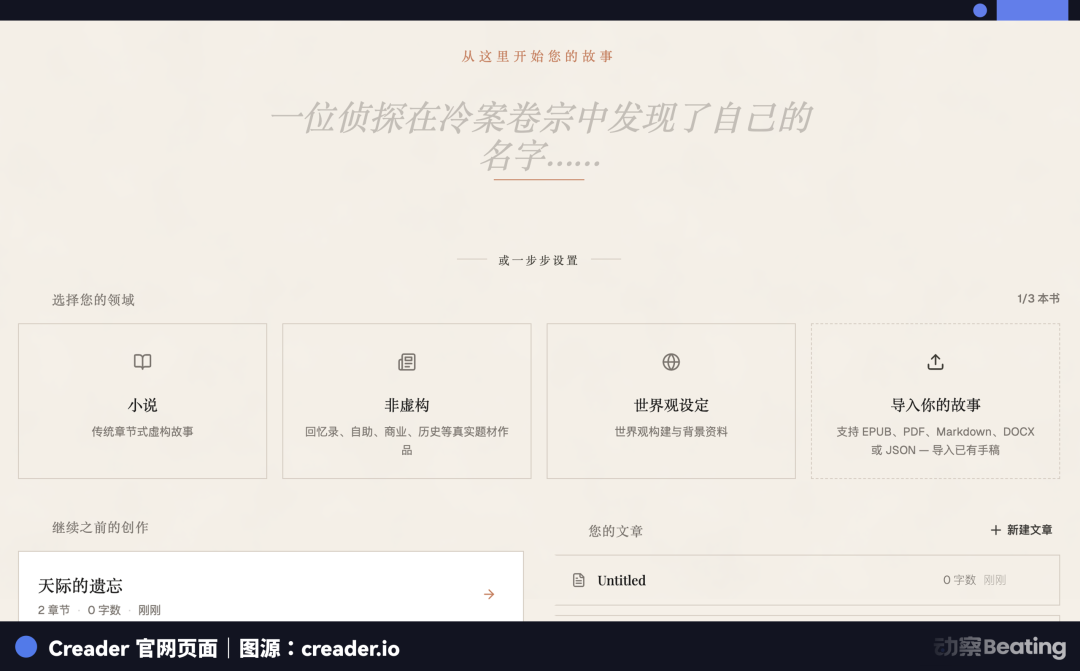
Tim: It is allowed, but generation is not the core. Different users need different things. Professional writers may not want AI to enter the main text at all; they just need it to help organize characters, timelines, and foreshadowing. Ordinary users may have a rich life experience but do not know how to structure it and may need more assistance.
The key is to maintain boundaries. We hope to clearly distinguish in the future which content is independently created by humans, which is AI-assisted editing, and which is mainly generated by AI. Using AI itself does not mean there is no creation, but readers should know how it was completed.
I don't think we have to choose between "purely manual" and "completely generated." The question is whether the author continues to make decisions, retains their intent, experience, and responsibility.
Dynamic Plotting: If Someone Has Their Own Ideas and Creativity, and Only Hands Over the "Hard Work" of Typing and Organizing Materials to AI, Is This Still Considered Creation?
Tim: I think this is a very interesting question: how do you define creation?
For example, when you are creating an article, what you truly invest in are your ideas, creativity, and how you want to organize which materials. In the past, these things had to be completed bit by bit through handwriting and typing, and some of it, in my opinion, is purely hard work. Now, if AI replaces this hard work, is it still considered creation? I think it is.
First of all, AI should still be defined as a tool. It cannot replace humans. At least for now, most AI generation still needs to be initiated by humans. You need to communicate with it, tell it what you want to write, from what perspective, and what you hope to achieve in the end.
Some people may have a great idea but lack the ability to express it fully. Now, with the help of AI, they have accomplished this, and this should not erase their original idea. They are still creating; they are just using a new tool.
动察 Beating: How should the author's identity be determined if the final text is mainly completed by AI?
Tim: I think in the future, we need to distinguish among three scenarios: human creation, AI-assisted creation, and AI-generated creation.
Some people only use AI to check grammar and organize their thoughts, some let AI generate a part of the content, and some may use AI for almost the entire creation process. All these approaches can coexist, but there should be clear labels to let readers know how the work was completed.
Previously, there were writers exposed for using AI for a significant portion of their work. What really angered people might not be that they used AI, but that they did not disclose this fact, and even treated "reader non-detection" as a sign of success.
Professional writers have their own way of thinking and creative concepts. The fact that they can collaborate with AI to write a book where readers cannot perceive AI's involvement does not mean that just anyone could do the same. The idea of "if I were in their place, I could do it too" may not necessarily hold true.
动察 Beating: But many readers still instinctively reject AI-generated novels.
Tim: If a story is good enough and the language is good enough, I personally will not refuse to read it just because it used AI. However, many people are worried whether AI is meant to replace authors. The media also often describe AI as "what can AI replace," which can make creators feel directly threatened.
I think some people's insistence on traditional methods is not a bad thing. The same goes for programming; some people are willing to write code line by line. AI is not omnipotent, and traditional methods still hold value at times.
The key is still why a person is using AI.
A professional writer who can write eight thousand or ten thousand words in a day may not even need AI to generate content for them. On the other hand, what they may truly need is organizing their thoughts. They might be thinking, I have all these characters, clues, and plots in my mind; how do I weave them together?
So the position of AI is different for different people. Some need generation, some only need collaboration. Tools should adapt to people's abilities, rather than requiring everyone to write in the same way.
Delaying the Answer
The most obvious problem with AI generative writing is factual errors, clichés, and language repetition. But Tim believes that the more insidious danger is speed; AI can always give an answer that appears correct too quickly.
The text becomes complete, but the thinking may stop before completeness.
Tim refers to this state as "premature coherence." Large models excel at finding the most reasonable completion for a gap, while creativity precisely requires the gap to exist temporarily. Characters can be unstable, motivations can conflict, and an idea can remain unnamed for a long time.
In these yet-to-be-determined parts, creators have the opportunity to discover what they really want to write.
Beating the Pulse: Why do you prefer to write something yourself even though you're writing it?
Tim: Communication with AI is very fast. It's a back-and-forth process. It generates a segment, you read it, find something wrong, and immediately start the next round of dialogue. Your brain keeps moving forward, making it challenging to truly slow down.
But it's different when you write on your own. Writing is actually a process of slowing down the speed of thinking in your mind. When you're halfway through writing, you pause and think, "Am I on the right track? Is what I'm writing what I really want to write?"
When directly using AI generation, you are more in the mode of reading and judging its answers. If something is wrong here, you let it make a change; if something is off there, you immediately move on to the next round. The process of slowly forming sentences on your own is missing.
So I think handwriting or typing by yourself, this ancient form of writing, helps people slow down their thinking, giving you more time to constantly question the value of your expression.
Beating the Pulse: For you, what is the most valuable part of writing or literature?
Tim: Of course, I don't come from a literary background; I look at literature from a computer background. For me, literature has two main meanings.
The first is to record your interaction with the world. Why do people record, why do people write? Initially, it was hoped that many facts could be seen by future generations. Where a person lived, what they experienced, how they interpreted that era, can all be preserved through words.
The second one is to record the imagination in your mind. As people see more, experience more, and interact more with the world, their imagination is also opened up. Why do we have science fiction, fantasy, why do we have "One Hundred Years of Solitude"? It's because an imagination sprouted in someone's mind, then was recorded, and finally became a world that doesn't exist in reality but can be accessed by many.
I think the essence of literature is still to express the inner world of a person.
Everyone is thinking about something, it's just that they may not want to say it, or may not want to post it on Weibo or other public social networks. But sometimes, they still want to record their thoughts of the moment, so they write a note.
Literature is not mandatory, it doesn't mean that you have to show it to others once you write it.
If you keep this moment of thought to yourself, I think it can also be considered literature. The most important thing is that you have recorded what was in your mind.
Dynamic Insight Beating: I heard that you also want to incorporate Creader into the education scene, how was this considered?
Tim: We are in contact with some institutions in Singapore and Vietnam to see how this product can be used in education.
Our generation did not have AI when we were young. Without AI, when faced with a problem, we had to learn on our own and figure it out by ourselves. This process leaves a layer of background to thinking, you know that you have to think and transform, turning what you see into your own knowledge. But for children born after 2005, 2010, AI may accompany them for a long time. When they most need to learn, to build self-learning abilities, they already have a tool that can provide answers anytime.
In the next five to ten years, there may be a kind of inertia, where I see something unfamiliar, and my first reaction is to ask AI.
The problem is, the human brain has a very important ability, we link what we see in life, what we learn in class, and some unrelated things together, and finally form our own understanding. Models are better at providing answers along relevance. If a person only receives this well-organized relevant content for a long time, their thinking may become more and more reliant on existing pathways.
So in the education scene, we actually don't want to provide generation right from the start. Students should first write an outline themselves, think about what to write based on the outline, and then proceed to complete the main text. Teachers can see how they modify, how they interact with the system, and how an idea gradually forms.
First, Get the Text Right
Over the next month, Tim plans to work more closely with a Vietnamese art publishing agency.
This is also the product's first encounter with regional differences in a more specific manner. As a set of writing tools enters another country, not only the interface language changes.
Dynamic Beating: What Is Creader's Next Development Plan?
Tim: Next, we may collaborate with an organization that helps Vietnamese artists enter the international market. They publish a magazine annually, distributed in various parts of the world, introducing Vietnamese artists. We hope to see if Creader can be integrated into their actual creative, editorial, and publishing processes. For us, it's also a learning experience because the feedback cycle of professional writers and organizations is usually longer. They are often already working on a book and won't use something today and give you a conclusion tomorrow.
This is a small and exquisite product, and many things still need to be embedded in real usage scenarios to truly understand their usefulness.
Dynamic Beating: Will Using the Same Product by Authors from Different Countries Lead to Compatibility Issues?
Tim: It will. Language is a significant difference.
For example, British English and American English are two very different language habits. The most superficial differences are spelling and word usage, such as color and colour, apartment and flat, elevator and lift. Furthermore, there are disparities in slang, conversational styles, and writing rhythms.
We have encountered a British author who wrote a story set in the United States. When writing, he needs to constantly consult dictionaries, references, confirming whether an American character would speak in a particular way. Because a person's educational background influences their writing. If you were educated in British English, many words would instinctively be written in British expressions. Even for professional writers, it's not just about writing it down and being done; they need continuous research, review, and replacement.
Currently, we mainly support British English, American English, and Chinese. Later, we will also explore the Japanese, Korean, and French markets. Europe has a strong writing atmosphere, while the United States has many self-publishing authors. The writing and publishing methods vary in each market.
Dynamic Beating: After the Emergence of AI, Will Future Content Still Be a Book or an Article? Will It Become Something Interactive with Readers?
Tim: We are also considering interactive novels, world-building, and multi-linear narratives. However, at the end of the day, I still believe that text allows for much greater imagination than video and images. Once you see a visual, your mind forms a relatively fixed image that is hard to completely detach from.
When reading text, though, each person can imagine differently. Why do works have so many fanfics and fan arts? It's because everyone starts from the same piece of text, yet ends up seeing different things.
In the future, of course, we can have interactive novels that allow readers to explore different narratives and a world that spawns many stories. But first and foremost, we need to get the text right.
Dynamic Beat: Will investors think this is not a big enough business?
Tim: They might. When discussing with some investors, they may compare it to directions like agents and AI memory layers and feel that a writing tool is not a particularly large business. It can certainly be linked to the "memory layer" and claim that we are helping AI preserve a world's memory. That argument works, but I don't think it's necessary.
I'm building this product to help people tell a good story. If it can help me tell a compelling story for fundraising purposes, that would be a validation too. But is there a need to exaggerate its significance? I don't think so necessarily.
It may not be a cash cow business, but it can be a sustainable product. Investors who are interested and truly understand this matter can chat with me. But I prefer to first do something I love.
This year's goal is also simple: to have one hundred authors actively using Creader, out of which ten will use it to complete and publish their own books. Achieving this, I believe, will meet this year's KPI.
I believe that as AI-generated content becomes more prevalent, people will also seek out a relatively clean space.
The Time That Was Left Out
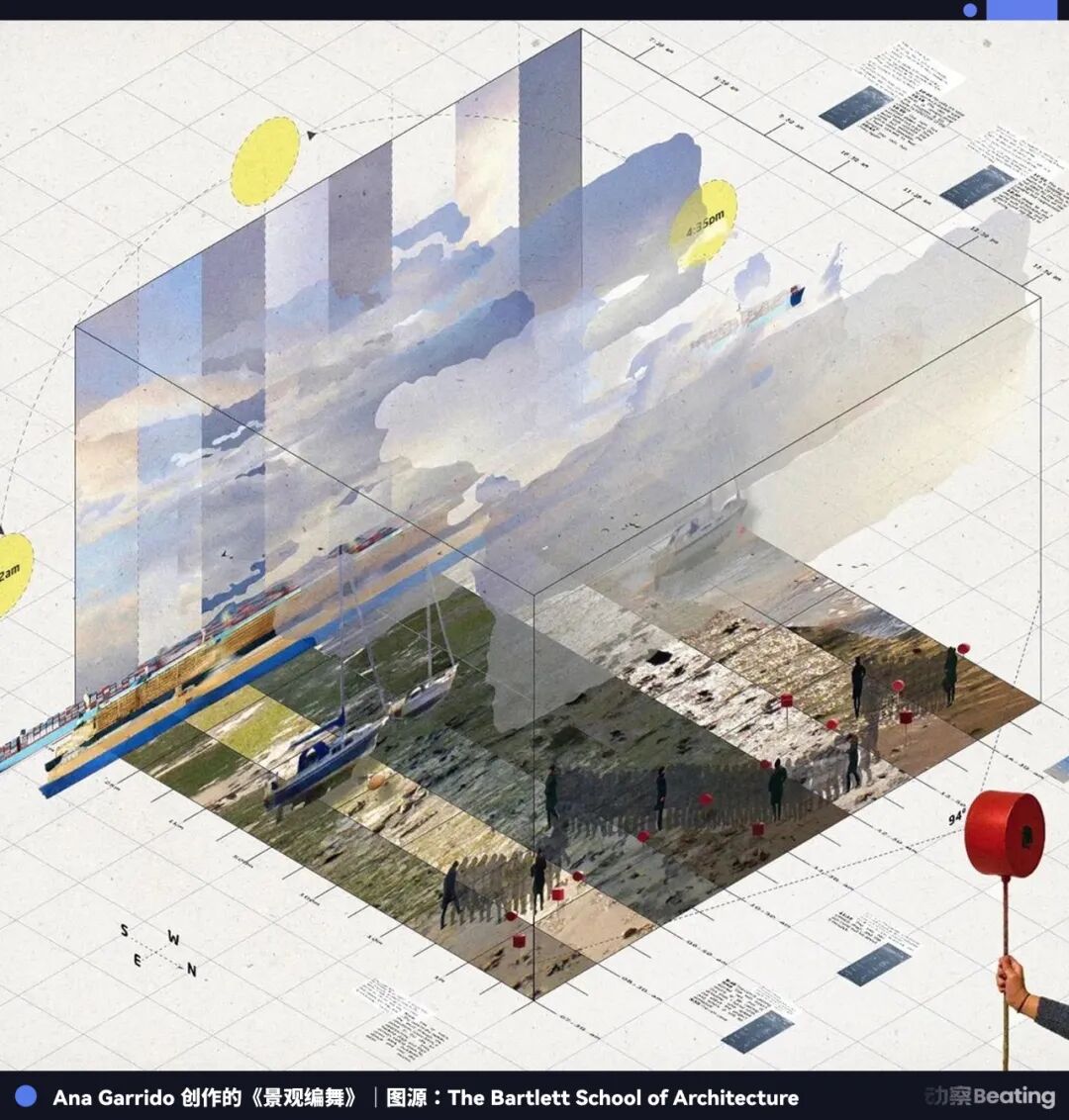
In "Time and Free Will," Bergson distinguishes two kinds of time. One is the time that can be divided and measured. It belongs to clocks, calendars, and production schedules: one minute followed by another, where each unit appears the same.
The other kind of time occurs within a person's consciousness. The past doesn't truly disappear but keeps entering the present. A moment of hesitation may carry a memory from ten years ago, and the words we write down hold the leftover heat of yesterday's arguments.
Bergson called it "duration." And writing takes place in such time.
An author pauses between two words, deliberates, deletes a paragraph just written, then retrieves it the next day. They may be stuck because a character can't make a decision or may leave the desk midway through writing. During that time of non-production, something is still changing; it just hasn't turned into a sentence yet.
Creation is not about converting time into words. Time itself is the material of creation.
A large model can generate a thousand words in just a few seconds. It can quickly tap into existing patterns in language, predict the most likely expressions to come next based on context. It pauses, but it is a waiting in a computational sense, not a person reinterpreting themselves in hesitation.
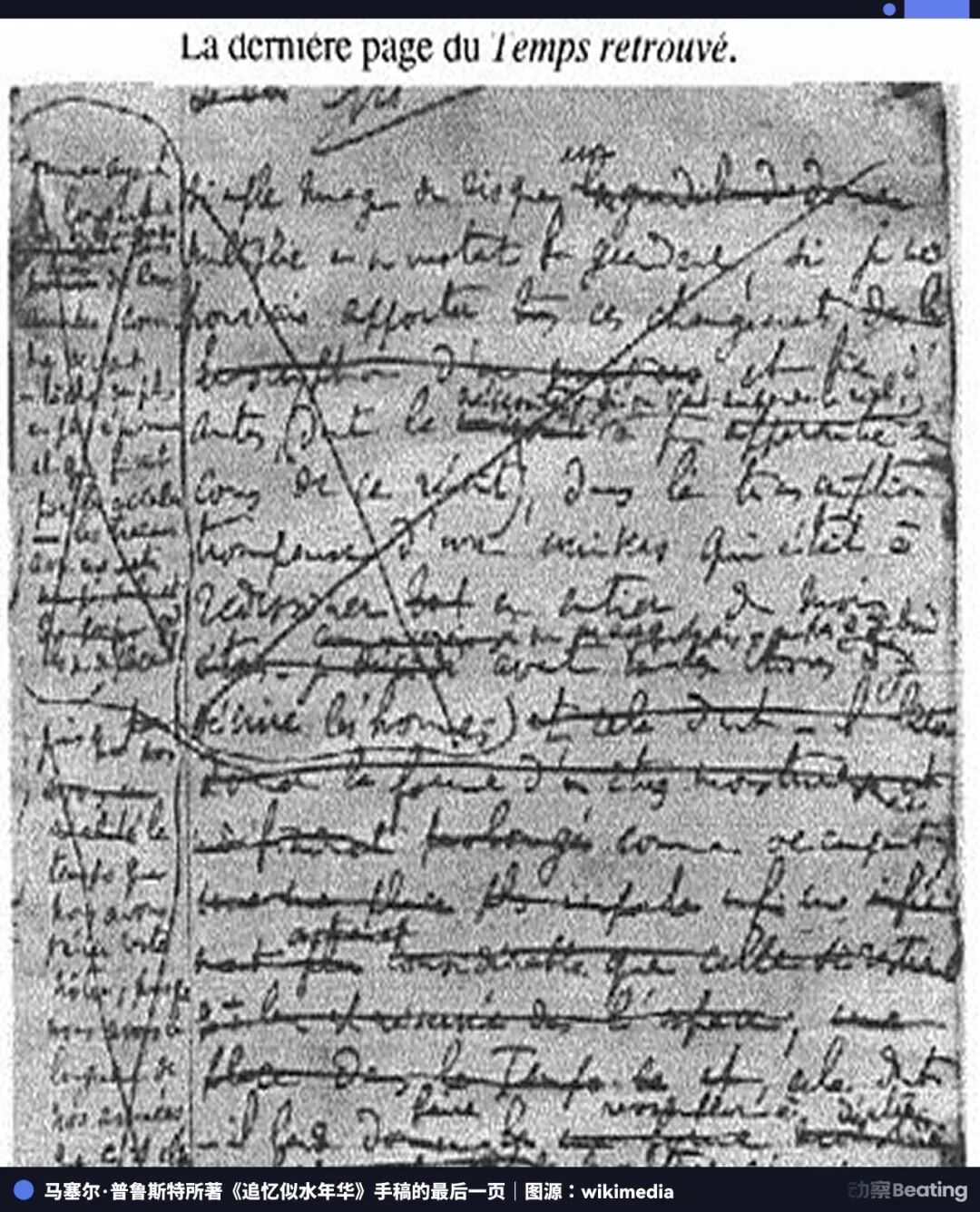
Borges compresses vast time into a very short space; Proust, on the other hand, continuously extends a single moment into the depths of memory. Different languages are not just a set of stylistic choices but also document how a person experiences the world, endures pauses, and interacts with their own time.
The flaws in writing also belong to this time.
A turn that is not fully tightened, an overly stubborn repetition, a judgment that the author may no longer agree with years later—all indicate that the person who wrote it was once in a specific place. They only knew this then, and could only get here.
Imperfection is sometimes not a technical deficiency but evidence that the text is still connected to a finite individual.
Creader exists in this contradiction, attempting to provide its answer.
Tim describes Creader as a piece of land. What a tool can do is not to prematurely grow a forest but to preserve the soil, tidy the boundaries, and allow a yet unformed world to continue developing.
Land is not like a production line. The production line demands stability, accuracy, and timely delivery, while the land allows for waiting. Seeds may take a long time to sprout, branches may grow in the wrong direction, and a thicket of weeds can also recreate a new world.
Viewing creation as land means that what the tool offers is not a faster way to reach the finish line but a space that accommodates the unfinished.
In an era where conclusions become too easy, we can also choose not to finish the story just yet.
Recommended
Desk: Brent Crude Tops $110, Musk's Net Worth Drops 528.6 Billion in Four Days After Tesla Roadster Launch
Oct 17, 21:49
JST Fifth Buyback and Burn Successfully Concludes: Over 170 Million Tokens Worth Approximately $23.53 Million Burned, Buyback Mechanism Set for Comprehensive Upgrade
Oct 17, 20:10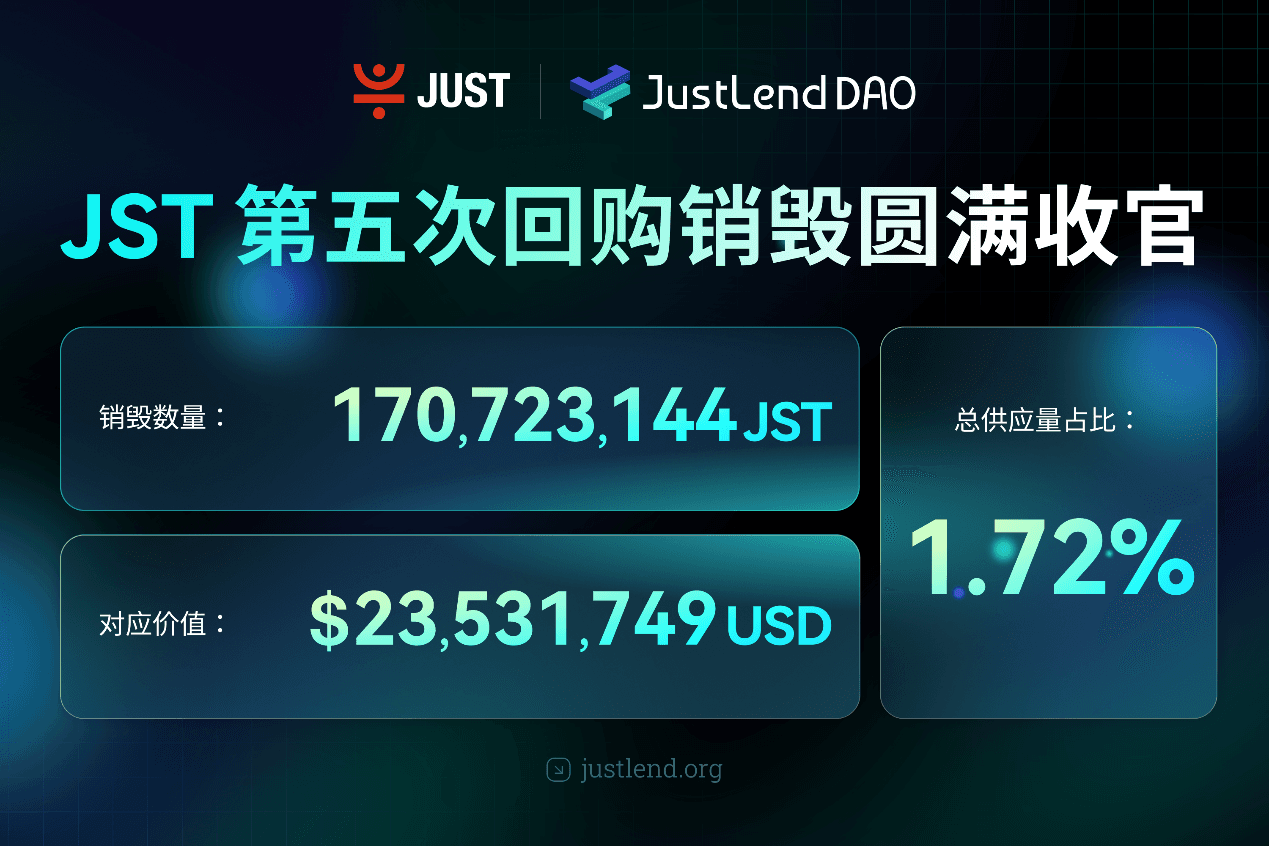
BitTorrent Brand Upgrade and Initial BTT Buyback & Burn Launch Simultaneously, Dual Engines Usher in New Era of Web3 Infrastructure
Oct 17, 20:00
Asia Market Daily: Japan's BOJ signals more rate hikes while Korea targets offshore perpetual platforms (2026/10/17)
Oct 17, 17:01Why did Papertrade backfire on you?
Oct 17, 17:01
The 'Strict Father' of Northern Myanmar: This Company Deploys 200,000 "AI Best Actors" to Strike Back Against Scammers
Oct 17, 15:34