Exclusive Interview with Chris, Founder of Axis Robotics: Why Data is the Holy Grail of the Robotics Industry

When it comes to AI nowadays, people are very familiar with the upstream and downstream. When hyping storage, they know to look at optical modules, materials, and equipment; when hyping computing power, they know to look at NVIDIA, power supply, and cooling.
However, most people's perception of robots is still stuck at the Spring Festival Gala, where a few humanoid robots can take a few steps, which they think is cool. But beyond that, most people can't really say much about the upstream and downstream of the robot industry or what the "purple leaf" of the robotics industry is.
Actually, the robotics industry also has its own supply chain and is branching out into more and more specialized tracks. Some work on hardware, some on models, but there is another link that is seldom noticed by ordinary people but may affect the upper limit of a robot's capabilities: data. More precisely, data that gives robots "hands-on experience" in production.
The rise of large models has a very simple premise: a massive amount of text, images, code, and videos has already been accumulated on the Internet. The first challenge for model companies is how to ingest this data, how to scale computing power, and how to train larger models.
Robots are different.
Robots do not have a natural internet corpus. For trajectories that can be directly used for robot control learning, they typically include observation, action, and robot state; depending on the task, they may also include object state, contact information, success conditions, task semantics, and control frequency. Real-world data collection is slow, expensive, dangerous, and highly dependent on the specific robot.
And this is precisely the background of Axis Robotics. On July 27, this Physical AI data engine company announced the completion of a $12 million seed round of financing, led by Hack VC, with participation from Nomad Capital, Pi Network Ventures, 10K Ventures, and several angel investors. This money is not a bet on yet another team building a robot, but a team specifically feeding experience to robots.
In this context, BlockBeats interviewed Axis Robotics founder Chris. Chris previously served as COO of Chainbase, co-led Theia, the first native encrypted base model on Hugging Face (an AI model community). Prior to this, Chris was a venture capitalist at Emergence Capital and a management consultant at Bain & Company.
BlockBeats Question: Before founding Axis, what were your main entrepreneurial and career experiences? How did you get involved in robotics, Physical AI, and robot data? Was there a specific opportunity that made you realize there was an entrepreneurial opportunity here?
Chris: Before joining Axis, my previous startup was focused on data infrastructure, similar to the direction of Databricks, helping enterprises organize their data and unlock its value. The biggest realization from that experience was that while data may not be sexy, it is often the variable that determines the company's ceiling, ultimately deciding how far a company can go.
The beginning of 2024 was a critical time for me. AI was very hot at that time, with everyone discussing models, parameters, and computing power. However, I increasingly felt that the industry was shifting from being "model-driven" to "data-driven." While models are certainly important, what often determines whether a model can continue to advance is the data.
What really excited me was Surge AI. Founded in 2020, the company had surpassed $1 billion in revenue in just four years, outpacing even Scale AI and with minimal external funding. I kept wondering: How could a data-focused company grow so rapidly? Have we underestimated the value of data in the age of intelligence?
During that time, I often chatted with friends from Nanyang Technological University, UC Berkeley, and NVIDIA, listening to their insights on the changes happening at the intersection of academia and industry. We gradually reached a clear consensus: while models iterate quickly, data forms the foundation and is the most challenging, non-standardized, and easily overlooked layer. From the pre-training of large language models to the data requirements for high-quality training data post-Agent emergence, data is not becoming less important but increasingly complex.
So, I started to wonder if Physical AI would follow a similar path. The physical world is much more complex than the text world. Environmental variations, sensor noise, various edge cases, and diverse user habits all amplify the data requirements. The amount of data needed for Physical AI and the scenarios required for error correction during post-training may be a hundredfold or even more than what is needed in today's AI.
However, if you were to ask at that time, "Who is working on Physical AI data?" hardly any name could be readily mentioned. In a race that could potentially produce a hundred billion-dollar company in the future, there was no clear leader. For entrepreneurs, this signal was already crystal clear: it was worth going all-in.
Therefore, starting in the summer of 2025, I began in-depth discussions with friends from NTU and UCB about the technical roadmap and product form of Axis Robotics, and that was when Axis Robotics truly took off.
BlockBeats Question: When discussing the robotics industry, the external focus is usually on hardware and models. Why does the Axis team believe that data is the "purple leaf" most likely to limit the scalability and implementation of Physical AI in this round?
Chris: This is a great question. The development of large models gives us a very direct inspiration: once a technical path is validated, the next stage of capability improvement often comes from the simultaneous expansion of data, computing power, and model scale. From GPT-1 to GPT-3, we have seen that large-scale pre-training can bring about significant leaps in capability.
However, the robotics industry is still in its early stages. Today's hardware and algorithms have actually progressed at a decent pace, with various robotic arms and humanoid robots constantly emerging. The model paths are also gradually converging, such as VLA connecting vision, language, and robot actions; world models learning how the environment might change after an action is taken; and WAM further integrating predictions of future states with action generation. People are working in these directions.
The challenge is that in order for a robot to not only perform in the laboratory but also work in a real environment, achieving a leap similar to the "GPT-1 moment" of language models, a much larger amount of real-world interactive data is required.
For example, today's robots are a bit like someone who has only learned to swim in textbooks, understands the theory but has never been in the water. If you want it to really know how to swim, you have to let it practice repeatedly in different pools, different water temperatures, and different waves. These "swimming experiences" are the data.
However, the scale of publicly available data is still very small.
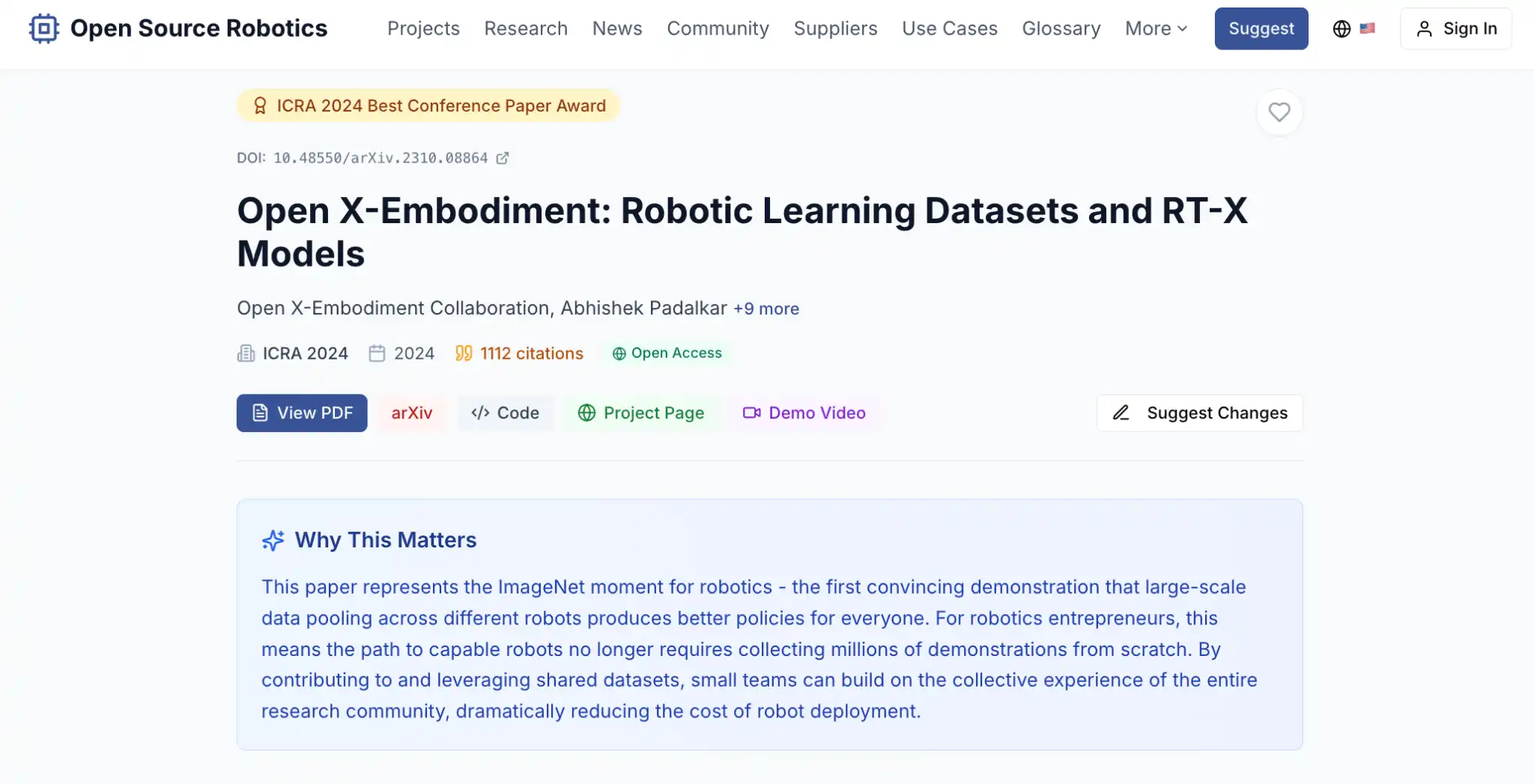
Open X-Embodiment is one of the representative open datasets, integrating 21 institutions, 22 types of robots, and over 1 million trajectories. This may sound like a lot, but compared to internet-scale data, it's not even a fraction. Many other public datasets are still at the level of several hundred hours.
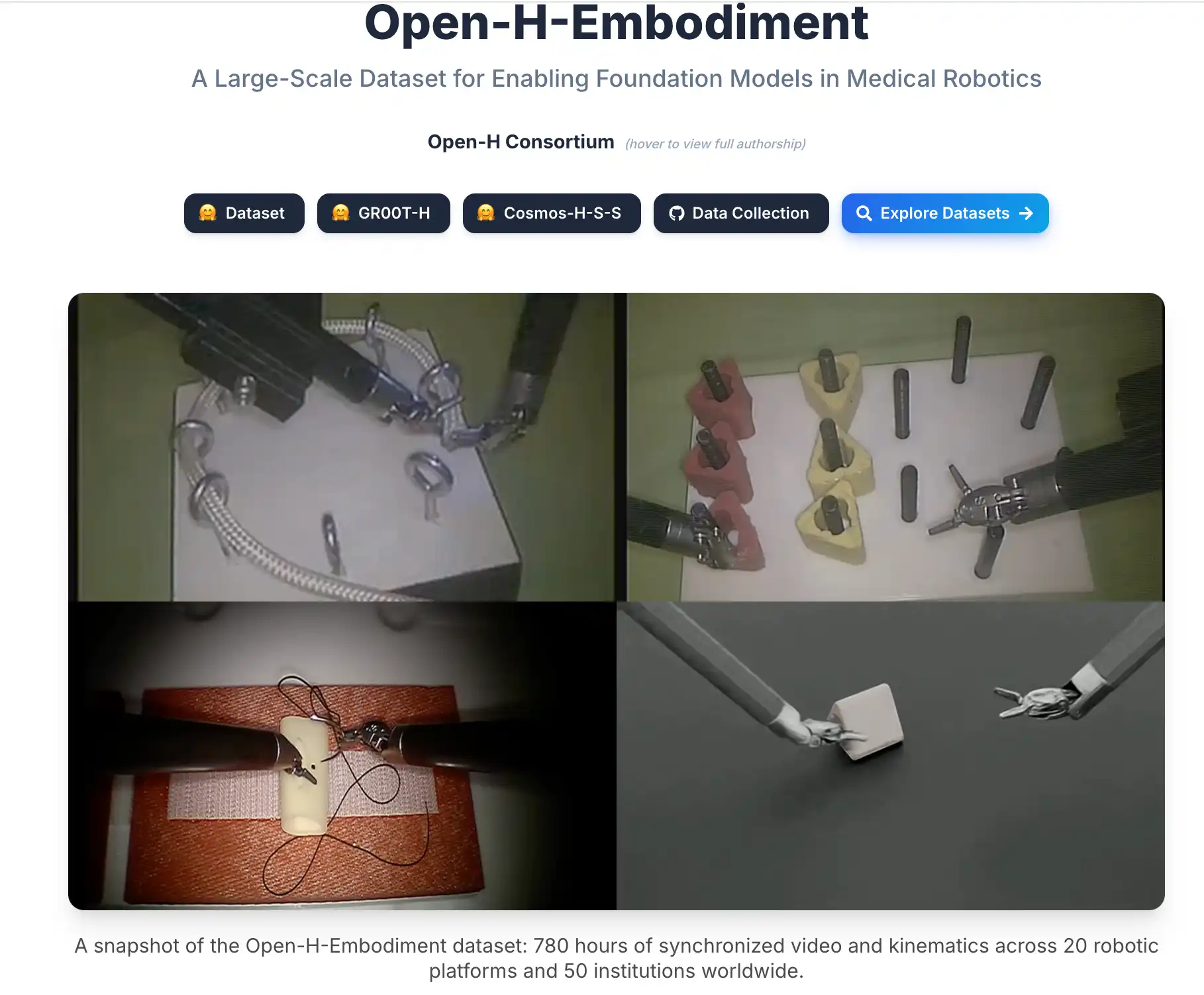
Therefore, we believe that what is currently hindering the development of robotic base models is not necessarily the model structure itself, but the scale and diversity of data lagging far behind. Without a sufficient amount of real-world data spanning scenarios and industries, even the best models and hardware can only run in circles in the laboratory. At this stage, data is not the finishing touch but the key variable that determines whether Physical AI can cross the inflection point.
BlockBeats Question: Can you use the simplest, most straightforward, and least roundabout way to tell ordinary people what Axis does?
Chris: Put simply, Axis is helping robots continuously accumulate "hands-on experience."
You can think of a robot as a new intern. It's smart but has never actually done anything. You need to turn it into an experienced worker. Just showing it the instruction manual won't work; it has to get hands-on, make mistakes, get corrected, do it again, and practice repeatedly. What we do is systematize these experiences.
From pre-training preparation, task design, simulation exercises, to real-world data collection, followed by data cleaning, error correction after model training, and continuous optimization, we have streamlined the entire process. We have also developed a web-based simulation platform and a mobile data collection tool, allowing ordinary people to participate. Folding clothes and tidying up at home—these daily actions can all become learning materials for robots.
In a nutshell: Axis is a continuous data engine that provides training data to Physical AI and helps correct its mistakes, enabling robots to learn faster and make fewer errors.
BlockBeats Question: What do you think is the ultimate solution to the current embodiment intelligence data gap? First-person data, teleoperation data, or simulation data—which is better?
Chris: The biggest challenge in the industry today is the simultaneous achievement of data scale, scene diversity, and real-world physics alignment. Real-world physics alignment means that the motion patterns in your data must be consistent with the real world; you can't practice well in a virtual environment and then feel lost when dealing with a real machine.
Let me give you an example. Simulated teleoperation data is like practicing driving in a driving simulator. The barrier to entry is low; you don't need a real car. People from around the world can remotely control virtual robots via the web to generate a large amount of training data. By combining various robot forms, objects, scenes, and tasks randomly, diversity can quickly be achieved. However, the downside is evident: no matter how good the simulator is, it is not the real road conditions. Bumps, sudden events, and irregular road surfaces in real life are difficult to replicate entirely in a simulator. If the model learns in a virtual environment, it may still struggle when it comes to a real machine; this is what we call the "reality-gap."
First-person real human data is like installing a dashcam for an experienced driver. Ordinary people can use their phones to collect real-life operations at home or in the office. The footage contains visual and verbal cues, helping the model understand how humans actually work. However, the downside is that the footage lacks precise joint data of robots, making it insufficient for directly training fine actions.
Real-world remote control data means actually hitting the road for driving practice. It offers the highest trajectory accuracy and the most realistic physical interaction. Especially when the model itself fails to operate, human intervention to correct the remaining trajectory is particularly valuable for model improvement. However, the cost is also the highest, requiring actual vehicles and human effort. Production capacity is limited and cannot be infinitely scaled.
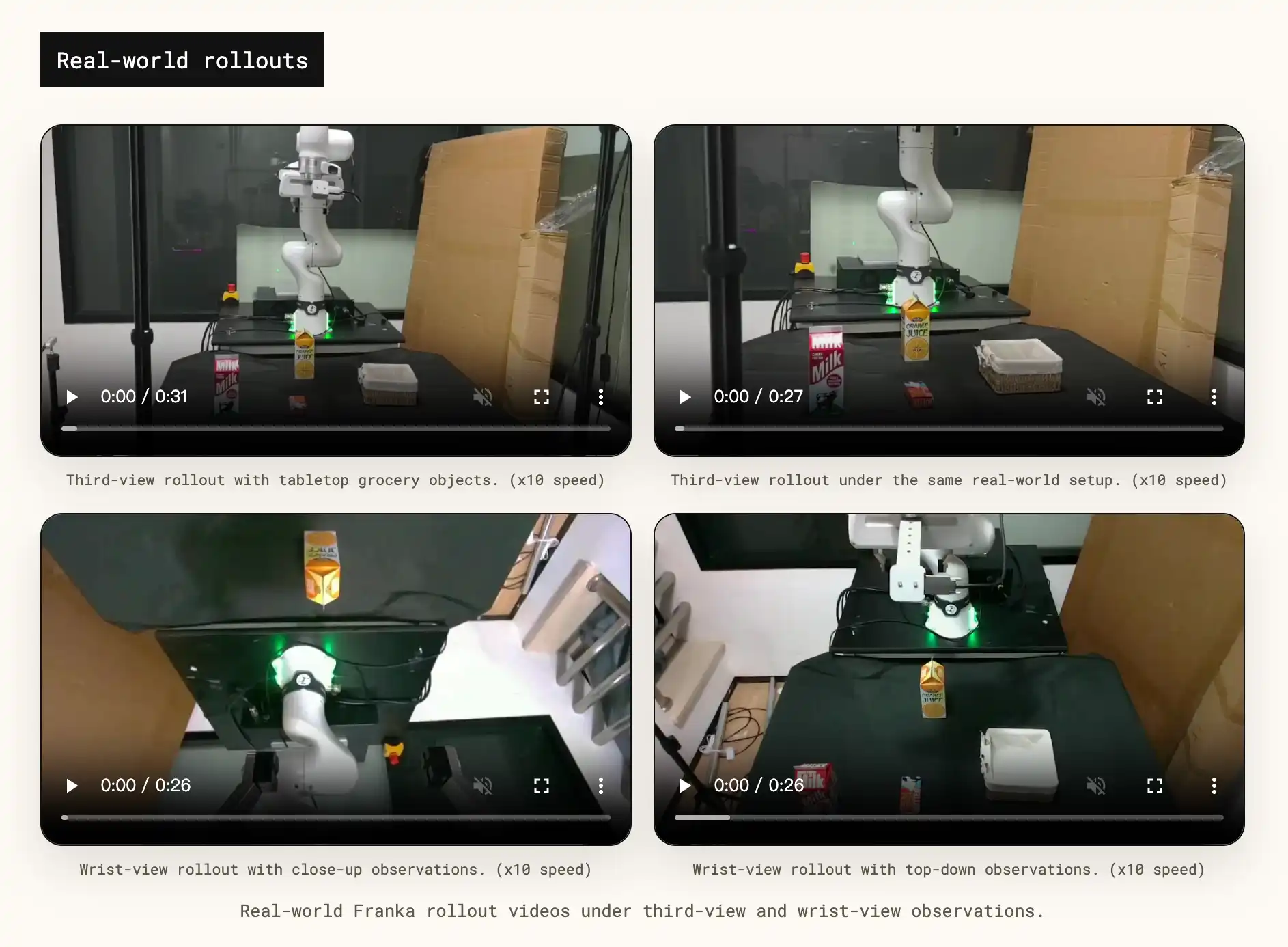
Style of Axis Actual Deployment
Therefore, the answer is not which one is better, but that each of the three types of data has its own role to play: simulation scales up the quantity, first-person view helps the model understand real-world common sense, and real-world remote control data is used for precision calibration and closed-loop error correction. Only by integrating the three types of data into the same system is it possible to truly fill this gap.
This is also the reason why we adopt the "hybrid data sources, bidirectional closed-loop engine" approach. We use simulation remote control data and first-person view human data for dual-supply, combined with Human-Gated DAgger. Its approach is straightforward: after a model failure, human intervention corrects it, and then the correction result is sent back for training. This way, data is collected, cleaned, and enhanced, enters unified visual, language, and action model training, goes through virtual and real-world deployment, feedback loops for failures, and data supplementation, forming a self-propelling cycle.
BlockBeats Question: Why did Axis initially choose to start with simulation data and is now beginning to lay out first-person view data? Has there been a strategic shift?
Chris: This is an extension of the same data strategy. Physical AI must be data-driven, and the core metric of data is not quantity but diversity, as diversity determines generalization capability and robustness. We started with simulation because it is controllable, repeatable, and easy to evaluate. We can design tasks, adjust scenarios and robot morphologies, collect data, and then replay, validate, train, and test. It itself is like a "world model," virtualizing the real world.
First-person view data can complement the breadth of the real world. Recent research, including DreamDojo, has further shown the potential of large-scale first-person view videos in learning human behavior and world regularities. This type of data records how people use tools, handle objects, and complete tasks, and these behaviors are scattered across different countries, industries, and life scenarios, making it difficult for a few laboratories to cover.
Simulation data is more easily produced by a few platforms, but first-person view data is naturally decentralized and requires global contributors to participate. As top model companies like NVIDIA and DeepMind have increasing demands for this type of data, the ability to continuously access, process, and validate first-person view data globally will become a critical capability.
More importantly, for Axis, the contributor network, task distribution, and data processing and validation pipelines are reusable. From simulation expansion to first-person data, it's not a change in direction, but rather a completion of a more comprehensive robotic data infrastructure.
BlockBeats Question: Can you walk us through the entire process of embodied intelligence data collection, processing, and training within Axis?
Chris: In Axis, data collection and processing are not segmented pieces; the entire process is an end-to-end closed loop. The recently released Axis V2 is a crucial upgrade for us: previously, Axis was more like a one-way data collection station, and now we have integrated task generation, data collection, model training, evaluation, and optimization into a system.
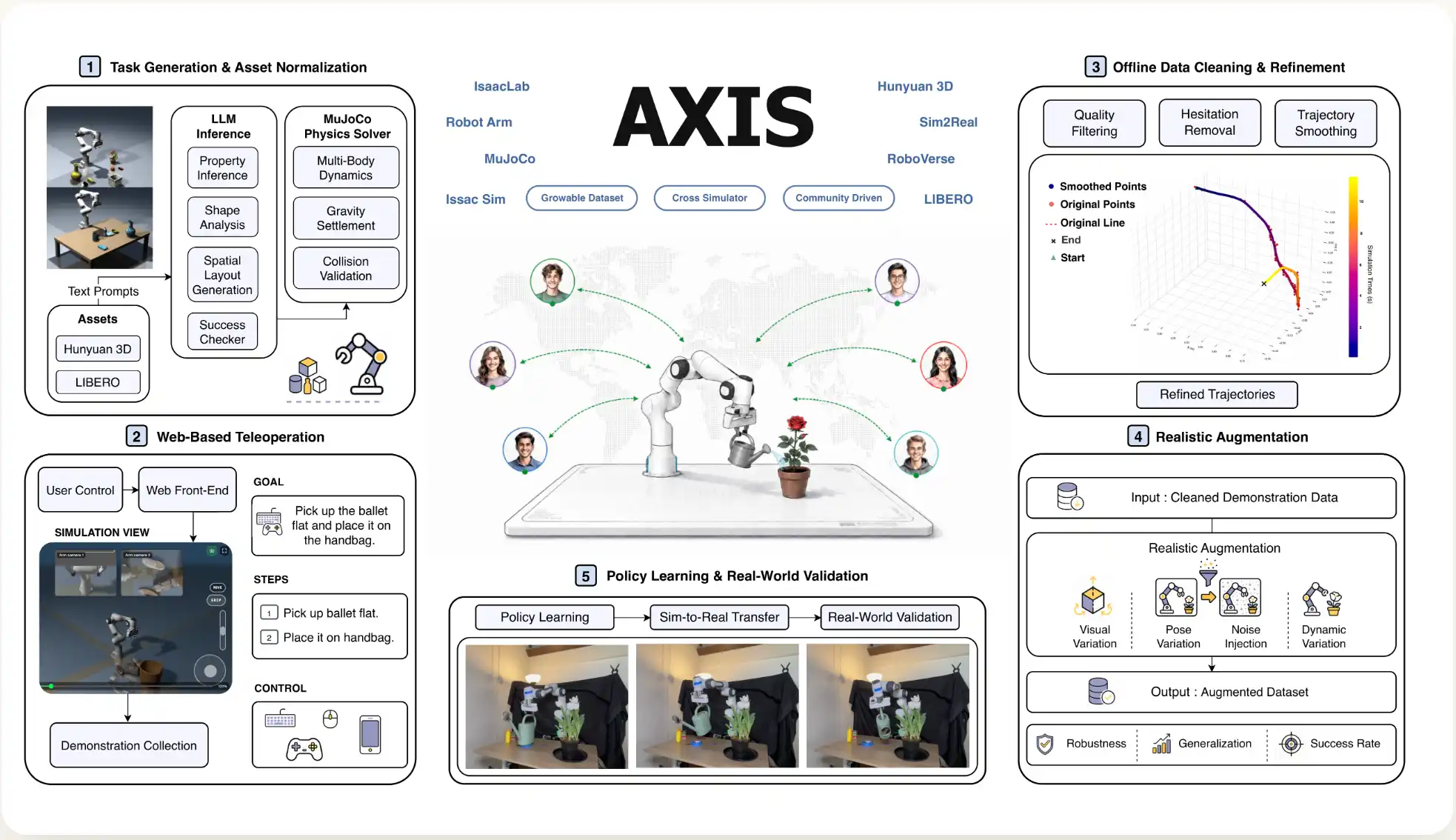
The first step is question generation. In a simulation environment, we use algorithms to combine variables such as the robot's body, target objects, position, visual conditions, etc. For example, with a combination of 10 actions, 10 objects, and 10 placement methods, the diversity of tasks can be exponentially amplified.
The second step is answering questions. Global contributors can complete simulation tasks through a simple web or mobile interface, or they can use a first-person view application on a mobile device to capture real-world operational processes.
The third step is reviewing and processing, which is also the most critical part. Raw data often contains jitter, invalid actions, or unnatural operations. We first clean, smooth, and resample the data. Then, leveraging RoboVerse, the same batch of data circulates between different simulation environments, migrating simulation data collected on the lightweight web interface to Isaac Sim for replay and data augmentation. While replaying, we modify scene materials, lighting, camera angles, and physics parameters. It's like taking the same recipe and redoing it with different pots, heat, and ingredients to expand one raw data into many training samples.
After processing, the data is not fed directly to the large model. It goes through success condition checks, anomaly filtering, and format standardization before entering model training. Once a training round is complete, we let the model execute tasks in simulation and evaluation environments to observe where it is prone to failure in which scenarios and states. We then transform these weak points into new targeted collection tasks.
The model first autonomously performs tasks. Once it deviates from the correct path, contributors take over and provide corrective actions. This error correction data is re-entered into training, allowing the model to gradually learn to handle situations it was previously unfamiliar with. This flywheel keeps spinning, lifting the capabilities of data, model, and robot together.
So, the significance of V2 is not just the addition of a few features, but transforming Axis from a system that simply "receives data" into a complete system that "helps the model get smarter."
BlockBeats Question: Axis recently released Dataset V1. Why is this dataset important, and what does it specifically demonstrate?
Chris: The most important aspect of Dataset V1 is not just that it added a batch of data, but that it preliminarily validated one thing: simulated operations from a large number of ordinary contributors, after task design, success checks, filtering, smoothing, and data augmentation, can form useful signals for robot pre-training.
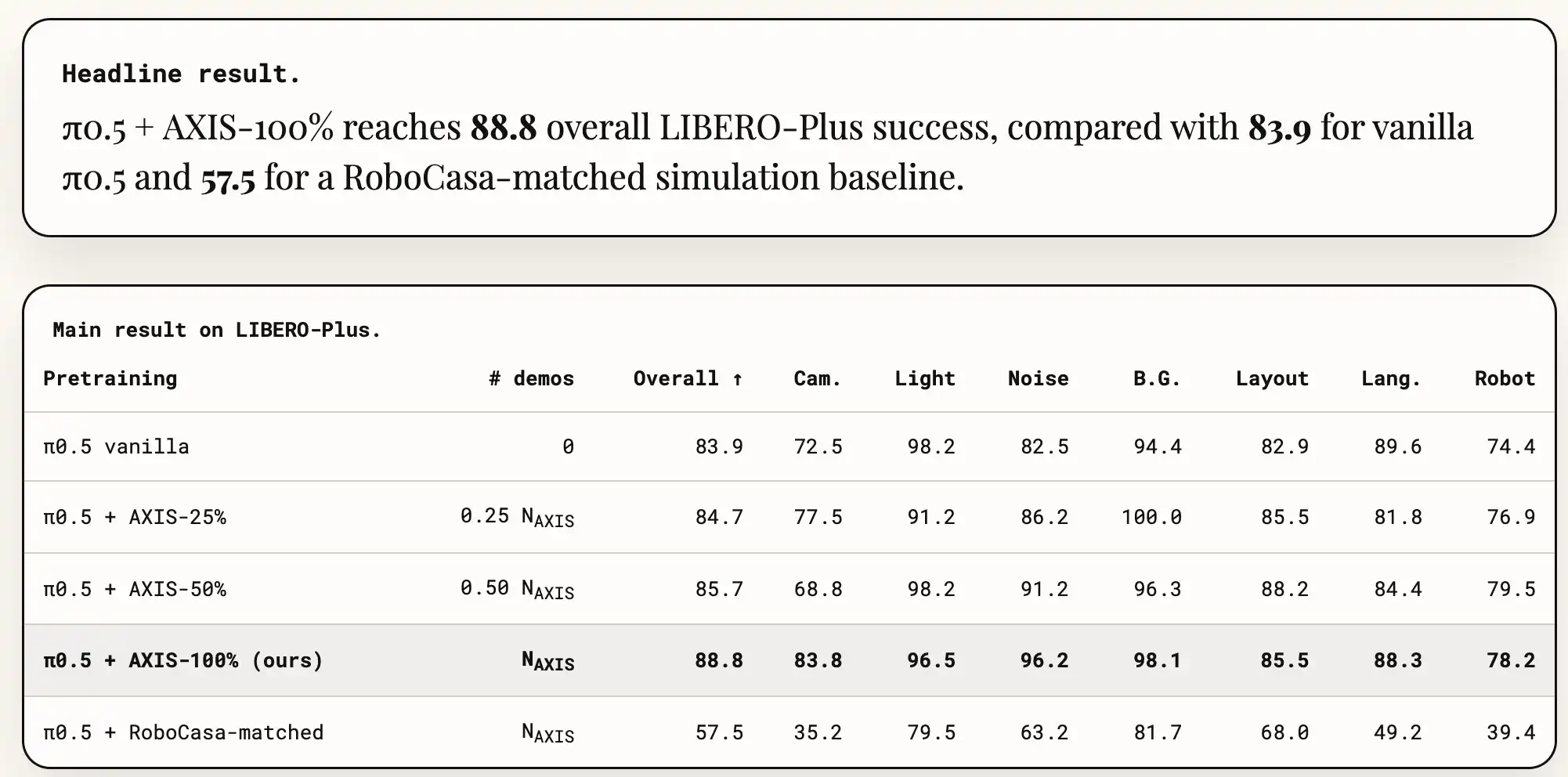
V1 contains 207 operational tasks, over 50,000 trajectories, and over 60,000 task and scene variations. In the open LIBERO-Plus evaluation, after continuing pre-training with the complete AXIS data, the overall success rate of π0.5 increased from 83.9 to 88.8, a 4.9 percentage point improvement. The RoboCasa control group with the same amount of data was 57.5. This at least indicates that, under these evaluation conditions, model improvement depends not only on the quantity of single data, but also on the diversity of tasks, scenes, perspectives, and disturbance conditions.
This year, we will release Dataset V2, continue to expand the scale, and cover more robot forms, tasks, and scenarios.
BlockBeats Question: How does Axis determine the value of a piece of data? What are the evaluation criteria?
Chris: We don't just look at whether a piece of data has been captured, but instead continuously ask several questions: Is it clean? Does it bring something new? Can it be used in the real world? And does it help the model make up for real shortcomings?
The first step is to see if it can be used. Was the operation completed? Was there any freezing or disconnection in the middle? Can the action replay be reproduced? Were there device lags, operation drifts, or objects passing through in violation of physical laws? We will also use this batch of data to train a lightweight model for a quick check-up. If it can't even pass this first step, this batch of data will not enter the training pool.
For the second checkpoint, we look for any new information. The robot's biggest fear is encountering repeated questions it already knows. We examine how different the scene, objects, and interactions in this trajectory are compared to existing data. If there are rare scene layouts, special materials, or uncommon manipulation methods, the data is valuable. While a large amount of repetitive "pick up and put down" actions are useful for building a foundation, the focus should be on complex tasks where multiple objects obstruct each other, requiring several consecutive steps to complete. This type of data forces the model to generalize and apply its knowledge to new scenarios.
For the third checkpoint, we assess the transition from simulation to reality. The quantity of simulation data is not as important as ensuring it reflects real-world variations. Can the model handle changes in lighting, materials, friction levels, or camera angles? The more these variables are perturbed, the more robust the model will be when deployed in the real world. If simulation data always occurs under ideal conditions, it serves only as basic pre-training material and has limited value when transferred to real-world settings.
Lastly, we evaluate the contribution to long-term iteration. When the model fails in a real-world scenario and a human intervenes to correct a small segment of the trajectory, this corrective data is extremely valuable—it precisely indicates where the model lacks understanding. Similarly, novel trajectories introduced by new tasks or robot models help the model rapidly expand its capabilities. Conversely, if a simple task is already well-handled by the model, adding more similar data provides diminishing returns.
Therefore, quality data is more than just "correctly formatted." It must be clean, innovative, applicable to the real world, and capable of driving the model's continuous improvement. We aim to allocate our limited data collection resources to data that genuinely enhances the robot's intelligence.
BlockBeats Question: Since Axis is a robotics company, why does it need blockchain technology? Axis has chosen the Base chain; could you elaborate on the reasons?
Chris: This is a sharp and critical question. Our rationale is straightforward: Axis is primarily addressing the data bottleneck in Physical AI, a challenge that requires the participation of a large number of contributors worldwide. Blockchain technology is not the protagonist; it serves more as an efficient underlying tool for traceability, validation, incentivization, and distribution.
In the era of large language models, training data is often a "black box": it's hard for outsiders to understand where the data comes from, how it's processed, and how contributors' value is recognized. However, Physical AI directly involves a robot's actions in the real world, where data quality impacts safety. Therefore, this black box nature cannot be easily accepted.
We have moved part of the data production process of Physical AI to Base in order to make this process more transparent. Base is a low-cost blockchain network built on Ethereum. Specifically, task IDs, data traceability IDs, user IDs, and their interrelationships will be recorded. This way, each action trace and each contributor can be traced, audited, and receive corresponding incentives.
Furthermore, we need a network with broad community coverage and low participation barriers. The community of Base is highly globalized, and the Base chain has low usage costs, fast transaction confirmations, which facilitates our recording of contributions and incentive distribution.
Most importantly, we reward not just quantity, but high-quality contributions. For a robotic model, garbage data is not only useless but may even be harmful. We use a dual-scoring and point system to determine whether a piece of data has actually helped the model. The better the contribution, the higher the score, and the greater the reward. The efficient and low-cost nature of the Base chain perfectly matches our need for high-frequency, small-scale global cooperation.
BlockBeats Question: What is Axis's current commercialization path? Regarding robot data collection, model training, and actual deployment, what products or services do you mainly provide to customers? What feedback have existing customers given on this model?
Chris: Our commercialization path is quite clear, focusing on serving three types of customers and providing end-to-end solutions based on their respective needs.
The first type is robotic hardware and embodiment companies, such as Booster Robotics, Feagine Robotics, and AgiBot. They have their own hardware but often require more customized data and deployable models to enhance their operational capabilities. We can assist them from task design to data collection, model training, and deployment, and also provide data solutions for their downstream customers.
The second type is companies that develop vision-language-action models or world models, such as Manycore Tech and SomaStacks. The role of world models is to help machine learning understand how the environment will change. They need a large amount of high-quality operational data to train universal models, and we provide them with high-quality task sets and datasets, and can also engage in joint training.
The third type is vertical industry enterprises, such as Lotus and Geely. They are not concerned about having the most advanced models but rather how to effectively use robots in the production line. Therefore, we provide end-to-end automation solutions based on machine learning methods.
We value system capabilities highly, so delivery is not just a data dump. We can adjust according to what the customer needs and where the internal capability boundary lies: we can provide data and deliver data-based solutions together. This not only enhances our competitiveness in serving customers but also more directly helps customers improve efficiency and quality.
BlockBeats Question: Who are Axis's partners and customers? When different customers come to Axis, what are their usual needs?
Chris: The types of companies mentioned earlier are all our typical customers. They all seem to say they "lack data," but what they actually lack is different.
For example, a hardware manufacturer may have just developed a very nice robotic arm. However, when it arrives at the customer's site, as soon as the lighting changes or the items are rearranged, the robot can no longer grasp accurately. They come to Axis not for a bunch of random videos but to truly solve: how to make the robot work stably in more environments.
What we provide them with is not a pile of messy videos but structured data generated, cleaned, and semantically annotated through multidimensional and diverse processes. When necessary, we will also directly help them train strategies. The ultimate result to be delivered is to make their hardware more stable and generalizable in unstructured environments.
BlockBeats Question: Could you share some operational data that has not been publicly disclosed since the platform went live, such as the number of active registered contributors, task completion, cumulative trajectories, and the activity and contribution of high-quality users?
Chris: Since the platform went live 15 weeks ago, we have accumulated over 80,000 registered contributors. This number has excluded invalid accounts like robot accounts and represents real and valid data. We have released a total of 1,600 machine learning tasks for pre-training, collected over 2 million data trajectories in total, which is roughly equivalent to 3,500 hours of high-quality data.
But what we value more is user quality and stickiness. Currently, there are approximately 20,000 high-quality contributors, accounting for about 30%. In the past 30 days, 7,800 of these users have remained active; in the past 7 days, 5,300 have been active, with a 68% weekly-to-monthly active ratio. In the last 30 days and the past 7 days, they have contributed approximately 680,000 and 160,000 trajectories, respectively.
This level of activity and engagement allows us to see users' interest in the "training is contributing, and contribution can be rewarded" model. It also indicates that our community is forming a relatively mature and stable network of intelligent robot contributors.
BlockBeats Question: Over the past two years, various humanoid robots, VLAs, and Physical AI have been hot topics, but most ordinary people have not yet truly embraced robots. How long do you think it will take for robots to achieve large-scale adoption? What will be the true inflection point—will it be the decrease in hardware costs, a leap in model capabilities, or the maturity of data infrastructure?
Chris: We believe that the true inflection point will be the maturity of data infrastructure.
The hardware costs have actually been rapidly declining. The advantage of the Chinese supply chain has made the manufacturing cost of robots no longer an insurmountable barrier. But why haven't ordinary people widely adopted robots yet? The core reason is that robots are still not smart enough; they lack sufficient common sense understanding of the physical laws of the real world and human intent.
It's like having a low-cost car with a good engine, but no driver's license and no experience on the road—having only hardware and algorithms, without enough "road experience," the car won't be driven well. Only when we can acquire interaction data from the physical world like we scrape web content today, low-cost and at scale, and turn it into nourishment that models can digest, will robots truly take off.
We believe this inflection point is getting closer, and what Axis wants to do is to push it further ahead.
BlockBeats Question: In the robotics industry, both big model companies and whole-machine companies may build their own data in the future. Faced with these self-built data teams and Axis' current competitors in the same field, what is Axis' long-term moat? Is it the contributor network, task generation capability, data quality control, customer scenarios, or closed-loop training effectiveness?
Chris: This is a very critical and realistic question. Big model companies and whole-machine manufacturers will definitely build their own data teams in the future; this is almost an inevitable outcome of industry development. But the real competition is not about who can or cannot collect their own data, but about who can establish a cross-scenario, scalable, and continuously optimized data infrastructure.
In the short term, everyone is competing based on data coverage and diversity; in the medium term, it's about efficiently turning data into model capabilities; in the long term, it's about who can truly embed themselves in the customer's intelligent production system and become an irreplaceable component.
Axis' moat will not be just a single point, such as the contributor network, data collection efficiency, or data processing capability. Single-point capabilities can all be replicated. What we care more about is connecting these capabilities into a continuously strengthening closed loop and gradually integrating them into the customer's training workflow.
For customers, accessing Axis should be straightforward, with no need for complex licensing, enabling quick task deployment and data acquisition. However, once customers start using our simulation asset system, distributed collection network, and model correction feedback loop, the training processes on both sides gradually become intertwined. To replace us, customers are not just switching data providers; they would need to redeploy the simulation infrastructure, rebuild the contributor network, data processing pipelines, and post-training correction processes. Our moat is not closed off but rather this structural embedding.
We also especially value the ability to evolve alongside the models. If we were only selling data, we could certainly be replaced at any time; but if we can continuously identify model weaknesses, design targeted tasks, provide post-training correctional data, and effectively help clients improve success rates and robustness, we become part of the model optimization feedback loop. At that point, our relationship with clients is no longer just a vendor and buyer; it is more like co-developers.
In the next 18 months, the industry will face a significant shortage of large-scale, high-coverage data, where volume and diversity remain key. Looking three years ahead, the industry may require more specialized data for specific domains and scenarios. The assets we truly want to accumulate are not a specific type of data but rather a programmable task generation system, a scalable distributed contributor network, and a continuously optimized training loop. It should be able to expand horizontally into more industries and vertically into a specific field.
In summary, in the short term, we aim for scale; in the medium term, we aim for efficiency, and in the long term, we aim for integration. Axis's goal is to become part of the Physical AI intelligent production system, rather than a data provider that can be easily replaced.
BlockBeats Question: In the 6–12 months after fundraising, what are Axis's main tasks and goals? Is it to continue expanding data scale, validate more real-world robot tasks, or acquire more paying customers? If we look back in a year, what keywords would you like the outside world to use to describe Axis?
Chris: In the next 6 to 12 months, we will simultaneously advance our product, ecosystem, and commercialization.
On the product side, V2 has transitioned us from a unidirectional collection platform to a complete training loop. The next step is to truly operationalize and scale this system. In September, we will further expand the first-person data collection pipeline. We have already accumulated tens of thousands of hours of data and are in discussions with cutting-edge model labs in North America. Around October, we plan to release the V2 version of the dataset, covering more robot forms and atomic capabilities. By the end of the year, we aim to release the first large-scale Human-Gated DAgger post-training dataset.
On the ecosystem side, we will continue to expand our global network, enter the Latin American and European markets. In the next 6 to 12 months, we aim to maintain the stable daily production capacity of first-person view data above 500 hours, increase the daily production capacity of simulation data to above 50 hours, and gradually expand the production capacity of DAgger post-training data.
On the commercial side, our goal is to complete 2 to 3 new paid pilot projects by the end of the year and be included in the preferred vendor list of foundational model companies early next year.
A year from now, when we look back, we hope everyone will describe Axis with the words "scale, diversity, closed-loop." Scale represents our ability to continuously provide industry-level data supply; diversity means we truly cover the complexity of the real world; closed-loop means we not only generate data but can continuously optimize around model deficiencies.
More importantly, when the industry mentions Axis, we hope they will say, "This is a system that accelerates the evolution of robot models." We are solving not only the issue of data quantity but also the efficiency of model evolution. Once customers integrate with Axis, the model iteration is faster, the success rate is higher, and the scenario coverage is broader, which is where our value lies.
Recommended
Desk: Brent Crude Tops $110, Musk's Net Worth Drops 528.6 Billion in Four Days After Tesla Roadster Launch
Oct 17, 21:49
JST Fifth Buyback and Burn Successfully Concludes: Over 170 Million Tokens Worth Approximately $23.53 Million Burned, Buyback Mechanism Set for Comprehensive Upgrade
Oct 17, 20:10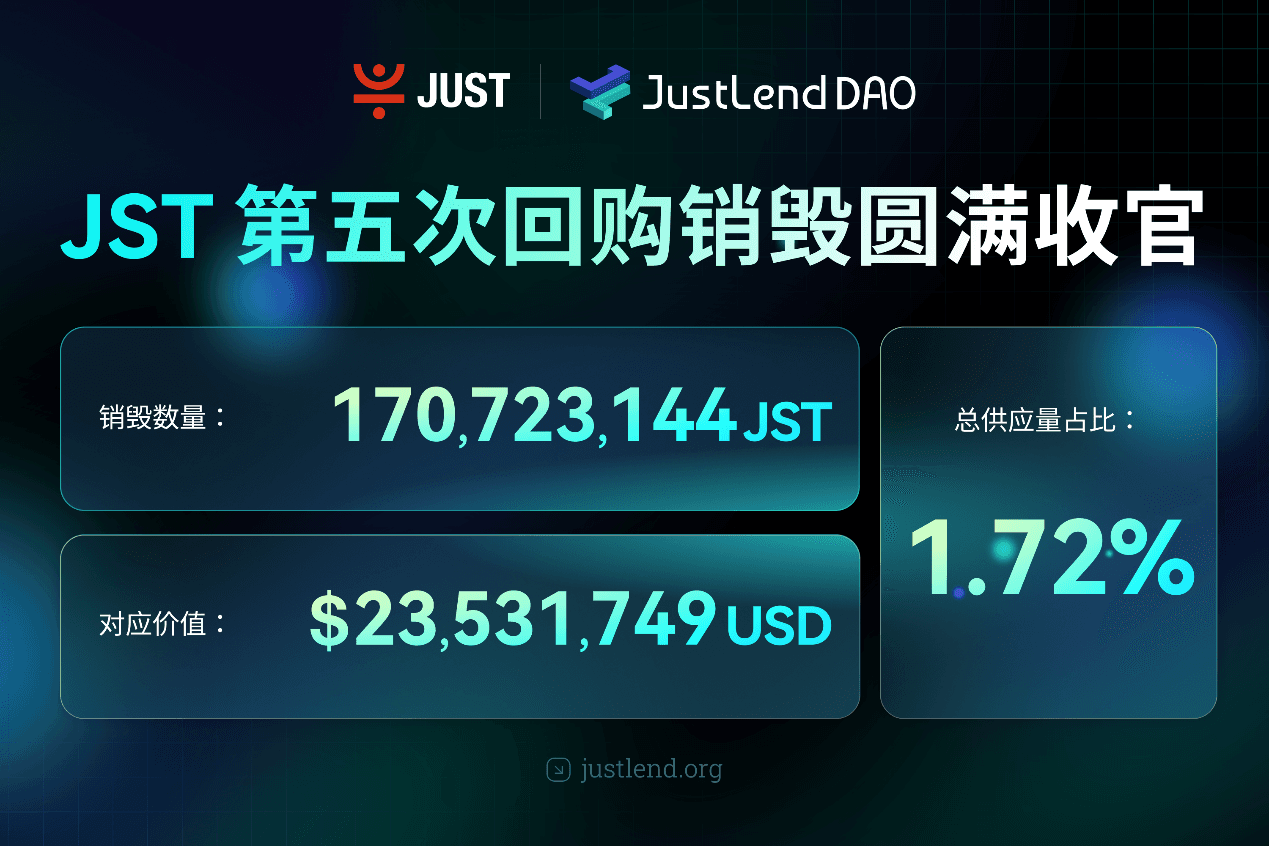
BitTorrent Brand Upgrade and Initial BTT Buyback & Burn Launch Simultaneously, Dual Engines Usher in New Era of Web3 Infrastructure
Oct 17, 20:00
Asia Market Daily: Japan's BOJ signals more rate hikes while Korea targets offshore perpetual platforms (2026/10/17)
Oct 17, 17:01Why did Papertrade backfire on you?
Oct 17, 17:01
The 'Strict Father' of Northern Myanmar: This Company Deploys 200,000 "AI Best Actors" to Strike Back Against Scammers
Oct 17, 15:34